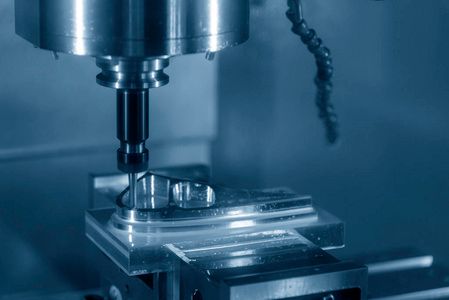
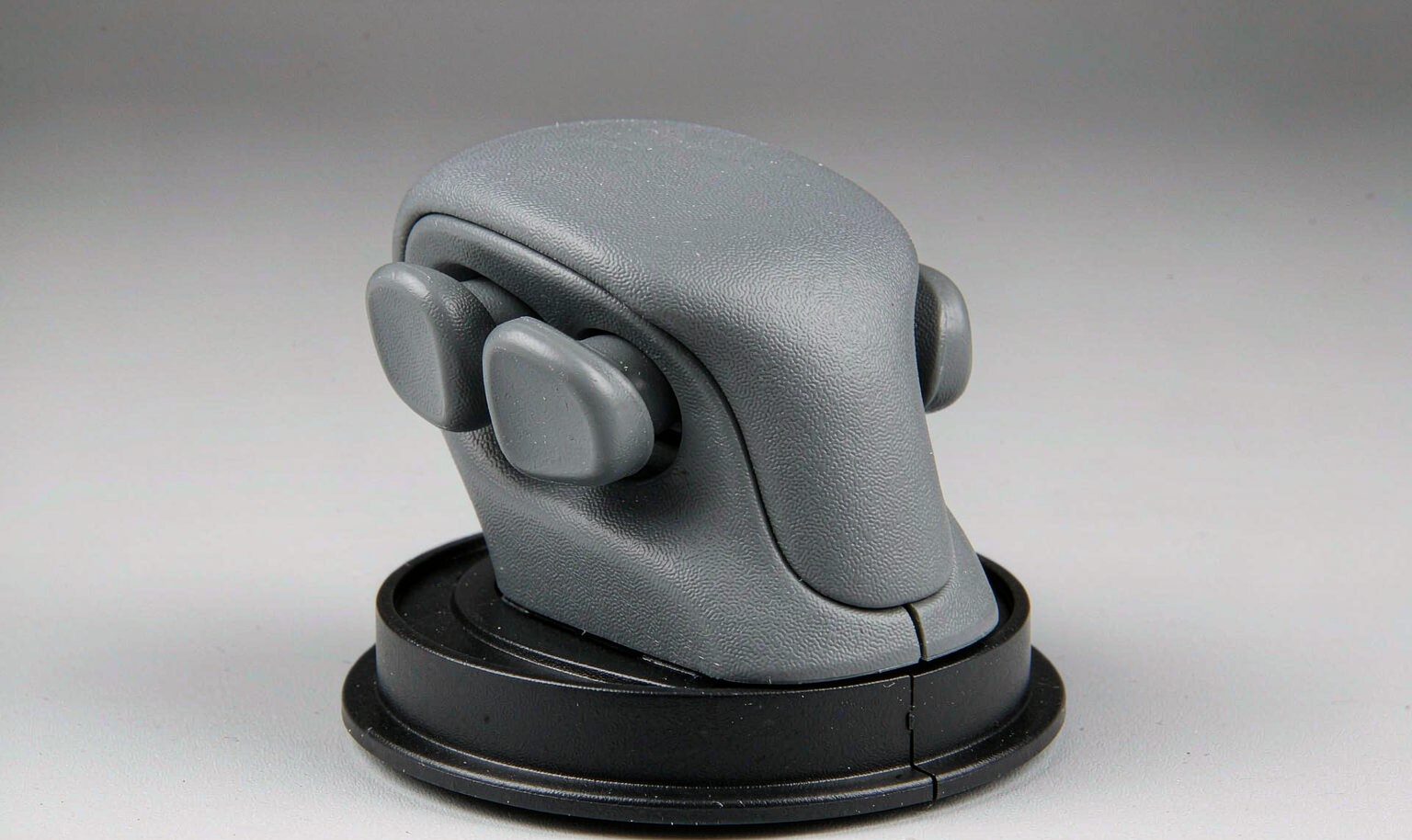
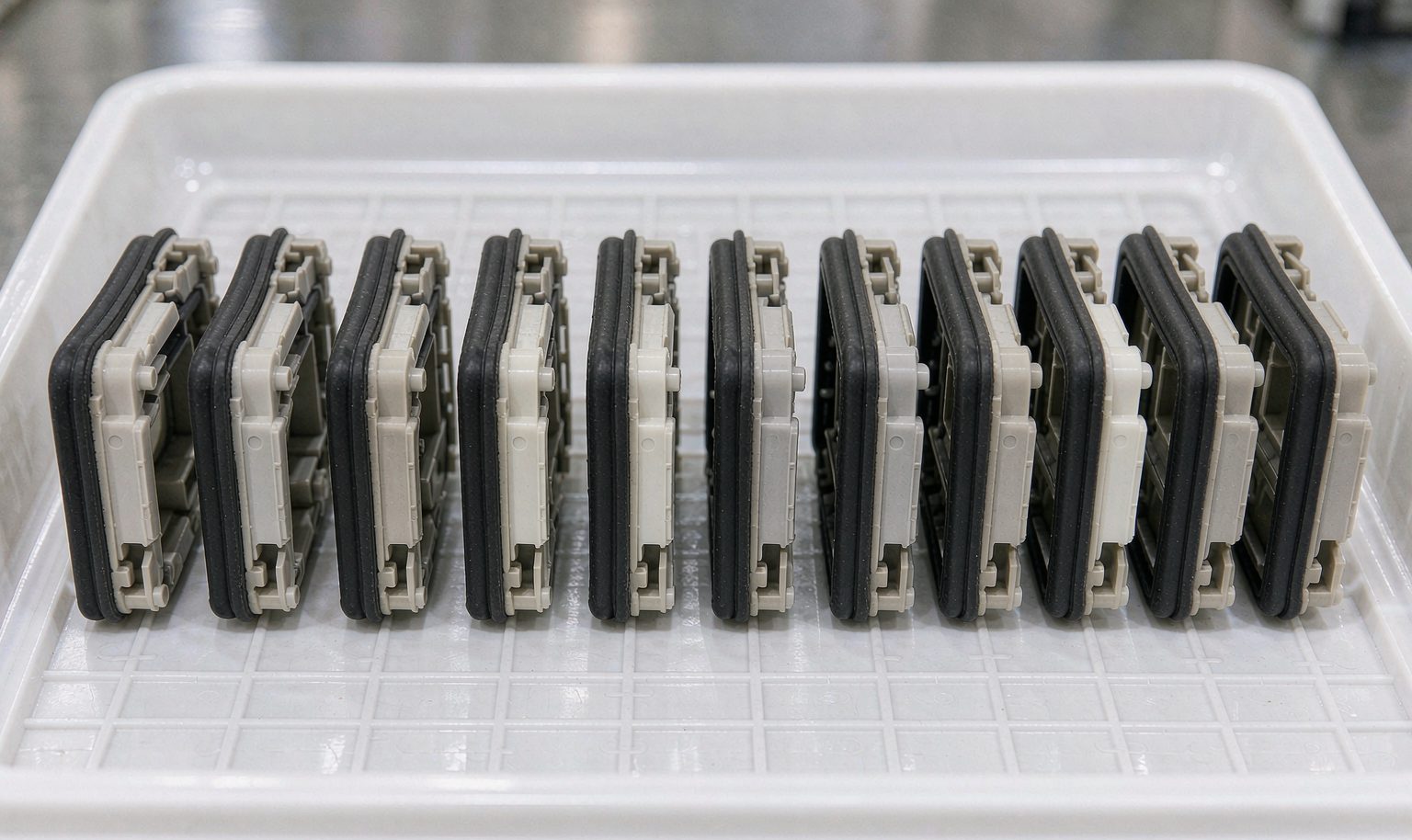
Two-shot injection molding — also called 2K, dual-shot or two-component molding — forms a part from two materials or colors in one machine cycle, so a rigid substrate and a soft or second-color material become one production part.
Last updated: September 2026
Is Two-Shot Right for Your Part?
Two-shot molding is a design decision, not a default. It solves specific problems, and it adds cost when they do not exist. Screen your part below before investing in tooling.
Two-shot is usually the right fit when…
- A rigid body plus a soft, grippy or sealing surface that will not peel off.
- Two colors or materials meeting at a clean, repeatable boundary.
- Removing a secondary assembly, adhesive or gasket step.
- A part that is handled or sealing, so the interface must last.
- Assembly of separate pieces is slow or hard to automate.
Two-shot is usually the wrong fit when…
- A single material already meets the function.
- A snap-fit, weld or adhesive is cheaper and proven.
- Volume is very low and unlikely to scale.
- The two materials cannot bond and cannot be interlocked.
- The finish you need only comes from post-processing.
When a part is borderline, we compare it against overmolding or assembly and tell you which route is cheaper for your volume.
Two-Shot vs Overmolding: Which Process Fits Your Part?
Buyers often use these terms interchangeably. They are not the same process, and the difference drives tooling cost, cycle time and consistency.
| Factor | Two-Shot (2K) Molding | Overmolding |
|---|---|---|
| Materials per cycle | Both molded in one machine, one cycle | Substrate first, then a second operation |
| Tooling | One multi-material mold (rotary, core-back, transfer) | Substrate tool plus a separate overmold tool |
| Cycle time | No handling between shots; shorter, stable cycle | Extra load, unload and re-heat between stages |
| Bond quality | Second shot molded onto a warm, fresh substrate | Bond depends on an insert and re-melt |
| Boundary control | Set precisely by the mold and shut-offs | Set by placement of the insert |
| Best fit | Mid to high volume, aesthetic boundaries, sealing | Low to mid volume, simple overmold, inserts |
| Cost behaviour | Higher tooling, lower unit cost at volume | Lower tooling, higher unit cost and handling |
If the bond, the boundary or cycle time is critical, two-shot usually wins. At low volume with simple geometry, overmolding or assembly is often cheaper.
How Two-Shot Molding Works
Four stages happen inside one machine and, usually, one mold. The sequence lets the second material bond while the first is still receptive.
First Shot
The rigid substrate is injected into the first cavity, forming the structural body.
Rotation or Core Transfer
The mold rotates or a core retracts, moving the substrate to the second cavity.
Second Shot
A soft elastomer or second color is injected over the substrate while it is still warm.
Finished Part
The bonded part ejects complete: no assembly, no adhesive, no secondary handling.
Material Combinations That Bond Reliably
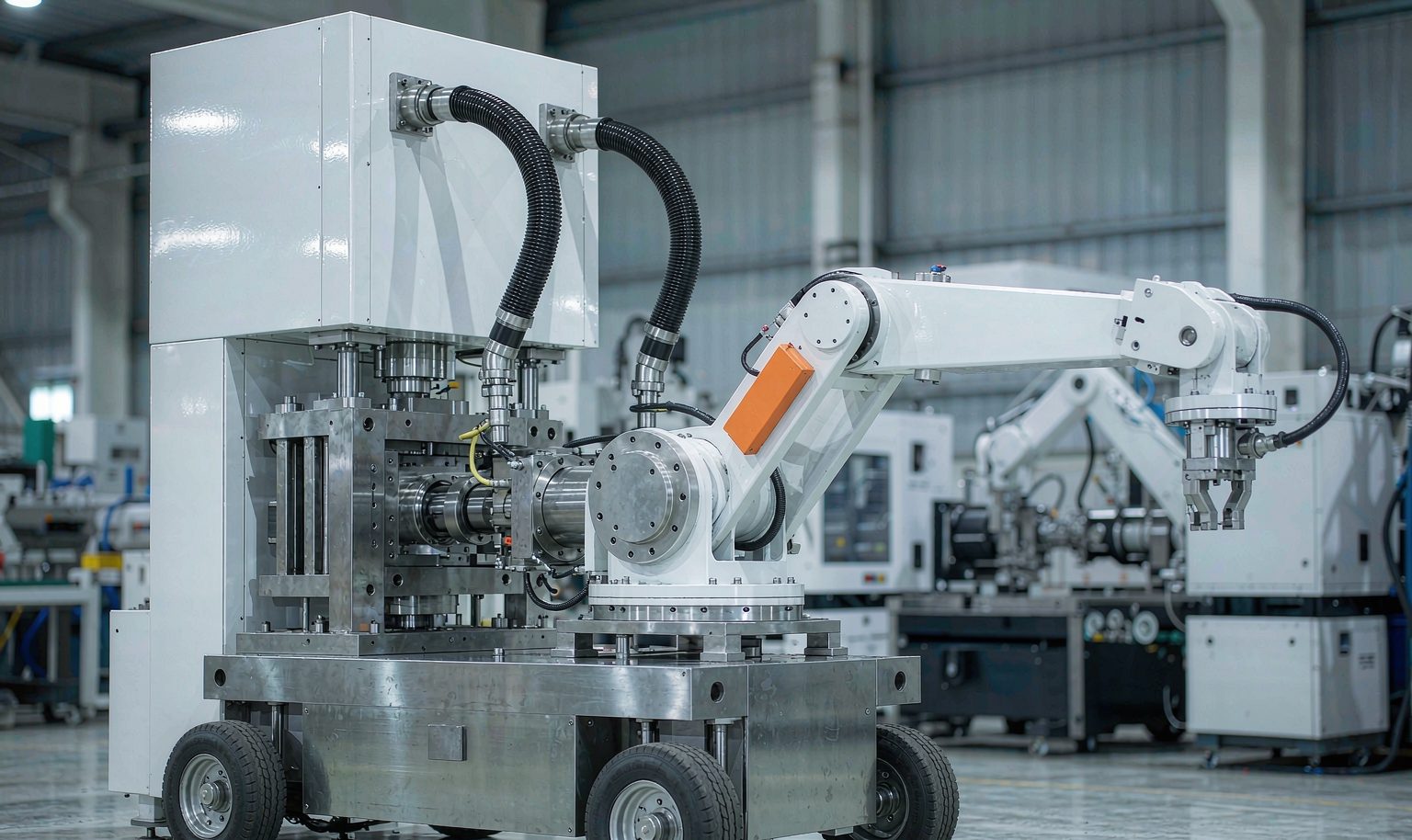
Bonding is chemistry plus geometry. These pairs are the most common candidates for hard/soft parts, not a guarantee. Each is validated against your grades before production.
A workhorse pair for consumer and industrial parts, with a broad window and a proven soft-touch bond.
Soft-touch grips · housingsA stiff substrate with a durable flexible skin for wear and sealing surfaces.
Devices · coversToughness and dimensional stability with a soft overmold in one part.
Automotive · enclosuresA low-cost, chemically resistant substrate; bonding needs a compatible grade or compatibilizer.
Caps · sealsA strong, heat-resistant substrate for demanding parts; grade selection decides the bond.
Tools · technical partsOne resin, two color masterbatches — the simplest case, with a uniform bond and a clean boundary.
Aesthetic · branding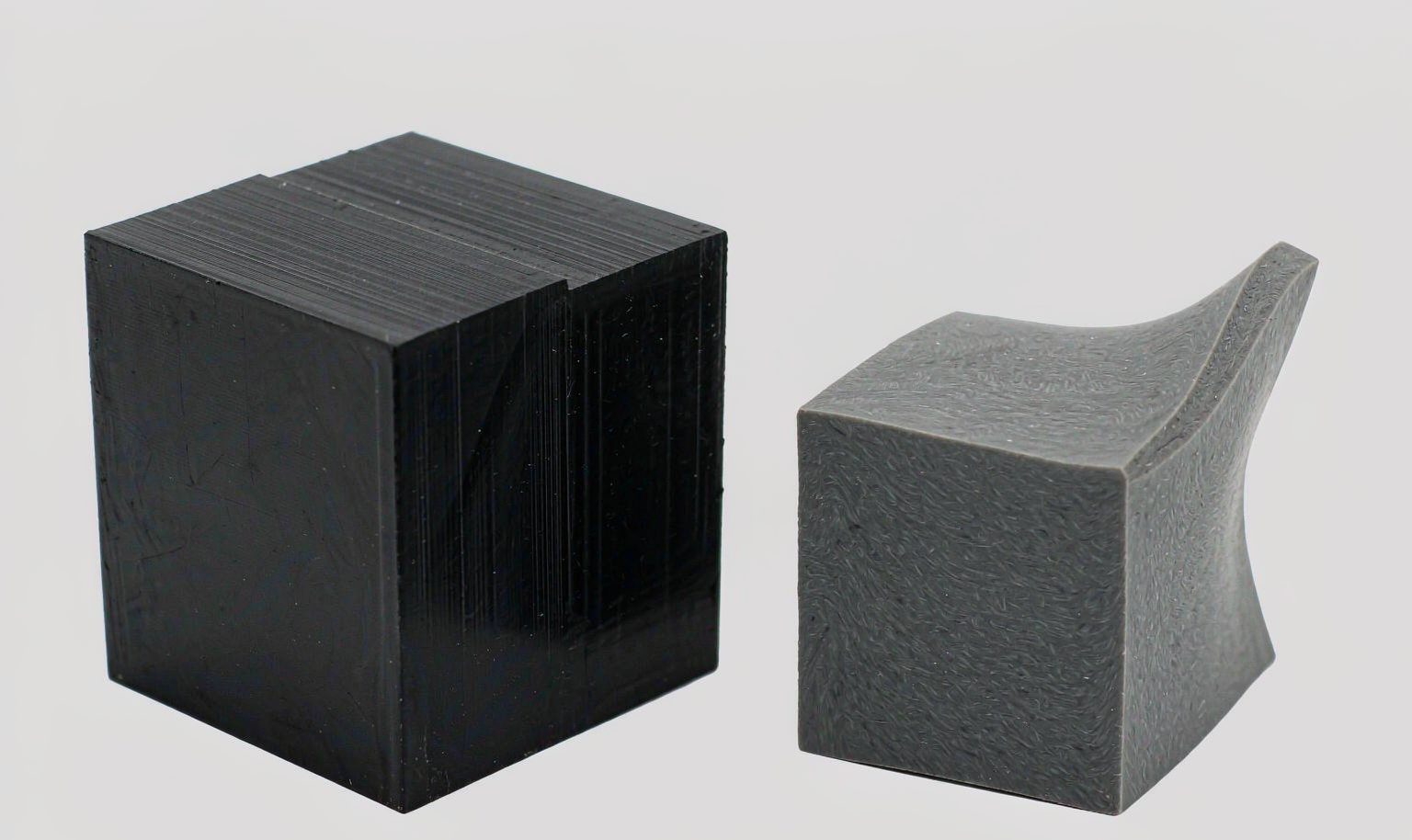
Bond strength depends on the specific grades, not only the polymer families. The same nominal pairing can bond in one grade and fail in another, so we validate before tooling.
Bonding & Interface Engineering
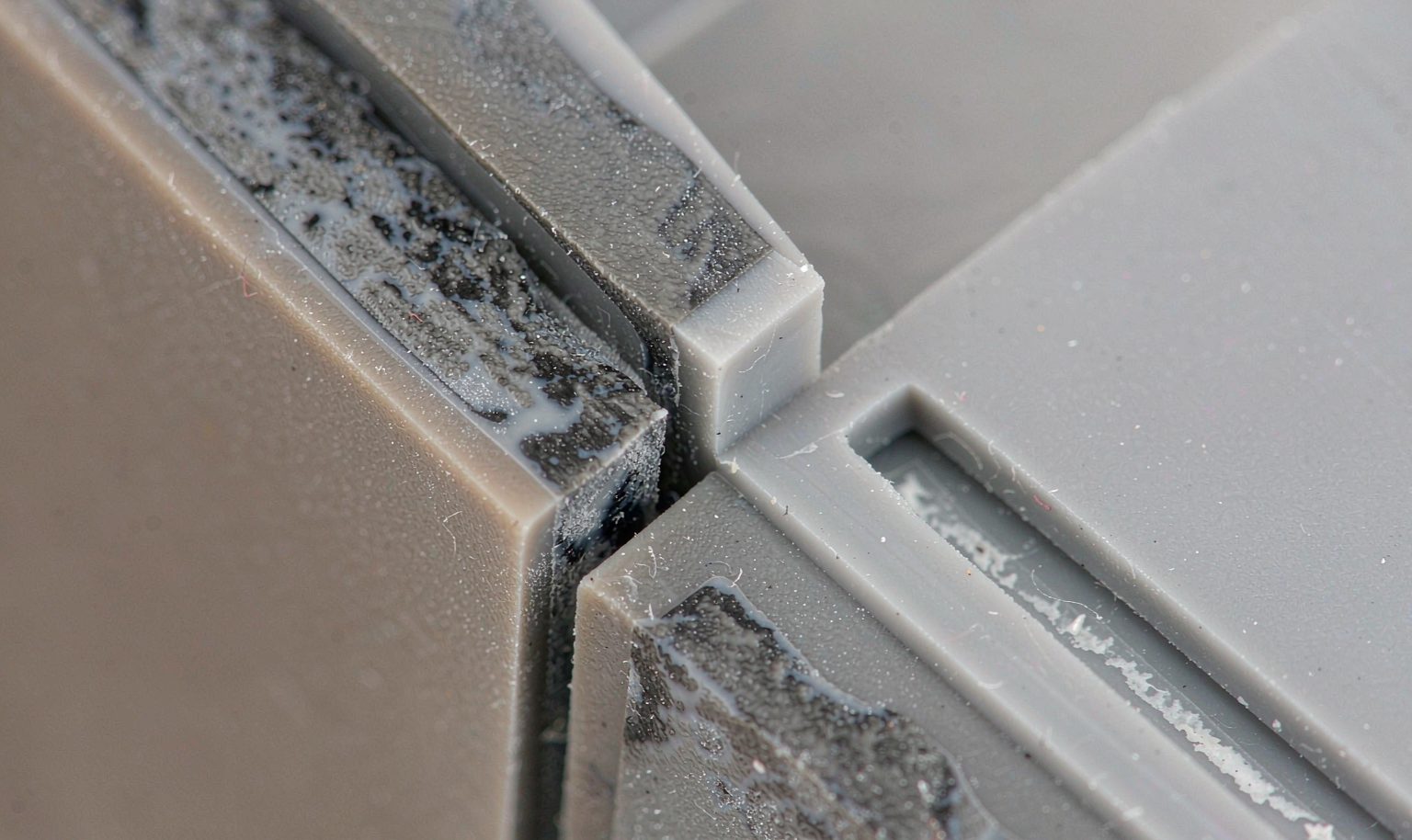
A two-shot part is won or lost at the interface. We engineer four things together, because controlling only one rarely holds on the floor.
Chemical compatibility
Whether the two polymers are compatible at the molecular level — the same family, or a pair designed to bond.
Thermal window
The second shot must be hot enough to fuse, yet not so hot that it deforms the first. Both melt temperatures set the window.
Interface geometry
Ribs, undercuts and surface texture give the bond a physical grip, so it does not rely on chemistry alone.
Process conditions
Injection speed, packing pressure and mold temperature set how the two melts meet. These are locked in during trials.
Mold Design for Two-Shot Molding
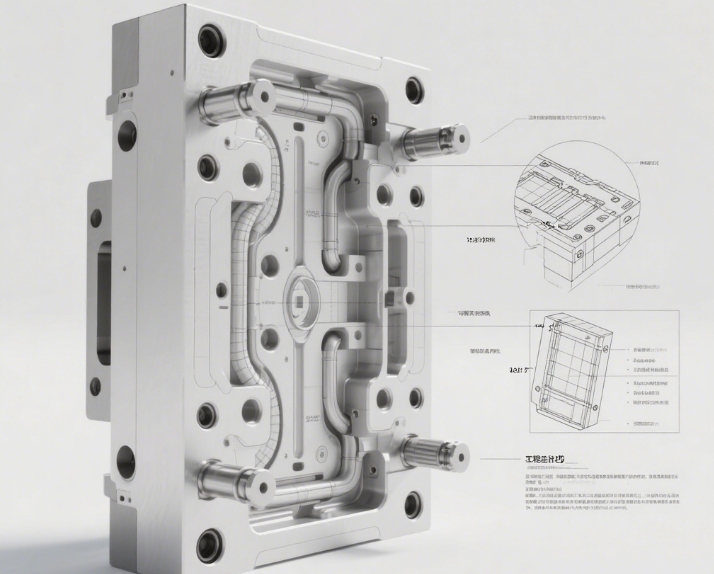
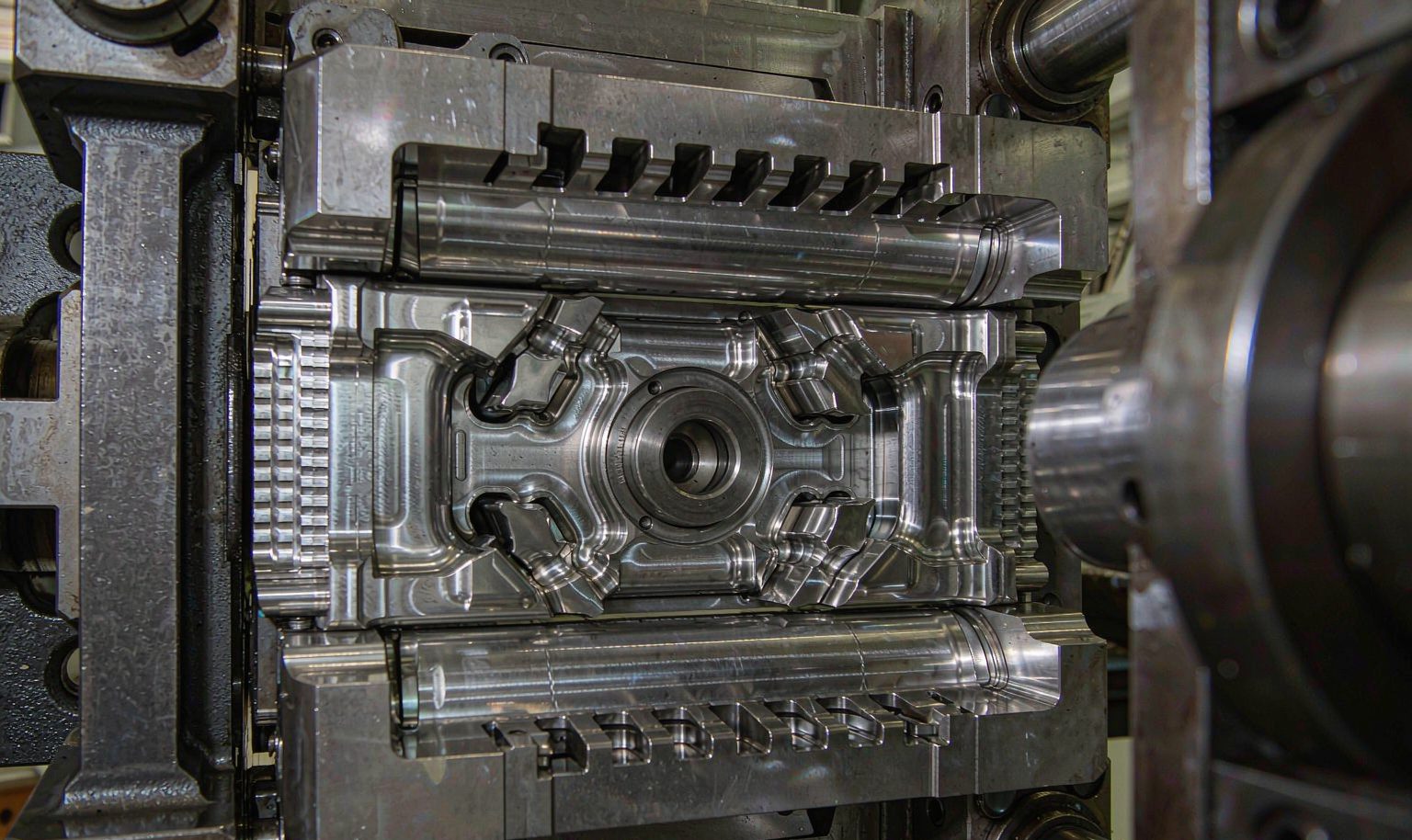
The mold decides whether two-shot tooling earns its cost. Architecture follows part geometry, material pair and volume.
Rotary platen
The moving half rotates between two stations. Fast and common at mid-to-high volume.
Core-back
A core retracts to open a second cavity on the same axis, for parts that cannot rotate.
Transfer / two-station
The substrate is transferred to a second station for overmolding — flexible for asymmetric parts.
Runner & gate design
Hot and cold runner layouts balanced for each material so both shots fill predictably.
Cooling layout
Independent cooling keeps cycle time down and controls warpage across both shots.
Shut-off & alignment
Shut-offs define the boundary; alignment keeps the two cavities registered part after part.
2K DFM Review: What We Check Before Quoting
A quote is only useful if the part is manufacturable as drawn. Our DFM review answers that before a number is issued.
- Substrate wall thickness and flow length for the first shot
- Overmold thickness and coverage for an even second shot
- Bond area and whether a mechanical interlock is needed
- Shut-off surfaces that will hold the color boundary
- Draft angles for both shots, including the overmold
- Gate location for the second shot so it does not wash out the substrate
- Material pair and grade suitability, with a bond check
- Tolerance stack-up across the interface and the finished part
- Cycle feasibility, tonnage and tooling approach
Send a 3D model and a 2D drawing with key dimensions and the two materials. We return a manufacturability summary and a quote, usually within one working day.
From Prototype to Production
You do not have to jump straight to a production mold. We stage the program so you confirm the concept, the bond and the boundary first.
Prototype
Validate form, fit and material choice with 3D printed or CNC-machined samples. See 3D printing services.
Tooling
Mold design and build, including the two-shot architecture. See injection mold manufacturing.
T1 & Sampling
First-shot trials and 2K samples. We adjust the process window and correct the boundary before sign-off.
Validation
Dimensional, interface and functional checks to the drawing, with an FAI report on request. See custom plastic injection mold.
Mass Production
Serial 2K parts under the frozen process window, with batch traceability. Prototype lead time 3–7 working days; low volume 7–20; mass production 15–25.
Quality Control on a Two-Shot Part
A two-shot part has one extra quality dimension: the interface. Inspection covers the part and the bond between its materials.
Dimensional inspection
Key dimensions and the tolerance stack across the interface, measured to the drawing.
Interface & bond checks
The bond line and interlock, inspected for separation, voids and incomplete fill.
Boundary & appearance
The boundary between the two materials, checked for position, cleanliness and finish.
Functional & assembly
Where the part fits into a product, fit and function are verified to a drawing or sample.
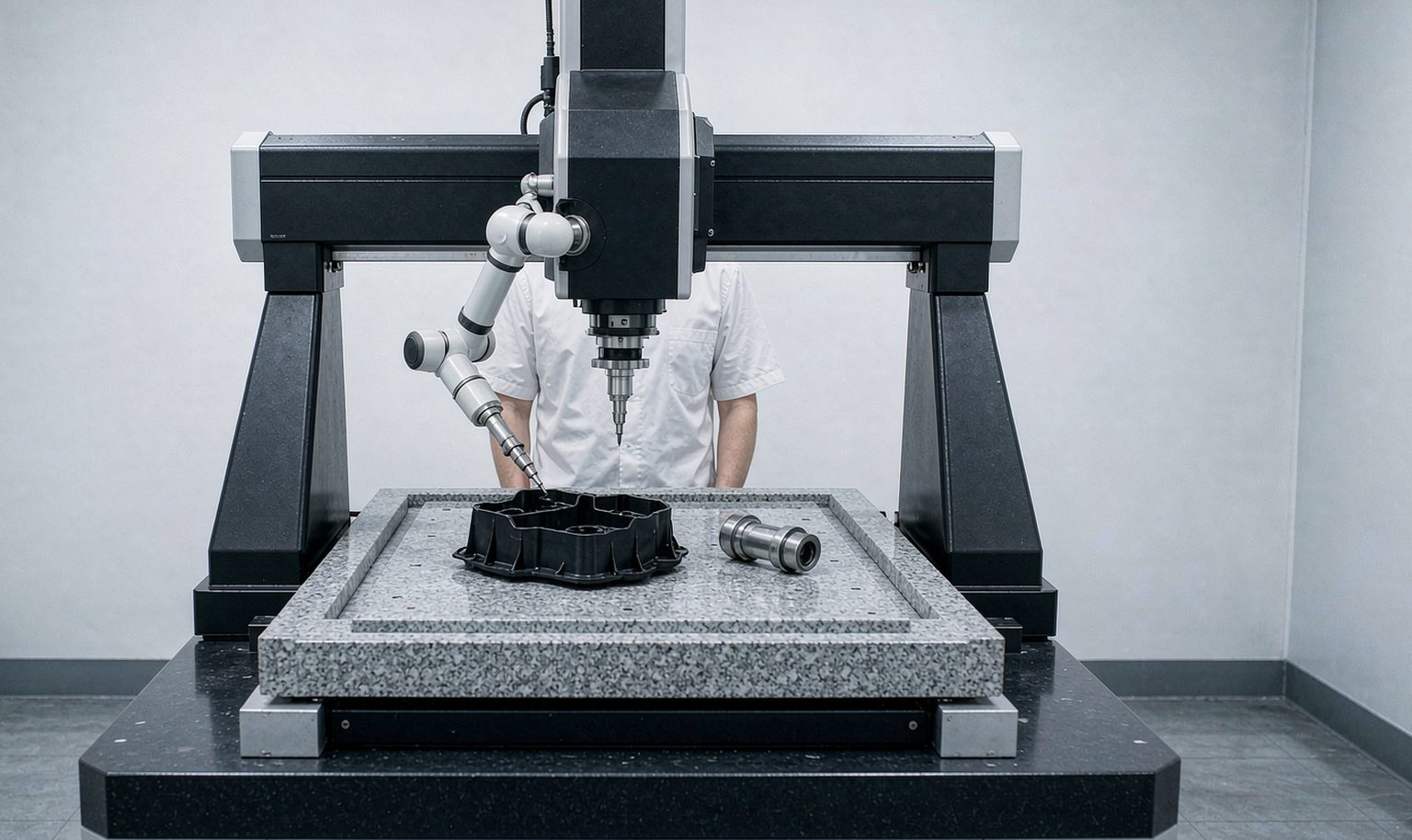
Inspection methods, sample sizes and acceptance criteria are set with you against the drawing; we do not publish blanket tolerance or bond-strength figures, because they are part-specific.
Documentation You Receive
A two-material part is harder to audit than a single-material one, so the paperwork has to travel with the part.
- First article inspection (FAI) report, available on request
- Material certificates for the substrate and the overmold material
- In-process and final inspection records
- RoHS test report TQT7737B1373EC on file
- PPAP documentation where applicable to your program
- Certificate copies provided under NDA
Molding runs under an ISO 9001:2015 quality system. Automotive and medical programs are handled to IATF 16949-aligned and ISO 13485-aligned process controls.
Where Two-Shot Parts Are Used
Two-shot molding is chosen when a part must combine two functions. The second material almost always does a job, not just looks.
Automotive
Grip + seal: soft-touch controls, interior trim, sealing parts.
Electronics
Protection + feel: housings with soft-touch edges and seals.
Medical
Comfort + sterilisability: device grips and two-material housings.
Industrial & tools
Durability + grip: handles, knobs and daily-handled parts.
Consumer & appliances
Aesthetics + function: two-color panels, buttons and covers.
Volume & Tooling Economics: When 2K Pays Off
Two-shot tooling costs more than a single-material mold. The question is whether the unit-cost saving repays it.
Low volume
Tooling dominates. If the part needs no bonded interface, a single-material mold or overmolding is usually cheaper.
Mid volume
The break-even zone. Eliminating an assembly step often repays the extra tooling here.
High volume
Two-shot wins clearly: shorter cycles, no handling between shots and lower unit cost at scale.
MOQ starts at 1 piece for prototypes. Tell us your annual volume and we will model whether two-shot, overmolding or assembly is the lowest total cost.
What Drives the Cost of a Two-Shot Part
Two-shot quotes vary more than single-material quotes, because more variables move the number.
| Cost driver | Why it matters |
|---|---|
| Tooling complexity | Rotary or core-back architecture, shut-offs and alignment add design and build cost. |
| Material pair | Engineering resins and specialty elastomers cost more than commodity grades. |
| Part size & tonnage | A larger projected area needs a larger machine and mold base. |
| Overmold coverage | More second-shot area means more material and tighter process control. |
| Boundary & aesthetics | A tight, cosmetically critical boundary raises tooling precision and inspection. |
| Volume | Spread over more parts, tooling and setup drop sharply per unit. |
How a Two-Shot Project Is Scoped
Every 2K program is defined by the same decisions. Once these are fixed, tooling, cycle and unit cost become predictable.
Why Goldcattle for Two-Shot Molding
Two-shot work needs a supplier who controls the mold, the material choice and the process together. Goldcattle has done that since 1998.
In-house mold design & build
Tooling is designed and made in-house, so the two-shot architecture is decided with the part, not subcontracted blind.
Six processes under one system
CNC machining, injection molding, mold making, 3D printing, die casting and sheet metal fabrication are performed in-house under one ISO 9001:2015 quality system.
Material selection support
We help choose the substrate and overmold grades, and confirm the pair will bond before tooling is committed.
DFM before the quote
Every 2K part is reviewed for manufacturability first, so you know the risks before you approve a number.
Xiamen Goldcattle Plastic & Metal Products Co., Ltd. — custom injection molded parts since 1998.
Two-Shot Injection Molding: Buyer FAQ
The questions procurement and engineering teams ask most, answered directly.
What is two-shot injection molding?
A process that molds a part from two materials or colors in one cycle: a first shot forms the substrate, then a second shot bonds onto it.
Is two-shot the same as 2K, dual-shot or two-component molding?
Yes. Two-shot, 2K, dual-shot, two-component and two-color molding describe the same family of processes; 2K is the most common shorthand.
What is the difference between two-shot molding and overmolding?
Two-shot molds both materials in one machine and cycle; overmolding adds the overmold in a second operation. Two-shot gives better bond control; overmolding has lower tooling cost.
Which material combinations can be two-shot molded?
Common pairs include ABS + TPE, PC + TPE or TPU, PC/ABS + TPE, PP + TPE and PA + TPE, plus any single resin in two colors — but each grade must be validated.
How do I know if my two materials will bond?
Bonding depends on chemical compatibility, the thermal window, interface geometry and process conditions. We check the pair against your grades and confirm the bond in trials.
Why is two-shot tooling more expensive than a standard mold?
A two-shot mold must form two materials and register them accurately. Rotary, core-back or transfer architecture, precision shut-offs and alignment all add cost.
What production volume makes two-shot molding worthwhile?
If the second material replaces an assembly or adhesive step, two-shot often repays its tooling at mid volume; at high volume it wins clearly. Send your volume and we will model it.
Can you make a two-shot prototype before committing to tooling?
Yes. We can validate form, fit and material choice with 3D printed or CNC-machined samples first, so you confirm the concept before investing in a multi-material mold.
What is the lead time for two-shot tooling and parts?
Prototype samples are typically 3–7 working days; low volume 7–20; mass production 15–25. Tooling lead time depends on mold complexity and is confirmed at DFM.
What is your MOQ for two-shot parts?
MOQ starts at 1 piece for prototypes. For series production, the economic minimum depends on the mold and material pair, and is stated in the quote.
How do you control the color boundary and dimensional consistency?
The boundary is set by precise shut-offs and held by mold alignment; dimensions are held by the mold and the frozen process window, then verified against the drawing.
What tolerances can you hold on a two-shot part?
Tolerances are part-specific: they depend on the materials, geometry and which feature is critical. We agree the tolerance stack with you at DFM.
How is bond strength verified?
The interface is inspected for separation, voids and incomplete fill, and functional checks confirm the part performs as intended. The test method is agreed with you.
What documentation do you provide?
First article inspection reports on request, material certificates for both materials, inspection records, and PPAP documentation where applicable.
Can you handle multi-cavity or high-volume two-shot programs?
Yes. Tooling architecture, cavity count and machine tonnage are selected to match your volume, from single-cavity prototypes to multi-cavity production molds.
Request a 2K Injection Molding Quote
Send your drawing and the two materials. Our engineers return a manufacturability review and a quote, usually within one working day.
Include the following in your request:
- Part / application
- First material
- Second material
- Volume
- CAD file
- Surface finish
- Target market
- Comments
Xiamen Goldcattle Plastic & Metal Products Co., Ltd. — custom two-shot molded parts since 1998.