Toys & Consumer Product Manufacturing · Prototype to Production · Xiamen, China

Custom Toy & Consumer Product Parts Manufacturing

From 3D-printed prototypes to injection-molded production parts, Goldcattle manufactures custom plastic components for toy brands, product developers and consumer goods manufacturers. We support design refinement, DFM review, material selection, prototype validation, mold development and repeat production based on your drawings, CAD files or approved samples.

  • 3D-printed prototypes and low-volume parts for design validation
  • Custom injection-molded plastic components for repeat production
  • Mold tooling and a structured transition from prototype to production
  • Material documentation, dimensional inspection and project records
Explore manufacturing options →
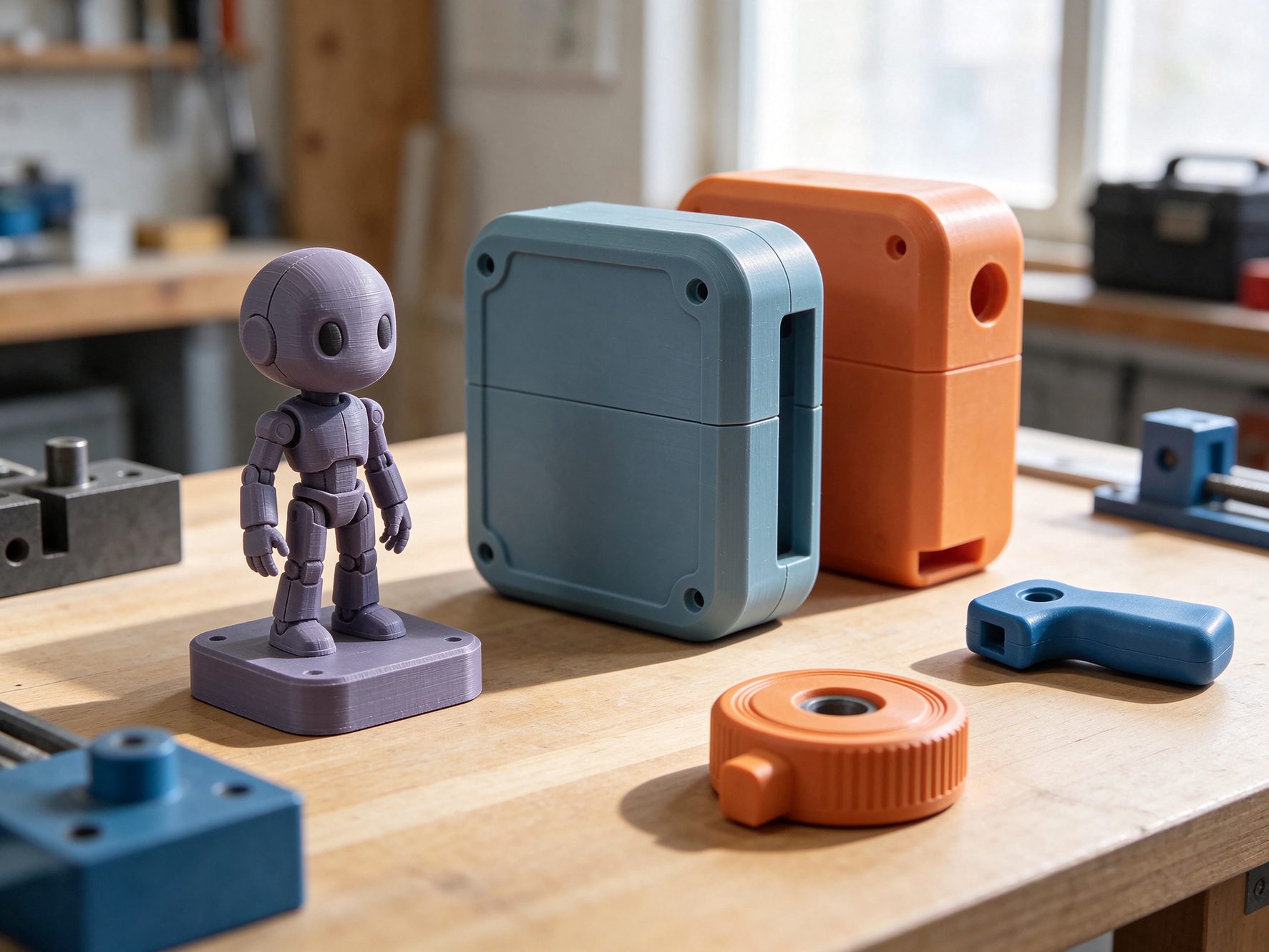
Workshop bench with a 3D-printed articulated character prototype beside smooth injection-molded housings, a grip and a knob in blue, gray and orange

Representative project mix: a printed figure prototype alongside molded housings and functional components prepared for engineering review.

Prototype · Validate · Tooling · ProductionOne engineering route from first sample to repeat parts
3D Printing + Injection MoldingProcess matched to design maturity and target volume
Parts to your drawings or samplesCustom components rather than a fixed catalog of finished goods
Material data and inspection recordsResin grade, batch traceability and dimensional checks per project
Buyer split

Who We Support: Toy Projects and Consumer Product Components

These two buyer groups share the same manufacturing route, but their review points differ. The cards below separate the common purchasing paths so a toy brand and a consumer product developer can each find the relevant scope.

01 · Custom toy manufacturing

Toy brands, collectible studios and educational product companies

We support component and part production for collectible figures, articulated toys, STEM and educational components, game miniatures and accessories, and custom injection-molded toy parts. Review points include appearance, joint retention, snap-fit, material feel, batch consistency and age-grade related risk in the design.

02 · Consumer product components

Consumer brands, product developers and OEM purchasing teams

We review housings, appliance covers, handles, grips, knobs, enclosures, protective shells and functional plastic accessories for lifestyle, electronics-adjacent, appliance and general consumer products. Review points cover functional performance, wall and rib design, snap-fit, cosmetic finish, assembly and repeat-order consistency.

Part categories

What We Manufacture for Toys and Consumer Products

The focus is the custom plastic part: geometry, joints, fit, material and surface. Finished-goods assembly, electronics integration and full product ODM are scoped separately where applicable.

Figures

Articulated figures

Poseable character and model components with ball, hinge or pin joints, separate limbs and head parts, reviewed for clearance and repeated movement.

Toy parts

Injection-molded toy parts

Structural shells, blocks, bases and repeated plastic components produced in a tooling route once the design and volume are suitable.

STEM

Educational and STEM components

Mechanical demo pieces, teaching models and assembly components built to drawing with fit and function checked on the sample.

Housings

Consumer product housings

Device covers, enclosures and protective shells with ribs, bosses, mounting features and cosmetic exterior surfaces.

Functional parts

Handles and functional components

Grips, knobs, levers, clips and snap-fit accessories selected for hold, feel and assembly performance.

Prototypes

Custom product prototypes

Appearance models and functional validation parts used to check scale, color, fit and mechanism before tooling commitment.
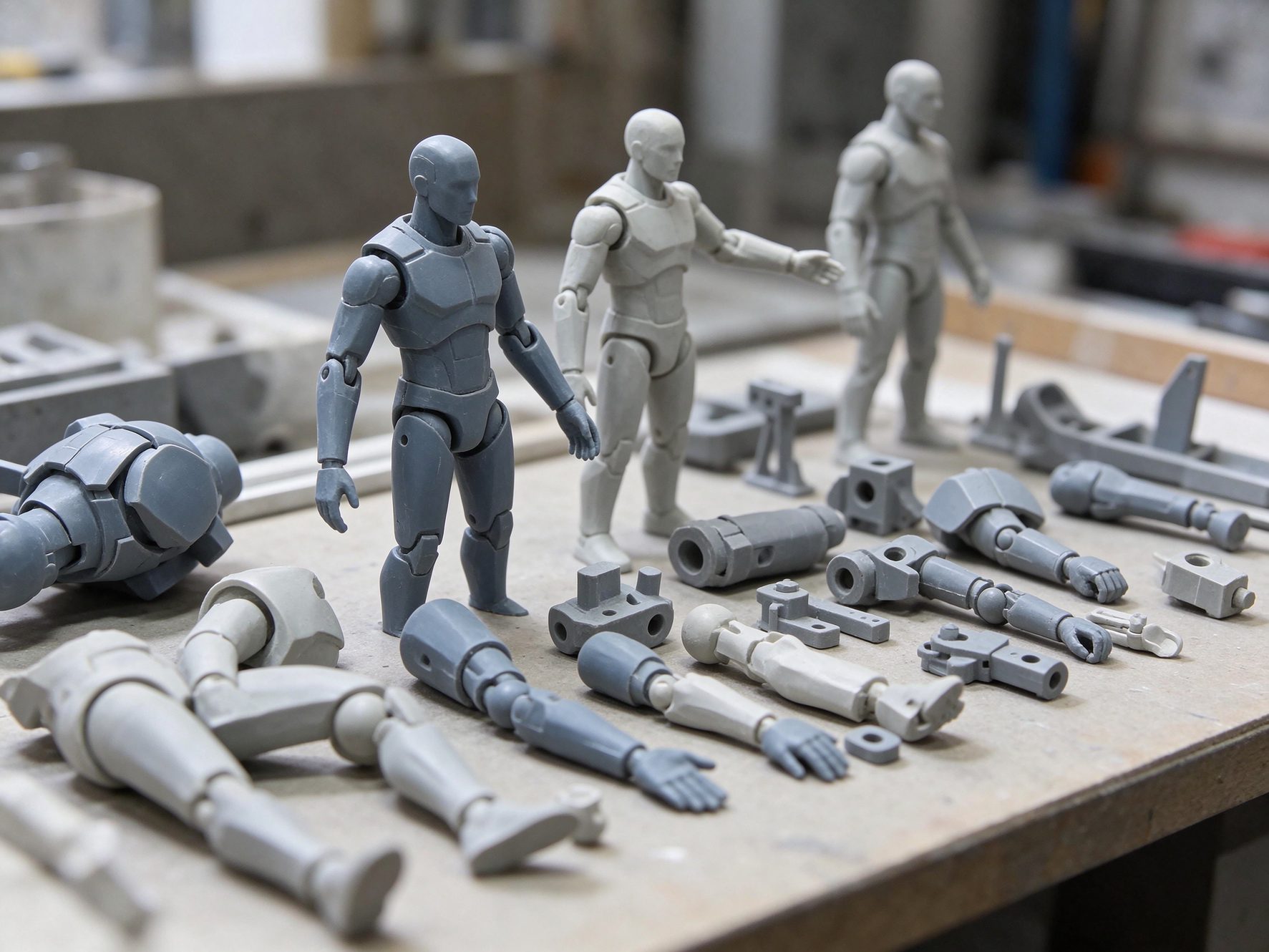
Inspection bench with gray articulated figure prototypes, separate limbs, ball joints and hinge components laid out in solid matte plastic
Articulated figure prototypes and separate joint components laid out for fit and pose review before any production decision.
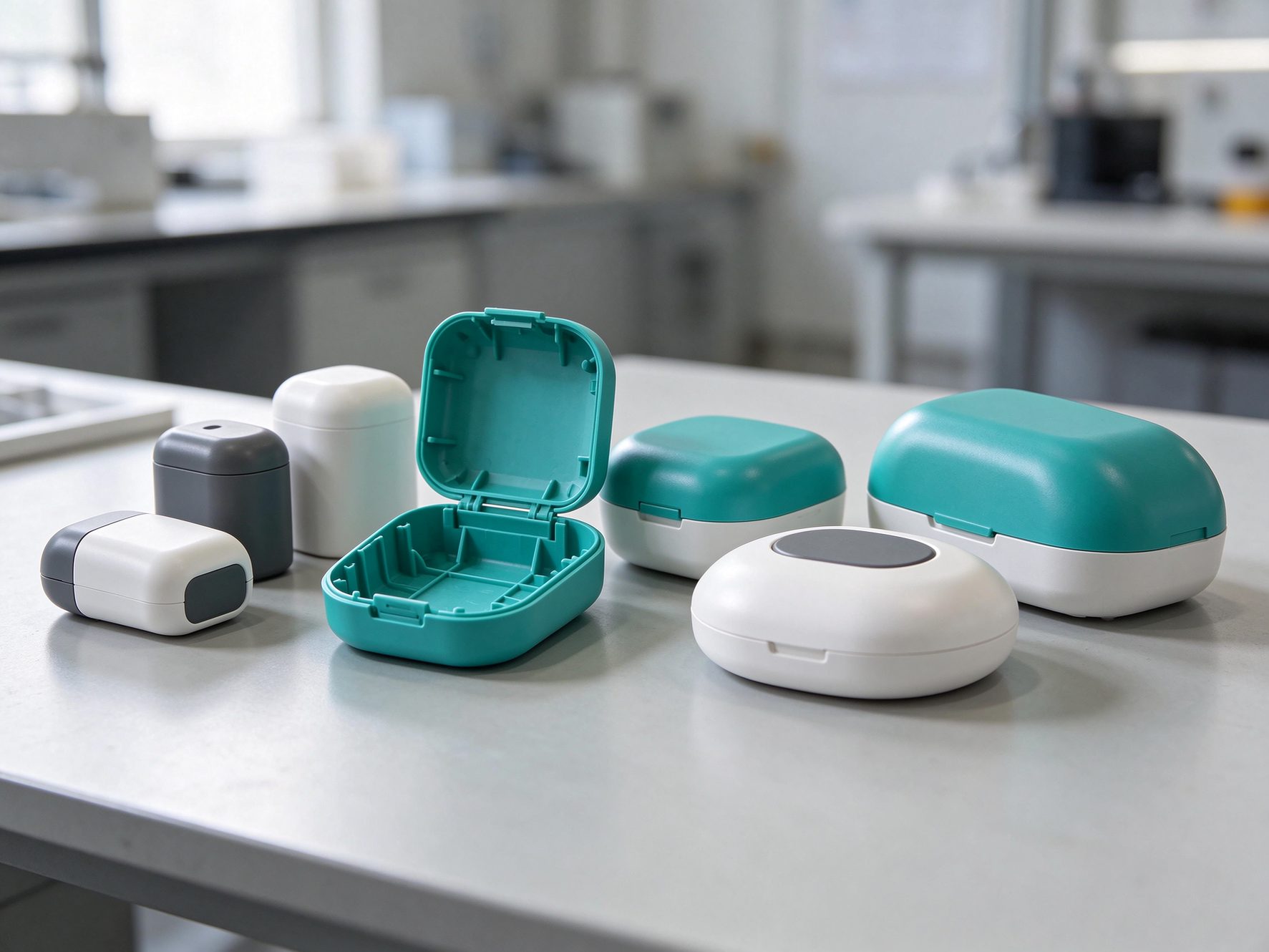
Row of matte white, dark gray and teal consumer product enclosures on a quality-control table, one open cover showing internal ribbing
Consumer product housings and shells reviewed for wall balance, ribs, snap-fit and exterior finish.
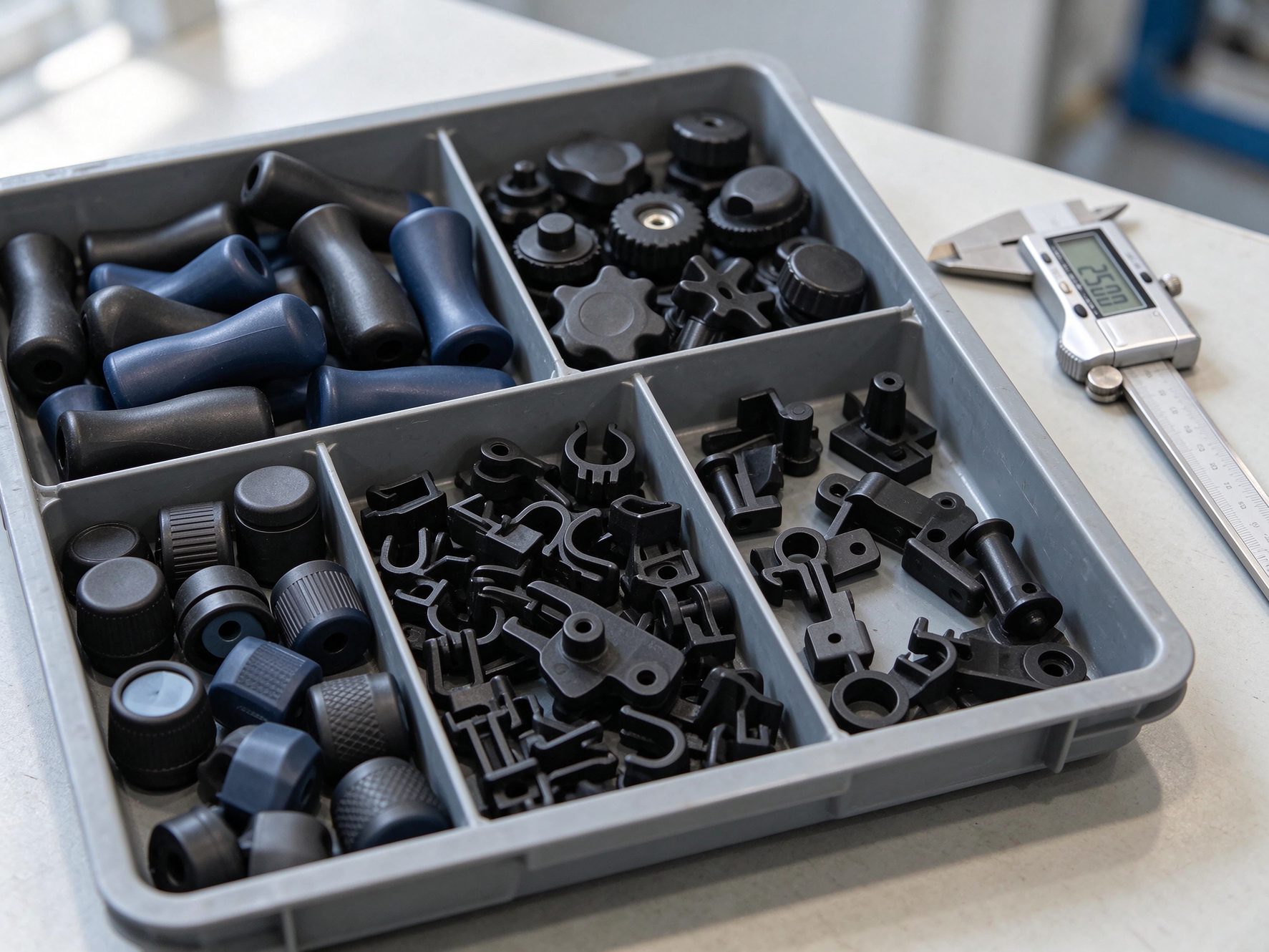
Tray of black and blue custom handles, knobs, grip caps and snap-fit clips with a digital caliper on a clean workbench
Handles, knobs and clip components sorted for functional review alongside dimensional check.
Process selection

From Rapid Prototyping to Injection-Molded Production

One practical advantage of working with Goldcattle is that 3D printing and injection molding are connected in the same engineering flow. The buyer can validate the part first, then move the approved design into tooling and repeat production without transferring the project to a new supplier.

Review point3D printingInjection molding
Main usePrototypes, design validation, functional checks and low-volume partsStable, repeat production of approved parts
Tooling investmentNo injection mold requiredRequires a mold designed and built for the part
Design changesGeometry can usually be revised and reprintedDesign changes may require mold modification
Complex structureHandles complex geometry and internal features more freelyConstrained by draft, parting line, ejection and mold design
Surface qualityDepends on print technology and applied post-processingControlled through mold polish, texture and molding process
Unit cost modelNo mold amortization; unit cost fits small or bridge batchesPer-unit cost can fall at higher repeat volume after tooling
Buying stageProduct development, market and fit validationDesign freeze and ongoing repeat supply
Not sure when to move from 3D printing to injection molding? Share your target volume and design files. We review the most practical production route based on tooling cost, unit price and expected demand. There is no fixed crossover unit count: it depends on part size, material, mold structure, cavity count and the demand forecast.
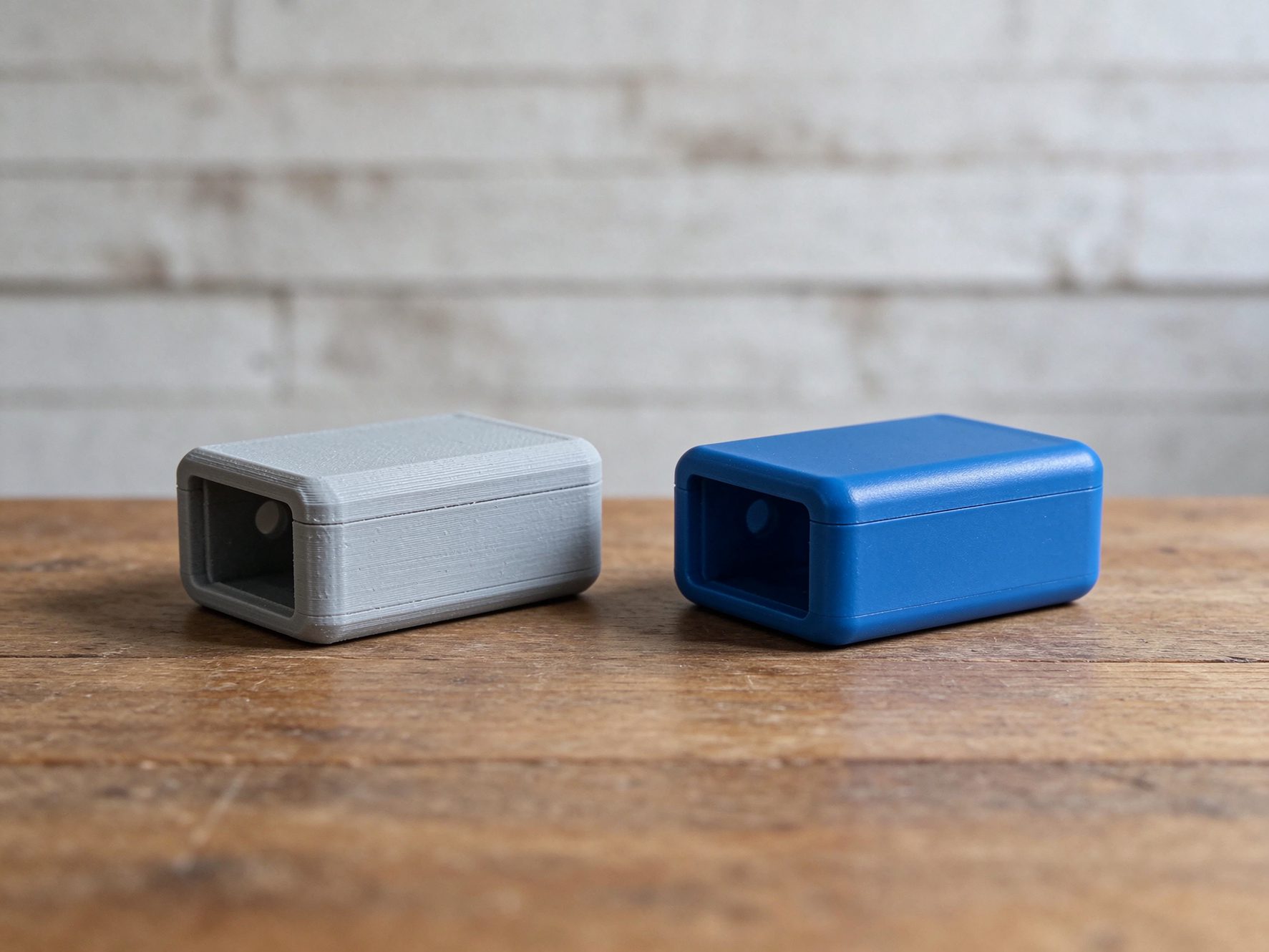
Side-by-side small housing: left a gray 3D-printed prototype with fine layer lines, right a smooth blue injection-molded version of the same shape
Same geometry in two stages: printed validation part beside the molded production version, with appearance and fit checked against the approved drawing.
Material selection

Materials Reviewed for Toy and Consumer Parts

Material choice sets strength, feel, flexibility, appearance and the later compliance path. The listed families are reviewed against the part role, not treated as a single universal grade for every product.

Injection molding materialMain characteristics reviewedTypical parts
ABSRigid, good toughness and common appearance-finish performanceHousings, toy structural parts
PPLightweight, chemical-resistant, suitable for some hinge designsCovers, containers, accessories
PCImpact-resistant, possible transparencyTransparent covers, protective shells
PC/ABSBalanced strength and molding performanceElectronics-adjacent housings
PA / NylonStrength and wear resistanceFunctional structural parts
POMLow friction and dimensional stabilityGears, sliding components
TPE / TPUFlexible, elastic, soft-touch characterSoft-touch parts, protective components
3D printing materialCommon prototype use
PLAAppearance models and early prototypes
PETGPrototypes needing some toughness
ABS / ASAFunctional housings and prototypes for selected use environments
PA12Durable functional prototypes and movable structures
TPUFlexible components
SLA resinHigh-detail appearance and display models, with post-processing noted
Print resins, PLA, PETG and ordinary printed materials are not assumed suitable for children's toys by material name alone. Injection-molding grades, color masterbatch and additives are also verified against the project. The exact resin grade, supplier data and any additive requirement are confirmed on the RFQ before production.
Engineering support

DFM and Product Optimization for Better Manufacture

Before tooling, the drawing is reviewed for the features that most often drive fit, appearance and production stability. These checks reduce late changes and support a cleaner transition to molded parts.

Wall and ribs

Wall thickness and ribs

Walls are kept as uniform as possible; ribs and bosses are proportioned to limit sink marks, warpage and uneven shrinkage on the visible face.

Snap-fit

Snap-fit design

Cantilever and retainer features are reviewed for assembly force, retention and repeated engagement rather than a one-time press fit.

Gate and line

Gate and parting line

Gate position and parting line are planned to protect cosmetic surfaces and give the cavity a sensible draft and ejection path.

Surface

Surface and texture

Gloss, matte and texture targets are reviewed together with draft, mold polish and color matching; batch color consistency is checked on the sample.

Joints

Joint and assembly design

Toy joints, connecting links and mating parts are reviewed for clearance, retention and assembly check between sub-assemblies.

Prototype

Prototype validation

A sample checks dimensions, structure, function and appearance before the design is locked for tooling and repeat production.
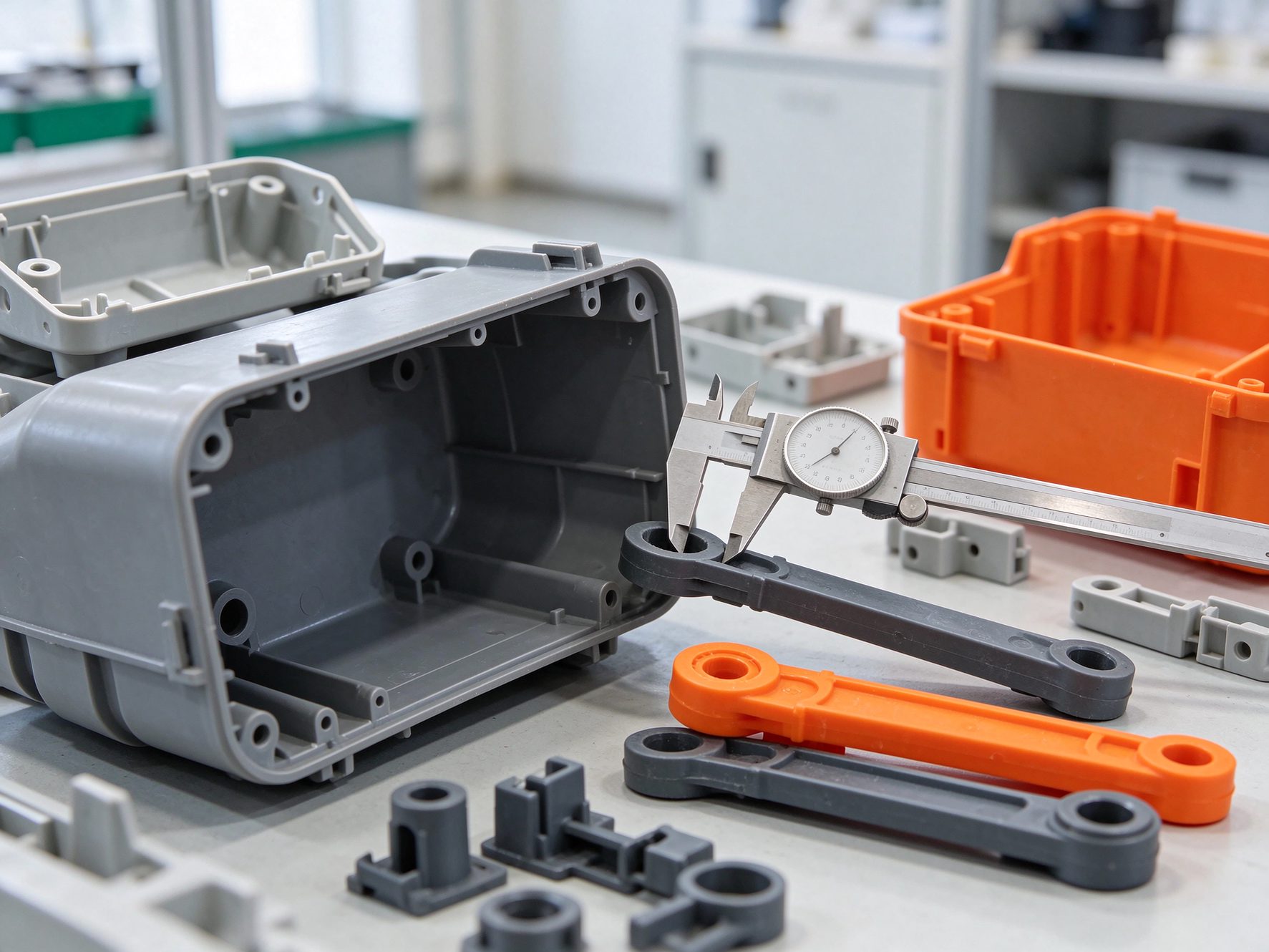
Gray and orange housing halves, joint links and snap-fit clips on a bench, dial caliper checking a molded component with ribs and bosses visible
Multi-part assembly checked with a caliper: ribs, bosses, links and mating surfaces are reviewed before fit approval.
Toy structure review items include joint retention, small-part detachment risk, magnet retention, drop and impact behavior, and repeated-movement fatigue. These are written into the design review and project validation plan. A design review or supplier self-check does not replace applicable third-party testing or finished-product certification.
Quality and compliance support

Material Documentation, QC and Market-Specific Requirements

The quality program separates what the manufacturing side provides from what the brand or importer remains responsible for. Clear boundaries keep the project traceable without overstating certificates we do not issue.

Material documentation

Resin and batch records

  • Resin grade verification against the agreed specification
  • Supplier material data where available
  • Applicable REACH or RoHS documentation where the project supports it
  • Material batch identification and traceability
Manufacturing quality

Inspection and consistency

  • First article inspection on reviewed features
  • Dimensional inspection against drawing datums
  • Visual surface inspection under controlled lighting
  • Assembly and fit check, plus batch consistency review
Product-specific

Applicable market requirements

  • EN 71 requirements for applicable EU toy products
  • ASTM F963 and CPSIA for applicable US children's toys
  • RoHS where applicable to electrical and electronic equipment
  • Other chemical or product-specific requirements assessed per market
Responsibility boundary. Final product compliance depends on the complete design, age grade, materials, manufacturing process and destination market. Goldcattle supports project-specific material documentation and manufacturing records, and cooperates with testing using samples and data. Third-party testing and final product certification are agreed according to the buyer's requirements and regulatory responsibilities. We operate under an ISO 9001:2015 quality management system; we are not a notified body and do not issue CE, CPC or finished-toy safety certificates. Finished-product compliance, age grading and market documentation remain with the brand or importer placing the product on the market.
Project flow

Manufacturing Workflow From Inquiry to Delivery

The flow follows a single project rather than two separate service entries. Design files, requirements and approved samples move through the same review and record path.

01

Submit design and requirements

STEP, IGES, STL, PDF, sample or a short structure brief, with quantity, audience and market notes.

02

Engineering and DFM review

Size, wall, structure, assembly, fit and manufacturing feasibility are checked against the file.

03

Material and process selection

Function, volume, appearance and applicable requirements guide material and route choice.

04

3D printed prototype

A sample validates appearance, dimensions, structure and function before tooling.

05

Mold development and T1 sampling

Mold structure is confirmed; first molded samples are reviewed with any needed design changes.

06

Production and quality inspection

Parts are made to the approved drawing, material and agreed inspection requirements.

07

Finishing, packaging and delivery

Surface treatment, assembly and packaging follow the confirmed project scope before delivery.

Why work with us

Why Toy and Consumer Product Buyers Keep the Project Here

The comparison is framed around common purchasing problems and the corresponding manufacturing support, not unverified company claims.

Common buyer problemCorresponding Goldcattle support
Prototype supplier and production supplier are separate3D printing and injection molding connected in one engineering flow
Uncertain mold investment for a new productDFM and process route review before tooling commitment
Injection parts vary in appearance between lotsMold, material and visual inspection planned around the cosmetic target
Different materials are needed for different functionsABS, PP, PC, PC/ABS, PA, POM, TPE/TPU and printed families reviewed per role
Design still needs structural changesEngineering review against drawing, with prototype validation before locking
Coordinating several part suppliers is costlyIntegrated manufacturing processes under one project record and RFQ path
Questions buyers ask

Frequently Asked Questions

Can you manufacture custom plastic toys from CAD files?
Yes. We work from STEP, IGES, STL, OBJ or 3MF files, a 2D drawing, an approved sample or a concept brief. The engineering review checks geometry, wall thickness, joints, fit, material and process before a prototype or production part is quoted. For licensed or copyrighted characters, the buyer confirms manufacturing rights. We do not design a complete toy product from a brand concept as an ODM service; our scope is custom part manufacturing, DFM support, prototype validation, tooling and repeat production based on the buyer's approved design.
Do you offer both 3D printing and injection molding for toys?
Yes. 3D printing is used for appearance models, functional prototypes, design iterations and low-volume parts without an injection mold. Injection molding is used for stable repeat production once the design and demand model are suitable. The same engineering team can review the prototype, propose the material and process, then transition the approved drawing to mold development and production. Process selection follows part geometry, material, appearance target, target volume and expected repeat orders rather than a fixed quantity rule.
When should I choose 3D printing instead of injection molding?
3D printing usually fits one-off samples, design changes, complex geometry and small or bridge batches where mold investment is not yet justified. Injection molding usually fits a design that is frozen, a part that repeats in stable lots, and a target volume where tooling cost can be spread across units. The crossover depends on part size, wall design, material, mold structure, cavity count and demand forecast, so there is no single fixed unit threshold. Share your target volume and files and we review the most practical route against tooling cost, unit price and expected demand.
Can you manufacture collectible figures and articulated toys?
We support collectible figures, art toys, articulated action figures, game miniatures and display models. Ball, hinge and pin joints are reviewed for retention, clearance and repeated movement; separate limbs, heads and accessories can be printed or molded as sub-assemblies. Finishing options include primer, base coat, detail painting, clear coat, dye and surface smoothing where the process allows. Adult collectibles and child-handled toys are scoped differently; state the intended age grade and audience so material, joint treatment and compliance path are reviewed correctly.
What plastics are suitable for injection-molded toys?
Common injection-molding families reviewed for toy and consumer parts include ABS, PP, PC, PC/ABS, PA nylon, POM and TPE/TPU. ABS suits rigid structural parts and appearance finishes; PP suits lighter covers and some hinge structures; PC suits impact-resistant or transparent parts; PC/ABS balances strength and molding; PA and POM suit wear or sliding features; TPE and TPU suit soft-touch components. The specific resin grade, color masterbatch and additives are selected against function, appearance and any applicable market requirement. A material name alone does not establish suitability for a children's toy.
Can you manufacture custom consumer product housings?
Yes. We make custom plastic enclosures, protective shells, appliance covers, handles, grips, knobs, snap-fit components and functional accessories for consumer product brands, developers and OEM purchasing teams. Housing review covers wall balance, ribs and bosses, draft, gate and parting line, snap-fit retention, mounting features and cosmetic surface. Prototype housings can be 3D printed for fit and appearance review before steel tooling; approved designs move to injection molding for repeat production. Electronics-specific requirements such as flame rating are assessed against the buyer's specification and destination market.
Can you produce prototypes before building an injection mold?
Yes. A 3D-printed or otherwise produced prototype lets the buyer check shape, scale, color, joint movement, snap-fit and assembly before tooling is cut. Design changes at this stage are faster and lower cost than mold modification after steel is made. The prototype is reviewed against the approved drawing, then the final design is locked for mold development and T1 sampling. We keep the approved file on record so later production parts and repeat orders follow the same geometry and fit where possible.
Can you support ASTM F963 and EN 71 requirements?
We support the manufacturing side of a toy project: material data, production records, samples and cooperation with third-party testing arranged under the buyer's market requirements. ASTM F963 and CPSIA apply to applicable US children's toys; EN 71 and the EU Toy Safety Directive apply to applicable EU toys. Goldcattle is not a notified body and does not issue CE, CPC or finished-toy safety certificates. Final product compliance, age grading, third-party testing and market documentation remain the responsibility of the brand or importer placing the product on the market. We flag design and material risks in the project review.
Do you provide material documentation for RoHS and REACH?
We can provide resin grade verification, supplier material data, batch identification and applicable REACH or RoHS documentation where the material and project support it. RoHS applies to electrical and electronic equipment and is not a general toy safety mark; a non-electronic plastic toy should not be described as RoHS-compliant as proof of toy safety. REACH covers applicable chemical substance restrictions for the supplied material. The exact documents available depend on the resin grade, supplier and project, and are confirmed on the RFQ rather than promised as a blanket certificate for every part.
Can you paint, assemble and package custom toys?
Post-processing and assembly are handled according to the confirmed project scope. Common steps include surface smoothing, primer and paint, clear coat, dye, pad or screen printing where applicable, magnet or pin insertion, multi-part assembly and pack-out. Color can be matched to Pantone or a supplied sample for painted parts. Assembly fit, joint movement and visual finish are checked before packing. Detailed finishing, assembly and packaging requirements should be listed on the inquiry so the quote reflects the actual labor and materials involved.
Who owns the injection mold after production?
Mold ownership, custody and maintenance are agreed in the project contract before tooling starts. A buyer-paid mold is generally held on file for repeat production under the agreed terms; the drawing, mold record and part files are kept for consistent reorders. Tooling terms, storage, maintenance and any amortization arrangement are stated in the quotation and agreement. Licensed character tooling follows the rights confirmed by the buyer. We recommend stating ownership and reorder expectations early so there is no ambiguity after the mold is built.
How do I get a quote for custom toy components?
Send the 3D model or drawing, part name and function, preferred material or feel, color and finish, target quantity and repeat cadence, intended age grade or audience, target market, and any required testing or documentation. Note assembly, packaging and critical fit features. With these inputs the engineering team reviews feasibility, proposes process and material, and returns a condition-based estimate. You do not need a complete compliance test plan on the first inquiry; material, age grade and market are recorded so the right compliance path can be discussed in the review.

Send your toy or consumer product part for a process review

Share the model or sample, part function, material or feel, color and finish, target volume, intended audience or age grade, and target market. The review proposes process and material, notes DFM and compliance points, and returns a condition-based estimate.

One inquiry per project; NDA available before file exchange. Mold ownership, required documents and any testing arrangement are confirmed in the project agreement.

See the 3D printed toy sub-page for figure and articulation detail →
Wei Chen
Manufacturing Engineer, Xiamen Goldcattle Plastic & Metal Products Co., Ltd.

Wei reviews toy and consumer-product drawings for wall balance, ribs, snap-fit, joints, gate and parting line, material route and inspection plan, and follows a part from DFM review and prototype to T1 sample and repeat production. Founded in 1998 in Xiamen, Goldcattle produces custom metal and engineering-plastic parts and tooling to customer drawings under an ISO 9001:2015 quality system. Related pages: custom 3D printed toys, injection molding services, 3D printing services.

Recommended Reading