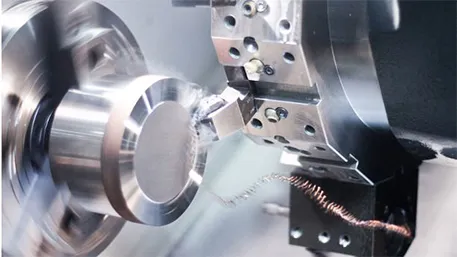
Custom Two-Shot Injection Molding for Multi-Material Parts
You need one plastic part with two materials — a rigid body and a soft grip, or two colors in one piece. The real questions: can the two grades bond and stay bonded, which 2K mold route fits the part, and how is the interface validated in production? This page answers those before you send a drawing.
Two-Shot Basics in One Table
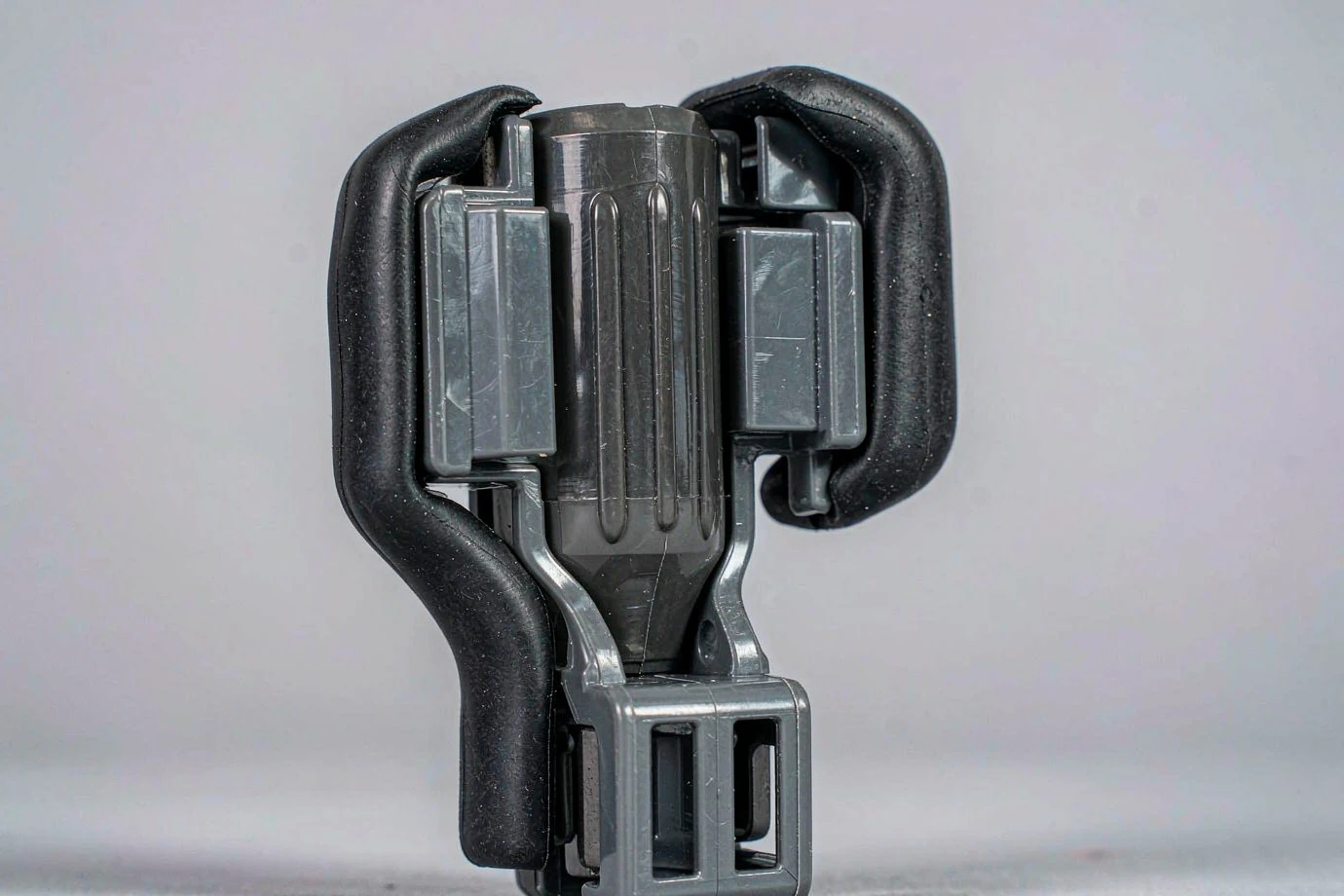
Two-shot injection molding makes one part from two materials in a single machine and mold. It is the right route when a soft touch, a seal or a second color must be integrated into a rigid plastic component and the volume justifies dedicated tooling. Success depends on the exact resin grades, the interface design, the 2K mold route and interface validation in trials — not on material family names alone.
What Two-Shot Molding Actually Does
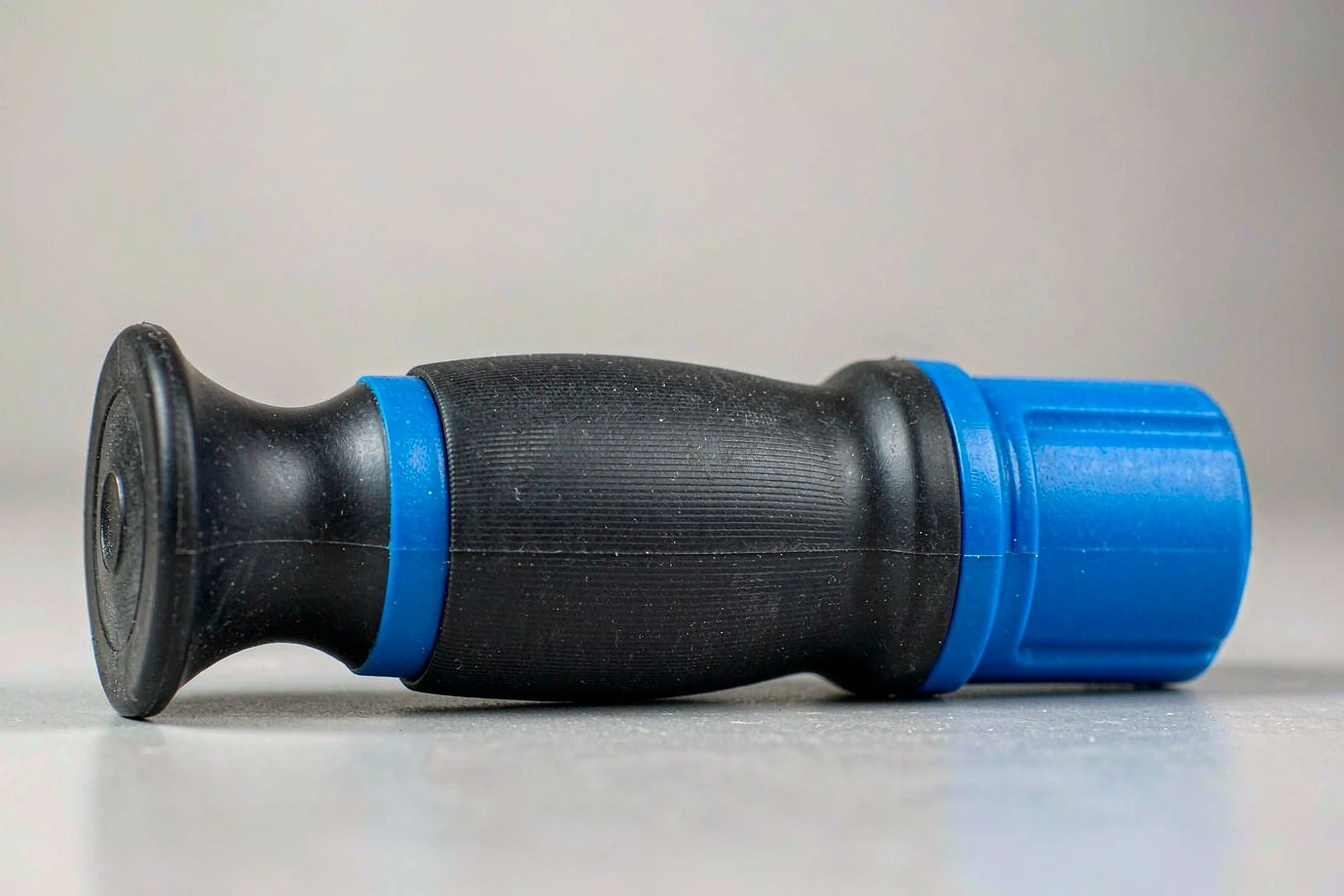
In a two-shot cycle, the first material is injected to form the rigid substrate. The mold then rotates, indexes or moves a core so a second cavity takes over, and the second material is injected against or around the first shot. The part leaves the tool as one component with two material zones. This replaces a separate bonding, overmolding or assembly step when the design and volume support it.
Resin Grades Decide Whether Two Materials Bond
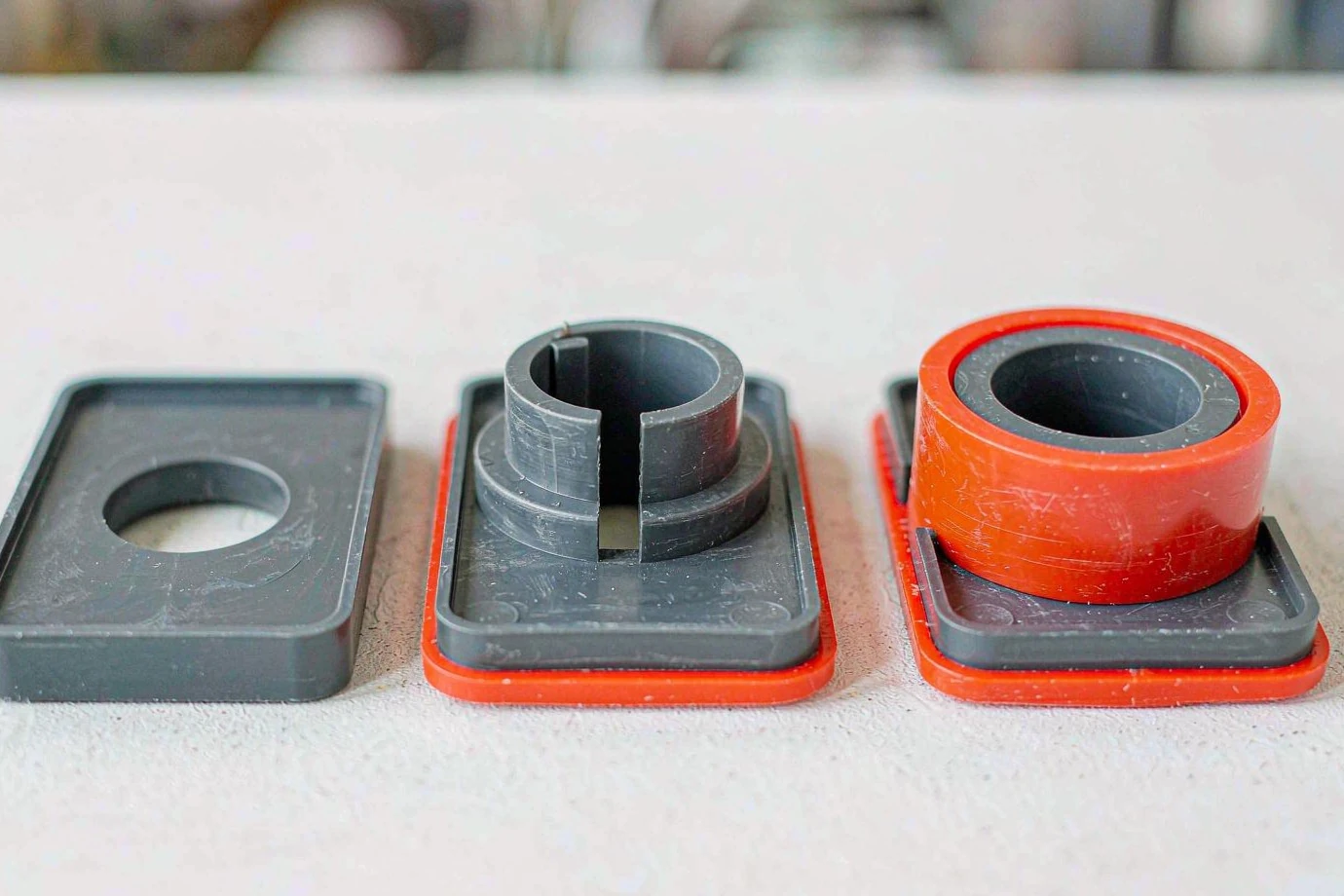
Buyers often arrive with two polymer families already chosen and ask whether they will bond. The honest answer starts with the exact grades, not the family names. Resin manufacturer, additives, reinforcement, colorant, processing temperature and interface geometry can all change the outcome. Two grades of the same named family can behave differently.
Resin maker and grade let us check compatibility instead of guessing from "ABS" or "TPE".
Second-shot temperature and substrate heat history affect whether a bond forms or the part cracks.
Soft touch, sealing or wear resistance sets the material qualification plan before tooling.
Candidate Material Pairings We Review
The pairs below are candidates for engineering review, not a list of combinations we have already qualified for every application. Each depends on the exact grades and the part.
| First shot, rigid | Second shot | Typical use | Engineering watch point |
|---|---|---|---|
| ABS | ABS-bonding TPE | Handles, housings, buttons | Use a grade made for ABS; hardness and additives vary |
| PC/ABS | Compatible TPE | Electronics cases, interior trim | Bond, thermal window and shrinkage mismatch |
| PC | PC-compatible TPE or TPU | Device housings, protective parts | Substrate heat history and stress cracking risk |
| PP | PP-bonding TPE or TPV | Appliance parts, caps, consumer goods | Usually needs a dedicated bonding formulation |
| PA6 / PA66 | PA-compatible TPE or TPU | Industrial grips, functional parts | Moisture, reinforcement and pre-drying behavior |
| Same resin family | Second-color compatible grade | Buttons, two-color shells | Colorant effect on flow, shrinkage and boundary look |
Chemical Adhesion or Mechanical Interlock
Two-shot parts hold together in two ways, and a robust design often uses both. Understanding which one carries the load helps you judge a supplier's answer to "will it peel?"
The two materials form an interface bond in the right temperature and processing window. It depends on the specific grades and conditions.
Holes, undercuts, ribs, grooves and overmolded edges physically lock the soft material to the substrate, reducing reliance on adhesion alone.
A supplier who answers delamination questions only with "we use high-quality material" is skipping the real controls: grade choice, interface geometry, substrate surface, the second-shot window and a shut-off that holds the boundary. We treat those as the variables to review and test.
Interface Geometry That Survives Daily Use
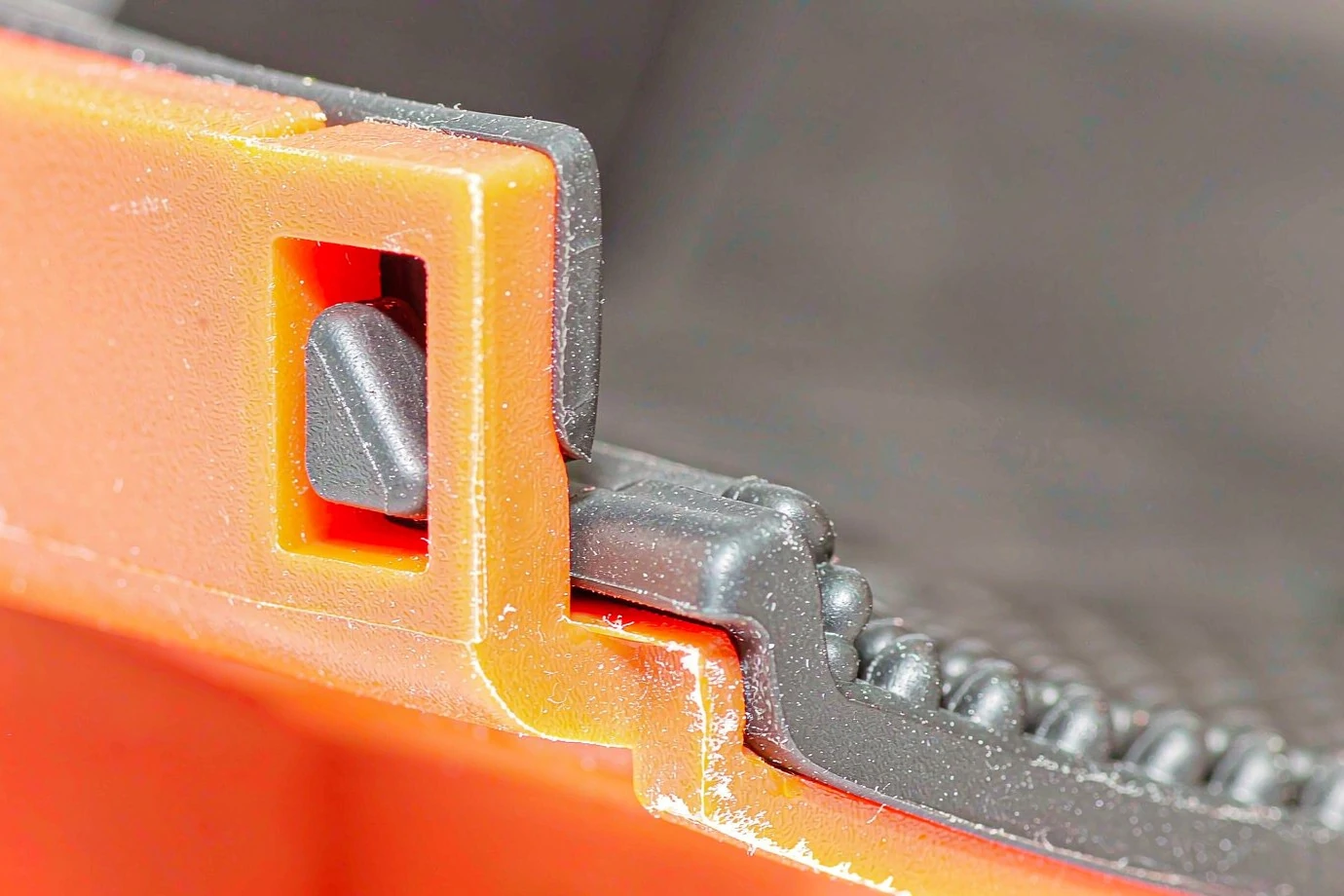
Interface design is where a two-shot part is won or lost. Six items are checked before the mold is released.
| Design item | What is checked |
|---|---|
| Interface geometry | Shape of the material boundary and how it resists separation |
| Bond area | Enough effective contact area for the load the part sees |
| Mechanical interlock | Holes, undercuts and ribs that add physical retention |
| Shut-off design | Control of the boundary and prevention of material flash |
| Thermal window | Matching first- and second-shot temperature behavior |
| Shrinkage and warpage | Different shrink rates and the distortion they can cause |
Three Routes for Placing the Second Material
Not every two-material part is made the same way. The route affects tooling cost, cycle time and the structures that are possible.
| Route | How it works | Typical fit |
|---|---|---|
| Rotary platen / index plate | After the first shot the mold rotates or indexes into the second-shot position | Two-color parts, soft-grip handles, housings |
| Core-back / moving core | A core withdraws to open space for the second material without full rotation | Parts where rotation is not practical |
| Sequential transfer / pick-and-place | First-shot parts move to another station or mold for overmolding | Low-to-mid volume or special structures |
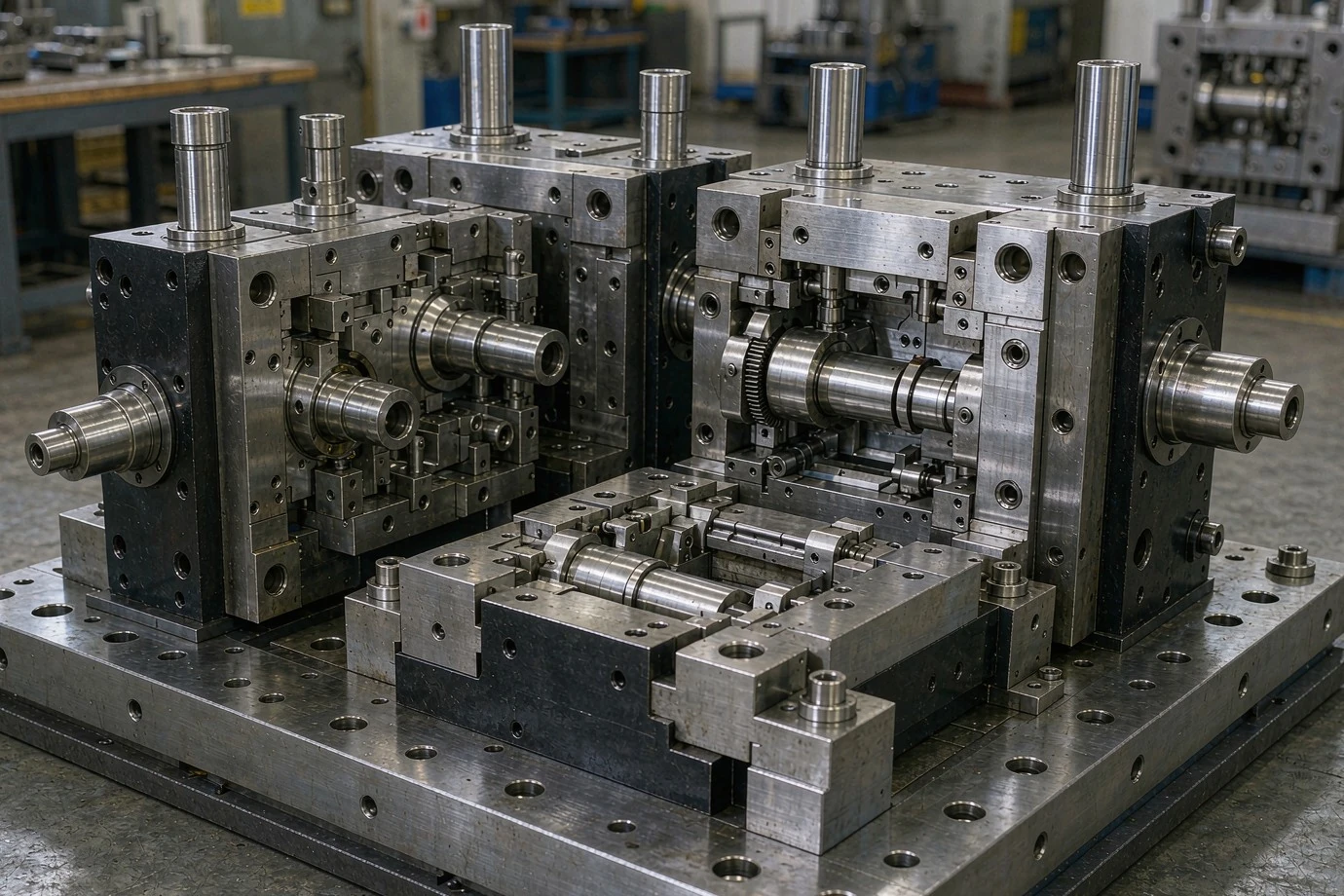
What a Two-Shot Mold Must Control
Both impressions must register so the second shot lands on the intended substrate zone.
Placement controls fill balance and the visible boundary between materials.
Chosen by material, color change needs and cost.
Separate circuits manage the different thermal needs of each shot.
Holds the material boundary and limits flash.
Removes the part without distorting the first-shot substrate.
Dual Injection Units and What They Determine
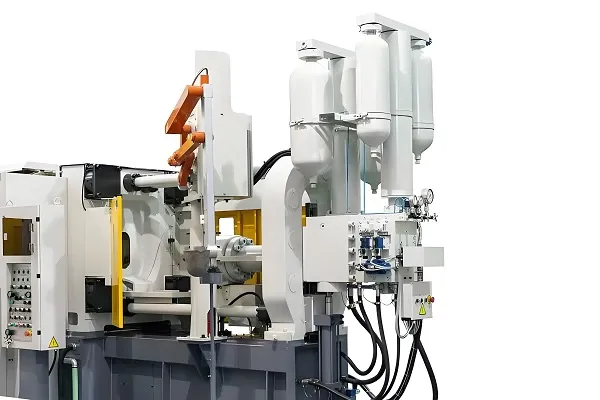
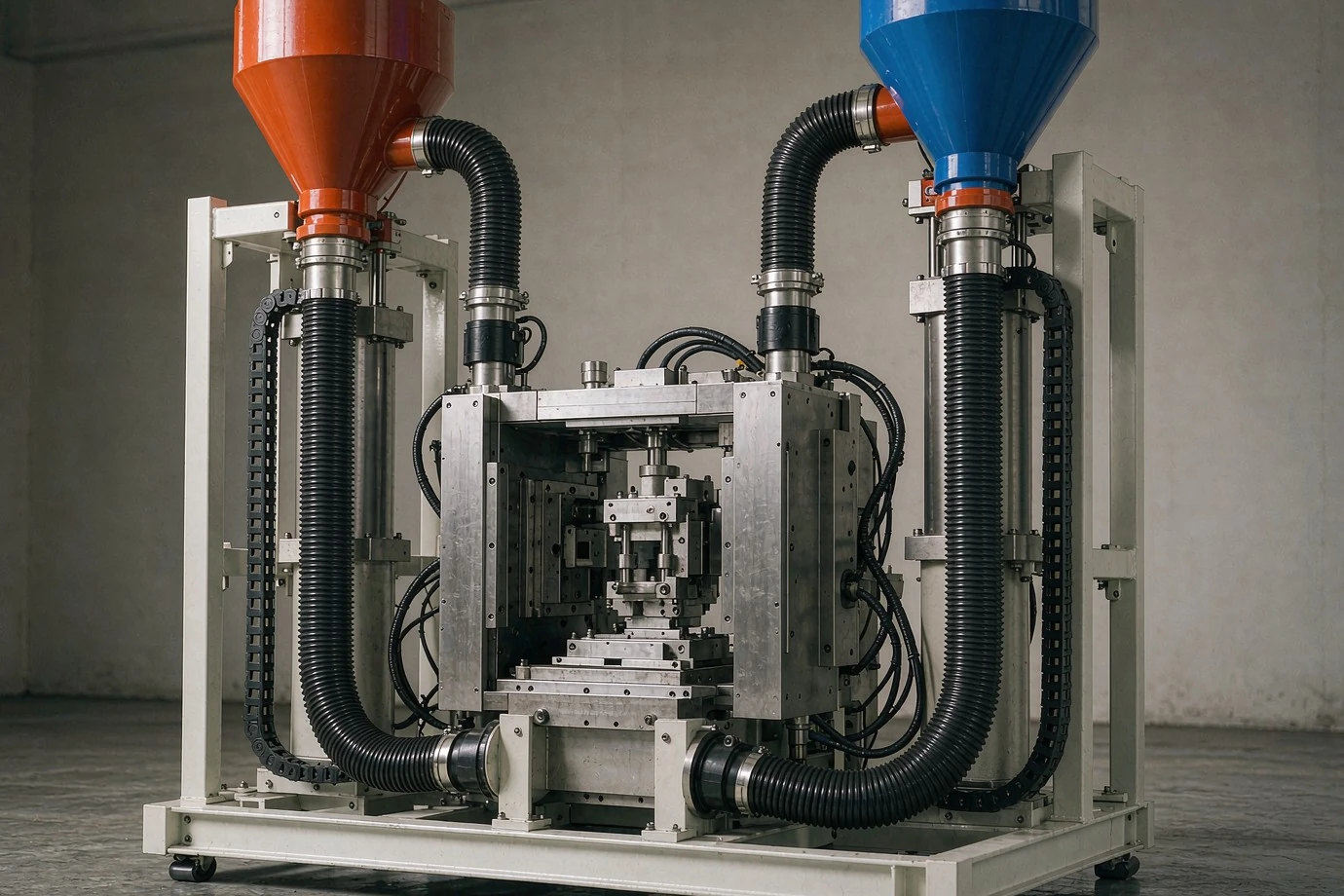
Two-shot production needs a machine with two injection units and a tool that can rotate, index or move a core. What matters for a quote is the configuration that fits your part — not a single clamping-force range quoted for the whole plant.
| Parameter | How it is confirmed |
|---|---|
| Injection units | Two independent units sized to each shot's material and volume |
| Clamping force | From projected part area, cavity count and material pressure |
| Shot capacity | Each unit checked against its own shot weight |
| Platen configuration | Rotary or index capability matched to the chosen 2K route |
| Part size range | Established from the mold envelope and the specific machine |
| Automation | Defined by cycle time and part handling needs |
DFM Items We Check Before Cutting Steel
This is what "we provide DFM" means in practice for a two-shot part. Each item is reviewed before tooling, with the value tied to the resin grades, geometry and critical features.
| Check | Why it matters |
|---|---|
| First-shot wall thickness | Avoids short shots and distortion |
| Second-shot coverage | Controls material use and appearance |
| Interface geometry | Improves bond and retention reliability |
| Draft angles | Prevents ejection damage and surface drag |
| Gate location | Reduces wash marks and weak weld lines |
| Venting | Lowers trapped air and burn marks |
| Shut-off surfaces | Controls flash and material crossover |
| Cooling strategy | Manages shrinkage, cycle time and warpage |
| Tolerance stack-up | Protects assembly dimensions |
| Material shrinkage | Reduces structure distortion between shots |
From T0 to T1: How a 2K Tool Is Proven
A two-shot tool is proven on real material, not on appearance alone. Trial stages separate what a shape can show from what a molded part must prove.
Check fill, interface formation, boundary position and basic dimensions with the actual grades.
Adjust gates, shut-offs and conditions; repeat the interface and dimensional checks.
Build samples against the drawing and agreed acceptance plan.
Freeze material and process settings, then monitor the run.
Four Groups of 2K Part Inspection
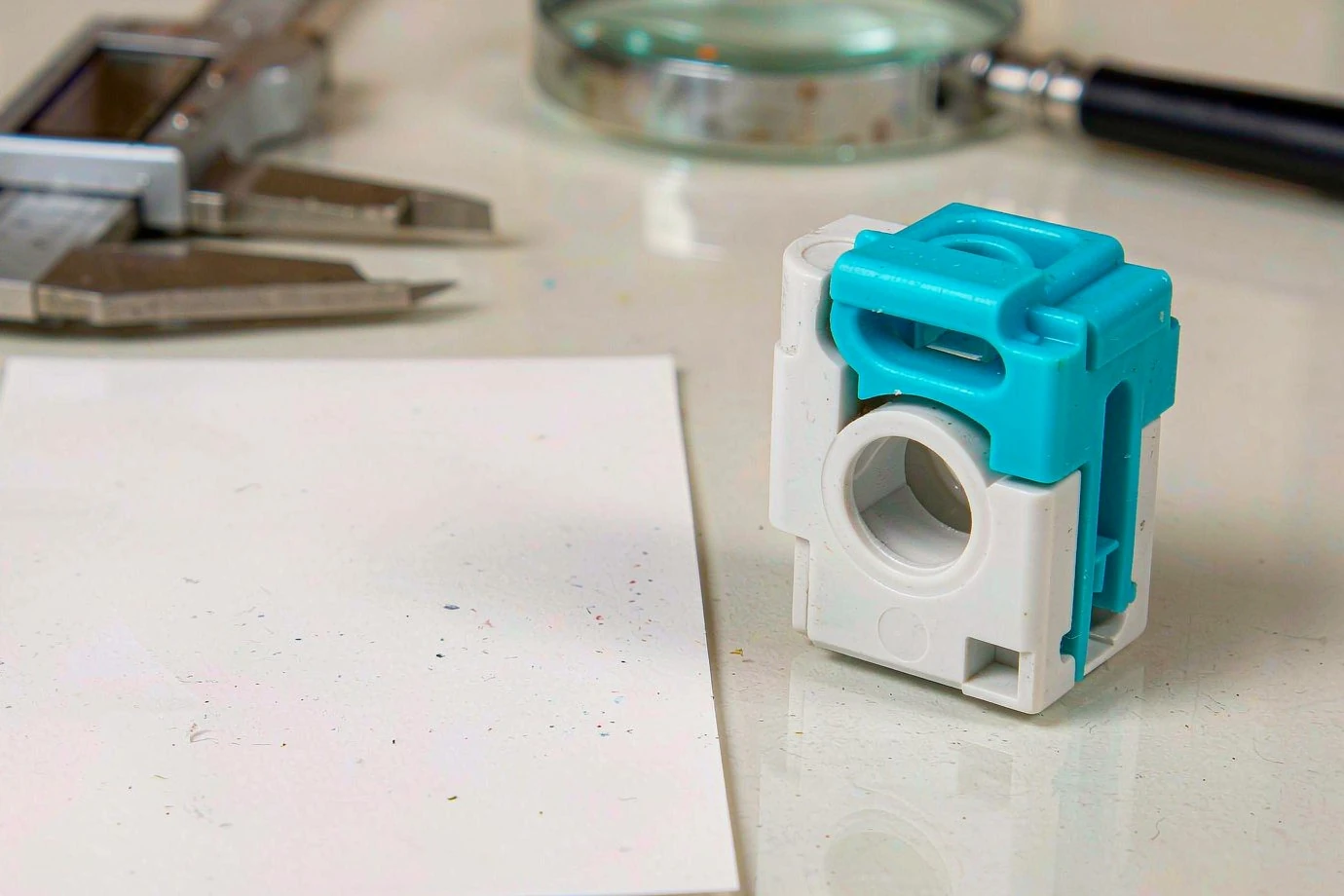
Inspection is organized by what can fail, then matched to the part's function and the customer's acceptance plan.
| Category | What is checked |
|---|---|
| Dimensional | Outer size, key holes, interface position and drawing tolerances |
| Bond and interface | Separation, layer integrity and mechanical retention at the boundary |
| Appearance | Flash, color difference, misaligned boundary and surface defects |
| Functional | Grip, assembly, sealing or other project-specified behavior |
Test methods are selected by function: peel, pull-off, shear or retention, cross-section examination, visual inspection, or a leak test only when the part has a sealing function and an agreed standard. Test direction, conditions and acceptance limits are defined before validation. We do not state a fixed N/mm bond figure without a defined test and a real part.
Three Different Lead Times, Not One
Projects slip when a sample date, a tooling date and a production date are treated as one promise. We keep them separate and confirm each against the actual program.
Time for a shape or fit model such as a 3D print or CNC sample. It does not prove a 2K bond.
Mold design, steel cutting, T0/T1 trials and correction. A dedicated 2K tool usually takes longer than a simple single-shot mold.
Build time after samples are approved, material and settings are frozen, and the acceptance plan is set.
Documents Supplied With a 2K Project
Documentation is agreed against the drawing and the customer's plan. Available items can include:
For the grades and lots actually used
Against the approved drawing and plan
Key and interface features
From monitored production runs
Before release
Where it applies and the customer requires it
When Two-Shot Helps and When It Does Not
Two-shot is not the best answer for every two-material part. Matching the route to the requirement is part of the engineering review.
| Part requirement | Suggested route | Reason |
|---|---|---|
| Rigid body + soft grip | Two-shot or overmolding | One-piece ergonomic structure |
| Rigid body + functional seal region | Two-shot, with function validation | Integrated interface if it passes testing |
| Two-color buttons | Two-shot | Avoids painting or later assembly |
| Low-volume two-material part | Pick-and-place overmolding | Lowers dedicated 2K tooling investment |
| Plastic + metal insert | Insert molding | Fits metal integration needs |
| Two separate plastic pieces | Separate molding + assembly | Easier inspection and service |
What Sets a Two-Shot Tool Quote
Instead of a fixed price, these are the variables that form a two-shot quotation.
| Cost driver | Effect on the quote |
|---|---|
| Mold structure | Rotary, index or core-back complexity |
| Material pair | Resin and elastomer price and compatibility work |
| Tool steel | Mold material and life requirement |
| Cavity count | Output per cycle and tool size |
| Part size | Mold envelope and machine tonnage |
| Overmold coverage | Amount of second-shot material |
| Cycle time | Output per hour |
| Bond validation | Sample and functional test requirements |
| Surface requirement | Texture, gloss and appearance grade |
| Production volume | Tooling amortization and automation value |
Where Two-Shot Parts Fit
We review multi-material parts by structure rather than by industry label. The first four groups are the most common requests.
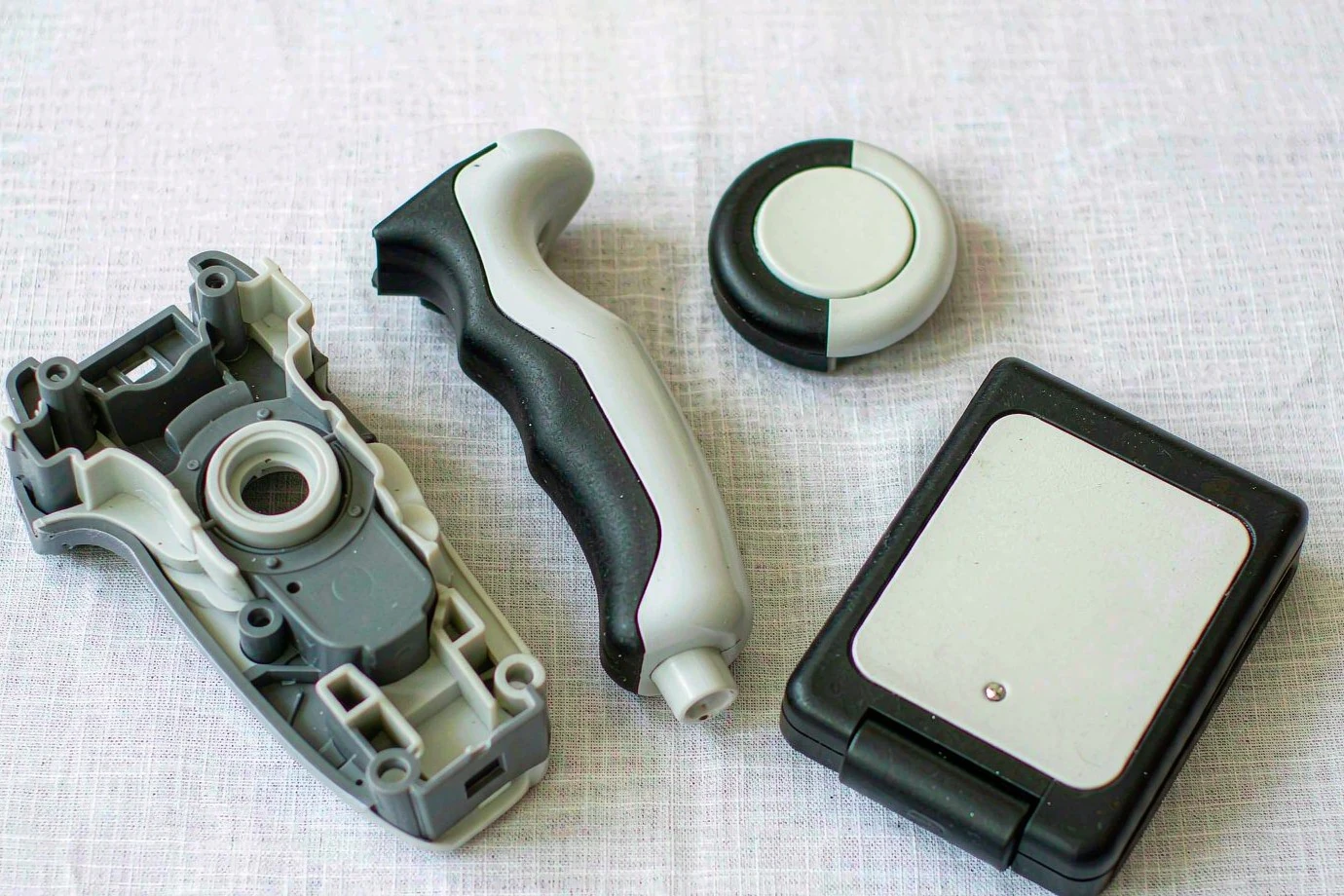
Power-tool grips, ergonomic handles, control knobs, protective grip surfaces. Usually rigid ABS or PC with a selected TPE or TPU.
Device cases, covers, soft-touch enclosures and protective interfaces, where appearance and boundaries matter.
Buttons, soft-touch controls and trim parts, where pairing, color consistency and appearance are reviewed.
Knobs, buttons, multi-color panels and handles, where feel and long-term use matter.
Integrated soft seal regions and damping parts, where interface and compression need functional validation.
Equipment grips and two-material parts, where material suitability and cleaning conditions are confirmed per project.
One Team From Resin Selection to Molded Parts
For a two-shot program, buyers rarely want material, mold and molding handled by parties who do not answer to each other. Our value is one engineering team across the chain.
Mold design, CNC, EDM and grinding in our own shop.
Grade-level compatibility and interface planning before steel is cut.
Trial and production under one quality system.
Design, molding and quality questions routed through one team.
Two-Shot Molding Questions Buyers Ask
What is two-shot injection molding?
Is two-shot molding the same as overmolding?
Can ABS and TPE be molded together?
Can PC and TPU be two-shot molded?
Which materials can be used in two-shot molding?
Does two-shot molding require special equipment?
How is bonding strength tested on a two-shot part?
Is two-shot molding suitable for low-volume production?
How do you prevent delamination in two-shot parts?
What information is needed for a two-shot quote?
Do you make the two-shot mold in house?
What quality documents can you provide for two-shot parts?
Send Your 2K Project for Engineering Review
Send your CAD model, the two materials and the expected volume. We can review grade compatibility, the interface and mold route, and define the DFM, trial and validation plan for your part.
Send CAD for DFM Review →Free DFM review · Quick initial response · Full report after review
Request an Injection Molding Quote →