Custom Metal Fasteners and Threaded Components Made to Your Drawings
Goldcattle manufactures custom CNC-machined metal fasteners and precision threaded parts for industrial equipment, machinery, electrical hardware and OEM assemblies. Drawing-based customization, prototype machining and repeat production are reviewed per project.
At a glance
On this page
Overview
Manufacturing
Quality & sourcing
Custom Fasteners vs Standard Fasteners
Custom fasteners are made to a customer's drawing: non-standard sizes, special thread forms, materials, finishes and inspection requirements. Standard fasteners are catalog parts made to a fixed specification and supplied by size and quantity. This page is about the first category.
The two markets work differently. Standard fasteners compete on catalog availability and unit price at volume. Custom threaded parts are defined by the drawing, the thread callout, the material grade and how the part fits an assembly. A supplier who stocks standard screws is not automatically set up to machine a non-standard threaded part.
Drawing-based
Defined by your 2D drawing or 3D model, thread class, material and inspection scope.
Catalog-based
Defined by a standard number, nominal size and quantity, with little design input.
Assembly-driven
Custom parts often must match mating threads, bores and spacing in your assembly.
Machined
Thread cutting, thread milling and tapping suit non-standard and small-batch work.
Goldcattle focuses on drawing-based CNC machining of custom threaded parts. If your need is a high-volume standard screw or bolt made by cold heading or thread rolling, that is a different process and is reviewed separately.
Custom Fastener and Threaded Part Types We Make
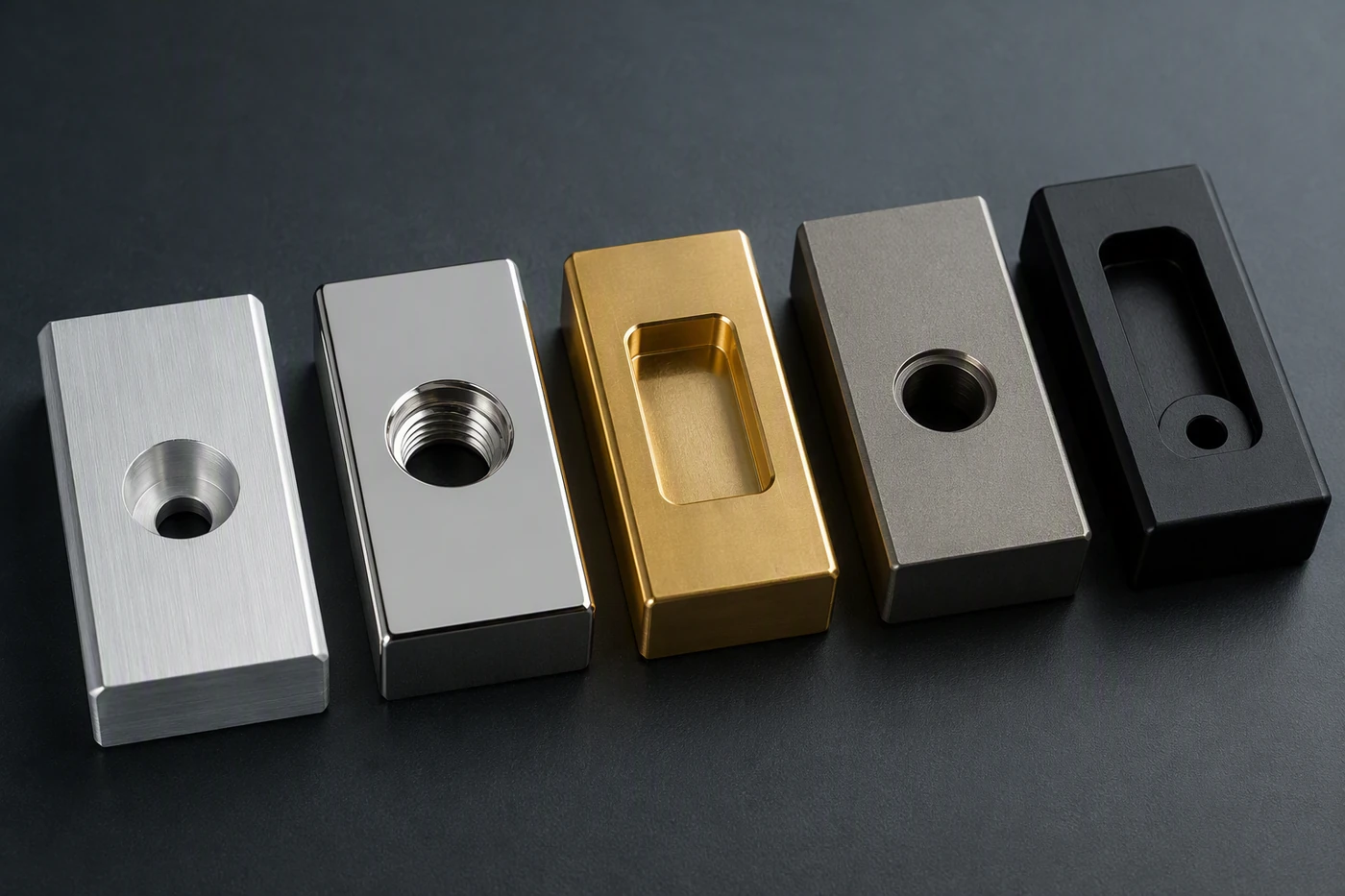
Below are the part families that best match drawing-based CNC machining. The list is a guide, not a fixed catalog; each part is confirmed against its drawing.
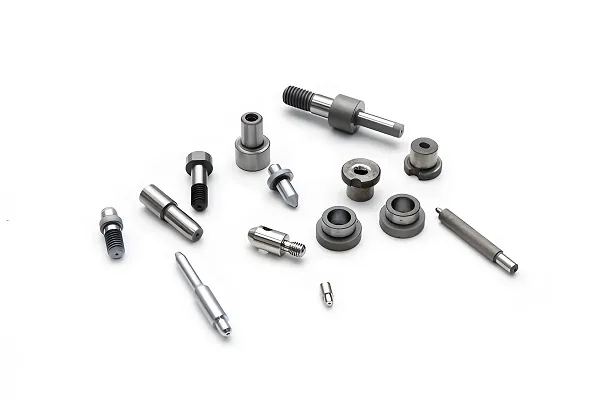
Threaded studs and shafts
Single or double-ended studs, threaded shafts and locating pins made to length and thread callout.
Standoffs and spacers
Brass, aluminum or steel standoffs and spacers with internal or external threads and custom lengths.
Threaded bushings and sleeves
Precision bushings, sleeves and connectors with controlled bore, shoulder and thread features.
Shoulder screws and special bolts
Custom shoulder sizes, special heads and non-standard lengths reviewed by drawing.
Threaded connectors
Brass and stainless steel threaded connectors for electrical and industrial hardware.
Micro threaded parts
Small-diameter screws, pins and threaded parts produced by Swiss-type turning where suitable.
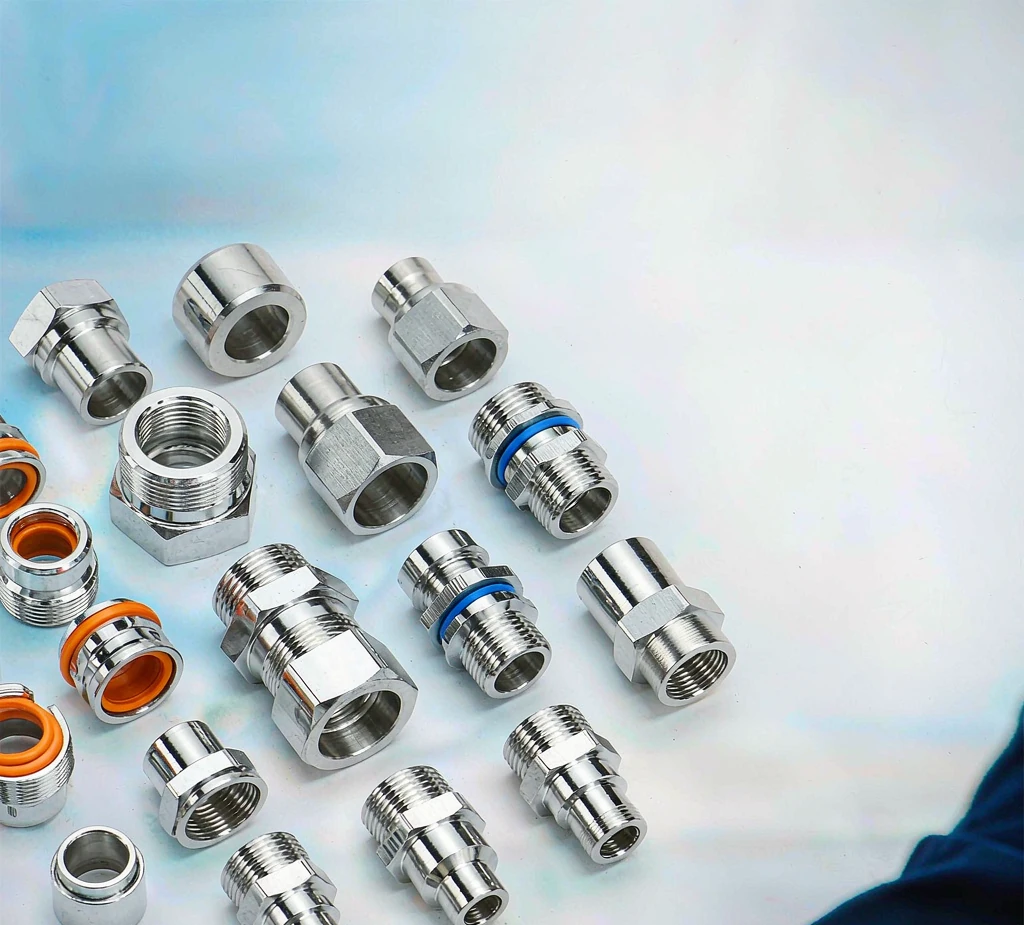
For brass fittings, adapters and fluid-connection hardware, see our custom hardware fittings page. That topic is kept separate from fasteners and threaded assembly parts.
Thread Specifications and How to Define Them
A thread callout is more than a nominal size. To quote and inspect a threaded part, each of the following needs to be clear on the drawing or in the RFQ.
Swipe the table to see all columns.
| Parameter | What to specify |
|---|---|
| Thread system | Metric ISO profile or Unified inch profile |
| Nominal size | For example M6, M8, 1/4 in |
| Pitch or TPI | Pitch in mm or threads per inch, including fine variants |
| Thread class | For example 6H, 6g, 2A, 2B |
| Direction | Right-hand or left-hand |
| Internal or external | Which mating part and which gauge apply |
| Thread length and depth | Effective engaged length and full-thread depth |
| Engagement | Required thread engagement in the assembly |
| Thread end | Chamfer, relief groove or end structure |
Two example callouts
Metric internal thread: M8 × 1.25 - 6H. Unified external thread: 1/4-20 UNC-2A. These are examples of how a callout reads; the governing drawing and applicable standard decide the final requirement.
Common references include ASME B1.1 for Unified inch threads, ASME B1.2 for Unified thread gauging, and ISO 965 and ISO 1502 for metric tolerance and gauging. Listing a standard here does not mean Goldcattle holds every thread capability or gauge; we confirm the specific thread, tool and gauge for your part before committing.
We do not claim to support every international thread standard as a blanket statement. Tell us the thread on your drawing and we will confirm whether we can machine and inspect it for your quantity.
Materials for Custom Threaded Parts
Material choice affects machinability, corrosion behavior, conductivity and cost. The grade is not the same as a mechanical property class, so strength requirements are confirmed separately.
Swipe the table to see all columns.
| Material | Typical reason to choose | Common parts |
|---|---|---|
| Brass C360 | Good machinability and conductivity | Threaded connectors, terminals, standoffs |
| Aluminum 6061 | Easy to machine, lower weight | Standoffs, light-duty mounts, spacers |
| Aluminum 7075 | Higher strength for its weight | Loaded connection parts, reviewed by drawing |
| Stainless steel 304 | Suitable for many general environments | Studs, screws, general connectors |
| Stainless steel 316L | Better corrosion resistance in many media | Marine and outdoor threaded parts |
| Carbon steel / alloy steel | Mechanical strength, heat-treat options | Shafts and connection components |
| Titanium grades | High strength-to-weight ratio and corrosion resistance | Special lightweight connection parts |
Brass C360 vs stainless steel 316L
Swipe the table to see all columns.
| Consideration | Brass C360 | Stainless steel 316L |
|---|---|---|
| Machinability | Good | More demanding |
| Electrical conductivity | Good | Much lower |
| Corrosion | Depends on alloy and environment | Good in many environments |
| Weight | Lower | Higher |
| Points to review | Dezincification in some media | Galling during assembly |
A grade such as 7075-T6 does not by itself equal a bolt property class, and 304 stainless steel does not automatically match a specific fastener property class. Property classes such as those in ISO 898-1 or ISO 3506 are confirmed by material, process and mechanical testing as required.
Manufacturing Processes We Use
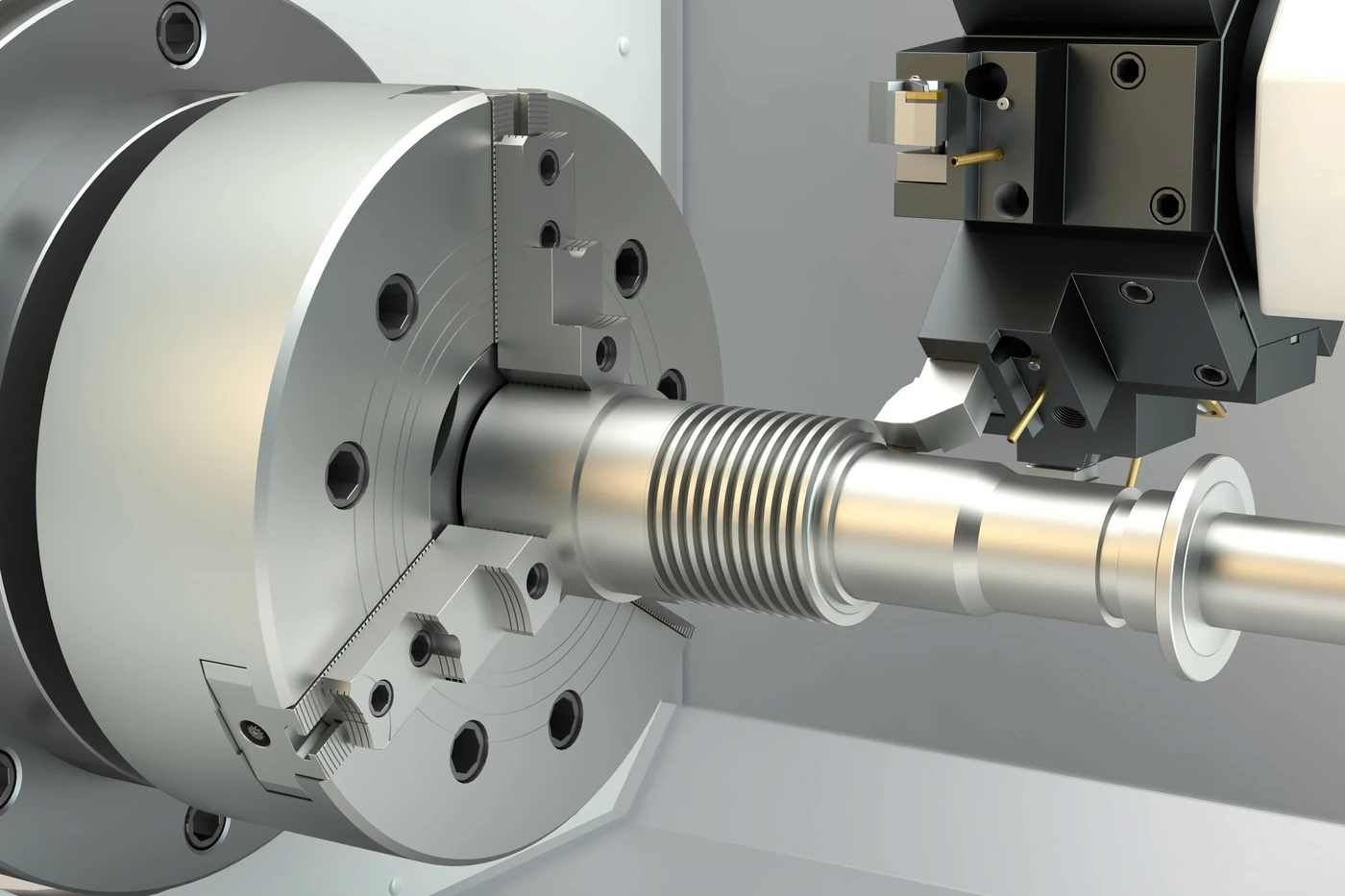
We focus on processes that suit non-standard geometry and small to medium quantities. The route is chosen by the part, not by a fixed rule.
CNC turning
Suits threaded studs, shafts, bushings, standoffs and round connectors. Controls outside diameter, shoulders and concentricity.
Swiss-type turning
Suits small-diameter and long, slender parts such as micro screws, pins and miniature standoffs.
CNC milling
Suits non-round heads, slots, cross holes and special mounting interfaces.
Thread generation
Thread cutting, thread milling and tapping are selected by thread form, size and quantity.
Thread cutting and thread rolling are different processes. Cutting, milling and tapping remove material and suit many non-standard and small-batch parts. Rolling forms threads by plastic deformation and needs suitable material, geometry and volume. We describe our machining-based routes here and do not present cold heading or thread rolling as in-house capability.
For more on our turning routes, see CNC turning services and Swiss-type turning services.
Surface Finishing and Thread Fit
A surface finish changes the effective size of a thread. If coating thickness is not planned, a mating nut or part may not assemble smoothly, the fit may become too tight, or the assembly torque may change.
Thread allowance
Confirm whether to leave material allowance so the finished thread still gauges correctly.
Masking
Agree which surfaces need masking, including critical threads and mating faces.
Post-finish gauge
Check the thread again after finishing where the fit is critical.
Hydrogen embrittlement
Consider this for high-strength plated steel parts and follow the applicable process controls.
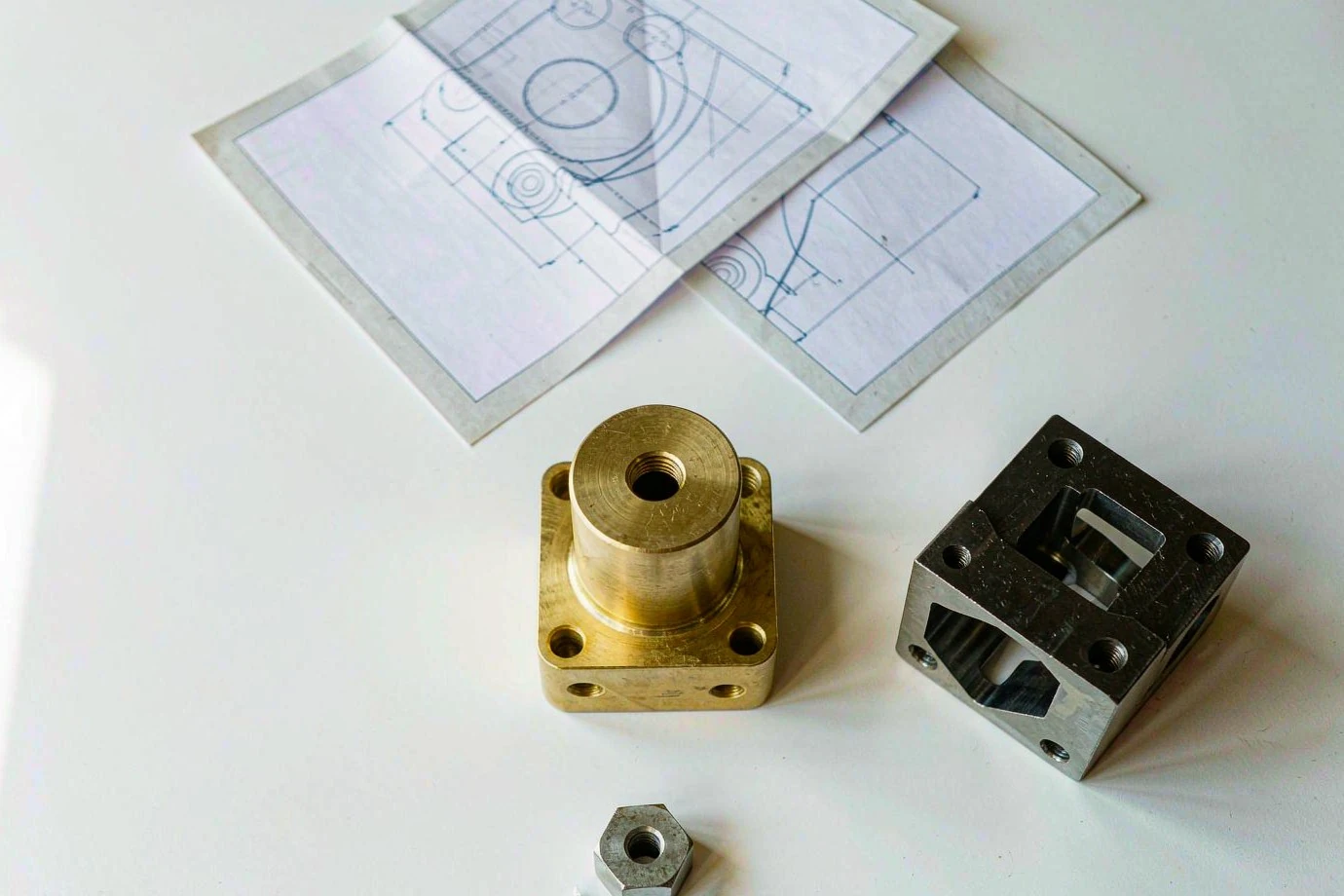
Finishes are reviewed per project and may include plating, passivation, black oxide or anodizing where applicable. We confirm what is available for your material and part before quoting. For background, see our plating overview.
Thread Inspection and Quality Control
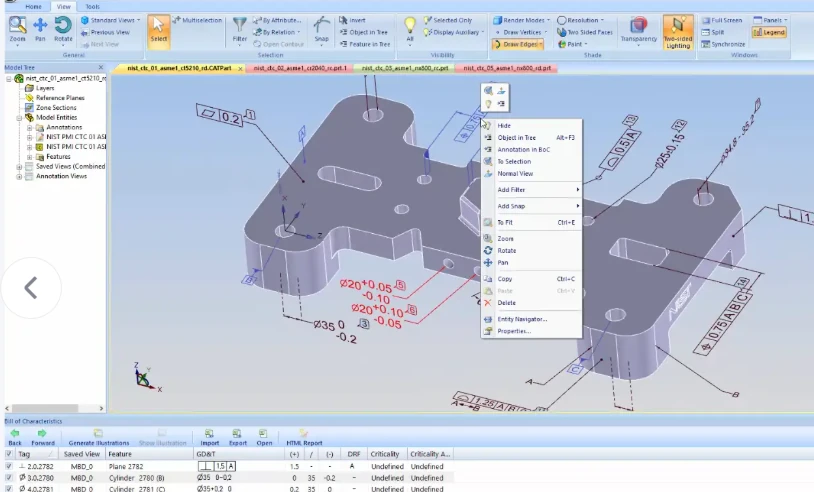
Thread parts are checked with the method that matches the specified thread class, such as GO/NO-GO plug or ring gauges and thread measuring equipment. Overall dimensions can be checked by caliper, micrometer or CMM. A CMM dimensional report is not a thread conformance report.
A threaded part has to do two jobs: match its printed dimensions and fit its mating thread. For that reason, thread acceptance follows the drawing and the relevant thread standard, not a general dimensional inspection alone.
Swipe the table to see all columns.
| Check | Typical method | Purpose |
|---|---|---|
| External thread | GO/NO-GO ring gauge | Confirm external thread conformance |
| Internal thread | GO/NO-GO plug gauge | Confirm internal thread conformance |
| Thread size | Thread measuring equipment | Check pitch diameter and pitch where specified |
| Overall dimensions | Caliper, micrometer, CMM | Check length, diameter and shoulders |
| Material | Material certificate | Confirm grade and batch where required |
| First article | FAI against the drawing | Confirm the first part before a run |
Inspection scope is agreed per project. We confirm which gauges and reports apply to your part and do not assume that a single inspection method covers every requirement.
Standards and Compliance Documentation
Buyers often refer to standards for thread form, mechanical properties and coatings. These are product or process requirements; they are not certifications that a supplier automatically holds. Confirm which ones apply to your part and what evidence you need.
Swipe the table to see all columns.
| Reference | Scope | How we treat it |
|---|---|---|
| ASME B1.1 / B1.2 | Unified inch thread form and gauging | Applied when the drawing calls for these threads |
| ISO 965 / ISO 1502 | Metric thread tolerance and gauging | Applied when the drawing calls for metric threads |
| ISO 898-1 | Mechanical properties of carbon and alloy steel fasteners | Reviewed against the required property class |
| ISO 3506 | Mechanical properties of stainless steel fasteners | Reviewed for stainless grades where applicable |
| ISO 4042 | Electroplated coating systems for fasteners | Reviewed for coating and hydrogen embrittlement control |
| ASTM F593 / F594 / F468 / F467 | Stainless and nonferrous fastener specifications | Followed where the purchase drawing requires them |
REACH, SCIP and RoHS: these are conditional requirements, not universal labels for every metal fastener. REACH concerns substances of very high concern in articles under defined conditions; SCIP is an information duty for certain articles placed on the EU market; RoHS applies to materials within its scope for electrical and electronic equipment. We confirm which rules apply to your product and provide documents for the exact materials used.
Our certification position: we hold ISO 9001:2015 as a quality management system certificate. Material certificates, first article inspection and dimensional reports can be provided according to the customer specification. IATF 16949, ISO 13485, AS9100, NADCAP and ITAR are not claimed here as held certifications. We do not describe our fasteners as REACH, RoHS, CE or ASTM certified as a blanket statement.
Applications and Buyer Types
Different industries specify custom threaded parts for different reasons. The table shows typical parts and what buyers usually check.
Swipe the table to see all columns.
| Buyer | Typical parts | Main checks |
|---|---|---|
| Industrial machinery OEM | Special studs, spacers, threaded shafts | Thread fit, dimensional repeatability |
| Electrical and electronics | Brass standoffs, terminals, threaded connectors | Conductivity, thread fit, finish |
| Automotive and mechanical suppliers | Location pins, connectors, bushings | Material batch, dimensional control |
| Marine and outdoor equipment | Stainless steel threaded hardware | Corrosion behavior, material choice |
| Precision instruments | Micro screws, threaded pins, bushings | Small-size accuracy, thread integrity |
Environment and assembly context matter. For marine hardware we do not treat stainless steel as immune to corrosion, and we review material compatibility rather than assuming one grade fits every environment.
Why Source Custom Fasteners from Goldcattle
Goldcattle is an integrated custom manufacturer. Founded in 1998 and based in Xiamen, China, we make components to drawings under one quality system.
Company
Xiamen Goldcattle Plastic & Metal Products Co., Ltd. Founded in 1998.
Six core processes
CNC machining, injection molding, mold making, 3D printing, die casting and sheet metal fabrication in house.
Machine base
100+ machines across the six processes in total, not 100+ CNC machines alone.
Related parts
We can also make mating parts such as brackets, sleeves and housings when an assembly needs more than one process.
Accuracy is stated carefully. A figure such as ±0.005 mm applies to qualified features after process review; it is not a blanket value for every part, and it is not a thread tolerance. Threads are inspected to the class on your drawing.
Goldcattle is not a ranked "best factory" and does not publish an industry ranking. This page describes what we can make and how we review it, not a claim to be the largest or cheapest supplier.
RFQ Checklist for Custom Fasteners
Send the drawing or 3D model, material grade, thread specification, quantity, critical dimensions and tolerances, surface finish and inspection needs. Add the assembly context so we can review manufacturability and thread fit before a quote.
Drawing or model
2D drawing or 3D CAD with revision and critical dimensions marked.
Thread callout
System, size, pitch or TPI, class, internal or external, and thread length.
Material and quantity
Grade, prototype quantity and expected repeat volume.
Finish and inspection
Surface finish, first article requirement and any specific reports.
Have a fastener drawing to review? Use the button below. We will check manufacturability and thread fit and confirm open points before quoting. You can also read our quote process.
Frequently Asked Questions
What types of custom metal fasteners can you manufacture?
We make drawing-based CNC-machined fasteners and threaded parts such as studs, threaded shafts, standoffs, spacers, bushings, shoulder screws and custom connectors. Each part is reviewed against its drawing, material and thread requirement before we confirm it fits our processes.
Can you manufacture custom screws and bolts from drawings?
We can review custom screw and bolt drawings, especially special heads, shoulders and non-standard dimensions. The manufacturing route depends on the geometry, quantity and strength requirement. High-volume cold-headed or rolled-thread standard fasteners are a different process and are evaluated separately.
What materials are available for custom threaded parts?
Common choices include Brass C360, aluminum 6061 and 7075, stainless steel 304 and 316L, carbon steel, alloy steel and titanium grades. Material grade is not the same as a fastener property class, so the required mechanical properties are confirmed by the applicable standard and tests.
Can you produce both metric and inch threads?
We review each thread against the drawing, including metric ISO profiles and Unified inch profiles such as UNC and UNF. Thread size, pitch or TPI, class and internal or external form must be specified. We confirm which threads we can hold and inspect for the specific part before quoting.
How do you inspect threaded components?
Threads are checked with the appropriate method for the specified class, such as GO/NO-GO plug or ring gauges and thread measuring equipment. Overall dimensions may be checked by caliper, micrometer or CMM. A CMM dimensional report is not a thread conformance report; thread acceptance follows the drawing and thread standard.
Can you supply prototype and small-batch quantities?
Yes. Drawing-based prototypes and small batches are a normal part of this work. Minimum quantity depends on the part, material and process, and is confirmed per project. We review how a prototype will move into repeat production before the first order.
What surface finishes are available for custom fasteners?
Finishes are reviewed per project and may include plating, passivation, black oxide or anodizing where applicable. A coating changes thread fit, so we review thread allowance and post-finish thread checks before production. Hydrogen embrittlement is considered for high-strength plated steel parts.
What files are required for a custom fastener quote?
Send the 2D drawing or 3D model, material grade, thread specification, quantity, critical dimensions and tolerances, surface finish and inspection needs. Add the assembly context so we can review manufacturability and thread fit before quoting.
Can you produce standard high-volume fasteners?
Goldcattle focuses on drawing-based CNC machining of custom metal fasteners and threaded components. Standard high-volume cold-headed or rolled-thread fasteners require different production processes and are reviewed separately based on geometry, quantity and manufacturing requirements.
What compliance documents can you provide?
We hold ISO 9001:2015 as a quality management system certificate. Material certificates, first article inspection and dimensional reports can be reviewed and provided according to the applicable customer specification. Requirements such as RoHS or REACH are confirmed against the exact materials and product before any claim is made.
Send your fastener drawing for a review
Share the drawing, thread callout, material, quantity and inspection needs. We will review the part and thread fit and come back with questions or a quote.
Custom threaded parts · Drawing-based manufacturing · Xiamen Goldcattle Plastic & Metal Products Co., Ltd.