
Precision turning for miniature shafts, pins, bushings, screws, connectors, fittings and other small-diameter components requiring consistent concentricity, tight tolerances and efficient multi-operation machining.
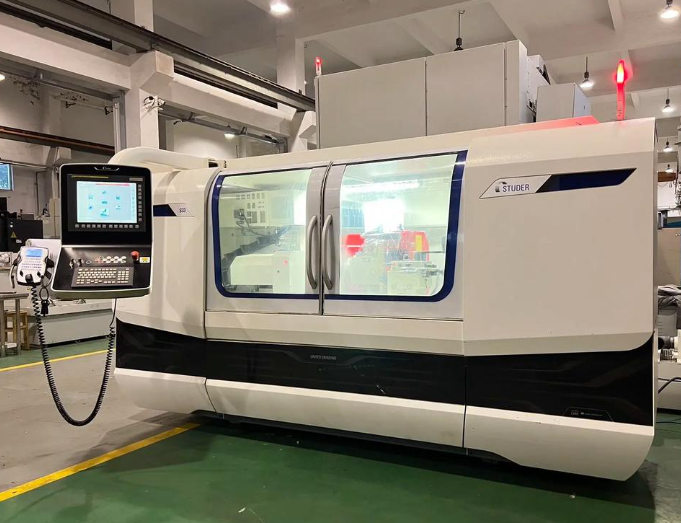
Precision Swiss-Type Turning for Small-Diameter and Slender Components
If your part is small, long, slender or feature-dense — and consistency across many units matters — Swiss-type (sliding-headstock) turning is often the right process. This page helps you judge whether your component fits, what we can hold, and how to start a quote.
Goldcattle operates Swiss-type / sliding-headstock lathes alongside conventional multi-axis turning. Where the geometry, length-to-diameter ratio and feature count justify it, Swiss-type turning delivers better dimensional stability and fewer secondary setups than conventional turning.
Swiss-Type Turning Capabilities at a Glance
Ten seconds on this table tells you whether we are a plausible supplier for your part.
- Turning Diameter
- Ø0.5–20 mm Round bar stock
- Part Length
- Up to 200 mm Longer on request
- L/D Ratio
- Up to 20:1 Ø2 mm × 40 mm example
- Tolerance
- ±0.005 mm Qualified features
- Surface Roughness
- Ra 0.4–1.6 μm As-machined to fine
- Live Tooling
- Yes Cross holes, slots, milling
- Sub-Spindle
- Yes Back-side operations
- Y / C Axis
- Yes Complex geometry
- Bar Feeding
- Automatic Unattended runs
- Production
- Prototype → Production Repeatable volumes
Indicative capability. Actual diameter, length, L/D and tolerance limits depend on part geometry, material and machine configuration. Confirm against your drawing at quotation.
What Is Swiss-Type CNC Turning?
Swiss-type CNC turning uses a sliding-headstock and guide-bushing architecture to support the workpiece close to the cutting zone, making the process particularly suitable for small-diameter, long or slender precision components.
Why it matters
This is why buyers ask "Swiss-type or conventional turning?" for miniature, slender and high-volume small parts.
When Should You Use Swiss-Type Turning?
We are not "selling Swiss" — use this table to decide if your part is a strong candidate.
| Part Requirement | Swiss-Type Turning |
|---|---|
| Diameter < 20 mm | Strong candidate |
| Long / slender geometry | Excellent |
| High L/D ratio | Excellent |
| Tight concentricity | Strong |
| Multiple turning operations | Excellent |
| Cross holes | Strong with live tooling |
| Side milling | Strong with live tooling |
| High-volume small parts | Excellent |
| Large-diameter parts | Conventional CNC turning may be better |
| Large irregular components | CNC mill / turn may be better |
Swiss-Type Turning vs Conventional CNC Turning
| Factor | Swiss-Type Turning | Conventional Turning |
|---|---|---|
| Small Diameter | Excellent | Good |
| Long Slender Parts | Excellent | More deflection risk |
| L/D Ratio | High | More challenging |
| Guide Bushing | Yes | Usually no |
| Complex Small Features | Excellent | Depends |
| Live Tooling | Available on many machines | Depends |
| Large Parts | Less suitable | Better |
| High-volume Small Parts | Excellent | Good |
Swiss-type is not automatically better. It is especially valuable when part diameter, length-to-diameter ratio, precision and feature density justify the machine setup.
Precision Swiss-Turned Parts We Manufacture
Micro Shafts
- miniature shafts
- stepped shafts
- actuator shafts
Precision Pins
- dowel pins
- locating pins
- hinge pins
Bushings
- sleeve bushings
- miniature bushings
- spacers
Screws
- miniature screws
- custom threaded parts
Dental Components
- dental abutments*
- dental screws*
Medical Components
- small surgical components
- bone screws*
Electronic Components
- connectors
- contact components
- terminals
Micro Fittings
- miniature fittings
- fluid connectors
Sensor Components
- miniature sleeves
- sensor bodies
*Bone screws and dental abutments are produced only where the project has confirmed materials, process validation and the applicable quality system. Tell us your requirements and we will confirm feasibility.
Micro-Precision CNC Turning
Small diameter, miniature bores, fine threads, tiny grooves, small cross holes and long/slender geometry are where Swiss-type turning earns its place.
For the smallest stable diameters, we machine down to Ø0.5 mm on qualified geometries. Where your drawing specifies a larger minimum, the practical limit is set by part rigidity, feature location and material — confirm at quotation.
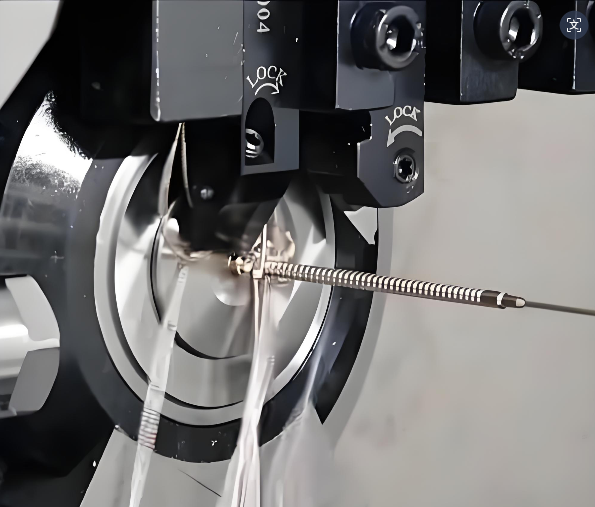
Swiss-Type Machine Configuration
Swiss-type lathes combine several subsystems. Each affects the geometries and secondary features a part can carry:
Sliding Headstock
The bar feeds through the headstock; the tool stays near the guide bushing.
Guide Bushing
Supports the workpiece close to the cut, controlling deflection.
Main Spindle
Drives the primary turning operations.
Sub-Spindle
Transfers the part for back-side turning, drilling and finishing.
Live Tooling
Rotating tools for cross holes, slots and milling in the same setup.
Y-Axis
Enables off-center milling and eccentric features.
C-Axis
Indexed/continuous rotation for angular features.
Bar Feeder
Automatic bar loading for unattended production runs.
Configurations vary by machine. Live tooling, sub-spindle, Y-axis and C-axis are available on our Swiss-type lathes — confirm the exact configuration for your part at quotation.
Turning and Milling in One Swiss-Type Setup
Live tooling lets a single setup complete what would otherwise need multiple machines:
Why it matters
Materials for Swiss-Type CNC Turning
Stainless Steel
- 303
- 304
- 316L
- 17-4PH
Corrosion resistance, medical and fluid components.
Titanium
- Ti-6Al-4V
High strength-to-weight for aerospace and medical.
Brass
- C360 (and supported grades)
Machinability and conductivity for connectors and fittings.
Aluminum
- 6061
- 7075
- other supported grades
Low weight for miniature housings and shafts.
Engineering Plastics
- PEEK
- POM
- PTFE
- Nylon
Chemical / thermal performance for medical and semiconductor parts.
Material choice drives machinability, tolerance and surface finish. Tell us the grade (or the application) and we will propose the right option.
Diameter, Length and L/D Ratio Capabilities
The length-to-diameter (L/D) ratio describes how long a part is relative to its diameter. As this ratio increases, workpiece deflection, vibration and dimensional control become more challenging.
Example
Ø2 mm × 40 mm → L/D = 20:1
The guide bushing supports the workpiece close to the cutting zone, helping control deflection during machining — which is why Swiss-type turning suits long, thin parts far better than conventional turning.
Tolerances, Concentricity and Runout
We hold tight tolerances where function requires them. Typical and tight values:
| Characteristic | Typical | Tight (qualified features) |
|---|---|---|
| Diameter Tolerance | ±0.01 mm | ±0.005 mm |
| Length Tolerance | ±0.02 mm | ±0.01 mm |
| Concentricity | 0.01 mm | 0.005 mm |
| Runout | 0.01 mm | 0.005 mm |
| Roundness / Cylindricity | 0.01 mm | 0.005 mm |
| Thread Tolerance | Per ISO / ASME class on request | |
| Position | ±0.02 mm | ±0.01 mm |
Actual tolerance depends on part size, geometry, material, feature location, machine configuration and inspection method. Tight values apply to qualified features — not every dimension on every part.
Critical-to-Function Features
bearing diameters · shaft journals · sealing diameters · miniature bores · threaded interfaces · mating surfaces · shoulder positions · concentric features.
Tight tolerances should be applied where function requires them, rather than across every dimension.
Micro Features We Can Machine
Micro Holes
Small diameter drilling and boring.
Fine Threads
Small-pitch internal and external threads.
Grooves
Sealing and retaining grooves.
Cross Holes
Radial holes via live tooling.
Slots
Milled slots and flats.
Tiny Shoulders
Stepped diameters.
Internal Bores
Reamed / bored IDs.
Chamfers & Radius
Edge breaks and form radii.
Knurling
Grip surfaces where required.
Surface Roughness and Finishing
We achieve surface roughness from Ra 0.4 μm (fine) to Ra 1.6 μm (as-machined) depending on the operation. Available finishing:
As-Machined
Standard turned finish.
Fine Turning
Improved Ra on functional diameters.
Polishing
For sealing and sliding surfaces.
Passivation
Corrosion protection for stainless.
Electropolishing*
Where specified.
*Grinding and electropolishing availability depends on the specific requirement — confirm at quotation. Surface roughness should be specified for functional surfaces such as sealing diameters, sliding interfaces and bearing seats, not as a blanket value.
Quality Control for Swiss-Turned Parts
In-Process
diameter · length · bore · thread · groove · surface roughness.
Final
concentricity · runout · roundness · critical dimensions · cosmetic inspection.
Documentation
dimensional report · CMM report · material certificate · FAI · COC · surface roughness report — provided to the level your order specifies.
Inspection Equipment
| Equipment | Checks |
|---|---|
| Micrometer | OD |
| Bore Gauge | ID |
| Thread Gauge | Thread fit |
| CMM | Position / geometry |
| Roughness Tester | Ra |
| Optical System | Small features |
Swiss-Type CNC Turning Process
Prototype, Low-Volume and Production Turning
Prototype
validation · fit · function.
Low Volume
pilot · niche products · limited demand.
Production
repeat parts · automation · medical · electronics.
Swiss-type turning is especially economically attractive when complex small parts require repeatable production over multiple units.
When Swiss-Type Turning Is Not the Best Choice
Swiss-type is not automatically the right answer. Consider conventional turning or milling when:
- Diameter is large relative to length (low L/D).
- The part is short, simple or single-feature.
- A large irregular component is better served by mill / turn.
- Conventional turning reaches the tolerance faster with less setup.
We will tell you honestly which process fits your part — including when a simpler, lower-cost method is the better choice.
Swiss-Type Turning Applications
Medical
- bone screws*
- dental components*
- miniature surgical components
Electronics
- connectors
- pins
- contacts
- micro housings
Aerospace
- titanium shafts
- precision pins
- miniature fittings
Automotive
- injector parts
- sensor components
- shafts
Hydraulics & Pneumatics
- fittings
- valve components
- nozzles
Robotics & Automation
- shafts
- pins
- miniature mechanical components
*Deeper medical and aerospace content is provided where the project has confirmed materials, validation and the applicable quality system. Share your requirements and we will confirm scope.
Swiss-Type Turning Case Studies
The profiles below illustrate typical part types we produce. Specific dimensions, tolerances and inspection are defined per project under NDA; figures shown are representative.
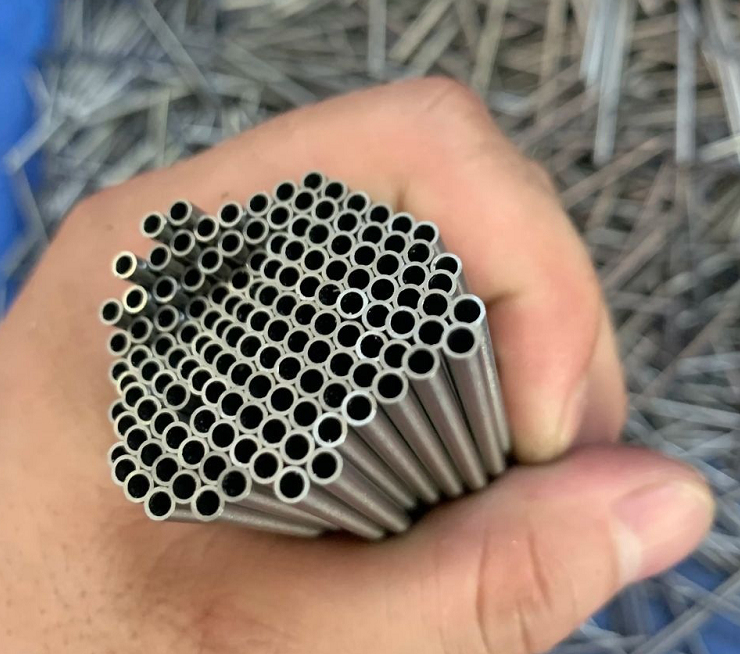
316L Miniature Medical Component
- Material
- 316L stainless
- Process
- Swiss turning
- Features
- Fine thread + bore + groove
- Finish
- Passivation
- Application
- Medical
Small corrosion-resistant component with threaded and sealed features for a fluid-path application.
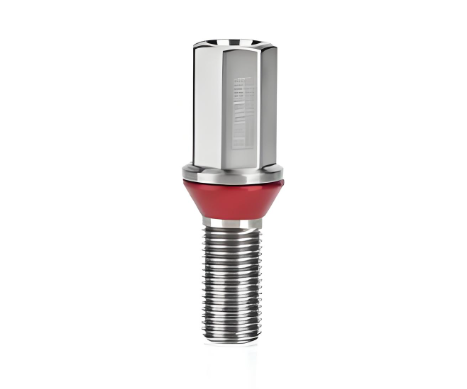
Ti-6Al-4V Miniature Shaft
- Material
- Titanium Ti-6Al-4V
- Process
- Swiss turning + live tooling
- Features
- Multiple shoulders + cross hole
- Challenge
- Hard-to-machine material
- Application
- Aerospace / medical
High-strength slender shaft with secondary features completed in one setup.
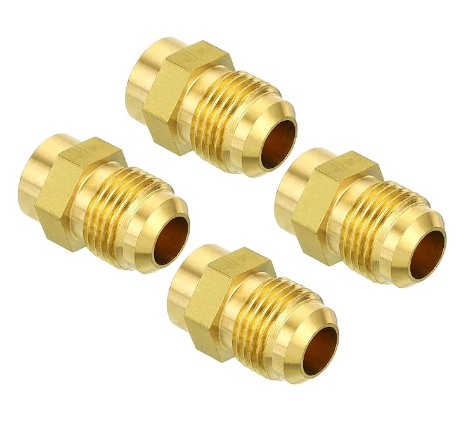
Brass Electronic Connector
- Material
- Brass C360
- Features
- Fine threads + slots + cross holes
- Volume
- Production quantity
- Application
- Electronics
High-volume connector leveraging brass machinability and live-tooling features.
What Affects Swiss-Type Turning Cost?
Material
Grade, bar form and certification.
Geometry
Diameter, length, L/D ratio.
Features
Count, cross holes, milling, threads.
Tooling
Setup and programming complexity.
Tolerance & Finish
Tight values and special finishes.
Quantity
Volume and annual requirement.
Inspection
Reporting and certification level.
Swiss machining may have higher setup / programming complexity, but can reduce secondary operations and improve repeatability for the right part geometry.
When does Swiss become cost-effective?
Best fit: high part count · small diameter · many features · long/slender geometry · reduced secondary ops. Less suitable: one very large part · large-diameter component · very simple part where conventional turning is faster.
What Do We Need for Your Swiss Turning Quote?
For an accurate quote, share as many of these as possible. The four most important for Swiss projects are marked:
★ Part Diameter
Bar and finished diameter.
★ Part Length
Overall and critical lengths.
★ Material Grade
Or the application.
★ Quantity
Prototype / annual volume.
L/D Ratio
If known.
Critical Tolerance
Concentricity / runout.
Thread Spec
Standard and class.
Surface Roughness
Functional surfaces.
Finish & Treatment
Passivation, heat treat.
Inspection
Reporting level.
CAD / Drawing
3D model + 2D drawing.
Request a Swiss-Type Turning Quote
Upload your CAD and drawing and tell us the four key values above. We respond with feasibility, tolerance capability and lead time.
Frequently Asked Questions
What is the minimum diameter you can Swiss-turn?
We machine qualified geometries down to Ø0.5 mm. The practical minimum for your part depends on length, material and feature location — confirm against your drawing at quotation.
Is Swiss-type turning better than conventional turning?
Not automatically. It is strongest for small diameters, long/slender parts, high L/D ratios and feature-dense components. For large or simple parts, conventional turning is often better and faster.
What tolerances can you hold?
Typical ±0.01 mm, with ±0.005 mm on qualified features for diameter, concentricity, runout and position. Actual limits depend on geometry, material and inspection method.
Which materials can you Swiss-turn?
Stainless (303/304/316L/17-4PH), titanium (Ti-6Al-4V), brass (C360), aluminum (6061/7075) and engineering plastics (PEEK/POM/PTFE/Nylon).
Can you do milling and cross holes in the same setup?
Yes — live tooling, Y-axis and sub-spindle let us complete turning, drilling, cross holes, slots and threading in one setup, reducing secondary operations.
What volumes do you support?
From prototype through low-volume and production. Swiss-type turning is especially attractive for repeatable small-part production.
When does conventional CNC turning make more sense?
Larger diameters, shorter parts, simpler geometries and projects where Swiss-type support offers little additional benefit.
Request a Swiss-Type Turning Quote
Upload your CAD and 2D drawing, or tell us the part diameter, length, material and quantity. We will confirm feasibility and tolerance capability.