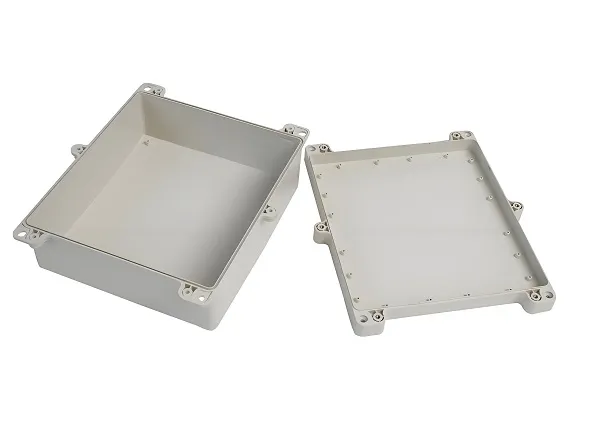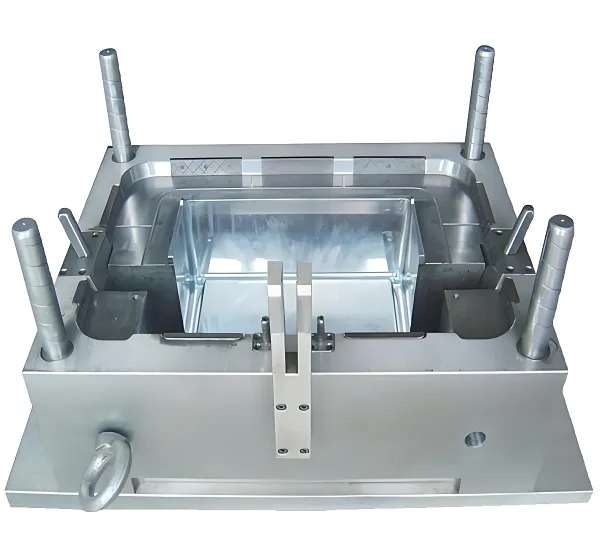
OEM manufacturing for custom metal hardware, mechanical components and non-standard parts, from engineering review and prototyping to production, finishing and inspection.
Xiamen Goldcattle manufactures custom OEM hardware parts from your drawings, samples and specifications — not from a catalog. For each part we select the appropriate manufacturing process, material, finishing and quality controls for the application, then take it from prototype and tooling through production, inspection and delivery. You provide the design; we provide the engineering, process, tooling and production.
Custom OEM Hardware Manufacturing from Drawing to Production
Xiamen Goldcattle is a drawing-based OEM custom hardware manufacturer. We produce non-standard metal and plastic hardware components to customer drawings and specifications, selecting the right process and controls for each part and running it from prototype through production.
The OEM Hardware Path
How a custom hardware part moves from your input to delivered goods.
- Customer drawing / sampleThe design input — CAD, 2D, spec or physical part.
- Engineering reviewGeometry, material, tolerance, tooling and method assessed.
- Part classificationWhat type of hardware is this — bracket, shaft, connector?
- Process selectionCNC, turning, stamping, die casting or sheet metal — by fit.
- Material & finishChosen for function, environment and cost.
- Prototype / toolingValidate first, then cut production tooling.
- ProductionRepeatable runs with in-process inspection.
- Finishing & inspectionSurface treatment, CMM/FAI, documentation.
- Packaging & deliveryProtected pack, labeled, shipped to you.
What Does OEM Hardware Manufacturing Mean?
OEM hardware manufacturing means producing parts according to the customer's own drawings, specifications, samples or approved designs — not selling a standard catalog product. The customer owns the design; the manufacturer supplies the engineering and production.
Customer Provides
Drawing, 3D CAD, sample, material requirement, tolerance, quantity, application and revision. You keep the product concept and IP.
Manufacturer Provides
DFM review, process selection, tooling, manufacturing, inspection, finishing, packaging and delivery — the production capability around your design.
OEM vs ODM Hardware Manufacturing
| OEM | ODM |
|---|---|
| Customer provides the design | Manufacturer contributes product design |
| Manufacture to customer specification | Manufacturer develops the solution |
| Customer owns the product concept | Manufacturer may provide design / IP scope |
| Drawing-driven | Engineering-driven |
| Strong for replacement / custom components | Strong for new product development |
- Goldcattle's core OEM service is drawing-based manufacturing. Where a project also needs product design or engineering development (ODM), we discuss scope per project rather than claiming a full ODM program by default.
Custom Hardware Parts We Manufacture
Buyers shop by part, not by process. Below is how we group the hardware we make — so you can see quickly whether your part fits.
Precision Machined Hardware
- shafts
- pins
- bushings
- spacers
- collars
- sleeves
- connectors
Mounting Hardware
- brackets
- mounting plates
- supports
- clips
- retainers
Fasteners
- custom screws
- nuts
- bolts
- rivets
- threaded components
Stamped Hardware
- clips
- terminals
- brackets
- washers
- plates
Cast Hardware
- aluminum components
- zinc components
- structural housings
- handles
Custom Assemblies
- multi-part hardware
- metal sub-assemblies
- fastener assemblies
Which Manufacturing Process Is Right for Your Hardware Part?
The buyer buys a part; the process is our engineering decision. Use this map to see the typical route for a requirement — then we confirm the exact method on your drawing.
| Part Requirement | Typical Process |
|---|---|
| Tight-tolerance machined part | CNC machining |
| Round shafts / pins / bushings | CNC turning |
| High-volume thin metal parts | Stamping |
| Complex aluminum / zinc shapes | Die casting |
| High-strength forged parts | Forging (via partners) |
| Flat / bent metal components | Sheet metal |
| Very small precision metal parts | Precision machining / stamping |
| Prototype | CNC / suitable low-volume process |
OEM Hardware Manufacturing Process Matrix
| Process | Typical Part Types | Volume | Main Advantage |
|---|---|---|---|
| CNC Milling | Brackets, housings, structural parts | Low–Medium | Flexible geometry |
| CNC Turning | Shafts, pins, bushings | Low–High | Precision round parts |
| Stamping | Brackets, clips, terminals | Medium–High | High productivity |
| Die Casting | Complex aluminum / zinc parts | Medium–High | Complex near-net shapes |
| Forging | High-strength hardware | Medium–High | Mechanical strength (via partners) |
| Sheet Metal | Brackets, covers, panels | Low–High | Fast fabrication |
How We Select the Manufacturing Process
When you choose "Not Sure" on process, we turn that into an engineering recommendation. The inputs are your part's geometry, material, tolerance, volume and finish — and the output is a justified route.
- Process is chosen for your part, not for our convenience — this is what separates an OEM manufacturing partner from a single-process shop.
- If your volume is unclear, we can prototype in CNC and move to a tooled process once the design and quantity are locked.
Custom Hardware Materials
Material is chosen for the function, not by habit. These are the hardware materials we work with most.
Aluminum
6061 / 6063 / 7075
Lightweight, corrosion-resistant, machinable; common for brackets and housings.
Stainless Steel
303 / 304 / 316 / 316L
Corrosion resistance for outdoor, food, medical and marine hardware.
Carbon Steel
Selected grades
High strength and low cost for structural and load-bearing parts.
Brass
Machinable alloy
Excellent machinability and electrical use; connectors and fittings.
Copper
Conductive
Electrical conductivity for terminals and conductive hardware.
Titanium
High strength/weight
Low weight + high strength where it matters; confirm grade per project.
Zinc / Aluminum Alloys
Die casting
Complex cast shapes in high volume.
Engineering Plastics
Non-metal hardware
Where the part is plastic: ABS, PC, PC/ABS, PA, PBT and FR grades.
Material Selection for OEM Hardware Parts
Match the material to the duty. This table is a starting point; the final choice depends on load, environment, temperature, corrosion exposure, dimensions and cost.
| Requirement | Potential Material |
|---|---|
| Lightweight | Aluminum |
| Corrosion resistance | Stainless steel |
| Electrical conductivity | Copper / Brass |
| High strength | Steel / selected alloys |
| Machinability | Brass / aluminum / selected steels |
| Wear resistance | Hardened steels / selected alloys |
| Low weight + high strength | Titanium / aluminum |
Custom Hardware Tolerances and CTQ Features
Tolerance is set per feature, not stated as one number for the whole part. Non-critical surfaces are left loose; the features that make the part work are held tight and inspected.
Standard Tolerance
Determined by drawing, process capability, material and feature size. Typical molded or machined tolerance is around ±0.1 mm on size; for machined features, typical ±0.01 mm and tight ±0.005 mm on qualified features, CMM-verified.
Critical Dimensions
- Hole diameter Bores and clearance holes that locate parts.
- Shaft diameter Press-fit and bearing seats.
- Thread Form, class and engagement length.
- Bearing seat Runout and diameter control.
- Sealing surface Flatness and finish for seals.
- Mating interface Where two parts assemble.
What We Review as CTQ Features
- Mating dimensions Where parts align.
- Sealing surfaces Flatness and roughness.
- Thread fit Form and class.
- Hole position True position / pattern.
- Flatness Datums and seats.
- Concentricity For round features.
- Hardness Where wear/strength matter.
- Coating thickness On finished faces.
- Surface roughness Ra where specified.
- Mechanical load, vibration, wear, corrosion, temperature, pressure, electrical conductivity, sealing, assembly and repeated motion all shape the spec.
- Drawings are an input; functional requirements are an input too. Tell us what the part must do, not only its size.
Custom Threads and Fastener Features
Threads are high-value engineering detail on hardware. We manufacture common standards and check them to the class you specify.
Thread standards
Metric, UNC, UNF, BSP, NPT and other standards per actual capability. State form, tolerance class, depth, sealing requirement and mating component on the drawing.
Fastener features
Custom screws, nuts, bolts, rivets and threaded components, including threaded bosses, inserts and standoffs for assemblies.
Surface Finishing for OEM Hardware
Finishing affects corrosion, wear, appearance and compliance. We provide the common finishes below — in-house or through qualified partners depending on material and specification.
Anodizing
- Type II / III
- colored options
Passivation
- stainless steel
- corrosion
Plating
- zinc
- nickel
Powder Coating
- durable color
- thickness control
Black Oxide
- steel
- low-reflective
Polishing / Brushing
- cosmetic
- Ra control
Sandblasting
- texture
- pre-coat
Deburring
- edge break
- standard
- We list only finishes we can deliver. Confirm the finish and any standard (coating thickness, salt-spray hours, hardness) with us for your material and spec — some finishes are provided via qualified partners.
Custom Tooling for OEM Hardware
Tooled processes need the right tool. We provide tooling matched to the manufacturing process, geometry, material, volume and expected tool life.
Stamping Dies
Progressive / single
For high-volume stamped brackets, clips, terminals and plates.
Die-Casting Dies
Aluminum / zinc
For complex cast hardware in medium–high volume.
Injection Molds
Plastic hardware
For non-metal custom hardware produced by molding.
Machining Fixtures
CNC
Jigs and fixtures that hold consistency on machined runs.
Who Owns the Tooling?
Tooling ownership is defined in the quotation or purchase agreement. We commonly work on a customer-owned tooling basis — the tooling built for your part remains your asset. Exact terms (storage, maintenance, reorder) are stated before tooling starts, so there is no ambiguity about who controls the tool.
From Prototype to Mass Production
A clear path from your input to volume — each gate protects the next, so mass production starts only after the part is proven.
Drawing / Sample
Your CAD, 2D drawing or physical reference as the input.
Engineering Review
Geometry, material, tolerance, tooling and method assessed.
DFM
Design-for-manufacture changes proposed before cutting tooling.
Process Selection
The route chosen for fit, volume and cost.
Prototype
First parts by CNC or 3D print to validate fit and function.
Tooling
Stamping die, casting die or fixtures built for volume.
Pilot Run
Small production lot to confirm process and consistency.
FAI / Inspection
First-article report against the drawing.
Customer Approval
You sign off the first article before volume.
Mass Production
Repeat runs with in-process inspection.
Final QC
Dimensional and visual checks before pack.
Packaging
Protected, labeled pack per your requirement.
Delivery
Shipped to your dock or warehouse.
Custom Hardware Quality Control
Quality is built into the flow, not added at the end. Inspection covers material, process, first article, final, finish and function.
Incoming Material
Material certs and verification before production starts.
In-Process Inspection
Checks during runs to catch drift early.
First Article (FAI)
Full report against the drawing before volume.
Final Inspection
Dimensional and visual checks on finished parts.
Surface Finish
Coating thickness, roughness and appearance checks.
Functional / Packaging
Fit, thread and pack verification before ship.
Documentation
| Document | Provided |
|---|---|
| Inspection / dimensional report | Yes |
| Material certificate | Yes |
| Coating / hardness report | Yes |
| FAI report | Yes |
| Certificate of Conformity (COC) | Yes |
| PPAP-level package | On request — confirm scope |
Quality Certifications and Compliance
The right quality system depends on your industry and regulatory requirement. We state what we hold and where scope must be confirmed.
| Application | Typical System | Status |
|---|---|---|
| General industrial | ISO 9001 | Held — ISO 9001:2015 |
| Automotive | IATF 16949 | Confirm current scope / certificate |
| Aerospace | AS9100 | Confirm current scope / certificate |
| Medical | ISO 13485 | Confirm current scope / certificate |
- ISO 9001:2015 is held. IATF 16949 / AS9100 / ISO 13485 are listed by industry need — confirm the current certificate and scope with us before relying on them for a regulated program.
- Product certifications held: SGS (SZIN2409001808ML09_EN), RoHS (TQT7737B1373EC), Rmbond (XMML24030283_EN).
OEM Drawing, NDA and IP Protection
When you send CAD, your design is the asset. We handle customer drawings, CAD data, specifications and product information under agreed confidentiality and IP procedures.
- NDA We can sign an NDA under our legal entity before drawing release.
- Controlled access Drawing and CAD access limited to the project team.
- Revision control Drawing revisions tracked and confirmed back to you.
- Approved sample Production references the approved sample / FA, not a loose file.
- Tooling ownership Defined in agreement; customer-owned tooling is standard.
- Spec confidentiality Product and commercial information kept confidential.
Custom Hardware Applications
The same manufacturing base serves many industries. Examples of hardware we make per sector:
Automotive
- brackets
- shafts
- connectors
- clips
- housings
Electronics
- terminals
- brackets
- connectors
- shielding parts
- mounting hardware
Industrial Machinery
- shafts
- bushings
- couplings
- brackets
- fittings
New Energy
- battery components
- busbar parts
- structural hardware
Furniture
- brackets
- hinges
- connectors
Construction
- fittings
- brackets
- specialty fasteners
OEM Hardware Case Studies
Below are representative program types showing the path from customer drawing to produced part. Figures are typical program scales; exact values are confirmed per project.
Custom Mounting Bracket
- Material
- Stainless steel (typical)
- Process
- Stamping + secondary machining
- Volume
- Typical 50k–200k / yr
- Finish
- Powder coating
Custom Brass Connector
- Material
- Brass (typical)
- Process
- CNC turning + threading
- Volume
- Low–high (turning scales)
- Finish
- Per spec
Custom Aluminum Housing
- Material
- Aluminum alloy
- Process
- Die casting + CNC machining
- Volume
- Medium–high
- Finish
- Anodizing
Founded in 1998 · 28+ years — Xiamen Goldcattle's integrated OEM hardware capability covers CNC machining (3/4/5-axis milling and turning), die casting, sheet metal and stamping, plus injection molding for plastic hardware and 3D printing for prototypes, with in-house inspection, finishing coordination and prototype-to-production flow. We are a strong fit for drawing-based custom hardware that needs multi-process engineering, prototype validation and repeatable production — and for buyers who choose "Not Sure" on process and want us to select the route.
Custom Hardware vs Standard Hardware
This page is about made-to-drawing hardware, not catalog fasteners. The distinction matters for procurement.
| Standard Hardware | Custom OEM Hardware |
|---|---|
| Catalog dimensions | Customer-specific dimensions |
| Standard material | Application-specific material |
| Off-the-shelf | Drawing-based |
| Limited customization | Custom geometry |
| Standard finish | Custom finish |
| General use | Designed for a specific assembly |
| Immediate stock | Made-to-order |
Manufacturing from Customer Samples
Yes — when technically feasible, you can provide an existing physical sample as a reference for engineering review, dimensional measurement and reverse-engineering requirements.
- The sample is measured and reviewed; critical dimensions are captured.
- Final production should be based on an approved drawing or specification rather than visual matching alone, so tolerance and function are controlled.
- This is common when a drawing is lost or the part is being re-sourced.
What Affects OEM Hardware Cost?
Unit price is only part of procurement cost. We quote the drivers transparently so you can compare total cost, not just the number on the quote.
- The lowest unit price is not always the lowest total procurement cost — compare quality risk, lead time, inventory and rework, not just price.
- Tooling is separated from piece price so you see both, and can choose prototype-now / tool-later.
OEM Hardware Lead Time and MOQ
Lead time and minimum order depend on stage and process. The figures below are industry mid-to-upper band and confirmed against your drawing.
Lead Time by Stage
| Stage | Typical Time |
|---|---|
| RFQ Review | 1–2 business days |
| Engineering / DFM | 2–3 business days |
| Prototype | 3–7 working days |
| Tooling (stamped/cast) | A few weeks |
| First Article (T1/FAI) | After tooling |
| Mass Production | 15–25 working days |
MOQ by Process
| Process | Prototype | Production |
|---|---|---|
| CNC Machining | 1 pc | from ~50 pcs * |
| Stamping | 1 pc | from ~500 pcs * |
| Die Casting | 1 pc | from ~1,000 pcs * |
| Sheet Metal | 1 pc | from ~50 pcs * |
* Benchmark minimums; actual MOQ confirmed per project and tooling. Prototype can start from 1 piece.
What Should You Include in an OEM Hardware RFQ?
A complete package produces an accurate, comparable quote. Split into what is required, what helps, and what is important.
Required
2D drawing · 3D CAD · material · quantity · tolerance · surface treatment.
Helpful
Application · load · temperature · pressure · assembly method · annual volume · target delivery · existing sample.
Important
Revision number · applicable standards · critical dimensions · packaging requirement.
- Include a process preference: CNC, Stamping, Die Casting, Forging, Sheet Metal — or "Not Sure."
- If you choose "Not Sure," we treat process selection as an engineering service and recommend the route with reasons.
Frequently Asked Questions
What does OEM hardware parts manufacturing mean?
Can you manufacture hardware parts from our drawings?
Can you manufacture custom hardware from a sample?
What materials are available for OEM hardware?
What manufacturing processes do you use?
Can you recommend the best manufacturing process?
Can you make prototypes before mass production?
Can you handle high-volume OEM hardware orders?
Do you provide custom tooling?
Who owns the tooling?
Can you provide surface finishing?
What tolerances can you achieve?
Can you manufacture custom threads?
Can you provide inspection reports?
Can you sign an NDA?
Can you provide OEM packaging?
What should be included in an OEM hardware RFQ?
Request a Custom OEM Hardware Quote
Send your 2D drawing and 3D CAD, the material and tolerance, the quantity and any finish or application notes. If you are unsure of the process, choose "Not Sure" — we will select the route and explain why. Our engineers review and quote on a real manufacturing plan.