A practical path from “I have a part” to “I picked the right CNC supplier and submitted a clean project.” Built for procurement, engineering and product teams who need to buy CNC machining correctly — not a textbook on how machines work.
Last updated: September 2026
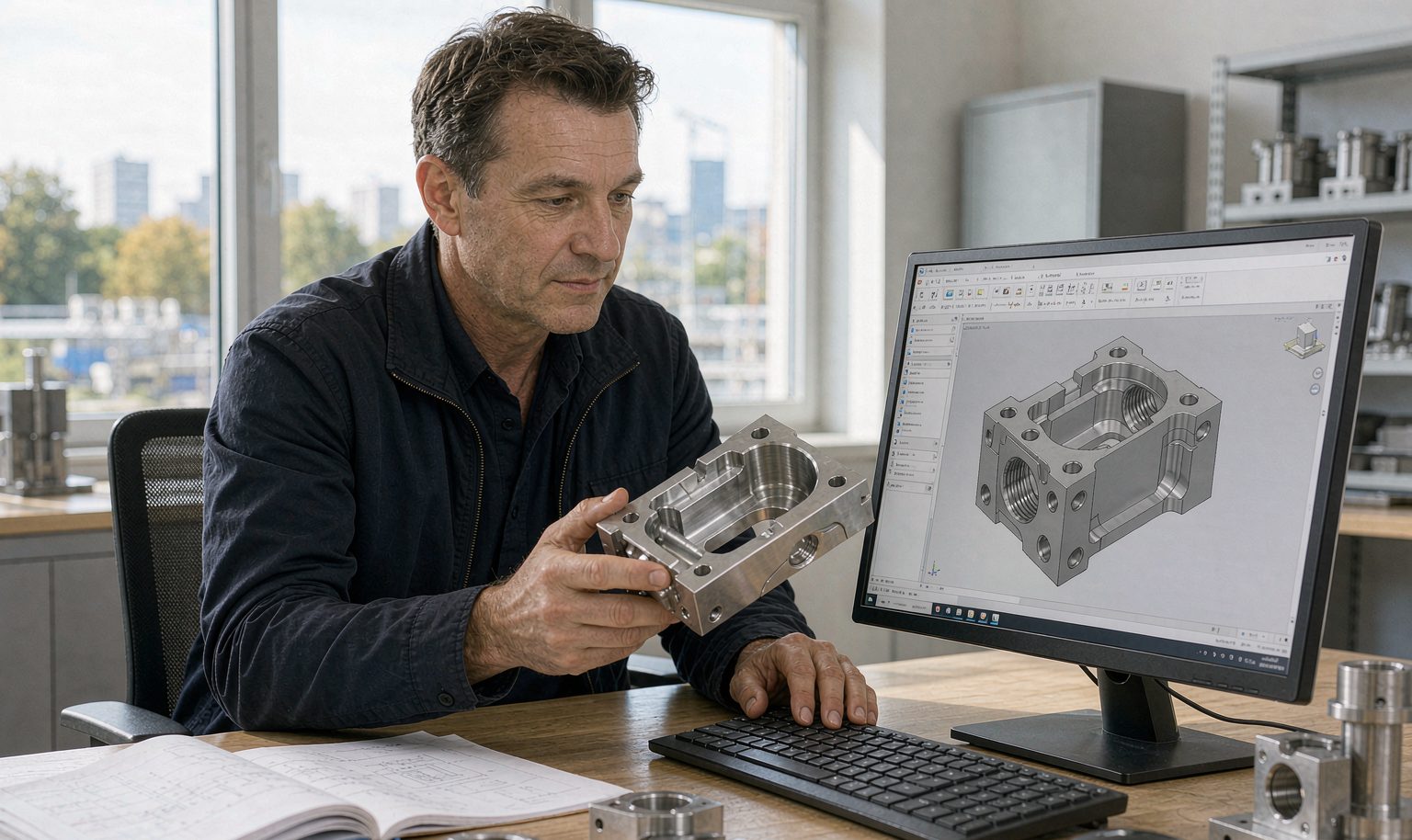
Need CNC Machined Parts? Start Here.
Most buyers arrive with a different level of project maturity. Pick the entry point that matches yours — each one opens the same quote form, pre-tagged so our engineers respond with the right information.
I Have a CAD & Drawing
You know the geometry, material and tolerances. You want a firm number and a lead time.
I Have a CAD but Need Feedback
The design may not be manufacturable as drawn. You want an engineering review before quoting.
I Only Have a Sample / Concept
A physical part, sketch or idea — no CAD yet. You want to know if and how it can be made.
The CNC Project Journey
Five steps take a part from idea to delivered batch. The right CNC service starts with a clearly defined part — not with choosing the most advanced machine.
What Does a CNC Machining Service Actually Include?
CNC machining service is not “putting your CAD into a machine.” It is a controlled manufacturing outcome built from five linked stages. Understanding them helps you brief a supplier and judge a quote.
Engineering
- CAD review
- DFM feedback
- Process planning
- Material review
Machining
- Milling (3/4/5-axis)
- Turning
- Drilling, boring, threading
- Grinding, honing
Secondary
- Heat treatment
- Anodizing, plating
- Polishing
- Deburr, surface prep
Quality
- Dimensional inspection
- CMM measurement
- First Article (FAI)
- Material documentation
Supply
- Prototype
- Low-volume
- Production
- Packaging, delivery
What You Are Actually Buying
Buyers often specify inputs (“a tight tolerance”, “a 5-axis machine”) when what they need is a verified outcome. Reframing the request usually lowers cost and risk.
| Buyer Thinks They Need | What They Actually Need |
|---|---|
| A CNC machine | The suitable process for the geometry |
| A tight tolerance everywhere | Functional accuracy on critical features only |
| The cheapest quote | A competitive total cost with known assumptions |
| Fast machining | Reliable, documented delivery |
| A CMM | Evidence that critical features were measured |
| 5-axis | The correct access and setup strategy |
| A material name | Exact grade, temper and specification |
| “High quality” | Defined, agreed acceptance criteria |
Which CNC Process Fits Your Part?
Process choice follows geometry, not marketing. Use the map, then open the detailed capability page for the route you land on. If your part mixes rotational and prismatic features, the route is usually turning for the core and milling for the features — or a mill-turn machine that handles both in one setup. The goal stays the same: the fewest setups that still hold your critical dimensions.
Swiss-type turning suits very small, precise cylindrical parts; grinding and honing finish hardened or tight-tolerance features. The goal is the fewest setups that still hold your critical dimensions.
Choose Material by Function, Not by Popularity
Start from what the part must do, then narrow to a grade. The exact material should be defined by grade, temper and applicable specification — not simply “aluminum” or “stainless steel.” Full grades live on the materials hub.
| Requirement | Materials to Evaluate |
|---|---|
| Lightweight | Aluminum (6061, 7075), magnesium |
| High strength | Tool / alloy steel (4140), 7075, titanium |
| Corrosion resistance | Stainless (316L), selected aluminum |
| Low friction | POM, PTFE, engineering plastics |
| High temperature | PEEK, high-temp alloys, ceramics |
| Electrical / thermal | Copper, aluminum, selected plastics |
3D CAD Is the Shape. The Drawing Defines the Agreement.
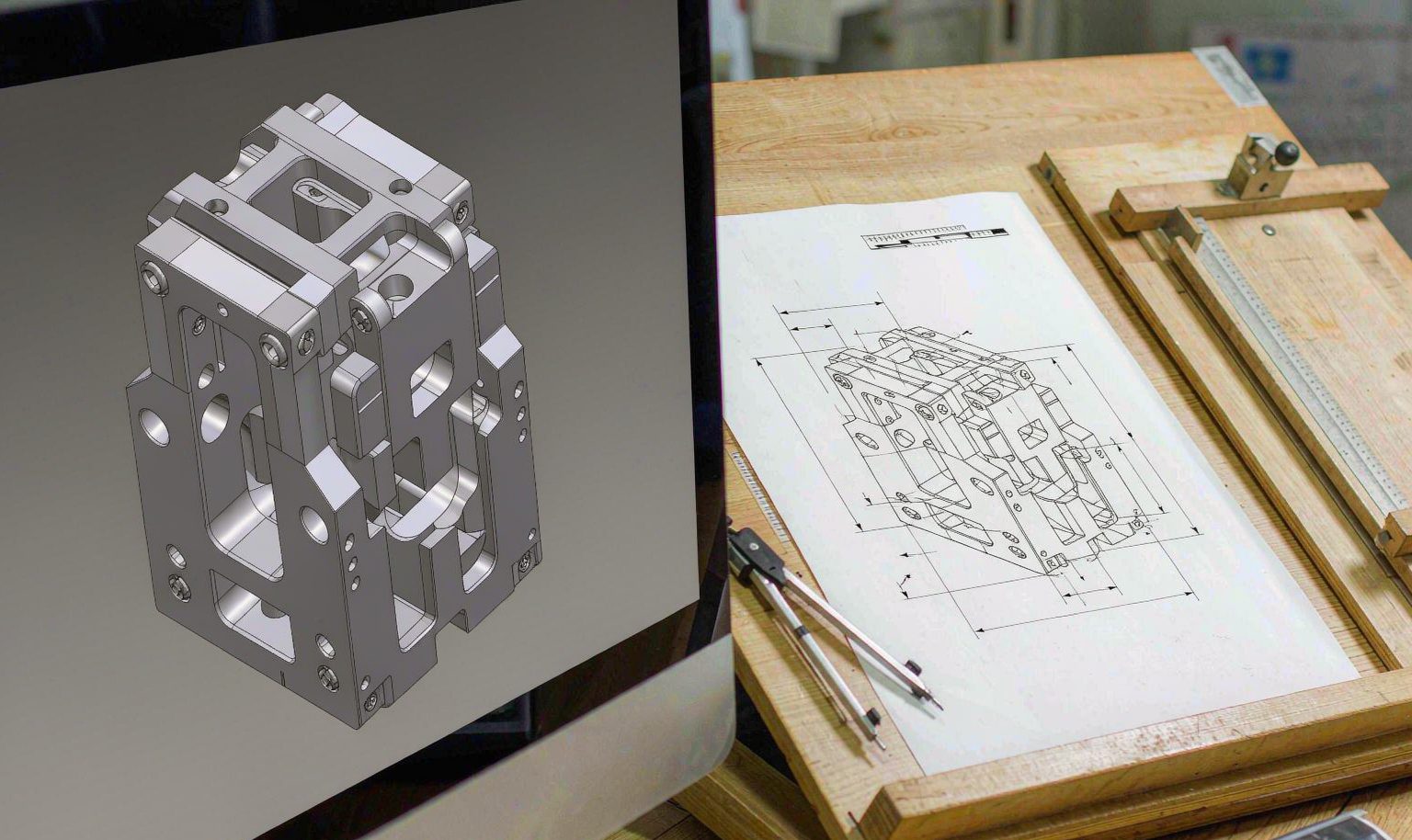 A 3D model shows geometry; a 2D drawing sets the contractual requirements.
Geometry only
Surfaces, holes, overall shape and fit. It tells the machine what to cut — but not what “good enough” means.
The agreement
Tolerances, GD&T, datums, threads, surface finish, material, heat treatment, inspection and revision. This is what a quote and acceptance are measured against.
Before You Send Your Drawing — Checklist
- Part revision and CAD revision match
- Exact material grade and condition
- General tolerance block defined
- Critical dimensions and GD&T called out
- Threads, surface finish and coating specified
- Quantity, stage and inspection requirement stated
How to Specify Tolerances Without Overpaying
Specify tight tolerances where function requires them, and use an appropriate general tolerance for everything else. Do not make every dimension ±0.005 mm simply because a supplier says it can.
| Feature | Typical Reason for Tight Control |
|---|---|
| Bearing seat | Fit and rotation |
| Shaft diameter | Assembly and runout |
| Seal surface | Leakage prevention |
| Locating pin hole | Position and alignment |
| Mounting interface | Assembly alignment |
| Cosmetic surface | Appearance, not dimension |
Tight tolerance on a non-critical face only adds cost and cycle time. For the methodology behind achievable limits, see the CNC machining tolerance guide.
How Should You Evaluate CNC Part Quality?
Quality is layered. A CMM is a measuring tool, not quality itself — it produces the evidence a quality system acts on.
Material
Exact grade, condition and certificate where the application requires it.
Dimensions
Basic and critical dimensions against the drawing.
Geometry
Position, flatness, parallelism, perpendicularity, runout.
Function
Assembly, movement, sealing, load — verified where the part is used.
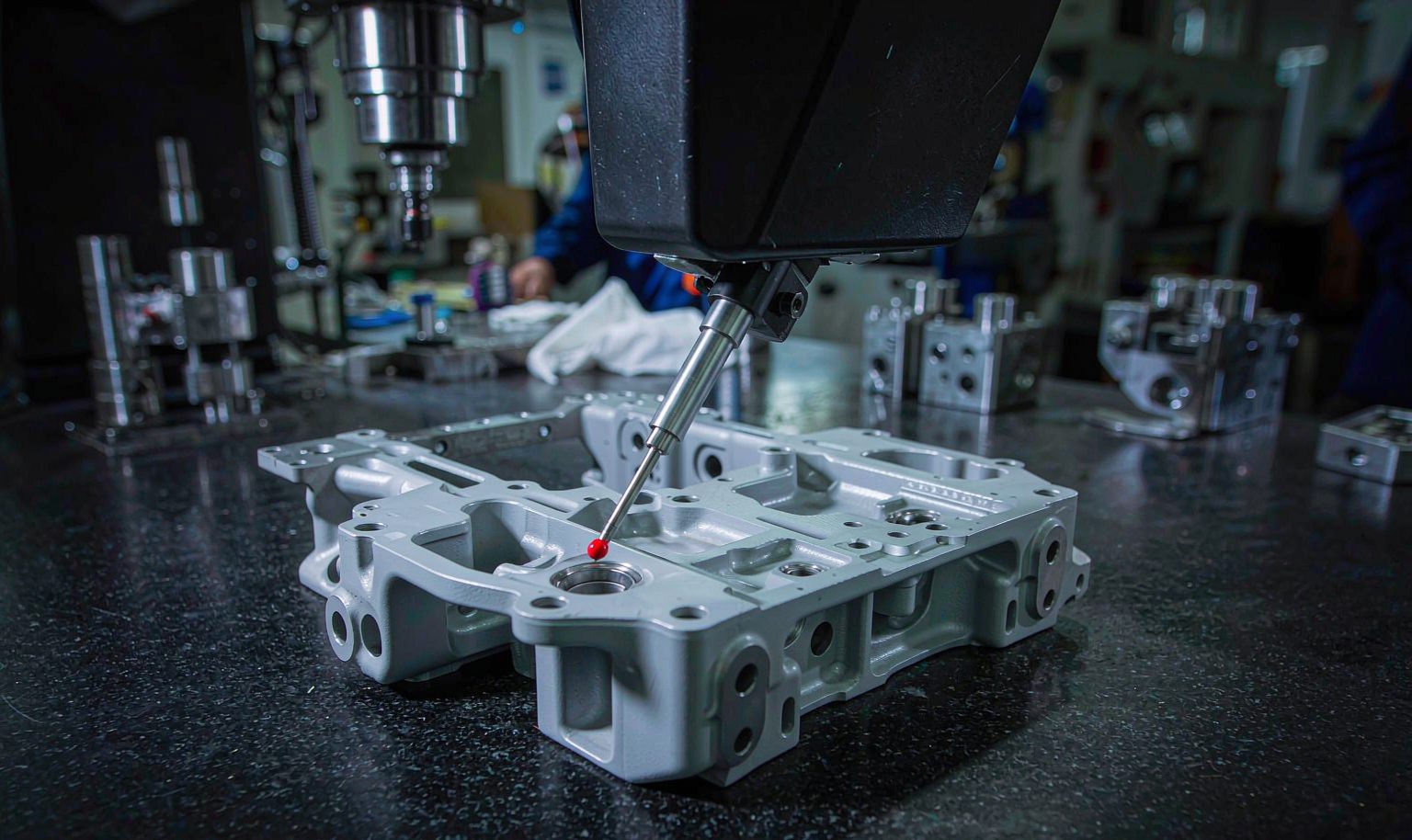 Inspection evidence — not the machine alone — is what proves a part meets the drawing.
What Quality Documents Should You Request?
Documentation should match the drawing, the quality agreement and the application — not “every certificate for every part.” Ask for the evidence your critical features actually need. Over-documenting adds cost and delay; under-documenting leaves you unable to prove the part met the drawing. The table below maps each document to the situation where it earns its place.
| Document | When It Matters |
|---|---|
| Material certificate | Controlled or regulated material |
| Certificate of Conformance | Customer quality system |
| Dimensional report | Critical dimensions |
| CMM report | Complex geometry |
| First Article (FAI) | New program / first run |
| Heat treatment report | Heat-treated parts |
| Plating / anodizing record | Controlled surface process |
| PPAP-related documents | Applicable automotive programs |
What Actually Determines CNC Lead Time?
A realistic date comes from the whole chain — not a fixed “prototype = X days” rule, which ignores material, complexity and finishing. The two biggest schedule risks are material that must be sourced to a specific grade and secondary operations handled outside the machine shop; naming both up front moves the realistic date earlier.
Clarify scope and assumptions
Stock or sourced grade
Resolve risk before cutting
Toolpath and setup
Hold the part accurately
Cut to tolerance
Secondary operations
Verify critical features
Protect in transit
To your Incoterms
Typical windows Goldcattle works to: prototype 3–7 working days, low-volume 7–20, mass production 15–25 — each confirmed against the actual chain above, not a flat rule.
How to Compare Two CNC Quotes Correctly
Two quotes are only comparable when the assumptions are comparable. Unit price alone hides most of the real cost. A quote that omits inspection or finishing is not cheaper — it has moved that cost and risk to you. The columns below separate what each quote should state explicitly before you compare numbers.
Compare the Scope
- Material included?
- Machining, finish, inspection included?
- Packaging and freight handled?
Compare the Basis
- General tolerance and material condition
- Finish thickness and method
- Outsourced operations disclosed?
- Quote validity and payment terms
CNC Supplier Qualification Checklist
A scorecard for procurement, engineering and supply-chain teams. It evaluates capability, not a sales pitch.
| Area | Question to Ask |
|---|---|
| Process | Can the supplier explain the manufacturing route for your part? |
| Geometry | Have the difficult features been identified? |
| Material | Is the exact grade and condition specified? |
| Tolerance | Are critical features separated from general tolerance? |
| Quality | What method verifies each critical feature? |
| Documentation | What reports will actually ship? |
| Capacity | Can they support prototype and production? |
| Lead time | What assumptions support the quoted date? |
| Changes | How are drawing revisions handled? |
| Outside processes | Which operations are subcontracted? |
For a full procurement framework, see the precision CNC supplier selection guide.
CNC Supplier Red Flags
Statements that sound reassuring but lack the engineering detail a real shop would give.
“We can hold any tolerance”
With no mention of feature, size, material, process or inspection. Tolerance is conditional, never absolute.
“Everything is 5-axis”
With no note of 3+2 vs simultaneous, why, or which machine. Right tool for the feature matters more.
“100% inspection”
With no answer to what is inspected, how, and what report follows. Inspection without a plan is theatre.
“Best quality, lowest price”
With no engineering basis. One of the two claims is being quietly dropped.
What Happens When the Design Changes?
Revision control is where many production runs go wrong. A quote, a CAD file and an inspection report must all reference the same revision.
Re-confirm price
A tolerance tweak may only need re-quoting; a geometry tweak may need a new fixture.
New source & strategy
Different stock, tooling and machining parameters — and often a new lead time.
Re-quote the job
New CAM, new fixture, possibly new process. Always update the drawing revision before approving.
When Does Outsourcing CNC Machining Make Sense?
Outsourcing is a sourcing decision, not a cost cliché. It fits when an external partner extends your capability or capacity without adding fixed overhead. It does not fit as a permanent substitute for a capability you need repeatedly; in that case the total cost of managing an external supplier usually outweighs the headline saving.
- No internal CNC capacity, or a temporary volume spike
- Prototype development before committing to tooling
- Specialized work (5-axis, difficult materials, tight tolerances)
- Low-to-medium volume where in-house setup is not justified
The partner you choose should be judged as an external manufacturing partner — assessed on the same qualification checklist above — not as a low-cost commodity source.
Where Goldcattle Fits in the CNC Project Lifecycle
Goldcattle is an OEM/ODM custom-parts manufacturer. The CNC capability below is one part of six in-house processes, all run under one ISO 9001:2015 quality system.
Engineering
- Drawing / CAD review
- DFM
Machining
- 3 / 4 / 5-axis
- CNC turning
Materials
- Aluminum
- Stainless, titanium
- Engineering plastics
Quality
- CMM
- Dimensional inspection
Stage
- Prototype
- Low volume
- Production
How a CNC Project Moves from Prototype to Production
Maturity — not a fixed funnel — should drive how much process and verification you build in at each stage.
Prototype
Verify fit, function and geometry. Speed over process rigor.
Design validation
Confirm dimensions, materials and assembly behavior.
Pilot
Validate repeatability and the production process itself.
Production
Stable supply, cost and quality under a controlled system.
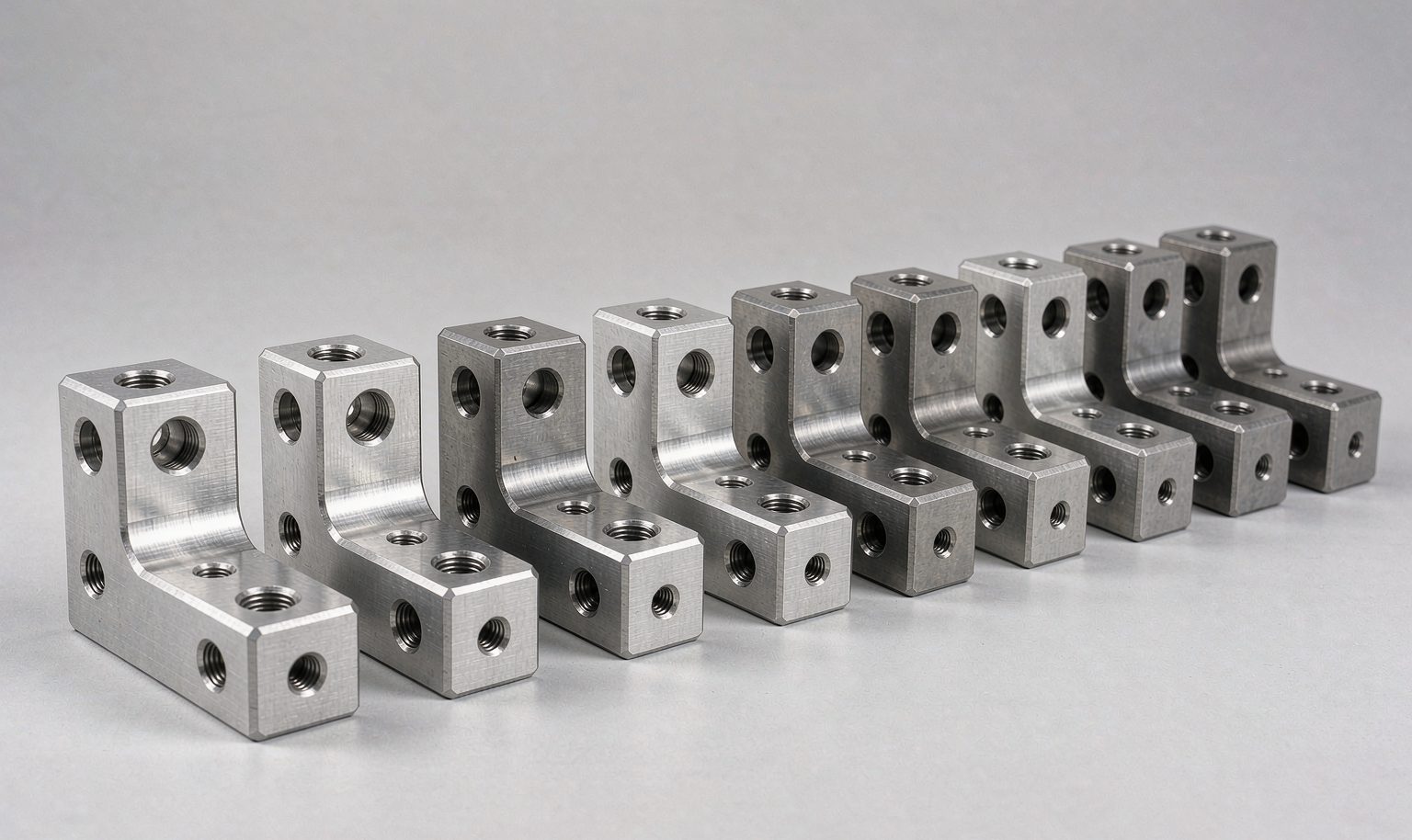 The manufacturing strategy should evolve with the maturity of the product — not stay fixed from first sample to volume.
What Do You Need to Do Next?
A branching call to action beats a single “contact us.” Pick the step that matches where you are.
I Need a Price
Upload CAD + drawing + quantity.
I Need Feedback
Upload CAD for a manufacturing review.
I Need Process Help
Send geometry + material + quantity.
Ready to Request CNC Machining?
Send your 3D CAD model, 2D drawing, material, quantity and critical requirements. Goldcattle can review the manufacturing route, flag the key production considerations and prepare a project-specific quotation.
One supplier across engineering, machining, finishing and inspection — under a single ISO 9001:2015 quality system.
Frequently Asked Questions
What does a CNC machining service include?
What files do I need to request a CNC quote?
Do I need a 2D drawing if I already have a 3D CAD model?
How do I choose between CNC milling and turning?
When should I use 5-axis machining?
How should I specify critical tolerances?
What quality documents should I request from a CNC supplier?
How do I compare CNC machining quotes?
Continue the CNC Buying Path
Xiamen Goldcattle Plastic & Metal Products Co., Ltd. — custom CNC machined parts since 1998.