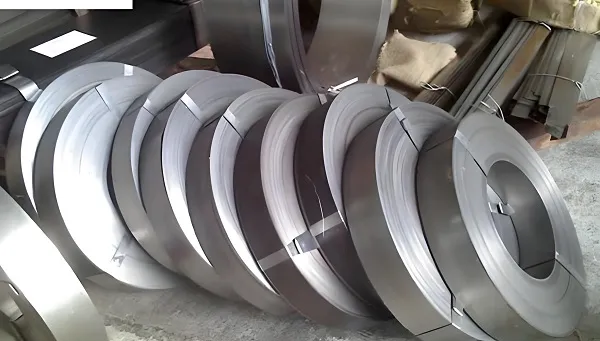
High Gloss Appliance Panel Injection Molding
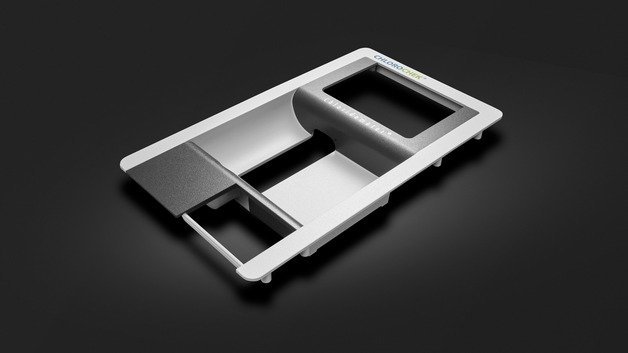
Mirror-polished mold surfaces, controlled gloss uniformity and flow / sink / weld-line management for cosmetic appliance panels — control fronts, door panels, bezels and decorative trims. Send your drawing and we review it for moldability and surface finish before quoting.
At a Glance
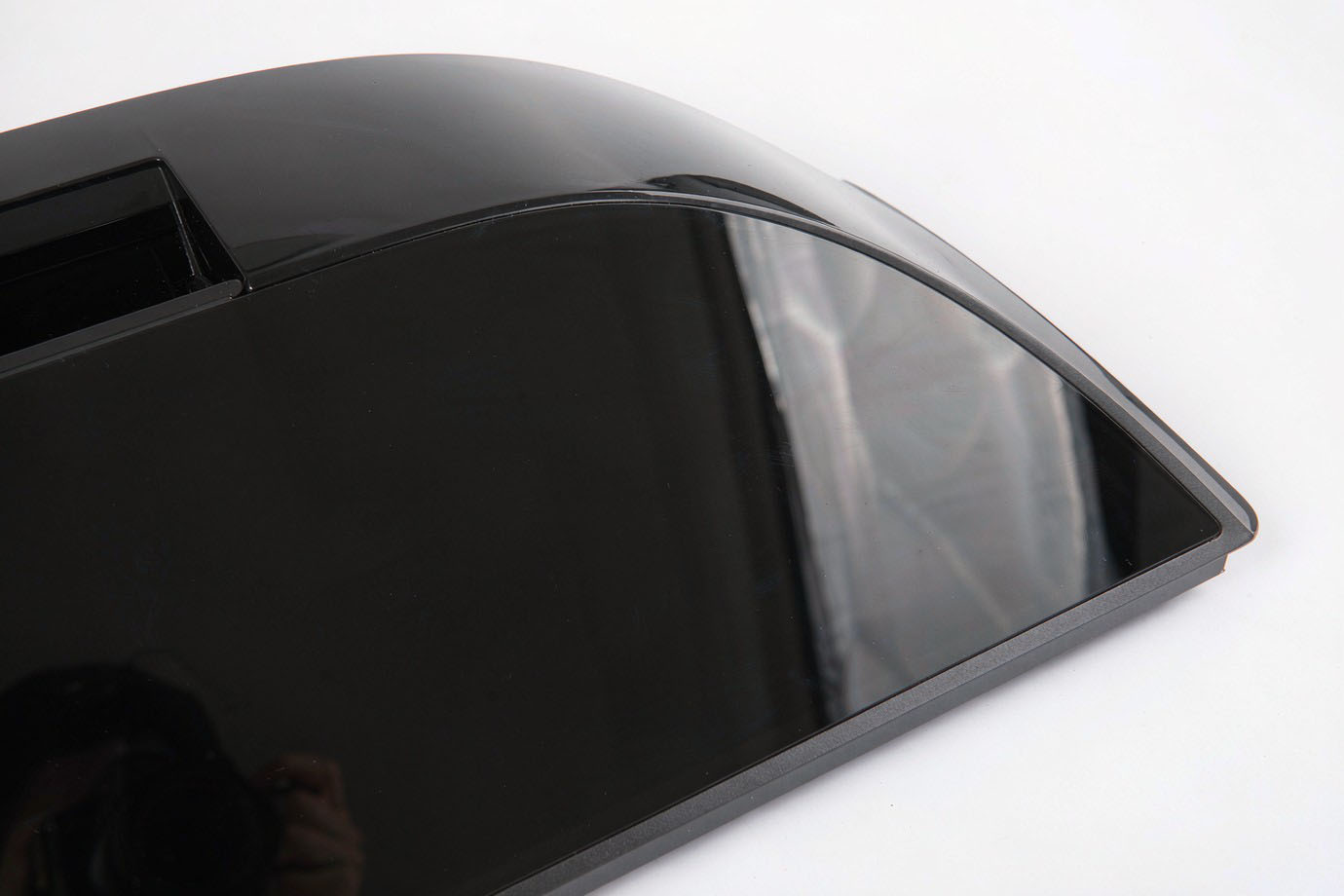
If you need a high-gloss cosmetic appliance panel, the practical path is to send the 2D/3D drawing, the resin or target, the gloss and colour target, and the estimated volume. We review the part for moldability and surface-finish risk — gate location, flow length, ribs and bosses that can telegraph through, and flatness — plan or build a mirror-polished tool, mold trial samples, assess gloss and cosmetic defects under agreed lighting, then run production. Gloss level, colour and the cosmetic standard are confirmed per your project, not assumed.
Panels We Mold
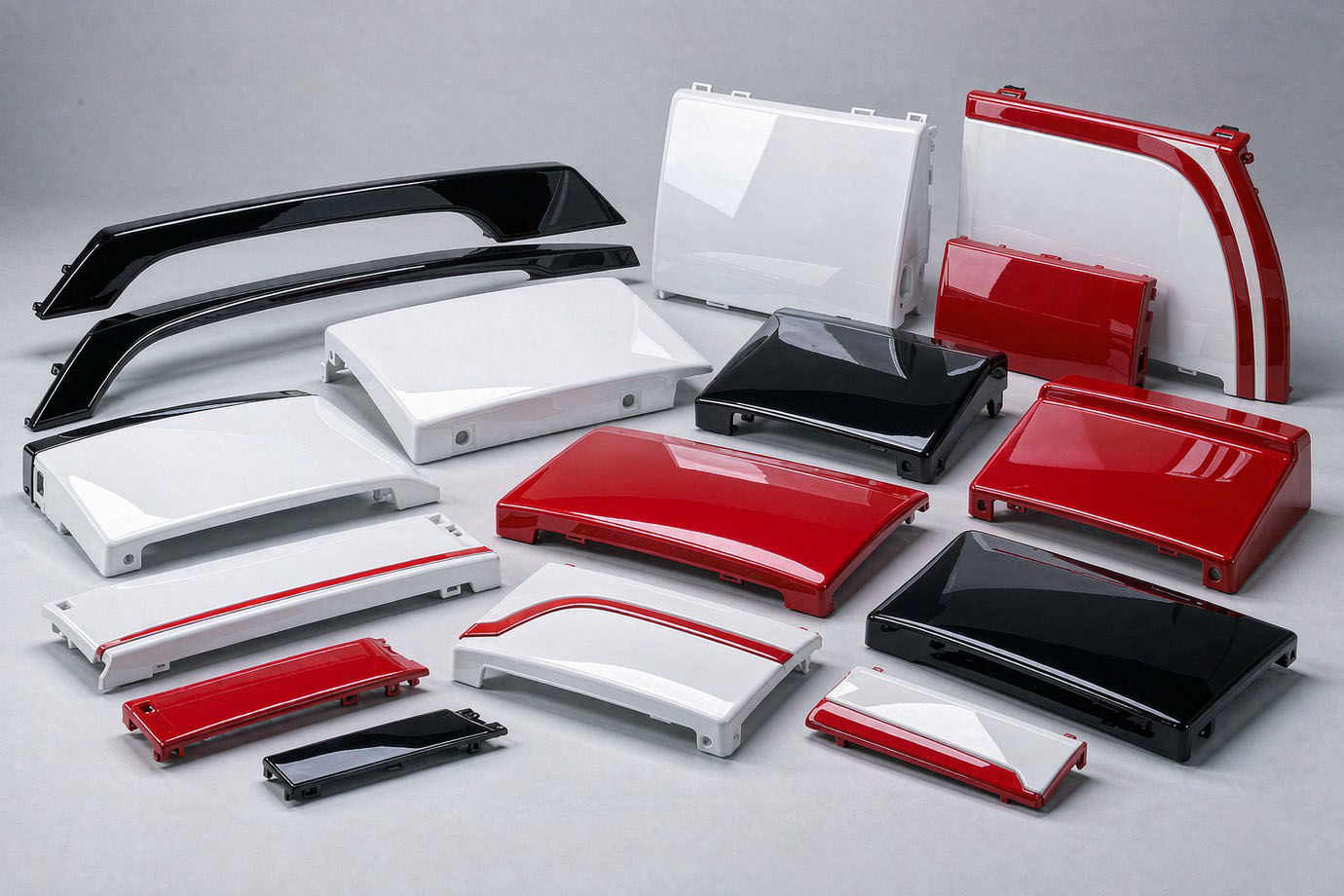
We quote and mold to your drawing rather than to a fixed catalogue of panels. The categories below are how buyers usually specify a high-gloss part; each carries different gloss, rigidity and cosmetic requirements that we confirm against the drawing and the visible-surface standard.
Control Panels & Fronts
The visible face of a white-goods or small-appliance product — must hold a uniform gloss and read cleanly under showroom and kitchen lighting.
Door & Lid Panels
Large flat or gently curved surfaces where gloss uniformity, flatness and the absence of sink and flow marks are the main challenges.
Bezels & Trims
Framing parts around displays, dials and handles where edge definition and a consistent gloss line matter.
Decorative Inlays
Contrast panels and accent strips that set off a matte body — the gloss differential is part of the design.
Display & Lens Windows
Clear or tinted glossy windows over a display; clarity and surface cleanliness are the focus.
Housing Facia
The cosmetic shell or fascia of a small appliance where the panel and the body are one molded face.
The High-Gloss Challenge
On a glossy surface there is nowhere for a defect to hide. The same flow, shrinkage and venting behaviour that is invisible on a textured part becomes obvious on a mirror face. Each row below is a real failure mode we design and process against, not a slogan.
Applications by Industry
The same molding discipline serves different product lines; the cosmetic standard and the resin differ by where the panel lives. For the broader scope of build-to-print molded parts, see our OEM custom injection molding plastic parts page.
Refrigeration
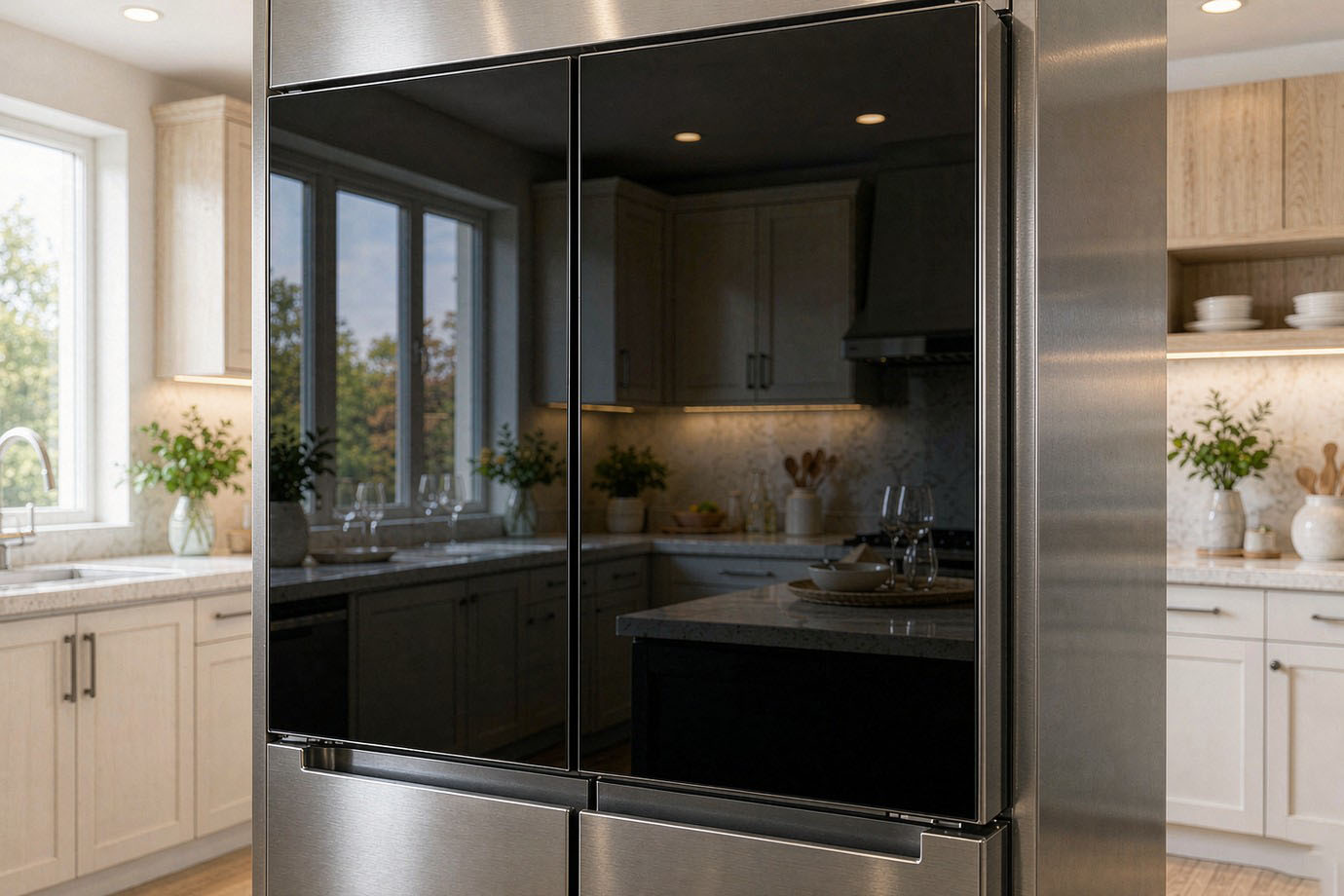
Door panels, dispenser fronts and control bezels. Focus: large flat gloss with no sink, and colour stability in a humid, cold-cycle environment.
Laundry & Dishcare
Control consoles and lid facias. Focus: gloss held against detergents and repeated wipe-down, and crisp edge definition.
Small Appliances
Kettles, cleaners, fryers, personal-care devices. Focus: a premium gloss look and tight colour match on a compact, high-touch face.
HVAC & Air Care
Panel fronts and decorative trims. Focus: gloss and colour retention where warm air and dust are present.
Material Selection
The resin sets the ceiling for gloss, hardness and chemical resistance. There is no single best choice; the table below states the trade-off and what the buyer must confirm. For a decision-oriented reference, see our materials page.
| Material | Surface & property consideration | What the buyer must confirm |
|---|---|---|
| PMMA (Acrylic) | Hardest, clearest high-gloss; excellent optical surface | Brittleness, impact need, cost, chemical exposure |
| PC | Clear, impact-resistant gloss; stable surface | Stress-crack risk, drying, colour and price |
| ABS / PC blend | Widely used appliance panel resin; balances gloss, impact and cost | Impact target, gloss level, regulatory profile |
| ASA | Holds gloss and colour under UV and humidity better than ABS | Outdoor or sunlit exposure, colour retention |
| Pre-coloured / MB | Colour and gloss carried by compound or masterbatch | Pantone / RAL target, lot-to-lot consistency |
Mold Engineering & Polishing
On a high-gloss part the tool is the surface. Most of the visible result is decided here, before a single shot is run. Each row below is an engineering judgment we apply, not an adjective about quality.
| Engineering question | What we address |
|---|---|
| Polish grade | Cavity diamond-polished to a specified surface roughness, commonly referenced to SPI A-1 / VDI 3400 high-polish classes or to a measured Ra on the limit sample. |
| Steel & coating | Selected for polishability, wear and corrosion resistance; a mirror face shows any scratch, so steel and upkeep are part of the plan. |
| Gate type & location | Where the melt enters decides flow marks, weld lines and gate blush on the visible face — often a film, submarine or edge gate away from the cosmetic centre. |
| Venting | Adequate vents at the last-fill area prevent burns and short gloss; a glossy face makes a burn obvious. |
| Mold temperature control | Stable, well-distributed cooling keeps gloss and flatness uniform across the panel. |
| Ribs & bosses | Designed so they do not telegraph (show through) on the glossy side — minimised or relocated, with wall balance. |
Tooling is planned from geometry, resin, expected life and volume — see our custom plastic injection mold page for the tooling scope.
Injection Process Control
A polished tool only delivers gloss when the process is held in a tight window. The parameters below are the ones that move the surface; we set and document them during qualification, then hold them in production.
Drying
Resin dried in a dehumidified hopper to the maker's spec so moisture does not cause splay or silver streaks on the glossy face.
Melt & Mold Temp
Melt and mold temperatures set within a band that gives even flow and stable gloss; mold temperature is held uniform across the panel.
Fill Profile
Injection speed and profile tuned so the melt front advances smoothly — avoiding jetting and hesitation that print as flow marks.
Hold & Pack
Holding pressure and pack time set to suppress sink at ribs and bosses without over-packing the gate area.
Cooling & Eject
Cooling time and ejection set so the panel leaves flat, with no warp that would break the gloss line.
Manufacturing, Inspection & Defect Control
The same five steps apply whether the panel is a control front or a door face. We inspect against the drawing and the agreed cosmetic standard under defined lighting, rather than against adjectives.
RFQ & DFM Review
Receive 2D/3D drawing, resin, gloss and colour target, visible-surface standard and estimated volume; flag moldability and finish risk.
Tool Build & Polish
Build the mold and diamond-polish the cavity to the agreed class; verify the surface before trial.
Trial & Finish Check
Mold trial parts; measure gloss, assess flow / sink / weld lines under agreed lighting and set the limit sample.
Production Release
After sample acceptance, run volume production to the approved material, process window and inspection plan.
Inspection & Delivery
Per-part cosmetic check plus gloss verification, packing and delivery with the agreed quality documents.
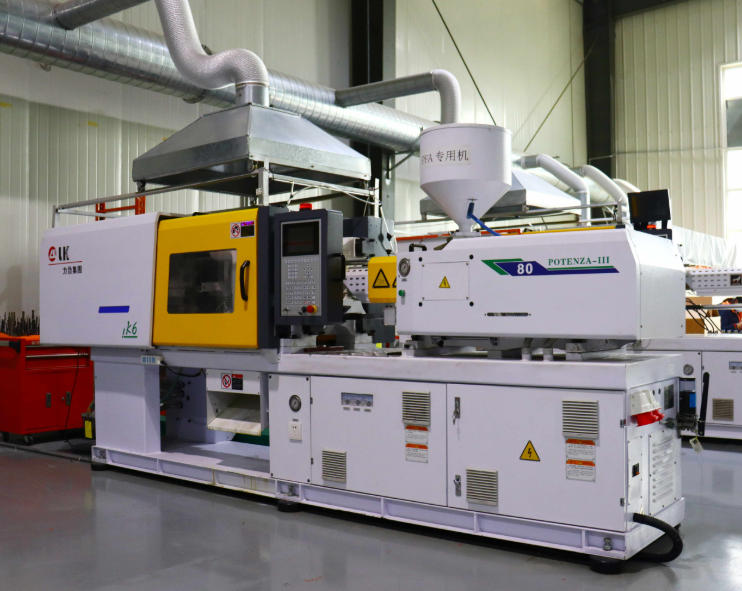
Gloss is verified with a gloss meter at the geometry you specify — typically 20 degrees for high-gloss and 60 degrees as a cross-check — and reported in gloss units (GU). Colour and cosmetic acceptance are judged against the agreed limit sample under defined lighting.

High-Gloss Molding vs Other Methods
We manufacture the panel by injection molding. Painting, in-mold film (IML) and polished sheet are shown here for comparison — they are alternative ways to reach a glossy look and each has a different cost and durability profile. The point is to pick the method by the part, not by habit.
| Method | Best for | Limit — when molding wins |
|---|---|---|
| Injection molding (gloss tool) | One-piece glossy panel at volume, integral colour, no post-paint | Polished tool cost upfront; below a volume it is hard to justify |
| Paint / clear-coat | Very high gloss or special effects on mixed substrates | Added process, VOC and scratch/wear of the coating over life |
| In-mold film / label (IML) | Decorated gloss with graphics or texture in one step | Film cost and registration; less flexible for low volume |
| Extruded / cast gloss sheet | Large flat sheets later cut and formed | Lower design freedom, joins and forming marks versus a molded face |
Procurement, Compliance & Request a Quote
For EU and US buyers the real questions on a cosmetic panel are colour and gloss consistency, documentation and test support — not a wall of certificate names. We state which grade and which evidence apply to your part, rather than claiming all parts comply.
Pantone / RAL Match
Matched by masterbatch or pre-coloured compound and confirmed on the limit sample under defined lighting before production.
Measured in GU
Gloss verified with a gloss meter at the geometry you specify (commonly 20 degrees), reported in gloss units.
Material & Inspection
Resin maker, grade, data sheet and any declaration supplied per project; cosmetic check against the agreed sample.
ISO 9001:2015
Xiamen Goldcattle Plastic & Metal Products Co., Ltd. is certified to ISO 9001:2015; the certificate is available on request.
To start a request you can also open our injection molding quote page.
What to send for a high-gloss panel quote
Required fields let us scope the project; optional fields sharpen the estimate.
Note: drawings are handled under NDA on request. We respond with a manufacturability and surface-finish review and a project-specific quotation — not a generic price list.
FAQ
Can you mold high-gloss or mirror-finish appliance panels from a drawing?
Which plastic gives the best gloss and surface for an appliance panel?
How do you avoid flow marks, sink marks and weld lines on glossy parts?
What mold surface finish and polish grade is used for high gloss?
What gloss level can be achieved and how is it measured?
Can you match a specific colour and gloss target such as Pantone or RAL?
What are typical lead times and minimum order for glossy panels?
What information is required for a high-gloss panel quote?
Ready to review your high-gloss panel project?
Send the drawing, the resin or target, and the gloss and colour target. We will return a moldability and surface-finish review and a tooling-and-unit-cost estimate scoped to your panel — not a one-size-fits-all number.
Request a Panel Quote Explore all injection molding servicesXiamen Goldcattle Plastic & Metal Products Co., Ltd. — Founded in 1998 · ISO 9001:2015 certified · OEM/ODM build-to-print.