Medical Device Sheet Metal Components: Compliant, Traceable, Production-Ready
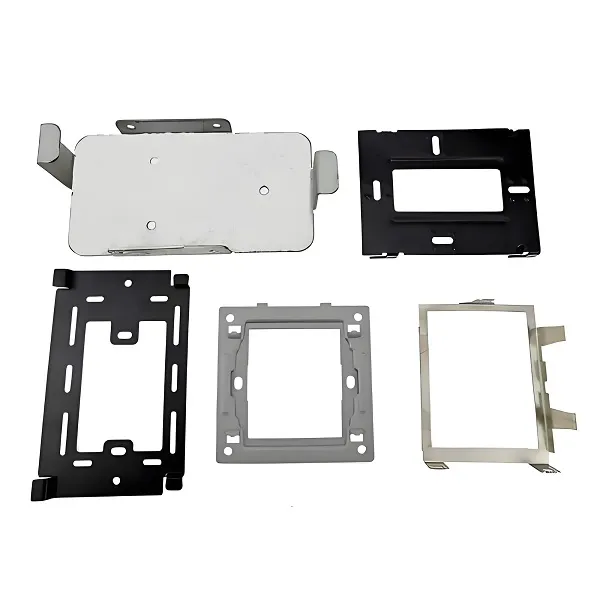
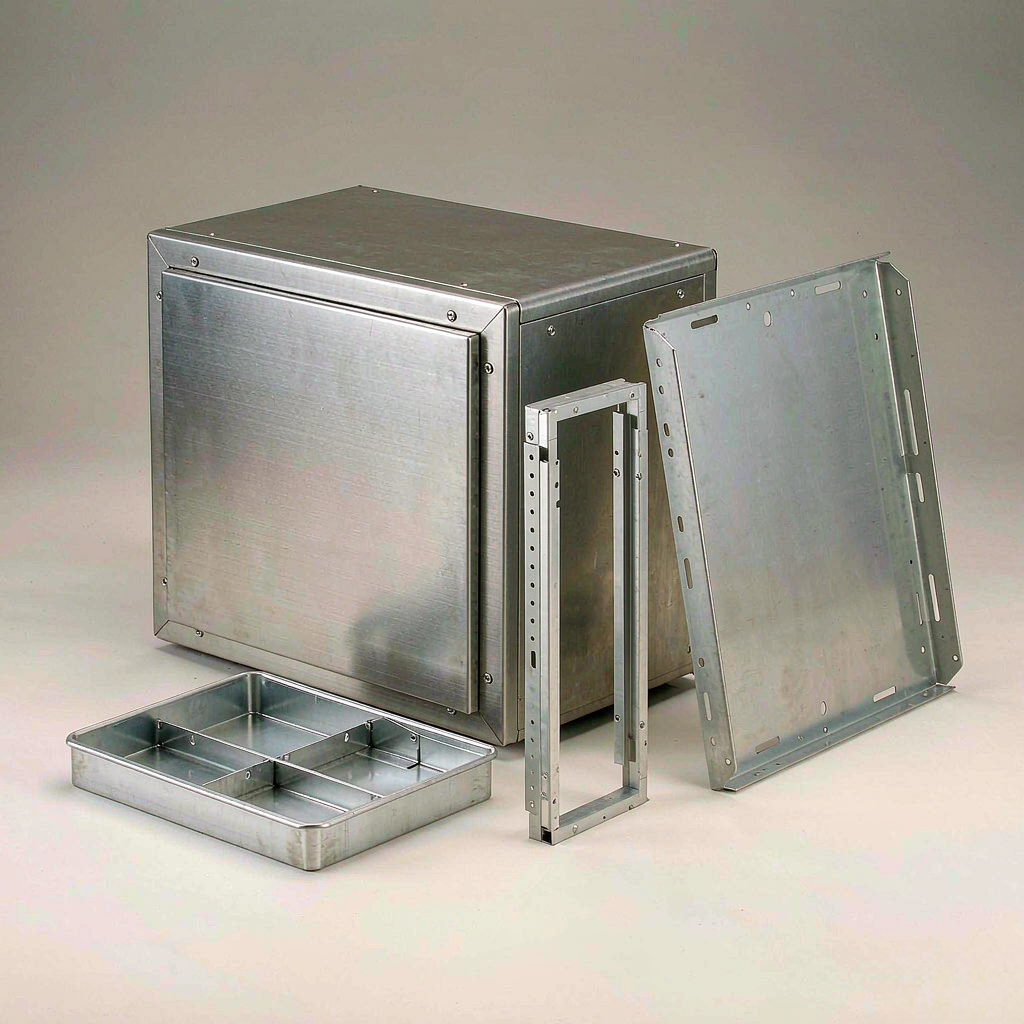
Enclosures, brackets, frames, trays and panels built for medical device OEMs — with material traceability, clean finishing and documented quality under an ISO 9001:2015 system and process controls aligned to ISO 13485.
At a glance
Medical device sheet metal components are built the same way as any precision sheet metal part — laser cut, bent, welded and finished — but held to a higher bar on documentation, material traceability and surface cleanliness. We run them under ISO 9001:2015 with process controls aligned to ISO 13485, supply material certs and lot records, and confirm tolerances per feature against your drawing. We are a manufacturing partner, not a regulated device manufacturer: your team owns device approval and biocompatibility validation.
Why medical sheet metal is different
The geometry of a medical bracket is rarely harder than an industrial one. What is different is everything around the part: which material lot it came from, how it was finished, and what paper travels with it. For a buyer, that means the questions shift from "can you make the shape" to "can you prove the part."
A general precision shop can make medical parts well — provided it treats three things as first-class, not afterthoughts:
From billet to box
Material certs and lot records that let you tie a finished part back to its heat and mill source.
Fit for the application
Deburring, passivation and electropolishing specified to the part's function and device class.
The quality file
FAI, dimensional reports and process records your regulatory submission can reference.
ISO 13485-aligned
Change control, identification and records managed under an ISO 9001:2015 system.
Materials for medical components
For medical sheet metal the default choices are stainless 304 and 316L, and medical-grade aluminum such as 5052 and 6061, typically across thicknesses from about 0.5 mm to 6 mm. Exact grades and ranges are confirmed per enquiry, and we supply material certs so the stock ties to your device file.
Material choice drives corrosion resistance, cleanability and how the part finishes:
Low-carbon, corrosion resistant
Common for instrument and equipment parts; low carbon reduces sensitization after welding. Biocompatibility for a specific device class is confirmed with your team.
Versatile, cleanable
Used for enclosures and non-implant contact surfaces; passivation helps maintain the chromium oxide layer.
Lightweight, formable
Suitable for housings, brackets and carts where weight matters; anodizing is an option for non-contact faces.
Confirm per device
Biocompatibility and grade are application-specific. We supply the cert; your engineering confirms the suitability for the intended use.
See the full materials overview for grades, available forms and finishing notes.
Dimensional tolerances & fit
Tolerances are defined per feature, not as one number for the whole part. Laser-cut dimensions are typically ±0.1 mm, hole position ±0.1 mm, and bend angle ±0.5°, with cutting referenced to ISO 9013 and welding to ISO 13920 where applicable. Critical features can be recovered by CNC machining after forming.
A medical part often must locate precisely against mating components — a panel to a gasket, a bracket to a bolt circle, a tray to a chassis. Because sheet metal accumulates variation through cutting, bending and welding, we separate tolerances by feature type rather than quoting a blanket value:
Cut dimensions
Reference for laser-cut profiles on common gauges; tighter values depend on thickness and feature size.
Hole position
Reference for pierced and cut holes relative to datum edges; small or near-edge holes are quoted per feature.
Bend angle
Reference for air-formed bends, with springback compensated per material and radius at first-article.
Welded fit
General tolerances for welded fabrications; critical openings machined after welding when needed.
Critical features
Datums and position controls from your drawing drive how assemblies are located and verified.
Stack-up
On assemblies we check whether accumulated tolerances leave enough clearance before production.
For the full precision treatment — bending springback, GD&T stack-up and post-weld recovery — see our tight-tolerance sheet metal fabrication page.
Deburring, cleaning & surface finish
Finishing is where medical parts diverge most from general industrial work. We control burrs, edges and surface state to the part's function, with passivation and electropolishing applied where your drawing or device class calls for them.
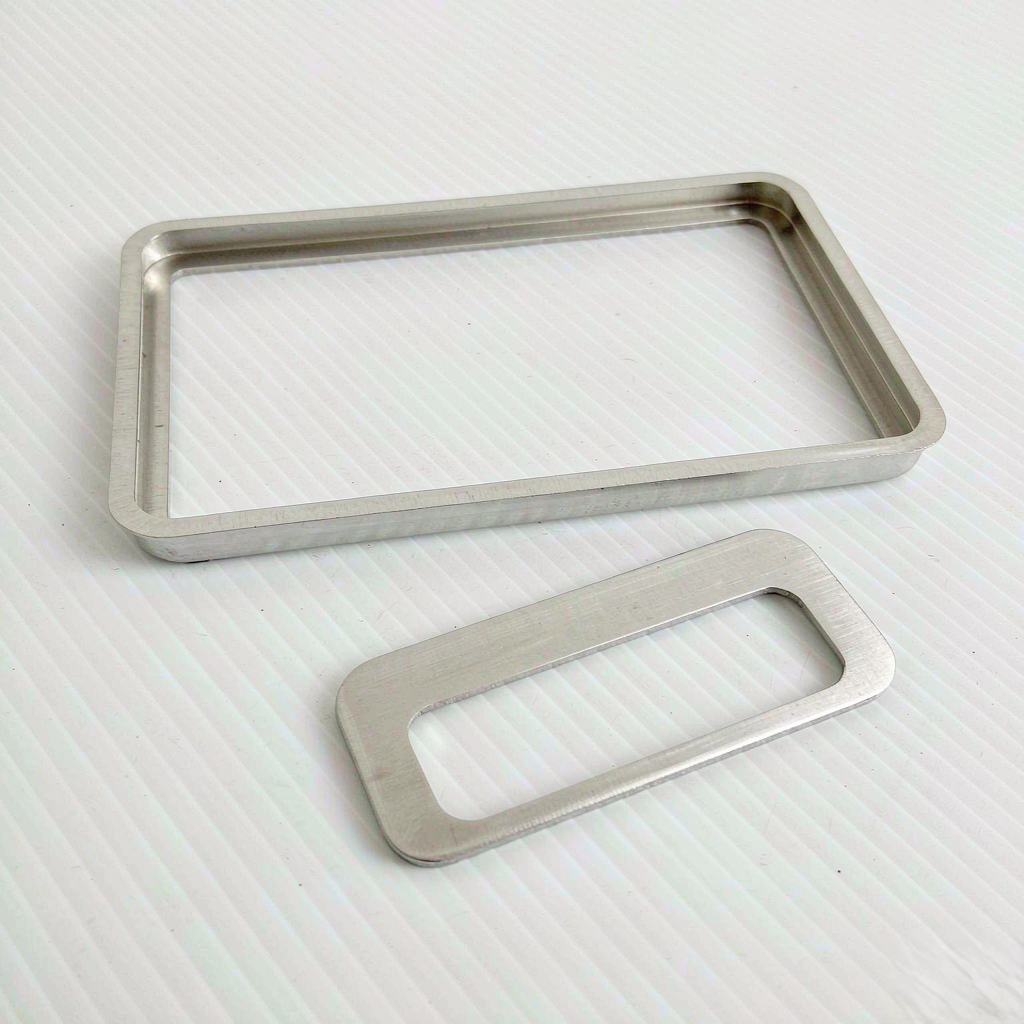
- Deburring: edges broken and burrs removed so parts handle and assemble safely; method chosen per material and geometry.
- Passivation: for stainless, per ASTM A967, to support the corrosion-resistant oxide layer — specified per part.
- Electropolishing: where a smoother, lower-particle surface is required, applied to drawing specification.
- Coatings: powder coating or anodizing for non-contact surfaces, selected for the application.
Welding & joining for medical parts
Welded fabrications are verified against ISO 13920 general tolerances, with weld sequence and fixturing planned to control distortion. Appearance and post-weld finishing (passivation, electropolish) are specified per part.
Where a medical assembly is welded rather than fastened, heat management decides whether the part holds its shape:
Welding heat moves metal and can discolor or distort a stainless enclosure that must seal and look clean.
We plan weld sequence and clamping, control distortion, then passivate or electropolish to restore the surface per spec.
- TIG welding: used for stainless enclosures and frames where a clean, controlled joint matters.
- Distortion control: fixture design and tack strategy keep contraction pulling toward true.
- Post-weld recovery: critical bores or faces are machined after welding rather than hoped to hold.
- Identification: weld and lot details recorded under the quality system for traceability.
Documentation & traceability
Documentation is part of the deliverable. We keep material certificates (MTC, EN 10204 3.1) and lot or heat records under ISO 9001:2015, and can tag parts to a material lot on request. The level of traceability is scoped with you per project.
What we can supply alongside the parts:
EN 10204 3.1
Mill test certificates tying the stock to its heat and composition for your device file.
On request
Full first-part verification used to lock the process before a production run.
CMM where critical
Measured reports tied to your datums for critical geometry.
ISO 9001:2015
Process and lot records retained under the quality system for audit and recall readiness.
Sheet metal + CNC secondary machining
When a feature must be tighter than cutting or bending can hold, we laser-cut and form the blank, then finish critical holes, pockets or faces on a CNC mill or drill. This hybrid recovers tolerances forming alone cannot reach.
Forming shapes the part economically; machining hits the features that must be exact. Combining them is often the most cost-effective route to a medical part with tight locating features:
- Tight bores in a bent bracket: cut a pilot, bend, then bore to final size so the hole is true after forming.
- Mating faces and channels: mill flat seats or slots the brake cannot produce.
- Threads and reamed holes: added after forming to avoid distortion.
For parts that are predominantly machined but include formed features, compare with our tight-tolerance CNC machining capability — the right process mix depends on which features are critical.
Quality inspection & verification
Verification ranges from pin gauges and calipers for simple features to CMM scanning for critical geometry, all under our ISO 9001:2015 quality system. FAI and dimensional reports are available on request.
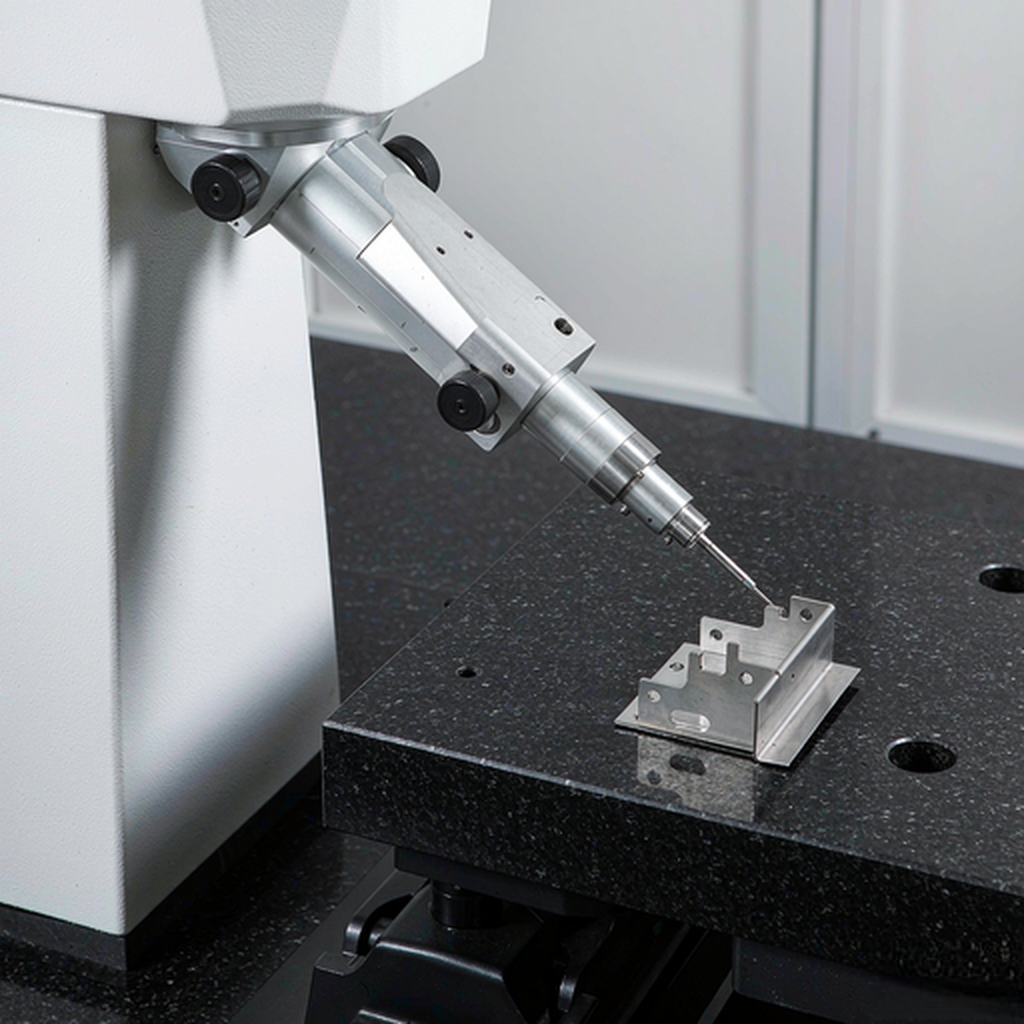
"Tight" is only real if it is measured. Our inspection scales with the part:
- FAI: the first part off the line is fully checked and used to lock the process.
- In-process checks: bend angle, hole position and flatness sampled during the run.
- CMM reporting: for critical geometry we produce a dimensional report tied to your datums.
- Traceability: material certs and process records kept under ISO 9001:2015.
Applications across medical equipment
Medical sheet metal appears wherever a device needs a formed, traced and documented structure — enclosures, brackets, chassis, trays, carts and panels across diagnostic, surgical, imaging and life-science equipment.
Mounting and sealing faces
Panels that align to gaskets, rails and lids with repeatable, documented fits.
Hole patterns that line up
Supporting structures where bolt circles and slots must match the mating part.
Cleanable, traceable
Instrument trays and fixtures where finish and material certs matter.
Welded, then verified
Mobile equipment structures with critical faces recovered after welding.
For enclosure-focused programs, see our custom sheet metal electronics enclosures capability.
Prototype to production
We support prototypes from 1 piece and scale to production volumes, with lead time depending on part complexity, material and order size. Sampling starts at 1 piece so you can validate fit, finish and documentation before committing to a run.
The same drawing and quality plan drive both prototype and production, so what you validate is what you get:
- Prototype: 1-piece sampling to confirm fit, bend strategy, finish and any hybrid machining.
- Low volume: flexible runs for pre-production, spares and design iterations.
- Production: repeatable setups with in-process checks and FAI on new lots.
Learn how formed parts sit alongside our broader sheet metal fabrication services.
Case examples
Three representative medical part types show how traceability, finish and feature-level tolerance are actually delivered — each summarized without disclosing customer identities.
Stainless enclosure, 316L
- Critical featureSealing face + certs
- ApproachLaser + bend + passivate
- ResultDocumented, cleanable part
A 316L enclosure needed a flat sealing face and a full material cert. We cut and formed the shell, passivated per ASTM A967, and supplied EN 10204 3.1 with the order.
Instrument tray, aluminum 5052
- Critical featureHole pattern + deburr
- ApproachLaser locate + deburr
- ResultRepeatable, safe edges
A 5052 tray required a precise hole pattern and clean, deburred edges for handling. We located holes by laser against a common datum and fully deburred before packing.
Welded bracket, then bored
- Critical featureBore after welding
- ApproachTIG weld + CNC bore
- ResultTight fit recovered
A welded stainless bracket's mounting bore would have shifted with heat. We welded the frame, then machined the bore to final size so the shaft fit held regardless of weld movement.
Request a medical component quote
Send your drawing and we will confirm materials, tolerances, finish and the documentation your quality file requires — before you commit to a run.
Request a QuoteXiamen Goldcattle Plastic & Metal Products Co., Ltd. · Founded in 1998 · Quoted to your drawing, not to a generic number.
Frequently asked questions
Can you make sheet metal components for medical devices?
Yes. We manufacture sheet metal components — enclosures, brackets, frames, trays and panels — for medical equipment OEMs under our ISO 9001:2015 quality system, with process controls aligned to ISO 13485 requirements. Final device regulatory approval and biocompatibility validation remain the OEM's responsibility; we supply material certifications and traceability to support your documentation.
Are you ISO 13485 certified?
ISO 9001:2015 is our held certification. Our process controls for medical work are aligned to ISO 13485 requirements — documentation, traceability and change control — rather than a separate ISO 13485 certificate. We recommend confirming this against your supplier-qualification needs before onboarding.
Which materials do you offer for medical sheet metal?
Common choices are stainless 304 and 316L, and medical-grade aluminum such as 5052 and 6061, across typical thicknesses from about 0.5 mm to 6 mm. Biocompatibility and grade selection for a specific device class are confirmed per enquiry; we supply material certs (EN 10204 3.1) so you can tie stock to your device file.
How do you handle material traceability?
We keep material certificates (MTC, EN 10204 3.1) and lot or heat records under our ISO 9001:2015 system, and can tag parts to a material lot on request. Full device-level traceability systems are scoped with you per project — tell us the level your regulatory file requires.
What surface finishes are available for medical parts?
Options include precision deburring, passivation for stainless per ASTM A967, and electropolishing where specified, plus powder coating or anodizing for non-contact surfaces. Which finish applies depends on the part's function and device class — confirm the requirement on your drawing.
What tolerances can you hold on medical sheet metal?
Tolerances are held per feature: laser-cut dimensions typically ±0.1 mm, hole position ±0.1 mm, bend angle ±0.5°, verified against ISO 9013 for cutting and ISO 13920 for welding as applicable. Critical features can be recovered by CNC machining after forming. Exact values are confirmed against your drawing — we do not quote a single blanket number.
Do you weld medical sheet metal parts?
Yes, including TIG welding for stainless enclosures and frames, with weld sequence and fixturing planned to control distortion, then verified to ISO 13920 general tolerances. Weld appearance and post-weld finishing such as passivation or electropolishing are specified per part.
What documentation do you provide with an order?
Typical documentation includes material certs (EN 10204 3.1), first-article inspection (FAI) reports on request, dimensional reports from CMM where critical, and lot and process records under ISO 9001:2015. Tell us which documents your quality file requires and we will include them.
What is your minimum order quantity for medical parts?
We support prototypes from 1 piece and scale to production volumes, so you can validate fit and finish before committing to a run. MOQ is 1 piece for sampling; production quantities are quoted per part.
How should I send a request for a medical sheet metal quote?
Send your 2D/3D drawing with the tolerance block, GD&T callouts and any CTQ list, plus material grade, finish and quantity. For medical work, also note any documentation, traceability level and finish requirements so we can quote and plan the quality records accordingly.
Ready to scope your medical component?
Send the drawing with your material, finish and documentation requirements, and we will tell you — feature by feature — what we can hold and what records ship with the order.
Discuss Your Medical Part Explore full sheet metal capabilities