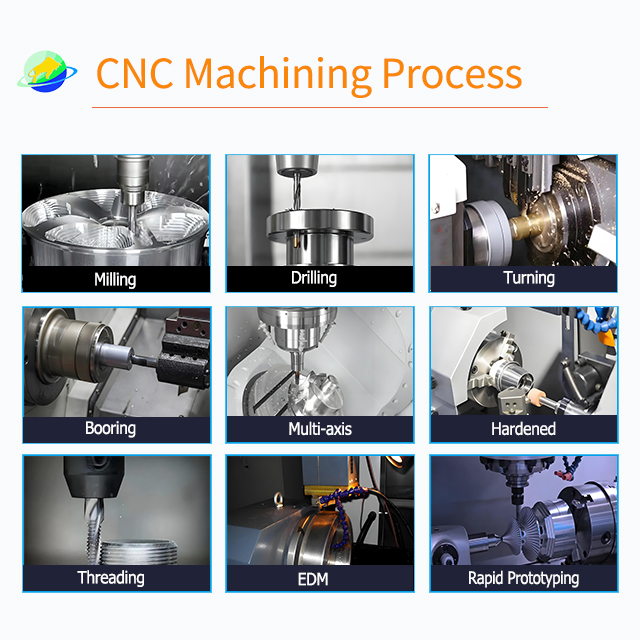
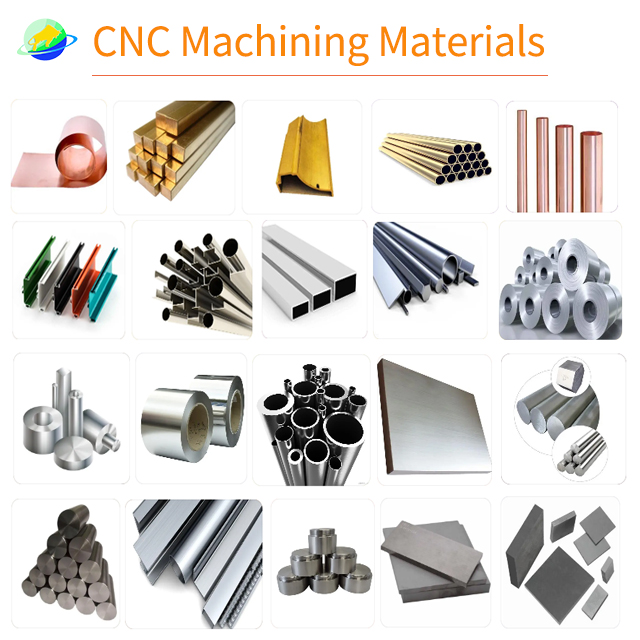
Precision Aluminum CNC Parts | ±0.005mm, 6 Families
|
Attribute
|
Details
|
|
Machining Types
|
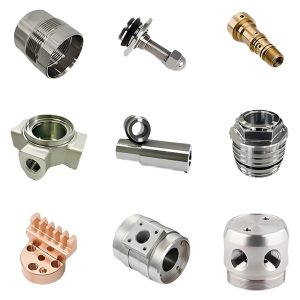
CNC lathe, wire cutting, drilling, machining center, knurling, turning, parts processing, laser cutting, grinding, tapping, copper parts processing, waterjet cutting, milling, aluminum alloy processing, thermal cutting, electrical discharge machining, boring, planing, stainless steel parts processing, aluminum parts processing, turning, welding, CNC hardware milling, extrusion, sawing, punching, thread tapping
|
|
Machining Precision
|
±0.01mm
|
|
Processing Materials
|
Plastic, PVC, stainless steel, aluminum alloy, acrylic, copper, iron, PC, PU, ABS, PPS, brass, HDPE, POM, iron plate, carbon steel, bronze, stainless steel plate, red copper, aluminum, PEEK, aluminum profile, stainless steel, special steel, aluminum alloy, PP, PA (nylon), 40CrMo/304
|
|
Maximum Length
|
999
|
|
Tolerance
|
Customizable tolerance supported
|
|
Surface Roughness
|
Ra1 – Ra3.2
|
|
Sampling Cycle
|
7 days
|
|
Processing Cycle
|
15 days
|
|
Brand
|
Mingxiangxing (example, can be replaced)
|
|
Specification
|
CNC custom processing
|
Description
Custom Precision Aluminum CNC Parts Made to Your Drawings
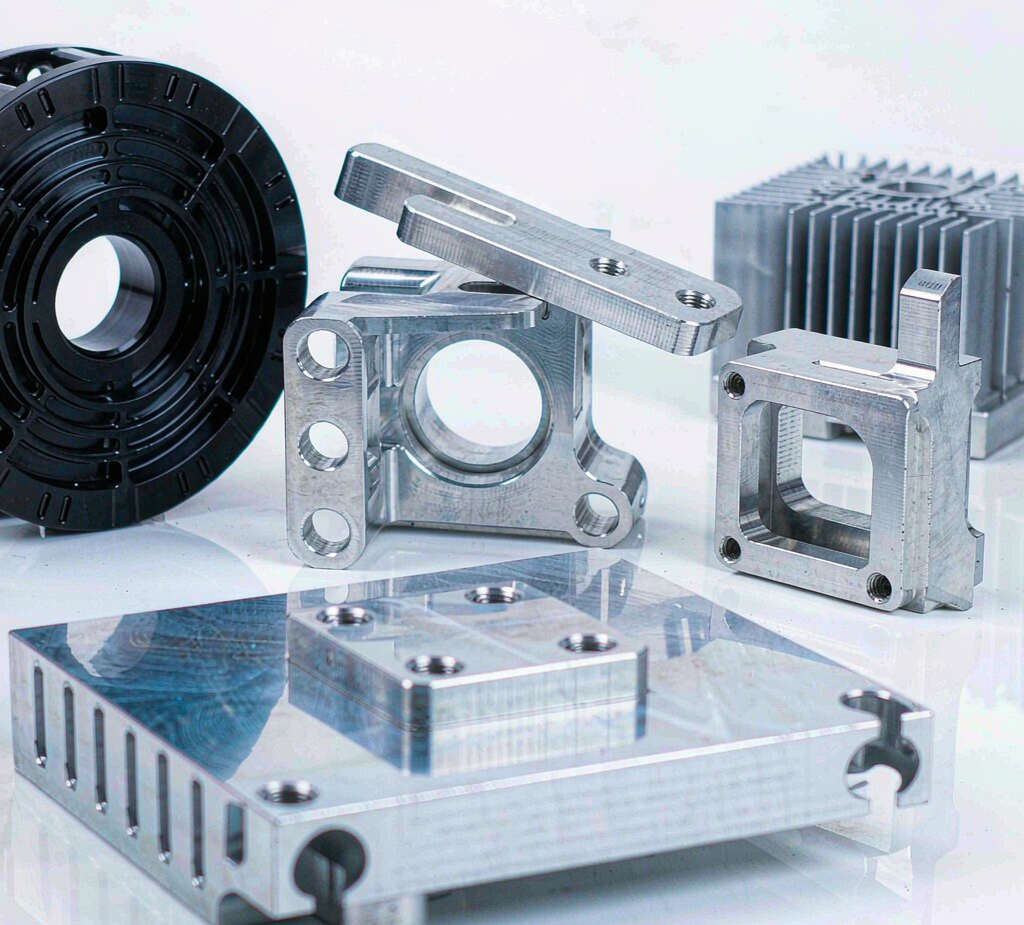
We make aluminum housings, brackets, plates, flanges, shafts and heat sinks from customer drawings and engineering specifications. From a first sample to repeat production, one team reviews the material, the process, the finish and the inspection plan.
Xiamen Goldcattle is a custom manufacturer. We do not sell a stock catalog of aluminum parts. Every quote starts with your drawing, your tolerances and the job the part has to do.
3-axis, 4-axis and 5-axis milling. CNC turning. Six aluminum grades. Prototype to repeat orders.
01 / Established
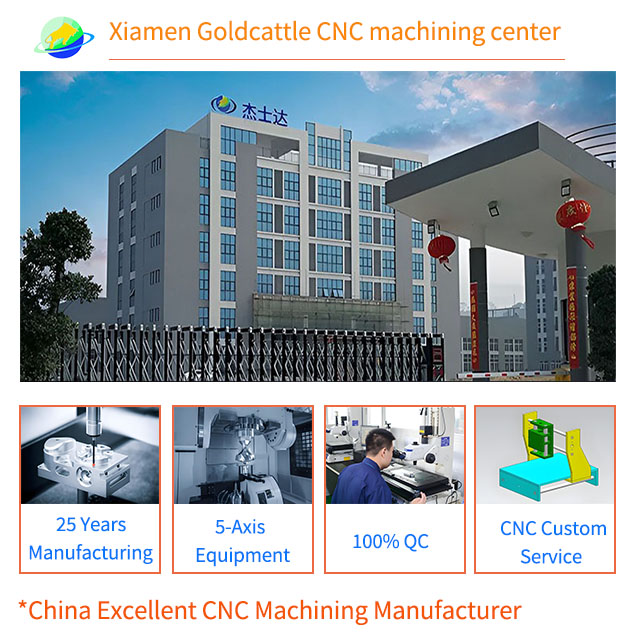
Founded in 1998
A custom parts manufacturer based in Xiamen, China, serving industrial buyers worldwide.
02 / Integration
Six core processes in-house
CNC machining, injection molding, mold making, 3D printing, die casting and sheet metal fabrication.
03 / Equipment
100+ machines across six processes
One combined equipment figure for all six core processes under one quality system.
04 / Approach
Drawing first, then process
We review the part and its critical features before we choose the machine or the setup.
1 · Aluminum Parts We Manufacture
We make custom machined aluminum parts in six families. Each family has a different set of critical features, so each one is quoted from the drawing rather than from a price list.
Aluminum Housings and Enclosures
Electronic housings, equipment enclosures, protective casings and recessed cavities with precision mounting interfaces.
- Mounting face flatness
- Hole position accuracy
- Sealing face finish
Aluminum Brackets and Mounts
Structural brackets, mounting arms, support blocks, fixture components and equipment mounting parts.
- Bearing strength
- Hole and slot position
- Assembly interfaces
Aluminum Plates and Faceplates
Base plates, instrument panels, mounting plates, control panels and custom machined plates.
- Flatness and plate thickness
- Hole pattern
- Surface appearance
Aluminum Flanges and Fittings
Machined flanges, connection blocks, manifolds and precision interface components.
- Sealing faces
- Bore diameter
- Thread and connection fit
Aluminum Shafts and Sleeves
Precision shafts, bushings, sleeves, bearing seats and rotational components.
- Concentricity
- Runout
- Fit dimensions
Aluminum Heat Sinks and Thermal Parts
Custom heat sinks, cooling plates, finned structures and thermal management components.
- Fin thickness and spacing
- Contact face flatness
- Warpage control
Tell us which family your part belongs to and send the drawing. If the part does not fit any family above, send it anyway. We review each enquiry on its geometry.
2 · CNC Machining Capabilities for Aluminum Parts
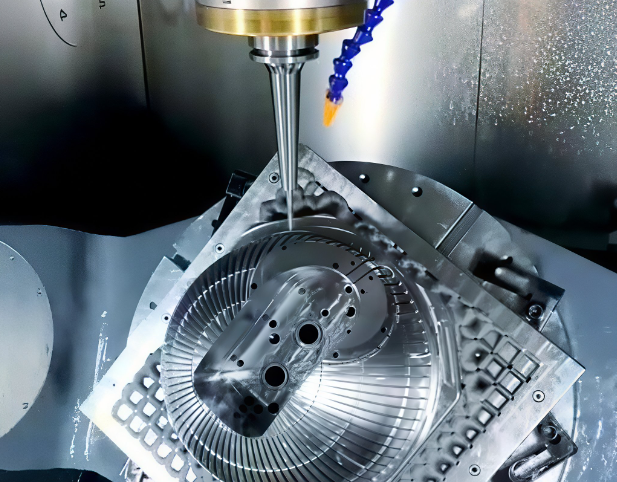
We match the process to the part. A simple plate rarely needs five-axis work. A part with angled holes and several faces may be faster and more consistent in one multi-axis setup.
The table below shows how we think about each route. It is a guide, not a promise. The final process is chosen after the drawing review.
Swipe the table to see all columns.
| Process | Best suited to | What it gives the buyer |
|---|---|---|
| 3-axis CNC milling | Plates, brackets, simple housings, faceplates | Cost-effective route for parts with features on one or two faces. |
| 4-axis CNC milling | Parts with features on several sides or around a cylinder | Fewer manual turns and better relations between side features. |
| 5-axis CNC machining | Angled holes, complex surfaces, multi-face parts | Better access to complex geometry and fewer setups in many cases. |
| CNC turning | Shafts, sleeves, bushings, round components | A consistent axis for round features and rotational parts. |
| Turn-mill machining | Parts with both turned and milled features | Fewer handoffs between separate machines and setups. |
We do not use five-axis for everything
More axes do not automatically mean a better part. We choose the route that holds the drawing requirements at a sensible cost. If a three-axis setup is the right answer, we will say so.
3 · Aluminum Alloys for Custom CNC Parts
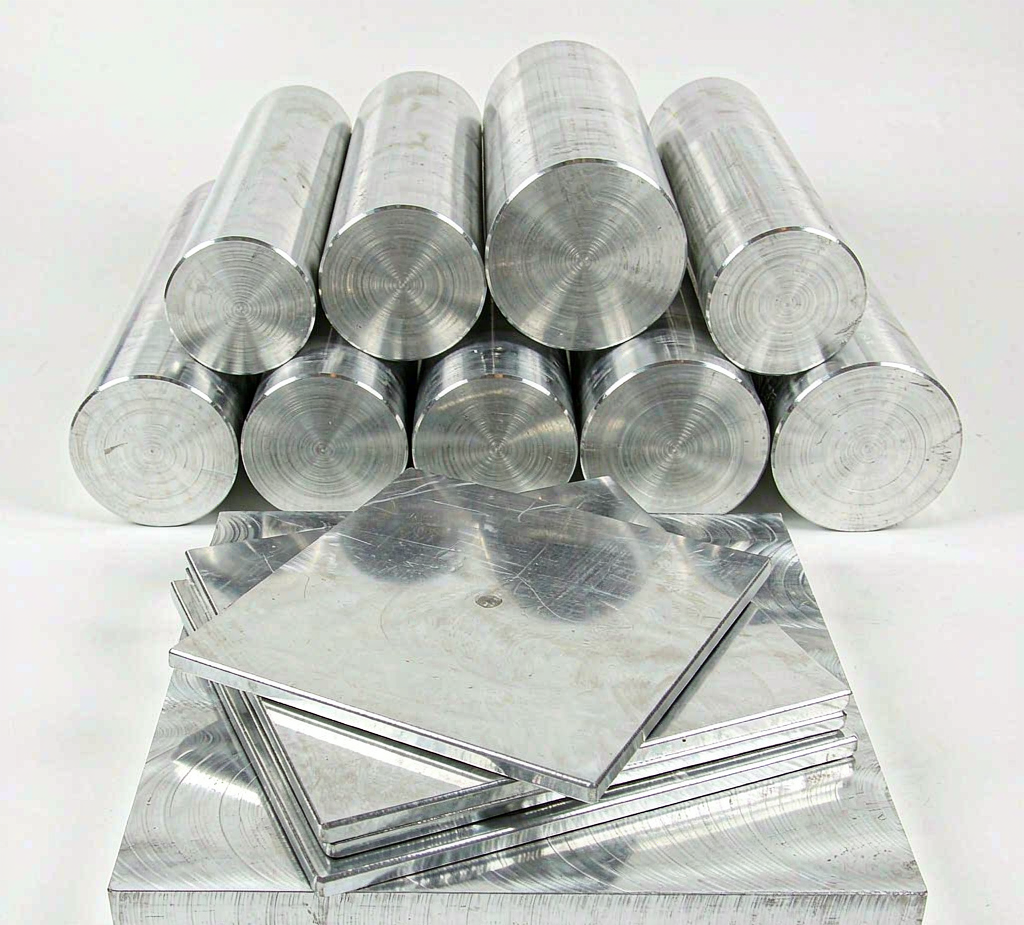
The grade and temper change the strength, the corrosion behavior and the way the part machines. Buyers often name a grade in the drawing. When they do not, we help choose one.
Our engineering team reviews your part requirements and recommends an aluminum alloy based on mechanical performance, the machining route and the intended operating environment.
Swipe the table to see all columns.
| Alloy | Typical use | What to check before choosing |
|---|---|---|
| 6061 | General structures, housings, brackets, bases | A good all-round choice for many machined parts. |
| 7075 | High-strength structures and loaded brackets | Higher strength, but corrosion protection needs planning. |
| 5052 | Enclosures, boxes, plate-type parts | Good corrosion resistance and forming behavior. |
| 6063 | Profile structures, frames, visible parts | Suited to profile sections and certain surface finishes. |
| 2024 | High-strength structural parts | Use where the design is validated and protection is defined. |
| A380 | Cast housings that need later machining | A380 is a cast alloy. Review porosity, machining allowance and datums. |
Grade and temper must match supply
We confirm the grade, the temper and the material document before we quote. We do not substitute one temper for another without your approval. A380 appears here only for parts that are cast first and then machined.
4 · Precision and Dimensional Control
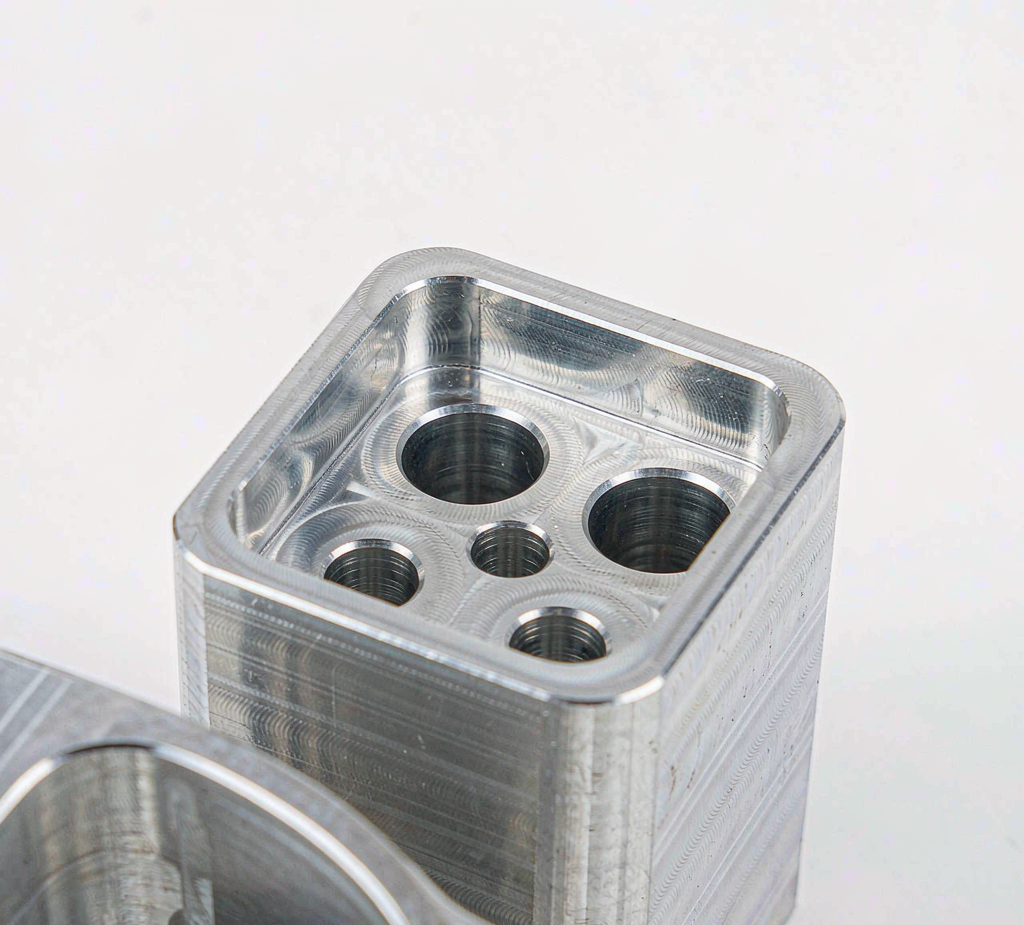
Tolerances are reviewed against the drawing. We look at the alloy, the shape, the process and the inspection method together. A flatness callout on a large plate is a different problem from a bore size in a small bracket.
For features that need closer control, we confirm the process and the inspection method before production. We do not quote a single tolerance for every part or every feature.
Swipe the table to see all columns.
| Feature we review | What it means on the drawing | How we handle it |
|---|---|---|
| Linear dimensions | Length, width, thickness | Checked against the drawing and the agreed inspection plan. |
| Hole diameter and fit | Bore size and fit class | Tool choice and check method agreed before machining. |
| Position tolerance | Hole location and pattern | Datum scheme reviewed at the drawing stage. |
| Flatness and parallelism | Mounting and sealing faces | Setup and clamping reviewed to limit movement. |
| Concentricity and runout | Rotational features | Turning setup and inspection method confirmed. |
| Surface roughness | Finish on functional faces | Toolpath and finishing step agreed with the drawing. |
There is no single blanket tolerance for aluminum CNC work. We agree the critical features with you first, then state how each one will be checked.
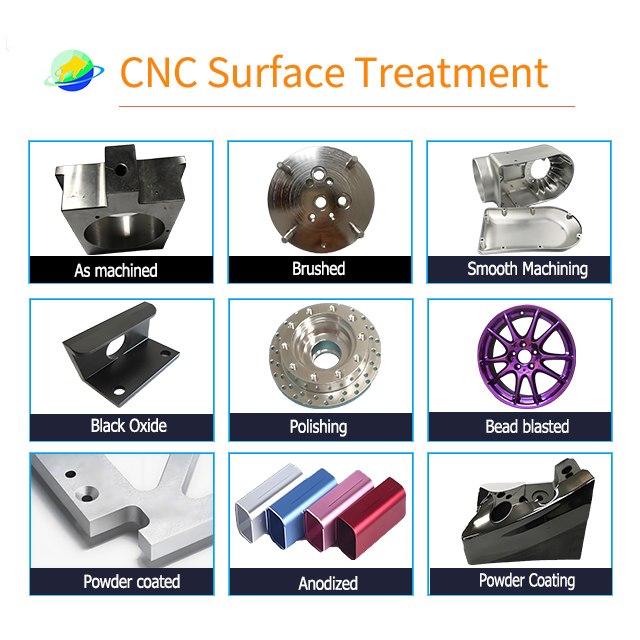
5 · Surface Finishing for Aluminum CNC Parts
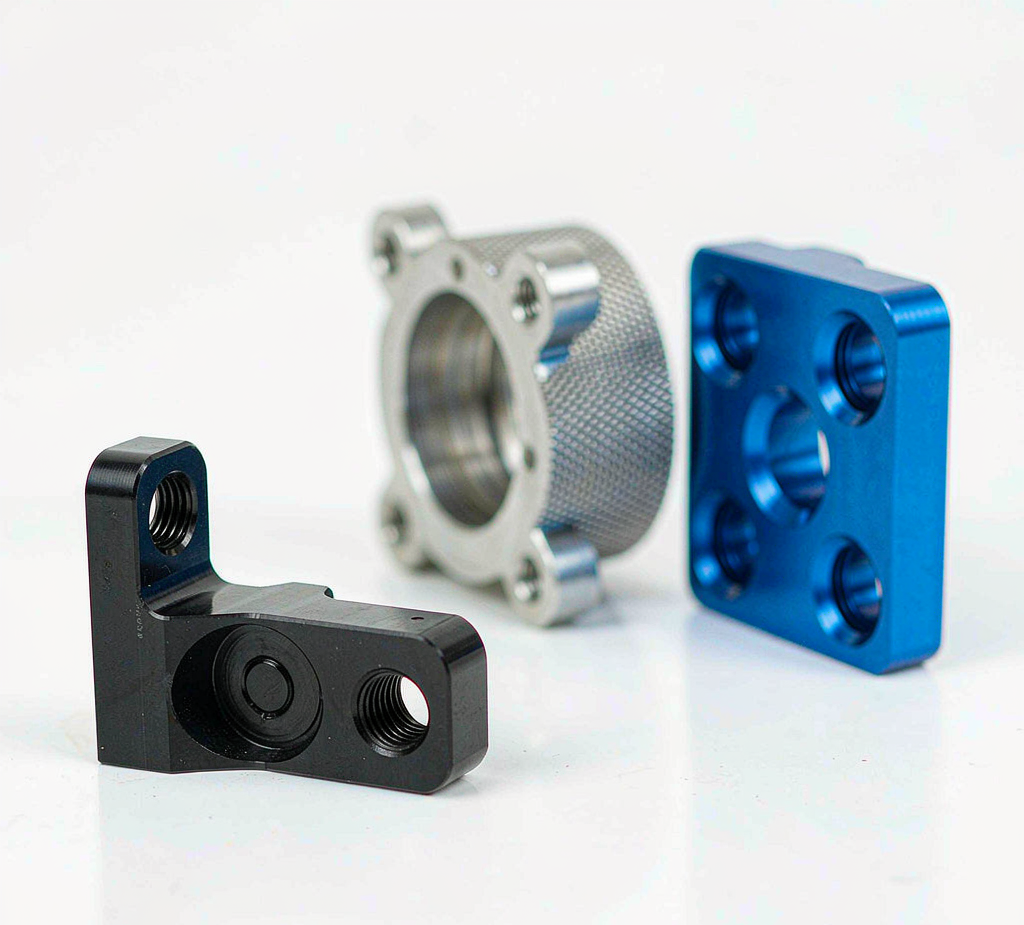
Finishing changes how a part looks and can change its final size. A coating builds thickness on a surface. That matters on a bore, a thread or a press fit.
We review the finish with the drawing so that the part still meets the requirement after finishing, not only before it.
Swipe the table to see all columns.
| Finish | Main function | What we specify |
|---|---|---|
| Anodizing | Corrosion resistance and color | Type, color, coating thickness and sealing requirement. |
| Hard anodizing | Wear resistance on sliding faces | Coating thickness, masking and the effect on fit sizes. |
| Bead blasting | Even matte surface | Blast media, coverage and resulting roughness. |
| Brushed finish | Directional surface texture | Grain direction and consistency between faces. |
| Powder coating | Protective colored layer | Coating thickness, adhesion and color reference. |
| Chromate conversion | Corrosion protection and contact surfaces | Coating type and which areas must stay conductive. |
What we review before finishing
- Anodizing type, where the project defines it.
- Natural, black or a custom color, with the color reference.
- Required coating thickness where it affects a fit.
- Masking on precision bores, threaded holes and contact faces.
- Sealing needs and the cosmetic check standard.
Finishing is coordinated as part of the production flow. We confirm who performs each finishing step for your order and inspect the returned parts against the agreed requirement.
6 · DFM and Cost Control
Design for manufacturability is a real engineering step for us. We review the drawing before the quote and suggest changes only when the part function stays the same.
Geometry
Wall thickness and pockets
Thin walls and deep pockets can move under cutting force. We review the wall, the pocket depth and the clamping plan.
Tool access
Corner radii and tool reach
Sharp internal corners may need a special tool. A small radius change can remove that need.
Datums
Machining datum scheme
A clear datum reduces error between setups. We review it against the inspection plan.
Tolerance
Only where it matters
Tight control on non-functional features raises cost. We flag features that may not need it.
Material
Stock utilization
Part orientation on the stock changes waste. We look at this on larger and heavier parts.
Threads
Hole and thread design
Hole depth, thread length and access affect tool life and cycle time. We review them early.
Any DFM change is sent to you for approval before production. We do not change the drawing on our side.
7 · Quality Inspection and Documentation
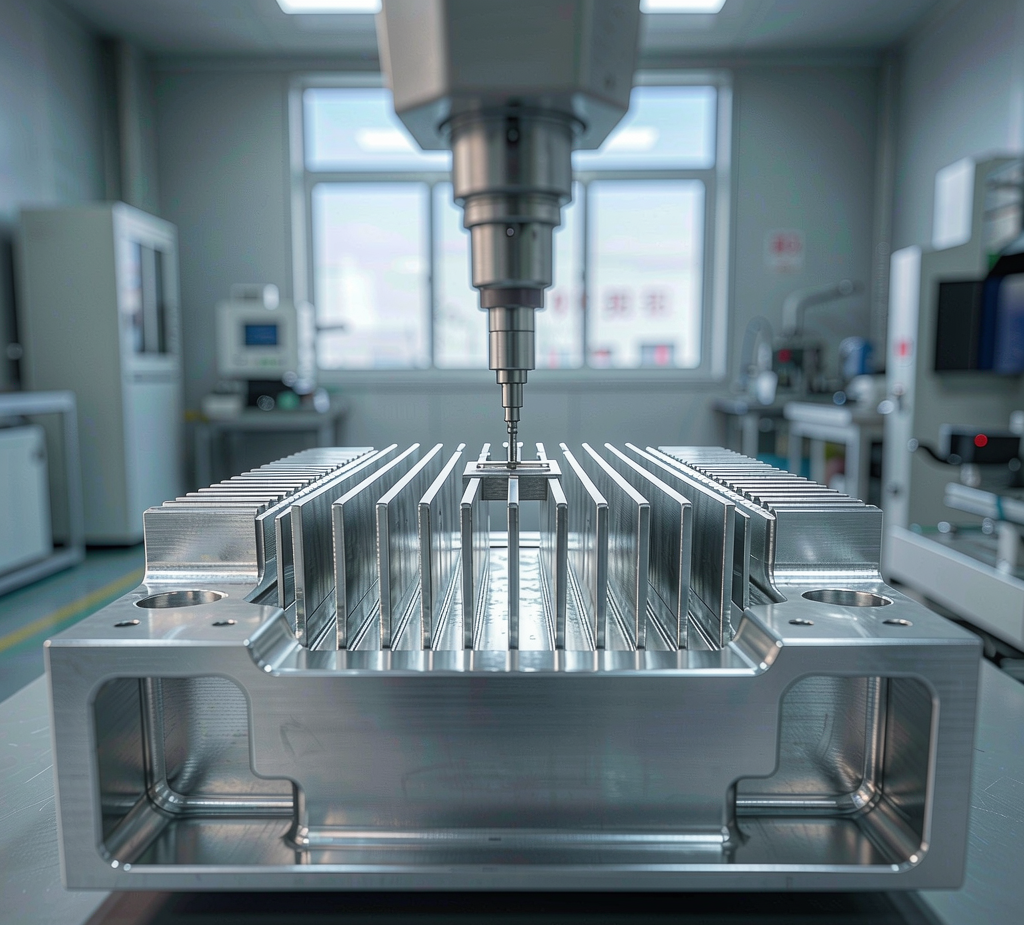
ISO 9001:2015 is our quality management system. It is not a product certification or a customer-specific approval. Inspection follows the drawing and the plan agreed for your order.
We state which checks and documents apply to your part. We do not claim one blanket document set for every order.
Incoming material
Grade, temper and batch document check.
In-process checks
Key dimensions checked during machining.
Final dimensions
Critical features checked against the drawing.
Finish check
Appearance, coating and masking reviewed.
Documents and packing
Agreed reports prepared with the shipment.
Swipe the table to see all columns.
| Document | When it applies |
|---|---|
| Dimensional inspection record | Agreed per order and per feature. |
| CMM report | Where the inspection plan calls for coordinate measurement. |
| First article inspection | Where the project requires a first article report. |
| Material certificate | Confirmed against the grade and supply for your order. |
| Certificate of conformity | Where the customer specification asks for it. |
Compliance documents are reviewed, not assumed
Material and compliance documentation can be reviewed against the applicable product requirements and customer specifications. RoHS and REACH have different scopes. We do not state that every aluminum part is RoHS certified.
8 · Aluminum CNC Components for Industrial Applications
We list the applications where we have made parts. Each one is supported by a real part type, not only by a general claim.
Industrial Equipment
Equipment housings, mounting blocks, brackets and machine interface parts.
Electronics
Electronic enclosures, heat sinks and mounting plates.
Automation
Machine bases, fixtures, precision supports and alignment parts.
Robotics
Structural brackets, joint housings and mounting components for machinery.
Automotive
Lightweight brackets, housings and structural components for non-safety systems.
Marine Equipment
Enclosures and fittings where the alloy and surface protection suit the environment.
Clear boundary on regulated work
We do not present aerospace or medical parts as a standard service here. Those projects can involve special quality, traceability and approval conditions. We discuss them only when the required scope is defined and agreed.
9 · Representative Aluminum Machining Projects
These are common project types we review. Customer names, quantities and measured results are only shared with permission, so we describe the work rather than publish numbers that do not belong to us.
Precision Equipment Housing
We review the alloy, the mounting face flatness, the hole pattern, the cavity depth and the finish. The inspection plan follows those features.
Custom Mounting Bracket
We review the wall thickness, the hole position, the load path and the surface protection. DFM notes are sent before production when needed.
CNC Aluminum Heat Sink
We review fin thickness, base flatness, contact finish and warpage control. The machining route is chosen to hold the contact face.
Want a project similar to yours? Send the drawing and we will tell you which features we would review first.
10 · From Drawing to Delivered Parts
Drawing review
We read the geometry, the material and the critical features.
Material and DFM
Grade, temper and design notes are agreed with you.
Process plan
Machine, setup and inspection method are chosen.
Machining
Parts are made with in-process checks on key features.
Finishing
Surface treatment is coordinated and checked.
Inspection and delivery
Final check, agreed documents and packing.
Samples and repeat orders follow the same drawing and inspection plan. A fit check on a sample is not a tooling approval. When a project needs a production tool, we agree that step separately.
11 · Request a Quote for Custom Aluminum CNC Parts
Tell us what you need before we quote
Send your drawings and project requirements. Our engineering team reviews the material, the machining process, the critical tolerances and the finishing options before quotation.
Part drawing — 2D drawing, 3D model or both.
Alloy and temper — or ask us to recommend one.
Quantity — sample, small batch and annual volume.
Critical dimensions — features that need closer control.
Surface finish — type, color and masking areas.
Inspection needs — reports or first article checks.
Delivery window — target date if you have one.
Application — what the part does in the assembly.
Accepted drawing formats include STEP, STP, IGES, IGS, STL, DWG, DXF and PDF. You can send more than one file. Files are handled under our confidentiality practice. Tell us if you need a specific handling arrangement.
12 · Questions Buyers Ask Before an Order
Can I order custom 6061 aluminum CNC parts from China?
Yes. Send the drawing, the quantity and the finish. We confirm the grade, the process and the inspection plan before we quote. The same plan carries into repeat orders.
Which aluminum alloy is best for a precision machined housing?
It depends on strength, corrosion exposure, finish and cost. 6061 suits many housings. 7075 is chosen when strength matters more. We review your part before we suggest a grade.
Can aluminum CNC parts be anodized after machining?
Yes. We review the type, the color, the thickness and the masking before finishing. We check the final size on masked fits after the coating is applied.
How can I keep dimensional accuracy after anodizing?
Tell us which bores or fits are critical. We agree the masking and the check sizes before finishing starts. The final check is made on the finished part.
What documents should I ask from an aluminum CNC supplier?
Ask for the document list at the enquiry stage. It can include a material certificate, a dimensional report and a first article report. We state what applies to your order.
How can I reduce the cost of a custom aluminum part?
Keep tight control only on functional features. Review wall thickness, pocket depth, radii and datums early. We send DFM notes for your approval before production.
13 · Frequently Asked Questions
What aluminum alloys can you CNC machine?
We machine 6061, 6063, 5052, 7075 and 2024 in wrought form. We also machine cast aluminum parts in A380 when the drawing calls for it. The grade and temper are confirmed against supply before we quote.
What tolerances can you achieve for aluminum CNC parts?
Tolerances are reviewed against each drawing. We look at the alloy, the part shape, the process and the inspection method. Critical features are confirmed before production. We do not quote one tolerance for every part or every feature.
Can you manufacture aluminum parts from CAD drawings?
Yes. Send a 2D drawing, a 3D model or both. STEP, STP, IGES, IGS, DWG, DXF, STL and PDF are common formats. We review the geometry and the critical dimensions before we quote.
Do you support 3-axis, 4-axis and 5-axis machining?
Yes. We match the process to the part. Simple plates and brackets often suit 3-axis work. Parts with angled features may need 4-axis or 5-axis setups. We explain the reason in the quote.
Can you provide anodized aluminum parts?
Yes. We review anodizing type, color, coating thickness and masking at the enquiry stage. Finishing is coordinated and inspected against the requirement. We confirm who performs each finishing step for your order.
Can you machine thin-wall aluminum components?
Yes, when the wall, the alloy and the tool path allow it. We review the wall thickness, the pocket depth and the clamping method. A DFM note is sent before production when the design risks movement.
Do you support prototype and low-volume orders?
Yes. We make single prototypes and small batches. The same drawing and inspection plan carry through to repeat orders. A sample fit check is not a tooling approval.
How do you inspect precision aluminum parts?
Inspection follows the drawing and the agreed plan. It can include first article checks, dimensional reports, CMM checks and surface finish checks. We state which method applies to your order.
Can you provide material certificates and inspection reports?
Ask at the enquiry stage. The document set can include a material certificate, a first article report and a dimensional report. We confirm what we can supply for your order. We do not claim one blanket document set.
What information is required for an aluminum CNC machining quote?
Send the drawing, the alloy, the quantity, the finish and the critical dimensions. Add the inspection needs and the target delivery window. More detail at the start means fewer questions later.
Are all your aluminum parts RoHS certified?
Material and compliance documents are reviewed against the applicable product requirements and customer specifications. RoHS and REACH apply to different scopes. We state what applies to your part and what document we can supply.
Can you reduce the cost of my aluminum part?
Often yes. We review wall thickness, pocket depth, corner radii, datums and tolerances. We suggest changes that keep the part function. Any change is sent to you for approval before production.