Why Is 3D Printing So Hard? Common Industrial Challenges Explained
Understanding the real engineering barriers behind additive manufacturing, and how professional services solve them
3D Printing Looks Simple — But Industrial Printing Is Complex
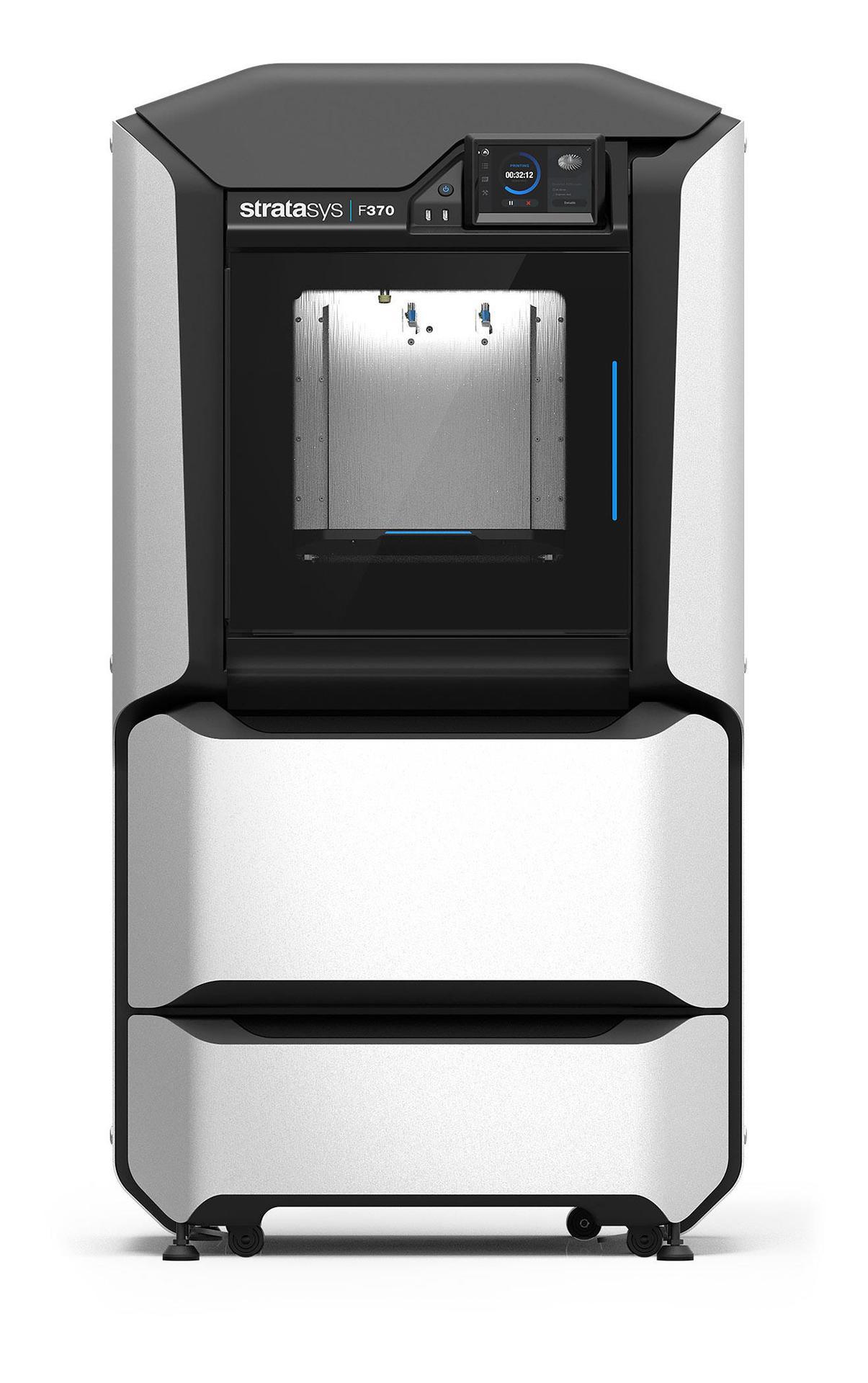
If you’ve ever used a desktop 3D printer, you might think 3D printing is easy: load a file, click print, and wait. But that’s just hobbyist printing.
For industrial applications—where parts need to hold tight tolerances, withstand load, and work in critical systems—3D printing becomes far more challenging. The gap between “it looks right” and “it works right” is huge.
| Consumer Desktop Printing | Industrial 3D Printing |
|---|---|
| Visual prototypes only | Functional engineering parts |
| Loose tolerances (±0.5mm+) | Tight tolerances (±0.05mm~±0.1mm) |
| PLA/ABS hobby materials | Engineering-grade polymers/metals |
| Low-stress display parts | Load-bearing, high-stress applications |
The Main Reasons Why 3D Printing Is Difficult
1. Thermal Distortion and Warping
Every material expands when heated and shrinks when cooled. In 3D printing, we melt material and then let it cool layer by layer—and this uneven cooling creates internal stress.
The result? Parts warp, curl at the edges, or even crack mid-print. This is especially common with large parts, or materials like ABS and Nylon that have high thermal expansion coefficients.
We can calculate this change with a simple formula: ΔL = αL₀ΔT, where α is the material’s thermal expansion rate. Even small temperature changes can add up to significant dimensional errors on large parts.
Research from Nature confirms that thermal cycles and residual stress are the top causes of deformation in both polymer and metal additive manufacturing.
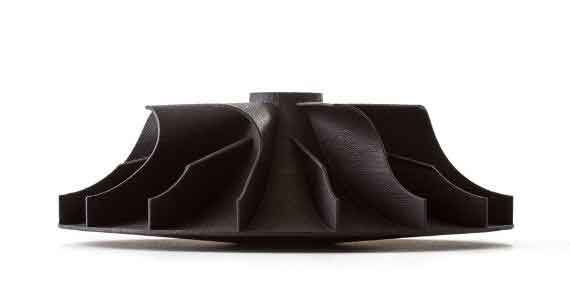
Example: Warpage in an MJF nylon part caused by uneven cooling
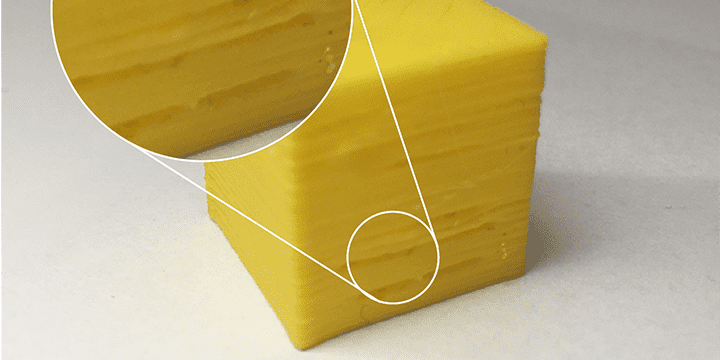
Example: Layer separation caused by poor inter-layer bonding
2. Weak Layer Adhesion & Anisotropy
3D printed parts are built layer by layer. While each layer is strong on its own, the bond between layers is never as strong as the bulk material.
This creates anisotropy: your part’s strength depends entirely on print orientation. Parts printed flat might be 50% weaker along the Z-axis than along the X/Y axis. That’s why functional parts often break between layers under load.
A 2022 study from arXiv found that insufficient diffusion between FDM layers is the leading cause of this weakness, and it’s one of the biggest barriers to using 3D printing for load-bearing industrial parts.
3. Dimensional Accuracy Is Hard to Control
For many engineering applications, 3D printing simply can’t match the precision of traditional machining. Even the best industrial printers have inherent limitations:
| Manufacturing Process | Typical Tolerance |
|---|---|
| Desktop FDM Printing | ±0.2mm or higher |
| Industrial SLA/SLS Printing | ±0.1mm |
| CNC Machining | ±0.01mm |
This is why most industrial 3D printed parts require secondary CNC finishing to hit tight tolerance requirements—this is called hybrid manufacturing.
4. Material Limitations for High-Performance Parts
Not all materials are easy to 3D print. While hobby printers work great with PLA, engineering materials come with huge challenges:
- PEEK/PEKK: These high-temperature medical/aerospace materials require heated chambers over 200°C to print without warping, and even then, process control is extremely difficult.
- Metal Powders: Metal 3D printing requires strict control of powder size, oxygen levels, and laser parameters. Even small impurities can cause part failure.
- Composite Materials: Fiber-reinforced polymers can wear out nozzles quickly, and fiber alignment is hard to control, leading to inconsistent strength.
As noted in automotive manufacturing research, industrial AM is still limited by material range, cost, and process stability for high-volume production.
5. Support Structures and Post-Processing
A common myth: 3D printing is a one-step process. In reality, it’s rarely that simple.
First, you need support structures for overhangs—these have to be removed after printing, leaving marks on the part. Then you need to:
- Sand and polish to fix surface roughness
- Heat treat parts to remove residual stress
- CNC machine critical features to hit tolerances
- Plate or coat parts for corrosion resistance
These post-processing steps can add 30-50% to the total cost and lead time of your part, and they’re often the reason why 3D printing projects end up over budget.
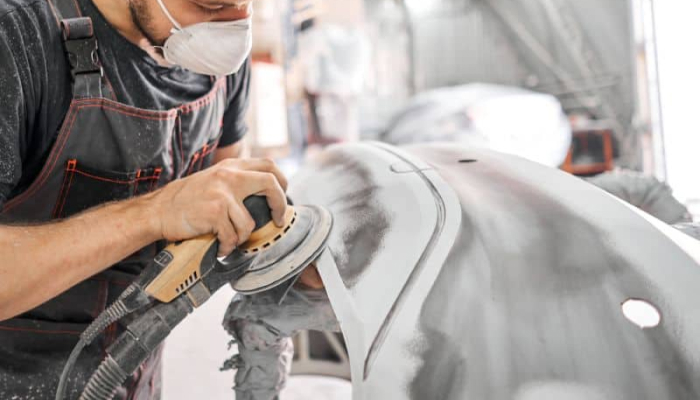
Post-processing: Sanding a 3D printed part to improve surface finish
Why Professional 3D Printing Services Perform Better
Desktop printers and hobbyist setups can’t overcome these challenges alone. Professional industrial services use specialized tools and experience to solve these problems before they happen.
DFAM Analysis
We review your design before printing to fix potential warping, overhangs, and strength issues early.
Orientation Simulation
We test print orientations in software to maximize part strength and minimize support material.
Shrinkage Compensation
We adjust toolpaths to account for material shrinkage, ensuring final parts hit your target dimensions.
Hybrid Finishing
We combine 3D printing with in-house CNC machining to hit tight tolerances that AM alone can’t reach.
How Engineers Reduce 3D Printing Failures
Small design changes can make a huge difference in print success rate. These are the tips our engineering team uses for every project:
Avoid Large Flat Surfaces
Large flat areas are prone to warping. Add subtle curvature or ribbing to reduce internal stress.
Add Fillets to Sharp Corners
Sharp corners create stress concentrations that lead to warping and cracking. Rounded corners distribute stress evenly.
Optimize Wall Thickness
Too thin walls break, too thick walls cause internal stress. We recommend 1.2mm-3mm for most polymer parts.
Limit Unsupported Overhangs
Overhangs steeper than 45° need support material. Redesign to avoid these where possible.
Use Lattice Structures
Lattices reduce material usage and cool faster, cutting down on warping while keeping part strength.
Design for Additive Manufacturing
DFAM (Design for Additive Manufacturing) adjusts your part to fit the process, not the other way around.
3D Printing Does Not Replace CNC or Injection Molding
A common marketing myth is that 3D printing will replace all traditional manufacturing. The truth is, each technology has its own sweet spot. The best manufacturers help you pick the right one for your project.
| Technology | Best For | Volume Range |
|---|---|---|
| 3D Printing | Rapid prototyping, complex geometry, low-volume custom parts | 1 – 1,000 parts |
| CNC Machining | High precision, tight tolerances, functional metal parts | 1 – 10,000 parts |
| Injection Molding | High-volume production, consistent plastic parts | 10,000+ parts |
Learn more about our other manufacturing services:
Real-World Example: Why a Large ABS Part Failed
A medical device startup came to us after they tried to print a large ABS enclosure on their desktop printer. The part warped so badly that it wouldn’t fit with their other components.
- Part Size: 250mm x 180mm x 80mm
- Material: ABS for medical use
- Problem: The bottom corners curled up by 2.5mm, and the top face warped into a curve
What we did to fix it:
- We ran a thermal simulation to predict shrinkage, and adjusted the CAD model to compensate
- We added fillets to all the sharp corners to reduce stress concentrations
- We optimized the print orientation to minimize layer height and improve cooling
- We used our industrial enclosed printer to maintain a constant chamber temperature during printing
Result: The final part had less than 0.1mm of warping, fit perfectly on the first try, and passed all their functional testing.
Frequently Asked Questions
Why do 3D prints warp?
Warping is caused by uneven cooling and thermal shrinkage. When melted material cools, it contracts, and if different parts of the part cool at different rates, it creates internal stress that pulls the part out of shape.
Why are 3D printed parts weaker?
3D printed parts are built layer by layer, so the bond between layers is weaker than the bulk material. This creates anisotropy, meaning parts are weaker along the Z-axis, depending on print orientation.
Is 3D printing accurate enough for engineering?
It depends on your requirements. For loose-fit parts, industrial 3D printing is accurate enough. But for tight-tolerance functional parts, you’ll usually need secondary CNC finishing to hit the required precision.
Why does industrial 3D printing cost so much?
Industrial 3D printing requires expensive machines, high-quality engineering materials, and a lot of post-processing work. The cost also includes the engineering time to optimize your design and process to avoid failures.
Can 3D printing replace CNC machining?
No, they serve different purposes. 3D printing is great for complex geometry and prototyping, but CNC is still the best option for high precision, tight tolerances, and high-strength metal parts. Many projects use both together.
What materials are hardest to 3D print?
High-temperature materials like PEEK and PEKK are the hardest, because they require extremely controlled chamber temperatures to avoid warping. Metal powders are also very difficult, as they require strict process control to avoid defects.
Why do large 3D prints fail?
Large parts have more material to cool, so thermal shrinkage and warping are much worse. They also take longer to print, so small process errors have more time to add up into big failures.
Struggling With Your 3D Printing Project?
Our engineering team can review your design for free, and help you avoid the common failures that derail most AM projects. Get a detailed DFAM review and quote within 24 hours.
Goldcattle Manufacturing Engineering Team | 26+ Years of Industrial Manufacturing Experience
Last Updated: May 2026