Custom Polypropylene (PP) Plastic Parts for OEM Applications
Custom PP plastic parts designed around your component geometry, material requirements and production volume. From initial design review and polypropylene grade selection to tooling, sample approval and production planning, each project is evaluated against its intended application and critical specifications.
This page covers custom PP parts for OEM projects — the grades, the design decisions that decide moldability, the tooling and sampling path, and the quality evidence that comes with production. For the material science behind PP, see our PP material guide.
The RFQ checklist on this page is shown in full. Select the text to reuse it, or use your browser's print / save-as-PDF — Goldcattle does not host downloadable files on this site.
PP Material Selection
Grade matched to your load, temperature, chemical contact and appearance requirements.
DFM Review
Shrinkage, warpage, wall thickness, hinges and snap fits reviewed before tooling.
Tooling & Sampling
In-house mold making, T0/T1 samples and written approval before production.
Production Quotation
Tooling and unit price quoted together, staged by gate against your volume.
Custom PP Parts: What We Make
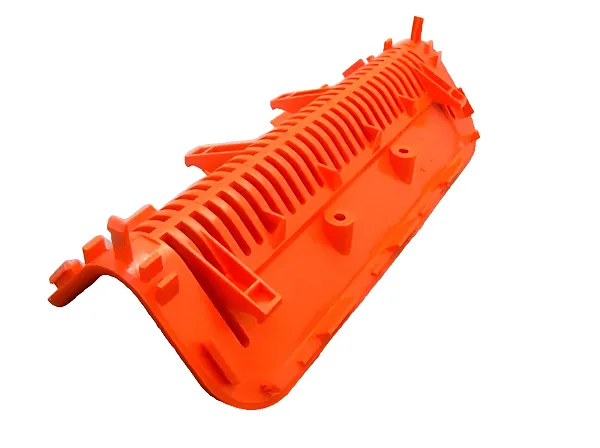
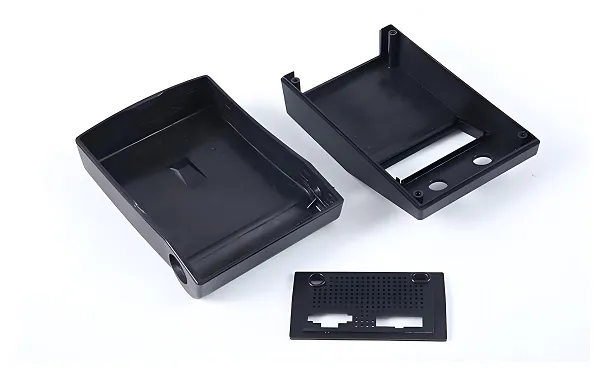
Six PP part families cover most OEM projects: housings and covers, clips and snap-fit parts, connectors and fittings, living-hinge parts, industrial brackets and structural components, and fluid-handling components. Each starts from your drawing — the part family, grade and process route are confirmed at engineering review.
Housings and covers
Equipment and appliance enclosures where chemical resistance, low density and cost at volume matter. Reviewed for wall uniformity, ribs and appearance requirements.
Clips and snap-fit parts
Retention and mounting components where cantilever geometry, root radius and cycle life are evaluated at design stage rather than after breakage.
Connectors and fittings
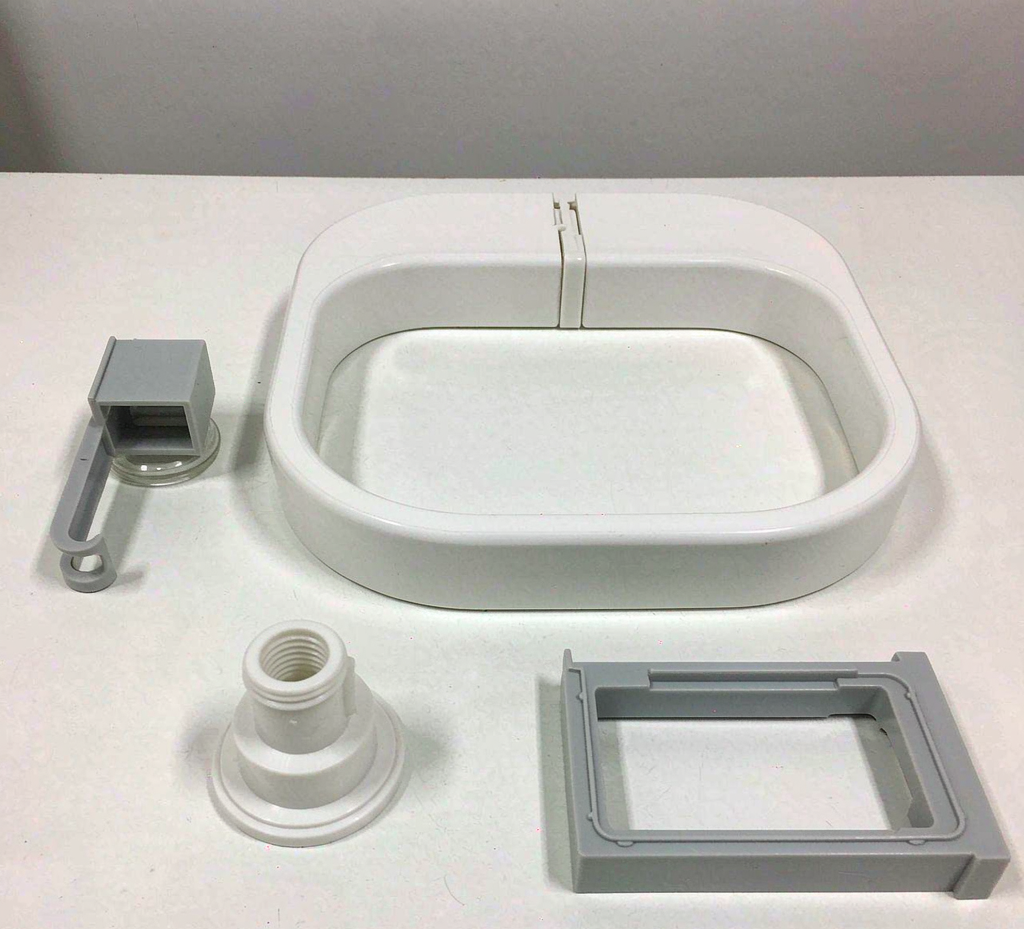
Small functional components with dimensional and sealing interfaces — reviewed for tolerance, flow length and assembly fit with your mating parts.
Living-hinge parts
Lid-and-body designs that flex thousands of times. These require a suitable PP grade and proper injection design — see the DFM module below.
Brackets and structural components
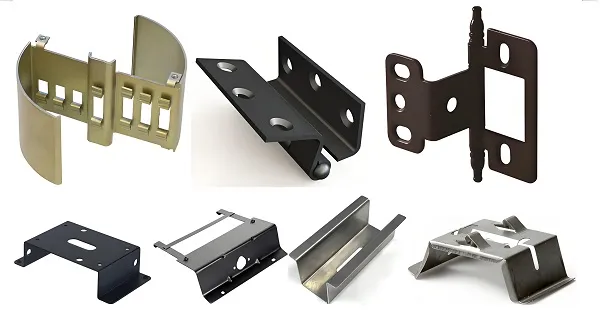
Load-bearing or mounting parts, including filled-PP grades where stiffness or heat resistance is required — filler level and warpage behavior evaluated per project.
Fluid-handling components
Molded valve bodies, pump components and fluid-path fittings where chemical contact and temperature set the grade selection.
PP Material Selection: Grades and Boundaries
PP is not one material — homopolymer, impact copolymer, talc-filled, glass-fiber-reinforced, UV- or heat-stabilized and food-contact grades behave differently in stiffness, impact, flow and appearance. Grade selection is matched to your part's load, temperature, chemical environment and appearance requirements.
| PP type | Selection consideration | Limits to confirm |
|---|---|---|
| Homopolymer PP | Applications needing higher stiffness at low cost. | Impact behavior, service temperature and part structure are evaluated together — the grade alone does not set performance. |
| Impact copolymer PP | Parts needing impact resistance, including at low temperature; the usual family for living hinges. | Low-temperature performance depends on grade and test conditions — confirmed against your requirement. |
| Talc-filled PP | Applications where added stiffness and dimensional stability matter. | Filler level affects flow, surface appearance and molding behavior — reviewed at DFM. |
| Glass-fiber-reinforced PP | Structural parts needing higher stiffness, strength or heat resistance. | Fiber orientation, anisotropy, shrinkage and warpage are evaluated per part geometry. |
| UV / heat-stabilized PP | Parts facing environmental aging or elevated service temperature. | Grade availability and performance data confirmed per project against your conditions. |
| Food-contact PP | Food-contact applications. | Compliance follows the specific grade, additives, use conditions and target market — confirmed per project, not assumed from the material name. |
Grade availability is confirmed at quotation, and resin certificates are tied to the production batch. For the underlying material science — property comparisons, modification routes and application limits — our PP material guide covers it in depth.
Manufacturing Process: Prototypes to Volume
Injection molding is the primary route for volume PP parts; CNC machining covers prototypes and low-volume batches without tooling. Secondary services — overmolding, surface treatment, ultrasonic welding and assembly — are evaluated per project against PP's low surface energy and your functional requirements.
PP injection molding
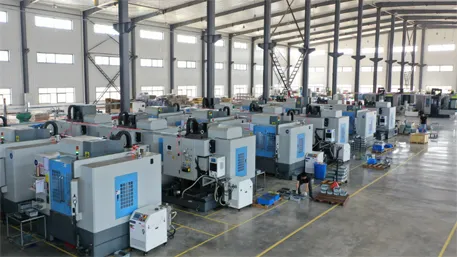
The volume route. Mold making, molding and in-process control run in-house under our ISO 9001:2015 quality system, with cavity count and mold structure set by your annual quantity.
PP CNC machining
Prototypes and low-volume batches from PP stock, including filled grades, with no tooling investment. Machined tolerances are confirmed per critical feature against the measurement method — mold accuracy, CNC capability and molded-part tolerance are stated separately, never as one blanket range.
Secondary and finishing
Overmolding PP with TPE for soft-grip surfaces, corona or flame treatment to raise surface energy for printing and painting, ultrasonic welding and hardware assembly. Feasibility is confirmed per material and process combination.
Process selection is a volume-and-geometry decision. The route for your part — molding, machining, or both across prototype and production stages — is confirmed at quotation against your quantity and design maturity, not ranked by capability claims.
PP-Specific DFM: Where Parts Succeed or Fail
PP-specific design decisions decide whether a part molds consistently: shrinkage and warpage compensation, wall thickness and rib design, living-hinge geometry, snap-fit dimensions and the surface treatment needed for printing or bonding. These are reviewed at DFM — before steel is cut.
- Shrinkage and warpage: PP shrinks more than many engineering plastics, and differential shrinkage shows up as warpage on assembly dimensions. Cavity compensation, gate location and cooling are planned around it — and verified per critical dimension at sample approval.
- Wall thickness and ribs: unnecessary thickness transitions drive sink marks, longer cycles and stress concentration. Rib spacing and wall uniformity are reviewed against stiffness, molding and appearance together.
- Living hinges: a living hinge needs a suitable PP grade — typically an impact copolymer — a correctly designed hinge web and controlled flow direction. Hinges are molded, not machined; cycle-life expectations are agreed at review.
- Snap fits and assembly: cantilever root radius, interference and stress concentration determine whether a clip survives cyclic use. These are evaluated at design stage, with your assembly load case where defined.
- Surface treatment and bonding: PP's low surface energy resists printing, painting and adhesive bonding. Corona or flame treatment, ink and adhesive selection are confirmed per material and process — not assumed.
Quality and Dimensional Control
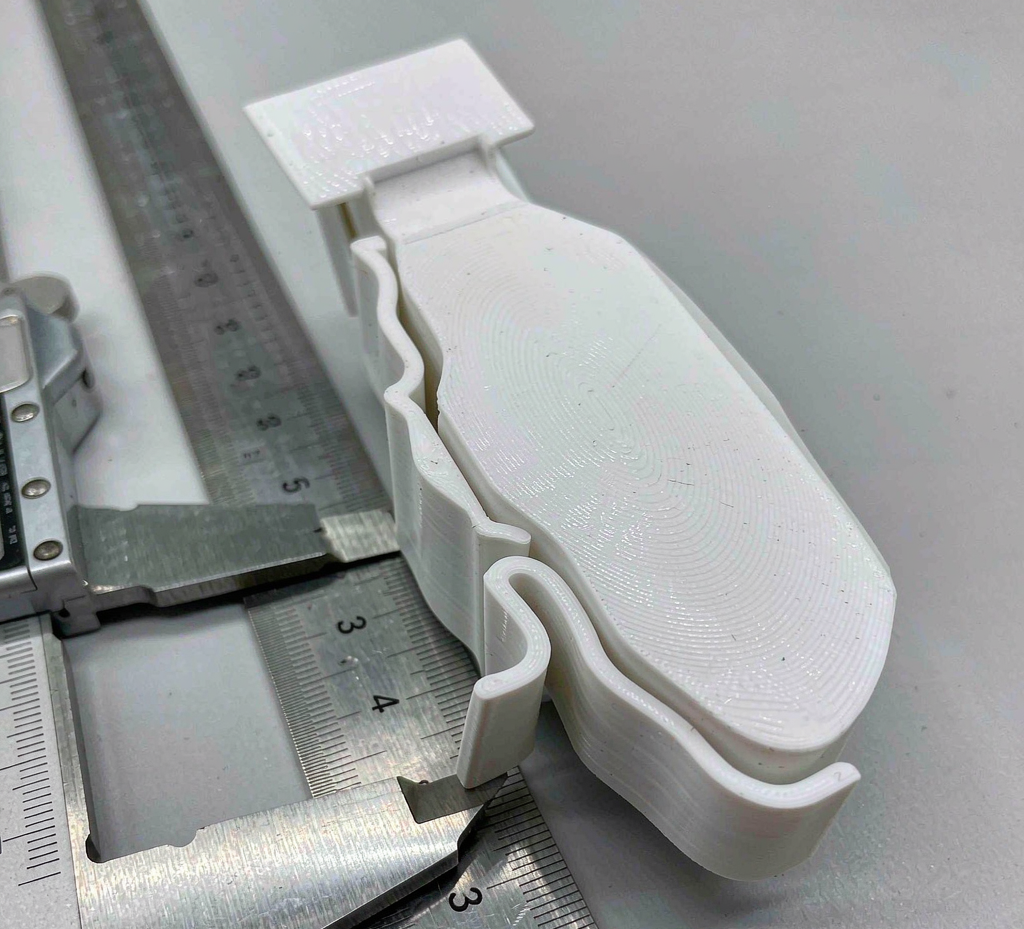
Quality evidence for PP parts covers material identity, dimensional verification of critical features, functional checks where the project requires them, first-article approval and batch traceability — with the method and report scope agreed in the quality plan.
| Control point | What is verified | Evidence |
|---|---|---|
| Material identity | Resin grade, color and lot against the agreed specification. | Material certificates tied to the production batch. |
| Dimensional verification | Critical dimensions against your drawing datum — with CMM and optical measurement matched to the feature. | First-article inspection report with results per feature. |
| Functional checks | Assembly fit, snap-fit or living-hinge function where the project requires it. | Functional results documented per the quality plan. |
| Batch consistency | In-process and batch checks against the agreed sampling plan. | Batch inspection records tied to the lot. |
| Change control | Post-approval design or process changes. | Engineering change request confirmed in writing before implementation. |
How tolerances are stated on this page
Mold machining accuracy, CNC machining capability and the molded part's dimensional tolerance are different indicators, and they are confirmed separately. For your part, the achievable tolerance is confirmed per critical feature against the resin grade, feature geometry, tooling strategy and measurement method — before production approval, not as a blanket range applied to every PP part.
Tooling and Cost: What a Quote Contains
A PP program is quoted as a package: tooling, unit price by volume tier, material, sampling, inspection, staged lead time, tool ownership and delivery terms. We quote the full structure so you can compare programs, not just unit prices.
| Quote item | What it covers |
|---|---|
| Tooling | Mold structure, cavity count and mold material, with the scope of what the tooling quote includes. |
| Unit price | Part price by volume tier, so tooling amortization across your annual quantity is visible. |
| Material | PP type, grade and color assumptions behind the price. |
| Sampling | T0/T1 sample scope, sample quantity and the approval requirement before production. |
| DFM | Manufacturability findings and key risks identified against your drawing. |
| Inspection | Critical dimensions, inspection methods and the first-article and batch scope. |
| Lead time | Mold making, sampling and production quoted as separate staged durations — confirmed at quotation. |
| Tool ownership | Mold ownership, storage, maintenance and transfer terms. |
| Packing and shipping | Packaging method, destination and delivery terms (EXW, FOB, CIF or as agreed). |
The full cost structure is explained in our injection molding quote guide — tooling, unit price by quantity, DFM, sampling, inspection, packing and mold ownership — so this page stays focused on PP-specific decisions rather than repeating general quoting content.
Project Workflow: Drawing to Delivery
A custom PP part moves through seven gates. Each gate has a deliverable, and the schedule is confirmed at quotation — not promised in advance.
Drawings, quantities and requirements reviewed for completeness and feasibility.
PP grade, design risks and process route confirmed with you.
Tooling and staged unit price quoted against your volume.
Tooling manufactured in-house, including cap or component molds.
T0/T1 samples inspected against critical dimensions; written approval before volume.
Stable runs with in-process checks against the validated process window.
Batch records, lot traceability, agreed packing and shipment.
Applications and Compliance Boundaries
We produce PP parts for automotive, appliance and hardware, industrial equipment, consumer electronics and packaging-related applications. Regulated requirements — food contact, flame retardancy, filled grades — are confirmed per project against the specific grade, use conditions and target market, never assumed from the material name.
Automotive and transportation
Interior and under-hood components, brackets and clips where lightweighting, temperature range and fatigue performance set the grade.
Home appliance and hardware
Appliance housings, door hinges, tool casings and plumbing-related components with chemical and thermal duty confirmed per part.
Industrial and manufacturing
Equipment housings, brackets, fittings and fluid-handling components exposed to chemicals, temperature cycling or load.
Consumer electronics
Device housings, connectors and internal components where cost at volume and dimensional consistency matter.
Packaging-related components
Closures, caps and container components — with food-contact documentation confirmed per project where required.
Regulated requirements
Food contact, flame retardancy and filled grades are evaluated per project: grade, additives, use conditions and target market confirmed before production, with the documentation set agreed in the quality plan.
Compliance is confirmed per project, not inherited from the material name
Food-contact suitability, flame-retardant ratings and other regulated properties depend on the specific resin grade, additives, use conditions and final part — PP as a material family does not carry them automatically. Where your project needs them, we confirm the grade and documentation scope against your target market's framework (for food contact, in the US regulations such as 21 CFR 177.1520 for PP, and in the EU Regulation (EU) No 10/2011), and your regulatory team confirms final suitability for the end product.
Frequently Asked Questions
What are the main differences between PP homopolymer and copolymer?
Homopolymer PP offers higher stiffness and heat resistance; impact copolymer PP trades some stiffness for much better impact resistance, including at low temperatures. Which one fits depends on your part's load, temperature range and whether it needs flexibility — the grade is confirmed with your application at review.
When should I use polypropylene instead of ABS or HDPE?
PP suits parts needing chemical resistance, low density, fatigue resistance and a low-cost route at volume; ABS offers stiffness and surface finish; HDPE offers excellent moisture barrier and toughness. The choice depends on load, temperature, chemical contact and appearance requirements — we review the alternatives against your drawing rather than defaulting to one resin.
How does PP shrinkage affect injection molded part dimensions?
PP shrinks more than many engineering plastics, so mold cavities are compensated and gate and cooling design are planned around it. Shrinkage and the warpage it can cause are managed at DFM stage and verified per critical dimension at sample approval — the tolerance your part holds is confirmed against the measurement method, not published as a blanket range.
What information is required for a custom PP injection molding quote?
3D CAD and 2D drawings at a named revision, the PP grade or material requirement, initial and annual quantities, critical dimensions and tolerances, color and surface requirements, application and environment, any compliance requirements, and your target delivery date.
When does injection molding become more economical than CNC machining?
CNC machining suits prototypes and low volumes because it needs no tooling; injection molding needs a mold but its unit cost falls sharply with volume. The crossover depends on part complexity, cavity count and your annual quantity — we compare both routes against your volume at quotation.
Can you produce living-hinge parts from polypropylene?
Yes. Living hinges require a suitable PP grade — typically an impact copolymer — and proper injection design for the hinge web and flow direction. Hinges are molded, not machined: we review the grade, geometry and expected cycle life with you at DFM before tooling.
How are tooling costs and part prices calculated?
Tooling cost is driven by cavity count, geometry complexity and mold structure; part price by material, cycle time and volume. We quote tooling and unit price together, staged by sample and production gates, so you can compare total program cost rather than a single unit price. Our injection molding quote guide explains the full cost structure.
What material and inspection documentation can be provided?
Material certificates tied to the production batch, first-article inspection reports with dimensional results against your drawing datum, and batch inspection records — the exact set is agreed in the quality plan per project. Where grade- or market-specific documentation is required, scope is confirmed before production.
Can PP parts meet food-contact requirements in the US or EU?
Food-contact compliance depends on the specific resin grade, additives, use conditions and target market — not on the material name alone. Where food-contact documentation is required, we confirm the grade and documentation set per project against your market's requirements (in the US, PP food-contact regulations such as 21 CFR 177.1520; in the EU, Regulation (EU) No 10/2011); final suitability for your product is confirmed by your regulatory team.
How are samples approved before mass production?
T0/T1 samples are produced from the production mold and inspected against your critical dimensions. Sample approval is written — production does not start until you confirm. Any design change after approval goes through an engineering change request before it is implemented.
What to Send With Your PP Part RFQ
Eight items let our engineering team assess your PP part — grade selection, manufacturability, tooling route and quotation. Nothing here commits you to an order.
| Item | What to include |
|---|---|
| 3D CAD / 2D drawing | STEP, IGES, X_T or dimensioned PDF at a named revision — geometry, dimensions and tolerances drive the review. |
| PP grade / material requirement | Your specified grade, or the performance target the material must meet. |
| Initial quantity & annual volume | First-order quantity and expected annual demand — these shape the tooling and unit-cost evaluation. |
| Critical dimensions & tolerances | Which features are critical, with target and limit values. |
| Color / surface requirements | Color, texture, finish and any printing or bonding needs — PP surface treatment is confirmed per material. |
| Application & environment | What the part does; temperature, chemical contact and load conditions. |
| Compliance requirements | Any food-contact, flame-retardant or other grade-specific documentation you need with the parts. |
| Target delivery date | Target dates for samples and production, plus destination and delivery terms. |
Confidentiality: an NDA can be signed before drawings are exchanged — mention it with your inquiry and we will send it first. Drawings are used only for feasibility assessment, tooling and production on your project.
Have a drawing for a custom PP part?
Send the drawing, material requirement and volume. Our engineering team reviews grade selection and manufacturability, confirms the tooling and sampling route with you, and quotes with the schedule staged by gate.
- PP grade selection and DFM review before tooling
- Tooling and unit price quoted together, staged by gate
- In-house mold making with written sample approval before production

Reviewed this page on 2026-10-22. Grade selection, DFM practice and process routes follow general polypropylene engineering principles; the grade, tolerances, documentation and schedule for your part are confirmed per project at engineering review and sample approval. Technical and commercial questions are answered within 24 hours.