
5-Axis CNC Machining
Aluminum 7075
Custom 5-axis CNC machining of 7075 aluminum for lightweight, high-strength components with complex geometries, multi-sided features and demanding dimensional requirements — from prototype to production, with DFM review, machining, finishing and inspection handled by one manufacturer.
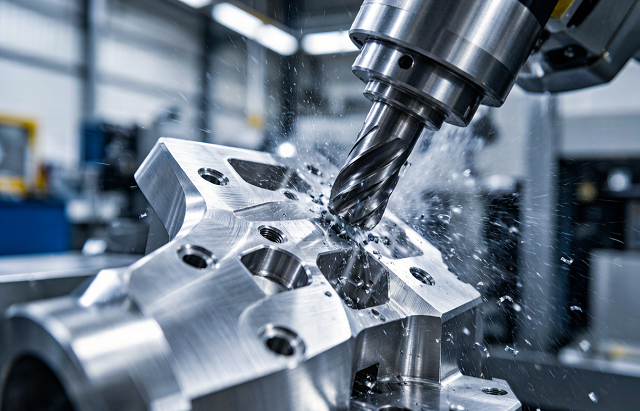
Why combine 5-axis CNC machining with Aluminum 7075?
7075 is chosen when strength-to-weight performance matters more than the broader corrosion resistance and weldability of alloys such as 6061. Five-axis CNC machining is especially useful when a 7075 component carries complex 3D surfaces, multi-face features, undercuts or difficult-to-access geometry that would otherwise require multiple setups on a conventional 3-axis machine. Together they let a high-strength part be held to tight datums in a single workholding strategy.
Why choose Aluminum 7075 for CNC machining?
7075 is not “the best aluminum alloy” for every job — it is a strong choice when strength-to-weight performance is prioritised. Understand what it actually earns you before specifying it.
High Strength
Among the highest-strength common aluminum alloys. Used for structural brackets, aerospace components, high-load housings and robotic structures where 6061 would be marginal.
High Strength-to-Weight
Delivers steel-class strength at roughly one-third of the weight, so load-bearing parts stay light — critical for aerospace, motorsport and robotics.
Good CNC Machinability
7075 machines efficiently at high speed, but the right temper, wall thickness, tool and geometry still decide cycle time and distortion. It is machinable, not “easy.”
Heat-Treated Conditions
7075 is not one material. Specify the condition — 7075-T6, 7075-T651 or a customer-defined temper — because residual stress and stability change with it.
7075-T6 vs 7075-T651 for CNC machining
Both are common; the difference matters most on large, thin-walled or precision-machined 7075 parts where residual stress drives dimensional stability after material removal.
| Condition | Why buyers specify it | CNC consideration |
|---|---|---|
| 7075-T6 | High strength, the most widely stocked condition | Common structural condition; good general baseline |
| 7075-T651 | Stress-relieved plate condition | Often preferred for machined plate parts with large material removal |
| Other tempers | Application-specific requirements | Confirm against drawing / specification before quoting |
For large pocketed 7075 parts, stock condition and residual stress can influence dimensional stability after heavy material removal. T651 and a balanced roughing strategy reduce that risk. Always state the required temper on the RFQ.
Why use 5-axis CNC machining for 7075?
5-axis is justified when part geometry, access, setup reduction or positional control benefit from multi-axis motion — not simply because the material is 7075.
Fewer setups
Complex faces are reached in one workholding cycle instead of re-clamping between operations.
Better datum control
Critical features stay tied to one coordinate system, so true-position holds across faces.
Better tool access
The tool tilts to enter deep cavities, angled surfaces, undercuts and complex contours.
Better surface quality
Complex curves get a more favourable tool-contact angle, improving finish consistency.
Reduced cumulative error
Fewer setups means fewer repositioning errors — on suitable geometries.
What “5-axis” actually means
5-axis does not mean every toolpath uses continuous simultaneous motion in all five axes. The two modes are different, and the right one depends on the part.
3+2 machining
The tool is oriented to different angles; cutting occurs with the axes effectively fixed during each cut. Ideal for angled holes, tilted faces and fixed compound positions.
Simultaneous 5-axis
Multiple axes move continuously during cutting. Used for continuous contours, impellers, blades and deep multi-axis access. Goldcattle runs simultaneous 5-axis on configured centres such as the DMG MORI DMU 50 class.
7075 aluminum 5-axis machining design guidelines
High strength does not make 7075 immune to thin-wall distortion. The strategy that protects accuracy is: rough → stabilise → finish.
Thin walls
Each roughing pass and each clamp release can distort a slender wall. Rough, let stress settle, then finish in a stable orientation with light depth of cut.
Deep cavities
5-axis improves the entry angle, but tool length, rigidity, chip evacuation and collision clearance still govern what is practical.
Thin ribs
Ribs need controlled cutting force, tool path and sequence so they are not springing during the final pass.
Undercuts
Decide whether true simultaneous 5-axis is needed, or whether 3+2 with a lollipop / barrel cutter suffices.
Angled holes
5-axis drills along the surface normal, eliminating weak tilted-spindle approaches and extra setups.
Complex curves
Compound surfaces, impeller-like geometry and aerospace contours are where simultaneous 5-axis pays off.
Datum strategy
Pick one primary datum that all critical faces reference, so positional tolerance is held in a single system.
Recommended vs needs DFM review
Good fit for 5-axis 7075
- Multi-sided pocket
- Angled hole / compound port
- Curved / contoured surface
- Undercut
- Thin structural web
- Complex cavity
Needs DFM review first
- Very thin walls
- Deep narrow cavities
- Long overhang tools
- Tight tolerance across large dimensions
- Large asymmetric material removal
5-axis CNC tolerances for 7075 aluminum
Final tolerance depends on feature size, geometry, material condition, fixture strategy, temperature control and inspection method. Critical dimensions should be identified on the drawing rather than applying ultra-tight tolerance to every feature.
| Requirement | Typical planning approach |
|---|---|
| General dimensions | Standard CNC tolerance band |
| Tight dimensions | Dedicated process control & verified finish pass |
| Critical position | CMM / controlled-datum strategy |
| Ultra-tight feature | Engineering review before quotation |
Surface finish options for 7075 parts
Finish is selected per application — corrosion resistance, appearance or friction. Result depends on tool geometry, toolpath, material condition, feature accessibility and the finishing process.
| Finish | Typical use |
|---|---|
| As machined | Functional parts, internal features |
| Fine milling | Visible / precision surfaces |
| Polishing | Appearance / optical requirements |
| Bead blasting | Uniform matte finish |
| Anodizing (Type II / III) | Corrosion / appearance / wear |
| Hard anodizing | Wear-focused applications |
| Alodine / conversion coating | Corrosion / electrical applications |
Does 7075 need anodizing?
7075 can be anodized, but the surface treatment should be chosen by corrosion exposure, appearance and wear — not assumed identical to 6061, whose anodizing result and colour can differ.
7075 vs 6061 for CNC machining
This is a selection decision, not a ranking — 7075 is not “better” than 6061, it is stronger and lighter at a higher cost and lower corrosion resistance.
| Factor | 7075 | 6061 |
|---|---|---|
| Strength | Higher | Lower |
| Strength-to-weight | Excellent | Good |
| Machinability | Good | Excellent |
| Corrosion resistance | Lower | Better |
| Weldability | Poor | Better |
| Cost | Higher | Lower |
| Best for | High-load / weight-sensitive | General-purpose |
| Anodizing | Available | Generally easier / more consistent |
3-axis vs 5-axis CNC for 7075
| 3-axis | 5-axis | |
|---|---|---|
| Simple 3D parts | Excellent | Often unnecessary |
| Multi-sided geometry | More setups | Better |
| Complex curved surfaces | Limited | Excellent |
| Undercuts | Limited | Better |
| Setup count | Higher | Often lower |
| Fixture complexity | Higher for complex parts | Lower in many cases |
| Initial programming | Simpler | More complex |
| Best use | Standard geometry | Complex geometry |
Applications of 5-axis 7075 CNC parts
We group by the engineering problem, not just the industry name. (We do not claim specific OEM programs such as Boeing or Airbus unless backed by supply-chain evidence.)
Aerospace & UAV
Structural brackets, wing components, aircraft fittings, housings, UAV frames
Robotics
Lightweight arms, joint housings, end-effector components
Automotive / Motorsport
Suspension components, brackets, lightweight structural parts, drivetrain housings
Industrial Equipment
High-strength fixtures, lightweight frames, precision housings
Medical Devices
High-strength surgical handles, equipment structural components
Electronics
High-strength enclosures, structural frames, thermal / mechanical components
7075 5-axis CNC machining case study
A representative program — what the part was, how it was made, and why 5-axis was the right process.
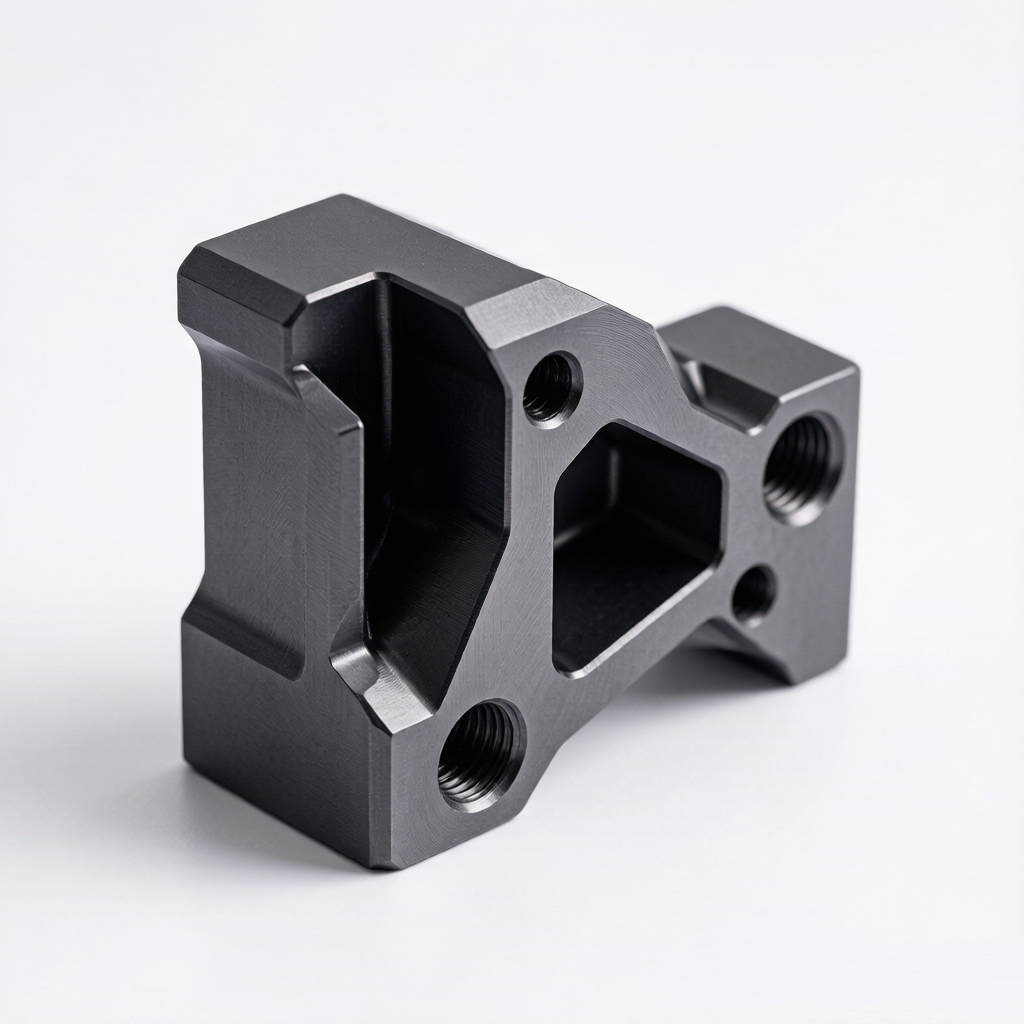
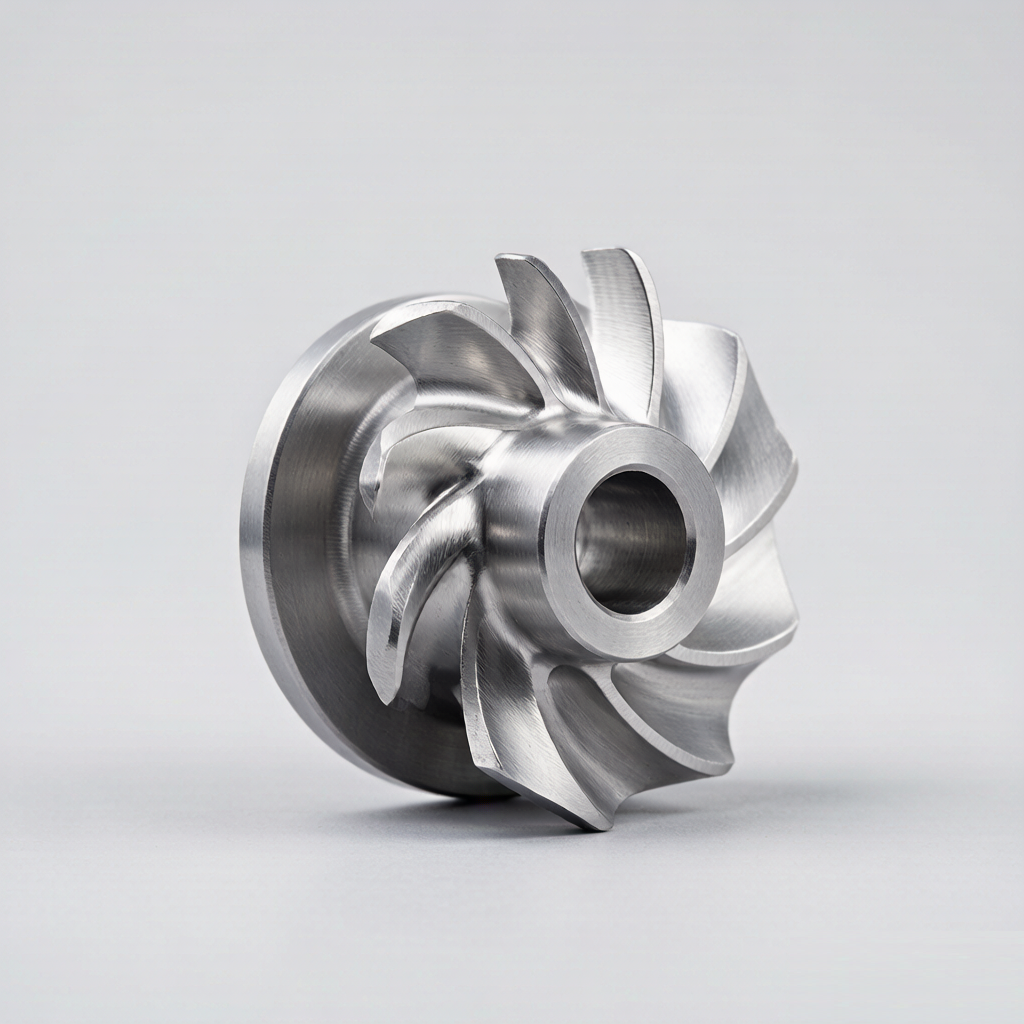
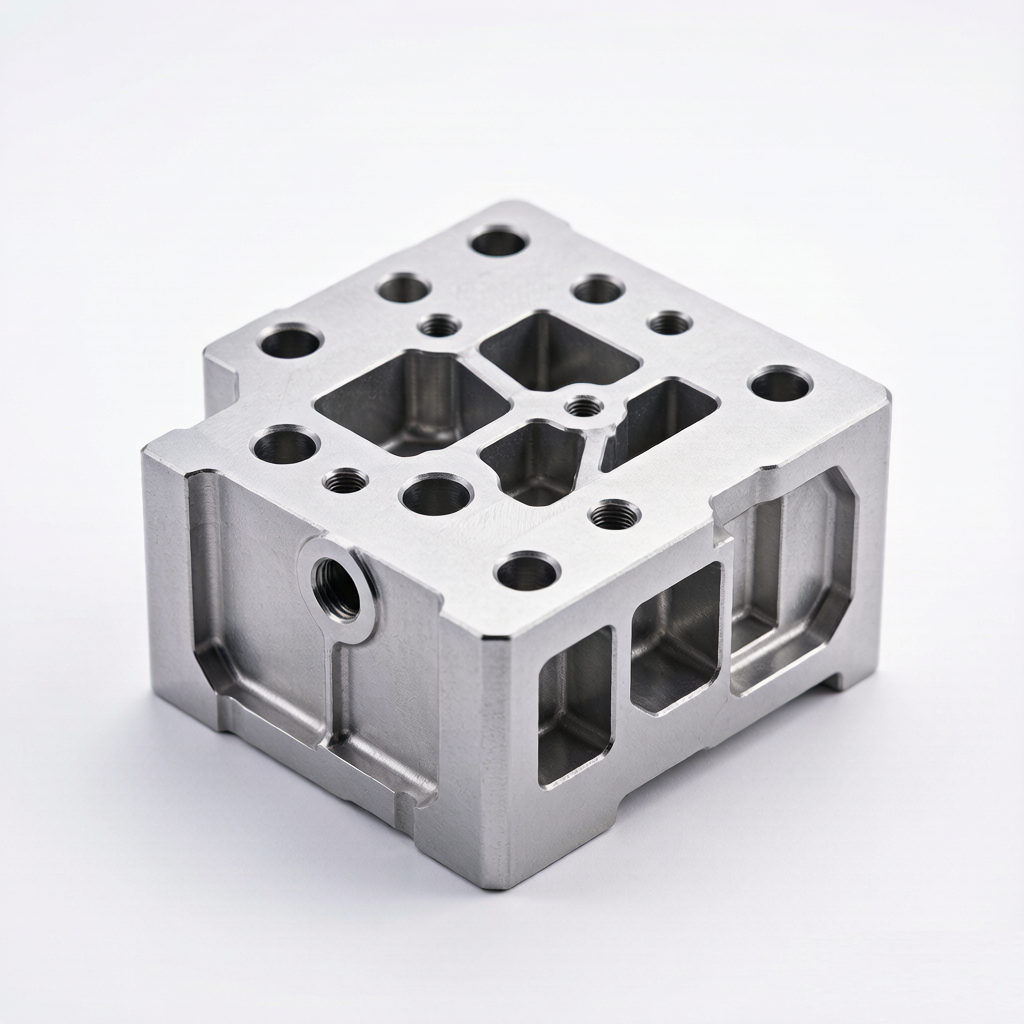
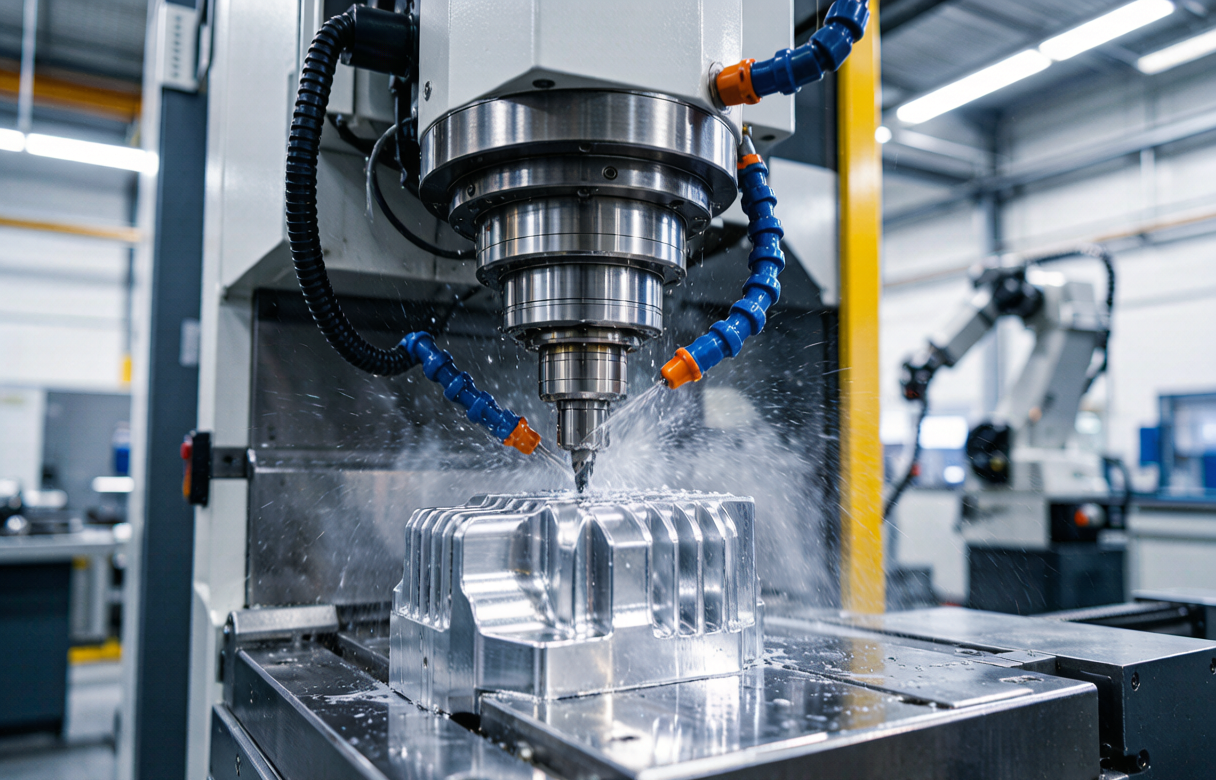
How Goldcattle machines & inspects 7075 parts
Material condition matters for 7075 — always specify grade, temper, heat/lot and any coating. Inspection runs the full chain; you receive the report, not just a promise.
Certifications on file: ISO 9001, SGS, RoHS, Rmbond. See the CNC supplier quality checklist for the full document set.
How much does 5-axis CNC machining in 7075 cost?
Price is driven by far more than the alloy. 7075 can be more expensive than 6061, but material is only one part of total CNC cost.
- Material cost & blank size
- Material removal ratio
- Machine time & 5-axis programming
- Fixture & number of setups
- Tolerance & surface finish
- Inspection level & quantity
For a transparent, drawing-based number, see our CNC machining cost guide.
How long does 5-axis CNC machining 7075 take?
Lead time depends on part complexity, material availability, programming, machining time, finishing and inspection. Below is Goldcattle’s standard policy.
What should you send for a 7075 CNC quote?
This is an engineering RFQ, so the more precise the inputs, the tighter our quote. Minimum required and recommended fields:
Required
- 3D CAD (STEP / IGES / Parasolid)
- 2D drawing with tolerance, GD&T, finish
- Quantity & delivery need
- Inspection requirements
Material
- 7075-T6
- 7075-T651
- Customer-specified condition
Part type
- Structural / Housing
- Bracket / Impeller
- Other
Specification
- Surface finish
- Critical tolerance
- Application
- Annual volume & date
Need a complex 7075 part machined on 5-axis CNC?
Upload your CAD model and drawing. Tell us the 7075 temper, quantity, critical tolerances and surface-finish requirements — our engineers review geometry, machining strategy and inspection before quoting.
Questions procurement managers ask
What is 5-axis CNC machining of 7075 aluminum?
Simultaneous or 3+2 CNC machining of 7075 aluminum parts where the tool tilts and rotates to cut complex, multi-face geometry in fewer setups — used when strength-to-weight and dimensional accuracy are both critical.
Why is 7075 aluminum used for CNC machining?
Because it offers one of the highest strength-to-weight ratios among common aluminum alloys, making it ideal for aerospace, motorsport and robotic parts where mass matters.
Is 7075 harder to machine than 6061?
It machines well but is less free-machining than 6061 and is more sensitive to thin-wall distortion and residual stress. The right temper, tooling and roughing strategy keep it predictable.
Why use 5-axis machining for 7075 aluminum?
To hold one datum across many faces, reach difficult geometry, and reduce the setups (and accumulated error) that a 3-axis machine would need for the same part.
What is the difference between 7075-T6 and 7075-T651?
T651 is a stress-relieved plate condition, often preferred for machined plate parts with large material removal because it improves dimensional stability after cutting.
What tolerance can 5-axis CNC achieve in 7075?
Standard ±0.01 mm, tight ±0.005 mm on qualified features, surface roughness Ra 0.4–3.2 µm. Achievable tolerance depends on geometry, datum strategy and inspection — we confirm before quoting.
Can 7075 be anodized?
Yes — Type II and hard (Type III) anodizing are both applicable. The result and colour can differ from 6061, so the coating is selected by exposure and wear, not assumed identical.
Is 7075 suitable for aerospace parts?
Yes, it is a standard high-strength aerospace aluminum when the drawing and specification call for it. We machine to the stated temper and provide material certification and CMM reports.
What is the difference between 7075 and 6061?
7075 is stronger and lighter but less corrosion-resistant and harder to weld; 6061 is more general-purpose, cheaper and easier to anodize. Choose by the engineering drivers.
Can thin-wall 7075 parts be CNC machined?
Yes, with a rough–stabilise–finish strategy and careful fixturing. Very thin walls benefit from DFM review before production to control spring-back.
How do you prevent deformation when machining 7075?
By balancing material removal, allowing stress to settle between roughing and finishing, controlling clamp force, and holding walls with a stable orientation during the final pass.
What surface finishes are available?
As machined, fine milling, polishing, bead blasting, anodizing (Type II / III) and conversion coating, selected per corrosion, appearance and wear needs.
How much does 5-axis 7075 machining cost?
It depends on material, blank size, removal ratio, machine time, fixture, tolerance, finish and inspection — not a flat rate. See our cost guide for the drivers.
How long does 5-axis 7075 machining take?
Prototype 3–7 business days, low-volume 7–20, mass production 15–25, confirmed after drawing and quantity review.
What documents are required for a 7075 CNC quote?
A 3D CAD model (STEP / IGES / Parasolid) plus a 2D drawing with tolerance, GD&T, finish, temper, quantity and delivery need.
Can you provide material certificates and CMM reports?
Yes. Every order ships with material certification, FAI where required, and a CMM surface-profile / true-position report for critical geometry.