6063 is best known as an extrusion alloy. For CNC-machined parts it is especially useful when a complex profile, good surface appearance and anodizing quality matter more than maximum structural strength. This page covers when to choose it, which temper to specify, and what to ask for on a drawing or RFQ.
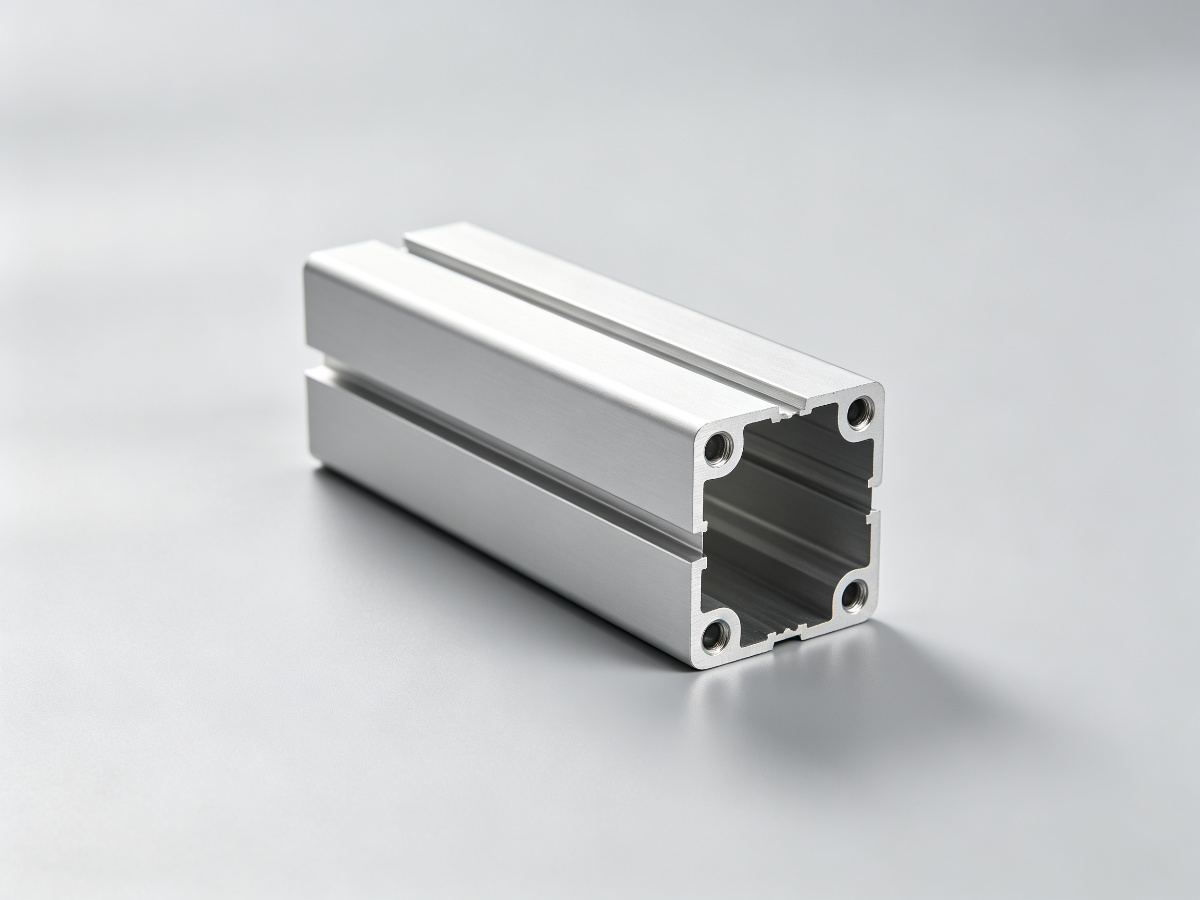
Typical 6063 profile: near-net cross-section produced by extrusion, then cut and CNC-machined to length with holes, pockets and mounting features.
Is 6063 Aluminum a Good Choice for CNC Machining?
It depends on what the part is trying to do. 6063 is not the strongest 6xxx alloy, but it is one of the best at being extruded into complex profiles and finished with a clean anodized surface.
| Your requirement | 6063 suitability |
|---|---|
| Complex extruded profiles | Excellent |
| Visible anodized surfaces | Excellent |
| Lightweight housings, frames, rails | Good |
| Heat-sink style profiles | Good |
| General CNC machining | Good |
| High-load structural parts | Usually not the first choice |
| Maximum strength | Consider 6061, 6082 or 7075 |
| Prototyping from solid billet | Possible, but may not use 6063's main advantage |
What Is Aluminum 6063?
6063 is a 6xxx-series aluminum alloy in the Al-Mg-Si family. It is heat-treatable, corrosion-resistant and, most importantly for this page, an extrusion-oriented alloy with a smooth surface that responds well to anodizing. It is commonly specified for extruded bars, rods, profiles and tubes under standards such as ASTM B221 and EN 755.
You will see it on enclosures, window and door frames, railings, lighting housings, machine frames and heat-sink sections. The part usually starts as a profile, then a saw cut and CNC operations turn it into a finished component. It is rarely the right answer when the dominant requirement is maximum strength at minimum weight.
6063 Is Not One Single Condition: T5 vs T6
Writing "aluminum 6063" on a drawing is incomplete. The temper changes mechanical properties, and those properties also vary with product form and wall thickness. Specify the temper, not just the alloy.
| Condition | General meaning | What to consider when buying |
|---|---|---|
| 6063-O | Annealed, softest | Rarely used for structural machined parts |
| 6063-T4 | Solution treated and naturally aged | Higher ductility, lower strength than T5/T6 |
| 6063-T5 | Cooled from extrusion and artificially aged | The most common condition for extruded profiles |
| 6063-T6 | Solution treated plus artificially aged | Higher strength than T5; specify when load requires it |
| 6063-T66 | Special controlled strength temper | Use only when actually specified and available |
Choose T5 when
The profile is cosmetic or general-purpose, and moderate mechanical performance is enough. T5 is the typical as-extrusion condition for frames, trim and enclosures.
Choose T6 when
The part carries higher loads, mounting forces or bending. Published minimum tensile and yield values differ between T5 and T6 and depend on section and wall, so confirm against the actual product form.
Choose the temper from the finished part requirement, not from the alloy name alone.
Why 6063 Is Machined After Extrusion
A machined 6063 part usually follows one route: extrusion forms the cross-section, then cutting and CNC create the finished interfaces. This is the manufacturing logic this page assumes.
6063 Extrusion + CNC vs CNC From Solid Stock
6063's advantage is not that it machines faster than 6061. It is that a complex profile can be formed once by extrusion, then only the critical features need CNC. Compare the two routes.
| Factor | Extrusion + CNC | Machining from solid |
|---|---|---|
| Initial tooling | Extrusion die required | None |
| Material efficiency | Better for profile-shaped parts | More swarf, especially on hollow sections |
| Complex hollow sections | Practical | Difficult and wasteful |
| Prototype flexibility | Lower | Higher |
| High-volume profile parts | Strong candidate | Often less efficient |
| Low-volume simple parts | May not justify a die | Often easier |
Extrusion can reduce machining volume significantly when the profile already carries much of the final geometry. The economic benefit depends on profile complexity, annual volume and extrusion tooling cost — it is not a fixed saving.
6063 vs 6061 Aluminum for CNC Machining
This is the comparison buyers ask most. 6063 and 6061 are not interchangeable defaults; they optimize for different things.
| Factor | 6063 | 6061 |
|---|---|---|
| Primary strength | Extrudability and surface finish | Strength and general structural use |
| Extrusion complexity | Excellent | Good, less profile-oriented |
| Machinability | Good to excellent (softer, watch built-up edge) | Excellent all-around |
| Surface appearance / anodizing | Excellent | Good |
| Structural strength | Lower | Higher |
| Typical part route | Extrusion profile + CNC | Billet, plate or extrusion + CNC |
See also our which aluminum alloy to choose comparison for the broader 6061 / 7075 / 5052 / 6082 picture.
6063 vs 6082: When a Stronger 6xxx Makes Sense
In European markets 6082 is often specified alongside 6063. It keeps the 6xxx family but adds structural strength where 6063 reaches its limit.
| Requirement | 6063 | 6082 |
|---|---|---|
| Complex extrusion | Excellent | Good |
| Structural strength | Moderate | Higher |
| Cosmetic finish | Excellent | Good |
| Industrial profiles | Excellent | Excellent |
| Higher-load components | Limited | Better candidate |
Where 6063 Sits Against Other Common Alloys
| Alloy | Primary reason to choose it |
|---|---|
| 6063 | Extrusion complexity plus a clean, anodizable surface |
| 6061 | Balanced strength and machinability for general structural parts |
| 6082 | Higher-strength industrial structural applications |
| 7075 | High strength, weight-sensitive components (typically plate/bar, not extrusion profile) |
| 5052 | Forming, sheet and corrosion-focused applications |
Explore the full range in our materials overview.
How 6063 Behaves During CNC Machining
6063 machines well, but it is a relatively soft aluminum. The machining issues are not about "can it be cut" — they are about what happens after the cut.
Built-up edge
Soft aluminum can adhere to the cutting edge, which hurts surface finish. Sharp tooling, appropriate geometry and chip control matter more than aggressive feed.
Long extrusions
A long profile is less rigid than a solid block. Deflection and vibration can appear if the part is not well supported, so fixturing strategy changes with length.
Thin walls
Extruded walls are thin. Over-tight clamping can distort the profile before machining even starts.
Residual stress
After the extrusion process, long sections can carry residual stress. Releasing clamping or sawing can move dimensions slightly, so hold and sequence matter.
Surface vs strength
Achieving tight structural tolerances on a profile that was designed for appearance is the wrong starting point. Match the tolerance to the functional feature.
Chip evacuation
Soft aluminum produces longer chips. Coolant and chip clearance protect finish and hole quality, especially on drilled and tapped features.
General tips for softer aluminums are in our aluminum CNC machining best practices.
CNC Machining 6063 Extrusions: What Changes
Machining a profile is not the same as machining a block. These decisions separate a clean part from a distorted one.
Datum selection
Use a stable, known extrusion surface as the reference rather than a face that may vary with the profile. Datum choice propagates to every drilled hole.
Straightness
Long profiles must be checked for straightness before machining. A bent extrusion cannot be fixtured flat without inducing stress that later relaxes.
Fixturing
Clamp pressure should hold the profile without deforming it. Multiple supports reduce deflection along long sections.
Cut-to-length order
Whether to saw first and machine ends, or machine both ends before final cut, depends on length tolerance and how much the profile moves after sawing.
6063 CNC Machining DFM Checklist
Use this before you send the drawing. It catches the requirements most often missing from a 6063 RFQ.
- Specify 6063-T5 or 6063-T6, not just "6063".
- Define the extrusion profile and any straightness requirement.
- Mark cosmetic surfaces explicitly.
- Call out only the truly critical machined dimensions.
- Avoid ultra-tight tolerances on non-functional features.
- Provide enough support zones for thin walls.
- Define tapped or threaded features and their class.
- State anodizing type, color and required thickness.
- Mark areas that must be masked or touch up.
- Define cut-length tolerance.
- Identify datum surfaces for fixturing.
- State the inspection report you expect.
Anodizing 6063 After CNC Machining
6063 is widely chosen because it anodizes to a clean, consistent cosmetic surface. The catch is that the extrusion surface and freshly machined surface are not the same surface.
A smooth as-extruded face, a CNC-machined face and a bead-blasted face will each take an anodic coating slightly differently. After anodizing they can show subtle color or texture variation even though the alloy is the same. This is a preparation problem, not a material defect — but it has to be planned before the part is quoted.
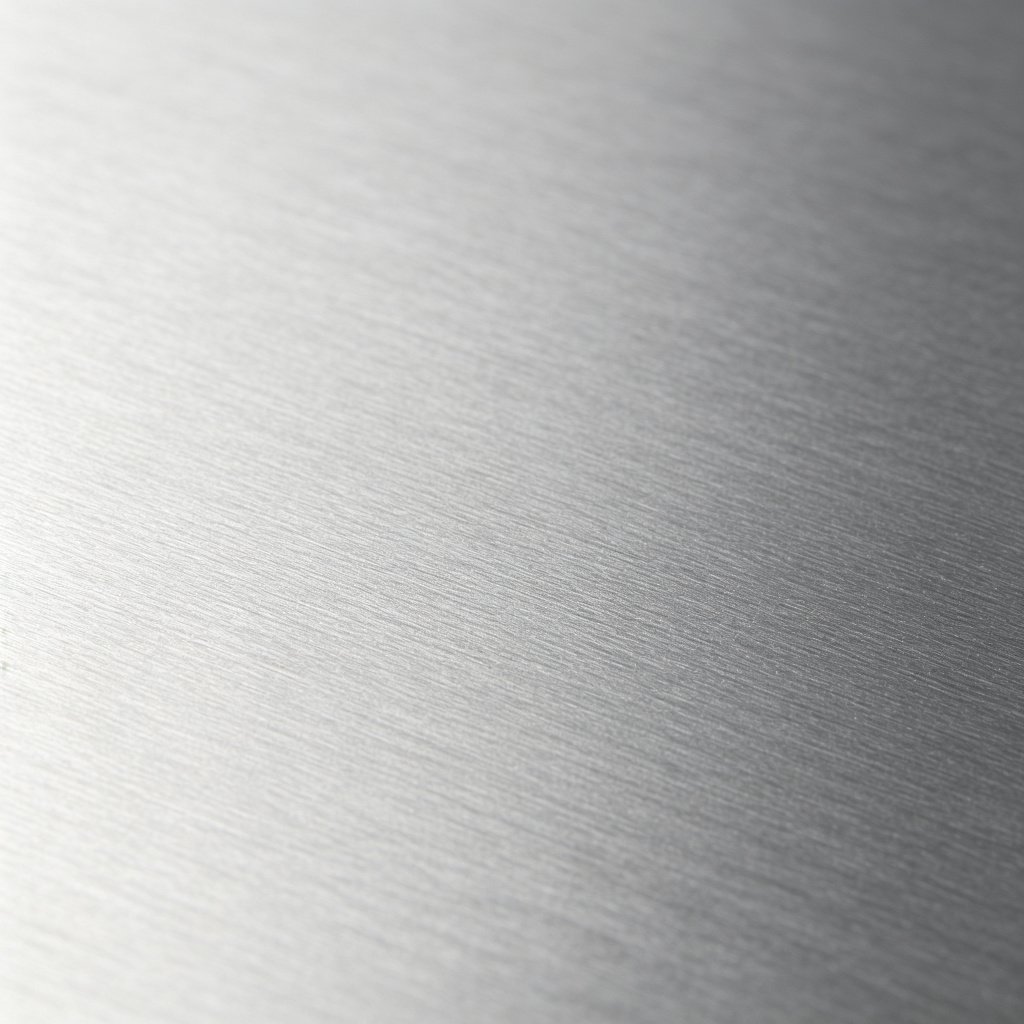
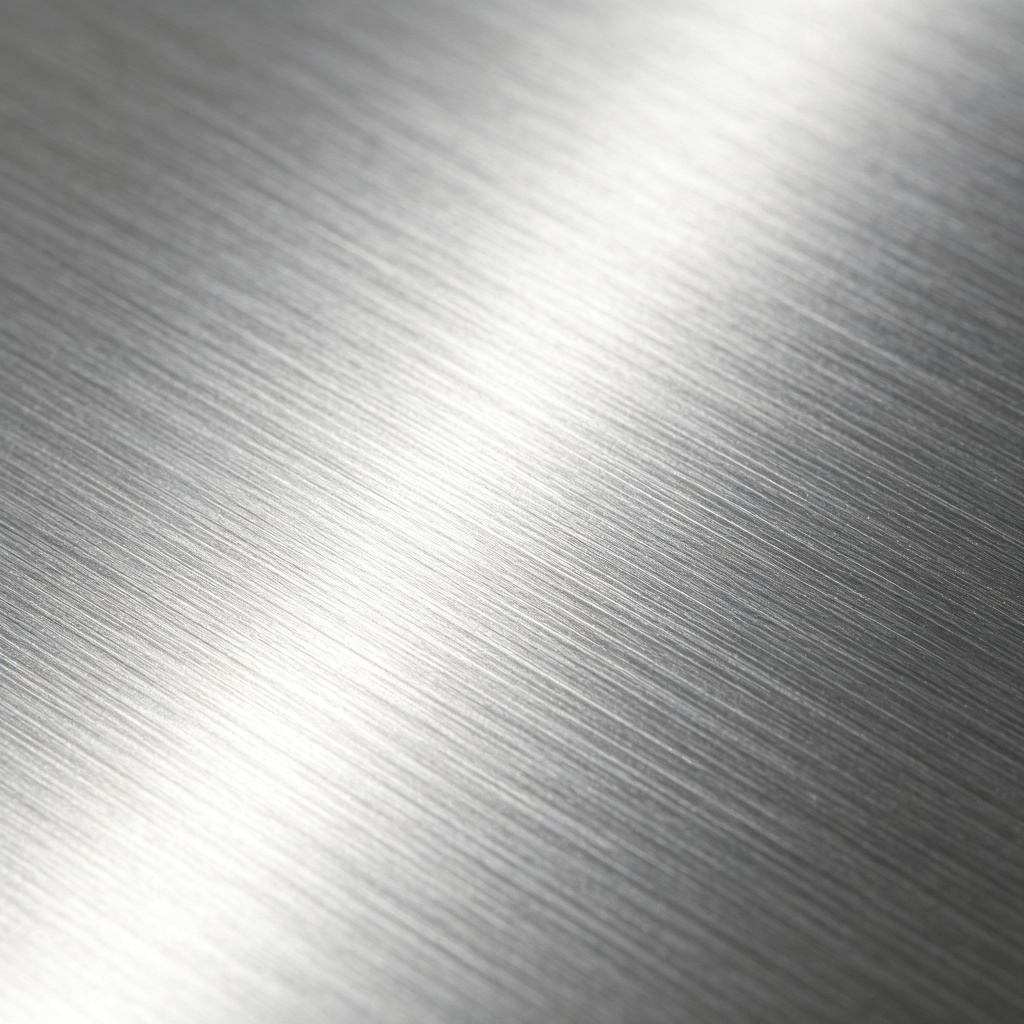
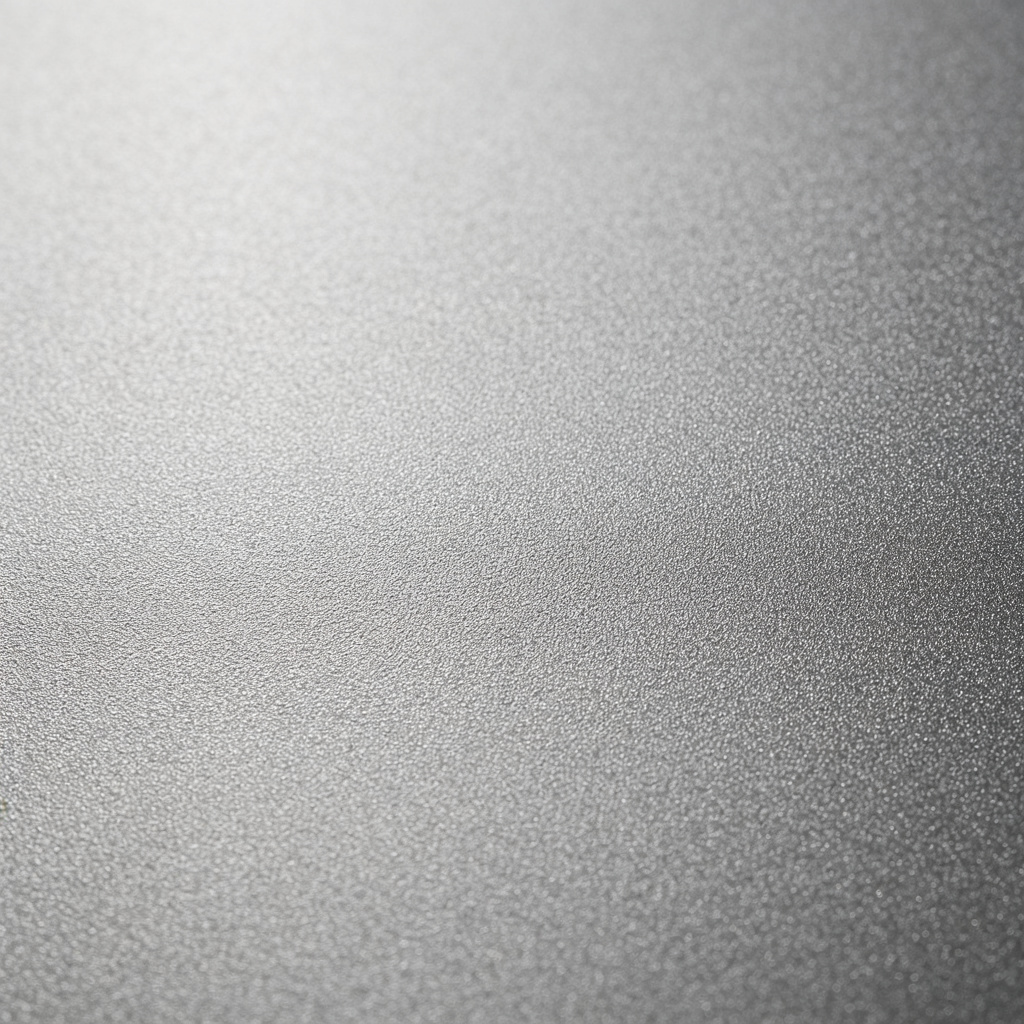
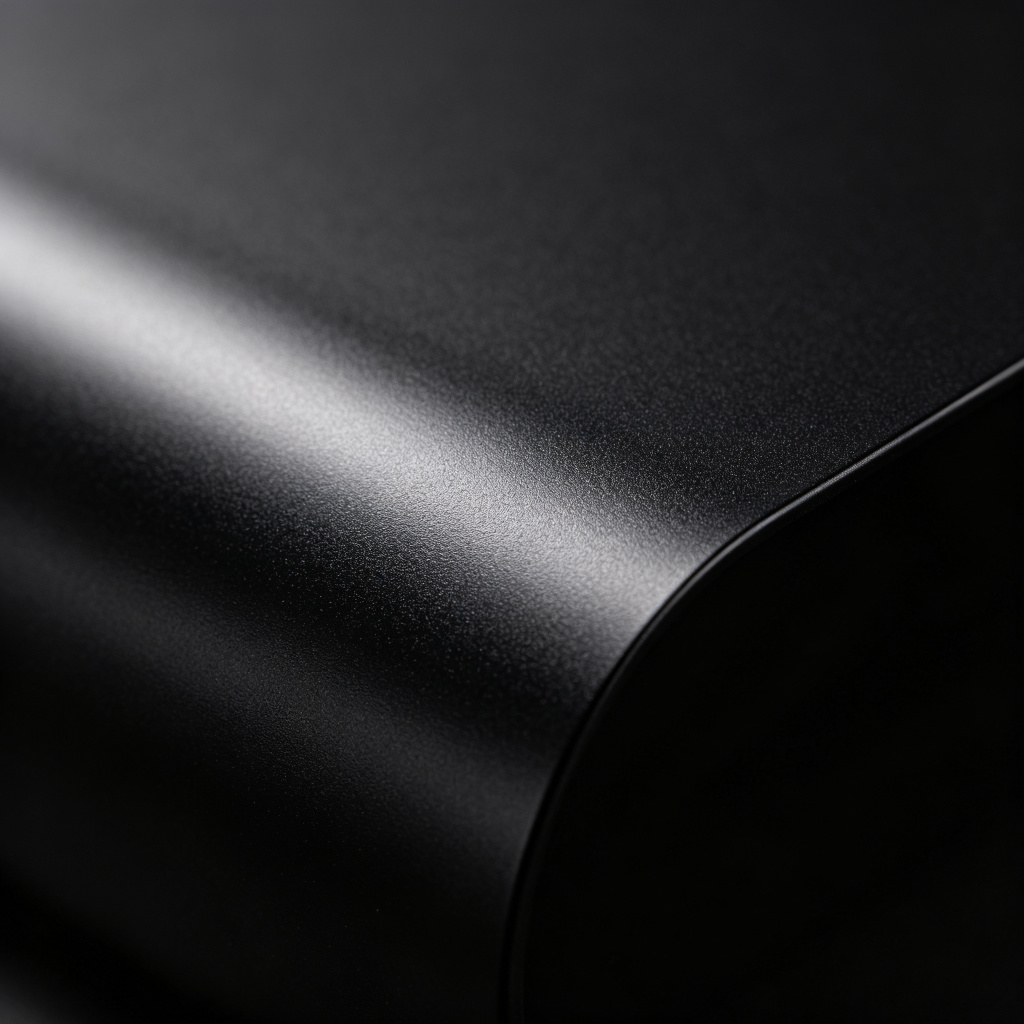
Same alloy, different surface preparation. The finish you see after anodizing depends on which of these surfaces the customer actually sees.
Anodizing options
Common choices include Type II decorative anodizing in clear, natural, black or other colors, and Type III hard anodizing where wear resistance matters. Availability depends on part geometry, masking needs and racking. Do not assume every option runs on every batch.
What to specify for 6063 anodizing
- Alloy and temper (6063-T5 / T6).
- Anodizing type (Type II / Type III*).
- Color and required coating thickness range.
- Gloss or appearance target.
- Masked or touch-up areas.
- Where racking marks may appear.
- Cosmetic acceptance sample.
* Only where the process is actually available. More detail in our aluminum surface finishing guide.
Tolerance and Dimensional Control
6063 does not come with a single universal tolerance number. What a CNC pass can hold depends on part size, wall thickness, extrusion condition, fixturing and feature geometry.
How CNC-machined 6063 parts are checked
| Stage | What is verified |
|---|---|
| Material | Alloy, temper, mill or material certificate (EN 10204 3.1 where requested) |
| Extrusion | Profile dimensions, straightness, visible surface condition |
| CNC | Critical dimensions, hole positions, threads, flatness, bore position |
| Finish | Anodizing color and coating, masked areas, visual acceptance |
| Final | Inspection report, packaging, traceability |
Typical CNC-Machined 6063 Components
Electronics enclosures
Covers, frames and profile-based housings that need a clean anodized look.
Heat-dissipation parts
Extruded heat-sink profiles with machined mounting holes and interfaces.
Industrial frames
Rails, mounting sections and machine-frame profiles.
Lighting
Lighting housings and mounting channels with visible finish.
Consumer products
Decorative profiles, structural trim and visible housings.
Architectural
Trim, handrails and window/door profiles.
Automotive / EV*
Lightweight brackets and frame profiles where projects exist.
Custom profiles
Customer-designed sections machined to drawing.
How to Specify 6063 on a Drawing or RFQ
A drawing that only says "aluminum 6063" leaves the biggest decisions open. At minimum, include the following.
| Field | Example |
|---|---|
| Material | AA 6063-T5 (or T6) |
| Product form | Extruded profile |
| Standard | ASTM B221 / EN 755-2 / customer specification |
| Critical dimensions | Call out functional features only |
| Surface | As extruded / machined / anodized |
| Finish | Anodizing type + color + thickness range |
| Inspection | Dimensional report / material certificate |
| Quantity | Prototype / annual volume / batch size |
What Determines the Cost of CNC-Machined 6063 Parts?
A 6063 part is not priced as a single "aluminum machined part." The cost is the sum of several stages.
At low volume, standard stock or solid billet may be the more sensible route. At higher volume, a custom extrusion plus secondary CNC usually improves unit economics. The break-even point depends on profile complexity and die cost — it is not a fixed number.
Buyer Checklist Before Ordering 6063 CNC Parts
- Is 6063 the correct alloy for the actual load?
- T5 or T6 — and is that temper confirmed?
- Extrusion or solid stock?
- What does the profile cross-section look like?
- What straightness is required?
- Which faces are cosmetic?
- Which dimensions are functional?
- Is anodizing required, and what color?
- What coating thickness and gloss are expected?
- Where may racking marks appear?
- What inspection report is required?
- What is the annual volume?
- Is a custom extrusion die justified?
6063 CNC Machining Case Study
A typical profile-plus-CNC program looks like this. Fill in real project values before publishing external case details.
Extruded 6063 enclosure / housing profile
Custom 6063-T5 extrusion
End milling, drilling, tapping, pocketing
Hole positions, mounting interface, profile length
Black or natural anodizing, masked areas
Thin walls, long profile, anodizing consistency
Multiple support fixturing, datum on stable face, controlled surface prep before anodizing
Dimensional report + visual finish check
Frequently Asked Questions
What is 6063 aluminum used for?
Is 6063 aluminum good for CNC machining?
What is the difference between 6063-T5 and 6063-T6?
Why is 6063 commonly used for extrusions?
Is 6063 or 6061 better for CNC machining?
Is 6063 suitable for anodizing?
Should I machine 6063 from solid stock or use an extrusion?
How do you prevent distortion when machining long 6063 profiles?
What should I include when ordering CNC-machined 6063 parts?
What tolerances can CNC-machined 6063 parts hold?
Can you machine custom 6063 aluminum extrusions from customer drawings?
Request a 6063 Aluminum CNC Machining Review
Send us your CAD or drawing, along with the required temper (T5/T6), product form, anodizing requirements and expected quantity. Our engineers will confirm whether extrusion-plus-CNC is the right route for your part.