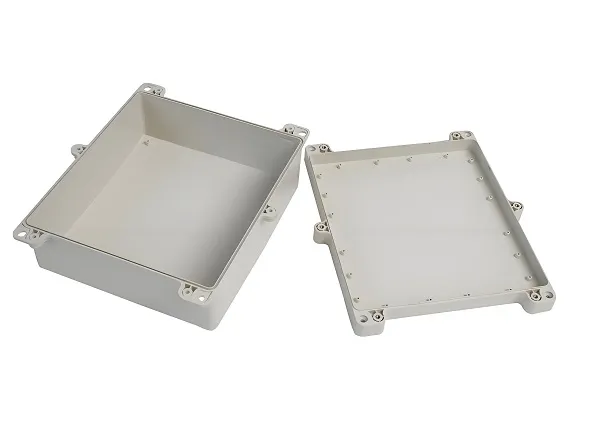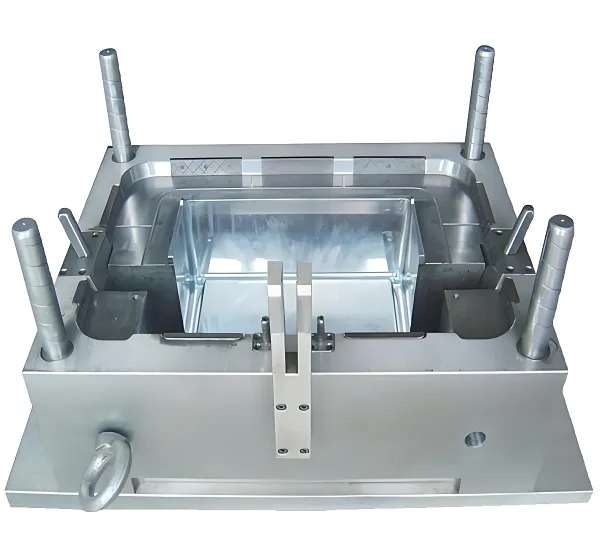
Turn your released 2D drawings, 3D CAD files or approved samples into inspected metal and plastic parts. We review the drawing, select the manufacturing process, produce to the approved revision, and deliver with inspection documentation.
At a Glance
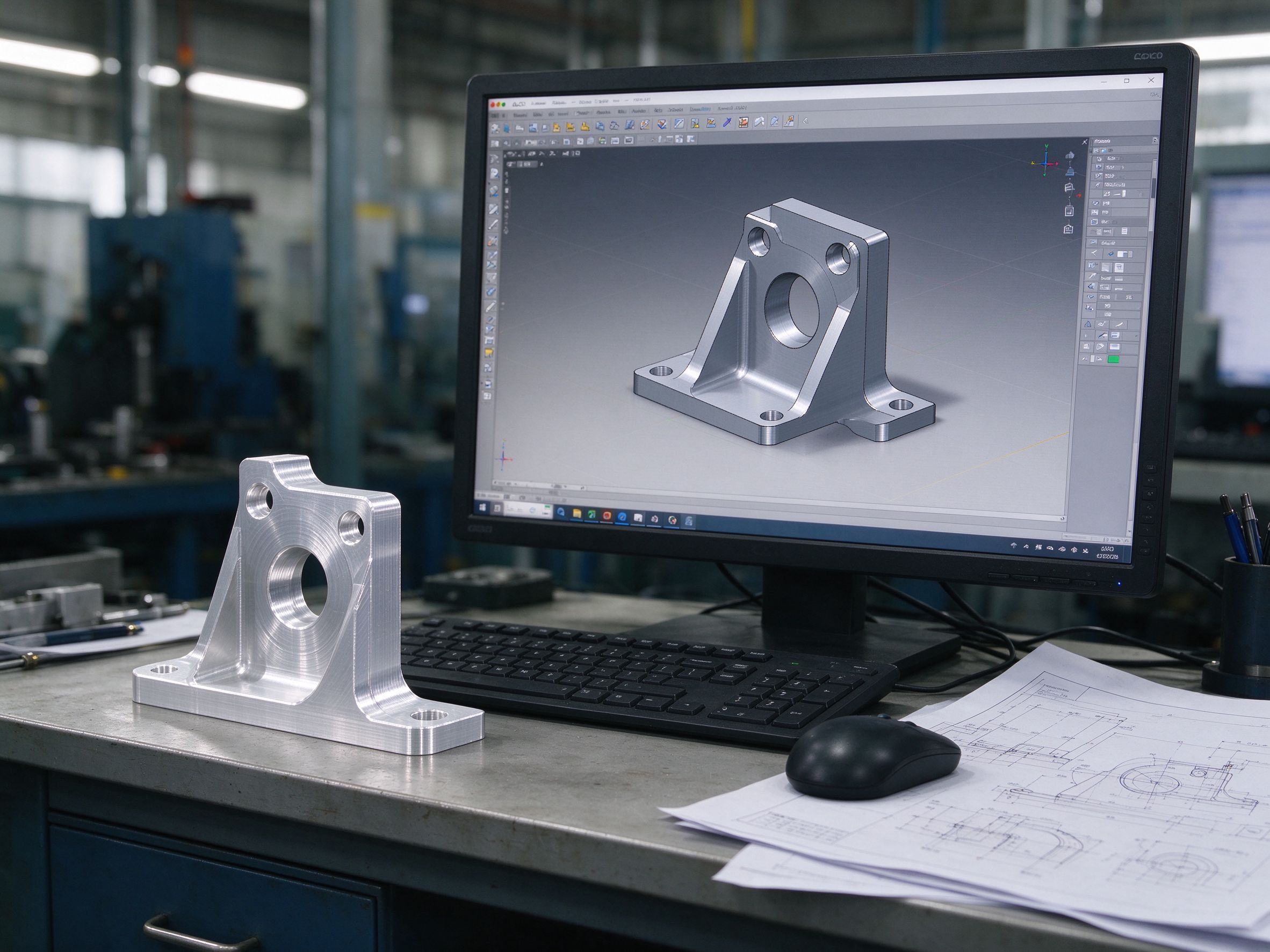
Yes — we manufacture parts to your released drawing, not to a generic design. You send the 2D drawing, 3D CAD or sample; our engineering team reviews completeness, material, tolerances and feasibility; we select the manufacturing route; produce to the approved revision; and deliver the parts with inspection evidence. We do not silently substitute material or change your geometry without written approval.
What You Can Send Us
You do not need to know which manufacturing process to use before contacting us. Send whatever package you have — a single PDF, a STEP file, a sample part, or a full drawing set. We will identify what is missing and come back with questions before quoting.
PDF, DWG, DXF
Dimensioned, toleranced drawings with revision and material called out.
STEP, STP, IGES
Solid models for geometry, tooling review and machining preparation.
Physical part or requirements
Existing sample, maintenance spare, or a written spec where no drawing exists.
What "Made to Drawing" Means
Build-to-print (also called made-to-drawing or manufacture-to-print) means the customer defines the part — geometry, material, tolerances, finish and acceptance criteria — through an approved drawing and CAD model. The manufacturer is responsible for producing the part to that released definition, not redesigning it.
Design intent, geometry, material grade, critical dimensions, tolerances, finishes, surface treatment, inspection requirements and revision level.
Process selection, tooling, workholding, machining strategy, production planning, inspection method, packaging and on-time delivery.
If your drawing is unclear or technically questionable, we raise an engineering question and wait for your written confirmation. We do not pick whichever option is easier on the shop floor.
How We Turn Drawings Into Finished Parts
The Goldcattle drawing-to-part workflow is a controlled sequence, not a straight line from inbox to shipment. Each step has a defined output before the next begins.
| Step | Stage | What happens |
|---|---|---|
| 01 | Receive | Drawing, CAD or sample logged and revision recorded. |
| 02 | Review | Engineering checks dimensions, material, tolerances, GD&T, finish and feasibility. |
| 03 | Clarify | Open questions are listed and resolved in writing before quoting. |
| 04 | Process select | CNC, injection molding, die casting, sheet metal or 3D printing chosen by geometry, material and volume. |
| 05 | Quote | Price, lead time, tooling assumptions and inspection scope issued. |
| 06 | Produce | Manufacture against the approved revision; first-article check on critical features. |
| 07 | Inspect | CMM, dimensional, surface and material checks against the drawing. |
| 08 | Deliver | Packaged, documented and shipped with the agreed inspection report. |
Manufacturing Processes We Apply
A drawing does not automatically mean CNC. We route your part to the process that fits the geometry, material and annual volume — not the process we happen to have running that day.
CNC machining
Milled, turned and 5-axis components in metal and engineering plastic.
Injection molding
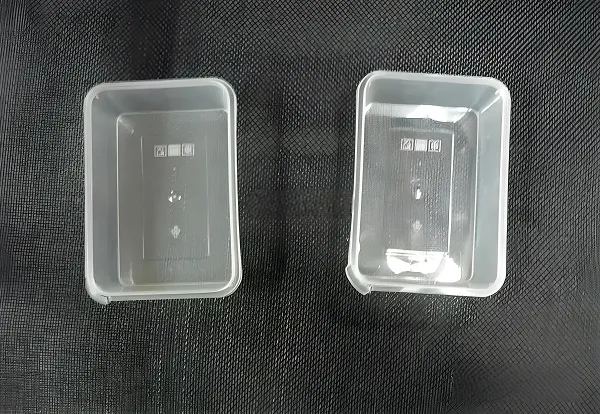
Housings, covers, gears and clips when volume justifies tooling.
Die casting
Zinc and aluminum cast components for higher-volume structural parts.
Sheet metal & stamping
Brackets, enclosures and formed components from sheet material.
We Review the Drawing Before We Commit
Before any part is cut, an engineer reads the drawing. This is the step that separates a build-to-print supplier from a shop that guesses.
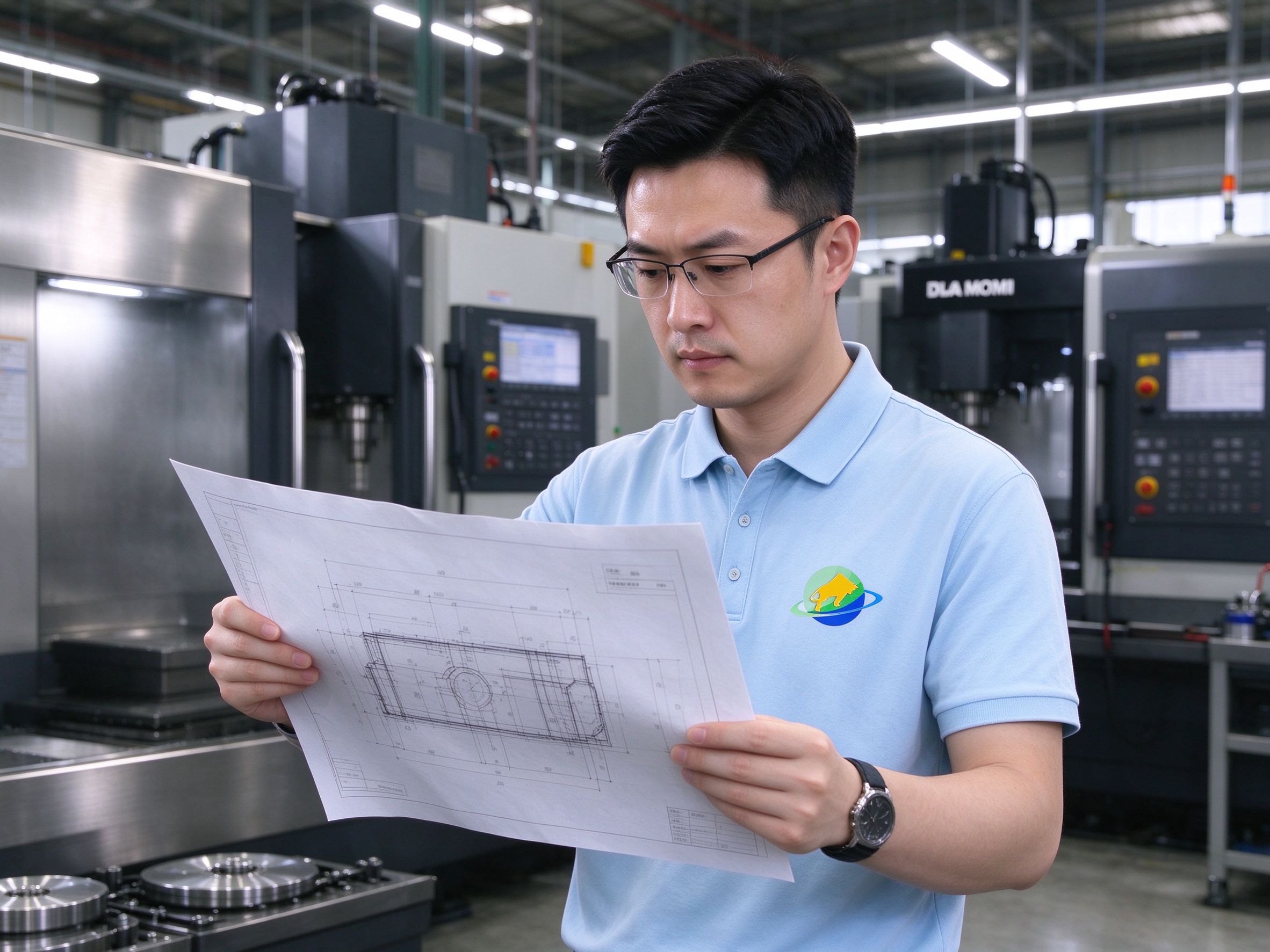
- Drawing completeness: dimensions, views, units, revision, general notes.
- Technical requirements: material grade, tolerance, GD&T, surface finish, heat treatment.
- Feasibility: tool access, wall thickness, deep pockets, undercuts, draft angles where molding applies.
- Critical features: mating dimensions, fits, sealing surfaces, positions that control assembly.
What If the Drawing and CAD Model Conflict?
2D drawings and 3D models occasionally disagree — a missing dimension in CAD, a slightly different radius, a note on the PDF that is not reflected in the model. In build-to-print, the drawing controls unless you tell us otherwise.
Identify the affected feature, write down the discrepancy, and send it to you with our proposed interpretation.
Pick whichever is easier, assume the CAD overrides the PDF, or ship a part that resolves the conflict silently.
Drawing Revision & Change Control
We quote against a specific revision and produce against that same revision. If you update the drawing mid-project, we re-review, note the cost and lead-time impact in writing, and wait for your approval before cutting the new revision.
| Situation | How it is handled |
|---|---|
| Quoted on Rev A | Production and inspection report reference Rev A. |
| Changed to Rev B mid-project | Engineering re-review, written price/lead-time update, approved before production. |
| Repeat order on old revision | Confirm the revision level before re-running the part. |
How We Select the Manufacturing Process
You do not need to decide CNC versus injection molding before you contact us. The geometry, material, annual volume, tolerance and tooling budget drive the route.
| What the part looks like | Likely route |
|---|---|
| Low-volume precision metal part | CNC machining |
| Complex plastic part at production volume | Injection molding + mold making |
| High-volume metal housing or bracket | Die casting + secondary machining |
| Bent, welded or flat sheet component | Sheet metal fabrication |
| One-off complex prototype | CNC or 3D printing |
Prototype → Pilot → Production
Most drawing-based projects start small. The process route can change as volume grows — and that is expected, not a problem.
Prototype
CNC or 3D printed from your CAD, for fit, form and function validation.
Low volume
CNC or soft-tooling runs as design is finalized and demand is proven.
Production
Hard tooling, injection molding or die casting once annual volume justifies it.
Part Types We Manufacture From Drawings
Milled parts
Brackets, housings, plates, bases, fixtures, manifolds.
Turned parts
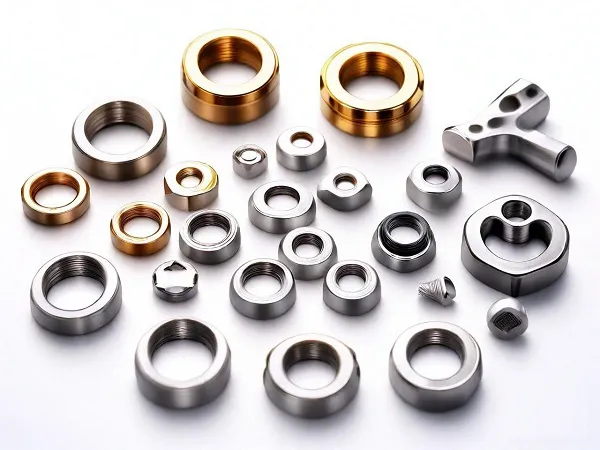
Shafts, bushings, pins, spacers, connectors, threaded fittings.
Plastic parts
Injection-molded housings, covers, gears, clips and knobs.
Cast & formed
Die-cast housings, sheet brackets, stamped components.
Prototypes
Functional prototypes, one-off spares, low-volume custom parts.
Replacement parts
Obsolete components, maintenance spares, second-source equivalents.
Materials We Manufacture to Drawing
The drawing controls the specified material grade. We do not substitute one alloy for another to save cost without your written approval.
Aluminum, steel, stainless, titanium, brass, copper
Grade and condition as called out on the drawing; material certificates available when supplied with the stock.
PEEK, POM, PA, PC, ABS, PPS and others
Engineering plastics for structural, electrical or wear applications, per your spec.
How We Verify Parts Against Your Drawing
Inspection is not a separate claim — it is the evidence that the part matches the released revision.
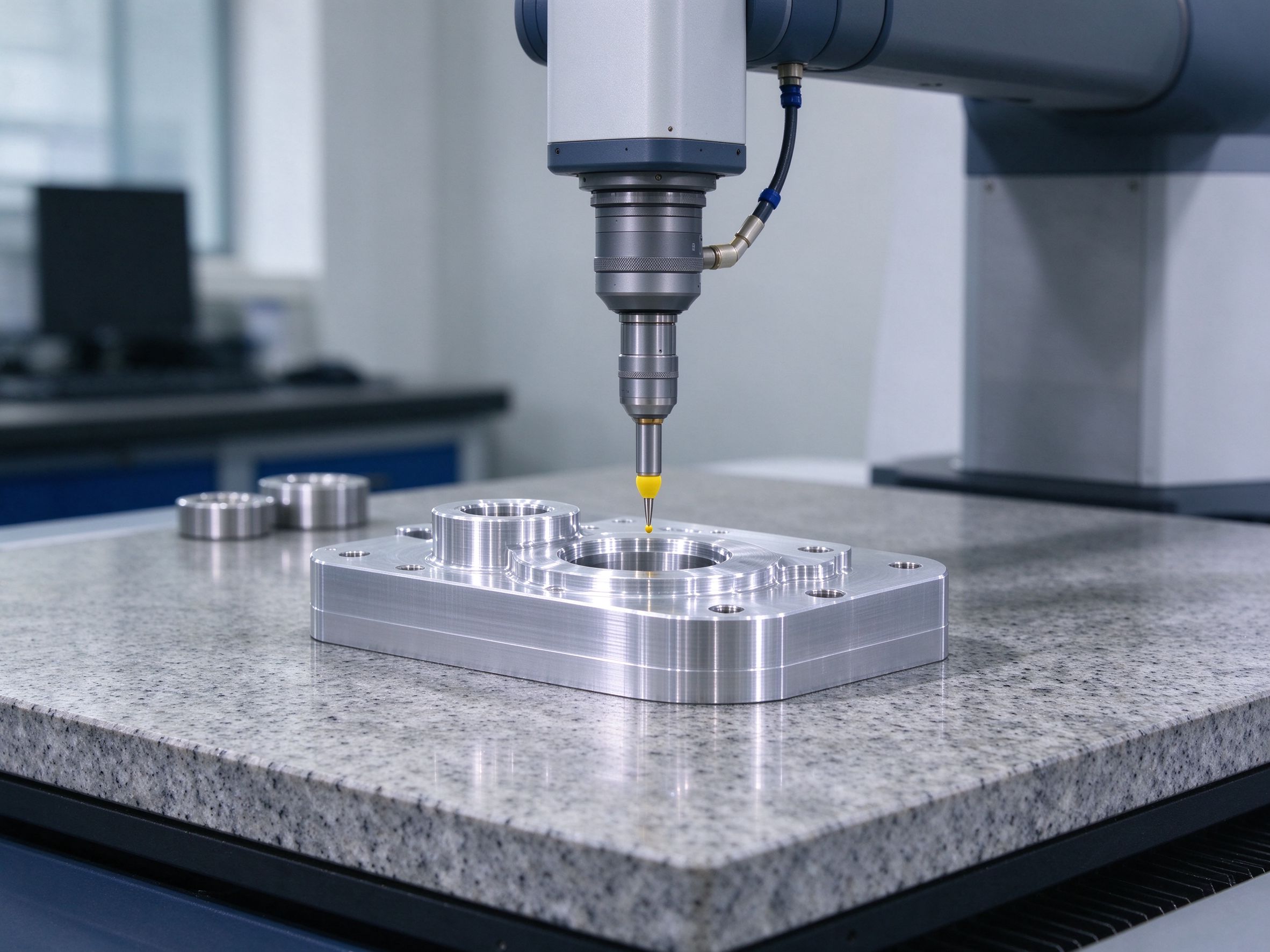
- Dimensional inspection on critical and mating dimensions.
- CMM inspection for positional, profile and geometric tolerances where required.
- Surface finish measured where a roughness value is specified.
- First article inspection when the project requires it.
- Material certificates when supplied and requested.
Drawing-to-Inspection Traceability
Each requirement on your drawing maps to a piece of inspection evidence. This is what a build-to-print delivery looks like on paper:
| What the drawing says | What we deliver |
|---|---|
| Ø20 ±0.01 bore | Dimensional result on the inspection report |
| Position ⌀0.02 datum A-B | CMM result referencing the specified datums |
| Ra 1.6 on sealing face | Surface measurement on that face |
| Material: 6061-T6 | Mill / material certificate where supplied |
| Anodize, black, Type II | Visual / coating confirmation per drawing |
Second Source & Replacement Parts
If you already have a released drawing and want a second source, or need a replacement for an obsolete or discontinued component, send the drawing and current requirements. We review manufacturability, quote, run a sample, inspect it, and support repeat orders on the same revision.
Second source qualification
Sample part, inspection report and documented process to qualify alongside your existing supplier.
Obsolete / spare parts
Maintenance spares and discontinued components remade from the original drawing or sample.
Your Drawings Remain Your Design
We work to your print — we do not reuse your geometry, resell your parts, or modify your design without approval. NDA is available on request. Drawing revisions are controlled project by project, and material substitutions require written confirmation from you.
Case Study: From Rev B Drawing to 500-Piece Batch
- Customer input3D CAD + 2D drawing, Rev B
- Material6061-T6 aluminum
- RequirementsCritical bore, anodize, inspection report
- Quantity500 pcs
- Route5-axis milling → finish bore → anodize
- InspectionCMM on bore and datum faces
Engineering review flagged a deep pocket and a tight bore that would need finish boring after the main milling. We quoted that route, confirmed the anodizing spec, ran first articles, then released the 500-piece batch with a dimensional report against Rev B.
What to Send for a Drawing-Based Quote
Files
- 2D drawing (PDF / DWG) and 3D CAD (STEP / IGES)
- BOM, if applicable
- Revision level noted
Requirements
- Material grade and condition
- Quantity (prototype / annual / per batch)
- Surface finish, coating, heat treatment
- Inspection level (CMM, FAI, material cert)
- Target delivery and destination
Frequently Asked Questions
Can a Chinese manufacturer make parts from my drawings?
What files do I need to send?
What does "build-to-print" actually mean?
Do I need a 2D drawing, or is a STEP file enough?
What if my CAD model and drawing disagree?
Can you start with a prototype and later move to production?
Can you make a second source for an existing part?
How are drawing changes handled mid-project?

Send Your Drawing for a Manufacturing Quote
Upload your CAD model, drawing or sample. We will review geometry, material, critical features and process route, and come back with a quote and lead time — not a generic price list.
Xiamen Goldcattle · Manufacturing since 1998 · CNC, injection molding, die casting, sheet metal · CMM inspection on qualified features