Buying CNC-machined parts from China can still be cost-effective in 2026, but a lower factory quote does not automatically mean a lower total cost. The result depends on part design, order quantity, material, finishing requirements, import duties, freight, quality controls and the cost of meeting your delivery date. This guide explains how to compare sourcing routes on total cost per accepted part.

At a Glance
Possibly, but not automatically. China CNC parts can still be cost-effective in 2026 when the part design is stable, quantities support the program, and the applicable duties, freight, inspection and delivery costs leave a real advantage. For US buyers the tariff treatment is verified against the current HTSUS classification and applicable measures; for European buyers the CN/TARIC classification and import measures are verified for the product and destination. The reliable comparison is total cost per accepted part delivered to your facility, not the machining quote alone.
Compare on Landed Cost, Not Factory Price
Landed cost is the total cost of the goods at the buyer's facility. For a machining program, compare:
| Cost item | What it includes |
|---|---|
| Purchase cost | Unit price × quantity, tooling, programming or one-time engineering, packaging |
| Logistics cost | International freight, insurance, customs brokerage, port and destination handling, local transport |
| Duties & tariffs | Applicable basic duties, additional duties and other import charges |
| Inspection cost | Third-party inspection, import sampling and additional quality verification |
| Risk cost | Estimated scrap, rework, expedited freight, delay handling, inventory and sourcing management |
| Accepted quantity | Parts that actually meet drawing, material, finish and acceptance requirements |
This is a management model for comparing sourcing options, not a customs calculation. Actual dutiable value, duties and any recoverable tax are calculated under the applicable rules; when estimating scrap, avoid counting the same loss twice through both a smaller denominator and an extra cost item.
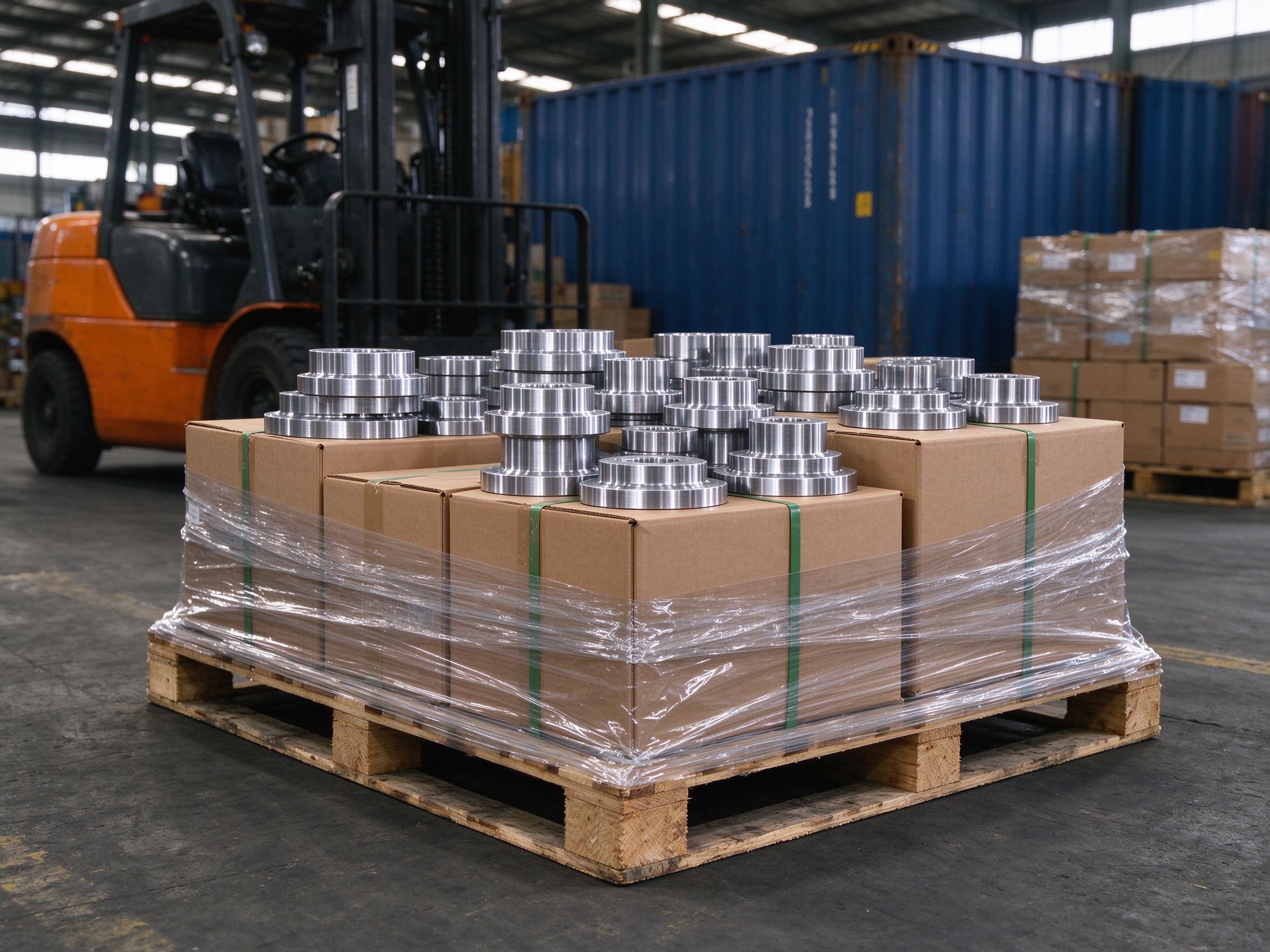
When Do Tariffs and Shipping Erase the China Cost Advantage?
China total per accepted part = China unit quote + per-part freight, customs and inspection + per-part duties and non-recoverable import costs + estimated quality, delay and inventory cost difference.
Local total per accepted part = local unit quote + local logistics + inspection + estimated quality, delay and inventory cost. Compare both routes on the same specification, acceptance standard and delivery target.
Where the China total is lower, cross-border sourcing may be worth evaluating. Where it is higher, re-assess volume, process route or supply region before deciding. Duties are not guessed from the words "CNC parts from China" — the applicable classification and current measures are checked first.
How US Tariffs Affect CNC Parts from China in 2026
US import treatment depends on the specific merchandise classification, the applicable HTSUS provision and the product lists and conditions of the current measures. Stainless steel, aluminium, copper and plastic CNC parts are checked separately — material names alone do not determine the rate.
- List the basic duty, applicable additional duties, customs brokerage and logistics fees separately.
- Check the current USITC HTS query result before ordering, and confirm classification and rate with a licensed customs broker.
- Do not ask a supplier to understate value, misdeclare the product or change origin description to lower the quote.
Is China CNC Sourcing Still Cost-Effective for European Buyers?
- Check the applicable CN/TARIC classification and import measures for the product and destination.
- Verify whether anti-dumping, countervailing, safeguard or other trade measures apply to the specific product.
- Separate freight, customs clearance and import VAT; treat any recoverable VAT by cash-flow and economic cost, depending on the importing entity and VAT registration.
- For DDP quotes, confirm the actual clearance, tax responsibility and documents so "delivered duty paid" is compared on the same basis.
China vs Local CNC Machining: Which Is Better for Your Project?
Prototype or urgent change
Tend to evaluate locally. Design not frozen, rapid iteration, or line-down cost high — local response may justify the premium. Count design-change frequency, lead time and risk, not only unit price.
Stable repeat production
Compare across regions. Drawing, material and inspection requirements defined, volume stable, supplier capability verified — compare China and local quotes on total cost per accepted part.
High-tariff or high-compliance part
Verify before ordering. Steel/aluminium derivatives, trade-remedy products or regulated parts need classification, duty and eligibility checks before treating the China quote as a saving.
| Project condition | China sourcing may win | Local sourcing may fit better |
|---|---|---|
| Order quantity | Stable repeat production that absorbs engineering costs | Very small urgent lots, one-off repairs, uncertain trials |
| Process complexity | Multi-operation parts, material and service coordination | Frequent on-site adjustment or design iteration |
| Lead time | Time for DFM, sampling and international freight | Line-down emergency, fast iteration or on-site problem solving |
| Freight economy | High value per piece, easy packaging, reasonable freight share | Large or heavy parts where freight dominates value |
| Tariffs | Verified duties still leave a real advantage | Duties erode the price gap or local supply has clear advantages |
| Quality | Process and inspection evidence match the drawing | Certifications, audits or special requirements the candidate cannot meet |
| Risk tolerance | Time for first-article approval, inspection and inventory | Cross-border uncertainty or delay cost is unacceptable |
| IP & regulation | Commercial terms and file controls satisfy the project | Export control, defence/security or mandatory local content |
Country of origin is not a substitute for supplier capability. Shops in the same country vary widely — judge by equipment, process control, inspection data and whether the project requirements match.
How to Compare CNC Machining Quotes Fairly
Align these items before comparing China and local suppliers:
Specification
- Drawing, 3D model and revision identical
- Material grade, temper and material documents
- Quantity split — samples, trial, single batch, annual
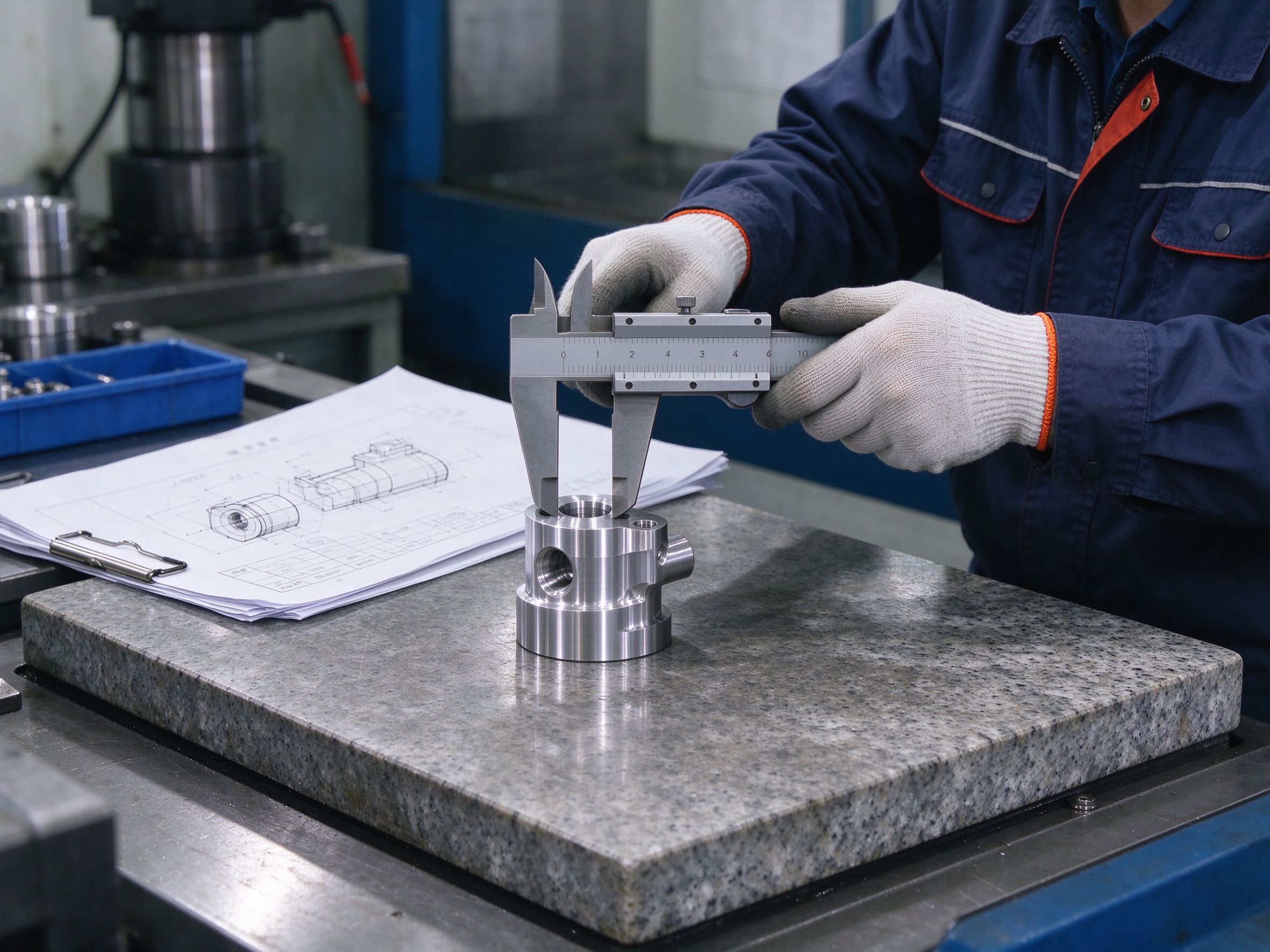
- Tolerance, FAI, CMM or report requirements
Terms & remedies
- Finishing — anodizing, passivation, plating, blasting, heat treatment
- Packaging, marking, batch traceability
- Delivery term — EXW, FOB, DAP, DDP and cost responsibility
- Destination, classification, duties and remedies for non-conforming parts
Frequently Asked Questions
Is it still cheaper to buy CNC parts from China in 2026?
Are aluminium or stainless CNC parts from China always subject to the same US tariff?
How should European buyers calculate the import cost of CNC parts from China?
Are China CNC parts always cheaper than US or European parts?
What should I send to get a meaningful CNC machining quote from China?

Compare a Quote for Your CNC Program
Send the drawing, material, quantity, finishing, destination and target dates. We will return a clear machining quote, delivery options and acceptance scope so you can run the landed-cost comparison yourself.
Xiamen Goldcattle · Manufacturing since 1998 · Custom CNC machining · Related: how to choose a reliable CNC supplier in China →