Custom Molded Packaging Components
Custom Injection Molding for Industrial Packaging Components
Protect parts in transit and on the line with rigid, repeatable packaging molded to your geometry. Xiamen Goldcattle molds trays, compartment dividers and locating holders in PP, PET, PE and ESD-safe compounds — engineered from prototype to volume under one ISO 9001:2015 quality system.
Is injection molding the right choice for your packaging?
Industrial packaging is rarely one part — it is a system of trays, dividers and locating features that must stack, nest and protect through shipping and assembly. The right process depends on volume, wall control and how tightly parts must be located.
Injection molding fits when…
- You need sharp walls, ribs and locating bosses repeated exactly across thousands of parts.
- Annual volume justifies tooling for lower unit cost.
- You want mono-material PP/PET for recyclability (PPWR-aligned).
- ESD-safe or cushion features must be molded in, not added later.
Consider thermoforming or foam when…
- Volume is very low and tooling cost outweighs per-part savings.
- The pack is a large, thin, single-surface shell.
- Soft cushioning (not structural locating) is the main requirement.
Still unsure? Send volume, resin and a drawing — our engineers tell you the lowest-risk route, even if it is not injection molding.
Packaging components we mold
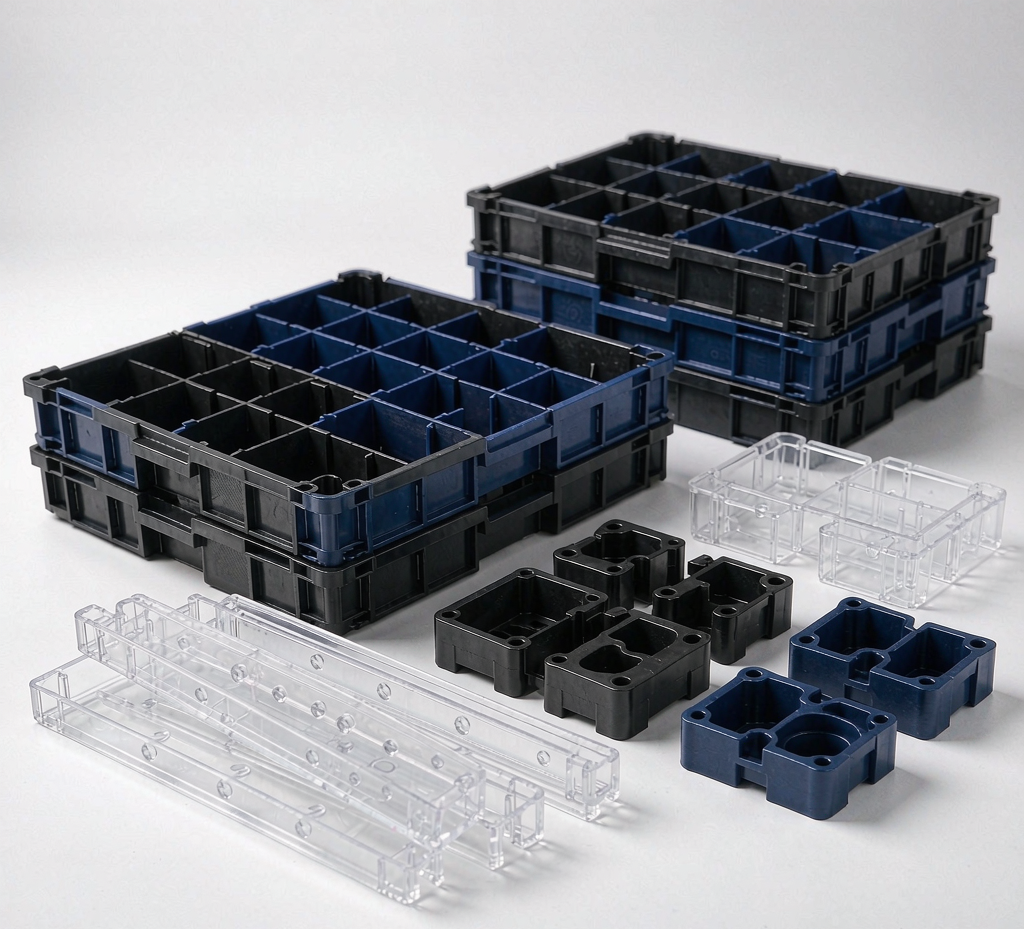
Component trays
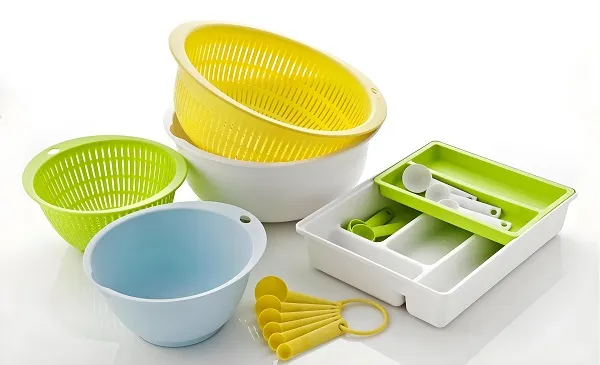
Rigid trays with formed pockets that cradle parts during shipping and line-side kitting — common for electronics, sensors and machined parts.
Compartment dividers
Snap-in or drop-in separators that partition a bin into cells, preventing part-to-part contact and mix-ups.
Locating holder nests
Precision nests with bosses and ribs that fix a part's orientation for automated handling, inspection or assembly.
Stackable bins & boxes
Reusable totes and bins with interlocking lids and feet for closed-loop logistics and line-side storage.
ESD-safe inserts
Conductive or dissipative trays and inserts that protect static-sensitive electronics through handling and transit.
Clip & cushion features
Integrated clips, living hinges and TPE overmold cushions that hold or damp parts without secondary assembly.
Material selection for molded packaging
| Resin | Packaging role | Why choose it |
|---|---|---|
| Polypropylene (PP) | General rigid trays, bins | Light, chemical-resistant, easy to recycle; recycled grades available |
| PET | Clear or rigid trays | Clarity and stiffness; widely recyclable mono-material |
| Polyethylene (PE) | Flexible bins, lids | Impact toughness and squeezable compliance |
| TPE / TPU | Cushion, grip, overmold | Soft-touch protection without a second part |
| Conductive / dissipative compounds | ESD-safe trays, inserts | Static protection for electronics handling |
| Recycled-content PP | PPWR-aligned programs | Supports recycled-content targets in a recyclable mono-material |
Exact grade and any recycled-content ratio are confirmed with you during DFM so the chosen resin meets both function and your compliance pathway.
Critical molding features & what we control
| Feature | What we control | How it is confirmed |
|---|---|---|
| Nest-to-nest repeatability | Consistent pocket position across cavities and shots | Tooling design + first-article inspection |
| Locating bosses & ribs | Position and height of orientation features | DFM review + CMM / gauge check |
| Wall uniformity | Even thickness to avoid sink and warpage | Fill simulation + sample measurement |
| Flash & parting line | Clean edges for safe, snag-free handling | Tool maintenance + visual + gauge |
| Surface & stack height | Stable stack and nesting fit | Sample stack test + dimension check |
Capability limits (part size, wall thickness, shot envelope) are confirmed during engineering review against your specific geometry and resin — we do not quote a single site-wide number because it varies by design.
Design for molding (DFM) rules for packaging
Geometry
- Adequate draft on all vertical walls for clean ejection.
- Uniform wall thickness; use ribs, not thick sections, for stiffness.
- Corner radii to reduce stress and improve fill.
Stack & nest
- Design nests to interlock without snap-fit interference.
- Control overall stack height for safe palletizing.
- Confirm lid/bin fit with sample stack tests.
Features
- Locating bosses sized for your handling tolerance.
- Living hinges sized for expected open/close cycles.
- ESD or cushion features specified up front, not retrofitted.
Production
- Multi-cavity tooling to cut unit cost at volume.
- Hot- or cold-runner choice balanced for part and volume.
- Resin and recycled-content ratio fixed in DFM.
Sustainability & PPWR readiness
What we can do
- Mono-material PP or PET trays that are easier to recycle.
- Recycled-content PP grades for recycled-content targets.
- Design for disassembly (no mixed-material bonds where avoidable).
What stays with you
- Final recyclability and recycled-content claims for the full pack.
- Third-party certification and labeling obligations.
- Compliance sign-off for your market and application.
We engineer the molded component to support your pathway; we do not certify the finished package.
Quality & process control
- ISO 9001:2015 certified quality system across all six core processes.
- DFM and mold-flow review before tooling commitment.
- First-article inspection (FAI) to verify the qualified tool.
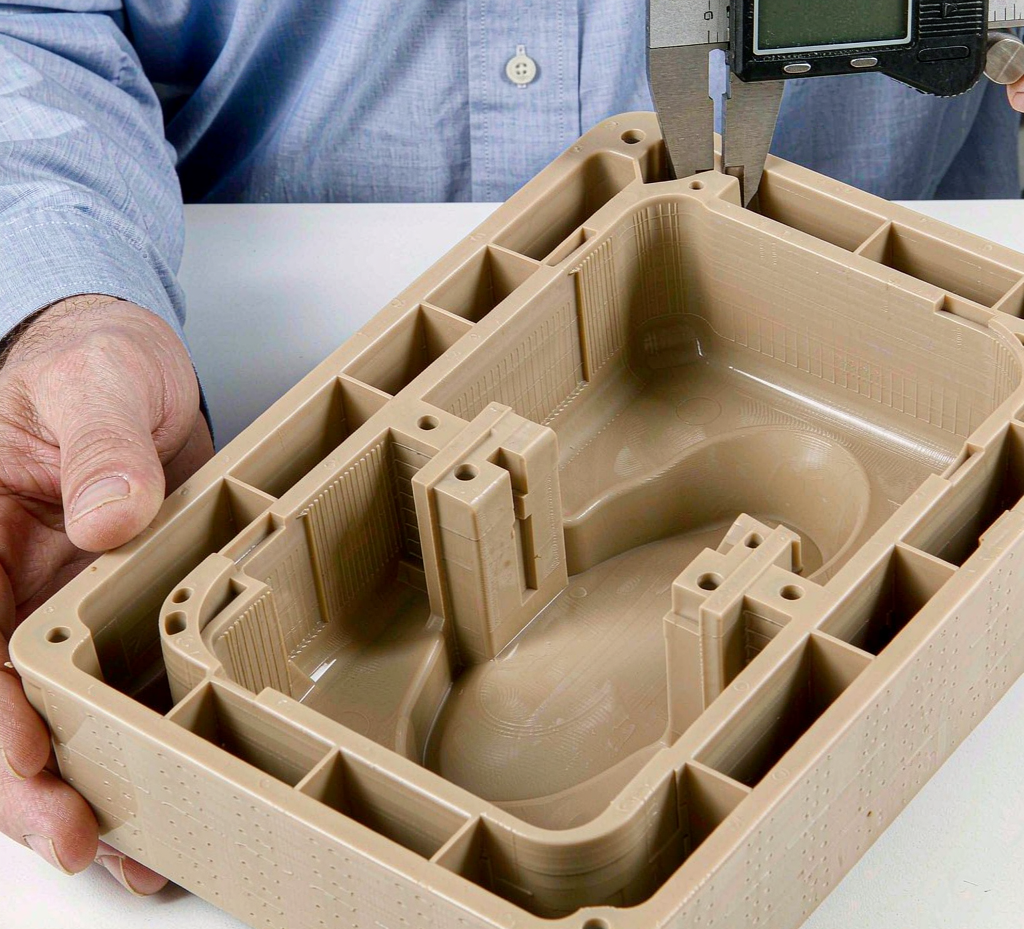
- In-process checks: calipers, gauges, CMM and sample stack tests.
- Inspection reports and material certificates available on request.
Documentation packages, inspection reports and material certificates are available on request. Certificate copies can be provided under NDA.
Start a packaging molding project
RFQ & DFM
Share drawing, resin, volume and notes; get DFM feedback and a quote within 24h.
Tooling
Steel tool built and qualified by first-article inspection.
Samples
Prototype parts molded and measured against your spec.
Validation
Stack, nest and handling tests confirm fit on your line.
Production
Mass production on a confirmed schedule with traceable QC.
What to include in your request
- 3D model (STEP / IGES / STL) or 2D drawing (DWG / DXF / PDF).
- Target resin or required properties (rigidity, ESD, cushion).
- Estimated annual volume and order批次 size.
- Compliance notes (PPWR, recyclability, recycled content).
- Critical features and any handling or stack requirements.
Frequently asked questions
What is industrial packaging injection molding and how does it differ from thermoforming?
Industrial packaging injection molding produces rigid trays, separators and locating holders by injecting molten resin into steel tooling. Compared with thermoforming, it gives sharper features, tighter nest-to-nest repeatability and better wall control for higher-volume runs, while thermoforming suits low volumes and very large thin shells.
Which packaging components can you mold?
We mold custom trays, compartment dividers, locating holder nests, stackable bins, ESD-safe inserts and clip or cushion features for electronics, automotive and medical handling. Each geometry is reviewed in DFM before tooling.
Which resin should I choose for molded packaging?
Polypropylene (PP) and PET are common for rigid, recyclable packaging; PE adds flexibility, TPE gives cushioning, and conductive masterbatches enable ESD-safe trays. Recycled-content PP is available for PPWR-aligned programs. Resin is selected during engineering review.
Can you make ESD-safe or conductive packaging trays?
Yes. We mold ESD-safe trays using conductive or dissipative masterbatches for electronics handling. Surface-resistance targets are defined per your specification and verified on request; final values depend on resin grade and loading.
How does the EU PPWR (Regulation 2025/40) affect my packaging?
PPWR (Regulation EU 2025/40, applicable from 12 August 2026) pushes recyclability and recycled content for packaging. We support mono-material PP/PET designs and offer recycled-content PP, but full compliance depends on your complete pack and third-party certification, which we do not self-declare.
What are your minimum order quantities and lead times?
Prototypes start at MOQ 1 piece. Typical lead times are 3–7 working days for prototypes, 7–20 for low-volume and 15–25 for mass production, confirmed per project after DFM.
How do you keep nested trays accurately aligned?
Locating accuracy comes from tooling design, consistent mold shrinkage control and DFM review of bosses, ribs and nest geometry. Critical locating features are validated per project; we confirm achievable tolerance during engineering review rather than quoting a single fixed figure.
What should I send to get a quote?
Send your 3D model (STEP/IGES/STL) or drawing, target resin, estimated annual volume and any ESD or compliance notes. Our engineers return DFM feedback and a transparent quote, typically within 24 hours.
Ready to mold your packaging components?
Send your drawing and volume — get DFM feedback and a transparent quote, typically within 24 hours.
Upload your drawing → Get a quote