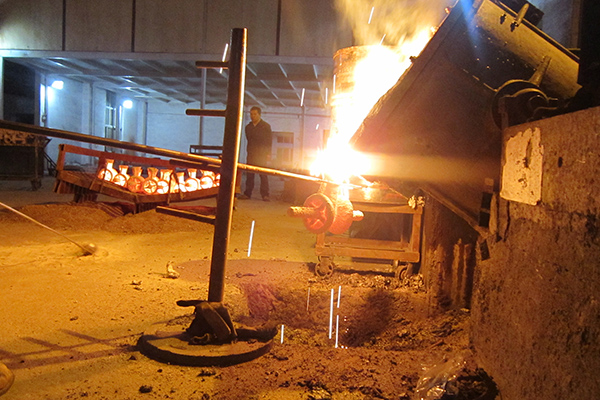
Custom EV Aluminum Parts & Components
Xiamen Goldcattle makes the aluminium parts that sit around an electric drivetrain: motor housings and end covers, inverter and controller enclosures, battery-module brackets and plates, coolant manifolds and charger housings. Every part is made to your drawing, in one of three routes — CNC machining, aluminium die casting with CNC finishing, or sheet metal — and the route is chosen from the geometry, the wall, the volume and the sealing requirement, not from a catalogue. What we do not make is stated plainly further down, because a page that claims everything wastes your time and ours.
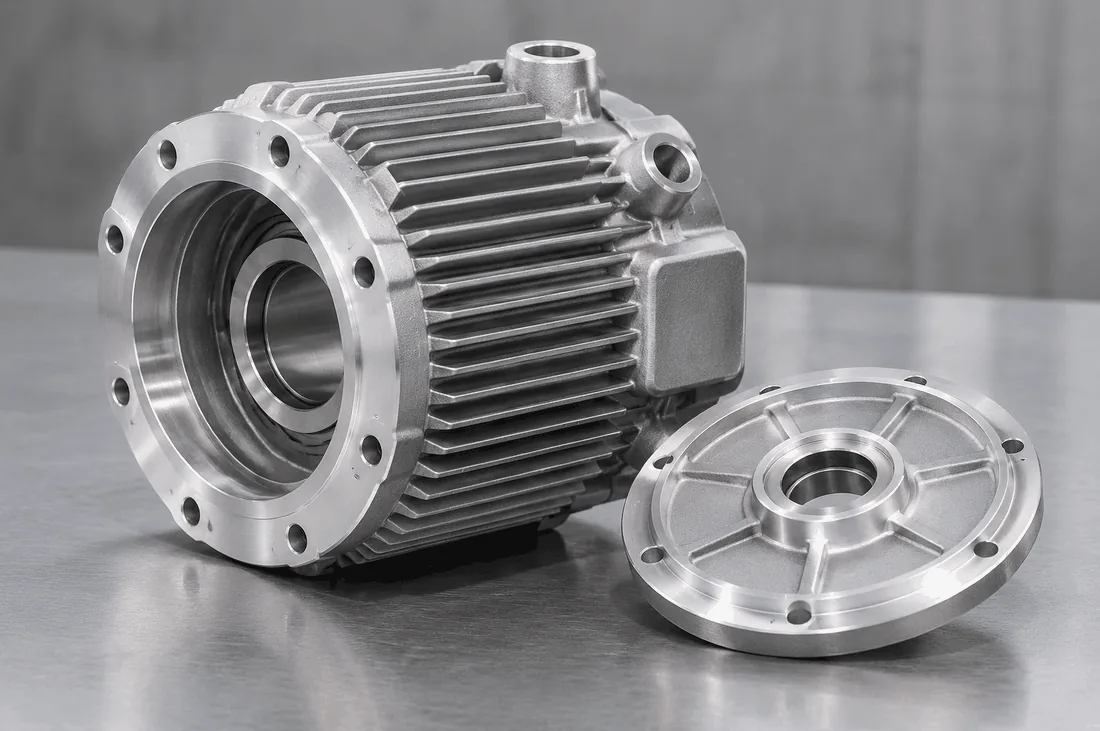
At a Glance
We make the aluminium parts around the electric drivetrain, not the battery itself. That means motor housings and end covers, gearbox and reducer housings, inverter and controller enclosures, battery-module brackets, end plates and mounting plates, coolant manifolds and heat-sink bases, and charger housings. Each is made to your drawing by CNC machining, aluminium die casting with CNC finishing, or sheet metal, chosen by geometry, wall, volume and sealing requirement. Complete battery packs, extruded battery trays, crash structures and mega castings are outside our scope, and this page says so rather than quoting them badly.
Where This Page Fits
The site already carries a deep automotive machining page, an aluminium CNC page, a die casting page and a sheet metal page. Each of those explains a process. None of them tells a buyer which aluminium parts exist in an EV and which route each one wants, which is the only question this page answers.
| Page | What it answers | What this page does about it |
|---|---|---|
| This page | Which EV aluminium parts we make, which process fits each, and what the drawing has to carry | — |
| Automotive CNC machining | Programme-level requirements: APQP, PPAP, Cpk, MSA, control plans, IMDS, change control, safety-critical boundaries | Not repeated. This page points to it as the document-heavy companion |
| Aluminium CNC machining | The machining service itself: machines, alloys, tolerances, surface finish, lead time | Machining detail lives there; here it is only the route for a named EV part |
| Aluminium die casting | Machines, tonnage, die design, DFM rules, as-cast tolerance, tool life | Same: casting detail stays there, the EV part list stays here |
| Sheet metal fabrication | Laser cutting, bending, stamping, welding, powder coating, flat-part design rules | The third route, applied here to covers, brackets and charger housings |
| Aluminium shell machining guide | How an aluminium enclosure is machined, in general engineering terms | Referenced for method, not for EV part scope |
Four Systems, and the Parts That Matter in Each
Buyers arrive with a part name, not a process name. The four groups below follow the way an EV is actually split in a bill of materials, so the page can be read from the part backward to the route.
Electric drive and drivetrain
This is the group with the tightest dimensional stack. A motor housing holds a stator bore and a bearing seat, and the rotor has to sit concentric to both — so the part is judged on roundness, coaxiality and the flatness of the faces that bolt to the next component, not on its outside appearance.
| Part | What it has to do | Features that decide acceptance | Route we quote first |
|---|---|---|---|
| Motor housing | Carry the stator, locate the rotor, hold the cooling jacket | Stator bore diameter and roundness, bearing seat, coaxiality between the two, flange face flatness, coolant port position | Die casting + CNC for volume; CNC from billet for prototypes and small series |
| Motor end cover | Close the housing and hold the outer bearing | Sealing groove depth and width, bearing bore, bolt circle position, face flatness | Die casting + CNC, or CNC alone at low volume |
| Gearbox or reducer housing | Carry gear shafts and hold oil or grease inside | Bearing bore positions, bore-to-bore distance, sealing faces, tapped holes | Die casting + CNC |
| Motor mounting bracket | Hold the drive unit to the chassis or subframe | Hole pattern and position, flatness of mounting faces, stiffness at the fixing points | CNC from plate, or sheet metal for a folded bracket |
Battery module mechanical parts
This is where a supplier has to be honest about scope. A finished EV battery pack is a welded, sealed, crash-tested assembly built around extruded sections, and it is not what a machining and casting shop supplies. The mechanical parts inside a module — the plates, brackets and frames that hold and space the cells — are ordinary precision metal parts, and those we do make.
| Part | What it has to do | Features that decide acceptance | Route we quote first |
|---|---|---|---|
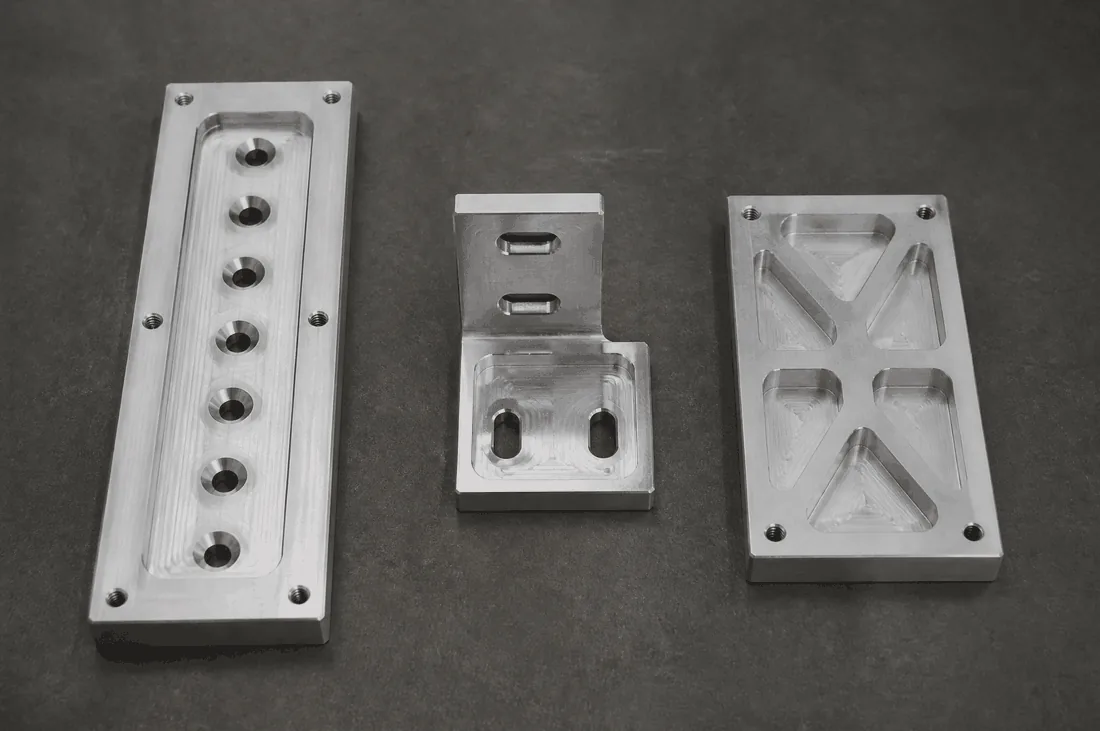
| Module end plate | Compress and locate the cell stack | Flatness over a long face, hole pattern position, plate thickness | CNC from plate; die casting above volume |
| Module mounting bracket | Hold the module to the pack structure | Hole position, slot length, face flatness at the fixing points | Sheet metal, or CNC for a thick bracket |
| Module support or spacer | Set cell spacing and carry load between modules | Thickness consistency, pocket depth, edge straightness | CNC from plate or extrusion stock, machined |
| Module cover or top plate | Protect the module and provide a mounting surface | Flatness, hole pattern, edge burr condition | Sheet metal, or CNC for small quantity |
| Busbar support and insulation plate | Hold and separate conductive parts | Hole position, creepage distance as drawn, flatness | CNC from plate; sheet metal where the geometry is folded |
Power electronics
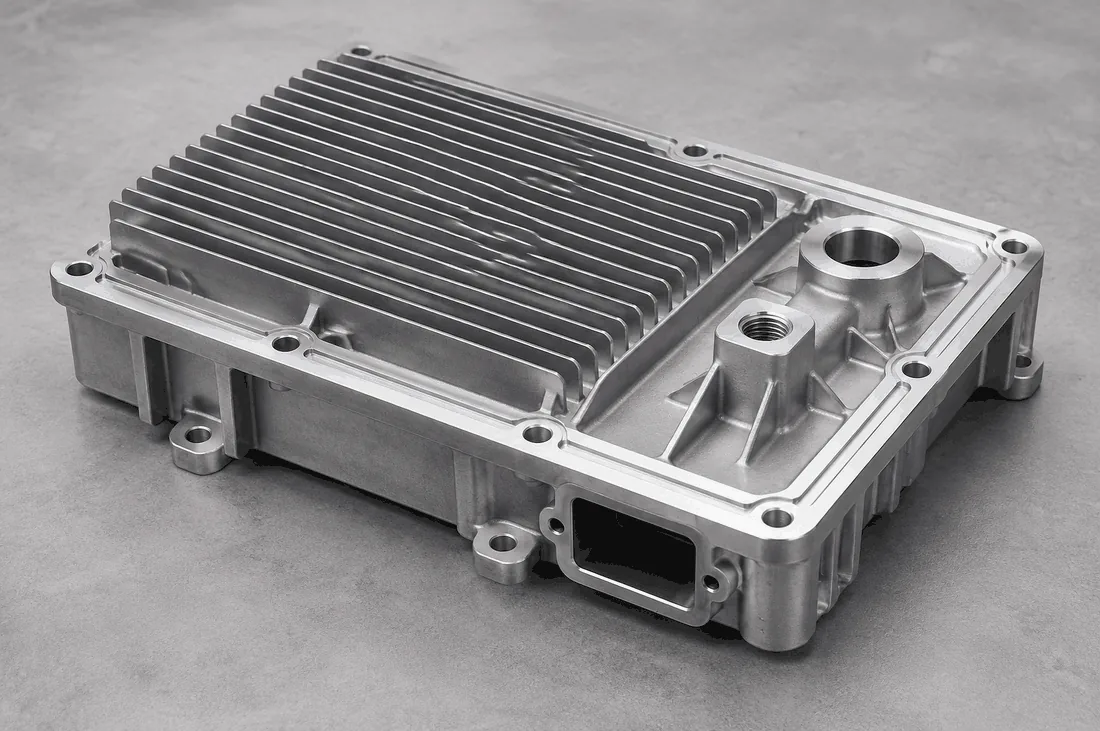
An inverter or controller housing is a die casting that has been turned into a precision part. The casting gives the fins, the walls and the internal structure; the machining gives the flange that seals, the bores that locate the connectors and the face that the power module sits on. Both halves matter, and they are quoted together.
| Part | What it has to do | Features that decide acceptance | Route we quote first |
|---|---|---|---|
| Inverter housing | House power modules and dissipate heat | Sealing flange flatness and groove, fin condition, connector aperture position, mounting face flatness | Die casting + CNC |
| Motor controller enclosure | Protect the controller and provide a thermal path | Base flatness where it contacts the cold plate, wall thickness, mounting holes | Die casting + CNC, or CNC from billet |
| ECU or BMS enclosure | Protect electronics in a sealed volume | Sealing groove, cover screw pattern, connector cut-outs, internal boss heights | Die casting + CNC; sheet metal for low volume |
| Power electronics cover | Close the housing and complete the seal | Flatness, groove position, screw holes, gasket face roughness | Sheet metal, or die casting + CNC |
| Heat-sink base | Spread heat from a module into a cold plate | Contact face flatness, surface roughness, hole pattern, fin geometry | CNC from plate for flatness; die casting + face machining at volume |
Thermal management and charging equipment
Cooling parts are where a supplier is tempted to overstate. A machined manifold with drilled and tapped ports is a normal precision part. A liquid cooling plate with a closed internal channel is a different object: it needs a channel-forming method, a closing operation and a leak test with a written acceptance, and it should be quoted only when those three exist.
| Part | What it has to do | Features that decide acceptance | Route we quote first |
|---|---|---|---|
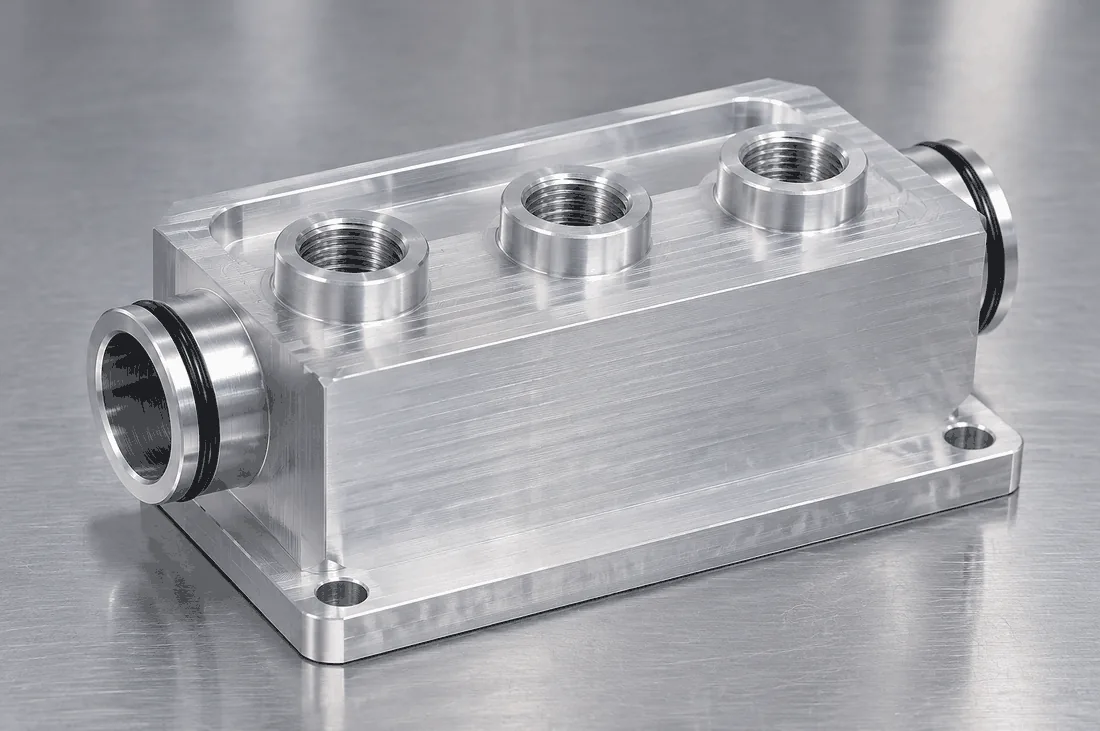
| Coolant manifold | Distribute coolant between circuits | Port position and thread, O-ring groove dimensions, face flatness at each port | CNC from billet |
| Cooling interface block | Join a hose or pipe to a housing | Bore and groove dimensions, thread engagement, face flatness | CNC from billet |
| Thermal management bracket | Hold pipes, plates and sensors in place | Hole and slot position, flatness, edge condition | Sheet metal, or CNC |
| Heat dissipation base | Provide thermal contact over a large area | Flatness over the contact area, roughness, hole position | CNC from plate |
| Charger and converter housing | Enclose charging or conversion electronics outdoors or in a bay | Sealing faces, cable gland positions, mounting holes, coating coverage | Die casting + CNC; sheet metal enclosure for low volume |
The Same Part Can Be Made Three Ways
A matrix like this is the most useful thing a manufacturer can publish, because it shows judgement rather than capability. The cells below say which route we would quote first for that part, and which routes stay viable if the volume or the geometry moves. They are not a claim that every size in every alloy has been built.
| Part | CNC from billet | Die casting + CNC | Sheet metal |
|---|---|---|---|
| Motor housing | First choice for prototypes and small series | First choice at repeat volume | Not this route |
| Motor end cover | First choice at low volume | First choice at volume | Not this route |
| Gearbox or reducer housing | Viable for one-offs | First choice | Not this route |
| Motor mounting bracket | First choice for a machined bracket | Viable at high volume | First choice for a folded bracket |
| Module end plate | First choice | Viable above volume | Viable for a thin plate |
| Module bracket | First choice for a thick bracket | Not this route | First choice |
| Module cover or top plate | Viable for small quantity | Not this route | First choice |
| Inverter housing | Viable for a prototype | First choice | Not this route |
| Controller enclosure | First choice at low volume | First choice at volume | Viable for a simple box |
| ECU or BMS enclosure | Viable | First choice at volume | First choice at low volume |
| Heat-sink base | First choice when flatness leads | Viable with a machined contact face | Not this route |
| Coolant manifold | First choice | Viable with a machined port face | Not this route |
| Cooling interface block | First choice | Not this route | Not this route |
| Charger or converter housing | Viable for a prototype shell | First choice at volume | First choice for a folded enclosure |
The matrix is a starting point, not a verdict: on a 400 mm housing with a 2 mm wall, the route is decided by flatness and by how the part is held, before volume is even discussed. That is why the drawing review comes before the quotation on every project on this page.
Choosing a Route by Stage and Volume
Three questions usually settle the route, and none of them is "what is cheapest per part". They are: how much of the geometry is still changing, how much metal has to come out of a solid block, and how much of the part has to be machined after it is formed.
| Project situation | Route we would look at first | Why |
|---|---|---|
| Design still changing weekly | CNC from plate or billet | A model change costs a reprogram, not a die modification |
| Ten to fifty parts for bench and vehicle tests | CNC | No tooling to write off while the design settles |
| Geometry complex, wall thin, volume repeating | Die casting plus CNC finishing | The casting produces the fins, ribs and bosses that would be slow to machine; the machining produces the sealed and located faces |
| Large batch, stable design, sealing required | Die casting plus CNC finishing | Tooling is amortised and the sealing face is machined on a stable casting |
| Cover, plate, bracket, folded enclosure | Sheet metal | The part is a flat development; cutting and bending beat machining it out of a block |
| Single thick part needing flatness over a long face | CNC from plate | A casting would need a machined face anyway, and at one piece the die cannot pay for itself |
Lead time follows the same logic. A machined prototype is typically quoted at 3–7 working days after drawing approval, and a machined repeat order at 7–15 working days subject to material; a new die casting is a tooling project measured in weeks, not days, and the trials come before the first saleable part. Any date is confirmed with the quotation, not before it.
Alloys, and the Difference Between Wrought and Cast
EV drawings arrive with plate alloys and casting alloys mixed on the same sheet, and the two cannot be substituted for each other. A wrought alloy is rolled or extruded and then cut; a casting alloy is poured into a die. The same part number cannot be both, so the first thing we check on a new drawing is which family the callout belongs to.
| Alloy | Family and form | Where it suits an EV part | What to confirm on the drawing |
|---|---|---|---|
| 6061-T6 | Wrought, plate and bar | Housings, covers, brackets, manifolds; the default when machinability, weldability and corrosion resistance all matter | Temper and stock thickness; weld procedure if the part is welded |
| 7075-T6 | Wrought, plate | High-strength brackets and structural blocks where weight matters more than weldability | That the part is not welded, and that the corrosion protection is specified |
| 5052-H32 | Wrought, sheet | Folded covers, enclosures, brackets and panels | Sheet thickness, bend radii and the finish, since sheet is finished after forming |
| ADC12 | Cast, high pressure die casting | Thin-wall housings and complex enclosures at volume | The grade name and the casting standard, not just "aluminium" |
| A380 | Cast, high pressure die casting | The common North American die casting alloy; similar family to ADC12 but not the same composition | Whether the drawing names ADC12 or A380, and which standard governs acceptance |
| A356.0 | Cast, gravity or low pressure | Parts that need to be fed and heat treated, such as a structural housing | Temper and the mechanical properties required, and on which specimens they are proven |
Six Features That Decide Whether the Part Fits
An EV aluminium part is rarely rejected for its outside shape. It is rejected because a sealing face was not flat enough, a bore was not round, or a pattern of holes missed its datum after the part relaxed. The table below is the checklist we run on the drawing before quoting.
| Feature | Why it is hard on this kind of part | How it is checked |
|---|---|---|
| Flatness of a sealing face | A long thin flange moves when the casting cools and again when it is clamped for machining | CMM or surface plate, measured free of the fixture |
| Bore accuracy and roundness | A thin wall deflects under clamping and springs back after boring | CMM bore scan or inside micrometer at several depths |
| Coaxiality between two bores | Two features cut in two setups inherit both setup errors | CMM with a common datum established in one setup |
| Sealing groove depth, width and position | Groove geometry is what compresses the seal, and it is easy to cut slightly deep | Groove profile check or gauge, plus the face flatness around it |
| Threaded holes and inserts | Thin walls around a thread strip on assembly; a cast boss may not be thick enough | Go/no-go gauge, thread depth, and a pull-out check where specified |
| Surface roughness on a gasket face | Too rough leaks past the seal, too smooth can let it slip; the value is part of the sealing design | Roughness tester, recorded against the specified Ra |
| Cooling channel and port geometry | Port position, thread and channel depth together decide whether coolant goes where it should | Dimensional check plus an agreed leak test, not a visual look |
Sealing is three dimensions working together
A sealing joint is not a groove dimension on its own. It is the groove depth and width, the flatness of the face the groove is cut into, and the roughness of that face — and a joint leaks when any one of the three is out, even if the other two are perfect. That is why a drawing that specifies a groove but leaves the face at a general tolerance is not a sealing specification. It is a shape with a groove in it.
Bores are a stack, not a number
On a motor housing the stator bore and the bearing seat are judged together: the rotor only runs true if the two are round, on size, and coaxial within the window the bearing allows. Practically, that means the two features are cut from one datum and measured from one datum, and a thin-wall part is measured after it has relaxed, not while it is still in the fixture. On a casting, the sequence is rough-machine, let the part settle, then finish — cutting both in one pass out of a stressed casting is how a bore arrives round and becomes oval on the bench.
Thin walls: what actually distorts them
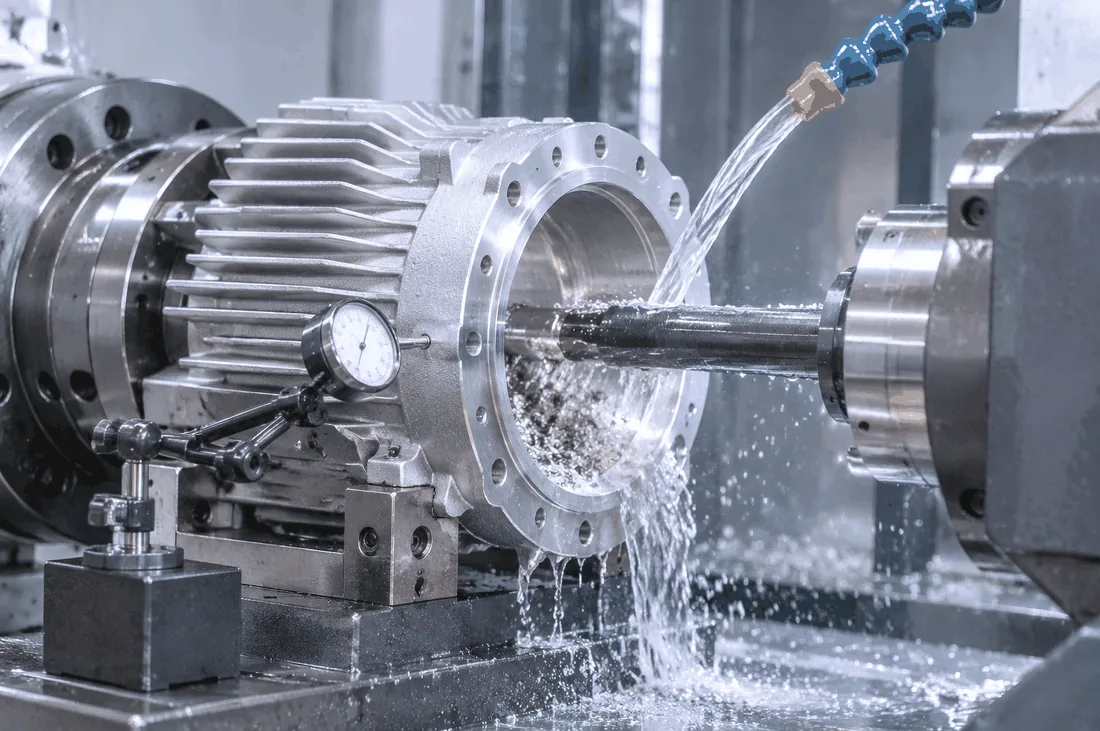
Three things move a thin aluminium wall during machining, and only one of them is the cutter. Clamping pressure ovalises the wall before the tool touches it. Cutting heat expands the wall locally, so the bore is cut to a size that changes as the part cools. And material removed from one side releases stress that was in the plate or the casting, so the part bows after it is released. The countermeasures are ordinary and unglamorous: low-pressure clamps or a supporting fixture, a roughing pass with a settling interval, finishing cuts at low depth with coolant directed at the cut, and inspection on a plate with the part free.
Quality, Documents and What a Certificate Actually Says
An EV buyer is not buying a part, they are buying the evidence that the part was made the same way every time. That evidence is documents, and the first job is to be precise about which ones exist and what each one proves.
| Document | When it applies | What it proves |
|---|---|---|
| Material certificate | Every production order | The alloy and temper of the stock actually used, with a heat or lot number |
| Batch or lot traceability | When the part enters a product with a quality file | Which material and which production run a delivered part came from |
| First article inspection report | New part, new tool, or a change to either | That the drawing was met on the first part, feature by feature |
| CMM dimensional report | When critical features are specified | The measured value of those features, on a stated datum, at a stated time |
| Certificate of conformance | When the purchase order requires it | A formal statement that the order met its specification |
| PPAP documentation | When an automotive programme requires it, at the level agreed | That the process is defined, measured and repeatable — scoped to the level you asked for |
| Change notification | Written into the supply agreement | That a process, material or sub-supplier change will not reach you silently |
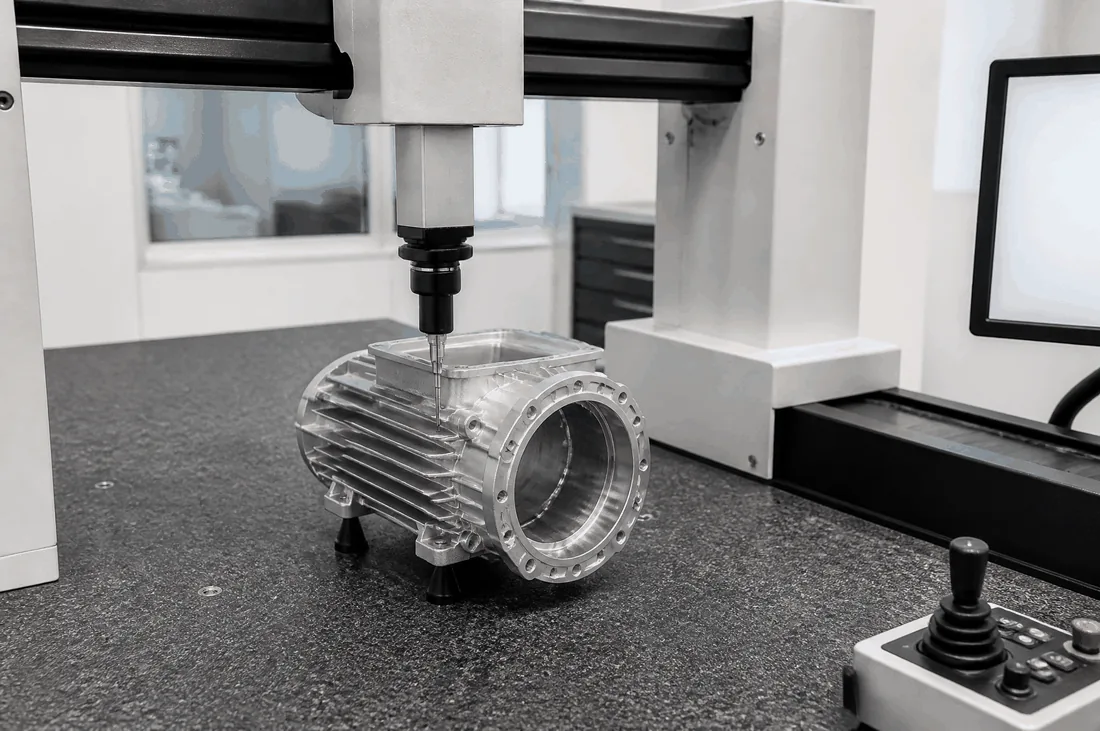
A tolerance is a property of a feature, measured under a stated condition — not a property of a supplier. Our aluminium machining page publishes ±0.005 mm for qualified features on machined aluminium, and that figure is a claim about a feature cut and measured in a defined way. It is not a promise that every dimension on a housing will land inside it, and any supplier who quotes one tolerance for a whole drawing is telling you they have not measured one.
What We Do Not Quote, and Why That Saves You Time
A page that lists only what a factory can do hands the buyer a filtering job. The list below is the filter, written by us, because a wrong enquiry costs both sides a week.
| Part or requirement | Our position | Reason |
|---|---|---|
| Motor housings, end covers, reducer housings | Quote | Matches our casting plus machining route directly |
| Inverter, controller, ECU and BMS enclosures | Quote | Die casting with machined sealing faces is a standard job for us |
| Battery module brackets, end plates, supports, covers | Quote | Ordinary precision parts in plate or sheet |
| Coolant manifolds and interface blocks | Quote, with the leak requirement stated | The part is machinable; the acceptance test has to be agreed first |
| Liquid cooling plates with a closed internal channel | Quote only when the channel and test method are agreed | Needs a channel-forming and closing process plus a written leak acceptance |
| Complete battery trays and pack enclosures | Refer elsewhere, unless the drawing is a machined or cast component | A welded extrusion assembly is a different supply chain |
| Structural mega castings and crash structures | Refer elsewhere | Requires presses and validation we do not hold |
| Complete battery packs, cells, BMS electronics | Not our business | Electrical integration and cell supply are outside metal parts |
Scoping is not refusing: it is the difference between a quotation you can trust and one you have to audit. When a drawing sits on the edge — a manifold with an internal channel, a bracket that is also a sealing cover — the review will say which half of the requirement is inside our process and which half needs a partner, and the quotation will say it in writing.
From Drawing to Production
Six steps, and the first two decide whether the rest is worth doing. They are the same steps whether the part is machined, cast or folded.
| Step | What happens | What you get |
|---|---|---|
| 1 · Drawing and requirement review | Alloy family, wall, feature stack, datum, sealing requirement, volume and stage | A DFM note naming what will not hold as drawn |
| 2 · Route decision | CNC, die casting plus finishing, or sheet metal, with the reason and the alternative if volume changes | A route recommendation and a quotation for that route |
| 3 · Prototype or tool | First parts machined for bench and vehicle tests, or a die designed and built for a casting route | Sample parts with a first article report, or a tool layout for approval |
| 4 · Process definition | Fixture, programme, casting parameters, inspection plan agreed against the drawing | Approved first article and an agreed inspection plan |
| 5 · Production | Machining or casting, finishing, in-process checks at the features that matter | Parts to the inspection plan, with records |
| 6 · Inspection and delivery | Final dimensional and visual check, packing that protects machined faces | Dimensional report, material certificate and packing list |
What to Send for an EV Aluminium Quotation
Eleven fields cover almost every EV enquiry. When one is missing, the quotation either stalls or comes back with an assumption inside it, and the assumption about sealing or tolerance is the one that gets discovered at first article.
| Field | What to send |
|---|---|
| 3D model | STEP or IGES — the model the part will be checked against |
| 2D drawing | PDF with datums, critical dimensions, the tolerance block and the general tolerance |
| Alloy and temper | The callout as written, with its standard, and whether it is wrought or cast |
| Quantity | Prototype quantity, first production batch and the annual or lifetime forecast |
| Stage | Prototype, pilot build or series production — it changes the route, not just the price |
| Critical features | The bores, sealing faces, grooves and hole patterns that carry the assembly |
| Sealing requirement | Environmental rating if one applies, groove and gasket specification, and whether the seal is supplied by you |
| Leak requirement | For fluid parts: test pressure, medium, allowed leak rate, method, and whether the test is before or after machining |
| Surface finish | Anodising, powder coating, passivation or bare, with colour and masking notes |
| Marking and traceability | Part marking method, position, and whether lot traceability must appear on the part |
| Documents | FAI, CMM report, material certificate, PPAP level — whichever your programme requires |
Two questions we ask during review are worth answering in advance. Whether the same part will later move to a different process, because a design that has to survive that move should leave machining allowance and draft now. And whether the drawing you sent is the released revision, because a quotation against a superseded drawing is the most expensive kind of accurate.
Frequently Asked Questions
What EV aluminium parts can Goldcattle manufacture?
Does Goldcattle manufacture custom EV motor housings?
What aluminium alloys are available for EV components?
Is CNC machining or die casting better for EV parts?
Can Goldcattle manufacture EV battery enclosures?
Can Goldcattle provide PPAP documentation?
What tolerances can be achieved on EV aluminium parts?
How do you control distortion on thin-wall aluminium housings?
Can Goldcattle leak-test cooling components?
What information is needed for an EV aluminium parts quotation?
Send the Part, and What It Has to Seal or Carry
A 3D model, a 2D drawing, the alloy as called out, and one sentence about what the part does. The review comes back with the route that fits, the features that will not hold as drawn, the sealing and machining allowance notes, and a quotation for the whole route rather than one operation of it.
Submit Your EV Part for ReviewSTEP · IGES · X_T · DWG · DXF · PDF · NDA on request
Where to Read Next
Automotive CNC machining
APQP, PPAP, Cpk, control plans and change control for automotive programmes. Automotive programme
Aluminium CNC machining
Machines, alloys, tolerance and surface finish for machined aluminium. Aluminium machining
Aluminium die casting
Tonnage, die design, DFM rules, as-cast tolerance and tool life. Die casting
Sheet metal fabrication
Laser cutting, bending, welding and coating for covers and brackets. Sheet metal
Die casting vs permanent mold casting
Which casting route suits a housing, and what each does to the part. Casting routes
CNC machining services
Machines, processes and materials across all metal work. General capability