Lead-Free Brass CNC Machining for Plumbing & Fluid-Control Parts
Custom CNC machined low-lead brass components — fittings, valve stems, adapters and connectors — engineered for potable-water and fluid-control compliance. Alloy, process and quality guidance written for procurement and design engineers.
At a Glance
Lead-free brass CNC machining is the precision machining of low-lead copper alloys — chiefly C69300 silicon brass and C26000 cartridge brass — into components for potable-water and fluid-control systems, where the finished part's wetted-surface lead content meets the ≤0.25% weighted-average limit under the US Safe Drinking Water Act. Unlike C36000 free-cutting brass (2.5–3.0% Pb), these grades are selected and machined so the part — not just the raw bar — stays within the compliance threshold.
What Is Lead-Free Brass
"Lead-free brass" is not a single alloy. It is a regulatory outcome: a brass component whose lead content on the surfaces that contact drinking water falls within the legal limit for that market. The driver is public-health law — in the United States, the Safe Drinking Water Act amendment of 2011 sets the potable-water limit at a weighted average of 0.25% lead across wetted surfaces, replacing the older 8% "lead-free" figure. The European Union applies a different route through the Drinking Water Directive and member-state limits. For the full alloy and grade reference, see the materials hub.
Because the limit is evaluated on the finished part (and, in the US, as a weighted average across wetted surfaces rather than a single bulk number), alloy selection and process control both matter. A shop that machines lead-free brass controls the alloy at incoming inspection and keeps it segregated from free-cutting grades such as C36000.
How the common grades compare
| Alloy (UNS) | Lead (Pb) | Lead-free status | Where it is typically used |
|---|---|---|---|
| C36000 | 2.5–3.0% | No — free-cutting | General, non-wetted, industrial and decorative machined parts |
| C26000 | ≤0.07% | Yes (by composition) | Cartridge, electrical, formed and decorative parts |
| C69300 | ≤0.09% | Yes — common plumbing grade | Valves, fittings, adapters, connectors (potable) |
| C69400 | ≤0.30% | No — exceeds 0.25% wtd avg | Non-potable, industrial, silicon red brass parts |
- C69300 (silicon / eco brass): the workhorse lead-free plumbing alloy — high strength close to C36000, good machinability, and corrosion resistance suited to water systems.
- C26000 (cartridge brass, 70/30): highly formable with lower strength; used where bending or drawing matters more than load.
- C69400 (silicon red brass): carries up to 0.30% Pb, which is above the 0.25% weighted-average threshold, so it is not automatically lead-free for wetted surfaces.
C36000 vs Lead-Free Alloys
The reason C36000 dominates general brass machining is lead: at 2.5–3.0%, lead acts as an internal lubricant and chip-breaker, giving excellent surface finish and tool life. Removing lead changes the machining behaviour, and the trade-off is the central engineering point for buyers.
| Property | C36000 (free-cutting) | C69300 (lead-free) | C26000 (lead-free) |
|---|---|---|---|
| Lead content | 2.5–3.0% | ≤0.09% | ≤0.07% |
| Machinability | Very high | High (silicon aids chip control) | Moderate (tougher, longer chips) |
| Tensile strength | ~440 MPa | ~480–550 MPa | ~300–380 MPa |
| Potable-water use | No | Yes | Yes |
| Typical use | Industrial, non-wetted | Valves, fittings, connectors | Formed, electrical, decorative |
Free-cutting brass cannot be used for wetted potable parts. Speeds, feeds, tool geometry and chip handling that were tuned for C36000 need re-qualification on a lead-free grade.
C69300 is the closest performer and is machined at high speed with adjusted feeds and sharper tooling; C26000 needs coolant and chip-breaking strategy. Results are confirmed on first-article, not assumed.
Components We Machine
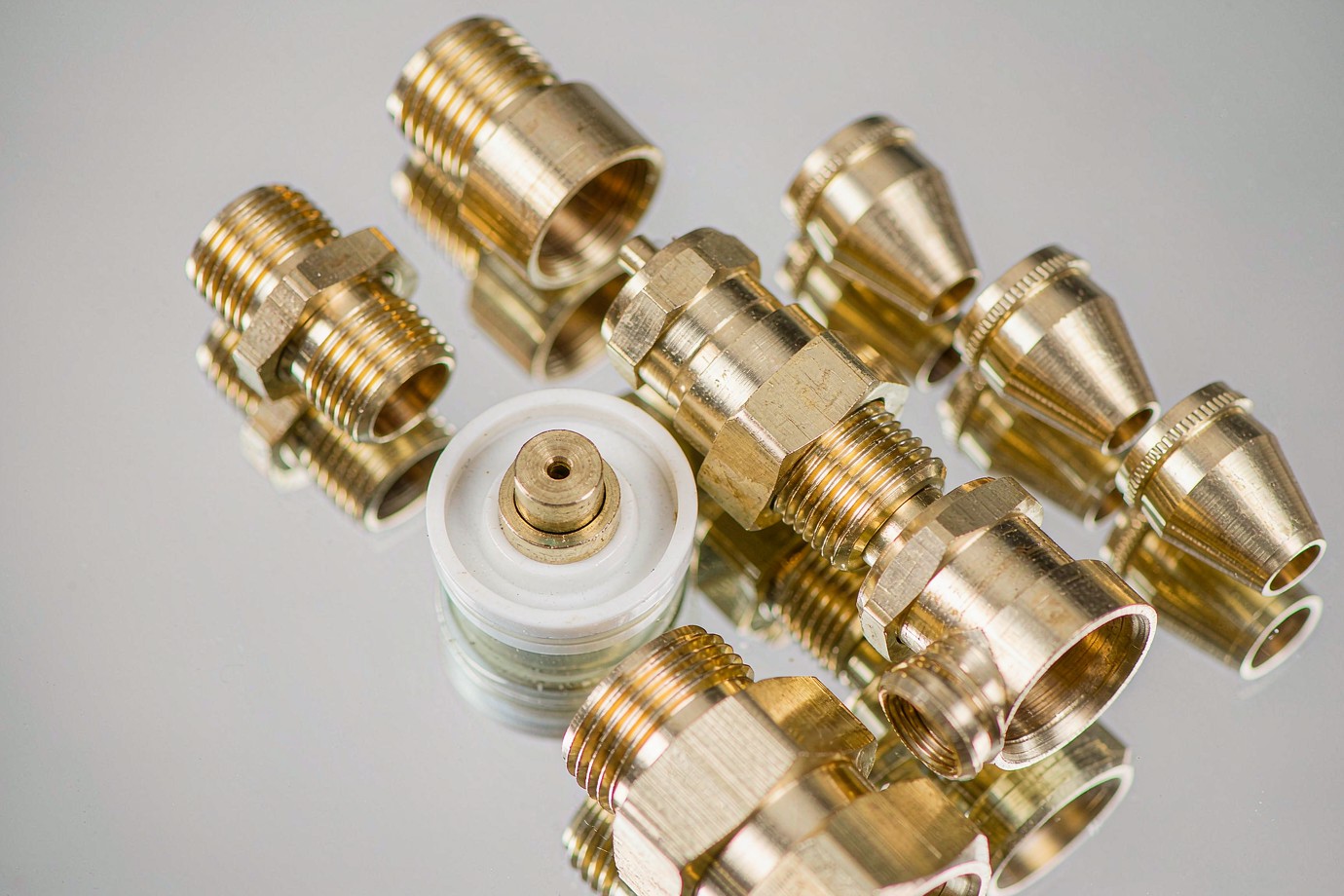
Lead-free brass suits small, precise, often threaded parts where corrosion resistance and compliance both matter. These are produced as custom CNC brass parts built to drawing. Typical part families:
Compression & union fittings
Nut, body and ferrule sets with controlled seat geometry and sealed thread faces.
Valve stems & bodies
Stems, bonnets and small valve bodies where surface finish affects sealing and wear.
Manifolds & couplings
Multi-port bodies and couplings with internal bores and branch threads.
Adapters & connectors
Threaded adapters, hose tails and hex connectors in UN/ISO/BSPT/NPT.
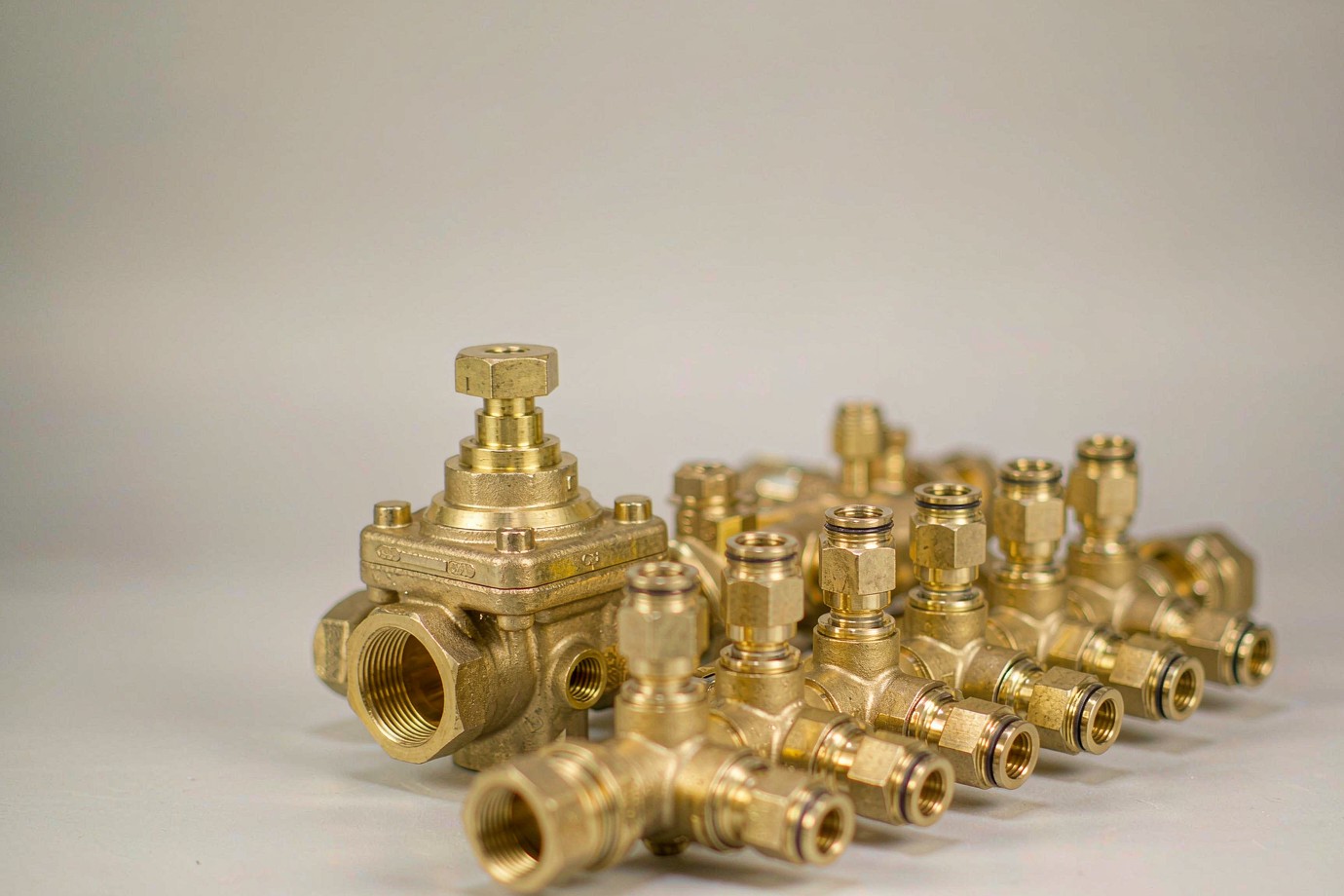
Example part (illustrative)
- PartBrass valve body
- AlloyC69300 (≤0.09% Pb)
- ThreadsNPT + UN, gauged
- Tolerance±0.02 mm qualified
- FinishCitric passivation
- VolumePrototype → 500/yr
The specification above is an illustrative example of the information captured for a lead-free brass fluid-control part; actual parameters are defined by the customer drawing and confirmed in DFM.
CNC Processes for Brass
Brass is a free-machining metal: it takes high cutting speeds, gives good surface finish and produces short, manageable chips on the right grade. Lead-free grades are processed with parameters matched to the specific alloy rather than carried over from C36000.
CNC turning
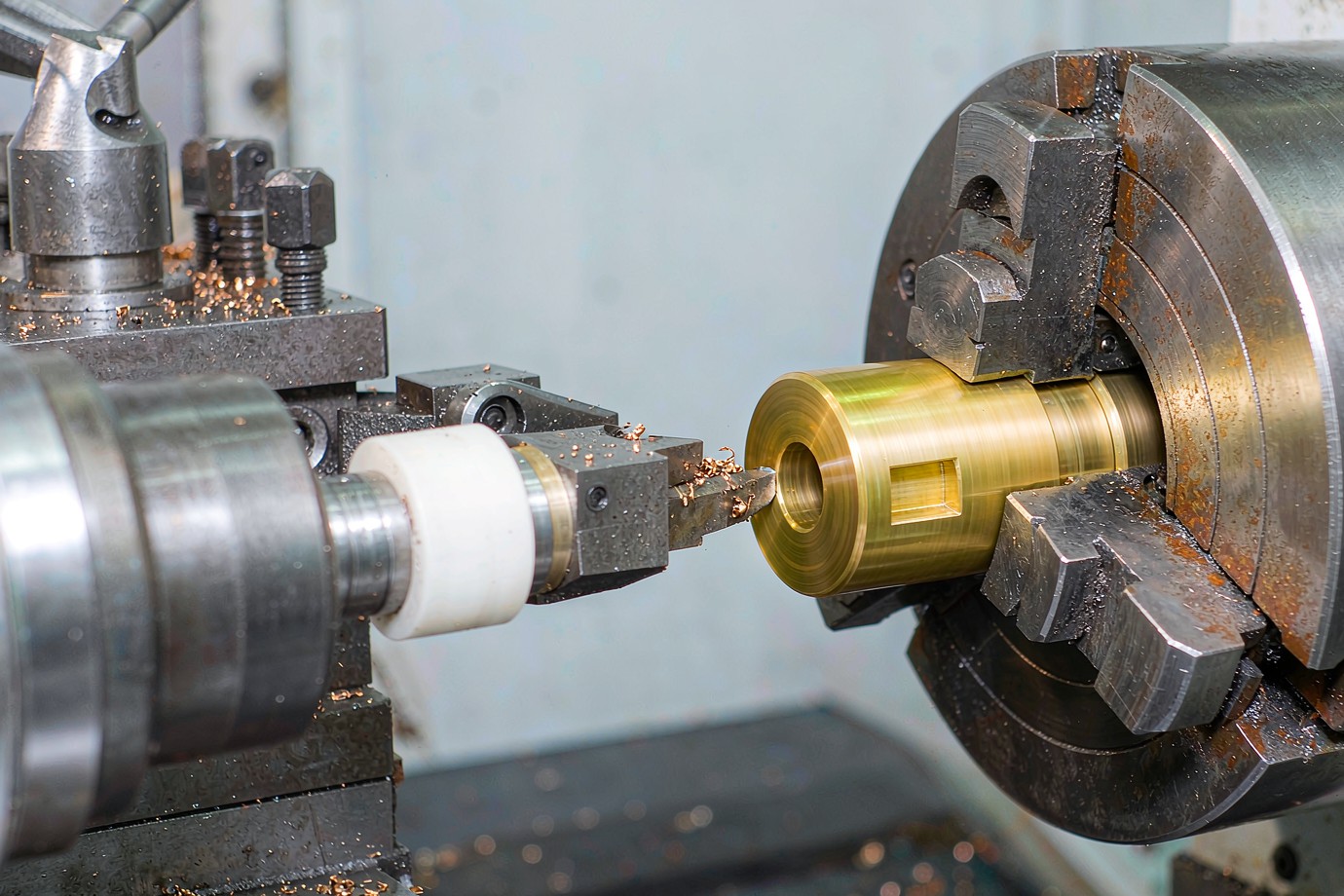
Bar-fed lathes handle the bulk of revolved brass parts: outer and inner diameters, facing, grooving and basic threading. For C69300 the feeds are adjusted for silicon-containing chip behaviour; for C26000, coolant and sharp tooling keep chips from stringing. See the CNC turning services overview for capability scope.
Swiss-type (sliding-headstock) turning
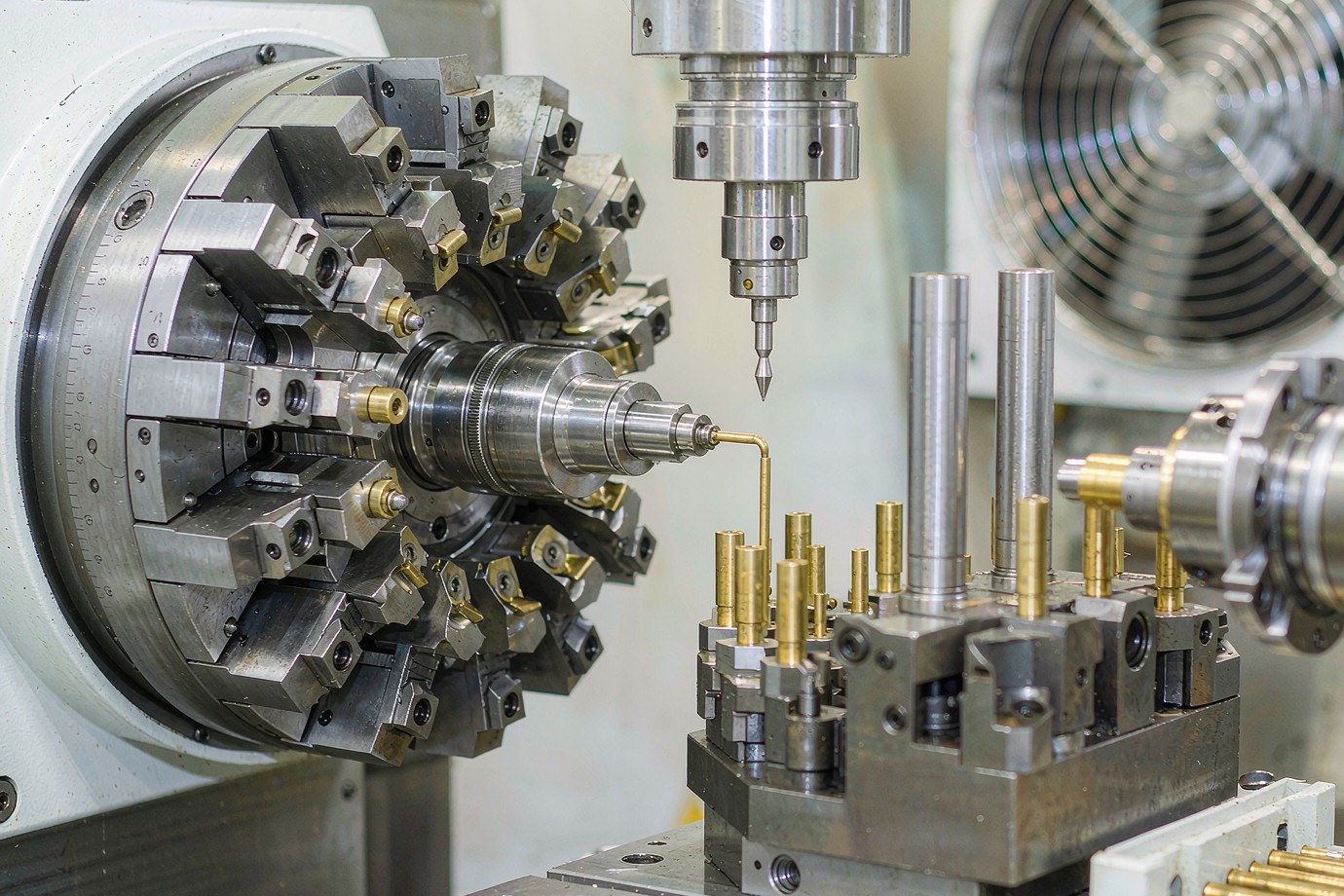
Swiss-type machines are chosen for long, slender or very small parts — connector pins, stems, thin-wall tubes — where the sliding headstock support eliminates deflection. Multiple operations (turning, cross-drilling, milling) are completed in a single chucking, which protects concentricity and tolerances at scale. Our Swiss-type turning capability covers these high-precision small parts.
Milling & live tooling
Driven (live) tooling on the lathe, or a separate machining centre, adds features that turning cannot: cross-holes, flat faces, hex broaching, slots and off-axis ports. For fluid-control parts this is where the branch threads and wrench flats are produced.
Drilling & reaming
Internal bores for flow and sealing are drilled and, where a press or slip fit is required, reamed to size. Reaming is confirmed by pin gauge or bore measurement rather than assumed.
Threading
Threads are produced by single-point turning, thread milling or tapping, matched to size and volume, to standards such as UN/UNC, ISO metric, BSPT and NPT. Sealing threads are checked with plug and ring gauges; critical threads are measured optically or on a CMM against the gauging standard on the drawing.
Deburring & edge break
Edge condition matters more on fluid-control parts than on most machined components: a controlled edge break prevents O-ring cutting and leak paths at sealing faces. Deburring is done by tumbling, brush or manual finishing and is verified at inspection on sealing surfaces.
Surface Finishing & Treatment
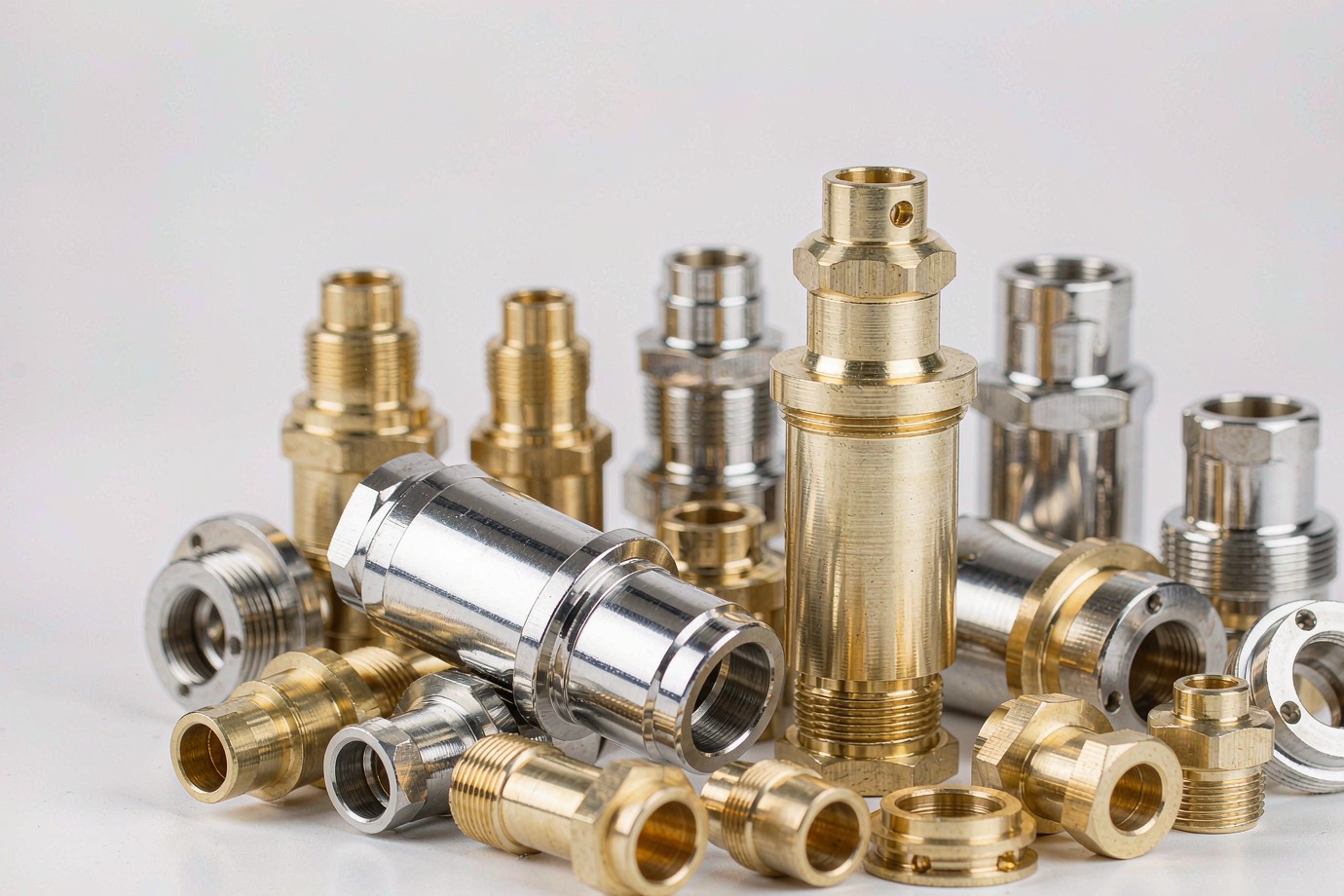
Finishing affects corrosion resistance, wear and appearance — it does not change the underlying lead content. Available options:
- As-machined: typically bright straight from cutting; the default for most fluid-control parts.
- Citric passivation: a non-chrome treatment that improves corrosion resistance without adding plating thickness.
- Electroless / electrolytic nickel: adds wear and corrosion resistance where the part sees friction or aggressive media.
- Tin plating: used for solderability or specific electrical contact needs.
- Clear protective coating: retards tarnish for decorative or shelf-life requirements.
QC & Traceability
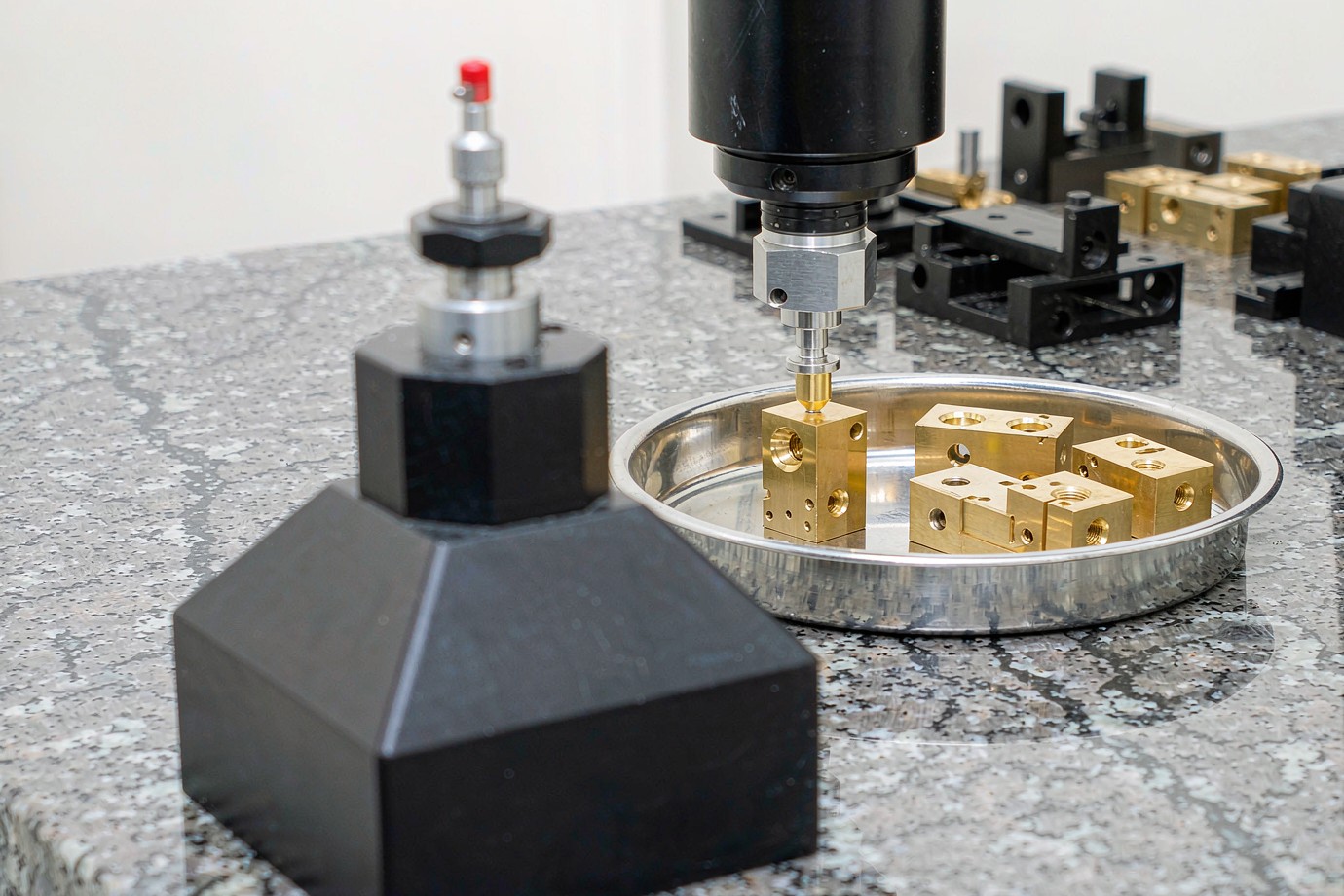
- Incoming material control: mill certificate (EN 10204 3.1 where applicable) confirming alloy and lead content; free-cutting and lead-free stock are segregated.
- Dimensional inspection: CMM, optical measurement and thread gauges verify critical and sealing features; a caliper alone cannot confirm a ±0.01 mm or gauged thread feature.
- Lead-content verification path: material certificate plus, where the project requires it, finished-part testing to NSF/ANSI/CAN 372 and 61 (Annex G).
- Batch traceability: each lot links back to the alloy heat and process records.
- Quality system: all work is performed under one ISO 9001:2015 system, with inspection and material documents supplied with the order.
US & EU Compliance
Compliance is market-specific, and the two major markets use different mechanisms. Buyers should name the target market up front so the right evidence is planned.
United States
The Safe Drinking Water Act (amended 2011) limits lead on wetted surfaces to a weighted average of 0.25%. Conformance is demonstrated through NSF/ANSI/CAN 372 (lead content), NSF/ANSI 61 (health effects) and the Annex G lead-free evaluation. A brass supplier provides the material and can support the testing, but finished-part certification is scoped per project and per application.
European Union
The EU Drinking Water Directive (2020/2184) sets a lead parametric value of 5 µg/L at the tap, implemented through member-state rules. Separately, RoHS Annex III 6(c) exempts copper alloys containing up to 4% lead — but that exemption applies to electrical and electronic equipment and is currently set to expire on 30 June 2027. It is not a drinking-water certification, and the two should not be conflated. REACH obligations also apply to substances used and declared.
Request a Quote
The list below shows the information that lets a lead-free brass quote and DFM review start quickly. It is a checklist of what to include — there is no form on this page; submit your drawing through the quote button, which opens the secure RFQ window.
What to include in your RFQ
Send these details with your drawing. The more the drawing defines, the faster the review.
Next step: open the RFQ window with the button below and attach your drawing. A material and DFM review is returned with the quote — including whether the specified alloy and finish meet the compliance target you named.
Frequently Asked Questions
What does "lead-free" mean for brass plumbing parts?
Which lead-free brass alloy should I specify — C69300, C26000 or C69400?
Can you machine C36000 free-cutting brass as well as lead-free grades?
What tolerances can lead-free brass CNC parts hold?
Which CNC process fits my brass part — turning, Swiss-type or milling?
How do you handle threads on brass fittings and connectors?
What surface finishes are available for brass fluid-control parts?
How do you verify NSF/ANSI lead-free compliance for drinking-water parts?
What documents and traceability come with an order?
What should I include in my RFQ for lead-free brass parts?
Ready to machine your lead-free brass parts?
Send your drawing for a material and DFM review. We confirm alloy, finish and compliance scope against your target market before quoting — so the part you receive is built for both function and regulation. Backed by our broader manufacturing services, the part you receive is built for both function and regulation.
Upload Your Drawing →Typical prototype lead time 3–7 working days · Low-volume 7–20 working days · MOQ 1 piece.