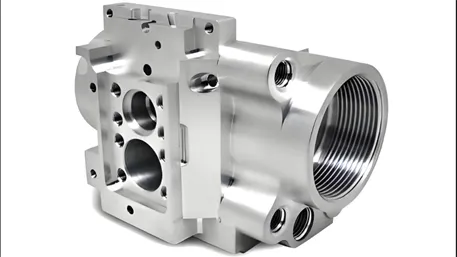
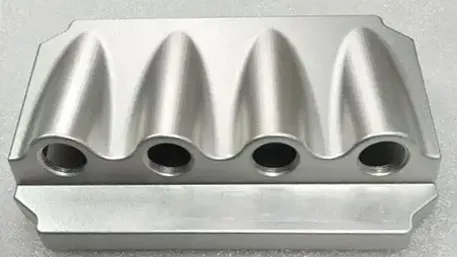
Custom Automotive Tail Lights Manufacturer | LED Rear Lamp Development & Manufacturing
Develop and manufacture custom LED rear lamps, tail light assemblies and lighting components from your CAD, drawings, vehicle data or existing samples. Goldcattle combines tooling, injection molding, CNC machining, assembly and quality inspection to support prototype and production programs.
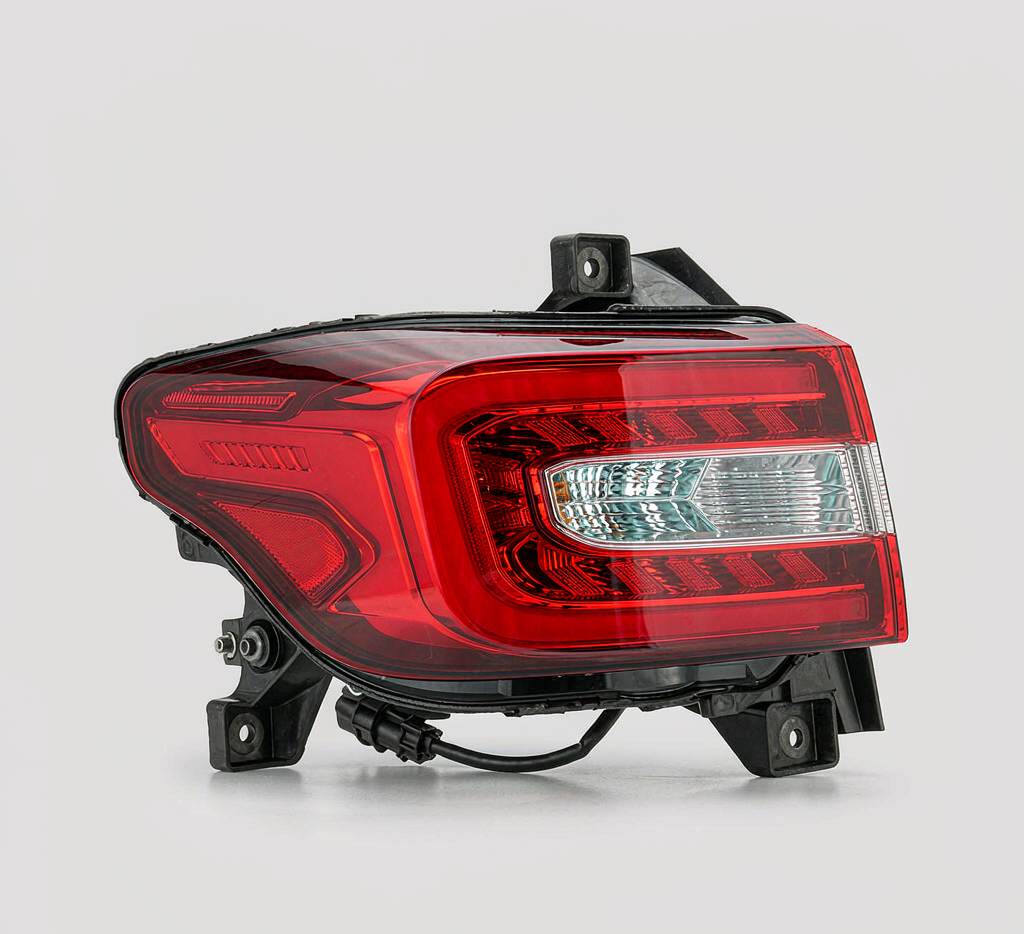
At a Glance
Built for Custom Automotive Lighting Programs
Goldcattle is a custom parts manufacturer. We apply our tooling, plastic, CNC, assembly and quality capabilities to automotive lighting programs — not a Tier-1 lighting specialist, but one manufacturing partner across the tail-light supply chain.
Automotive Lighting Brands
Companies building their own branded tail-light products who need a manufacturing partner for lens, housing, and assembly rather than a catalog supplier.
Specialty Vehicle Manufacturers
Off-road, commercial, utility, and EV-platform builders needing vehicle-specific rear lamps developed around their body and electrical interface.
Restoration & Low-Volume Programs
Legacy geometry reproduction, LED retrofit, low-volume tooling, and replacement assemblies where volume does not justify standard catalog supply.
Tier-2 / Component Suppliers
Suppliers needing lenses, housings, light guides, reflectors or subassemblies produced to their drawings and quality requirements.
What We Manufacture
Each row reflects a process Goldcattle actually operates. We do not list capabilities we cannot evidence.
| Tail Light Element | Goldcattle Role |
|---|---|
| Outer Lens | Injection molding and tooling; optical-grade surface and transparency control. |
| Housing | Injection molding; structural and sealing geometry. |
| Reflector | Molded reflective component; CNC-machined metal reflector parts where the design calls for them. |
| Light Guide / Optic | Custom molded optical component where the design requires it. |
| Mounting & Trim | Custom plastic and metal parts, including CNC-machined brackets and plates. |
| Gasket / Sealing | Sourced or integrated per the sealing specification and verification plan. |
| LED / PCB Module | Integrated from customer-specified or qualified modules; functional verification of lighting functions. PCB design and fabrication are handled through qualified sourcing, not claimed as a core in-house process. |
| Complete Assembly | Sub-assembly and functional checks offered where the program scope includes final assembly. |
What Goes Into a Custom Automotive Tail Light
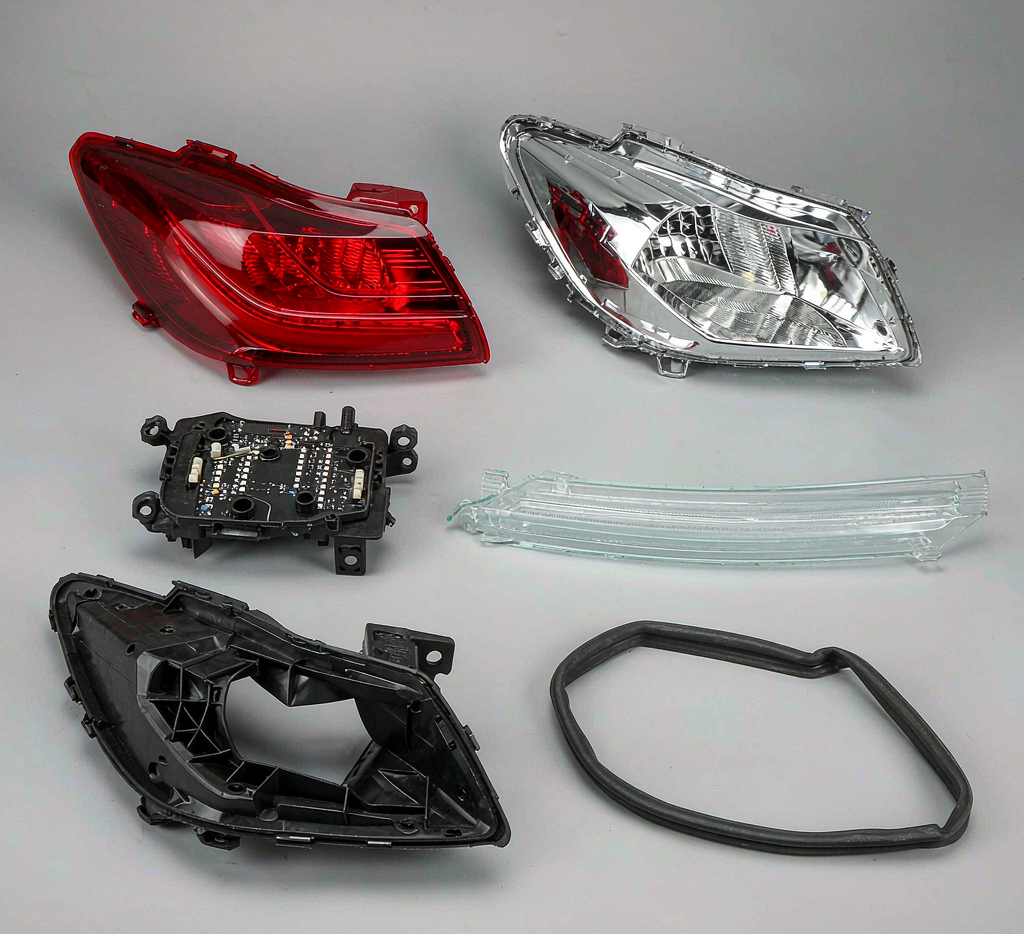
A tail light is a system, not a bulb in a plastic shell
Outer lens, optical surfaces and light guide, reflector, LED and PCB, heat path, housing, gasket and connector do not perform in isolation. Optical output, mechanical fit, thermal behavior, sealing and electrical integration have to be engineered as one assembly — and verified together.
That is why we develop the lamp as a program: geometry, tooling, materials and assembly are decided together so the finished part meets fit, function and appearance as a unit. It also keeps the work inside the processes Goldcattle already operates — tooling, molding, CNC, assembly and inspection.
Tail Light Engineering Considerations
Four layers drive whether a custom tail light is manufacturable, reliable, and approvable.
Optical Design
- Luminous distribution, uniformity, and hotspot control
- Light-guide geometry, reflector shape, and lens transparency
- Color and signal-function definition per lamp function
- Balance between appearance and regulated photometry
Mechanical Design
- Mounting points, housing geometry, and tolerance stack-up
- Vehicle-body fit, gap control, and datum definition
- Resistance to vibration and deformation in service
- Moldability: draft, wall thickness, and sealing interface
Electrical Integration
- Voltage (12V / 24V) and current behavior
- Connector, polarity, and signal-function mapping
- Flashing and fault behavior compatible with the vehicle
- Functional verification of the lighting functions
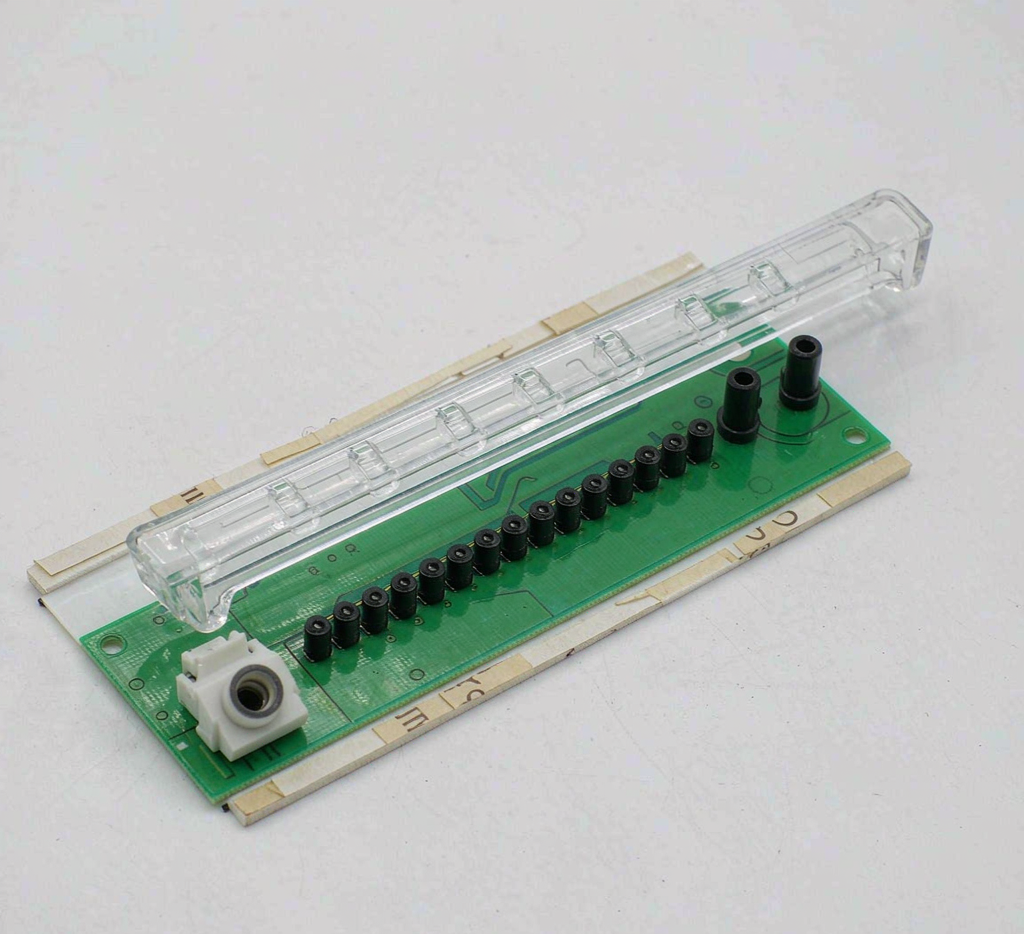
Environmental Design
Water ingress, condensation, UV, thermal cycling, road salt, and vibration are designed for from the start — not discovered in the field.
Thermal Behavior
LED heat paths, lens and housing temperature, and material selection are reviewed so performance holds across the operating range.
Sealing & Service Life
Gasket selection, sealing interface, and verification method are defined with the lamp's exposure conditions in mind.
Tail Light Material Selection
Material is chosen by optical requirement, environmental exposure, structural function, appearance, and the target market — not by a generic "this plastic is good."
| Material | Typical Role | Main Reason |
|---|---|---|
| PC (polycarbonate) | Outer lens / optical parts | Impact resistance with optical performance |
| PMMA | Light guide / lens applications | Optical clarity |
| PC/ABS | Housing | Balance of strength, molding and dimensional behavior |
| ABS | Housing / trim where suitable | Cost and appearance |
| Aluminum | Heat sink / mounting parts | Thermal conduction and rigidity |
Where a program specifies a particular grade or additive (UV stabilizer, tint, internal lubricant), we source to that specification and track the stock source for repeat orders.
Custom Tail Light Development Process
From requirement to production
- Requirement review: CAD, drawings, sample, vehicle model, electrical spec, target market.
- DFM review: housing, lens, mounting, draft, wall thickness, sealing, optical area, tooling.
- Prototype: appearance, fit, function, mounting, and light distribution validation.
- Tooling: injection mold, optical mold, and assembly fixtures.
- T1 / tool trial: dimensions, appearance, optical properties, assembly.
- Production & final inspection: controlled process with documented inspection.
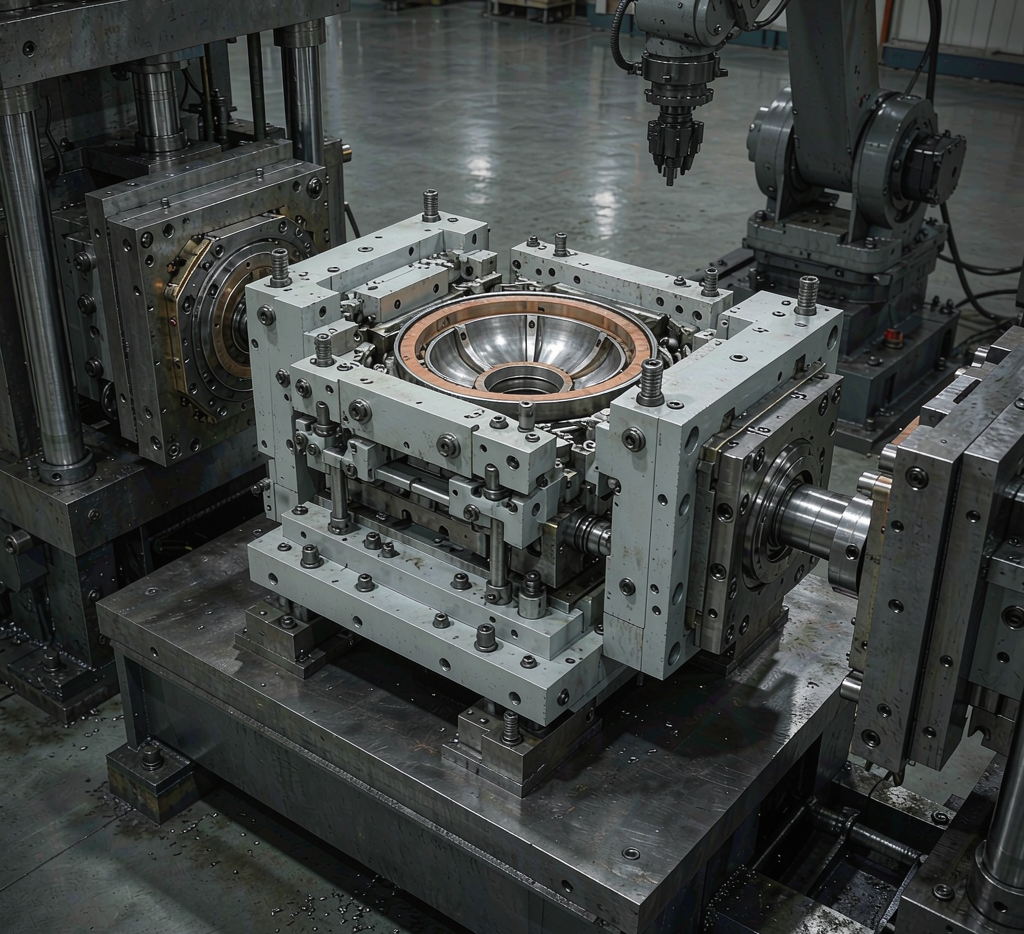
Lead time depends on program scope — prototype machining of parts runs on the same short cycle as our other custom parts, while tooling and trial add weeks. We state a realistic schedule after the requirement and DFM review rather than quoting a fixed number upfront.
Automotive Tail Light Compliance for U.S. and European Markets
Compliance is evaluated against the target market, vehicle application, and final lamp configuration. We support the engineering and test-documentation process for the applicable requirements — we do not issue universal "approved" claims.
| Market | Key Framework | What the Buyer Should Verify |
|---|---|---|
| United States | FMVSS 108 + applicable SAE requirements | Photometry, color, visibility, and installation / application |
| Europe | UN R148 + UN R48 and applicable requirements | Light-function / type approval and vehicle installation |
| Other markets | Local regulations | Market-specific testing / approval |
How we phrase compliance
- U.S.: lighting is designed and tested to support applicable FMVSS 108 requirements; final certification depends on the complete lamp / vehicle application and configuration. The U.S. system is manufacturer self-certification — we provide the engineering and test evidence, not a blanket "DOT approval."
- Europe: lighting function and vehicle installation are evaluated against the applicable UNECE regulations, such as UN R148 and UN R48. Applicable approval and marking depend on lamp function, vehicle category, and market.
Tail Light Validation & Quality Control
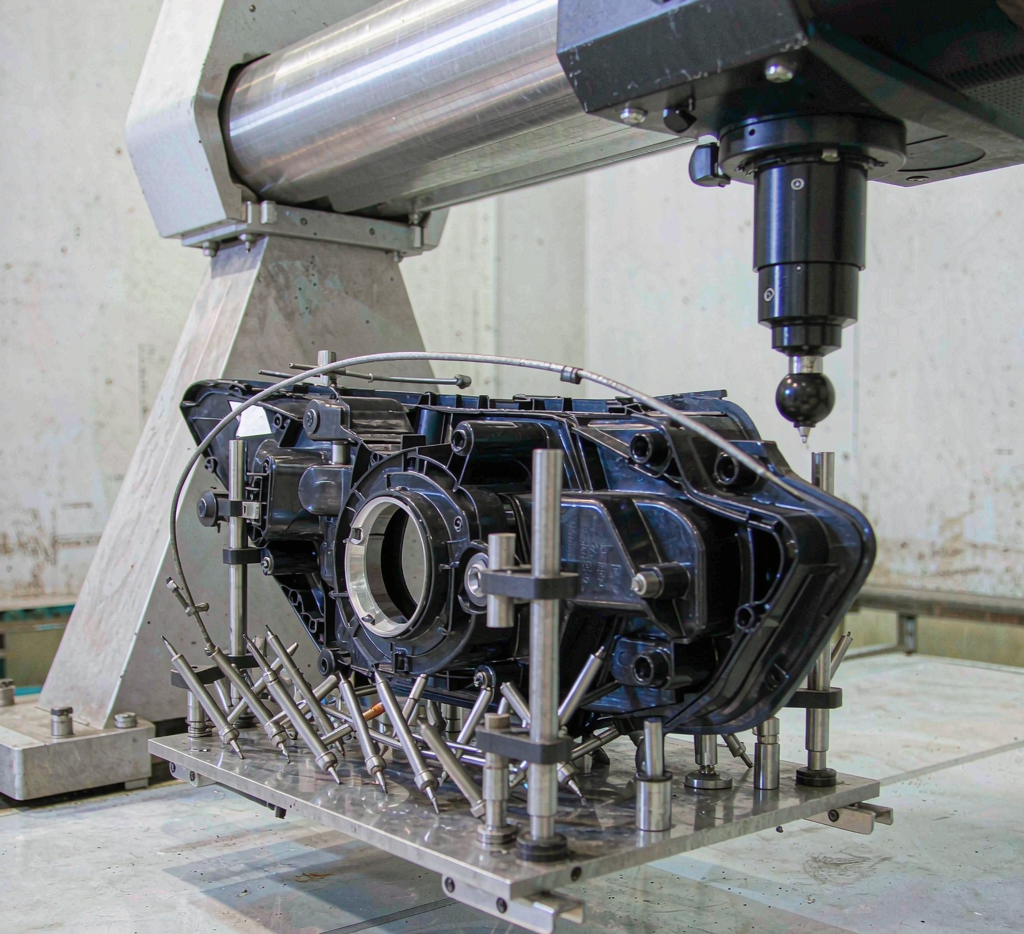
Verification by discipline
- Dimensional: CMM and fixture checks on critical mounting and sealing features, lens and housing dimensions.
- Optical: intensity, light distribution, color, and uniformity where the program requires measured data.
- Environmental: thermal cycling, humidity, UV, vibration, and water-ingress protocols suited to the exposure.
- Assembly: sealing, connector fit, and functional verification of the lighting functions.
- Documentation: inspection report, material certificate, traceability, and PPAP where required.
Specific numeric targets belong in the program specification and the case study — not as fixed claims that apply to every lamp.
Automotive Quality & Documentation
Automotive programs run under our ISO 9001:2015 quality system with automotive-oriented quality controls. Where a program requires it, we support IATF 16949-aligned process disciplines and PPAP documentation — control plan, process flow, dimensional results, material certification, and appearance approval as applicable. We do not claim IATF 16949 certification we do not hold; we state plainly what each program is supported with.
Material lot, processing records, and inspection results are tied to each order under ISO 9001:2015, so a finished part can be traced back to its stock and batch. See our manufacturing services page for the broader quality scope.
Customization Options
Lens & Housing Geometry
Developed to your sample, drawing, or concept — shape, wall section, and sealing interface are yours to define.
Color & Finish
Red, smoked, clear, and custom-tint lenses; textured or high-gloss housing finishes per appearance spec.
Light Functions
Brake, tail, reverse, turn, and daytime-running configurations mapped to your signal requirements.
Marking
Laser etching and labeling per your branding and traceability requirements.
Material Grade
PC, PMMA, PC/ABS, ABS, and aluminum selected to the optical and environmental spec.
Tooling Ownership
Customer-owned tooling with managed storage, maintenance, and change control.
Which Development Route Fits Your Program?
| Scenario | Recommended Approach |
|---|---|
| Concept validation | Prototype housing + functional lighting prototype to confirm fit and appearance |
| 1–20 units | Prototype / low-volume process |
| Low-volume specialty vehicle | Prototype tooling or production-intent tooling |
| Stable medium / high volume | Production tooling + controlled assembly |
| Existing lamp redesign | Reverse engineering + sample matching + new tooling |
| Existing tooling transfer | Tool audit + T1 verification + production ramp |
| Component-only sourcing | Lens / housing / reflector / guide manufacturing |
Need a Complete Tail Light or Individual Components?
Complete Tail Light
Best when you need a finished rear lamp developed around your vehicle, optical, mechanical, electrical, and regulatory requirements — from prototype through production.
This page is that service.
Tail Light Components
Best when you already assemble lamps in-house or supply a Tier-1, and need lenses, housings, light guides, or reflectors produced to drawing.
Explore our automotive taillight component manufacturing service →
Automotive Tail Light Program Example
Low-volume EV-platform rear lamp
A specialty-vehicle builder needed a rear lamp matching a new body interface, with defined brake, tail, and reverse functions. We reverse-engineered the mounting and sealing geometry from their sample, developed the lens and housing together in DFM, and built prototype tooling for a first-article validation.
Representative project figures from that program: thermal-cycling and water-ingress validation to the vehicle's exposure spec, CMM verification of critical mounting features, and functional light-distribution checks at first article. Tooling was customer-owned, with change control agreed before production tooling.
Details are generalized to protect customer confidentiality; figures describe one program, not a universal capability claim.
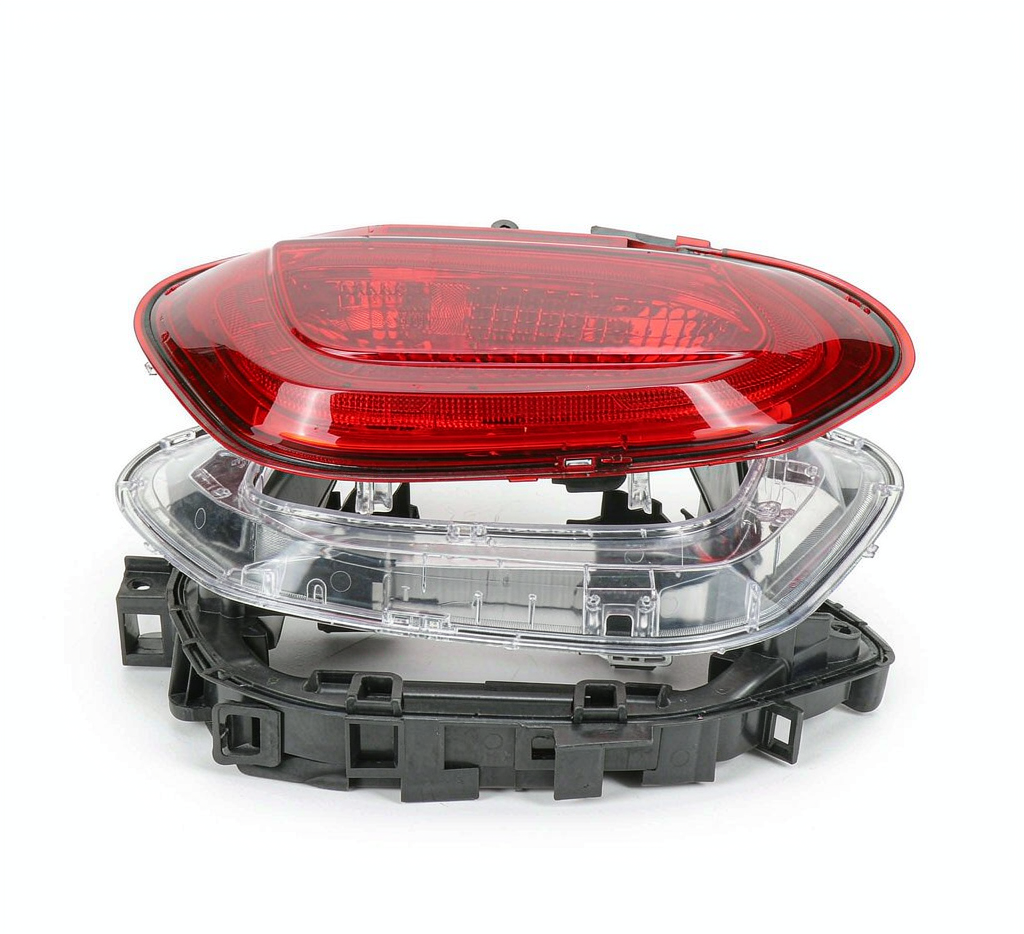
What To Check Before Selecting a Tail Light Manufacturer
The questions below are what an SQE or procurement engineer should ask. They are also what we are prepared to answer with evidence.
1. Can they build tooling?
Tooling design, build, and maintenance are in-house — not outsourced to an unknown third party.
2. Can they control optical surfaces?
Molded lens and optic surfaces are controlled to the optical and appearance spec.
3. Dimensional consistency?
Critical mounting and sealing features are verified, not assumed.
4. How is sealing verified?
Sealing interface and method are defined and checked per the exposure condition.
5. Prototype → production?
One partner across the program, so the validated design carries into production.
6. Who owns the tooling?
Customer-owned tooling with managed storage and change control.
7. Revision control?
Drawing, tooling, and process revisions are tracked per order.
8. Documents provided?
Inspection report, material certificate, and traceability on request.
9. PPAP support?
Supported where the automotive program requires it.
10. Which markets?
Engineering and documentation supported for the target market's applicable requirements.
Request a Custom Tail Light Manufacturing Review
The more of this you include, the fewer round-trips before a firm quote.
We recommend sending
- 2D drawing and 3D CAD model (or an existing sample)
- Vehicle model / platform and mounting information
- Lamp functions required (brake, tail, reverse, turn, DRL)
- Target market (U.S., Europe, or other) and regulatory target
- Desired material, finish, and color
- Annual volume and prototype / production quantity
- Connector and electrical interface requirements
- Any cleanliness, documentation, or certification needs
Upload your design and our applications team will return a manufacturing review with DFM and tooling feedback.
Frequently Asked Questions
What information do I need to request a custom tail light quote?
The most useful package is a 2D drawing, 3D CAD model, or an existing sample; the lamp functions and light distribution you need; the vehicle model or platform; mounting and connector information; target market (U.S., Europe, or other); annual volume; preferred material and finish; and whether you need a prototype or production run. Where some of this is not yet defined, our applications team helps clarify it during the review.
Can you manufacture a tail light from an existing sample?
Yes. We frequently work from an existing tail light or component as the reference — measuring and reverse-engineering the lens, housing, reflector, mounting and sealing geometry, then producing matched tooling and parts. Where the original is a third-party branded part, we build to your supplied geometry rather than copying protected intellectual property.
Can you reproduce a discontinued tail light design?
Low-volume reproduction of legacy or discontinued lamp geometry is a common program type for restoration and specialty vehicles. We reproduce the physical geometry and function from samples or drawings; any required market approval for a road-going application is evaluated against the target market and configuration.
Can you develop both the lens and housing?
Yes. Lens and housing are developed together as a system — optical surface, wall thickness, draft, sealing interface and mounting datum are reviewed in one DFM pass so the assembled lamp fits and performs as intended.
What materials are commonly used for automotive tail light lenses?
Common choices are PC (polycarbonate) for impact-resistant outer lenses, PMMA for light guides and clarity applications, PC/ABS or ABS for housings, and aluminum for heat-sink or rigid mounting parts. The selection is driven by optical requirement, environmental exposure, structural function, appearance, and the target market.
Can custom tail lights be developed for the U.S. market?
We design and validate lighting to support applicable U.S. requirements, including FMVSS 108 and relevant SAE photometry, color and visibility criteria. In the U.S. system the responsible party self-certifies the complete lamp or vehicle; final certification depends on the full lamp and vehicle application, so we support the engineering and test documentation rather than issuing a blanket approval.
Can custom tail lights be developed for European vehicles?
For European programs we evaluate lighting function and vehicle installation against the applicable UNECE regulations, such as UN R148 for light-signalling devices and UN R48 for installation. Applicable approval and marking depend on the lamp function, vehicle category and market; we support the engineering and documentation needed for the applicable requirements.
Can you support PPAP documentation?
Yes, PPAP documentation can be supported for automotive programs according to customer and program requirements, including control plan, process flow, dimensional results, material certification and appearance approval where applicable. Our automotive work runs under ISO 9001:2015 with automotive-oriented quality controls.
Who owns the production tooling?
Tooling is built for your program and ownership is defined in the agreement — in most programs the customer owns the molds and we manage storage, maintenance and change control. This is confirmed before tooling starts so there is no ambiguity at handover or reorder.
Can you manufacture low-volume custom tail lights?
Yes. Low-volume programs are supported with prototype tooling or production-intent tooling, which is the typical route for specialty vehicles, restoration, and new-platform validation before committing to full production tooling.
Can you integrate LED PCB assemblies?
We integrate customer-specified or qualified LED and PCB modules into the lamp and perform functional verification of the lighting functions. PCB design and fabrication themselves are handled through qualified sourcing rather than presented as a core in-house process; we confirm the exact scope on your drawing and program requirements.
Can you manufacture individual tail light components instead of the complete lamp?
Yes. If you only need lenses, housings, light guides, reflectors or related plastic and metal parts, we manufacture those as components. See our dedicated automotive taillight component manufacturing service for the component scope.
What quality documentation do you provide for automotive programs?
Documentation is scaled to the program and can include inspection reports mapped to your datums and tolerances, material (mill) certificates, certificate of conformance, PPAP where required, and traceability to material lot and processing records under ISO 9001:2015.
How do you control optical and dimensional consistency across a production run?
Consistency is controlled through qualified tooling, defined molding parameters, first-article verification, in-process checks on critical mounting and optical features, and lot-level traceability. Representative samples are validated for intensity, distribution, color and critical dimensions; the inspection scope is set with you per program.
Ready to Develop Your Custom Tail Light?
Send your CAD, sample, or concept. You will get an honest manufacturing review — including when a different process, material, or route would serve your program better.

Engineer Chen supports custom automotive tail-light program development — material selection, DFM, tooling, optical-mechanical integration, and quality documentation — helping lighting and vehicle teams move from sample or drawing to verified production. Founded in 1998, Xiamen Goldcattle is a one-stop OEM/ODM manufacturer operating tooling, injection molding, CNC machining, 3D printing, die casting, and sheet metal fabrication under an ISO 9001:2015 quality system.