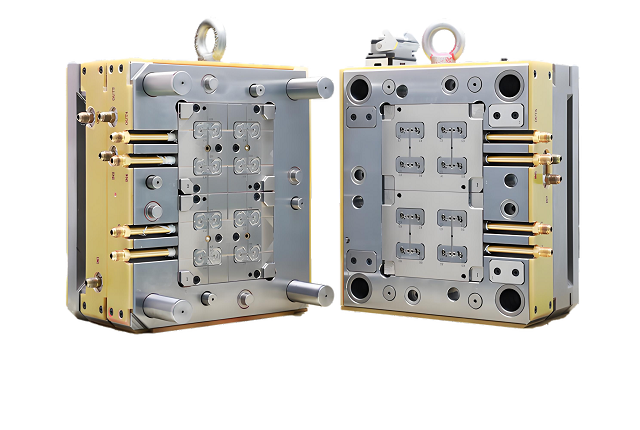
Custom insert molding for automotive connector components — integrating preformed metal terminals and other inserts into molded plastic structures. The engineering review focuses on insert positioning, resin selection, mold design, critical dimensions and project-specific quality requirements. This page covers what the process can and cannot deliver, how terminal position and retention are controlled, and what automotive buyers should send for a reliable feasibility review.
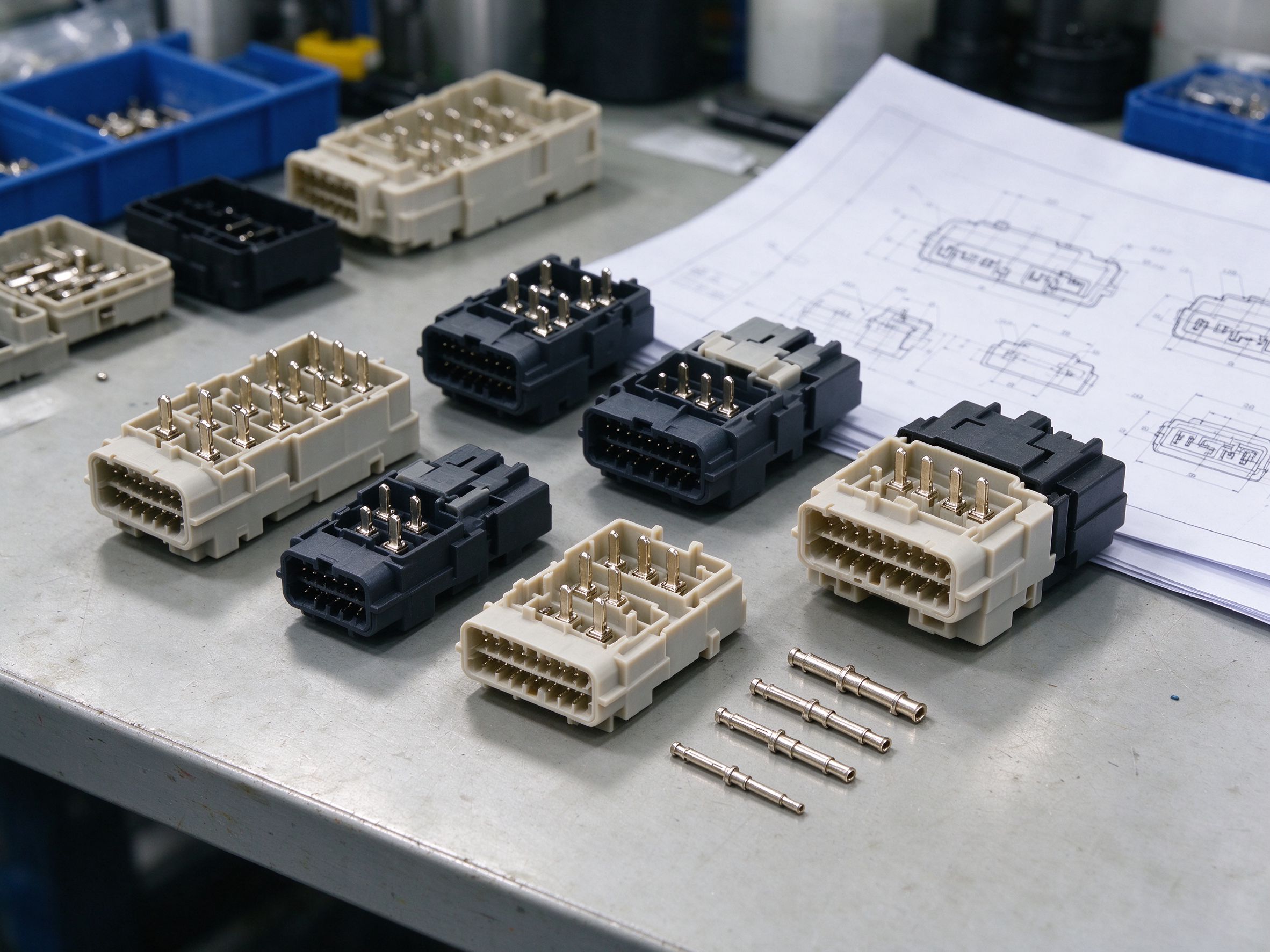
Insert molding for automotive connectors is judged on terminal position, retention, encapsulation and batch consistency — not on the process name. Preformed metal terminals are positioned in the mold, held against melt flow, and encapsulated by the plastic housing. The part must keep contact positions and spacing within drawing limits, hold inserts against pull and rotation, and avoid flash, short shots and incomplete coverage. A feasibility review covers the terminal drawing, resin, mold approach, critical dimensions and quality documents before quoting.
Capability and Verification Points
| Item | Confirmed per project |
|---|---|
| Insert type | Stamped terminals, machined contacts, threaded inserts or other preformed parts — each confirmed against our loading and molding setup |
| Terminal position | Position, orientation and center distance within drawing limits, with the measurement method agreed |
| Part dimensions | Part size range, mold size and press suitability confirmed from the drawing |
| Insert retention | Pull-out force, torque or mechanical retention per the customer's defined load and acceptance limit |
| Resin and grade | Processing experience with the specified grade is confirmed; new grades are reviewed and sampled |
| Molding defects | Flash, short shot, insert movement and incomplete coverage controlled by tool design and process setup |
| Inspection | Critical dimensions, terminal position and functional features measured to the drawing and agreed method |
| Production process | Insert loading, first-article confirmation, batch checks and change control |
| Quality documents | First-article reports, material certificates and project files delivered as agreed — automotive PPAP support is confirmed per project and customer requirement |
Terminal Positioning and Insert Retention
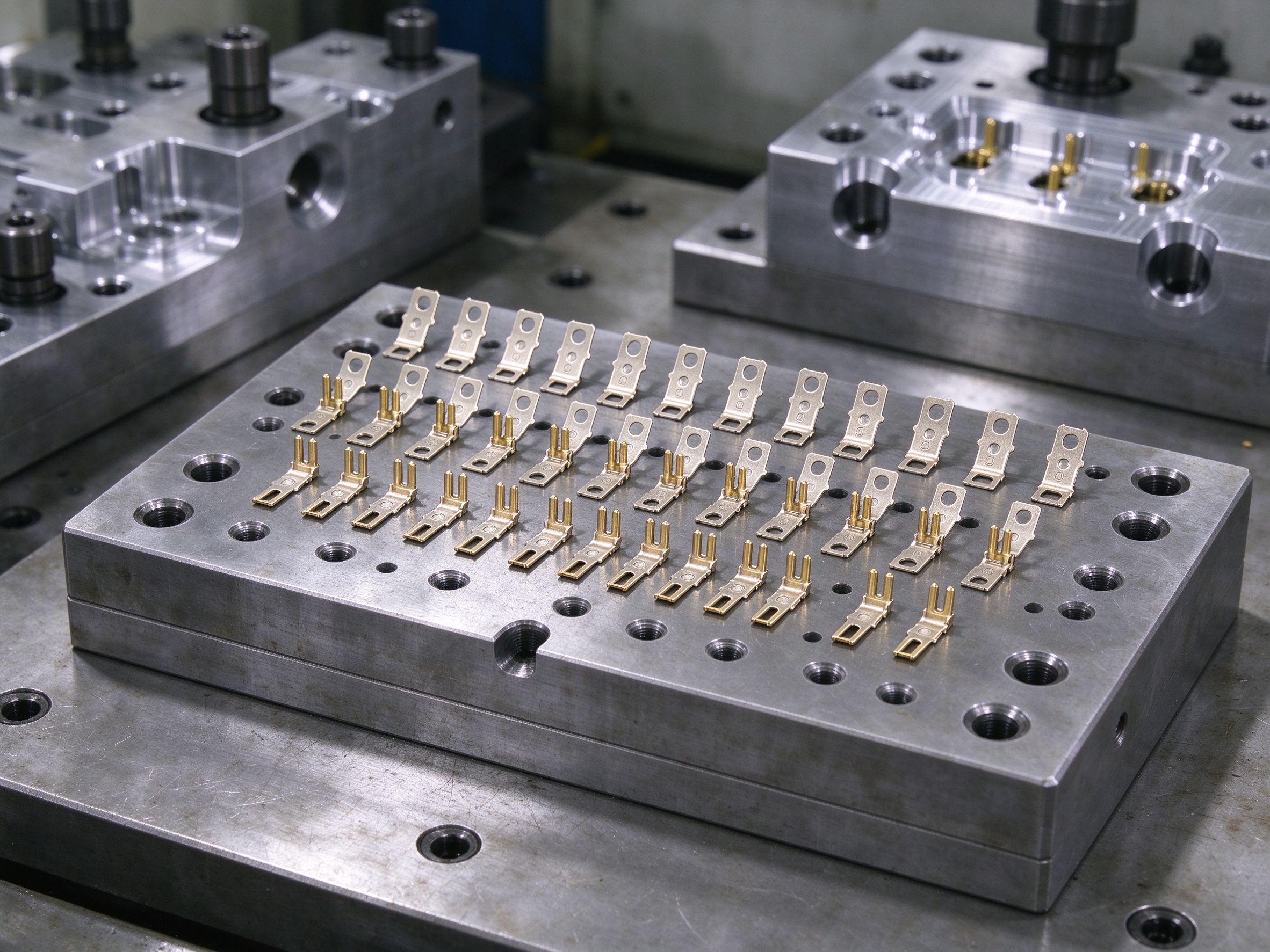
- Insert positioning — how preformed terminals sit in the mold, and how orientation, spacing and position offset are held against the melt.
- Insert retention — grooves, knurling, bosses or other mechanical locking features that prevent pull-out, rotation and cracking around the insert.
- Filling and encapsulation — gate, venting, flow path and thin-wall areas around the terminal, to reduce flash, short shot and incomplete coverage.
- Critical-to-quality characteristics — the dimensions that affect assembly and electrical function are identified from the customer drawing and given their own inspection and acceptance method.
Materials and Design for Manufacturability
| Resin | Typical concern | What the review covers |
|---|---|---|
| PBT | Dimensional stability, electrical properties, glass-filled options | Specific grade, shrinkage and processing conditions |
| PA66 | Mechanical performance, temperature environment, glass-filled options | Moisture absorption effects on dimensions and properties |
| LCP | Thin-wall and fine-feature designs | Flow behavior, grade selection and actual processing experience |
| PPS | Heat, chemical and dimensional stability requirements | Actual grade and validation in the target environment |
These are discussion frameworks for material selection, not a claim that every grade is already validated in automotive connector insert molding. Terminal material, geometry and surface condition are reviewed separately — a resin data sheet alone does not prove the finished connector meets all electrical, durability or environmental requirements.
Quality Validation for Automotive Connector Parts
| Inspection area | Validation approach | Conditions to confirm |
|---|---|---|
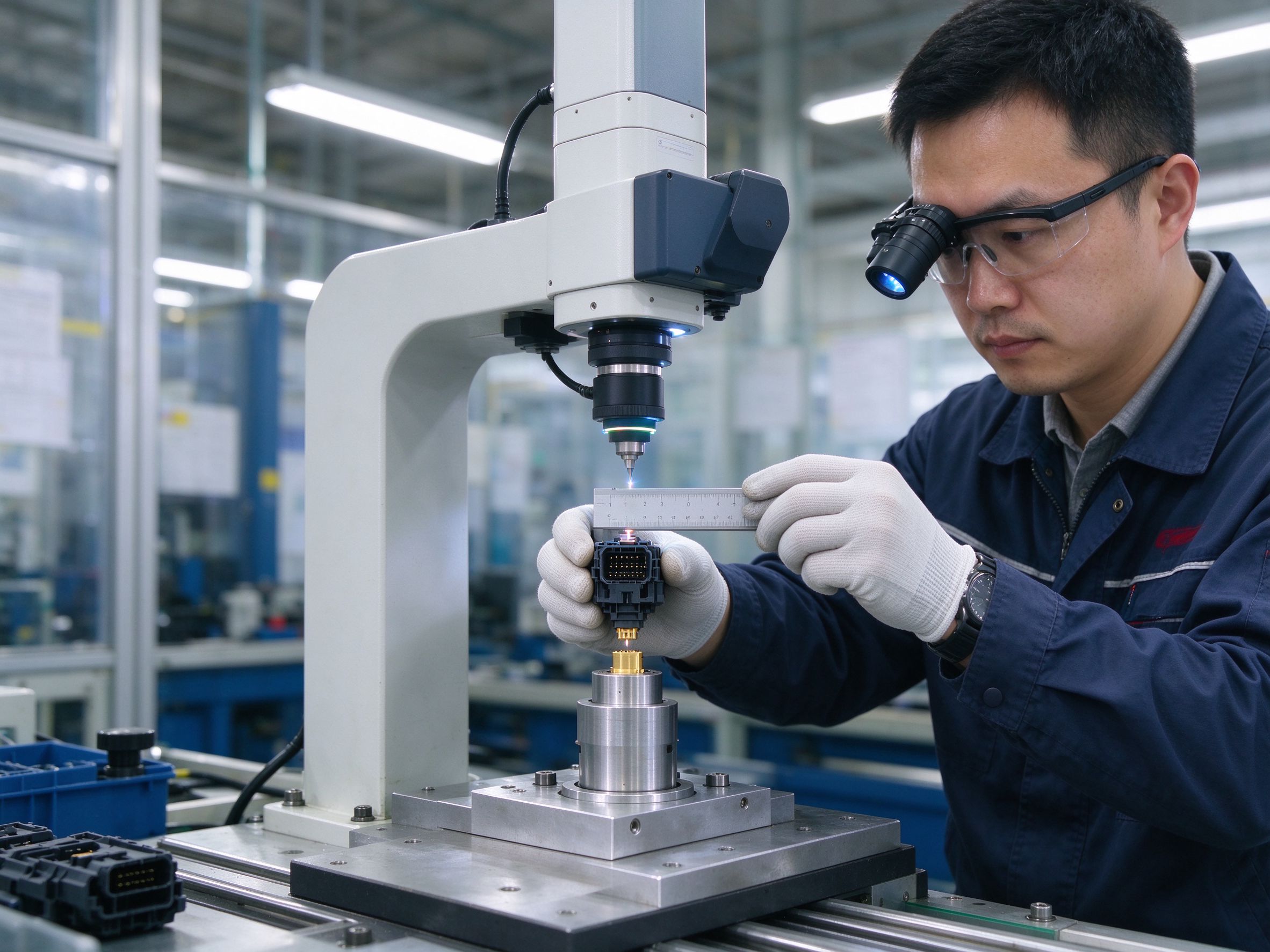
| Terminal position and spacing | Vision measurement, optical measurement or CMM | Feature reachability, accuracy and gage capability |
| Insert retention | Pull-out, torque or other mechanical retention test | Customer-defined load, fixture and acceptance limit |
| Molding defects | Visual inspection, applicable internal inspection | Inspection standard and actual equipment |
| Electrical requirements | Continuity, insulation or other tests per product spec | Whether Goldcattle tests in-house or the customer / third party does |
| Sealing and environmental | Leak, protection or environmental durability tests | Product spec, test conditions and responsible party |
| Batch consistency | First-article inspection, process monitoring, batch records | Project requirements, sampling plan and documentation |
Not every project needs all checks. Base dimensional and appearance inspection applies to every part; special electrical, environmental or sealing tests are scoped from the customer's specification, either in-house or with an external laboratory. FAI, SPC, MSA, control plans and PPAP support are confirmed per project — they are not presented as standing capabilities without verified evidence.
Tooling, Cost and Production Workflow
- Mold structure — insert locating, gating, venting and ejection are designed around the terminal layout and part geometry.
- Insert loading — manual, fixture-assisted or automated loading affects cycle, cost and consistency.
- Sample and ramp — first-article confirmation, trial runs and process window before production release.
- Cost drivers — mold complexity, insert handling, resin, cycle time, yield and inspection scope are listed in the quote assumptions.
Engineering risks are identified before quoting: terminal types, positioning requirements, critical dimensions and quality documents shape the mold and process plan.
Application Priorities
Low-voltage signal & electrical connectors
Metal contact position and orientation, plastic locating precision, insulation, terminal retention and downstream assembly. Reviewed first, with the terminal loading method confirmed.
Sensors & ECU-related connector parts
Small metal insert positioning, plastic coverage, material performance, dimensional stability and customer-specific functional tests. Developed as precision-part experience and records support it.
New-energy & high-voltage parts
Heat-resistant and flame-retardant materials, electrical insulation, safety spacing, sealing and complex environmental validation. Treated as a later expansion direction, not a headline commitment.
The entry path starts from low-voltage connectors and similar terminal insert molding we can run stably, then expands toward more complex automotive electrical applications as equipment, tooling, materials and quality systems support it.
Frequently Asked Questions
What is insert molding for automotive connectors?
Which metal inserts can be integrated?
How is terminal position controlled during insert molding?
How is insert retention validated?
Which plastics are suitable for automotive connector housings?
Can you support automotive PPAP requirements?
What information is needed for an automotive connector insert molding quote?

Request an Automotive Connector Insert Molding Review
Send the connector drawing, terminal drawing, resin grade, critical dimensions and expected annual volume. The review covers terminal positioning, retention, mold approach and inspection scope — the quote is issued with engineering risks identified.
Xiamen Goldcattle · Manufacturing since 1998 · Injection mold making and custom CNC machining · Related: insert molding vs overmolding →