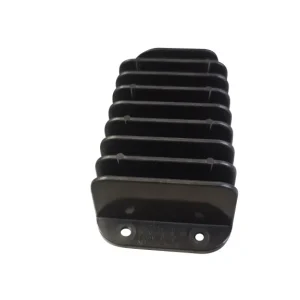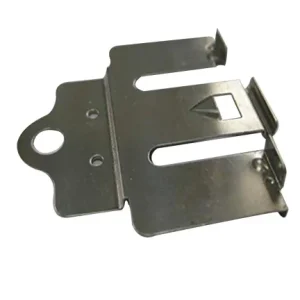


Custom Aluminum & Copper Stamping | ±0.005mm OEM
Place of Origin : Xiamen, China
Brand : JSD
Model : CNC-40
Type : broaching, drilling, etching/chemical machining, laser machining, milling, turning, wire EDM, rapid prototyping.
Micro-machining or non-micro-machining
Material : Aluminum alloy Stainless steel
Processing Service : OEM/ODM OEM ODM CNC Milling Turning
Logo : Customized Logo
Surface Finish : Anodized Powder Coating Polished Sandblasted
MOQ : 1 pcs
Tolerance : +/- 0.005mm
Certification : ISO9001
Processing equipment : CNC precision machining center
Description
Custom Copper and Aluminum Stamped Parts
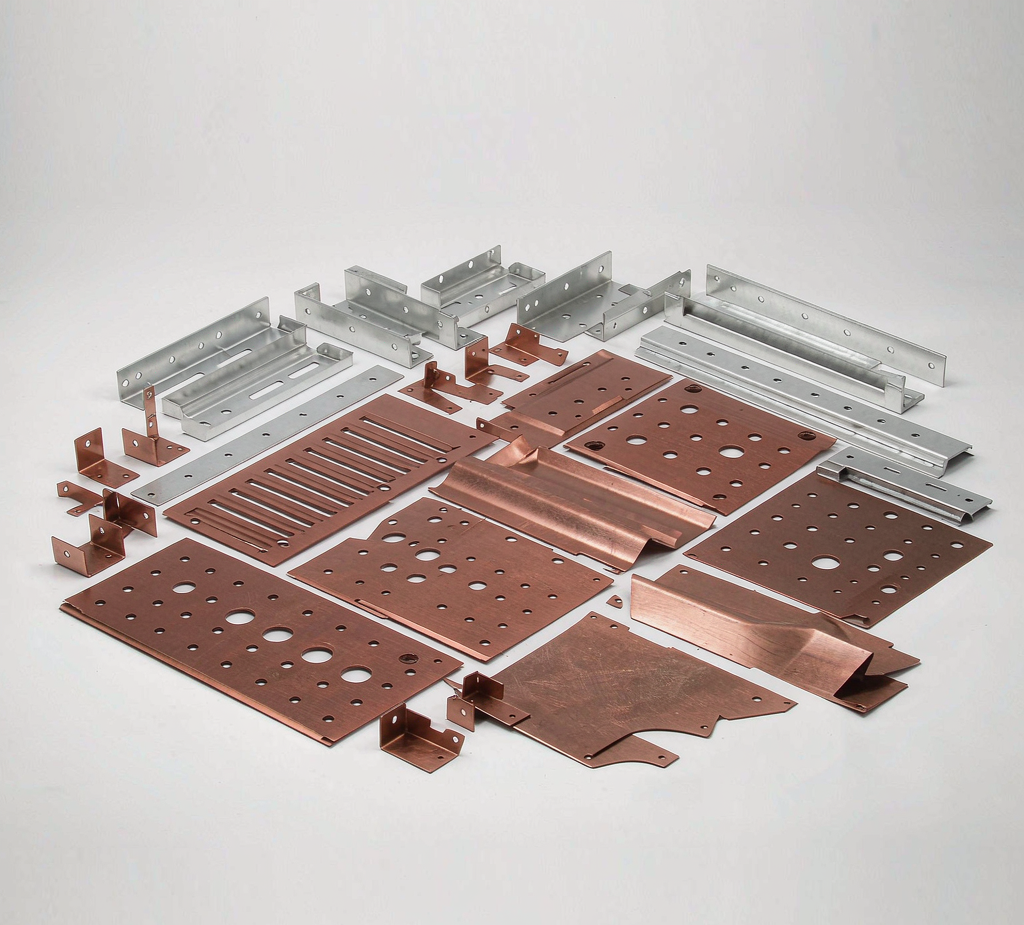
We stamp copper and aluminum sheet into parts made from your drawing. Flat blanks, bent brackets, busbar tabs, shields and contact clips are common examples.
Copper and aluminum do not form in the same way. The grade and temper set the smallest safe bend. They also set how much the part springs back. This page explains what we check before a die is built.
Made to your drawing. No stock catalogue, no fixed model series and no online price.
The drawing leads
Grade, temper, bend radius and check sizes come from your drawing.
Temper changes the bend
Soft sheet forms easily. Hard sheet can crack or spring back.
Tool route is a choice
Samples may need no die. Repeat orders may need a progressive die.
Checks are agreed
We set the inspection plan before the first batch is made.
01 · What This Page Covers
Short answer: we make stamped copper and aluminum parts to your drawing. The part is defined by the drawing, the material temper and the checks we agree before production.
This page is about parts cut and formed from sheet or coil in a press. It is not a list of stock parts. We do not keep a catalogue of standard copper or aluminum stampings.
A stamped part starts as a flat blank. A die cuts holes, slots and the outside shape. Other stations bend, emboss or draw the metal. One part can pass through several stations before it leaves the strip.
What belongs here
- Flat blanks and pierced plates.
- Bent brackets, clips and channels.
- Busbar strips, lugs and terminal tabs.
- Shallow shields, covers and heat spreaders.
- Small parts made in repeat orders.
What belongs elsewhere
- Cast or forged blanks. They use other tools.
- Solid machined blocks. See our CNC machining services.
- Large welded frames. See sheet metal fabrication.
- A fixed model series with set sizes. Our parts follow your drawing.
What we do not claim on this page
- A fixed press size or a fixed sheet thickness range.
- One blanket tolerance for every feature.
- A stock list, a set price or a set lead time.
- A fixed number of die stations or a set tool life.
We confirm each of these at drawing review. If a number matters to your order, ask for it in the quote.
02 · Part Types We Stamp
The six groups below are common shapes. They describe geometry, not parts we keep in stock. Your drawing sets the size, the holes and the bend angles.
Flat blanks and plates
A cut outline with holes or slots. Often used as a base, a cover or a shield.
Bent brackets and clips
One or more bends form an L, U or Z shape. Bend radius and springback need care.
Busbars and lugs
Flat copper strips that carry current. Hole position and edge quality matter most.
Shields and shallow cups
A formed wall or lip surrounds a circuit area. The draw depth sets the tool route.
Heat spreaders
Aluminum plates with ribs, embossed areas or mounting holes. Flatness is often key.
Contact tabs and springs
Small formed parts that press against a mating part. Temper controls the spring force.
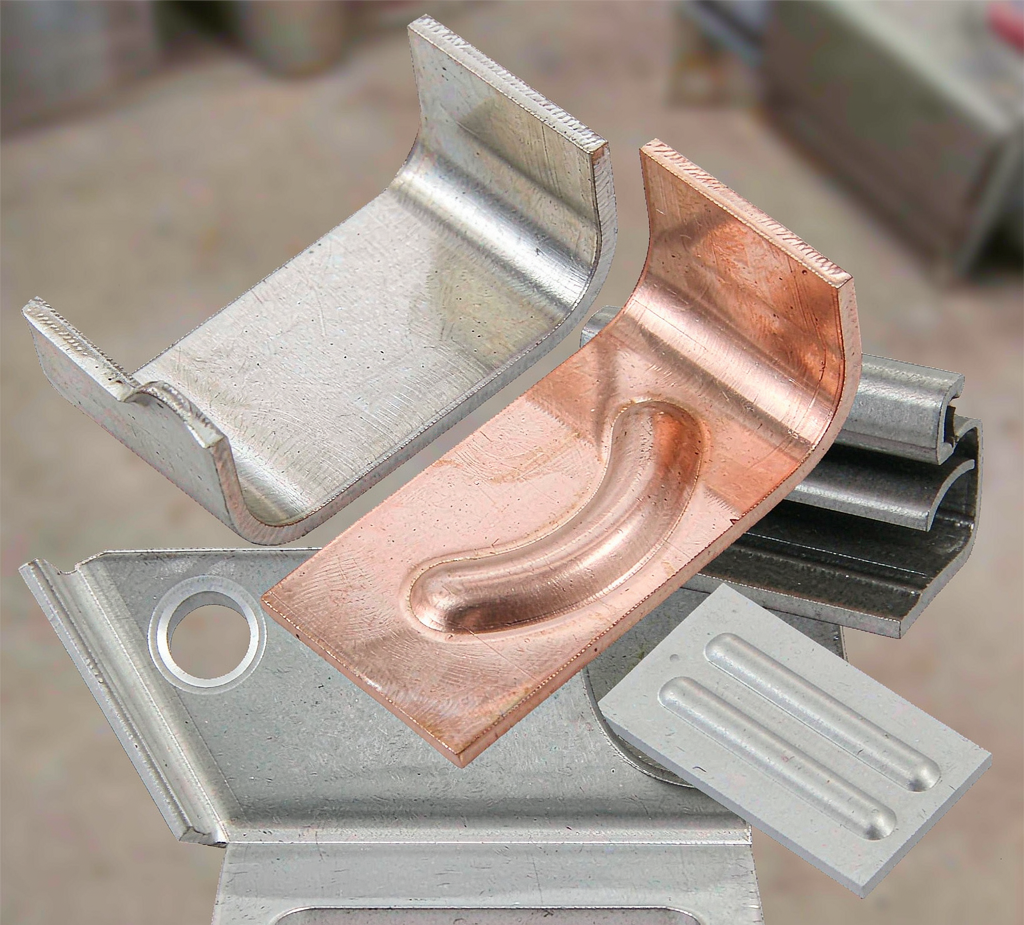
Not every shape suits one die. A part with a deep wall may need a draw station. A part with a tiny tab may need a carrier strip. We look at the shape before we propose a tool.
03 · Grades You Can Ask For
The table lists grades that buyers often put on a drawing. It is not a stock list. We confirm the grade, the temper and the mill document we can obtain before we order material.
Swipe the table to see all columns.
| Metal | Grade often specified | Why buyers choose it | Point to check |
|---|---|---|---|
| Copper | C1100 / C11000 ETP | Good electrical conductivity. Common for busbars, tabs and terminals. | Soft tempers bend well. Hard tempers add spring force but limit the bend. |
| Copper | C1020 / C10200 oxygen-free | Used when the oxygen content of the copper matters to the assembly. | Ask for the mill document at enquiry. It belongs to a material lot. |
| Aluminum | 1050 / 1060 | Very formable and easy to bend. Used for simple covers and shields. | Lower strength. A thin part can bend during handling. |
| Aluminum | 3003 | A common forming grade with more strength than 1050. | Still needs a bend radius that suits the temper. |
| Aluminum | 5052 | Good forming and better strength. Used for brackets and covers. | Springback is larger than with a soft grade. The die must allow for it. |
| Aluminum | 6061 | Used when a part needs post-forming strength or later machining. | A hard heat-treated temper is a poor choice for a tight bend. |
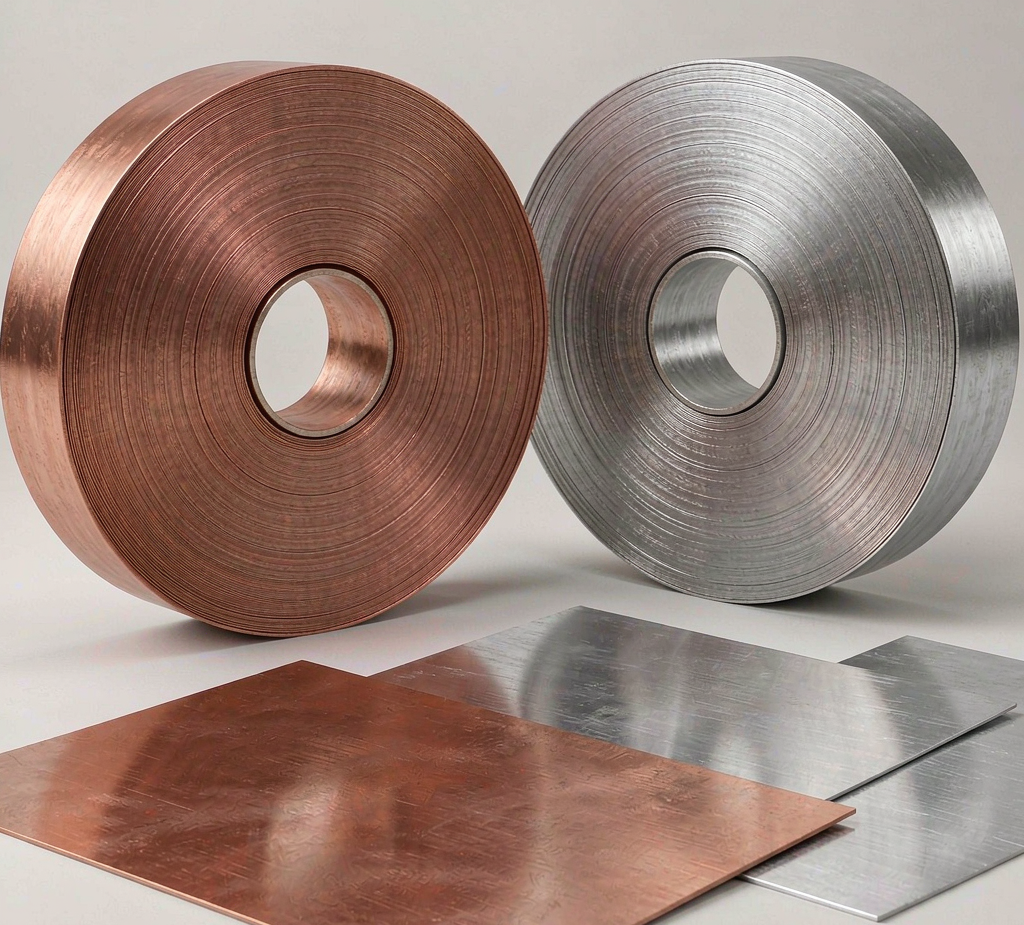
Grade is not the whole story
Two parts cut from the same grade can behave differently. One may be soft and one may be half-hard. The temper, the sheet thickness and the grain direction change the result. Always put the temper on the drawing.
If you only have a sample part, send it to us. We can review the shape and discuss a suitable grade before we quote.
04 · Why Temper Changes the Part
Temper tells us how soft or hard the sheet is when it reaches the press. Rolling and heat treatment set it. The same grade can be supplied in several tempers.
Swipe the table to see all columns.
| Sheet condition | What it means | Effect in the press |
|---|---|---|
| Soft or annealed | The metal bends easily and takes a small inside radius. | Good for deep forming. The part can dent during handling. |
| Quarter hard | A middle step between soft and half hard. | More springback than soft sheet. Still forms well. |
| Half hard | The metal is stiffer and holds its shape. | Useful for spring tabs. Tight bends can crack on the outside face. |
| Hard | The metal has been worked to a higher strength. | Flat blanks are fine. Forming needs a larger radius and a careful die. |
| Heat treated | A grade such as 6061 can be supplied in a hard treated state. | We discuss forming before that state, or we form in a softer state first. |
Bend radius
A hard sheet needs a larger inside radius. A small radius can open a crack on the outside of the bend.
Grain direction
Rolled sheet has a grain. A bend across the grain is usually safer than a bend along it.
Springback
The part moves back a little after forming. The die angle allows for that movement.
Flatness
Soft sheet can stretch near a hole or a rib. We agree where flatness is checked.
Do not copy a bend radius from another metal
A radius that works for stainless steel may fail on half-hard copper. A radius that works for soft aluminum may fail on 5052 in a harder temper. We review the bend with the temper on the drawing.
05 · Forming Risks We Check First
Most stamping problems start in the strip layout or in the bend. We look for these eight risks before tooling starts. Each row says what we need from you.
Swipe the table to see all columns.
| Risk | Why it happens | What we ask for |
|---|---|---|
| Cracks on the bend | The inside radius is too small for the temper or the grain direction. | The temper, the radius and the allowed grain direction on the drawing. |
| Springback | The metal returns partly to its flat shape after the die opens. | The final angle and the feature that must fit a mating part. |
| Orange peel | A coarse grain shows on a formed surface. | The visible face and the surface rule for that face. |
| Galling on the die | Soft aluminum can stick to a tool surface during forming. | The finish you need and the areas that must stay clean. |
| Wrinkles in a draw | Metal flows unevenly into a shallow cup or wall. | The draw depth and the flange width on the drawing. |
| Ears on a drawn cup | The sheet is not the same in every direction. | The trim rule and the allowed edge height. |
| Edge cracking | A sheared edge is stretched by a later bend. | The burr rule and the order of cut and form stations. |
| Distortion near holes | A hole sits too close to a bend or a rib. | The hole position tolerance and the mating pin or screw. |
We would rather change a radius on the drawing than repair a die later. Send the mating part too, if the fit is tight.
06 · Bends, Grain Direction and Springback
A bend is not just an angle. Three things set the result: the inside radius, the grain direction and the way the metal moves back after forming.
Inside radius
The inside radius is set by the die and by the sheet. A larger radius is safer for a hard temper. We do not give one radius for all grades. We check it against the temper on your drawing.
Grain direction
A coil is rolled in one direction. This leaves a grain in the sheet. A bend line across the grain is usually safer. We set the strip layout so the bend lines fall the right way.
Springback control
The die can bend the part a little past the final angle. A second station can set the angle again. We choose the method after the first sample parts are measured.
What we agree
- The final angle and where it is measured.
- Which face stays flat after forming.
- Whether a mating part is needed for a fit check.
- How sample parts are approved before a production run.
Sample parts come before a long run
We measure the first sample parts against the drawing. If an angle is out, we adjust the die. This is why the sample step is part of the plan, not an extra cost you discover later.
07 · Burrs, Edge Quality and Flatness
A cut edge has a small burr. Die clearance, tool wear and sheet temper all change it. The burr direction matters when parts are handled, stacked or slid into a slot.
Swipe the table to see all columns.
| Edge item | What to look for | Where the rule is written |
|---|---|---|
| Burr height | A sharp lip on the exit side of the cut. | The burr rule and the deburr step on the drawing. |
| Roll over | A rounded edge where the die first touches the sheet. | The edge note or the mating part it must clear. |
| Hole edge | A rough hole can cut a wire or stop a pin. | The hole note and the pin or screw used in assembly. |
| Flatness | A thin part can bow after piercing or embossing. | The datum and the surface that must sit flat. |
| Surface marks | Handling and die contact can leave small marks. | The visible face and the surface rule for that face. |
A clean size is not always a clean part
A part can measure well and still snag a cable or scratch a hand. Agree the burr rule on the drawing. We then set the deburr step and the check method before production.
08 · Three Ways to Make the Part
The right tool depends on volume, design stability and shape. A die is not always the first step. We compare the routes below with your order size.
Swipe the table to see all columns.
| Route | Best when | Cost shape | Point to watch |
|---|---|---|---|
| Cut and bend without a die | A few sample parts, or a design that may still change. | Low start cost. Each part takes more time. | Some shapes cannot be made this way. Ask at review. |
| Single stage or compound die | A simple part in a steady but modest volume. | One tool cost. More handling between steps. | Hole to bend position can drift between stations. |
| Progressive die | A stable design with repeat orders. | Higher start cost. Lower cost per part at volume. | Design changes are costly after the strip layout is cut. |
| Transfer die | A larger part that cannot stay on a carrier strip. | Tool and handling cost are both higher. | We confirm if the shape needs this route at review. |
Drawing review
Shape, grade, temper, bend and check sizes.
Material plan
Coil or sheet, width, thickness and grain.
Strip layout
Nesting, carrier, pilots and scrap.
Tool design
Station order, bend method and die clearance.
Sample parts
Measure, adjust and agree the sample.
Repeat orders
Run to the agreed check plan.

09 · Strip Layout and Material Use
A progressive die feeds a long strip. The layout sets how many parts you get from each length of coil. It also sets the grain direction and the scrap rate.
Nesting
Parts are placed so the strip wastes less metal. A small rotation can save a lot of coil.
Carrier
A thin frame holds the part as it moves between stations. It is cut away at the end.
Pilot holes
Small holes guide the strip. They keep each station in the same place.
Station order
We pierce, form and then cut free. The order protects hole position.
Grain direction
The layout fixes the bend line against the rolling direction.
Scrap
The skeleton must leave the press cleanly. A weak skeleton can jam the tool.
A cheap part on paper can waste a lot of coil. We show you the strip layout idea before the die steel is cut, so a change is still easy.
10 · When a Die Pays for Itself
A die is a cost at the start. It can lower the part cost later. The turning point depends on your volume and on how stable the design is. We do not use one fixed number for every buyer.
Design still changing
Start without a production die. Make samples. Change the drawing while changes are cheap.
Small repeat orders
A simple die may fit. We compare the tool cost with the number of parts you need.
Stable high volume
A progressive die is often the right route. Scrap rate and coil width now matter more.
Many variants
One die per variant is costly. We look for shared blanks or a common strip.
What we put in the quote
- The tool route we suggest and why.
- Who owns the tool, in writing.
- Where the tool is kept and how it is maintained.
- What happens if the drawing changes after tool cutting.
- The sample step and the approval rule.
Ask about the whole cost
Look at the tool, the material, the press time, the deburr step, the finish and the checks together. A low piece price can hide a high start cost. A high piece price can hide a wasteful layout.
11 · Finishes, Contact Faces and Conductivity
Bare copper and bare aluminum change over time in air. A coating can protect the surface, change its colour or change how current passes through a joint. We agree the finish before the tool is cut.
Swipe the table to see all columns.
| Finish | Why it is asked for | What to agree first |
|---|---|---|
| Bare copper | Good conductivity and a clean look at the start. | Copper can tarnish. Agree the surface rule and the packing method. |
| Tin plated copper | Helps a contact face and slows tarnish. | Coating thickness, masked areas and the check size after coating. |
| Nickel plated copper | A harder surface for a wear area. | Whether the change in contact resistance is acceptable. |
| Clear anodized aluminum | Keeps a metal look with a more stable surface. | Hole sizes after coating and the areas that must stay bare. |
| Dark anodized aluminum | A dark part for a visible area or a heat spreader. | Colour sample, masked contact faces and the final check sizes. |
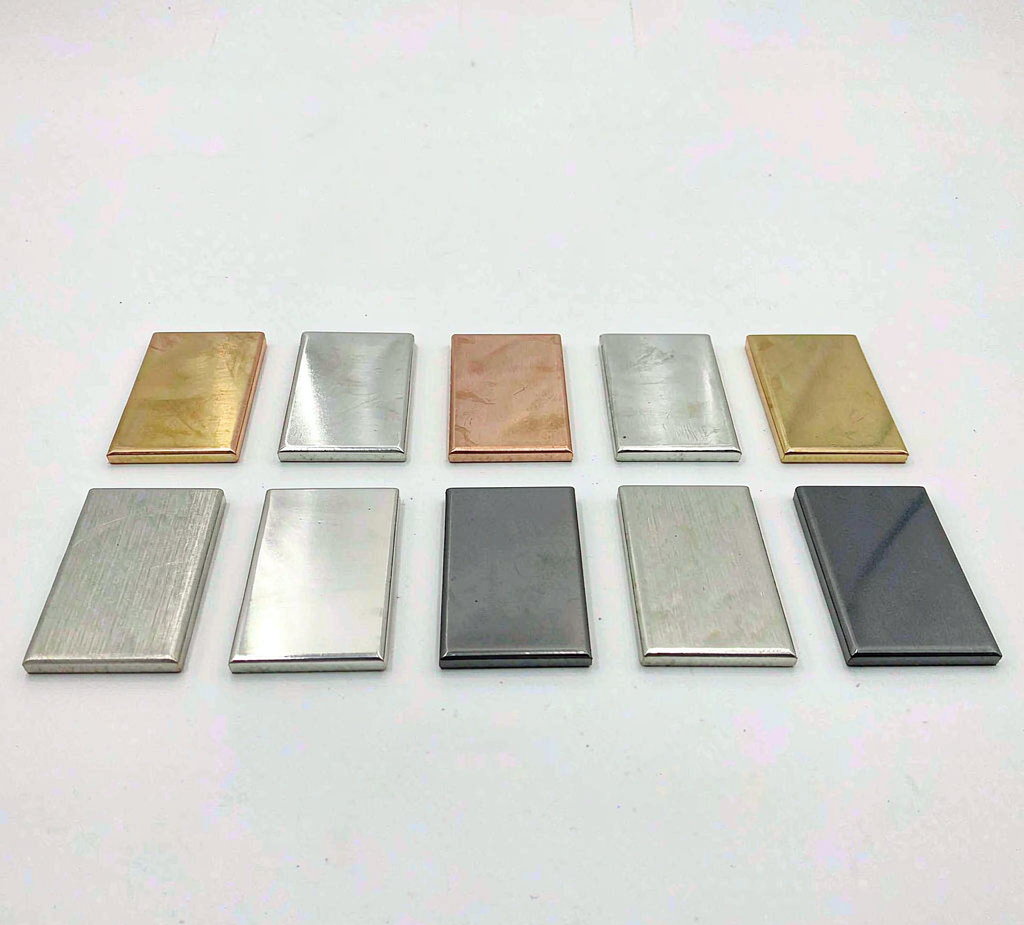
A coating is a size change too
Anodizing and plating add a layer. A hole can get smaller. A tab can get thicker. A contact face can change its resistance. We agree where to mask and which sizes are checked after coating.
Ask for the finish at enquiry. We confirm what can be supplied for your part before we quote.
12 · Other Work on a Stamped Part
Most parts leave the press with one or two more steps. We review which steps the drawing needs and which ones are possible for your shape.
Deburr and clean
Remove the cut lip. Clean off oil and loose metal before packing.
Threads and inserts
Tapped holes or pressed inserts. We agree the thread and the check method.
A few machined features
A flat face, a counterbore or a tight hole may need a CNC step.
Simple assembly
Two stamped parts can be joined. We confirm the joint before quoting.
Marking
A part mark or lot mark, only when the drawing asks for it.
Packing
Soft copper tabs bend easily. Packing is chosen to protect the shape.
A stamped part is often the start, not the finish. Put every later step on the drawing, so the die and the check plan cover them from the start.
13 · Checks and Records
We agree an inspection plan from your drawing. The plan says what is checked, how often and what record you can ask for. We do not check every size on every part unless the plan says so.
Swipe the table to see all columns.
| Check | Compared with | Record you can ask for |
|---|---|---|
| Material and temper | The grade on the drawing and the mill lot. | The material document we can obtain for that lot. |
| Sheet thickness | The thickness on the drawing. | A size record in the agreed check plan. |
| Hole position | The drawing datum and the mating pin. | A first article size record, if agreed. |
| Bend angle | The final angle after springback. | A sample measurement from the approved batch. |
| Burr size | The burr rule on the drawing. | A deburr check note, if agreed. |
| Flatness | The datum face named on the drawing. | A flatness record, if agreed. |
| Surface | The visible face rule and the finish sample. | A visual check note, if agreed. |
| First article | The full drawing at the start of a run. | The first article report scope, agreed before the run. |
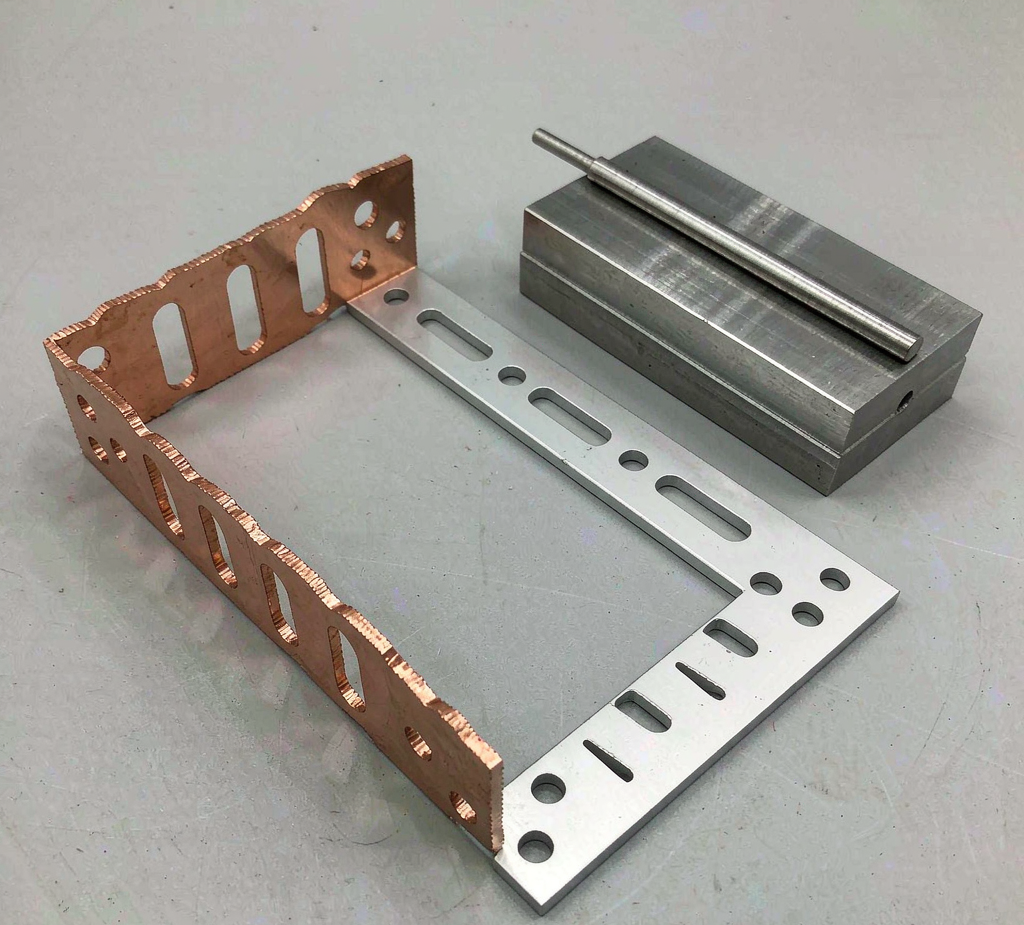
Soft metal needs a gentle check
A probe can bend a soft copper tab and give a false reading. We choose the check method to suit the part. If a size is critical, tell us at enquiry so we can plan the method.
14 · Five Questions Before We Quote
These five answers save the most time in a stamping project. If one is missing, we ask for it before tooling starts.
Which grade and temper? A grade alone is not enough. The temper sets the bend.
Which bend lines and radii? Mark them against the rolling direction of the coil.
Which faces must stay flat or clean? Name the datum and the visible face.
How many parts now and per year? This decides the tool route.
Which sizes need a record? This decides the check plan and the report.
15 · What to Send for a Quote
Send the list below in one message. A clear drawing and a clear material note give you a faster and more useful answer.
Flat pattern or 3D model plus a 2D drawing with the key sizes.
Material grade and temper for each part, not just the metal name.
Sheet thickness and the allowed thickness range.
Bend radii, bend angles and grain direction where they matter.
Hole sizes and position rules against a named datum.
Burr rule and any deburr or clean step.
Surface finish and the faces that must be masked.
Flatness or fit rule and the mating part, if there is one.
First order size and the expected repeat volume.
Document needs such as a material paper or a first article report.
Packing rule for soft or visible parts.
Design status and whether the drawing may still change.
Send a drawing. We will review the tool route first.
Tell us the grade, the temper and the volume. We will come back with the forming risks we see, the tool route we suggest and the checks we can agree. We do not give a fixed price on a page, because the drawing sets the cost.
Prototype quantities from 1 piece. Tooling is quoted as a separate line when a die is needed.
What happens next
- We read the drawing and the material note.
- We flag bends, holes and burr rules that need a decision.
- We suggest a tool route for your volume.
- We state what documents we can supply.
- We agree the sample step before production.
16 · Questions Buyers Ask First
Often yes. A small first batch can be cut and bent without a production die. The shape must suit that route. We tell you what is possible at drawing review.
Related: tool routes and tooling cost.
Usually the radius, the temper or the grain. A half-hard sheet needs a larger inside radius. A bend along the rolling grain is more likely to crack. We check all three before cutting steel.
Related: temper and forming risks.
Not always. Sheet thickness, springback and die wear add variation. We review the tolerance on each feature and say what the process can hold before we quote.
Related: checks and records.
We agree it in writing. Ask for the tool ownership term in the quote. We do not assume one rule for every project.
Related: when a die pays for itself.
Ask at enquiry. We then state what document we can obtain for the material lot. We do not claim one blanket certificate for every part.
17 · Frequently Asked Questions
Do you make standard copper or aluminum stamped parts?
No. We make stamped parts from your drawing or an approved sample. We do not keep a stock catalogue of standard stampings. Each part is defined by its drawing, its material and the checks we agree.
What should I send to get a quote?
Send a flat pattern or 3D model and a 2D drawing. Add the material grade and temper, the sheet thickness, the bend radii, the burr rule, the finish, the first order size and the expected repeat volume. Tell us if the design may still change.
Which copper grades do you work with?
Buyers often ask for C1100 or C11000 ETP copper, and for C1020 or C10200 oxygen-free copper. We confirm the grade and the mill document we can obtain before we order material. The grade is set at drawing review, not taken from a stock list.
Which aluminum grades do you work with?
Buyers often ask for 1050, 1060, 3003 and 5052 sheet. 6061 is used too, but a hard temper is a poor choice for a tight bend. We agree the grade and the temper with you before the die is cut.
Why does temper matter for a stamped part?
Temper tells us how soft or hard the sheet is. A hard sheet bends less before it cracks. It also springs back more after forming. We set the bend radius and the die angle to suit the temper on your drawing.
Can you make sample parts before a die is built?
Often yes. For a small first batch we can cut flat blanks and form simple bends without a production die. The shape and size must suit that route. We tell you what is possible at drawing review.
When is a progressive die worth it?
A progressive die suits a stable design and repeat orders. It costs more at the start and can lower the part cost later. We compare the tool route with your volume before tooling starts. We do not guess a break-even number.
Who owns the stamping die?
Tool ownership is agreed in writing before we build the die. Ask for the term in the quote. We do not assume one rule for every project, and we do not use a tool from one order for another order without agreement.
Do you plate copper parts or anodize aluminum parts?
These finishes can be requested. We confirm what can be supplied for your part before we quote. A coating can change a hole size or a tab fit, so we agree the masking and the check sizes first.
How do you check the size of a stamped part?
We agree a check plan from your drawing. It can cover hole position, bend angle, flatness and burr size. We do not check every size on every part unless the plan says so. Soft copper parts need a gentle check method.
Can a stamped part hold the same tolerance as a CNC machined part?
Not always. Stamping, springback and sheet thickness all add variation. We review the tolerance on each feature and say what the process can hold before we quote. We do not write one blanket tolerance for a whole part.
Can I get a material certificate or a first article report?
Yes, when you ask at the enquiry stage. We then state what document we can supply for the material lot and what the first article check will cover. We do not claim one blanket certificate for every part.
Still have a question about a bend, a finish or a tool route? Send the drawing with the question. We answer against your part, not against a general guide.
Related Capability Pages
This page is about copper and aluminum stamping. For wider process topics, see the pages below.
Xiamen Goldcattle Plastic & Metal Products Co., Ltd. Founded in 1998, we make custom parts from drawings or samples. Our work covers CNC machining, injection molding, mold making, 3D printing, die casting and sheet metal fabrication.