304 / 316 Stainless Steel for CNC Machining, Turning & Precision Manufacturing
The default corrosion-resistant metals for food, medical, marine and industrial OEMs. 304 is the versatile workhorse; 316 adds molybdenum for chloride and chemical resistance. At XM Goldcattle, 304 and 316 are machined daily to ±0.005 mm on 100+ in-house CNC, turning and 5-axis centers, with passivation and PMI on every lot.
- Excellent Corrosion Resistance
- Food & Medical Safe
- High Strength & Ductility
- Weldable & Formable
- Wide Temperature Range
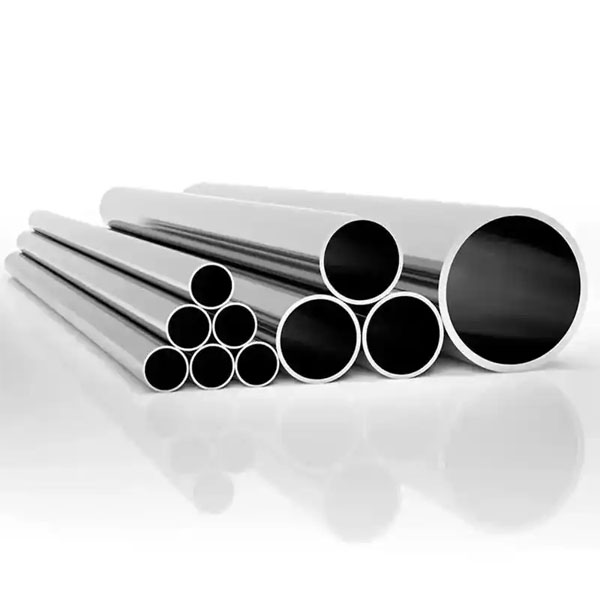
304 / 316 Stainless Steel at a Glance
Key engineering data procurement and design teams need before specifying 304 or 316 stainless steel. Values are typical for annealed bar and sheet; mill certificates and PMI confirm each lot.
Why Choose 304 / 316 Stainless Steel?
304 and 316 are the default corrosion-resistant metals for food, medical, marine and industrial OEMs. Understand when 304 / 316 is the right call — and when a different material is the better business decision.
✔ Best Used For
- Food & beverage — 304 contact surfaces, cleanable and washdown-ready
- Medical & pharma — 316L with electropolishing for hygienic, biocompatible parts
- Marine & offshore — 316 resists saltwater pitting and crevice corrosion
- Chemical processing — 316 handles acids, chlorides and process fluids
- Architectural hardware — brushed or polished 304 for durable, attractive trim
- High-temperature service — stable to 870 °C with good oxidation resistance
✖ Consider Another Material When
- You need very high strength or hardness — choose 17-4PH Stainless
- You need high-volume, free-machining parts — choose 303 Stainless
- You need lightweight structural parts — choose 6061 Aluminum
- You need lower cost for non-corrosive use — choose Carbon Steel
- You need electrical or thermal insulation — choose PEEK or POM
Detailed 304 / 316 Stainless Steel Properties
Data sourced from ASTM A276 and ASTM A240. We supply mill certificates with PMI verification so your incoming inspection matches the spec.
| Property | Value (304 / 316) | Test Standard | Notes |
|---|---|---|---|
| Density | 8.00 g/cm³ | ASTM A276 | About 3× heavier than aluminum; solid, premium feel |
| Melting Point | 1400–1450 °C | ASTM A276 | Suitable for high-temperature service |
| Thermal Conductivity | 16.2 / 16.3 W/(m·K) | ASTM E1461 | Lower than aluminum; stable at temperature |
| Electrical Conductivity | ~2.5% IACS | ASTM E1004 | Poor conductor; good for electrical isolation |
| Yield Strength | ≥ 215 / ≥ 220 MPa | ASTM A276 | Annealed condition values |
| Tensile Strength | ≥ 505 / ≥ 515 MPa | ASTM A276 | Strong and ductile |
| Elongation at Break | ≥ 40% / ≥ 40% | ASTM A276 | Excellent formability |
| Elastic Modulus | 193 GPa | ASTM E111 | Stiffer than aluminum |
| Hardness | 201 / 217 HB | ASTM E10 | Work-hardens during machining |
| Coefficient of Thermal Expansion | 17.2 / 16.0 µm/m·K | ASTM E831 | Lower than aluminum; more stable |
Which Processes Work Best for 304 / 316?
Not every process fits stainless steel. This table helps procurement and engineering teams choose the right manufacturing route before quoting.
| Process | Rating | Suitability | Typical Use |
|---|---|---|---|
| CNC Machining | 304/316 machine well with carbide and coolant to control work hardening. | Valve bodies, fittings, housings | |
| CNC Turning | Bar and tube turn cleanly; excellent concentricity for shafts and pins. | Shafts, rods, pins, spacers | |
| 5-Axis Milling | One-setup milling limits fixturing and repeated work hardening on complex parts. | Manifolds, impellers, medical parts | |
| Sheet Metal | 304/316 form, bend and weld cleanly — ideal for enclosures and panels. | Brackets, panels, cabinets | |
| Die Casting | Not recommended | High melting point makes die casting impractical for stainless. | — |
| Investment Casting | Good for complex shapes before final CNC machining. | Valve bodies, fittings | |
| Welding | TIG/MIG with matching filler preserves corrosion resistance. | Tanks, frames, piping |
What OEMs Make from 304 / 316 Stainless Steel
Real part families where 304 or 316 is the cost-performance sweet spot for corrosion-critical and hygienic products. Each application is supported by our in-house CNC, finishing and inspection.
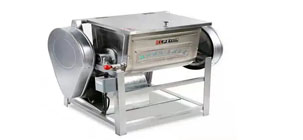
Food Processing Parts
304 is the standard for food contact: hoppers, mixers and conveyors with smooth, cleanable, washdown-ready surfaces.
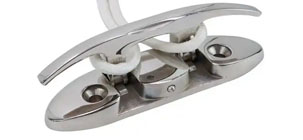
Marine Hardware
316 resists saltwater pitting and crevice corrosion — cleats, hinges, fittings and deck hardware for marine use.
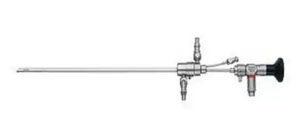
Medical Devices
316L and electropolished finishes are common for surgical instruments, implants and diagnostic equipment.
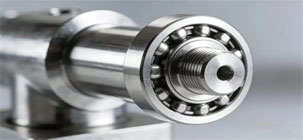
Chemical Fittings
304 and 316 handle acids and chlorides; passivation extends service life in corrosive process lines.
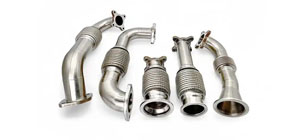
Automotive & Exhaust
Heat-resistant 304 and 321 stainless are used for exhaust systems, manifolds and high-temperature brackets.
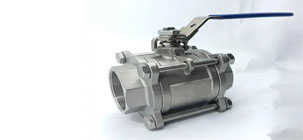
Architectural Hardware
Brushed, polished or PVD-coated 304 delivers durable, attractive finishes for public and commercial spaces.
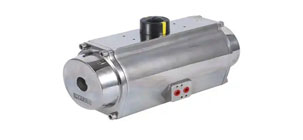
Pharmaceutical Equipment
316L with electropolishing meets strict surface-finish and cleanliness standards for pharma lines.
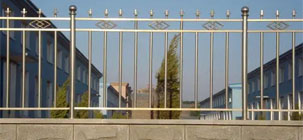
Industrial Enclosures
304 sheet-metal enclosures protect electronics and controls in harsh, corrosive factory environments.
304 / 316 Stainless Steel Finishing Options
Stainless finishes serve functional and cosmetic purposes. Choosing the right one early improves corrosion resistance, hygiene and brand appearance.
Passivation
Restores the chromium-oxide layer for maximum corrosion resistance. Standard for machined stainless parts.
Best for industrial & marine partsElectropolishing
Removes surface impurities and creates a smooth, hygienic finish. Common for medical and food-grade parts.
Best for medical & pharmaceuticalBrushed Finish
Uniform satin appearance hides fingerprints and minor scratches. Popular for architectural and consumer products.
Best for visible surfacesMirror Polishing
High-gloss reflective surface. Used for premium decorative and cleanroom applications.
Best for premium & cleanroom partsBead Blasting
Creates a uniform matte surface, removes machining marks and prepares for passivation.
Best for cosmetic consistencyPVD Coating
Durable decorative coating in black, gold and other colors. Improves wear resistance on architectural hardware.
Best for colored architectural hardwareDFM Rules for 304 / 316 Stainless Steel Parts
Design for manufacturability reduces cost and lead time. These rules are based on 26 years of machining stainless steel for global OEMs.
Minimum Wall Thickness
Keep walls ≥1.0 mm (1.5 mm preferred). Stainless work-hardens; thin walls cause vibration and tool wear.
Internal Corner Radius
Use R ≥ 0.5 mm for internal corners. Larger radii reduce stress concentration and extend tool life.
Recommended Holes
Standard drilled holes ≥1.5 mm; tapped holes ≥M3. Deep holes need peck drilling and ample coolant.
Threads & Inserts
Specify metric threads (M3–M16 common). For frequent assembly, consider helical inserts in stainless.
Tolerance Strategy
General: ±0.05 mm. Precision fits: ±0.02 mm. Ultra-precision: ±0.005 mm only where functionally required.
Dimensional Stability
Specify passivation or electropolishing early — final finish affects both corrosion resistance and cost.
What Drives 304 / 316 Stainless Steel Machining Cost?
Transparent cost factors help procurement teams optimize designs before requesting a quote.
Factors That Increase Cost
- Work hardening — 316 work-hardens faster than 304, requiring slower cuts
- Complex geometry — multiple setups, 5-axis work, deep pockets
- Surface finish requirements — electropolishing, mirror polish
- 316 vs 304 material cost — 316 is typically 20–40% more expensive
- 316 vs 304 material cost — 316 is typically 20–40% more expensive
- Inspection (PMI, CMM) — adds time but guarantees material and dimensions
How to Reduce Cost
- Use 304 where 316 is over-specified — saves material and machining time
- Relax non-critical tolerances to ±0.05 mm where possible
- Design near-net shapes — use bar or plate close to final size
- Group features on the same plane to reduce setups
- Increase batch size — amortize programming and setup
- Consolidate parts — fewer assemblies mean lower total cost
304 / 316 vs Other Materials
Comparison tables are high-intent SEO content. Use them to guide material selection and link into related material guides.
304 vs 316 Stainless Steel
| Corrosion | 316 superior in chlorides |
| Strength | 316 slightly higher |
| Cost | 304 lower |
| Machinability | 304 slightly easier |
| Best for | 304 general; 316 marine/chemical |
304 vs 303 Stainless Steel
| Machinability | 303 much better |
| Corrosion | 304 better |
| Weldability | 304 better |
| Cost | Similar |
| Best for | 304 formed; 303 high-volume machining |
316 vs 17-4PH Stainless Steel
| Strength | 17-4PH much higher |
| Corrosion | 316 better in chlorides |
| Heat treat | 17-4PH hardenable |
| Cost | 17-4PH higher |
| Best for | 316 chemical; 17-4PH high-strength |
304 / 316 vs Aluminum
| Weight | Aluminum ~1/3 of steel |
| Corrosion | 304 / 316 far superior |
| Machinability | Aluminum much faster |
| Cost | Aluminum generally lower |
| Best for | Aluminum light structural; 304 / 316 hygienic |
316 vs PEEK
| Strength | 316 higher |
| Weight | PEEK much lighter |
| Chemical resistance | Both excellent |
| Cost | PEEK higher |
| Best for | 316 metal parts; PEEK insulation |
304 vs Carbon Steel
| Corrosion | 304 superior |
| Strength | Carbon steel can be higher |
| Cost | Carbon steel lower |
| Machinability | Carbon steel often easier |
| Best for | 304 hygienic; carbon steel structural |
Which Manufacturing Path Fits Your 304 / 316 Part?
A quick decision tree to help procurement managers match part requirements to the right process.
Need high precision?
CNC machining delivers ±0.005 mm tolerances and excellent surface finishes for low-to-medium volumes of stainless parts.
Recommended: CNC MachiningNeed thin panels or enclosures?
Sheet-metal fabrication with laser cutting, bending and welding is cost-effective for brackets and boxes.
Recommended: Sheet MetalNeed complex geometry?
5-axis CNC machines multiple faces in one setup, limiting fixturing and repeated work hardening.
Recommended: 5-Axis CNCNeed a hygienic surface?
316 CNC machined and electropolished is the standard for food, medical and pharmaceutical parts.
Recommended: 316 CNC + ElectropolishCase: Marine Valve Body in 316 Stainless Steel
Customer: A European marine equipment supplier needed corrosion-resistant valve bodies for saltwater ballast systems.
Challenge: The part required precise sealing surfaces, internal passages and long-term resistance to pitting in chloride-rich seawater.
Why 316? 316 stainless steel's molybdenum content resists saltwater corrosion far better than 304. Its strength and weldability also suited the assembled valve system.
Process: CNC turning of bar stock → 5-axis milling of internal ports → passivation → pressure testing → dimensional CMM report.
Result: Parts passed 1,000-hour salt-spray testing and pressure testing to customer spec. First article delivered in 12 days; production batches ship monthly.
Services That Pair with 304 / 316 Stainless Steel
Link material selection to manufacturing capability. These service pages explain tolerances, equipment and quality systems for stainless parts.
CNC Machining
Carbide tooling, flood coolant and rigid setups control work hardening so 304 / 316 hold ±0.005 mm.
Learn more →5-Axis CNC
Single-setup machining of complex stainless porting, manifolds and impellers with no fixture marks.
Learn more →CNC Turning
Bar and tube turning for stainless shafts, pins and fittings with excellent concentricity.
Learn more →CNC Milling
Block, plate and billet milling of 304 / 316 housings and brackets to tight tolerances.
Learn more →Sheet Metal
304 / 316 sheet formed into enclosures, panels and brackets for corrosive environments.
Learn more →Passivation
Citric or nitric passivation per ASTM A967 restores the chromium-oxide layer after machining.
Learn more →Frequently Asked Questions About 304 / 316 Stainless Steel
Is 304 or 316 stainless steel suitable for CNC machining?
Can 304 or 316 stainless steel be passivated?
Is 316 stronger than 304 stainless steel?
Can 304 or 316 stainless steel be welded?
Is 304 stainless steel food safe?
Can 304 stainless steel be used outdoors?
What industries use 304 and 316 stainless steel?
Which manufacturing process is best for 304 or 316 stainless steel?
304 vs 316 stainless steel — which should I choose?
What is the difference between 304 and 304L stainless steel?
Can 304 stainless steel be die cast?
What is the cost of CNC machining 304 or 316 stainless steel?
Does 304 stainless steel conduct electricity?
How does XM Goldcattle control quality for stainless steel parts?
How do I get a quote for 304 or 316 stainless steel parts?
Request Parts Manufactured in 304 / 316 Stainless Steel
Get a free material review, DFM feedback and manufacturing quotation from our engineering team. Samples ready in 7–15 days.
Upload CAD
STEP, IGES, DXF or PDF drawing
Free Material Review
We confirm 304 or 316 is right for your design
Engineering Suggestions
DFM tips for cost and quality
Manufacturing Quotation
Detailed quote within 24 hours
ISO 9001 · SGS Certified · Material Certificates · NDA Available
Explore more: Return to the Materials Hub to compare all metals, plastics and ceramics, or view related guides for 316 Stainless Steel, 303 Stainless Steel, 17-4PH Stainless Steel and 6061 Aluminum.