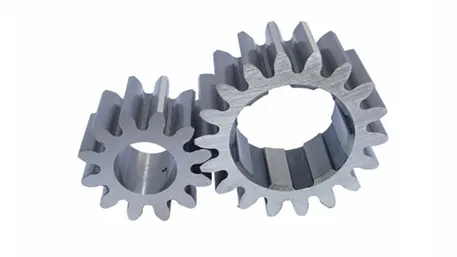
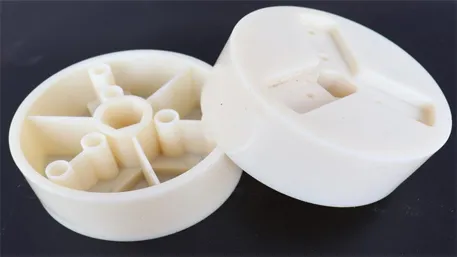
One-Stop CNC & Injection Molding Factory in China
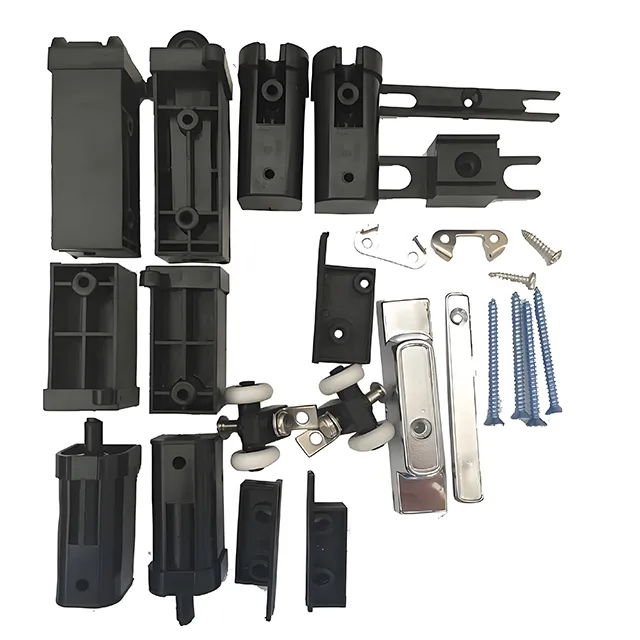
Integrated CNC machining and plastic injection molding for custom metal and plastic components — from prototyping and tooling to production, finishing, assembly and quality inspection, managed by one engineering team.
Send one RFQ with your CAD + BOM · Typical engineering response within 1–2 business days · NDA available
One Supplier for Custom Metal and Plastic Components
Most buyers searching for a one-stop CNC and injection molding factory in China are not looking for a factory that simply lists two capabilities. They have a product that contains both metal parts and plastic parts, and they want one manufacturing partner to coordinate the whole thing — engineering, tooling, production, finishing, assembly and inspection — instead of managing a CNC shop, a molder and a mold maker separately.
Goldcattle runs CNC machining and plastic injection molding as one coordinated manufacturing program. The value is not "we own more machines"; it is that your metal and plastic components are planned, reviewed and delivered together.
What Does One-Stop CNC & Injection Molding Mean?
CNC Side (metal)
- CNC milling & turning
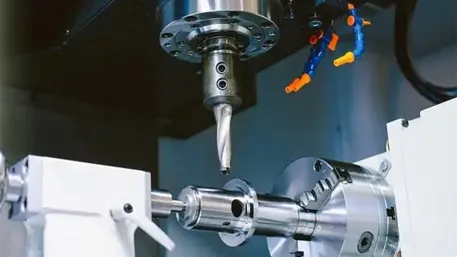
- 4-axis / 5-axis machining
- Precision machining to ±0.01 mm (±0.005 mm on qualified features)
- Machining fixtures & tooling
- Metal finishing (anodizing, passivation, plating)
Injection Side (plastic)
- Mold design & mold making
- Plastic injection molding (prototype to production)
- Insert & overmolding where applicable
- Color matching & texture
- Plastic finishing & secondary operations
Why Combine CNC Machining and Injection Molding with One Supplier?
When a project mixes machined metal and molded plastic, the cost and risk are rarely in the machines — they are in the coordination between suppliers. One integrated partner reduces that coordination overhead directly.
One engineering contact
Instead of a CNC supplier, an injection supplier and a separate mold maker, you work with a single project owner who sees the whole BOM.
One RFQ, not three
Upload a single CAD + BOM package. Metal and plastic routes are quoted and reviewed together, not in disconnected threads.
Shared DFM
Metal and plastic parts are reviewed together, so interfaces, fasteners and fits are resolved before tooling — not discovered at assembly.
Coordinated tooling
Injection molds and CNC fixtures are planned inside the same program, so multi-component assemblies actually fit when parts arrive.
Consistent documentation
One set of inspection reports, material certificates and packing lists — easier for your receiving and quality teams to process.
Consolidated shipping
Metal and plastic components ship together as one coordinated lot, reducing freight, customs touches and missing-part risk.
One Supplier vs Multiple Suppliers
The main value of one-stop manufacturing is reduced coordination complexity, not simply having more machines under one roof.
Traditional sourcing
- CNC supplier
- Injection molding supplier
- Separate mold maker
- Separate QC at each shop
- Multiple quotations to compare
- Multiple shipments to reconcile
- Multiple contacts to manage
- Supplier-to-supplier coordination on you
One-stop CNC + injection
- One supplier for metal + plastic
- One engineering team
- Coordinated tooling
- Unified QC process
- One project RFQ
- Consolidated delivery
- One project contact
- Centralized coordination by us
CNC & Injection Molding Capabilities at a Glance
The first thing a buyer needs to confirm is that both manufacturing routes are genuinely supported. The matrix below maps each capability across CNC machining and plastic injection molding. Figures are industry medium-to-upper benchmarks; final values are confirmed against your drawing and resin at quotation.
| Capability | CNC Machining (metal) | Injection Molding (plastic) |
|---|---|---|
| Prototypes | Yes | Yes |
| Low volume | Yes | Yes |
| Production | Yes | Yes |
| Tooling | Fixtures / jigs / soft jaws | Injection molds |
| Materials | Aluminum, SS, brass, copper, titanium, steel | ABS, PC, PP, PA, POM, PEEK, PC/ABS |
| Precision features | Excellent (±0.01 mm typical) | Process-dependent (shrinkage-controlled) |
| Surface finishing | Available | Available |
| Assembly | In-house | In-house |
| Inspection | CMM / in-process | FAI / dimensional |
One Product, Multiple Manufacturing Processes
A real product rarely comes from one process. Below is a typical electronics assembly where one supplier coordinates the complete component set — CNC metal parts and injection molded plastic parts built and inspected together.
| Component | Process | Material |
|---|---|---|
| Main housing | Injection | ABS / PC |
| Heat sink | CNC | Aluminum |
| Mounting bracket | CNC / Sheet | Stainless steel |
| Internal gear | CNC / Injection | POM |
| Shaft | CNC Turning | Stainless steel |
| Cover | Injection | PC |
| Assembly | Integrated | — |
Typical Project Scenarios
Electronics product
Plastic enclosure (injection) + aluminum heat sink (CNC) + metal bracket (CNC) + internal shaft (CNC turning) → assembly → inspection → packaging.
Robotics product
Plastic cover (injection) + aluminum joint housing (CNC) + steel shaft (CNC turning) + POM gear (injection / CNC) → final assembly.
Automotive component
Plastic housing (injection) + aluminum mount (CNC) + steel shaft (CNC turning) + metal bracket (stamping) → assembly.
Prototype to Production with One Manufacturing Partner
CNC and injection can run in parallel from the same program. Prototype processes are chosen for speed; production processes are chosen for cost — and we help you pick the right one for each component rather than forcing the whole BOM into a single method.
One Engineering Team for Metal and Plastic Parts
What proves a supplier understands the product and not just the parts is joint review of interfaces: where a metal bracket meets a plastic housing, where a screw or insert carries load, where shrinkage changes a fit.
Mechanical review
Whole-assembly function reviewed before any tool is cut.
DFM
Metal machinability and plastic moldability checked together.
Material selection
Metal and plastic chosen for the same environment and load.
CNC process selection
3/4/5-axis and turning matched to geometry and volume.
Injection mold review
Gate, cooling, ejection and shrinkage planned up front.
Tolerance stack-up
Metal and plastic tolerances summed across the assembly.
Assembly review
Sequence, fasteners and alignment validated before build.
Surface finish
Appearance and function coordinated across both materials.
Quality planning
One inspection plan covering metal and plastic together.
Design Review for Products Combining Metal and Plastic
This is where a dual-process supplier earns its position. When metal and plastic must connect, these questions decide whether the product assembles cleanly.
Interface & fasteners
How do metal and plastic parts connect — screws, heat-inserts, press-fits or snap features? Load path and rework access are decided here.
Tolerance & shrinkage
Metal tolerance and plastic shrinkage must be matched so the molded boss and the machined hole align without force-fitting.
Thermal expansion
Different CTEs mean sizes shift at temperature. Clearances are planned for the operating range, not just room temperature.
Corrosion & environment
Metal/plastic contact, gasket surfaces and chemical exposure are reviewed so the joint survives the application.
Assembly sequence
Order of operations is fixed so no part blocks another during build.
Cost by process
We flag which parts should be CNC (low volume, tight features) and which should be injection (high volume, cosmetic).
Tolerance Coordination Between CNC and Injection Molded Parts
Metal and plastic are made to different standards. A CNC shaft holds a tight, repeatable diameter; a molded bushing carries shrinkage and warpage. Coordinating the two is the real engineering work of a mixed-material product.
CNC metal shaft + molded POM bushing
- Shaft OD Machined to ±0.01 mm (qualified feature)
- Bushing ID Molded, shrinkage-compensated in tool
- Clearance Designed for press or slip fit
- Temperature CTE difference checked across range
- Assembly fit Validated at first article
CNC aluminum housing + ABS plastic cover
- Hole position CNC-drilled, tight repeatability
- Screw bosses Molded, shrinkage-compensated
- Thread Insert or molded-in, verified
- Gap / cosmetics Defined as a visual spec
- Interface Fit test before production
Materials for CNC and Injection Molding
Material choice is made per component, not per process. The tables below are candidate directions a buyer can discuss with our engineering team — not fixed formulas.
CNC Metals
Best for strength, thermal paths, tight tolerances and structural loads.
Injection Plastics
Best for complex shapes, cosmetics, volume cost and light weight.
How We Select Materials
| Requirement | Metal direction | Plastic direction |
|---|---|---|
| Lightweight | Aluminum | PC / ABS / PA |
| High strength | Steel / titanium | Reinforced nylon (PA+GF) |
| Low friction | Brass / SS + engineered plastic | POM / PEEK |
| Heat resistance | Stainless / aluminum | PEEK / PPS |
| Corrosion | Stainless / aluminum | PA / PC / POM (per application) |
| Appearance | Aluminum (anodized) | ABS / PC-ABS (textured/painted) |
Full material data and properties are covered on our Engineering Materials hub.
CNC Machining for Metal Components
This page is about the integration, so we keep CNC brief: it is the route for precision metal components, prototypes and low-to-medium volume production. Full depth is on the dedicated service page.
Milling
3/4/5-axis milling of aluminum, steel, stainless and more.
Turning
CNC lathes and Swiss-type turning for shafts, pins and round parts.
5-Axis
Complex geometry in fewer setups for tighter accuracy.
Grinding*
Available for tight dimensional and surface-finish control.
EDM*
Selected in-house and managed for precision features.
Fixtures
Machining fixtures and soft jaws built for your program.
*Selected processes are in-house; others are managed with Goldcattle QC control. Explore CNC Machining Services, 5-Axis CNC and CNC Turning.
Plastic Injection Molding for Production Components
Injection molding is the route for repeatable plastic volumes — from prototype tooling to production. Mold making is covered separately below.
Mold design
DFM, gate and cooling planned before steel is cut.
Mold making
In-house tooling for prototype and production molds.
Injection molding
Multi-cavity production on in-house machines.
Insert molding*
Metal inserts molded in where the design needs it.
Overmolding*
Two-material parts for grip and sealing.
Secondary ops
Texture, color match, printing, marking, assembly.
*Where applicable to your design. See Injection Molding Services, Custom Plastic Injection Mold and Custom ABS Plastic Molding.
Injection Mold Making and Tooling
When several components must assemble, tooling should be planned with the part manufacturing — not as an afterthought. Goldcattle builds both the injection molds and the CNC fixtures inside the same program.
Injection side
- Prototype & production molds
- DFM-driven mold design
- Gate / cooling / ejection optimization
- T1 sampling & correction
CNC side
- Machining fixtures
- Soft jaws & holding fixtures
- Inspection fixtures
- Alignment to molded references
Deep dive: Custom Plastic Injection Mold — Prototype to Production.
Surface Finishing and Secondary Operations
Finishing is listed per material. Some operations are in-house; others are managed partners running to Goldcattle's QC plan — stated plainly so procurement knows the boundary.
CNC metal finishing
- Anodizing (Type II / III)
- Passivation
- Plating
- Polishing / brushing
- Powder coating
Injection plastic finishing
- Texture & polishing
- Painting
- Pad / UV printing
- Laser marking
- Insert installation
Metal plating, anodizing and powder coating are coordinated through qualified partners under Goldcattle inspection — the same QC that covers in-house CNC and molding. We tell you which step is managed so your documentation is complete.
Assembly of Metal and Plastic Components
If the design allows, the same team that made the metal and plastic parts can also assemble them — turning a box of loose components into a validated subassembly.
Insert installation
Heat-press, ultrasonic or molded-in inserts set to spec.
Fastening
Screws, clips and adhesives applied in a fixed sequence.
Subassembly
Metal + plastic builds delivered as one unit.
Functional test
Fit, movement and basic function checked before pack.
Labeling
Serials, labels and traceability applied in-house.
Packaging
Export-ready pack designed for the assembled part.
One Quality Workflow for CNC and Injection Parts
Quality is where "one supplier" becomes concrete. Metal and plastic are inspected on their own methods, then validated together at assembly — one plan, one record set.
One Quality Plan Across CNC and Injection
CNC aluminum housing
- Key dimension ±0.01 mm (qualified)
- Hole pattern CMM verified
- Cosmetic Per spec
Injection molded cover
- Key dimension Shrinkage-controlled
- Boss / flash First-article checked
- Assembly gap Validated vs housing
Factory and In-House Manufacturing Capabilities
The keyword "factory China" implies real production. We answer it with a process → equipment → ownership map. Where a step is managed through a partner, it is marked — because credible one-stop sourcing is about honest boundaries, not claiming everything in-house.
| Process | Equipment | Material | In-house |
|---|---|---|---|
| CNC Milling | CNC machining centers | Metals | Yes |
| CNC Turning | CNC lathes / Swiss-type | Metals | Yes |
| 5-Axis Machining | 5-axis centers | Metals | Yes |
| Injection Molding | In-house molding machines | Thermoplastics | Yes |
| Mold Making | CNC / EDM tooling | Tool steel | Yes |
| Surface Treatment | Anodize / plate / coat | Metal | Managed partner |
| Assembly | Assembly cells | Mixed | Yes |
| Inspection | CMM & metrology | — | Yes |
Managed: some surface treatments and specialty processes run through qualified partners under Goldcattle's inspection plan. We disclose this so your audit trail is accurate.
Goldcattle operates 100+ machines across six integrated processes (CNC, injection molding, mold making, 3D printing, die casting, sheet metal) from Xiamen, China — a global OEM/ODM manufacturer since 1998.
Multi-SKU and BOM Manufacturing
The most valuable one-stop inquiry is not a single part — it is a BOM of 5, 10, 20 or 50+ SKUs where some are metal and some are plastic. Send the BOM and we review the manufacturing route for each line.
| Part | Material | Process |
|---|---|---|
| Housing | ABS | Injection |
| Shaft | SS304 | CNC Turning |
| Bracket | Aluminum | CNC Milling |
| Gear | POM | Injection |
| Heat sink | Aluminum | CNC |
| Cover | PC | Injection |
Example — Industrial Controller (Project BOM)
| SKU | Part | Process |
|---|---|---|
| A01 | Aluminum housing | CNC |
| A02 | ABS front cover | Injection |
| A03 | Stainless shaft | Turning |
| A04 | POM guide | Injection / CNC |
| A05 | Steel bracket | CNC |
| A06 | Plastic button | Injection |
CNC + Injection Molding Case Studies
Each case below is a product that mixes CNC metal and injection molded plastic — the kind a single-process shop cannot deliver end to end.
Case 1 — Electronics Device
Electronics| Part | Process | Material |
|---|---|---|
| Heat sink | CNC | Aluminum |
| Enclosure | Injection | PC/ABS |
| Bracket | CNC | Stainless |
Case 2 — Robotics Product
Robotics| Part | Process | Material |
|---|---|---|
| Joint housing | CNC | Aluminum |
| Gear / cover | Injection | POM / plastic |
| Shaft | Turning | Stainless |
Case 3 — Industrial Equipment
Industrial| Part | Process | Material |
|---|---|---|
| Base | CNC | Aluminum |
| Cover | Injection | ABS |
| Bracket | Sheet | Steel |
Case figures are representative of program structure; specific tolerances, volumes and lead times are confirmed per project under NDA.
What Affects One-Stop CNC + Injection Molding Cost?
One-stop can reduce total coordination and logistics cost, but unit prices are still evaluated separately by process. We are direct about that.
CNC cost drivers
- Material grade
- Machining time & setup
- Tolerance & complexity
- Finishing (anodize/plate)
Injection cost drivers
- Mold (one-time)
- Resin & color
- Cycle time
- Annual volume
Shared (one-stop) savings
- Single engineering review
- Consolidated logistics
- One assembly step
- One quality package
Buyers care about the total landed project cost, not a single CNC unit price. One program makes that total visible in one quotation.
Coordinated CNC and Injection Molding Lead Time
Because both routes sit in one program, CNC and injection can advance in parallel — the core scheduling advantage of one-stop. Indicative phases below; confirm against your BOM.
Indicative windows: prototype 3–7 working days · low volume 7–20 working days · mass production 15–25 working days (per process, confirmed at quotation). MOQ from 1 piece.
How to Choose a One-Stop CNC & Injection Molding Factory in China
Use this checklist when evaluating any China supplier that claims "one-stop." It doubles as a commercial page and a sourcing guide.
Upload Your CAD + BOM
A one-stop project is best quoted from a complete package. The most useful field is the number of SKUs — it tells us whether this is a single part or a coordinated program.
Frequently Asked Questions
Does your China factory offer both CNC machining and injection molding?
Yes. Goldcattle runs CNC machining (milling, turning, 5-axis) and plastic injection molding as integrated in-house processes, coordinated by one engineering team from Xiamen, China.
Can one supplier manufacture both metal and plastic parts?
Yes. For mixed-material products we route each component by its best process — CNC for metal, injection for plastic — and manage them as one program rather than separate jobs.
Can you make the injection mold and CNC metal components for the same project?
Yes. Mold making and CNC machining are both in-house, so the mold and the mating metal fixtures are released on a coordinated schedule and validated together.
Can you produce multiple CNC and injection molded SKUs from one BOM?
Yes. Send the full BOM; we review the manufacturing route for each line and return one coordinated quotation and production plan.
Can you support prototypes before mass production?
Yes. We run CNC and plastic prototypes (machined or printed) for fit and function, then transition to injection tooling and production within the same program.
Can you coordinate tolerances between metal and plastic parts?
Yes. Tolerance stack-up across CNC and molded features is reviewed during DFM, with shrinkage and clearance planned before tooling.
Can you provide both CNC machining and injection molding quotes?
Yes. One RFQ covering the full BOM returns separate process pricing plus the shared engineering, logistics and assembly cost.
Can you handle aluminum CNC parts and ABS injection molded parts?
Yes. Aluminum and ABS are among our most common combinations for enclosures, brackets and housings; other metals and resins are supported per the materials list.
Can you provide assembly for CNC and molded components?
Yes, where the design allows. We assemble metal and plastic parts into validated subassemblies, then apply functional checks before packaging.
Which materials can you machine and mold?
CNC: aluminum, stainless, brass, copper, titanium, carbon steel. Injection: ABS, PC, PP, PA, POM, PEEK, PC/ABS and more. Full data is on our materials hub.
Are CNC machining and injection molding performed in-house?
CNC machining, 5-axis, injection molding and mold making are in-house. Some surface treatments and specialty processes are managed through qualified partners under our QC plan — stated openly.
Can you manage surface finishing for both metal and plastic parts?
Yes. Metal finishing (anodizing, plating, coating) and plastic finishing (texture, painting, marking) are coordinated to one spec, with managed steps inspected by Goldcattle.
Can you provide one consolidated inspection package?
Yes. Metal and plastic are inspected on their own methods, then validated together at assembly, with one set of reports, material certs and packing lists.
Can you sign an NDA?
Yes. An NDA is available before drawings are shared; typical engineering response follows within 1–2 business days.
Can I upload a complete BOM for quotation?
Yes. The BOM (with CAD and drawings) is the best way to quote a one-stop project — include the number of SKUs so we can scope the program.
Can you ship multiple components together?
Yes. Coordinated production lets us consolidate metal and plastic components into one export-ready shipment, reducing freight and missing-part risk.
Can you support low-volume production?
Yes. Low-volume runs (7–20 working days indicative) are a core case, alongside prototypes and mass production from the same program.
Can you scale from prototype to mass production?
Yes. The same engineering program carries a part from prototype through pilot to production, so tooling and process choices are made once and reused.
Start Your CNC + Injection Molding Project
One BOM, one engineering team, one coordinated build — from CNC metal parts and injection molded plastic parts through tooling, finishing, assembly and one quality workflow.
Related: One-Stop Custom Manufacturing China (full hub) · CNC Machining Services · Injection Molding Services