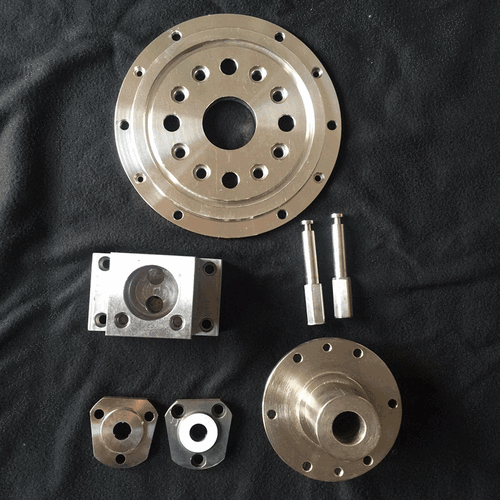
PEEK Injection Molding Services
Custom injection-molded PEEK parts for applications where metal fails on weight, chemical attack, or heat — engineered from resin selection and mold design through high-temperature processing, crystallinity control, and inspected delivery. Tell us what the part must survive; we mold it to hold.
Typical engineering response within 1–2 business days · NDA available · Since 1998
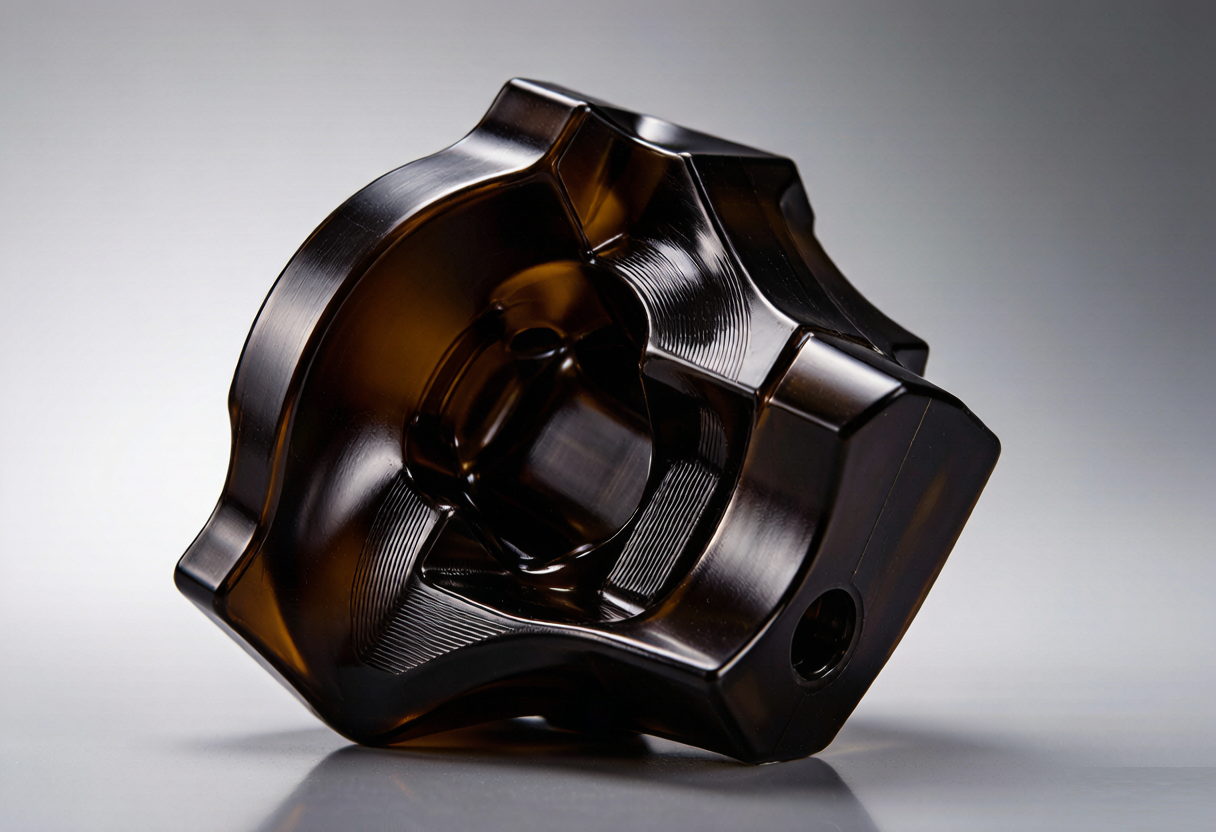
What PEEK injection molding services give you
PEEK (polyetheretherketone) is a semi-crystalline high-performance thermoplastic. Molding it is not like molding ABS or nylon: it needs a high melt and mold temperature, thorough drying, hardened-steel tooling, and controlled cooling so the part reaches the right crystallinity. Done correctly, you get a lightweight part that resists continuous heat up to roughly 250–260°C (grade- and load-dependent), aggressive chemicals, and wear — at volumes where machining or 3D printing would be slower or uneconomic.
What PEEK injection molding actually is
PEEK injection molding is the process of melting PEEK resin and injecting it into a steel mold at temperatures far above those used for commodity plastics, then cooling the part under controlled mold heat so the semi-crystalline polymer achieves stable crystallinity. The output is a net-shape or near-net-shape part that needs little or no post-machining for many geometries.
It is the right process when a part must combine several of these at once: continuous-service temperature well above 200°C, resistance to acids/solvents/steam, low wear, low outgassing, electrical insulation, and a fraction of metal’s weight. It is the wrong process for a simple, low-temperature clip where a standard engineering plastic would be cheaper and easier to mold.
Performance drivers behind a PEEK part
Buyers do not ask for “PEEK” for the name — they ask because the application demands a combination of properties that few materials meet.
Heat
Continuous use around 250–260°C for many grades (lower under load), with a glass-transition near 143°C and melt near 343°C. Far above nylon, PPS in some grades, and most thermoplastics.
Chemicals
Resists a broad range of acids, solvents, and hydrocarbons, plus repeated steam sterilization — why it is used in semiconductor and medical environments.
Wear & friction
Low wear and stable friction; carbon-fiber and wear-modified grades extend life in bearings, seals, and compressor parts.
Weight
About 1.3–1.45 g/cm³ — a fraction of steel or titanium — critical in aerospace, robotics, and drivetrain parts.
Purity
Low outgassing and particle generation in unfilled and specialty grades supports cleanroom and semiconductor handling.
Dielectric
Good electrical insulation with stable properties across temperature and frequency.
PEEK grades we mold
Each grade below has its own drying, melt, and mold-temperature window. We set the machine against the resin’s datasheet — never a single assumed setting across all grades.
Unfilled PEEK
Best ductility, chemical resistance, and surface; highest purity. Highest shrinkage and lower stiffness. Common for semiconductor and fluid-contact parts.
Shrinkage ~1.1–1.3%30% Glass-filled
Higher stiffness and dimensional stability at lower cost than carbon; some loss of wear and surface. Good general structural parts.
Shrinkage ~0.7–1.0%30% Carbon-filled
Highest stiffness, best wear and thermal conductivity, lowest creep. Used in bearings, seals, and structural brackets.
Shrinkage ~0.5–0.8%Wear-modified
Internal lubricants for low-friction, long-life sliding contacts where maintenance is hard to reach.
Confirm grade & loadSpecialty / medical
Implantable and radiopaque variants exist — but not every PEEK is medical grade. We mold medical-grade resin only against the specified biocompatibility requirement and documentation.
Specify requirementWhy PEEK is difficult to mold (and how we handle it)
If a shop treats PEEK like a normal plastic, the result is voids, warpage, brittle weld lines, or parts that change dimension after sitting. The difficulty is real and specific:
Melt and mold temperatures are far above commodity plastics. The machine, barrel, and heater bands must hold stable — drift causes degradation or short shots.
PEEK is semi-crystalline. Cooling too fast freezes an amorphous skin; the part shrinks and warps later. Mold heat and, often, annealing set the final crystallinity and stability.
Resin must be dried to <0.020% moisture (120–150°C, 3–5 h typical). Trapped moisture causes splay, voids, and hydrolytic chain scission that weakens the part.
High melt temperature releases volatiles. Poor venting burns the resin at the flow end and leaves black marks or weak weld lines.
PEEK needs hardened-steel molds with controlled surface and generous venting — not soft aluminum “bridge” tooling, which cannot hold the temperature or survive filled grades.
Shrinkage runs ~1.1–1.5% and is anisotropic with fillers. Gate location and packing must be engineered, not guessed.
The PEEK injection molding process
- Resin qualificationConfirm grade, supplier, lot, and drying spec from the datasheet; verify cert of analysis.
- DFM & MoldflowReview wall thickness, gating, and fill; simulate flow, pack, and warp before tooling.
- Mold design & buildHardened-steel tool, hot-runner or tuned cold-runner, venting, and thermal control sized for PEEK.
- DryingDried to <0.020% moisture in a desiccant dryer at the grade’s temperature and time.
- MoldingBarrel and mold held at the grade-specific window; first shots inspected before release.
- Annealing (if required)Controlled heat treatment to reach target crystallinity and dimensional stability.
- Inspection & docsCMM, material cert, and lot traceability; secondary CNC or finishing as specified.
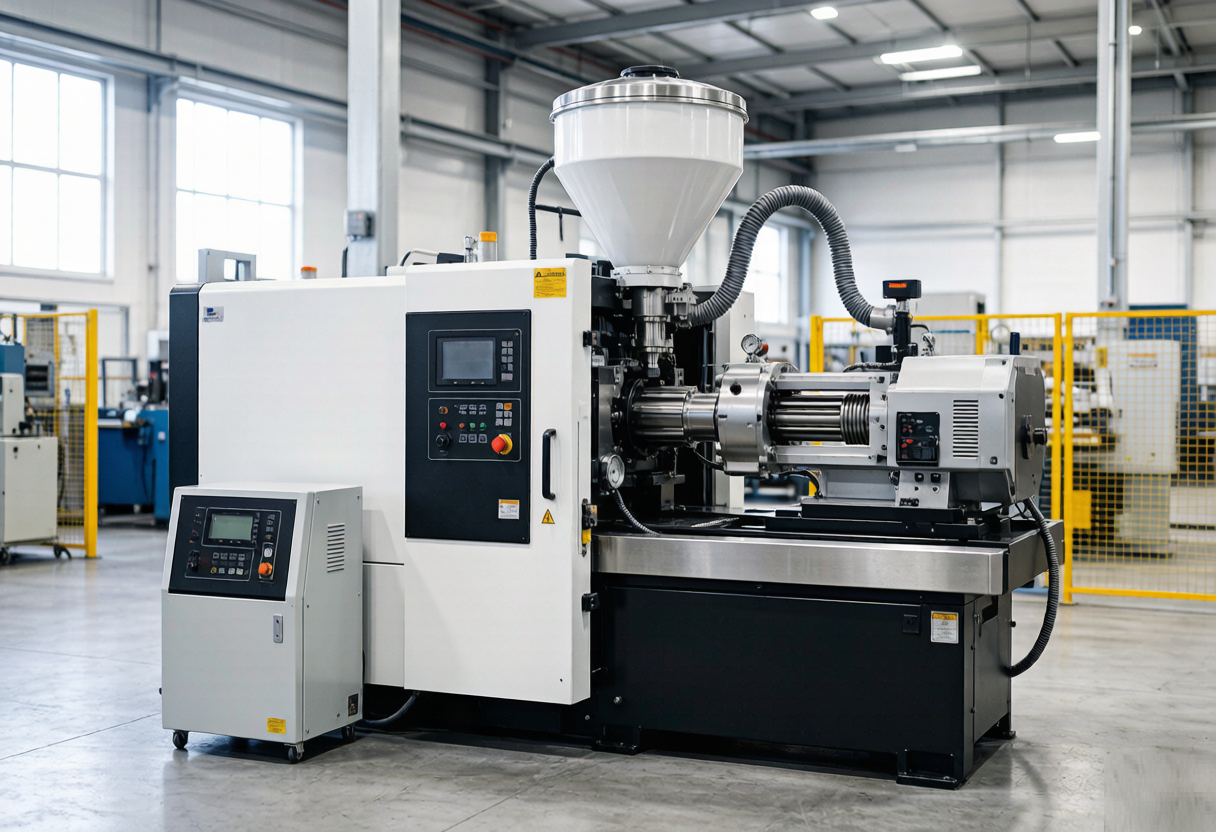
Melt (barrel) temperature window
PEEK typically melts in the barrel around 360–400°C depending on grade and filler, with some carbon-filled and high-flow grades at the upper end. These are starting points from resin datasheets, not a universal number.
Mold temperature & crystallinity
PEEK needs a hot mold — typically 170–210°C — so the polymer has time to crystallize instead of freezing amorphous and shrinking later. Mold-temperature controllers (oil or high-temp water) hold this within a tight band.
Why mold heat matters
- Promotes uniform crystallinity across wall sections
- Reduces internal stress and warpage
- Improves weld-line strength and surface
- Stabilizes final dimensions after molding
Annealing (when used)
- Post-mold heat soak near/under Tg to complete crystallization
- Improves dimensional stability for tight-tolerance parts
- Applied per part requirement, not by default to every job
- We state annealing in the process plan when required
Mold design for PEEK
A PEEK mold is built differently from a mold for ABS or polypropylene. Key elements:
Hardened steel
H-series or equivalent hardened, often coated, especially for glass/carbon-filled grades that are abrasive.
Thermal system
Mold-temperature channels and controllers sized to hold 170–210°C evenly across the cavity.
Venting
Deep, well-placed vents release volatiles at high melt temperature and protect weld lines and flow ends.
Gating
Gate type and location selected by flow length and shrinkage; hot runners reduce waste on filled grades.
No soft tooling
PEEK is not run in soft aluminum “bridge” molds — they cannot hold temperature or survive filled resin.
Clamping
Clamp force is selected per part projected area and grade; confirmed at quotation.
DFM rules for PEEK parts
- Wall thickness: keep uniform; avoid thick sections that shrink and void. Typical molded walls 1.5–4 mm depending on grade.
- Draft: 1–2° helps ejection from a hot, hard mold.
- Ribs & bosses: limit thickness to ~60% of wall to avoid sink and internal voids.
- Radii: generous fillets reduce stress and improve fill.
- Shrinkage: plan ~1.1–1.5% (lower with fillers); mold dims compensate accordingly.
- Gate & weld lines: place where strength matters least; simulate before cutting steel.
- Tolerance: tight tolerances need annealing and controlled crystallinity — state them early.
- Inserts: metal inserts are moldable but need thermal-management strategy.
Common PEEK molding defects & how we prevent them
Voids & sink
Cause: thick sections, low pack, trapped moisture. Fix: uniform walls, correct pack/hold, verified drying.
Warpage
Cause: uneven crystallinity, poor gating. Fix: hot mold, balanced fill, annealing where needed.
Burn marks
Cause: trapped gas at high melt temp. Fix: deeper venting, lower injection speed at flow ends.
Splay / silver streaks
Cause: moisture or volatiles. Fix: drying to <0.020%, clean resin, correct barrel profile.
Weak weld lines
Cause: cold melt meeting, poor venting. Fix: higher melt/mold temp, optimized gate, venting.
Degradation
Cause: excessive temperature or residence time. Fix: datasheet window, logged cycle, purge discipline.
Quality & inspection
First-article (FAI)
Dimensional and visual sign-off on the first molded parts before release.
CMM reporting
Coordinate measurement of critical features; report supplied with the order.
Material certification
Resin lot certificate and, where required, biocompatibility or food-contact docs.
In-process control
Melt/mold temperature logged; process windows held per resin lot.
Visual & gauge
Surface, gate, and flash checked against the drawing and AQL plan.
Crystallinity (where required)
Sampling or mechanical verification for stability-critical parts.
Material traceability & documentation
For high-performance parts, the paper trail matters as much as the part. Every PEEK order ships with:
- Resin supplier, grade, and lot number
- Certificate of Analysis / material cert
- Drying and molding process record
- CMM / inspection report for critical features
- Annealing record where applicable
- COC (certificate of conformance)
Finishing & CNC secondary machining
Molded PEEK is often near net shape, but some features still need machining — tight bores, threaded holes, or sealed faces. PEEK machines cleanly with sharp tools, proper speeds, and cooling, but it is abrasive when filled.
What we add
- CNC drilling, tapping, and boring to tight tolerance
- Sealing faces and O-ring grooves
- Threaded inserts and pressed metal features
- Deburr, clean, and package for the application
Why combine
- Molding gives the shape; CNC hits the features molding cannot
- Lower unit cost than full CNC at volume
- One supplier for tooling, molding, and finish
Applications for molded PEEK parts
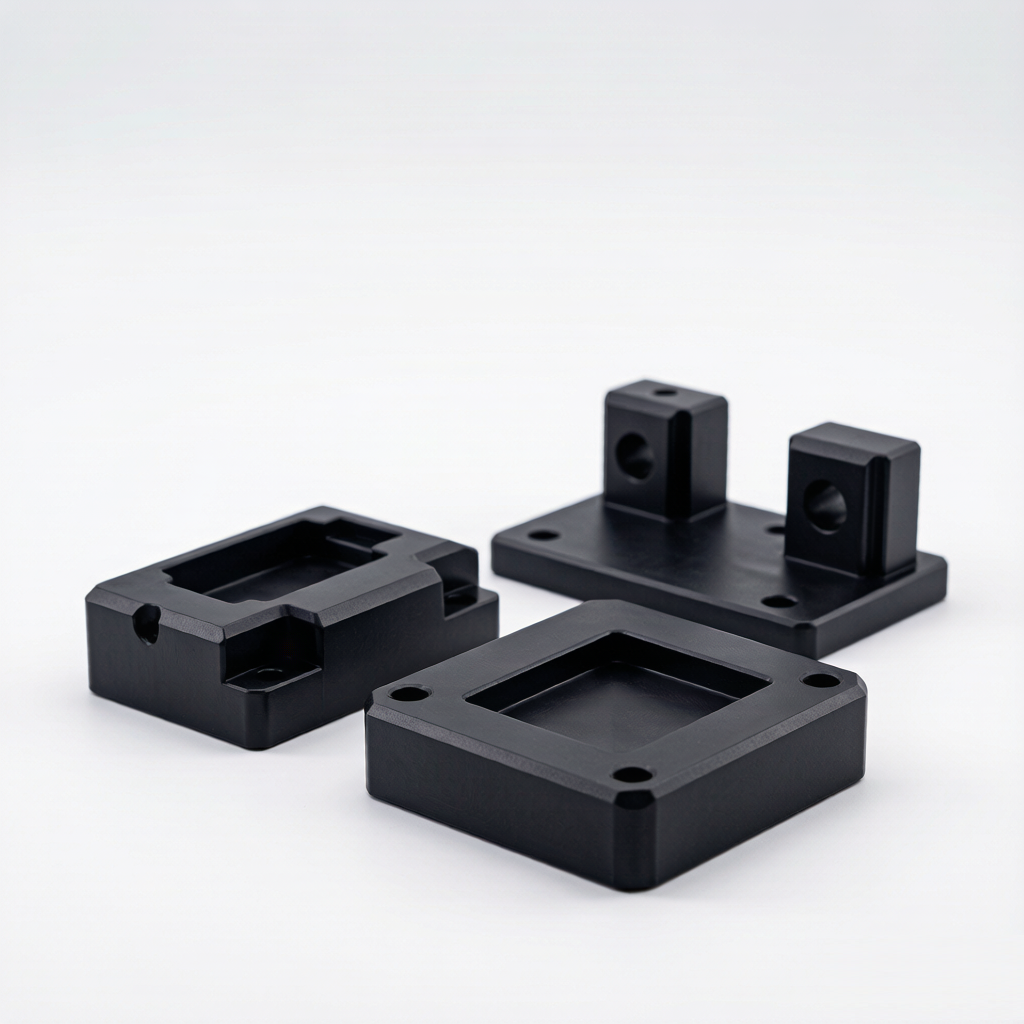
Semiconductor
Wafer-handling clips, rings, and insulators where purity and heat matter.
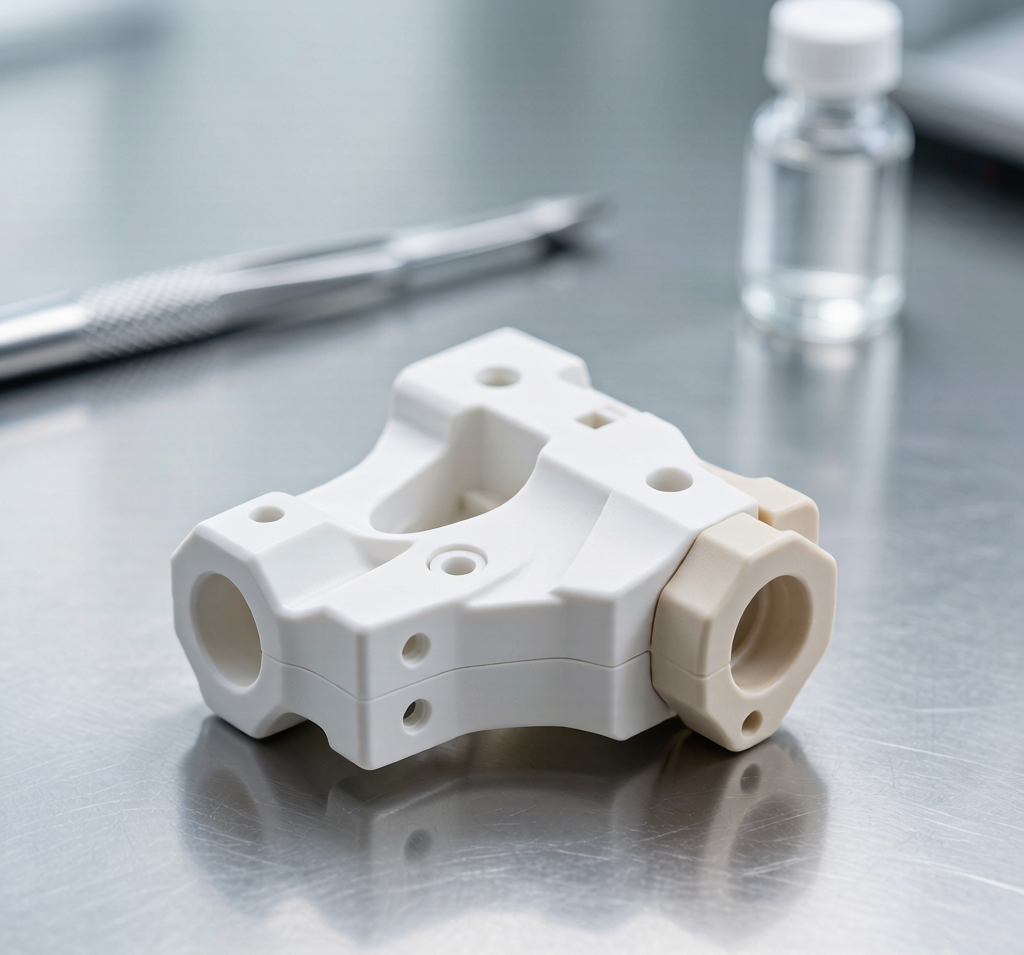
Medical
Device components and, in specified implantable grades, surgical parts — with the right documentation.
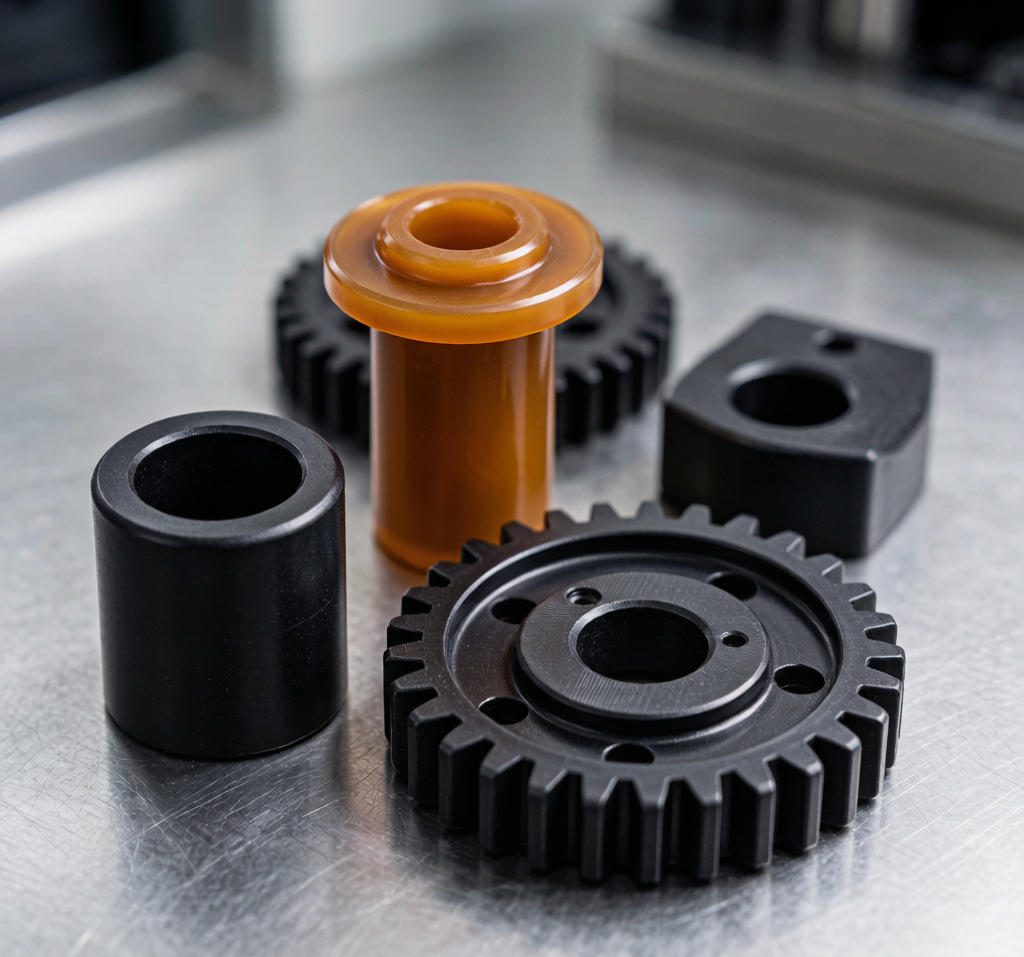
Industrial & fluid
Bearings, bushings, seals, and pump parts resisting wear and chemicals.
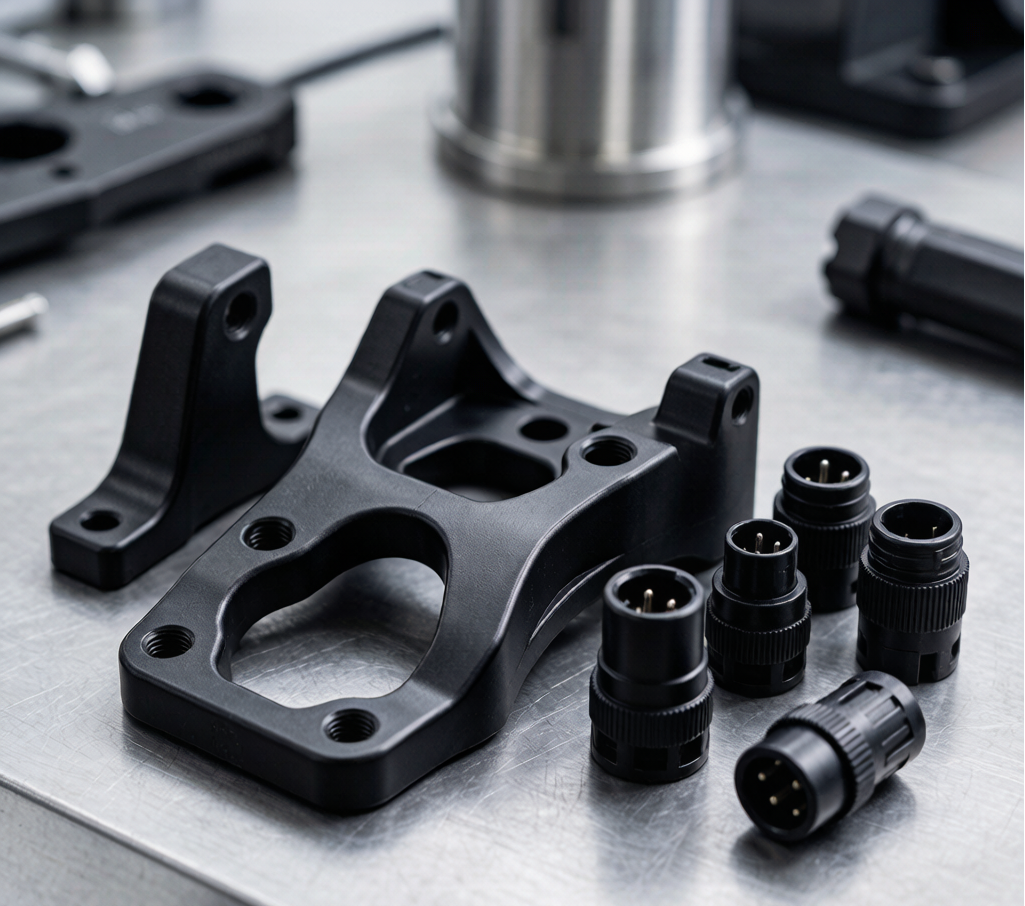
Aerospace & auto
Lightweight brackets, connectors, and insulation where heat and weight collide.
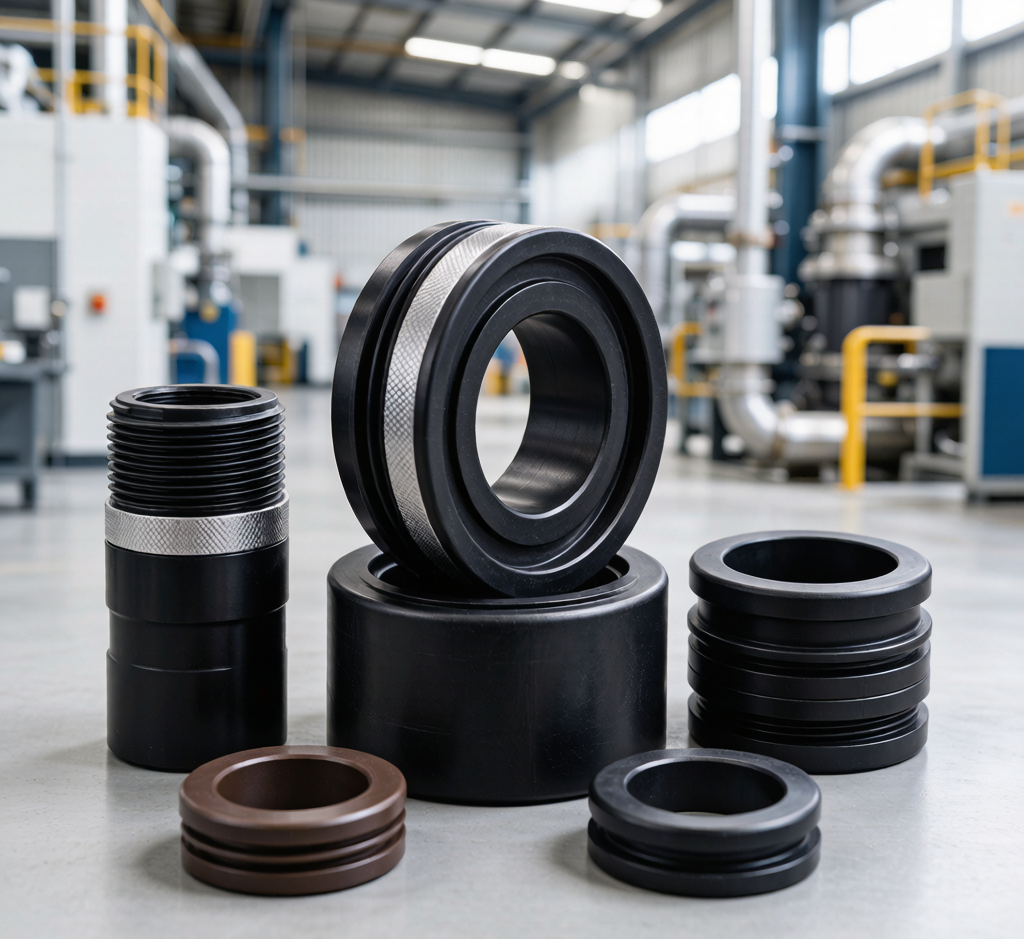
Oil & gas
Downhole and sealing components for chemical and temperature exposure.
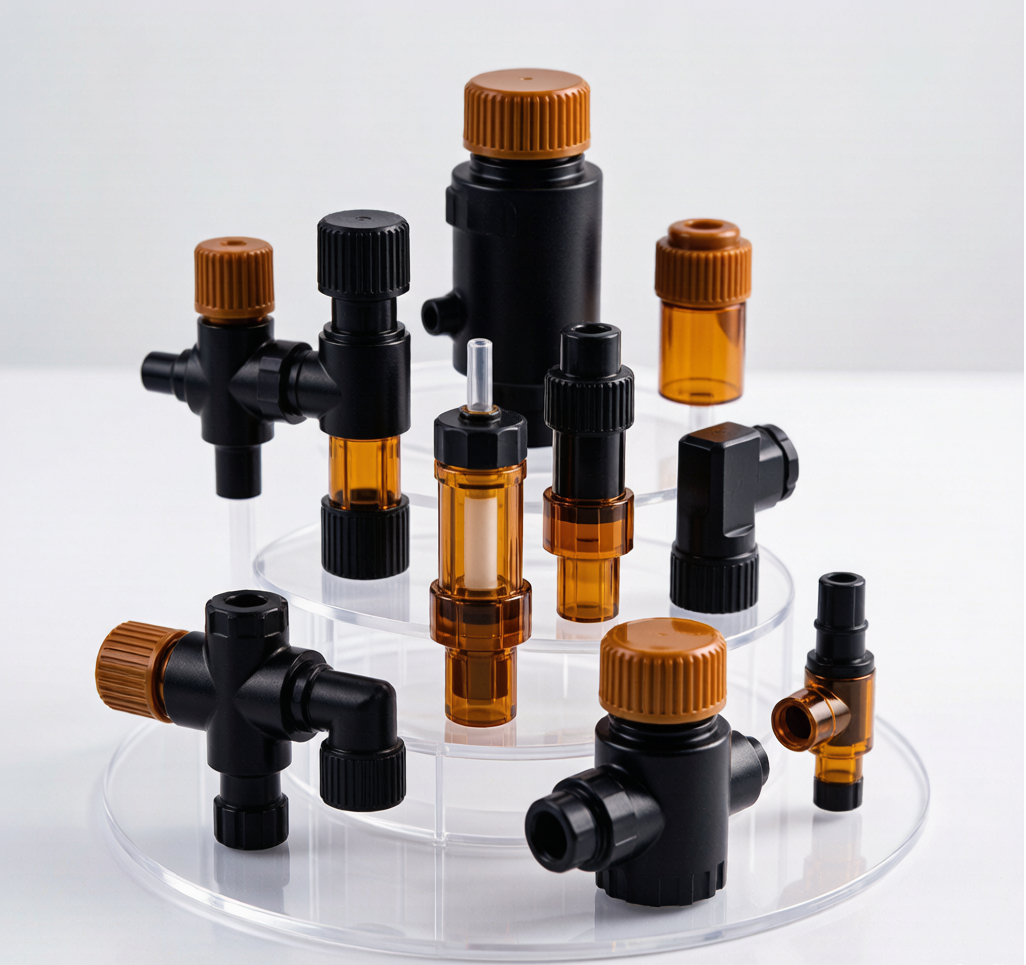
Analytical
Valves, fittings, and housings for aggressive chemicals and steam.
PEEK vs the alternatives
PEEK is rarely the cheapest option — it is the option when lower-cost materials fail on heat, chemical, or wear. Use these to decide.
PEEK vs PPS
| Property | PEEK | PPS |
|---|---|---|
| Continuous heat | Higher (~250–260°C) | Good (~220–240°C) |
| Toughness / impact | Higher | More brittle |
| Chemical resistance | Excellent | Excellent |
| Cost | Premium | Lower |
| Pick PPS when | Heat/chemical needs are met and cost drives the decision | |
PEEK vs PEI (Ultem)
| Property | PEEK | PEI |
|---|---|---|
| Continuous heat | Higher | High (~170–200°C) |
| Chemical (hydrocarbons) | Excellent | Limited — attacked by some solvents |
| Hydrolysis / steam | Excellent | Good |
| Cost | Premium | Lower |
| Pick PEI when | High heat but not aggressive chemicals, and cost matters | |
PEEK vs PTFE
| Property | PEEK | PTFE |
|---|---|---|
| Mechanical strength | High | Low (cold flow) |
| Wear / abrasion | Good (better filled) | Moderate |
| Moldability | Injection moldable | Hard to mold; usually machined/sinter |
| Chemical resistance | Excellent | Near-universal |
| Pick PTFE when | Chemical inertness dominates and load is low | |
PEEK vs CNC machining vs 3D printing
| Route | Best for | Watch |
|---|---|---|
| PEEK injection molding | Volume, net shape, repeatability | Tooling cost, grade-specific process |
| PEEK CNC machining | Low volume, tight features, no tooling | Slower / costlier per part at volume |
| PEEK 3D printing | Prototypes, complex one-offs | Lower mechanicals, anisotropy, slower at volume |
Cost drivers for PEEK molding
PEEK is a premium resin and a premium process — we are explicit about where the cost comes from rather than quoting a flat “cheap” number that hides risk.
Resin
PEEK raw material is far above commodity plastics; filled grades and medical certifications add cost.
Tooling
Hardened-steel molds with thermal control and venting cost more than soft-tool programs — but they are required.
Scrap & yield
High resin cost makes first-pass yield and regrind policy matter to unit price.
Process control
Drying, thermal logging, and inspection are built into the price, not optional extras.
Volume
Unit cost drops with volume as tooling amortizes; low-volume jobs carry more per-part overhead.
Secondary
CNC, inserts, and special cleaning add line items we state up front.
Lead time for PEEK molded parts
Case study: semiconductor wafer-handling clip
Requirement: a clip holding a silicon wafer during a high-temperature process — demanding low particle generation, chemical resistance, and dimensional stability, in volume.
Approach: selected unfilled PEEK for purity; DFM + Moldflow to balance fill and minimize warp; hardened-steel tool with controlled 170–210°C mold heat; dried to <0.020% moisture; first-article CMM before release.
Result: stable dimensions across batches, cleanroom-compatible parts, and a repeatable process with full lot traceability.
Program details shared under NDA; numbers above are representative, not a guaranteed specification for your part.
Why Xiamen Goldcattle for PEEK molding
Since 1998
Decades of custom plastic and metal manufacturing across six processes under one roof.
One-stop
Molding, tooling, CNC, and finishing in-house — no broken hand-offs between shops.
Thermal discipline
High-temp molding capability with logged melt/mold windows per resin lot.
DFM first
Engineering review before steel, so the part molds right the first time.
Quality system
ISO 9001:2015; material cert, CMM, and traceability on every order.
Confidential
Drawings and models are never reused or shared; NDA available before transfer.
What to send for a PEEK molding quote
The more precise the inputs, the tighter the quote. Minimum and recommended:
Required
- 3D CAD (STEP / IGES / Parasolid)
- 2D drawing with tolerance & GD&T
- Target volume & delivery need
- Application & environment
Material
- PEEK grade (unfilled / GF / CF / wear / medical)
- Resin brand if specified
- Certification needs
Process
- Required tolerance & stability
- Annealing required?
- Secondary CNC / inserts
Quality
- Inspection level / FAI
- Traceability requirements
- Cleanliness (cleanroom?)
Need a PEEK part molded to survive heat, chemical, and wear?
Send your CAD model and drawing. Tell us the PEEK grade, volume, tolerance, and environment — our engineers review feasibility, tooling, and inspection before quoting.
Questions procurement managers ask
What is PEEK injection molding?
Injecting melted PEEK resin into a steel mold at high temperature and cooling it under controlled mold heat so the semi-crystalline polymer reaches stable crystallinity — producing a net-shape high-performance plastic part.
Is PEEK difficult to injection mold?
Yes, relative to commodity plastics. It needs high melt and mold temperatures, thorough drying, hardened-steel tooling, and controlled crystallinity. Done without that discipline, parts void, warp, or change dimension later.
What melt temperature does PEEK require?
Typically around 360–400°C in the barrel, depending on grade and filler (carbon-filled and high-flow grades sit higher). These are starting points from the resin datasheet — we set the exact window per lot.
What mold temperature is needed for PEEK?
Usually 170–210°C. A hot mold lets the polymer crystallize evenly, reducing warp and improving weld-line strength and dimensional stability.
Does PEEK need drying before molding?
Yes. Resin is dried to below 0.020% moisture — typically 120–150°C for 3–5 hours in a desiccant dryer. Trapped moisture causes splay, voids, and weakened parts.
Which PEEK grade should I choose?
It depends on the job: unfilled for purity and chemical resistance, glass-filled for stiffness at lower cost, carbon-filled for wear and rigidity, wear-modified for sliding contacts. We help select against your requirement.
Can PEEK be molded with glass or carbon fiber?
Yes — 30% glass and 30% carbon are common. Fillers lower shrinkage and raise stiffness but are more abrasive, so tooling is hardened and often coated.
What is the typical shrinkage of PEEK?
Around 1.1–1.5% unfilled, lower with glass or carbon fill (~0.5–1.0%). Shrinkage is anisotropic with fillers, so gate location and packing are engineered, not guessed.
How do you control crystallinity in PEEK parts?
Through a hot mold (170–210°C) and, where required, post-mold annealing. We document the thermal cycle and, for stability-critical parts, verify properties on samples.
Is all PEEK medical grade or implantable?
No. Only specific medical/implantable grades with the right certification are suitable for those uses. We mold medical-grade resin only against a stated biocompatibility requirement and supply the documentation.
What are common PEEK molding defects and how are they prevented?
Voids/sink from thick sections or moisture, warpage from uneven crystallinity, burn from poor venting, splay from moisture, weak weld lines from cold melt. Each is prevented by drying, hot mold, venting, gating, and a logged process window.
Can PEEK molded parts be CNC machined after molding?
Yes. Tight bores, threads, and sealing faces are often CNC-finished after molding. PEEK machines cleanly with sharp tools and cooling, but filled grades are abrasive — plan tool life accordingly.
How does PEEK compare to PPS for injection molding?
PEEK runs hotter and tougher with better impact; PPS is cheaper and still chemically strong. Choose PPS when its heat and chemical limits are sufficient and cost drives the decision.
How does PEEK compare to PEI (Ultem)?
PEEK withstands higher continuous heat and aggressive chemicals (especially hydrocarbons); PEI is lower-cost with good heat but weaker solvent resistance. Pick PEI when chemicals are mild.
How does PEEK compare to PTFE?
PEEK is far stronger, wears better, and is readily injection-moldable; PTFE is nearly universal in chemical resistance but weak and hard to mold. Choose PTFE when inertness dominates and load is low.
When should I choose PEEK molding vs CNC machining vs 3D printing?
Mold for volume and net shape, CNC for low volume or tight features without tooling, 3D printing for complex one-offs and prototypes. We run all three and recommend by volume, tolerance, and lead time.
How much does PEEK injection molding cost?
It depends on resin grade, tooling (hardened steel required), yield, volume, and secondary operations — not a flat rate. Send the drawing and volume for a quote based on those drivers.
What lead time should I expect for PEEK molded parts?
Molded samples typically 2–4 weeks after DFM; production tool plus T1 sampling 4–8 weeks typical. PEEK cannot use fast soft-aluminum bridge tooling, so timing differs from commodity plastics. Confirmed after design review.