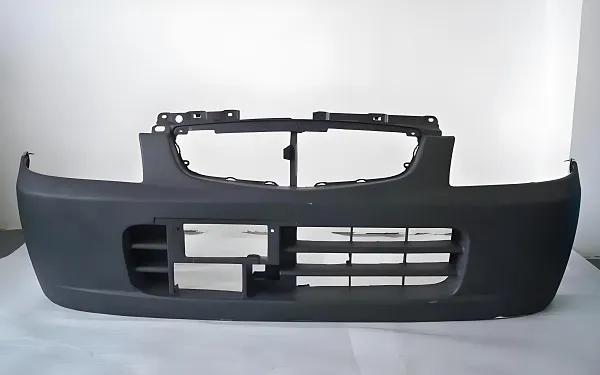
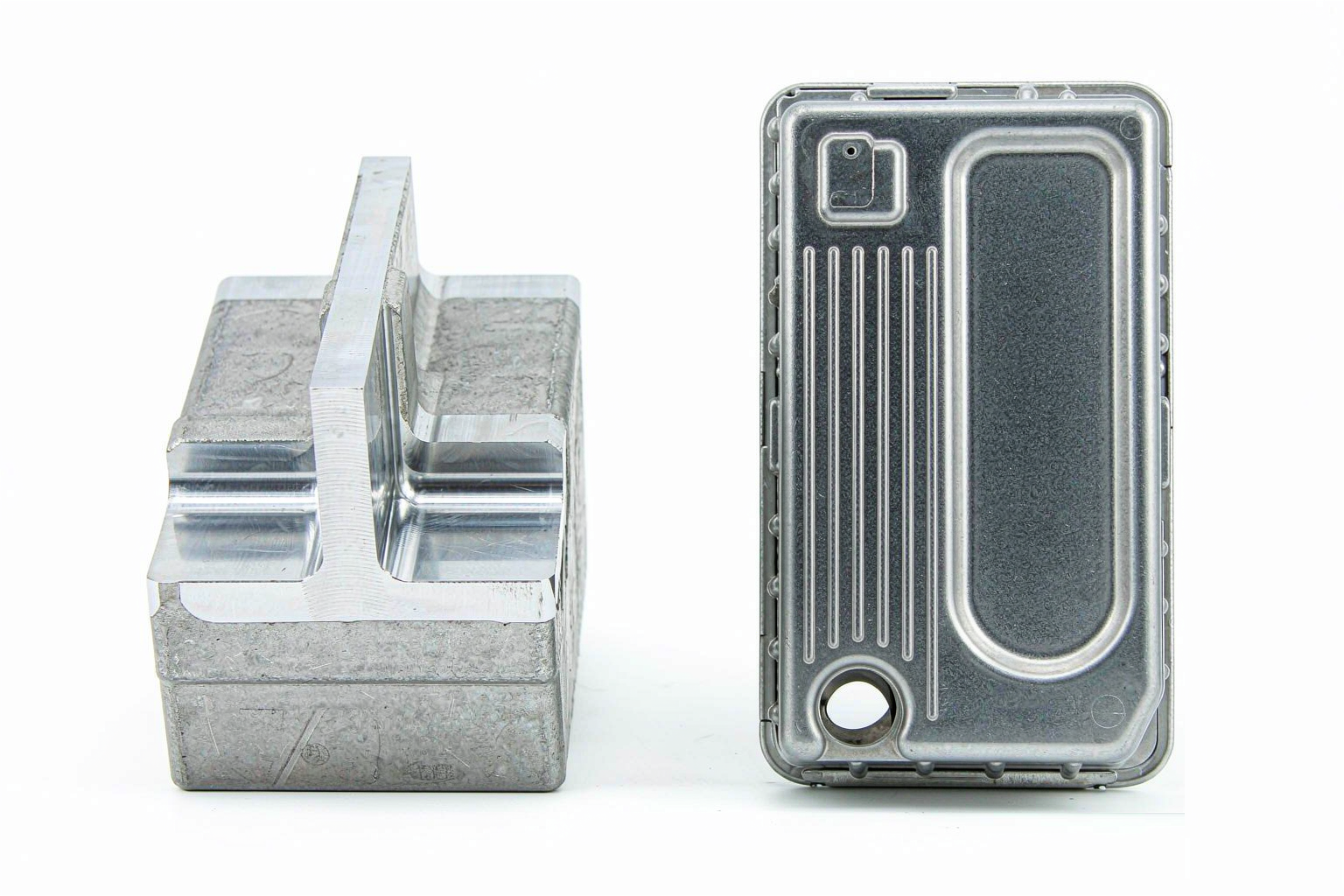
Billet → Machining → Finished Part
Molten Alloy → Die → Near-Net Part
Manufacturing Process Selection Guide
CNC Machining vs Die Casting — Which Is Better?
A practical guide to choosing between CNC machining, die casting, or a hybrid CNC + die casting process based on volume, tolerance, geometry, material and total cost.
Quick Answer
CNC Machining vs Die Casting: Quick Answer
Neither process is universally better. CNC machining is usually the better choice for prototypes, low-volume parts, frequent design changes, complex geometry and tight tolerances. Die casting becomes more attractive as production volume increases, especially for aluminum or zinc parts where tooling costs can be amortized over many units. For many production programs, the best solution is a hybrid approach: die casting for the near-net shape and CNC machining for critical features.
CNC Machining vs Die Casting — Quick Decision Matrix
| Requirement | CNC Machining | Die Casting |
|---|---|---|
| Prototype | ✅ Excellent | ⚠️ Less attractive |
| 1–100 pcs | ✅ | ❌ |
| 100–1,000 pcs | ✅ | ⚠️ Project dependent |
| 1,000–10,000 pcs | ✅ / ⚠️ | ✅ |
| 10,000+ pcs | ⚠️ | ✅ Excellent |
| No tooling investment | ✅ | ❌ |
| Tight tolerances | ✅ | ⚠️ Usually needs secondary CNC |
| Design changes | ✅ Easy | ❌ Expensive |
| Material flexibility | ✅ Excellent | ⚠️ More limited |
| Complex solid geometry | ✅ | ⚠️ Casting design required |
| Thin-wall high-volume parts | ⚠️ | ✅ |
| Lowest unit cost at high volume | ❌ | ✅ |
Not every part needs the same process. The right choice depends on the products, industries, processes and customer requirements — not on a single rule.
The economic crossover point must be calculated for the specific part rather than determined by a universal quantity threshold. Volume ranges below are screening guidelines, not fixed break-even rules.
Side by Side
CNC Machining vs Die Casting at a Glance
| Factor | CNC Machining | Die Casting |
|---|---|---|
| Process | Subtractive | Formative |
| Raw material | Billet / bar / plate | Molten non-ferrous alloy |
| Tooling | No dedicated die | Dedicated steel die |
| Initial cost | Low | High |
| Unit cost | Higher as volume rises | Drops at scale |
| Accuracy | Excellent | Good; critical features often CNC-machined |
| Material range | Very broad | Mainly aluminum, zinc, magnesium |
| Design changes | Easy | Costly after tooling |
| Prototype speed | Fast | Slower due to tooling |
| High volume | Less economical | Highly economical |
| Material waste | More machining scrap | Lower material removal |
| Part consolidation | Good | Excellent for castable geometry |
The Two Processes
What Is CNC Machining?
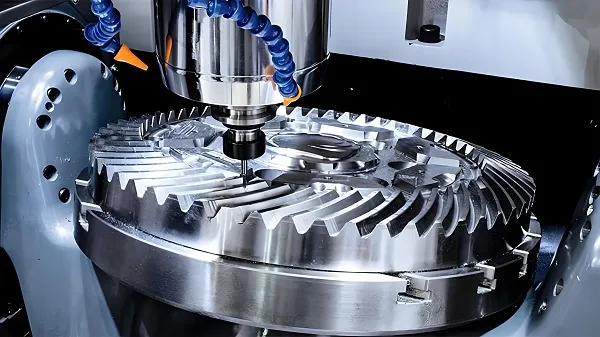
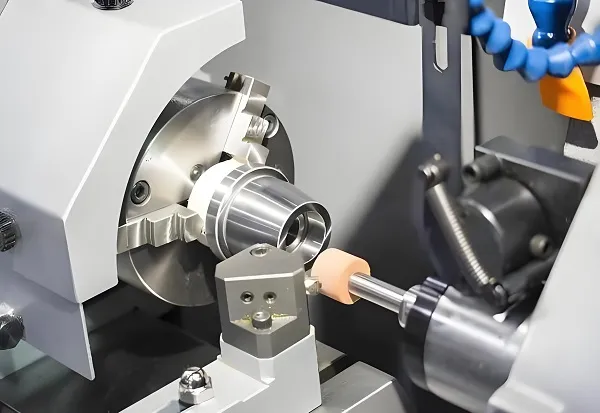
CNC machining starts from solid stock — a billet, bar or plate — and removes material with computer-controlled milling, turning, drilling and other operations, including 4-axis and 5-axis access. It takes a part from prototype to production while holding tight tolerances, and it supports fast design revisions because no dedicated tooling is required. It is the standard route when geometry, material or tolerance drives the design.
What Is Die Casting?
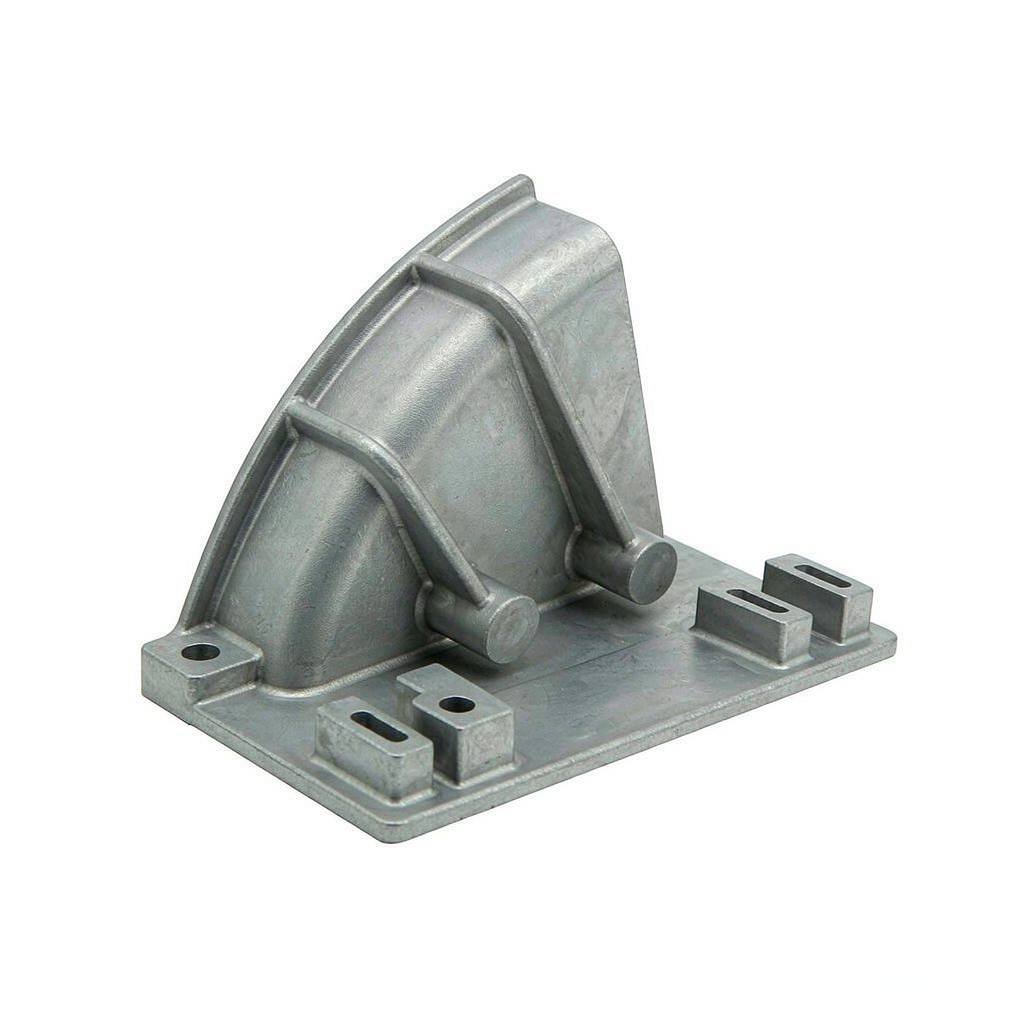
Die casting injects molten aluminum, zinc or magnesium into a dedicated steel die under high pressure to form a near-net-shape part that is then repeated at volume. The trade-off is a significant upfront tooling investment. Because the die is fixed, secondary machining is commonly used for critical features. The important difference is not simply how the part is made — it is where the economics and technical advantages of each process appear.
Cost Model
CNC Machining vs Die Casting Cost
CNC Machining
Total Cost = Setup + Material + Machine Time + Labor + Finishing + Inspection
Relatively low initial cost, but a higher variable cost per part.
Die Casting
Total Cost = Tooling + Material + Casting + Trimming + Machining + Finishing + Inspection
Higher upfront tooling cost, but a much lower variable cost at production scale.
Total Project Cost vs Volume
CNC has a relatively low initial cost but a higher variable cost per part. Die casting has a higher upfront tooling cost but a much lower variable cost at production scale. This is more useful than a fixed “CNC below 5,000 / die casting above 5,000” rule.
Break-Even Calculator
How to Calculate the CNC vs Die Casting Break-Even Point
CNC Total Cost = CNC Unit Cost × Quantity
Die Casting Total Cost = Tooling Cost + Die-Casting Unit Cost × Quantity
Break-even Q = Tooling Cost ÷ (CNC Unit Cost − Die-Casting Unit Cost)
Worked example (illustration only)
- CNC unit cost = $12 / pc
- Die casting unit cost = $3 / pc
- Tooling cost = $18,000
$18,000 ÷ ($12 − $3) = 2,000 pcs
At approximately 2,000 parts, the cumulative project cost becomes comparable. This is a sample calculation, not a general Goldcattle quote rule — the real crossover must be computed for the specific part, tooling price and annual demand.
By Volume
Which Process Is Better for Your Production Volume?
| Annual Volume | Recommended Starting Point | Why |
|---|---|---|
| 1–100 | CNC | No dedicated tooling |
| 100–1,000 | CNC / Hybrid evaluation | Depends on complexity and target cost |
| 1,000–5,000 | Compare both | Break-even may begin |
| 5,000–10,000+ | Die casting often attractive | Tooling amortization |
| 10,000+ | Die casting + CNC finishing | Scale economics |
These volume ranges are screening guidelines, not universal break-even rules.
Accuracy
CNC Machining vs Die Casting Tolerance
| Requirement | CNC | Die Casting |
|---|---|---|
| General dimensions | Excellent | Good |
| Tight dimensional tolerance | Excellent | More limited |
| Complex GD&T | Excellent | Often needs post-machining |
| Precision bores | Excellent | CNC recommended |
| Sealing surfaces | Excellent | CNC finishing often required |
| Critical holes | Excellent | Often drilled/reamed after casting |
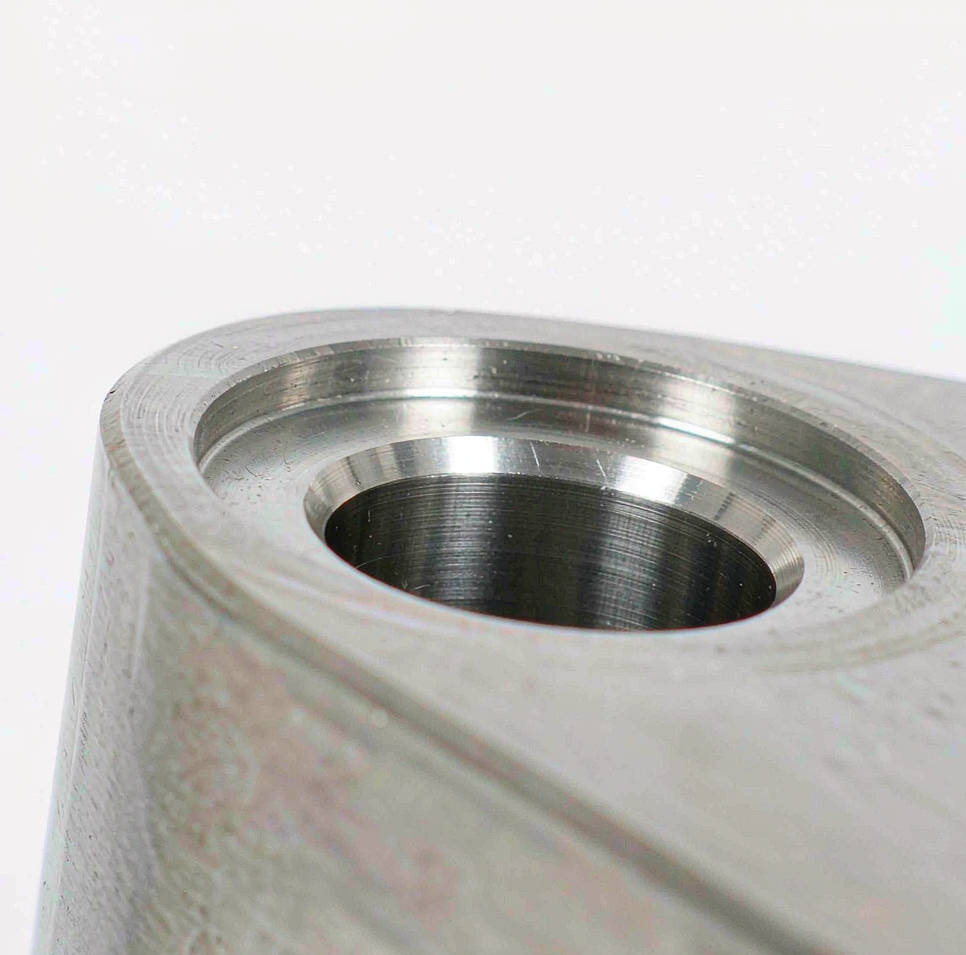
Die casting does not eliminate CNC machining. Critical bores, threads, sealing faces and datum features are often machined after casting to achieve the required final geometry. Avoid absolute comparisons such as “CNC ±0.005 mm / die casting ±0.1 mm”; actual capability depends on alloy, part size, geometry, die design, process control and secondary machining.
Material Options
CNC Machining vs Die Casting: Material Options
| Material | CNC | Die Casting |
|---|---|---|
| Aluminum | ✅ | ✅ |
| Stainless steel | ✅ | ❌ |
| Titanium | ✅ | ❌ |
| Brass | ✅ | ⚠️ |
| Copper | ✅ | ⚠️ |
| Steel | ✅ | ❌ |
| PEEK | ✅ | ❌ |
| ABS / engineering plastics | ✅ | ❌ |
| Zinc | ✅ | ✅ |
| Magnesium | ✅ | ✅ |
Choose CNC when material selection is a major design constraint. Die casting is more attractive when the design fits commonly cast non-ferrous alloys.
Geometry
Which Process Handles Complex Geometry Better?
CNC Advantages
- Internal features
- Deep pockets
- Undercuts
- Design revisions
- 5-axis access
- Prototype geometry
Die Casting Advantages
- Thin walls
- Repeated ribs
- Bosses
- Integrated mounting points
- Multiple features in one casting
- Near-net-shape production
Complexity means different things in CNC machining and die casting. A geometry that is easy to machine may be difficult to cast, while a ribbed thin-wall housing may be ideal for die casting.
Change Management
What Happens When the Design Changes?
CNC
CAD change → toolpath update → machining
Die Casting
CAD change → die modification → trial → inspection → production
CNC is generally more change-friendly, while die casting rewards design stability. This matters most during the prototype → production transition.
Lead Time
CNC Machining vs Die Casting Lead Time
| Stage | CNC | Die Casting |
|---|---|---|
| DFM | Fast | Required |
| Tooling | None | Required |
| First article | Shorter | Longer |
| Production setup | Short | Longer initial setup |
| Repeat production | Fast | Very fast |
For prototypes, CNC often provides the shortest path to physical parts. For stable high-volume programs, die casting can offer much faster cycle production after tooling is approved.
Quality
CNC Machining vs Die Casting Quality Considerations
CNC
- Predictable dimensions
- Tight tolerances
- Direct machining from billet
Die Casting — watch for
- Porosity
- Shrinkage
- Flash
- Die wear
- Dimensional drift
- Casting defects
Mechanical performance depends on alloy, material condition, geometry, casting parameters and the required property — not only on the manufacturing process. For pressure-bearing, fatigue or safety-critical applications, the decision must follow the actual material, heat treatment and validation requirements.
Surface Finish
CNC Machining vs Die Casting Surface Finish
| Requirement | CNC | Die Casting |
|---|---|---|
| Machined surface | Excellent | Requires machining |
| Cosmetic as-made surface | Good | Good with suitable die finish |
| Polished feature | Excellent | Secondary finishing often required |
| Tight sealing face | Excellent | Usually CNC finished |
| Cosmetic consistency | High | Highly dependent on die/process |
Decision Signals
When Should You Stay With CNC Machining?
When Is Die Casting Better Than CNC Machining?
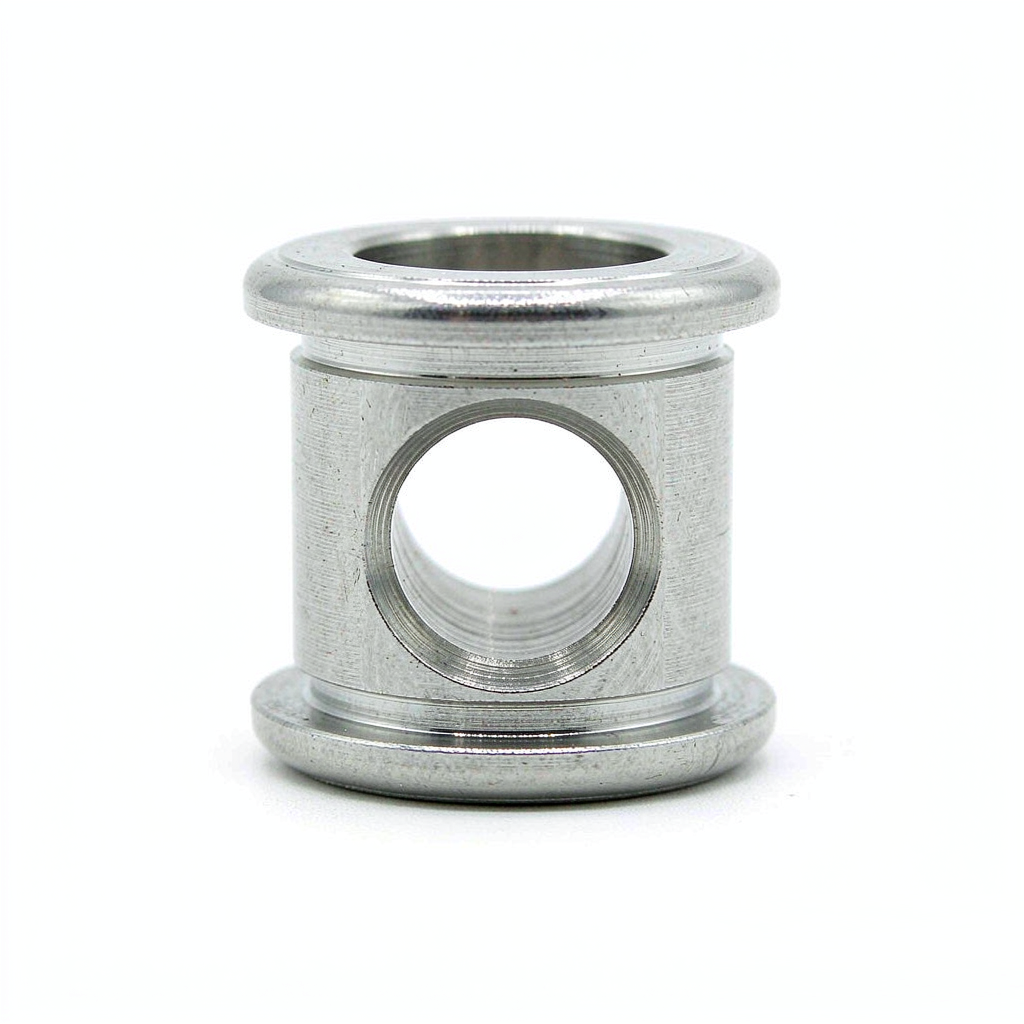
A stainless steel valve body is a typical “stay with CNC” part: low volume, a tight machined bore and no tooling payback. Materials like stainless steel, titanium and tool steel are not practical as die-cast alloys, so CNC is the natural route.
Hybrid Manufacturing
When CNC Machining and Die Casting Work Better Together
The decision does not always have to be CNC versus die casting. For many products, CNC is the bridge from prototype to production, while die casting becomes the economical near-net-shape process for volume manufacturing.
Migration
When Should You Move From CNC Machining to Die Casting?
Annual volume is increasing
Unit machining cost is becoming too high
Part geometry is stable
Tooling ROI is justified
Design is suitable for casting
Do not wait until production cost becomes excessive. Review the manufacturing route when annual volume, design maturity and cost targets change.
Real-World Examples
CNC vs Die Casting Real-World Part Examples
Example 1 — CNC Is Better
50 pcs precision stainless steel valve component
- Low volume
- Tight bore
- No tooling ROI
→ CNC Machining
Example 2 — Die Casting Is Better
100,000 aluminum electronic housings / year
- High volume
- Stable design
- Repeated thin-wall geometry
→ Die Casting + CNC critical features
Example 3 — Hybrid Is Better
10,000 aluminum motor housings / year
- Die-cast near-net shape
- CNC sealing surfaces
- CNC bearing bores + leak test
→ Die Casting + CNC finishing
Decision Tree
How to Choose the Right Manufacturing Process
Customer-specific requirements may apply in addition to these standards. For automotive programs, OEM Customer-Specific Requirements can add further conditions on top of the chosen process.
Total Cost of Ownership
Compare Total Project Cost, Not Just Unit Price
CNC total cost
Material waste + Machine time + Labor + Finishing + Inspection
Die casting total cost
Tooling + Material + Casting + Scrap + Trimming + CNC + Finishing + Inspection + Tool maintenance
A lower quoted unit price does not necessarily mean a lower total project cost.
Why Goldcattle
Why Choose Goldcattle for CNC + Die Casting?
You do not have to decide the process alone. Goldcattle supports both CNC machining and die casting under one engineering workflow, so the manufacturing route is selected by capability and cost rather than by a single process being available.
The value Goldcattle provides is not a single process — it is process selection plus manufacturing execution. Send the drawing and volume; the engineering team compares the routes and recommends the more economical one.
FAQ
Frequently Asked Questions
Is CNC machining better than die casting?
Neither is universally better. CNC suits prototypes, low volume, changes, complex geometry and tight tolerances. Die casting suits high-volume aluminum or zinc parts. Many programs use both.
Which is cheaper, CNC machining or die casting?
CNC has low startup but higher per-part cost; die casting has high tooling but lower per-part cost at scale. Cheaper depends on volume, size, complexity, material and cycle time.
Is CNC machining better for low-volume production?
Yes. With no dedicated tooling and easy design changes, CNC is usually the better route for low and mid volumes.
When does die casting become more economical?
As annual volume grows and tooling can be amortized — often in the thousands of parts, but the exact point depends on the part.
What is the break-even point between CNC and die casting?
Break-even quantity = tooling cost ÷ (CNC unit cost − die-casting unit cost). Compute it per part; do not use a fixed threshold.
Which process provides tighter tolerances?
CNC provides excellent, direct tolerances. Die casting is good generally, but critical features are often CNC machined after casting.
Can die-cast parts be CNC machined afterward?
Yes. Secondary CNC machining of bores, threads, sealing faces and datums is standard in die casting production.
Which process is better for aluminum parts?
Both. CNC is flexible for any volume; die casting is economical for high-volume stable aluminum geometries. Many combine both.
Which process is better for stainless steel or titanium?
CNC. These are not practical die-cast alloys; choose CNC when material is a constraint.
Which process is better for prototypes?
CNC — no tooling, fast changes, quick physical parts.
Which process is better for mass production?
For stable high-volume castable geometries, die casting plus CNC finishing is usually most economical.
Can I prototype with CNC and then switch to die casting?
Yes. CNC validates the design; then tooling enables die casting with CNC finishing for critical features.
Which process has a shorter lead time?
CNC for prototypes (no tooling); die casting for fast repeat cycles after tooling approval.
Does die casting require tooling?
Yes — a dedicated steel die is required, a significant upfront investment.
How much does a die casting mold cost?
It varies widely with part size, complexity and cavitation. Request a quote based on the actual drawing and volume.
Which process produces less material waste?
Die casting generally removes less material (near-net shape); CNC removes more from solid stock. Total cost depends on more than scrap.
Not Sure Whether CNC Machining or Die Casting Is Right for Your Part?
Send us your CAD file, drawing, annual volume and target quantity. Our engineers compare both processes and recommend the more economical manufacturing route.
Accepted files: STEP, IGES, DWG, DXF, PDF