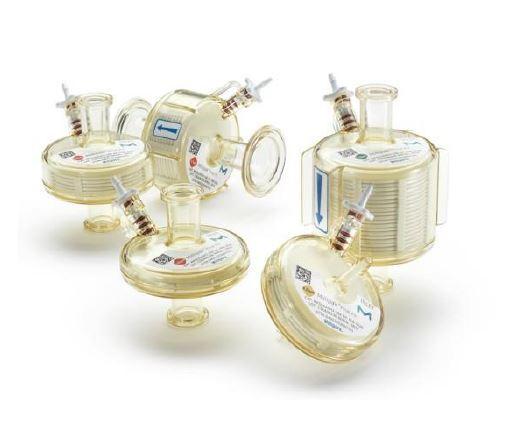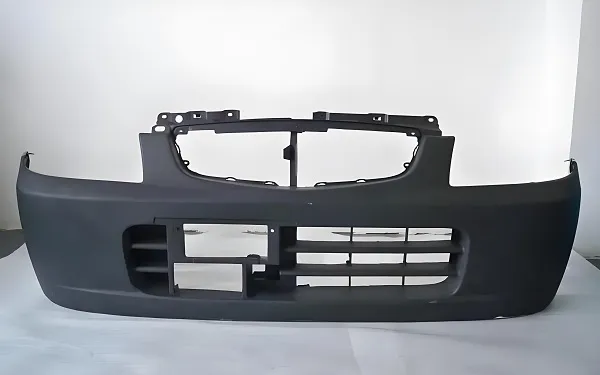
Engineering Plastic CNC Machining Services for Precision Parts
From PEEK and PEI to POM, nylon, PC, ABS, and PTFE — we machine the full engineering-plastic family to drawing, from a single prototype to production runs. No tooling, MOQ from 1 piece, and material decisions made with you, not for you.
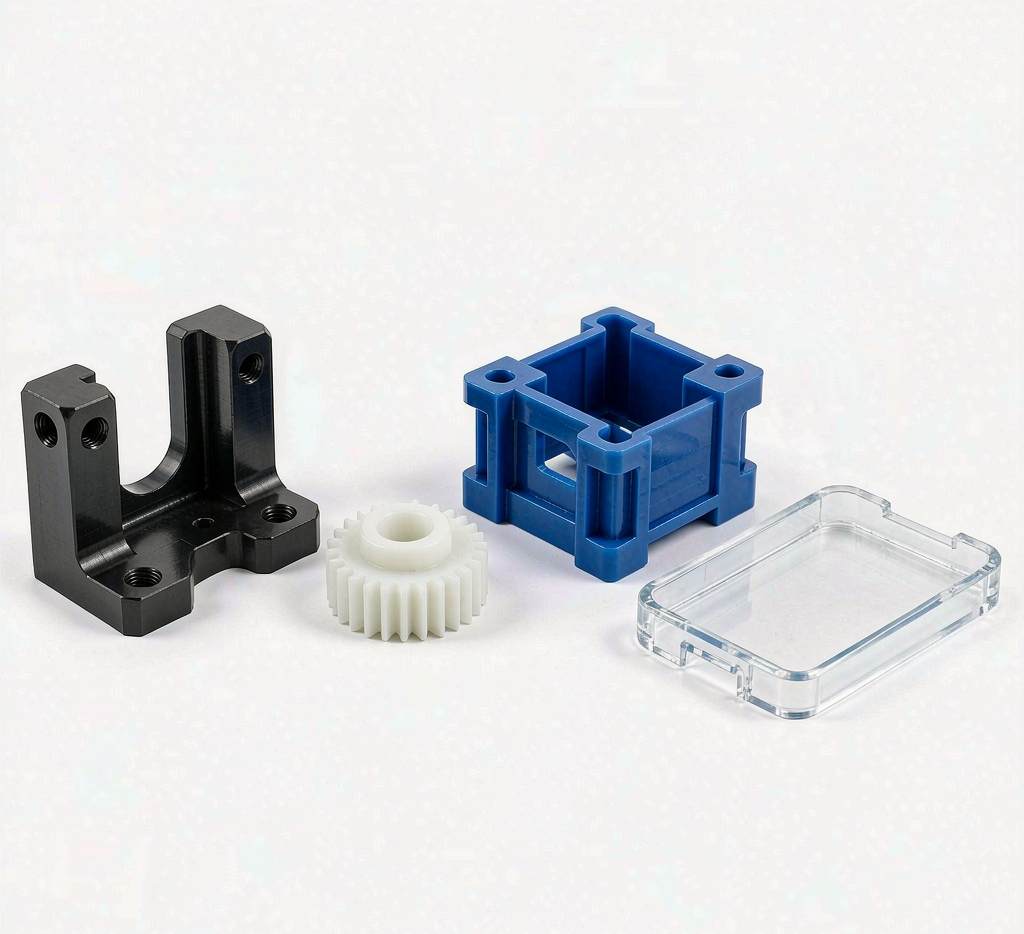
At a Glance
Quick Material Selector
A first-pass map from requirement to material. Property figures are typical published data and vary by grade and supplier — treat this as a shortlist, not a decision.
| Material | Choose it for | Watch out for | Typical parts |
|---|---|---|---|
| PEEK | Highest temperature of the group, chemical resistance, purity, wear (filled grades) | Material cost; stringy chips; abrasive when filled | Semiconductor insulators, bushings, manifolds |
| PEI (Ultem) | High heat with stiffness, flame rating, good dimensional stability | Notched impact sensitivity; costs more than commodity plastics | Electrical insulators, housings, connector bodies |
| PPS | Chemical resistance near PTFE with more stiffness, high temperature | Brittle feel; filled grades are abrasive to tools | Chemical process parts, pump components, sensor housings |
| POM (acetal) | Low friction, stiffness, excellent machinability, low moisture uptake | Lower temperature ceiling; bonding is difficult | Gears, bushings, rollers, valve components |
| Nylon (PA6 / PA66 / MC) | Toughness, wear resistance, large cast sections (MC nylon) | Moisture absorption moves dimensions; needs condition control | Sprockets, wear pads, rollers, large gears |
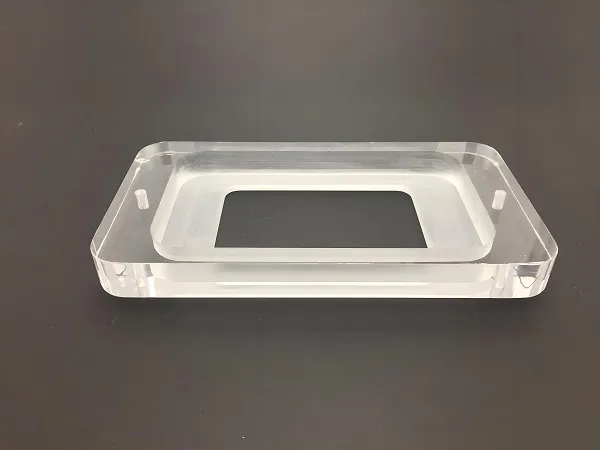
| PC (polycarbonate) | Optical clarity, impact strength, electrical insulation | Stress cracking with some chemicals; needs stress relief | Covers, windows, inspection panels, lenses |
| ABS | Cost-effective, easy to machine, good appearance parts | Heat limit; poor chemical resistance | Housings, jigs, fixtures, prototypes |
| PTFE | Extreme chemical resistance, lowest friction, high temperature | Creeps under load; hardest to hold tight tolerance | Seals, gaskets, insulators, low-friction slides |
Not on the list? We also machine PPS-GF40, PEEK-GF30/CF30, PA66-GF30, UHMW-PE, PET, PVC, and customer-specified grades. Send the service conditions and we will shortlist candidates during DFM review.
Plastic CNC Machining Is Not Metal CNC Machining
The biggest source of failed plastic parts is treating them like aluminum with a different color. The same machine can cut both — but the physics are different in five ways that directly affect your tolerances, and every one of them is predictable if it is engineered for in advance.
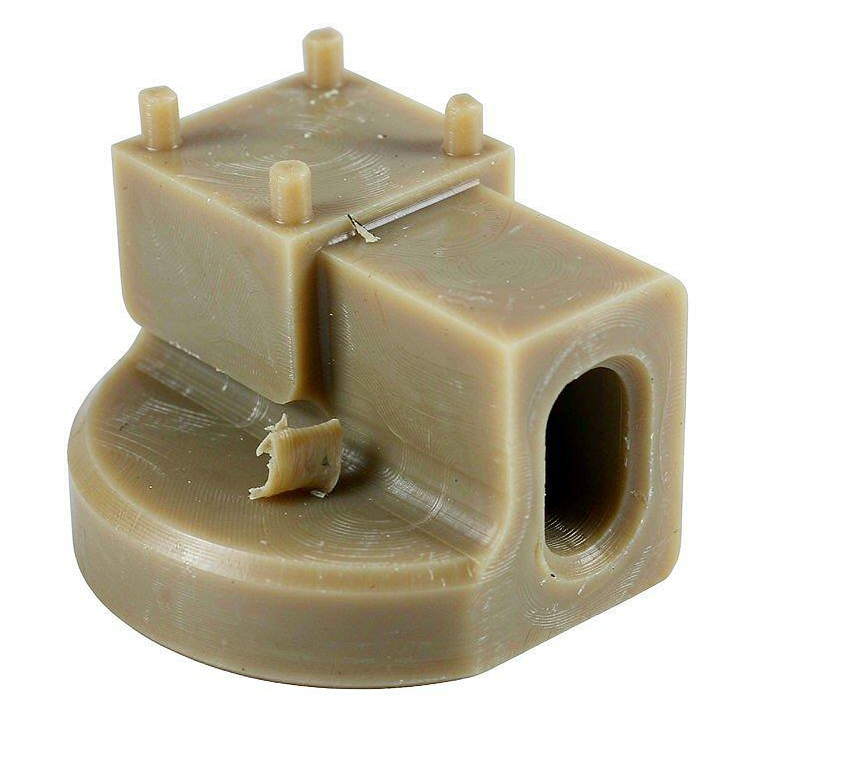
The five differences that move your dimensions
- Thermal expansion: engineering plastics expand roughly 5–10× more than steel per degree. A part measured warm is not the part your customer measures cold — so verification temperature becomes part of the tolerance plan.
- Moisture absorption: nylon can gain enough moisture to shift dimensions and properties. Dry-as-machined and conditioned nylon are two different parts; the target condition must be specified.
- Residual stress: extruded and cast stock carries internal stress. Aggressive one-pass machining releases it unevenly and the part moves — staged removal and stress relief keep geometry true.
- Creep: under sustained load, plastics deform over time. A press-fit that works on day one may relax by month six if the material and interference were chosen without creep data.
- Clamping sensitivity: the fixturing force that is routine for metal can visibly bow a plastic part. Soft-jaw, vacuum, and distributed clamping strategies are standard on our plastic jobs.
What this means in practice: on plastic RFQs we spend more of the review on stock condition, fixturing, and measurement plan than on feeds and speeds. That is where plastic accuracy is actually won.
How We Keep Plastic Parts Dimensionally True
Dimensional control on plastics is a chain of decisions from stock selection to final measurement. Skipping any link is how a ±0.01 mm drawing note turns into a scrapped batch.
Stock selection & conditioning
We choose extruded, cast, or compression-molded stock by part geometry and tolerance demand, and pre-dry or precondition hygroscopic materials where the target condition requires it.
Stress relief where needed
Annealing before roughing — and between stages on critical parts — reduces residual-stress movement so the final geometry stays where we set it.
Staged material removal
Rough, semi-finish, rest, then finish. Letting the part settle between stages lets stress relax before the final passes that define your tolerances.
Gentle, distributed fixturing
Soft jaws, vacuum plates, and expanded contact areas prevent the part from being machined into the shape of its own clamping force.
Heat management at the cut
Sharp tooling and per-material parameter windows shear cleanly instead of rubbing heat into the part — the difference between a stable dimension and a drifting one.
Condition-controlled measurement
Tight-tolerance parts are measured at stable temperature on calibrated CMM equipment, and hygroscopic parts are measured in the condition the drawing specifies.
Material-Specific Machining Strategies
Each family gets its own parameter window, tooling, and handling plan. Three examples of how the strategy changes with the material:
POM, nylon & the wear family
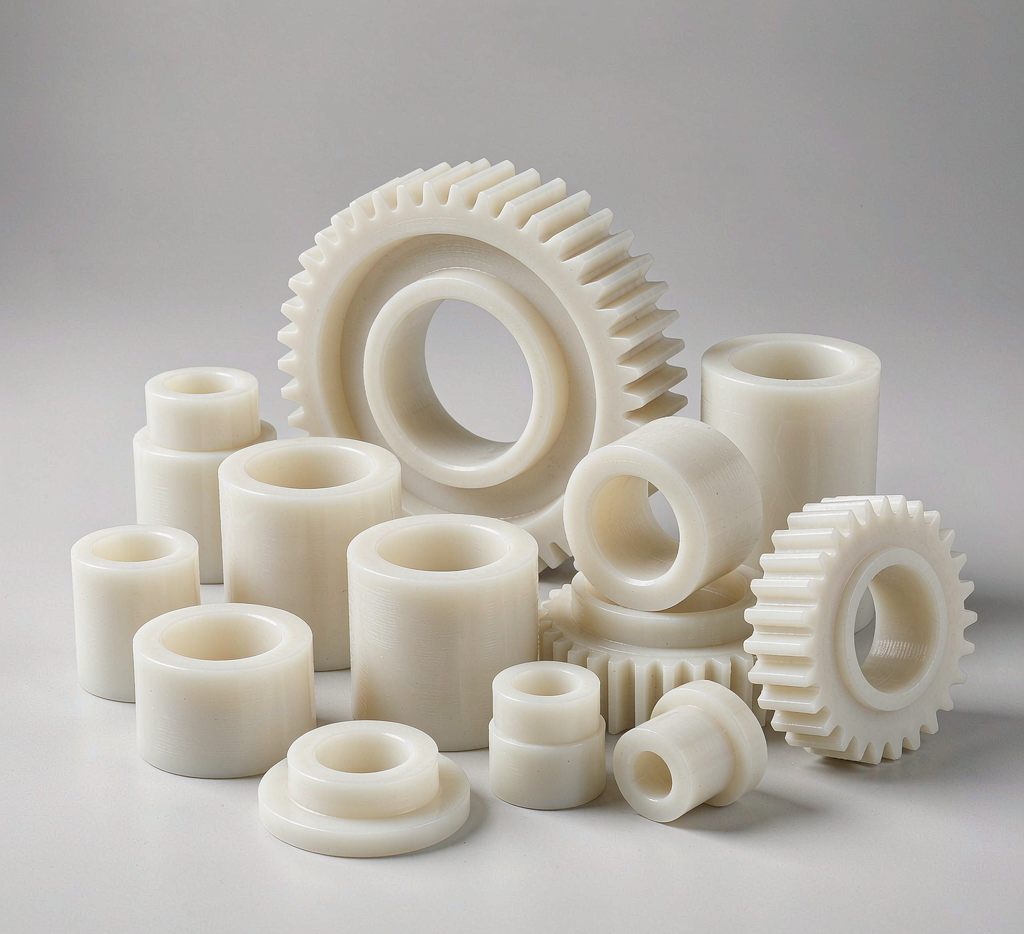
- POM (acetal): machines beautifully with sharp tools and moderate heat — the workhorse for gears and bushings. The risk is over-fast finishing that smears instead of shears, dulling edges and hiding detail.
- Nylon: gummier at the cut and moisture-hungry. We control coolant and tool sharpness to prevent chip packing, and we plan tolerances against the dry or conditioned state your drawing defines.
- Cast MC nylon: for large sections and wear parts; cast stock machines more freely than extruded but needs the same condition-aware tolerance planning.
PEEK, PEI & the high-temperature family
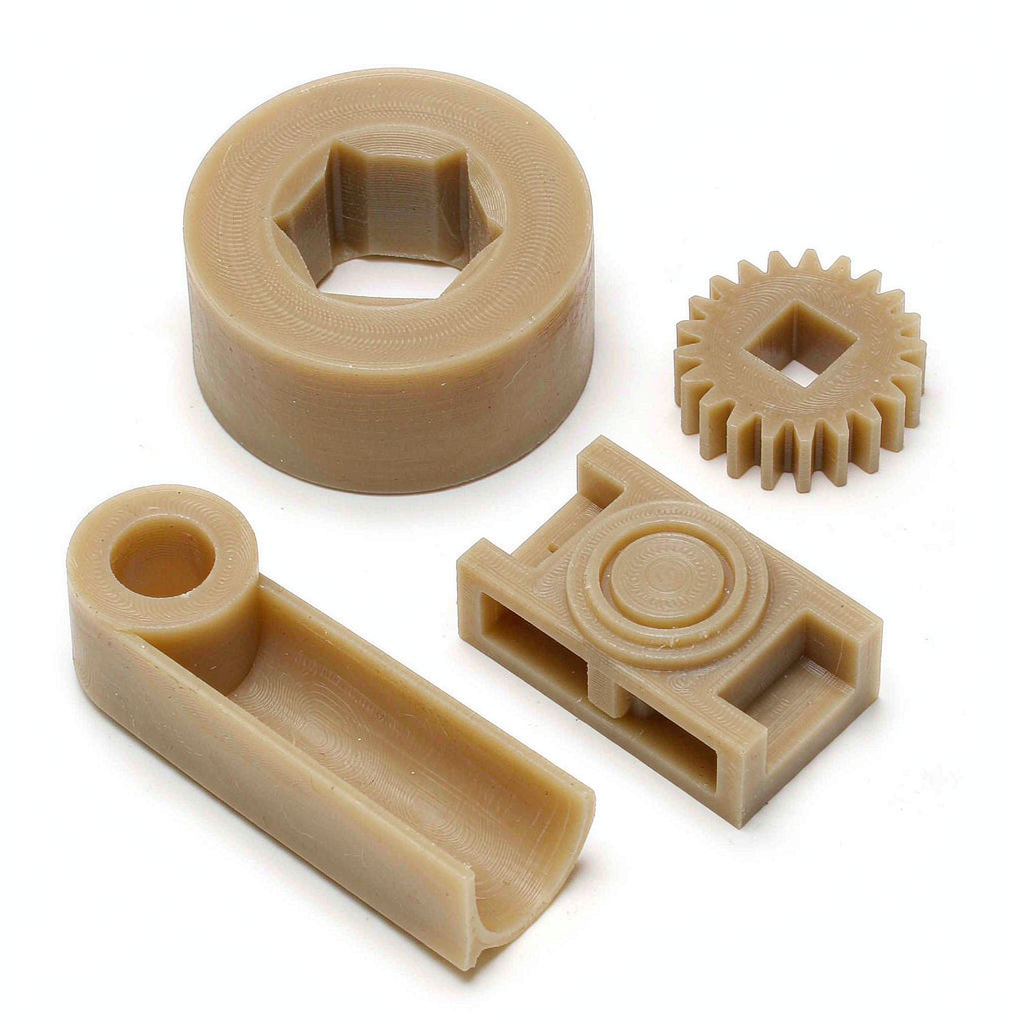
- PEEK: unfilled grades cut cleanly but produce stringy chips and localize heat; filled grades (GF30/CF30) are dimensionally excellent but aggressively abrasive to tooling, so tool wear is budgeted into the process. Full PEEK machining detail here.
- PEI (Ultem): stiff and stable but notch-sensitive — generous radii and careful edge work protect both the part and the assembly.
- PPS: filled grades demand carbide geometry and conservative parameters; the payoff is chemical resistance few plastics match.
PC, ABS & the clarity / appearance family
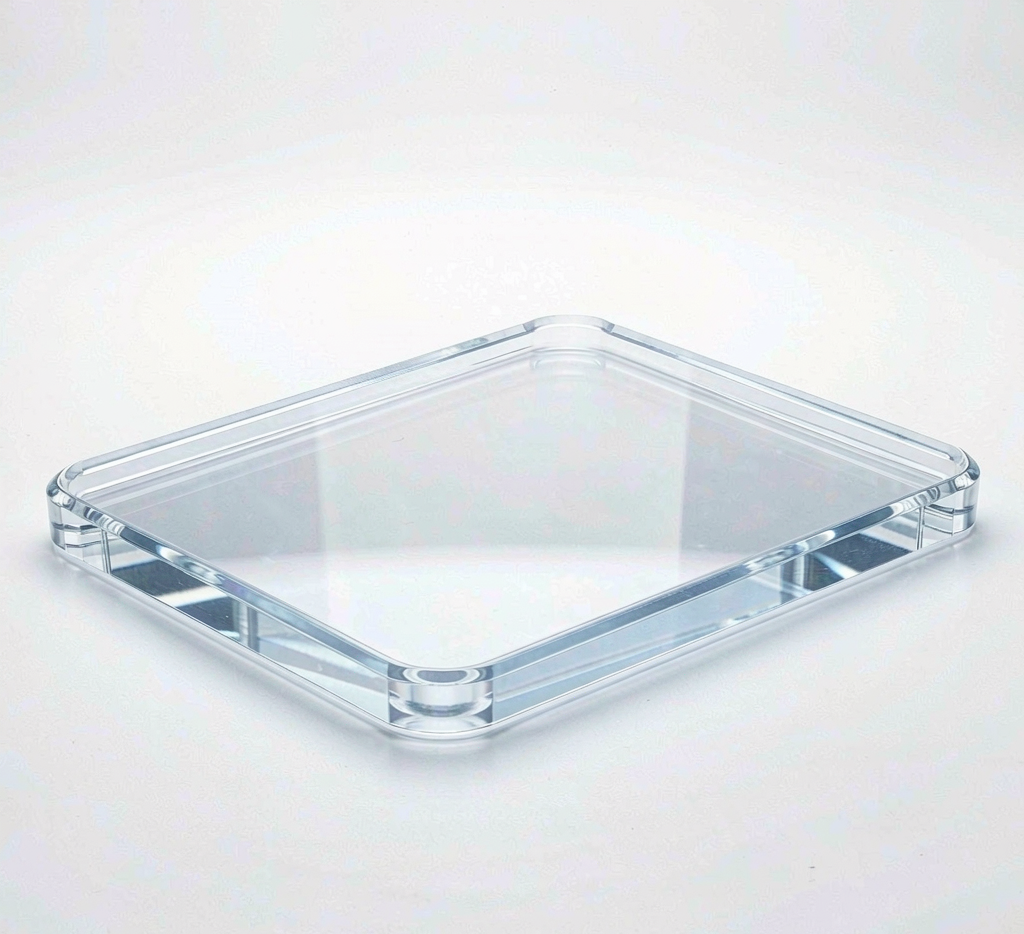
- PC: clarity is the deliverable, so tool marks and stress whitening are the enemies. Sharp polished tools, light finishing passes, and annealing to prevent later stress cracking in chemical environments.
- ABS: the easiest of the group to machine — the engineering work is in heat control and appearance surfaces, not in exotic parameters.
- PTFE: the opposite problem: soft, creeping, and dimensionally restless. Tight-tolerance PTFE is a planning exercise — realistic tolerance allocation by feature, controlled measurement conditions, and filled-grade alternatives where stability matters more than friction.
The Exact Grade Matters More Than the Family Name
"Nylon" is not a material — it is a family of very different materials. PA6, PA66, cast MC nylon, and PA66-GF30 differ in stiffness, moisture behavior, temperature ceiling, and how they move after machining. The same is true inside every family above: unfilled PEEK versus CF30, general-purpose PC versus UV-stabilized grades, bearing-grade POM versus natural.
What we need on your drawing
- The full grade designation — e.g. PA66-GF30, PEEK-CF30, not just "nylon" or "PEEK". If you only know the family, send the service conditions and we will propose grades with reasoning.
- The measurement condition for hygroscopic materials — dry-as-machined or moisture-conditioned, and the environment the part will actually live in.
- Color and modifier requirements — pigments, lubricant additives, and heat stabilizers all shift properties slightly; specify them rather than assuming.
Equivalent grades from different stock suppliers machine and move slightly differently. For repeat orders we track the stock source so a replacement batch behaves like the one you validated.
Tight-Tolerance Plastic Machining
General-profile tolerances on machined plastics commonly hold ±0.1 mm without drama. Beyond that, tolerance capability becomes feature- and condition-specific: ±0.01 mm is achievable on qualified features — the right material condition, geometry that supports it, and a measurement method that does not add its own error. We state what a drawing can realistically hold rather than quoting one number and discovering it in inspection.
Three things decide whether your tolerance is realistic:
Feature size & geometry
Thin walls, long unsupported spans, and deep small bores magnify every thermal and stress effect. Tolerance scales with the feature's ability to hold it.
Material & condition
A glass-filled grade, stress-relieved stock, and a dry-spec nylon each change what a feature can hold — in different directions.
Measurement conditions
On plastics, the inspection plan is part of the tolerance. Temperature soak, fixturing force, and target condition are defined before the first measurement.
For programs that demand the tightest end of the range, see our tight-tolerance CNC machining services page — the same discipline applies to plastics with the added material-condition controls described above.
Inspection Built for Plastic Behavior
Measured the way it will be used
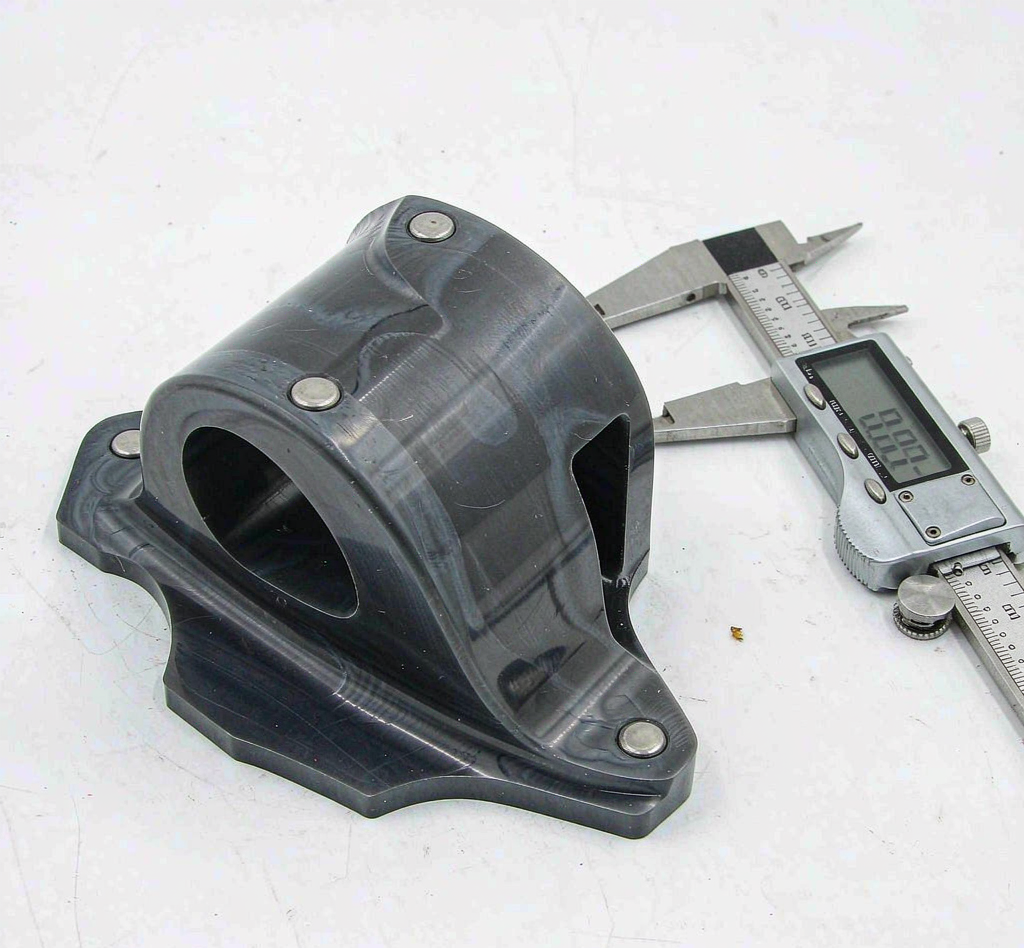
- First-article inspection mapped to your datums and drawing notes.
- Thermal soak before measurement on tight-tolerance features — a warm part is not a finished part.
- Condition-aware measurement for nylon: dry or conditioned, as the drawing defines.
- Clamping force on the CMM kept consistent with how the part is actually constrained in service.
The result: inspection data that describes the part your assembly will see, not an artifact of the measurement setup.
CNC Machining vs Injection Molding vs 3D Printing
Choosing the process is as important as choosing the material. The honest version:
| Factor | CNC Machining | Injection Molding | 3D Printing |
|---|---|---|---|
| Economics | No tooling; best for prototypes to mid-volume | Tooling cost, lowest per-part at high volume | No tooling; per-part cost roughly flat with volume |
| Tolerance | Tightest of the three on qualified features | Good, set by tool quality and shrinkage | Loosest; layer effects and anisotropy |
| Material | Any machinable stock grade, including filled | Requires moldable grades; fillers and grades constrained by flow | Limited grade palette; properties differ from stock |
| Lead time | Days (3–7 for prototypes) | Weeks for tool design, build, and trial | Days, geometry-permitting |
| Best for | Validation, spares, low/batch runs, tight geometry | Locked designs at scale | Fast form-and-fit checks, unmachinable internal geometry |
A common pattern: print or prototype to validate the concept, machine pre-production parts in the exact production grade, then move to molding when volume justifies tooling. Because machined and molded parts come from different material conditions, we flag the property differences before you lock the design.
From Prototype to Production
Most plastic programs follow the same path, and we keep the handoffs boring on purpose:
- Prototype (3–7 working days): machined in the target grade from stock — not a substitute material — so material behavior is validated along with geometry.
- DFM feedback at every stage: tolerance realism, grade confirmation, and fixturing strategy are reviewed on your drawing before the first cut.
- Low-volume runs (7–20 working days): batch consistency managed through stock-source tracking and first-article re-verification.
- Production (15–25 working days): documented processes, defined inspection scope, and packaging per your specification.
Because the same team machines metals and plastics, hybrid assemblies — a plastic insulator riding on a machined aluminum frame, for example — are coordinated in one order rather than split across suppliers.
Part Types We Machine in Plastic
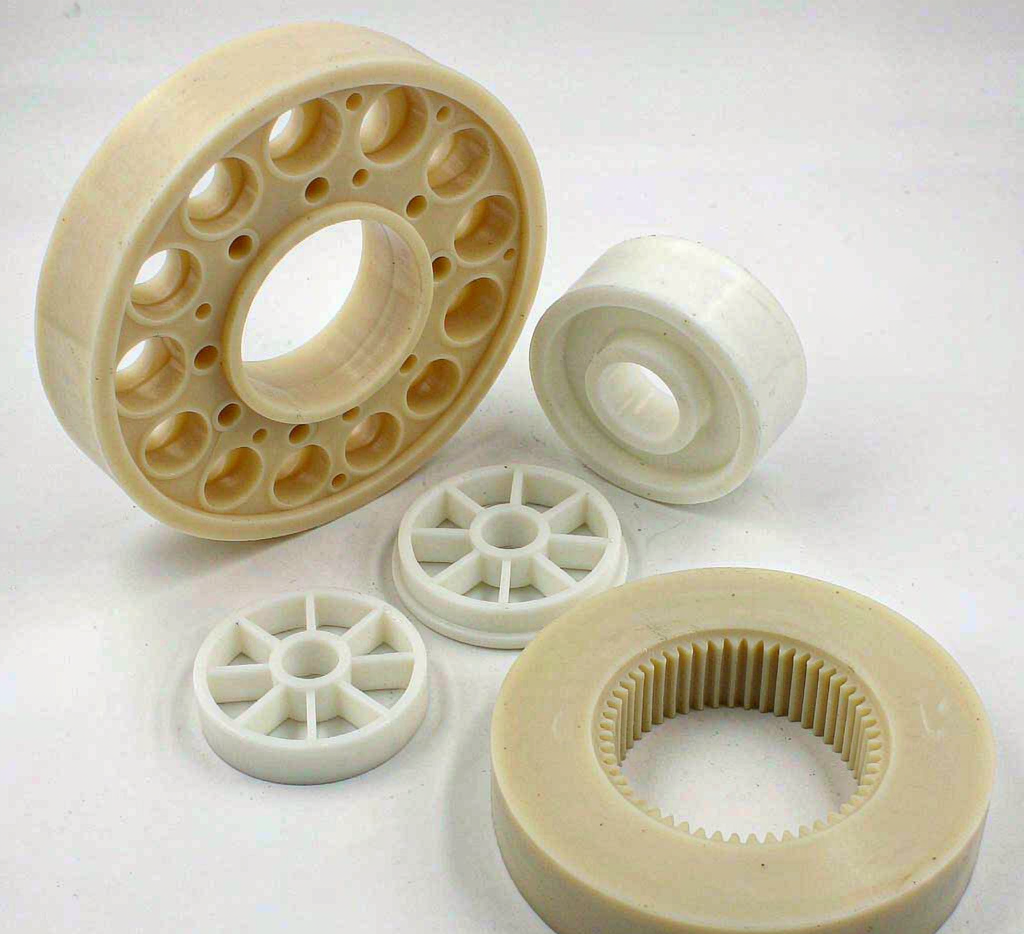
- Gears, sprockets, rollers, and wear pads
- Bushings, bearings, and wear rings
- Insulators, standoffs, and electrical housings
- Covers, windows, and transparent guards
- Manifolds, spacers, and fixtures
- Seals, gaskets, and low-friction slides (PTFE and filled grades)
- Prototype housings and custom machine components
If your part is not listed, send the drawing — most geometries that work in metal translate to plastic with the right design adjustments.
Industries We Serve
Semiconductor & electronics
PEEK and PEI insulators, wafer-handling parts, and test fixtures where purity and dimensional stability matter.
Industrial automation
Nylon and POM gears, rollers, guides, and wear parts that run quietly and outlast unlubricated metal contacts.
Medical & laboratory
Instrument components in PEEK, PC, and PPS where sterilizability and chemical resistance are required; applicable material standards confirmed before production.
Food & packaging machinery
Wear strips, guides, and changeover parts in moisture-tolerant, cleanable grades.
Automotive & new energy
Insulators, battery-system components, and under-hood parts validated for thermal and chemical exposure.
Chemical & process equipment
PPS and PTFE components resisting aggressive media where metals fail to corrosion.
Quality System and Documentation
Work is performed under our ISO 9001:2015 quality system. Every order is tied to its material lot, and documentation is scaled to the program: material (mill) certificate, certificate of conformance, first-article inspection, and RoHS/REACH statements where applicable. We support process controls aligned with IATF 16949 requirements for automotive-linked programs and state plainly what we hold — we do not claim approvals we do not have.
Plastic RFQ Checklist
The more of this you include, the fewer round-trips before a firm quote. The rest we resolve during DFM review.
What to include in your request
- 3D model (STEP/IGES) and 2D drawing with tolerances
- Exact material grade — or the service conditions so we can recommend one
- Quantity, target delivery date, and annual volume if known
- Operating temperature, load, and chemical/humidity exposure
- Measurement condition for hygroscopic materials (dry or conditioned)
- Cleanliness, documentation, and certification requirements
Upload your drawing and our applications team will return a quote with material and tolerance feedback.
Two Real Program Examples
Nylon sprocket set for food-handling equipment
A packaging-equipment customer needed sprockets that would run dry, quietly, and without corroding in a washdown environment. We recommended cast MC nylon over the initially requested PA6 for the section size and wear behavior, machined the tooth profiles with condition-aware tolerances, and delivered first articles within the standard prototype window. The customer validated noise and wear on their line before the low-volume run.
Clear PC guard for an analytical instrument
An instrument maker needed a transparent guard that would stay clear and craze-free in a cleaning-chemical environment. The machining plan combined polished tooling and light finishing passes for optical surfaces with an annealing step to prevent later stress cracking. First-article measurements were taken after thermal soak, and the guards shipped with cleaning-handling notes to protect the finish in service.
Details are generalized to protect customer confidentiality; specifics are shared under NDA.
Frequently Asked Questions
Which engineering plastics can you CNC machine?
We CNC machine PEEK, PEI (Ultem), PPS, POM (acetal), nylon (PA6, PA66, cast MC nylon, glass-filled grades), polycarbonate (PC), ABS, and PTFE, plus customer-specified grades. The most suitable material depends on your temperature, load, chemical, electrical, and wear requirements.
What tolerance can you hold on machined plastic parts?
Plastic tolerances are material-, geometry-, and condition-dependent. General-profile work commonly holds ±0.1 mm or tighter; ±0.01 mm is achievable on qualified features when stock condition, part geometry, and measurement method support it. We confirm achievable tolerances on your drawing during DFM review rather than quoting a single blanket number.
How is CNC machining plastic different from machining metal?
Plastics expand and contract far more with temperature, absorb moisture (especially nylon), carry residual stress in extruded stock, creep under sustained load, and deform under excessive clamping force. Cutting parameters, fixturing pressure, cooling, and measurement conditions must all be adapted — the same feeds, speeds, and inspection setup used for metals will not produce accurate plastic parts.
Should I choose CNC machining, injection molding, or 3D printing for my plastic part?
CNC machining suits prototypes, low-to-mid volumes, tight tolerances, and designs that may still change — no tooling required. Injection molding suits high volumes where tooling cost is amortized. 3D printing suits fast form-and-fit checks and geometries that cannot be machined, but printed parts have anisotropic properties and looser dimensional control. We will tell you plainly when a different process would serve you better.
What is your minimum order quantity for plastic parts?
Minimum order quantity is 1 piece. Prototypes and pre-production samples are a normal part of our workflow, so you can validate material and geometry before committing to volume.
How fast can you deliver machined plastic prototypes?
Prototype lead time is typically 3–7 working days, low-volume runs 7–20 working days, and production 15–25 working days, subject to material availability and inspection scope.
Can you machine nylon so it stays dimensionally stable after moisture absorption?
Nylon dimensions change as it absorbs moisture, so the target condition must be defined first. We machine to the condition you specify — dry-as-machined or moisture-conditioned — and account for expected dimensional change in the humidity environment your part will see. Tolerances on nylon are planned around this behavior rather than assumed away.
Do you stress-relieve or anneal plastic stock before machining?
Where the material, geometry, or tolerance demands it, we anneal or stress-relieve stock before and between machining stages to reduce residual stress movement. This is standard practice for tight-tolerance work in PEEK, PC, and cast nylon, and we confirm the need during DFM review.
Which nylon grade should I choose — PA6, PA66, cast MC nylon, or glass-filled?
PA6 offers toughness and wear resistance at lower cost; PA66 offers higher stiffness and temperature capability; cast MC nylon suits large sections and low-volume wear parts; glass-filled nylon adds stiffness and dimensional stability at the cost of reduced toughness and higher tool wear. Send your load, temperature, and environment and we will recommend a grade during DFM review.
Can tight tolerances be held on PTFE?
PTFE is challenging because it creeps under load and moves with temperature. Tight tolerances on PTFE require careful fixturing, sharp tooling, controlled measurement conditions, and realistic tolerance allocation by feature. Where a PTFE-lined or filled PTFE grade can be used, dimensional stability improves; we confirm feasibility on your drawing.
Do you provide material certification and traceability for plastic parts?
Yes. Available documentation includes the material (mill) certificate for the stock used, certificate of conformance, first-article inspection report, and reference to our ISO 9001:2015 quality system. RoHS/REACH statements can be supplied where applicable.
What information should I include in a plastic machining RFQ?
Include a 3D model (STEP/IGES), a 2D drawing with tolerances, the exact material grade (or the service conditions so we can recommend one), quantity and delivery date, operating temperature and environment, and any cleanliness, documentation, or certification requirements.
Can you convert an existing metal part to plastic?
Yes, material conversion is a common project type. We review the load path, temperature, wear, and fastening conditions of the original metal design, recommend a suitable plastic or filled grade, and flag geometry changes needed for plastic — such as wall thickness, radii, and thread strategy — before prototyping.
What surface finish can you achieve on machined plastics?
As-machined engineering plastics typically achieve a smooth, clean surface in the Ra 0.8–3.2 µm range depending on material and tooling, with finer finishes possible on qualified features. Plastics cannot be anodized or plated like metals; cosmetic and functional surface control is achieved through machining, finishing, and material choice.
Do you machine PEEK and Ultem for semiconductor and electronics applications?
Yes. PEEK and PEI (Ultem) are widely used for insulators, wafer-handling components, test sockets, and chamber parts. We follow the cleanliness, traceability, and documentation requirements stated in your drawing and purchase order. See our dedicated PEEK machining page for detail on high-temperature applications.
Ready to Machine Your Plastic Part?
Send your model, grade (or service conditions), and quantities. You will get a quote with honest material and tolerance feedback — including when a different process or grade would serve you better.

Engineer Zhang works with equipment teams to select engineering plastics, plan realistic tolerances, and take plastic and hybrid metal-plastic parts from drawing to verified prototype. Founded in 1998, Xiamen Goldcattle is a one-stop OEM/ODM manufacturer operating CNC machining, injection molding, mold making, 3D printing, die casting, and sheet metal fabrication under an ISO 9001:2015 quality system.