White Goods Plastic Components for OEM Appliance Manufacturers
Custom plastic components for washing machines, refrigerators, dishwashers, tumble dryers and other major household appliances. From functional housings and control components to drawers, covers and internal supports, each project is evaluated against its material, geometry, assembly, appearance and production requirements.
Xiamen Goldcattle works with appliance sourcing and engineering teams to review drawings, assess molding feasibility and define project-specific tooling, inspection and supply requirements.
This page is a working reference. The RFQ checklist is shown in full — select the text to reuse it, or use your browser's print / save-as-PDF. Goldcattle does not host downloadable files on this site.
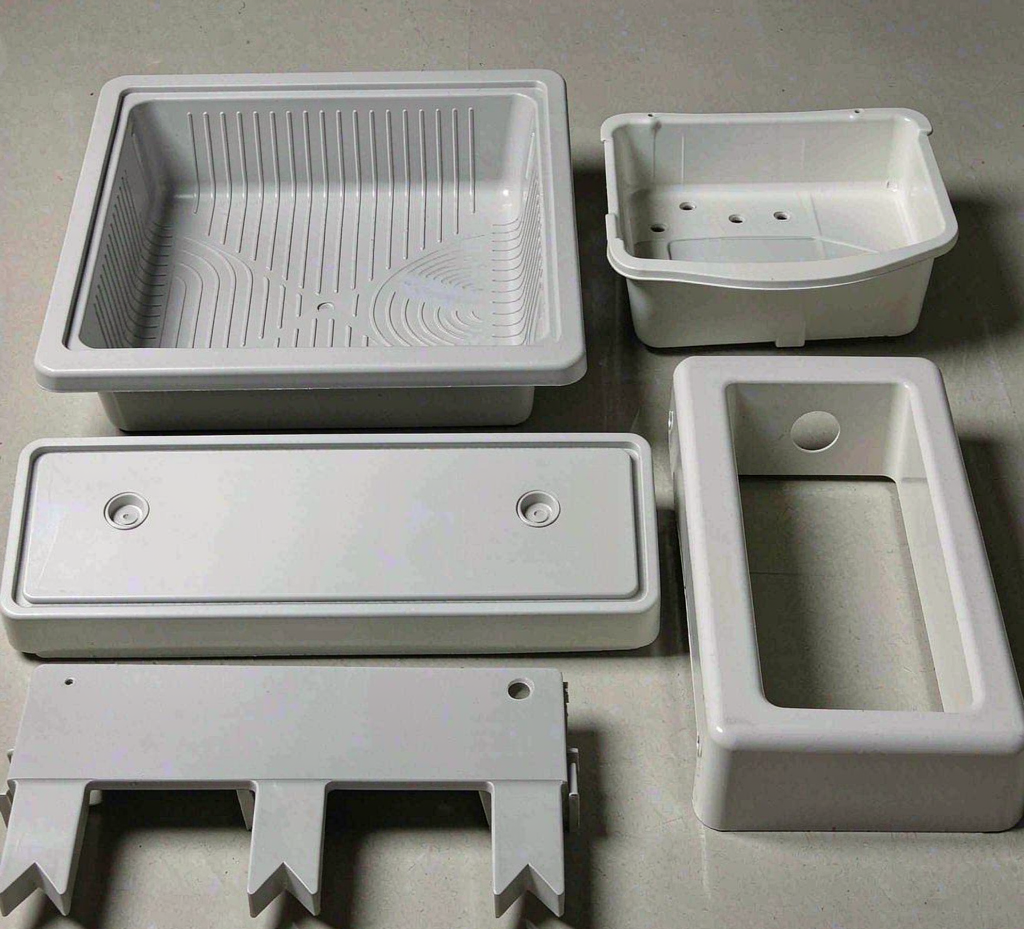
Custom OEM components
Parts engineered to your drawings and assembly interfaces, not catalog guesses.
DFM & tooling review
Snap-fit, warpage and cosmetic risks reviewed before tooling kickoff.
Material selection
Grade chosen against service environment — detergent, humidity, cold, heat.
Long-term supply
Repeat orders, tooling records and version control across the program life.
01 · White Goods Part Categories by Appliance Type
We supply molded plastic components for the four major white goods families — washing machines and dryers, refrigerators and freezers, dishwashers, and ovens and cooking appliances. Each family is listed below with its typical parts and the engineering conditions that matter most in service.
Washing machines & dryers
Detergent drawers and dispenser housings; door ring trim, handles, filter covers and mounting brackets; control panel supports, inner covers and functional housings; water-path plastic parts where applicable.
Focus: detergent resistance, assembly fit, snap-fit reliability, humid-heat environment, long-term repeat supply.
Refrigerators & freezers
Drawers, door bins, shelf supports and brackets; air-duct covers, mounting brackets and handle-related parts; housings for thermostat and functional modules.
Focus: low-temperature performance, impact, dimensional and assembly fit, large-part molding feasibility.
Dishwashers
Control panels, covers and mounting structures; detergent dispenser housings; filter covers, fluid-path plastic parts and functional brackets.
Focus: detergent and water contact conditions, sealing and assembly requirements, humid-heat environment, material suitability.
Ovens & cooking appliances
Knobs, control housings, panel brackets; plastic structural parts isolated from heat sources; other parts confirmed suitable by use-case and material evaluation.
Focus: operating temperature, electrical and flame-retardancy requirements — general plastic capability is not equivalent to qualification near high-temperature zones.
Part scope is defined against our published process envelope — 50–650 T clamping force and approximately 400 × 400 × 300 mm maximum part size. Structures beyond that envelope, such as full washing machine cabinets or refrigerator liners, are handled through an engineering feasibility review before they are quoted.
02 · Part Groups by Function — the Cross-Cutting View
The same part can appear in several appliances. This second classification organises white goods components by engineering function, so a drawing can be evaluated against the technical requirements that actually drive its design.
| Part group | Typical parts | Engineering focus |
|---|---|---|
| Housings & covers | Outer covers, functional housings, base plates | Dimensions, appearance, wall thickness, mounting features, warpage |
| Control panels & bezels | Control panel housings, bezels, keypad frames | Color and gloss consistency, texture, button fit, surface defect limits |
| Drawers, bins & trays | Crisper drawers, door bins, racks, trays | Load-bearing, low-temperature or humid conditions, snap-fit and guide features |
| Brackets & internal supports | Mounting brackets, internal frames, ribs | Stiffness, bosses, inserts, critical dimensions |
| Water-handling parts | Dispenser housings, filter covers, water-path components | Media compatibility, assembly, leak verification where required |
| Moving & functional parts | Hinge-related plastic parts, sliders, functional arms | Wear, fatigue, fit and service-life requirements |
03 · Published Process Envelope for Appliance Parts
The table below is the process envelope we publish for injection molding. Exact limits depend on part geometry and resin, and are confirmed in engineering review — the envelope defines what we evaluate, not a blanket guarantee.
| Parameter | Published capability |
|---|---|
| Clamp force (machine range) | 50 – 650 T |
| Max part size | ≈ 400 × 400 × 300 mm |
| Min part size | ≈ 5 × 5 × 3 mm |
| Wall thickness (typical) | 0.4 – 4.0 mm |
| Dimensional tolerance | ±0.05 mm standard · ±0.02 mm precision |
| Mold life | 100k – 1,000k+ shots (steel-dependent) |
| Production volume | 1k – 1M+ parts / year |
| Supported resins | ABS, PP, PE, PC, PA, POM, TPU, PEEK, PPS & more |
| Insert / overmolding | Supported |
| Accepted file formats | STEP, IGES, STL, DWG, DXF, PDF |
| Inspection methods | CMM, calipers, gauges, FAI reports |
| Quality system | ISO 9001 |
Scope boundary
This envelope is the same one published on our injection molding services page. Parts that approach or exceed it are not automatically out of scope — they are routed through an engineering feasibility review before we quote or commit.
04 · Material Selection — How the Grade Is Chosen
White goods material selection is driven by service environment: detergent and cleaning-agent contact, humidity, low temperature, vibration, impact, and proximity to heat sources. The families below are evaluation directions, not fixed recommendations — grade, masterbatch and additives are confirmed per project.
| Material family | Typical white goods uses | Factors to evaluate |
|---|---|---|
| ABS | Panels, housings, knobs, decorative parts | Impact, color, gloss, heat resistance, detergent resistance |
| PC/ABS | Housings and control panels where toughness and heat resistance are both needed | Specific grade, surface quality, stress, dimensional change |
| PP | Drawers, covers, functional parts | Shrinkage, warpage, low-temperature impact, chemical compatibility |
| HIPS | Specific liners, covers and structural parts | Stiffness, impact, appearance, service environment |
| PA / PA-GF | Structural brackets, gears, load-bearing parts | Moisture absorption, shrinkage, fiber orientation, dimensional stability |
| POM | Sliding parts, gears, mechanical moving parts | Wear, fit, lubrication, temperature and chemical environment |
| PC, PBT, flame-retardant grades | Transparent functional parts; electrical and structural applications | Specific grade, thickness, thermal environment, required documentation |
Material decisions are made against the confirmed grade, masterbatch, additives, wall thickness and actual use conditions — never from the material family name alone. Grade-level detail for individual families is covered in the materials section and the PP material guide.
05 · Process Route Selection — Not Every Part Is an Injection Molding Part
White goods programs include parts that do not fit a standard injection molding route. The route is selected per part situation, and we only present routes confirmed as supportable for your project.
| Part situation | Route to evaluate | What we review |
|---|---|---|
| Solid or ribbed parts | Injection molding | Tooling investment, material, cavity count, warpage, unit cost |
| Hollow containers or air-duct structures | Injection molding, blow molding or other suitable process | Structure, wall thickness, material and route feasibility |
| Soft-hard combined parts | Overmolding, two-shot / multi-material injection | Material compatibility, bond strength, tool structure, process conditions |
| Parts with metal inserts | Insert molding or post-molding assembly | Insert positioning, bonding, assembly and inspection requirements |
| Visible decorative parts | Injection molding with applicable surface decoration | Cosmetic standards, color, texture, secondary-process consistency |
Tooling, insert molding and overmolding are covered in depth on their dedicated pages: injection mold making and custom plastic components.
06 · White Goods DFM & Quality Control
White goods parts fail in specific, predictable ways: sink marks on thick sections, warpage on large flats, color drift between batches, snap-fit or boss failure at assembly, and dimensional drift over a long production run. The table below lists the risks we review and the control focus for each.
| Risk | Control focus in DFM and quality planning |
|---|---|
| Sink marks & warpage | Wall thickness, rib design, gate location, cooling and process conditions evaluated in DFM review |
| Color & gloss variation | Color reference, resin and masterbatch confirmation, cosmetic boundary samples, batch checks |
| Snap-fit & boss failure | Snap-fit and boss geometry, assembly force and crack-risk review before tooling |
| Dimensional variation | Critical dimension definition, first-article inspection and measurement method |
| Material substitution | No change of the specified resin or grade without customer approval |
| Tool wear & repeat orders | Tool maintenance, version management, issue records, repeat-order confirmation |
How inspection is scoped
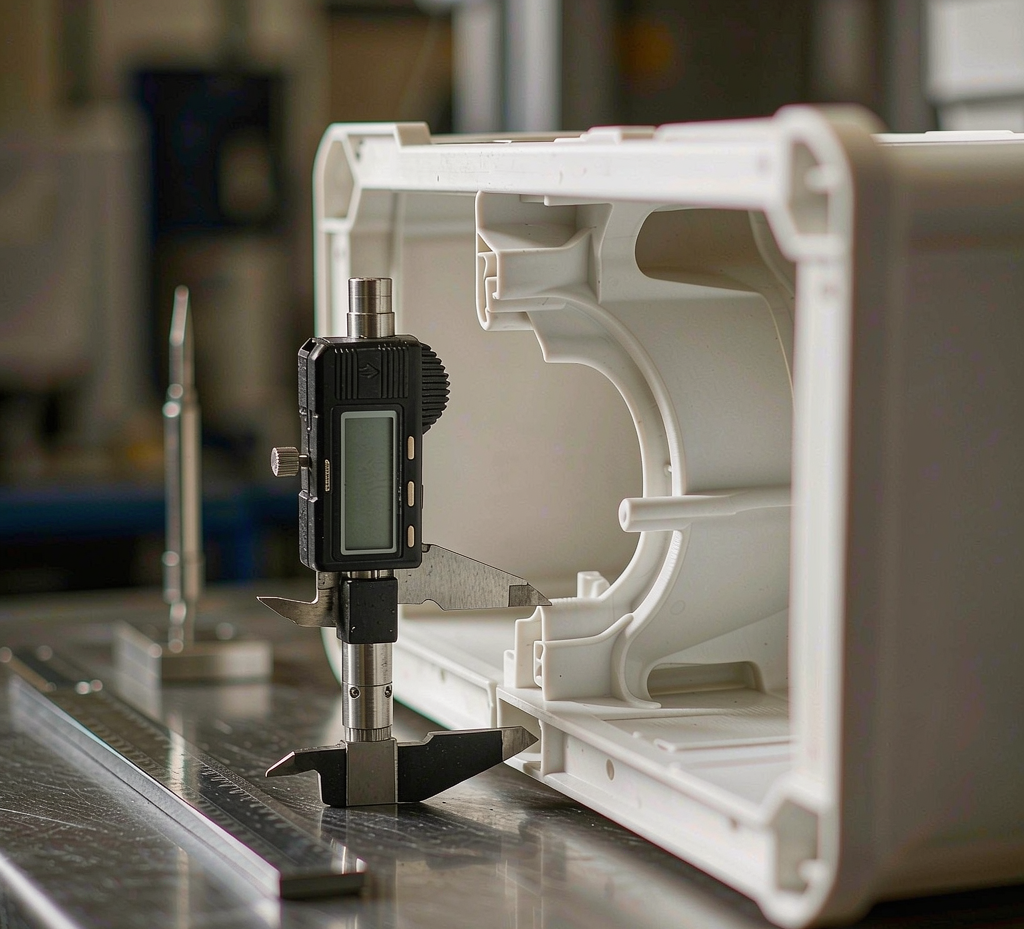
Inspection scope is agreed per project in the quality plan — not every check applies to every order. Depending on the part, this can include first-article inspection with recorded critical dimensions, batch dimensional checks using CMM, calipers or gauges, and cosmetic checks against an approved boundary sample.
For cosmetic parts, the agreed reference — color standard, gloss level, texture, and defect limits for flow marks, weld lines and scratches — is defined with your team before production, so acceptance criteria exist before the first shot rather than after it.
07 · Long-Term Component Supply & Spare Parts
White goods programs run for years beyond the last unit sold. EU ecodesign regulations set spare-parts availability obligations on appliance manufacturers, importers and authorised representatives — not on component suppliers like us — but for an OEM component supplier the practical questions are tooling management, version retention and approved replenishment across the program life.
| Regulation | Appliance scope | Plastic-related spare parts referenced | Availability requirement |
|---|---|---|---|
| Regulation (EU) 2019/2023 | Household washing machines and washer-dryers | Door, door hinge and seals, door locking assembly, plastic peripherals such as detergent dispensers | Minimum 10 years after the last unit of the model is placed on the market; delivery within 15 working days |
| Regulation (EU) 2019/2019 | Refrigerating appliances | Door handles, door hinges, trays and baskets (7 years); door gaskets (10 years) | Minimum 7 / 10 years after the last unit is placed on the market; delivery within 15 working days |
| Regulation (EU) 2019/2022 | Household dishwashers | Door hinge and seals, other seals, spray arms, drain filters, interior racks, plastic peripherals such as baskets and lids | Minimum 10 years; professional repairers and end-users |
Who the obligation belongs to
These obligations rest with the appliance manufacturer, importer or authorised representative — a component supplier does not carry them directly. What an OEM needs from a component supplier is the other half: a supplier that can keep tooling, drawings, material grades and versions aligned across a program that outlives its original production run.
What we support per program
- Repeat orders of approved parts, quoted against existing tooling records
- Tooling maintenance and status records retained per program
- Drawings, material grades and version management under customer approval
- Spares quoting for discontinued or revised programs
- Feasibility assessment for small-batch replenishment
Each item is confirmed per project as part of the commercial agreement — we list what we can support, and define scope before production starts rather than implying blanket commitments.
08 · RFQ Checklist — What to Send With Your First Inquiry
A white goods inquiry becomes an evaluable project when it carries nine pieces of information. Use the checklist below when preparing your request — it mirrors what our engineering team needs to review feasibility, tooling scope and inspection requirements.
| # | Information | Why it matters |
|---|---|---|
| 1 | Company & work email | Identifies the buying organization and a traceable contact |
| 2 | Appliance type | Washing machine, refrigerator, dishwasher, dryer or other — sets the service-environment assumptions |
| 3 | Part name & CAD upload | Defines geometry and interfaces; STEP, IGES, STL, DWG, DXF or PDF |
| 4 | Resin grade / material requirement | Confirms the material direction — or flags it as open for evaluation |
| 5 | Initial quantity & annual volume | Drives tooling investment, cavity count and batch economics |
| 6 | Color / texture / cosmetic standard | Sets the appearance reference for visible parts |
| 7 | Critical dimensions & assembly requirements | Defines what must hold at assembly, and how it is verified |
| 8 | Testing / compliance documents | Confirms material files and any project-specific documentation |
| 9 | Target delivery & product lifecycle | Sets program timing, repeat-order and spares expectations |
If the drawing is not final, reference images plus a requirement summary are enough to start. Engineering will confirm what additional data — material grade, GD&T, tolerances or interface drawings — is needed before a firm quote.
09 · Frequently Asked Questions
What white goods plastic components can you manufacture?
We manufacture molded plastic components for major household appliances — washing machine and dryer parts such as detergent drawers, dispenser housings, door trim and filter covers; refrigerator and freezer drawers, door bins, shelf supports and air-duct covers; dishwasher control panels, dispenser housings and filter covers; and oven control housings and panel brackets. Parts are evaluated against our published process envelope — 50–650 T clamping force and a maximum part size of approximately 400 × 400 × 300 mm — and anything outside it goes through an engineering feasibility review before quoting.
Do you manufacture refrigerator drawers, bins and door baskets?
Yes. Refrigerator drawers, door bins, trays and shelf supports are typical white goods components we quote and mold, most commonly in PP and related grades. Each project is evaluated for low-temperature performance, impact, dimensional and assembly fit, and load requirements; large-format parts are checked against the published maximum part size and molding feasibility before production.
Which materials do you use for white goods parts?
Material selection follows the part's function and service environment rather than a fixed list. Common directions include ABS for panels and housings, PC/ABS where toughness and heat resistance are both required, PP for drawers and covers, HIPS for specific liners and covers, PA and PA-GF for structural and load-bearing parts, POM for sliding and moving parts, and flame-retardant grades for electrical or structural applications. Grade, masterbatch and additive choices are confirmed per project.
Can you produce control panels and other visible cosmetic parts?
Yes. Control panel housings, bezels and keypad frames are produced with color, gloss and texture control. Cosmetic projects are managed against an agreed reference: color standards, surface texture, gloss level and defect limits such as flow marks, weld lines and scratches are confirmed with your team before production, with boundary samples and batch checks agreed in the quality plan.
What is your injection molding process envelope for appliance parts?
Our published envelope covers clamping force from 50 to 650 T, part sizes from approximately 5 × 5 × 3 mm up to about 400 × 400 × 300 mm, typical wall thicknesses of 0.4–4.0 mm, dimensional tolerances of ±0.05 mm standard and ±0.02 mm precision, and mold life from 100k to over 1M shots depending on tool steel. Production volumes from around 1k to 1M+ parts per year are supported. Exact limits depend on geometry and resin and are confirmed in engineering review.
How do you keep color and gloss consistent between batches?
Cosmetic consistency is managed through an agreed reference rather than verbal description. Before production we confirm the color standard, resin and masterbatch, gloss level and surface texture with your team; a cosmetic boundary sample or approved master sample is then used as the reference, with batch-to-batch checks agreed in the quality plan. Color matching is verified against the agreed reference, and any material or masterbatch change requires your approval.
Do you support insert molding and overmolding for appliance assemblies?
Yes — insert molding and overmolding are supported process routes, and two-shot / multi-material molding is evaluated per project. For parts combining soft and hard materials or requiring metal inserts, we review material compatibility, bond strength, insert positioning, tool structure and assembly requirements during DFM, and confirm the route and inspection scope before tooling kickoff.
How are repeat orders and spare parts handled after a program ends?
Repeat-order and spares handling is part of our long-term supply support. For approved parts we retain tooling records and maintenance status, manage drawings, material grades and version changes under your approval, and quote replenishment orders — including small batches — through a feasibility assessment. EU ecodesign regulations place spare-parts availability obligations on appliance manufacturers, importers and authorised representatives; our role is to keep the component and tooling side of that program aligned across its lifecycle.
What documentation can you provide with white goods orders?
Documentation scope is agreed per project in the quality plan. Depending on requirements this can include first-article inspection (FAI) reports, dimensional inspection records using CMM, calipers or gauges, and material documentation for the confirmed grade. Our quality system is certified to ISO 9001:2015. Any market-specific or customer-specified test documentation is confirmed project by project rather than assumed.
What information do you need to quote a white goods component project?
To evaluate a project we need: your company and work email; the appliance type; the part name and CAD file (STEP, IGES, STL, DWG, DXF or PDF); the resin grade or material requirement; initial quantity and annual volume; color, texture or cosmetic standard; critical dimensions and assembly requirements; any testing or compliance documents required; and your target delivery date and product lifecycle. If the drawing is not final, reference images and a requirement summary are enough to start.
Planning a white goods component program?
Send drawings, material requirements and volume targets. Our engineering team reviews molding feasibility, tooling scope and inspection requirements, then returns a project-specific proposal — including repeat-order and spares handling where the program needs it.
- DFM review before tooling kickoff
- Cosmetic and dimensional scope agreed up front
- Long-term supply and version management per program

Reviews molding feasibility, tooling requirements and quality documentation for appliance and functional component programs. Goldcattle has manufactured custom plastic and metal parts since 1998 under an ISO 9001:2015 quality system.