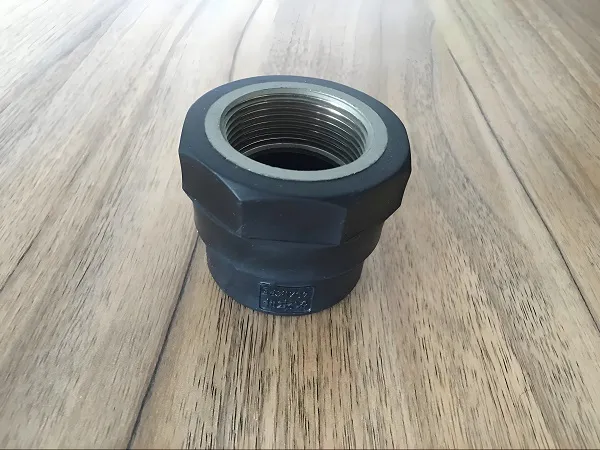
Custom CNC Machined Stainless Steel Industrial Fittings
A fitting is not a catalogue item when the thread, the seal and the bore all have to match one machine. This page explains how we plan and check those three things from your drawing. It also says clearly what we do not claim.
At a glance
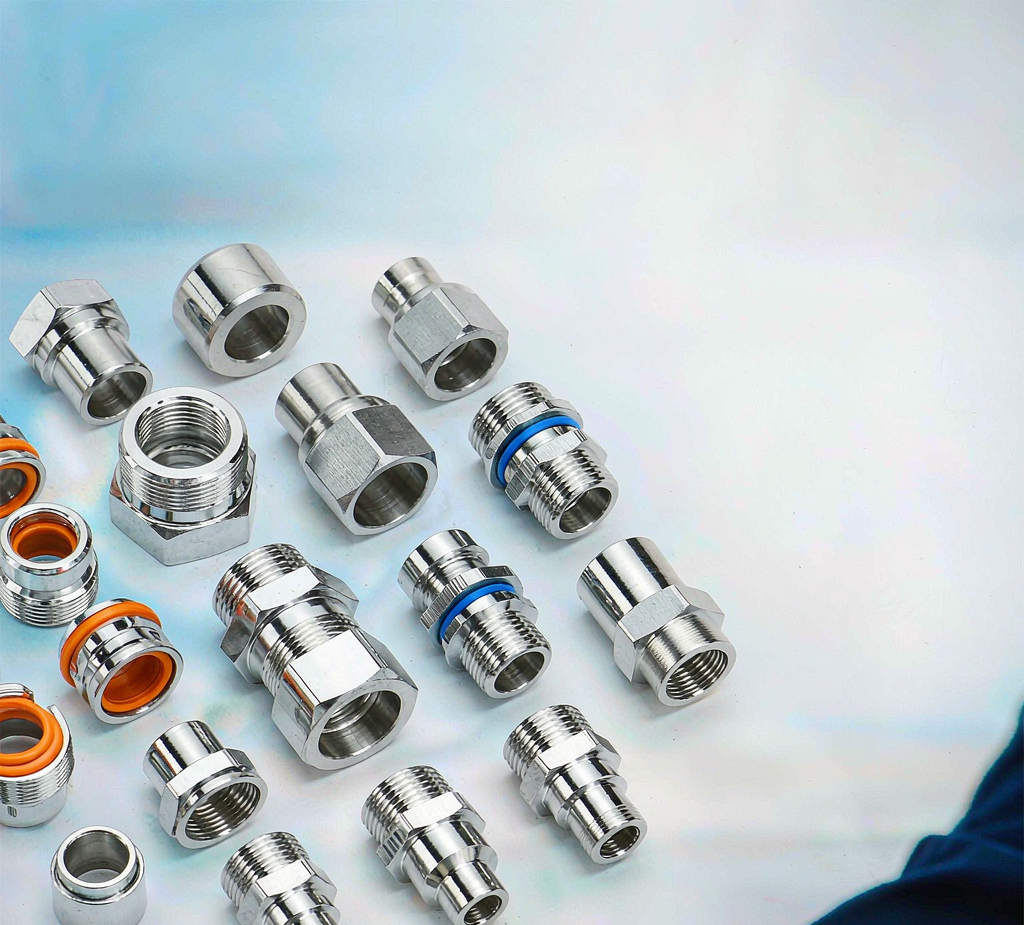
Custom stainless steel industrial fittings are made-to-order metal parts that join tubes, hoses, valves, pumps and instruments. We machine them from stainless bar stock with CNC turning and milling. The features that decide whether a fitting works are the thread standard, the sealing face, the internal bore and how these three sit relative to each other. We confirm each one in writing before we quote. We do not sell a standard pipe fitting catalogue, and a machined part does not carry a pressure rating on its own.
What We Make, and What We Do Not
We make the machined fitting. We do not make the hose, the valve assembly, the sensor or the pressure certificate for the finished system. We work from your drawing. Each part is planned against one connection interface, not taken from a shelf.
This page is a product application page, not a general material guide. Our stainless steel CNC machining page covers the wider material and process background. Our valve body page covers a different part family. Those pages answer different buying needs.
Where we draw the line
- We do not sell a standard catalogue of elbows, tees, flanges or certified pressure pipe fittings.
- We do not present forging, casting or welding as an in-house process. Elbows and multi-port bodies often need a bought blank, which we confirm before quoting.
- We do not claim that our parts interchange with named fitting brands, or that a machined body matches a branded tube fitting set.
- We do not print a pressure class, a CE or PED approval, an API approval, or a blanket tolerance for every thread and bore.
- We do confirm the thread standard, the seal type, the grade, the key sizes, the inspection method and the record format in writing before a price is issued.
What Buyers Check First
A buyer does not start with a machine list. They start with the connection. If the thread or the seal is wrong, a well-made part still leaks. The table below is the list we work through at enquiry. It is also the list we answer in writing before a price goes out.
| Decision factor | What we agree at enquiry |
|---|---|
| Thread and sealing standard | NPT, BSPP, BSPT, metric, UNF, JIC, DIN or ORFS, as named on the drawing |
| Position of the seal | Cone, flat face, groove or thread seal |
| Bore and flow path | Diameter, depth, cross holes and alignment |
| Material and medium | Grade, what flows through it, temperature and cleaning agents |
| Pressure duty | Whether a test or a product rule applies to this order |
| Surface treatment | Passivation, polishing, masking and the re-check after treatment |
| Inspection record | Which sizes, which gauge and which report format |
| Repeat supply | Sample, small batch and repeat order control |
Three items cause most first-order problems. A thread named only by its size. A sealing face that is not marked on the drawing. A surface treatment agreed after the final sizes were set. We ask for all three early.
Seven Fitting Types We Machine
These seven types cover most custom fitting work. Each one changes which sizes matter most. An adapter needs two correct thread ends. A bulkhead fitting needs a true panel face. A multi-port block needs its ports to meet inside the part.
| Part type | What it does | What we check first |
|---|---|---|
| Threaded adapters | Join two thread sizes or two thread systems | Standard, engagement length, hex flats, bore |
| Straight connectors and unions | Join tube to tube or tube to equipment | Bore, end faces, concentricity |
| Hydraulic fittings | Join hydraulic lines and hose ends | Cone seat, thread, seal design |
| Instrumentation fittings | Join gauge, sensor and test lines | Small bores, port depth, sealing face |
| Bulkhead fittings | Pass a line through a panel or wall | Panel hole, lock nut, face seal |
| Custom elbows, tees and multi-port parts | Change direction or split a line | Relative port positions, cross holes, blank supply |
| Precision fluid connectors | Control flow through a special bore or seat | Bore size, seat form, internal burrs |
Related shapes include threaded nipples, reducing adapters, hex bushings, pipe plugs, orifice fittings, test ports, custom nozzles and pump or valve connectors. The list describes machining needs, not stock items. We do not hold these parts in a catalogue.
Thread Standards: A Size Is Not a Standard
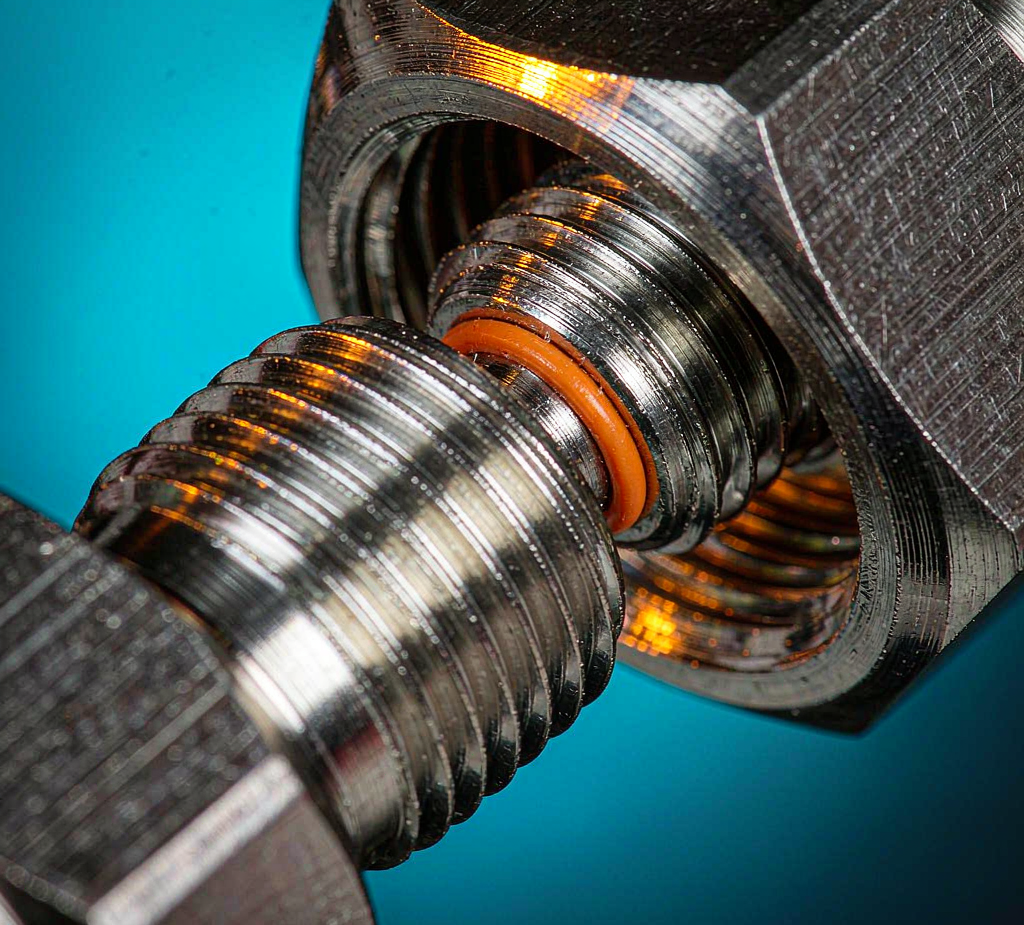
A thread size is not a thread standard. A note that says only "half inch" tells us nothing about the seal. We need the standard, the form, the class and the gauge that will be used to check it.
| Thread or connection | Where buyers use it | What we check |
|---|---|---|
| NPT | US industrial pipe and equipment ports | Taper, gauge, engagement length |
| NPTF | Dryseal pipe joints for specific uses | The named NPTF gauge and rule |
| BSPP / G | Parallel pipe threads on instruments | Thread plus a separate sealing face |
| BSPT / R / Rc | Taper pipe threads | Taper and the seal method |
| ISO metric | European machines and equipment | Pitch, profile, diameter, class |
| UN / UNF | Equipment ports and special joints | Class and pitch |
| SAE ORB | Hydraulic ports with an O-ring | Thread, groove, spot face |
| JIC 37 degree | Hydraulic flare connections | Flare seat angle and surface |
| DIN / ISO 24 degree cone | Hydraulic cone connections | Cone angle and contact face |
| ORFS | O-ring face seal connections | Groove size and face flatness |
Sealing Geometry: The Surface Does the Work
The seal is a surface, not a word on a drawing. We need its angle, its finish and its position relative to the thread axis. A cone can have the right angle and still leak if it sits off centre.
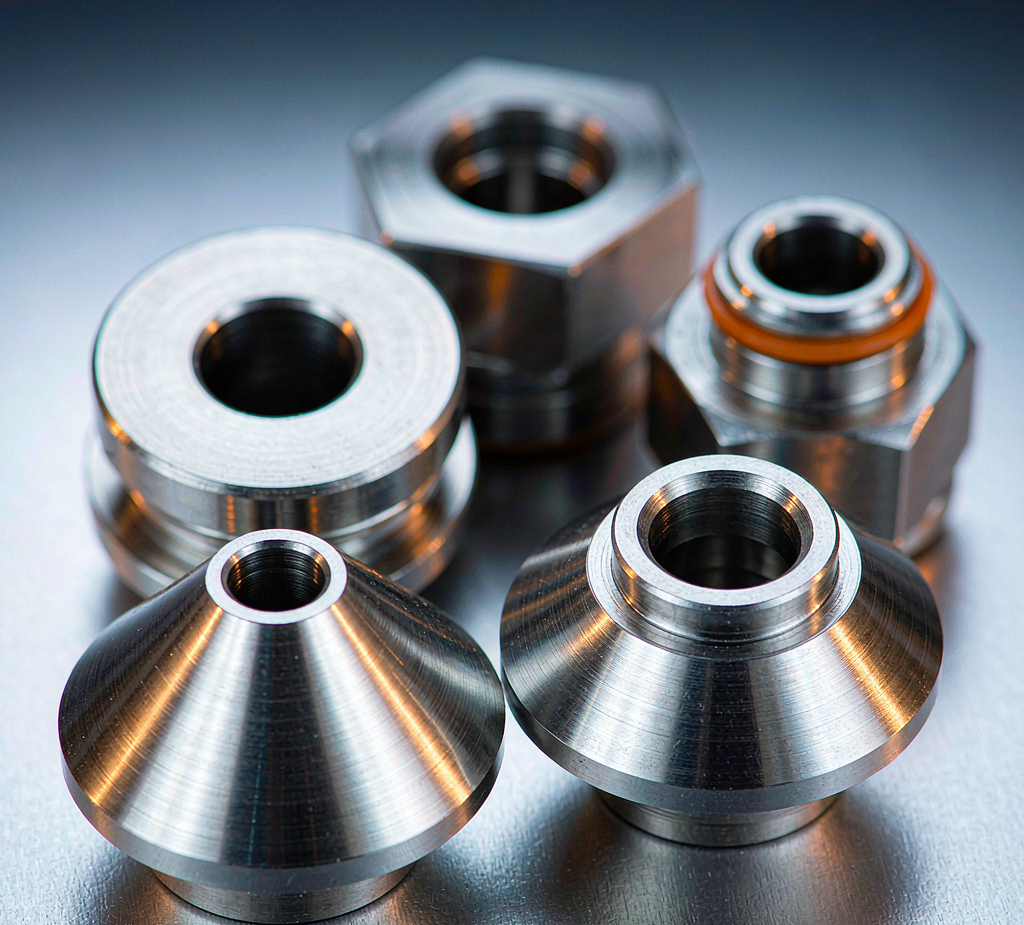
| Sealing type | What it is | What we control |
|---|---|---|
| 37 degree flare seat | A cone that meets a flared tube | Angle, surface, position to the thread axis |
| 24 degree cone seat | A cone used in hydraulic lines | Angle, contact width, face condition |
| O-ring face seal | A flat face with a circular groove | Groove size, face flatness, cleanliness |
| O-ring boss | A threaded port with an O-ring | Thread, groove and spot face |
| Flat face seal | Two flat faces with a gasket | Flatness and surface roughness |
| Thread seal | A taper thread that seals as it tightens | Standard, form and engagement |
Where the drawing allows it, we tie the seat, the bore and the thread to one datum scheme. That keeps the relationship stable from the first cut to the last check. SAE J514 and the ISO 8434 series describe connection types. They apply when your project names them, not to every CNC machined fitting.
Internal Bores and Flow Passages
A fitting can pass an outside check and still restrict flow. The bore is part of the function. For a fluid part, what happens inside matters as much as the thread on the outside.
| Feature | Why it matters | How we plan it |
|---|---|---|
| Through bore | Sets the flow area | Boring or reaming to the drawing |
| Passage alignment | Two ports have to meet | One setup where possible |
| Cross-drilled holes | Join side ports to the main bore | Drill order and chip control |
| Bore concentricity | Keeps the seal centred | Turn bore and seat in one setup |
| Port depth | Controls tube or fitting insertion | Depth stop and gauge |
| Wall thickness | Holds the part together | Check the smallest section |
| Internal burrs | Loose metal can enter the line | Deburr and clean the crossing |
At a cross hole, the burr sits where two holes meet. We plan how to reach it before we cut. We remove chips, wash and dry the part, and protect the threads and sealing faces. We do not write a blanket burr-free or zero-contamination promise. The cleaning level is agreed for the order.
Materials and the Working Environment
Pick the grade from the medium, not from habit. 316L is a good grade, but it is not right for every fluid. Chloride level, temperature, cleaning agents and crevice shape all change the choice.
| Grade | EN number | Where it often fits | Check first |
|---|---|---|---|
| 303 | 1.4305 | General machined connectors | Corrosion risk in service |
| 304 / 304L | 1.4301 / 1.4307 | General equipment and fluid lines | Welding needs, if any |
| 316 / 316L | 1.4401 / 1.4404 | Many marine, chemical and washdown uses | Chloride level and temperature |
| 17-4PH | 1.4542 | Parts that need higher strength | Material condition and heat treatment |
The EN names are a guide, not a purchase order. The grade, the product form and the supply papers must match your order. Duplex 2205, Hastelloy and other special alloys are quoted only after we confirm the supply and the machining route.
Pressure Rating and Testing: Where We Draw the Line
No. A machined part does not get a pressure rating from a grade name or a tolerance number. A rating needs a design basis, a material state, a defined test and an acceptance rule.
| Factor | Why it matters |
|---|---|
| Part geometry | Shape and corners set where stress builds |
| Minimum wall | The thinnest section often decides |
| Material and condition | Grade plus heat treatment state |
| Thread engagement | Short engagement lowers joint strength |
| Sealing design | Cone, face or thread seal |
| Machining defects | Tool marks, burrs and cracks |
| Installation | Torque, alignment and support |
| Temperature and medium | Heat and corrosion change the limit |
| Applicable rule and test | The standard and the test method for the order |
What we confirm, and what we do not claim
- We confirm the cut plan, the inspection method and the sizes we will report, against your approved drawing.
- We do not claim a pressure class, a CE or PED approval, an API approval, or a completed pressure test unless the test procedure, the acceptance rules and the documents are agreed in writing at quotation.
- We do not treat ASME B16.11 or B16.9 as general CNC fitting rules. They apply only when the product form and the order really call for them.
If your order needs a hydrostatic test or a leak test, say so at enquiry. We then plan the rig, the media, the pressure, the hold time and the record. A material paper covers the metal we bought. It is not a pressure test report, and it does not prove a whole piping system.
CNC Routes: Turning Comes First
Most round fittings are a turning job. More axes help only when the part has ports or faces at several angles. We choose the route from the drawing, not from a machine list.
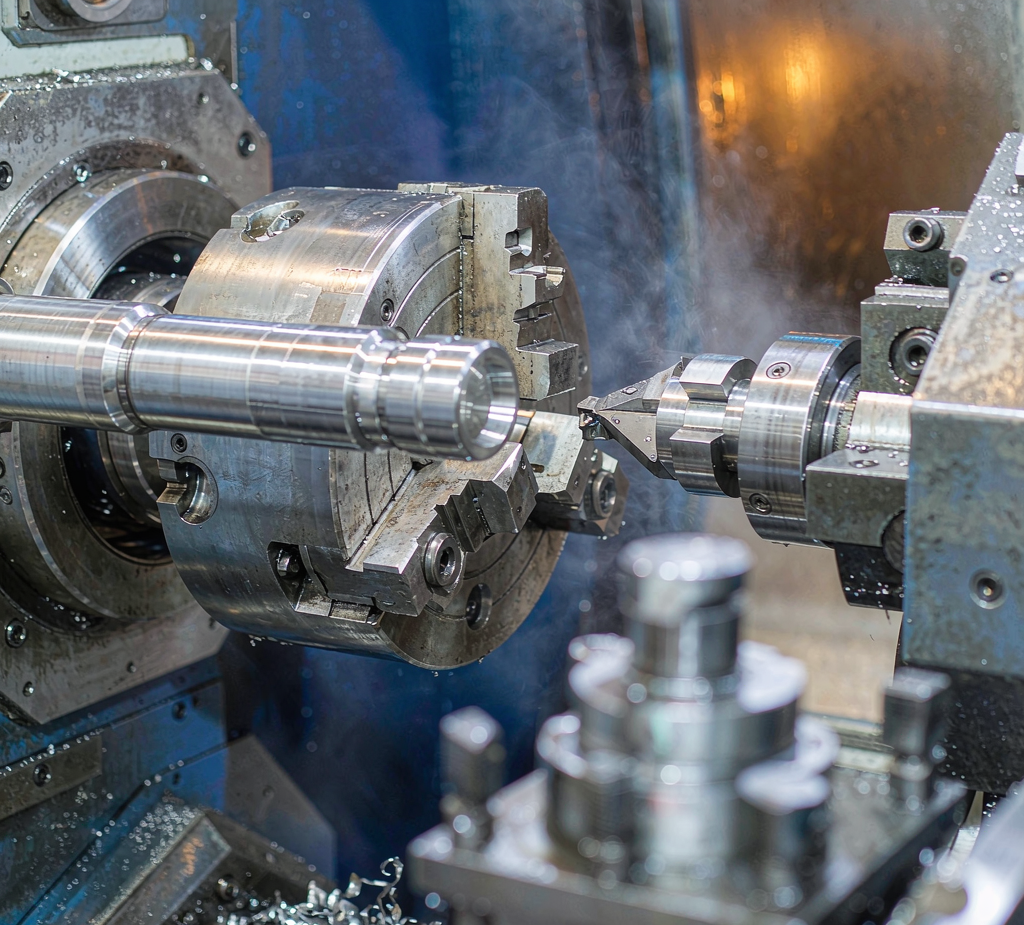
| Process | Best for | What we control |
|---|---|---|
| CNC turning | Round bodies, threads and cone seats | Concentricity, end faces, thread |
| CNC milling | Hex flats, side ports, small blocks | Flat position, side hole location |
| 4-axis work | Ports on several sides | Fewer setups, one datum chain |
| 5-axis work | Angled ports and tilted faces | Tool reach on complex geometry |
| Drilling and boring | Bores, cross holes, flow paths | Size, depth, chip control |
| Grinding | Selected flat or round faces | Size and surface finish |
For a plain hex adapter, a turning centre with a good setup is often the better route. Our CNC turning services page covers that process in more depth. Angled multi-port bodies may need 5-axis machining, but only when the geometry asks for it.
| From bar stock | From a forged blank | |
|---|---|---|
| Special tooling | Usually none | A forging tool or a blank supplier is needed |
| Samples | Good for non-standard shapes | Good when a blank already exists |
| Material use | More chip waste on complex shapes | Less metal removed |
| Main limits | Bar size and tool reach | Blank supply, cost and batch size |
Our main route is bar stock. We can finish a customer-supplied or confirmed bought blank. We do not present forging or welding as an in-house process on this page.
Surface Finishing, Size Change and Cleaning
Surface work changes size. We agree the order of the steps before we cut. A part that fits before treatment can fail after it.
| Treatment | Used for | Question to agree |
|---|---|---|
| Passivation | General corrosion resistance of stainless parts | Which specification and acceptance check? |
| Electropolishing | Smoother and cleaner surfaces | How much size will be removed? |
| Pickling | Remove scale or oxide after hot work | What happens to the final size? |
| Mechanical polishing | Appearance and contact faces | Which roughness and which faces? |
| Bead blasting | An even matt look | Which areas are masked? |
Passivation, electropolishing and pickling can change a thread fit, a precision bore, a cone seat or an O-ring groove. We agree the treatment, the masked areas and the re-check at enquiry. The size before treatment is not always the size we deliver.
Inspection and Documents
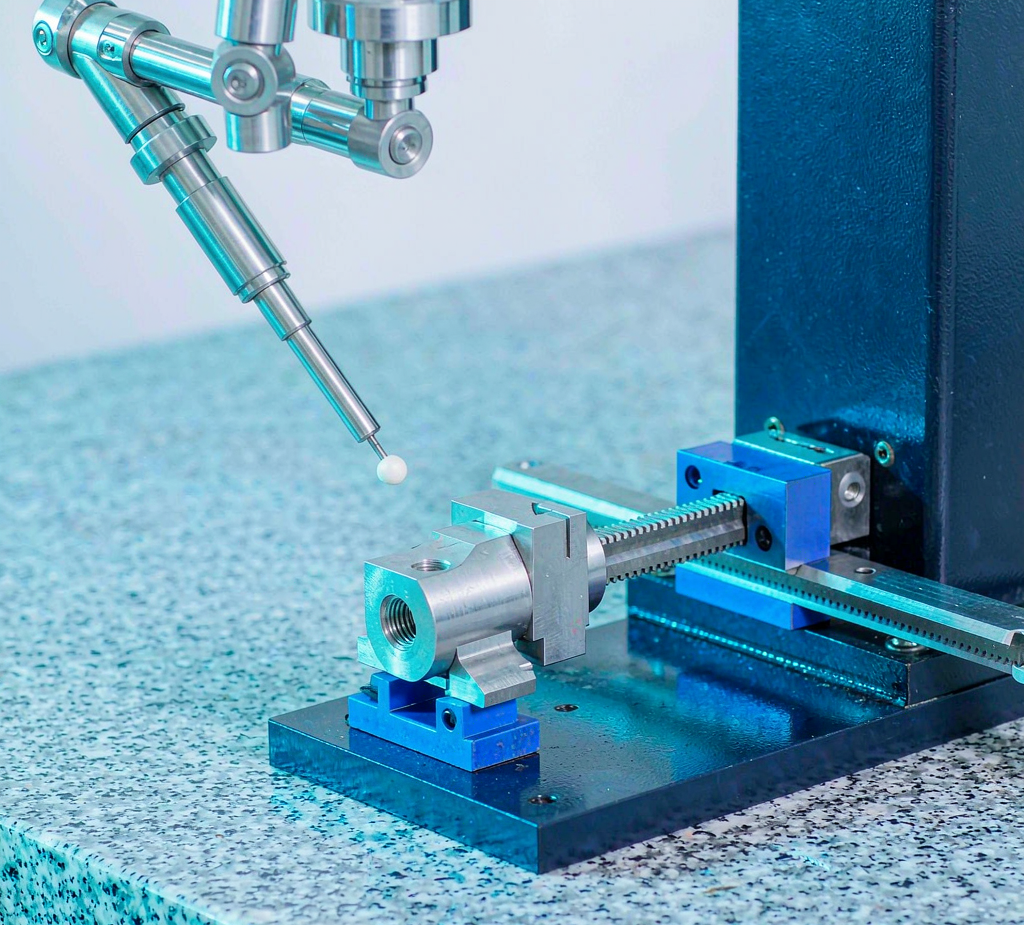
We agree what to measure, with which tool, and in which report. That plan is written before the first cut. A buyer wants to know how a thread is checked and how a lot is traced, not how many machines we own.
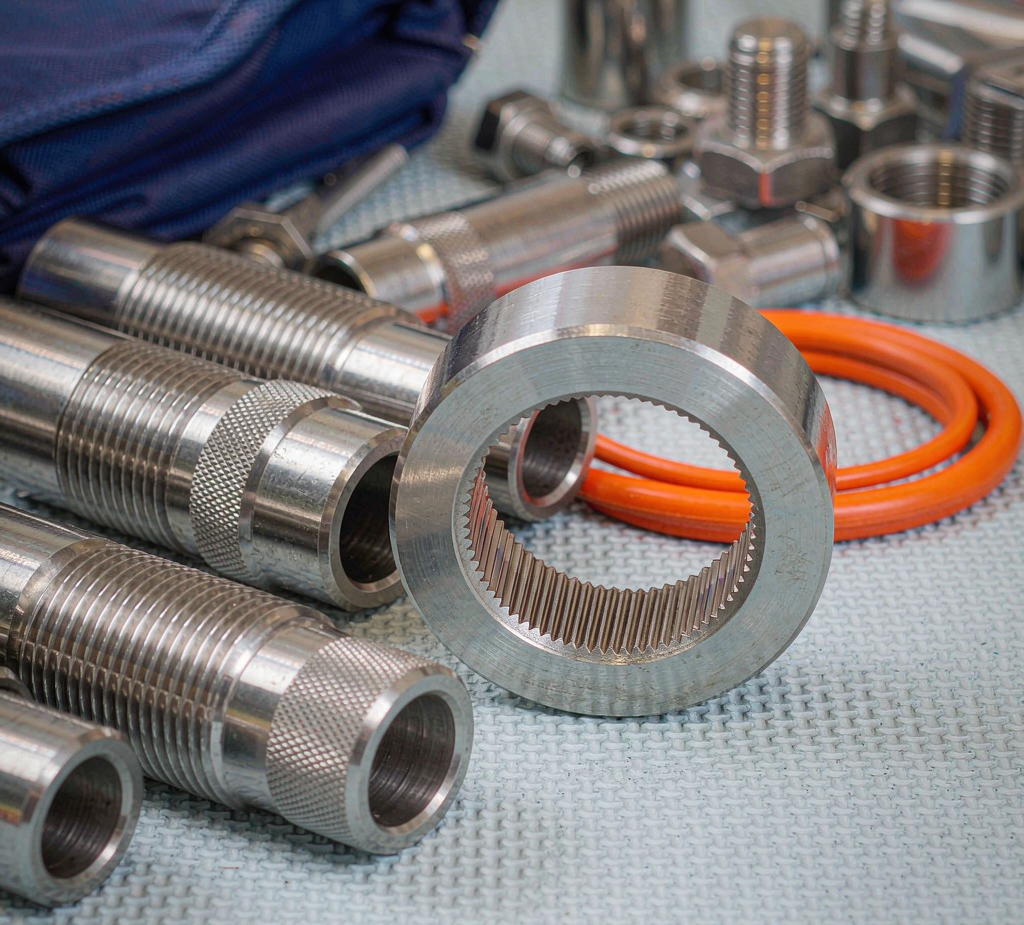
| Feature | How it can be checked |
|---|---|
| External thread | Ring gauge matched to the named standard |
| Internal thread | Plug gauge matched to the named standard |
| Internal bore | Bore gauge or CMM |
| Sealing seat | Profile check or optical measurement |
| Concentricity | CMM or a suitable gauge setup |
| Surface roughness | Surface roughness tester |
| Across flats and length | Caliper, micrometer or CMM |
| Material grade | Supplier papers and an incoming check |
The quality flow has five steps.
Who Buys These Parts
Six groups buy custom fittings, and each one asks a different first question. We do not treat them as one market.
| Buyer | Parts they buy | First question |
|---|---|---|
| Pump and valve OEMs | Valve connectors, threaded adapters, manifold ports | Will the bore and the port line up? |
| Hydraulic and pneumatic OEMs | Hose ends, adapters, bulkhead fittings | Which cone and which thread? |
| Instrument and measurement OEMs | Gauge connectors, test ports, sensor adapters | How small is the bore and how is it checked? |
| Process and chemical equipment OEMs | Special adapters, nozzles, fluid connectors | Which grade and which medium? |
| Food, beverage and pharma OEMs | Sanitary connectors, special tube adapters | Which surface and cleaning rules apply? |
| Marine and maintenance buyers | 316L adapters, replacement parts | Can you copy an old part and supply papers? |
We aim this page at the first three groups. They have clear drawing-based needs for threads, seats and bores. Process, marine and sanitary buyers often need extra material and surface rules, which we review case by case. We do not aim this page at large standard elbows, tees, flanges or certified pressure pipe fittings. Those depend on forging, welding and product approvals, and they are a different supply chain.
From Drawing to Repeat Orders
One part, one agreed plan, then the same plan again. A repeat order should not need a new drawing review.
Prototype quantities start from one piece, subject to drawing review. Samples and repeat batches are quoted separately because setup and inspection scope differ. Lead time depends on geometry, quantity and finishing, so we confirm it at quotation. For a repeat order we keep the same datum scheme, cut plan and inspection method.
What to Send for a Quote
The two items that change a quote most are the thread standard with its sealing type, and the working conditions. Please send both, even if the rest of the drawing is still open.
| Item | What to send |
|---|---|
| 2D drawing | Sizes, tolerances, GD&T and the datum scheme |
| 3D model | STEP, STP or IGES |
| Material | Grade, product form and any supply papers needed |
| Thread standard | NPT, BSPP, BSPT, metric or UNF, with the class |
| Sealing type | Cone, flare, O-ring, flat face or thread seal |
| Bore and passage | Diameter, depth and cross hole positions |
| Working conditions | Medium, temperature and design pressure if it applies |
| Surface treatment | Passivation, electropolishing, polishing, masking |
| Inspection | Gauges, CMM, first article and report format |
| Quantity | Sample, small batch and repeat volume |
| Documents and delivery | Papers you need, target date, destination, packing |
If you have no drawing yet, send a photo of the old part, the mating part and the medium it carries. We can start a first review from that. Do not send a thread size on its own.
Questions Buyers Ask Before an RFQ
Who makes custom stainless steel industrial fittings for OEMs?
A shop that works from your drawing and the connection interface, not a catalogue. Send the 2D drawing, the 3D model and the mating part details. We review the thread, the seal, the bore and the material. Then we quote a cut plan and an inspection plan.
Related: RFQ checklist
Can a CNC shop supply a pressure-rated fitting?
Not from machining alone. A rating needs a design basis, a material state, a test method and an acceptance rule. We machine to the drawing and can plan a test when your order defines it. We do not print a pressure class on this page.
Related: pressure and testing
What is the difference between NPT and BSPP?
NPT is a taper thread that seals as it tightens. BSPP is a parallel thread that needs a separate sealing face or a seal part. A size alone does not tell us which one you need. Name the standard on the drawing.
Related: thread standards
Which documents should I ask a fitting supplier for?
Ask for a dimensional report on the sizes that matter, thread gauge results, material papers for the lot, and a first article report if the order needs one. Agree the format before the first cut. A material paper is not a pressure test report.
Related: inspection and documents
Frequently Asked Questions
What are custom stainless steel industrial fittings?
They are made-to-order metal parts that join tubes, hoses, valves, pumps and instruments. We machine them from stainless bar stock to your drawing. They are not stock catalogue items. Each part has a thread, a sealing face and an internal bore that have to work together. Send a drawing and we plan the cut around those three features.
Which types of stainless steel fittings can you CNC machine?
Common types are threaded adapters, straight unions, hydraulic connectors, instrument fittings, bulkhead fittings, custom nozzles and multi-port blocks. We also make special fluid connectors with a controlled bore or seat. Elbows, tees and crosses often need a forged or welded blank. We quote those only after the blank supply is confirmed.
Can you make custom threaded adapters from my drawing?
Yes. A 2D drawing with the thread standard, the class and the key sizes works best. A STEP or IGES model helps too. We review the two thread ends, the engagement length, the hex flats and the bore before we quote. We do not hold standard adapters in stock. Each part is planned against your drawing.
Which thread standards can you machine?
Buyers commonly ask for NPT, NPTF, BSPP, BSPT, ISO metric, UN, UNF, SAE ORB, JIC 37 degree and DIN 24 degree connections. We ask for the standard and the gauge on the drawing. The thread form, the pitch and the sealing method all matter. We confirm the tooling and the gauge for your size before we accept the order.
What is the difference between NPT and BSPP fittings?
NPT is a taper pipe thread. It seals as the joint tightens. BSPP is a parallel pipe thread. It does not seal on the threads, so it needs a sealing face or a seal part. The two forms are not interchangeable. We need the standard named on your drawing, not just the nominal size.
Can you machine 316L stainless steel fittings?
Yes, where the drawing calls for it and the material is available for that lot. 316L is often chosen for chloride or washdown conditions. It is not the right grade for every fluid. Tell us the medium, the chloride level, the temperature and the cleaning agents. We confirm the grade and the supply papers before we order material.
Which stainless steel grade is best for industrial fittings?
There is no single best grade. 303 cuts easily for general connectors. 304 and 304L suit many general fluid lines. 316 and 316L suit many marine and chemical uses. 17-4PH suits parts that need more strength. The choice depends on the medium, the heat, the working conditions and the papers you need.
Can you machine JIC 37 degree and DIN 24 degree cone seats?
Yes, when the drawing defines the seat. We check the cone angle, the surface finish and the position of the seat relative to the thread axis. A correct angle is not enough if the seat sits off centre. Send the connection standard and the seat details. We agree the gauge and the check method at enquiry.
What tolerances can you hold on stainless steel fittings?
Key sizes follow your drawing. We do not print one blanket number for every thread, bore and cone. A tight feature is reviewed before we accept it. We agree the feature, the datum and the measurement method in writing before we quote. That is more useful to a buyer than a single number on a web page.
Can you supply pressure-rated stainless steel fittings?
We can machine parts to an approved drawing. We do not give a pressure class from a grade name or a machining tolerance. A rating depends on the shape, the wall, the thread engagement, the seal design and the test method. If a hydrostatic or leak test is needed, we agree the procedure, the acceptance rules and the records at quotation.
Can you passivate, electropolish and supply material and dimensional documents?
Yes, where the order names them. Surface work can change a thread fit, a bore or a sealing seat, so we agree the treatment, the masked areas and the re-check before we cut. We can plan a dimensional report, a first article inspection and material papers for the lot we buy. Ask for the report format at enquiry.
What do you need for a custom fitting quote?
Send the 2D drawing and 3D model, the material grade, the thread standard, the sealing type, the bore and passage details, the working medium and temperature, the surface treatment, the inspection needs, the quantity and any papers you need. The thread standard with its sealing type and the working conditions change the quote most.
Related Capability Pages
This page covers one part family. The pages below cover the wider process, material and precision background.
Submit Your Fitting Drawing
Send the 2D drawing, 3D model, thread standard, sealing type, material grade and working conditions. Our engineers review the thread, the seat, the bore, the surface steps and the inspection plan. Then we quote a process we can hold.
Drawings are handled under our standard confidentiality procedure. An NDA can be arranged before files are exchanged.