CNC Machined Watch Crowns & Pushers, Made to Your Drawing
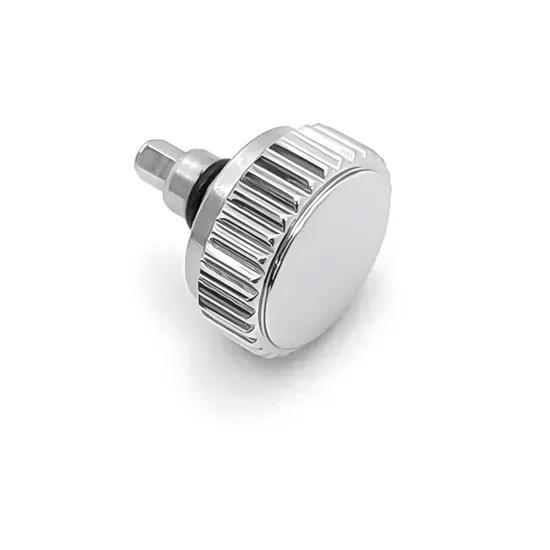
We machine small watch parts to customer drawings: screw-down crowns, crown tubes, chronograph pushers, knurled crowns and stainless steel buttons. This page explains the threads, seal grooves, coaxiality, surface texture and fit that buyers need to check before an order.
At a glance
On this page
Overview
Engineering control
Manufacturing
Buyer decisions
Quick Answer: What Should a Buyer Check?
Watch crowns and pushers are small parts, but their fit and feel are critical. Before you order, fix five things on the drawing: thread size and fit, seal groove dimensions, coaxiality between crown and tube, surface texture and button fit with repeat use. Confirm how each one will be checked.
This page covers custom machined crown and pusher parts. For the machining routes we use, see our CNC turning services and Swiss type turning pages. For the wider machining service, see CNC machining services.
Thread fit
State size, pitch and fit class. Agree how the thread will be checked before production.
Seal groove
Define groove width, depth and finish. A groove alone does not make a watch water resistant.
Coaxiality
Control the crown and tube as a pair so the crown turns and seats correctly.
Button feel
Define fit and repeat action against the mating parts, not by a fixed cycle number.
Five Part Families We Machine
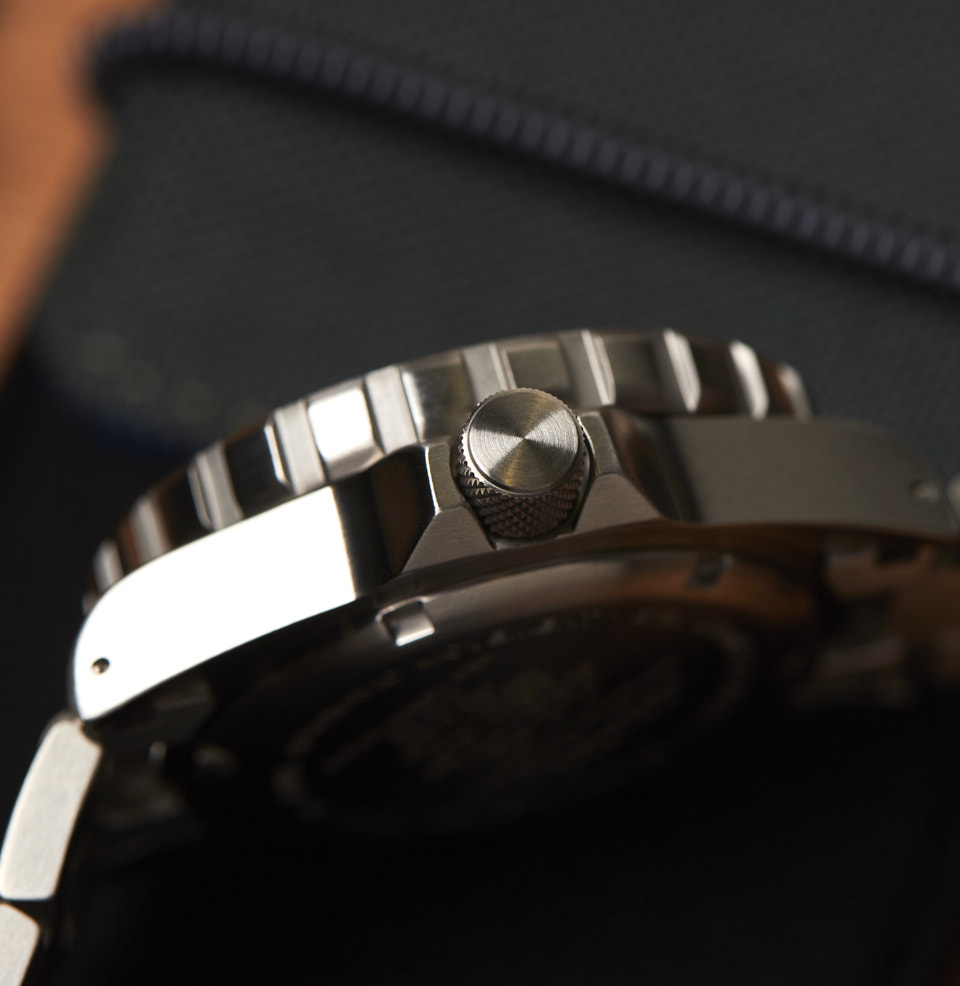
We group watch crown and pusher work into five families. Each one is made to a customer drawing. The families share processes, but their control points are different.
Swipe the table to see all columns.
| Part family | What it does | Main control point |
|---|---|---|
| Screw-down crowns | Knob that screws onto the case tube | Thread fit and seal groove |
| Watch crown tubes | Sleeve fixed to the case for the crown | Coaxiality with the case and crown |
| Chronograph pushers | Buttons that operate timer functions | Stem fit and repeat action |
| Custom knurled crowns | Crown with a grip pattern on the edge | Texture pattern and look |
| Stainless steel buttons | Simple press buttons and caps | Dimension, finish and fit |
We do not keep a catalogue of standard crowns. Every part is reviewed from your drawing or sample, because a crown that fits one case will not automatically fit another.
Thread Accuracy on Small Parts
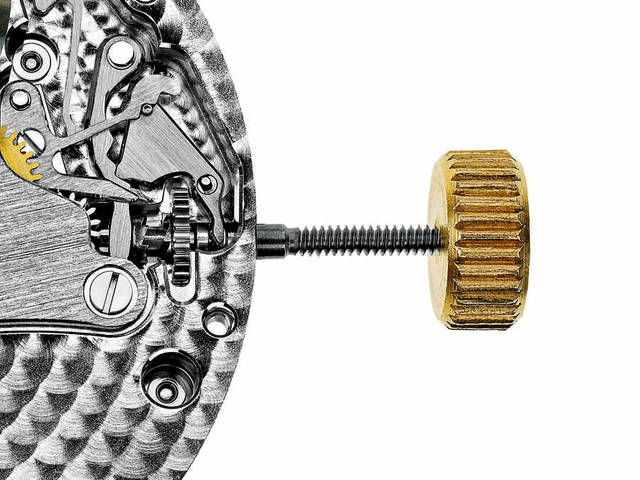
Thread is the first thing a buyer checks on a screw-down crown. A thread that looks right can still fail if the pitch, fit class or minor diameter is wrong.
We take thread size, pitch and fit class from the drawing. We choose the turning or thread-milling route by thread size and part shape. The thread is checked by the method agreed in the inspection plan. We do not promise full gauging of every thread.
Small threads are sensitive to tool wear and setup. Long or fine threads can also deform if the part is thin. We review the thread form, the wall around it and the part material before we set the process.
Swipe the table to see all columns.
| Item to fix | Why it matters |
|---|---|
| Thread size and pitch | Sets the mating crown or tube |
| Fit class | Controls how tight the parts screw together |
| Minor and major diameter | Affects strength and fit |
| Thread length | Sets how far the crown screws on |
| Inspection method | Defines how fit is confirmed |
A dimension such as plus or minus 0.005 mm applies only to qualified CNC features after a process review. It is not a promise for every thread, seal groove or button fit.
Seal Grooves and Crown Tubes
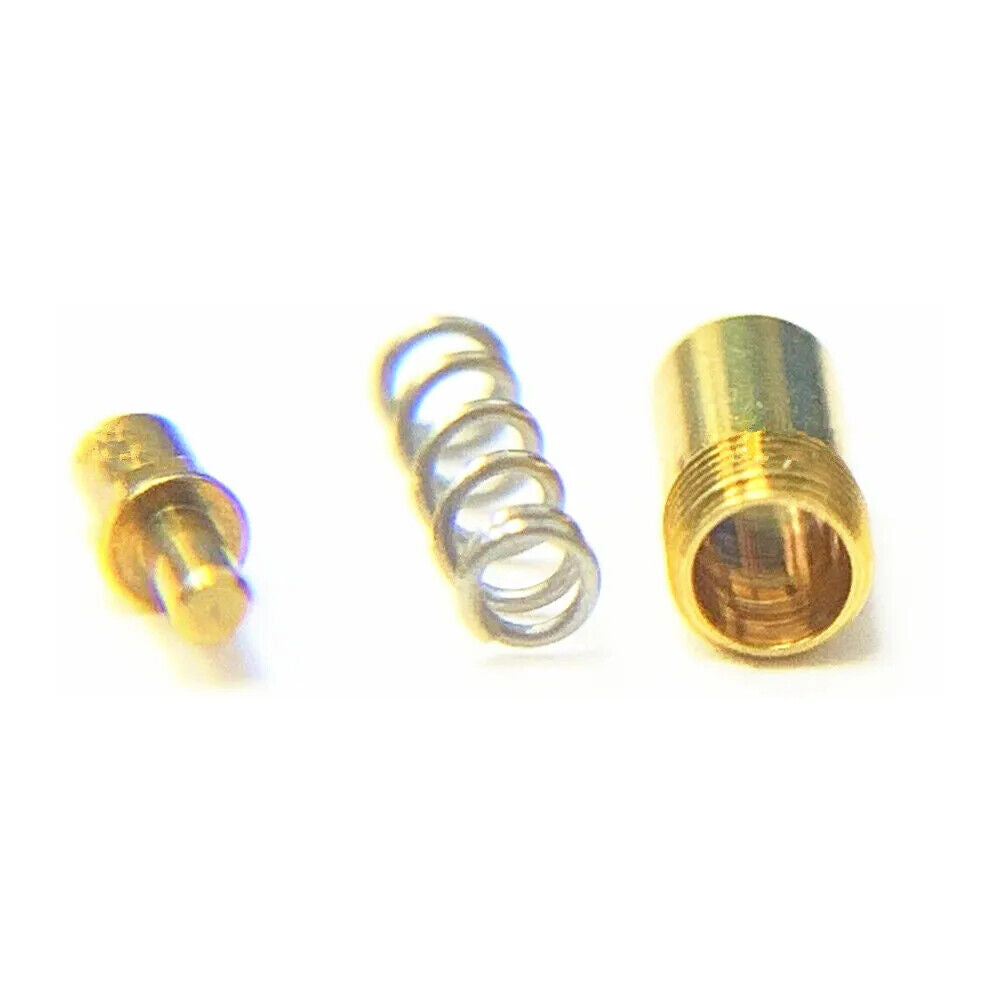
Many screw-down crowns carry a seal groove. The crown tube is the sleeve on the case that the crown screws onto. The two parts must work as a pair.
Seal grooves
Groove width, depth and surface finish come from the drawing. We can include the groove in the turning operation when the part is set up. We check the groove to the agreed method before it leaves the shop.
Crown tubes
The tube must seat on the case and accept the crown at the same time. We review the tube bore, outer diameter and the seating face as one feature set, not as separate dimensions.
A machined seal groove does not make a watch water resistant. Water resistance depends on the seal, the case design, assembly and testing of the complete watch. We machine the metal parts to your drawing; we do not certify a finished watch.
Coaxiality and Runout
Coaxiality is the alignment between the crown, the tube and the case. If these axes do not line up, the crown can bind, sit crooked or wear the seal.
Swipe the table to see all columns.
| Feature | Why buyers check it |
|---|---|
| Crown axis to seating face | Sets how square the crown sits |
| Tube bore to outer diameter | Affects crown alignment |
| Seal groove to thread | Keeps the seal seating even |
| Surface runout | Affects feel and wear |
We review coaxiality from the drawing and plan the setup around it. Turning operations that share one setup can help hold related features. The exact method depends on the part shape and the drawing.
We do not publish a fixed runout value that applies to every crown. The limit comes from your drawing and is checked as agreed in the inspection plan.
Surface Texture and Knurling
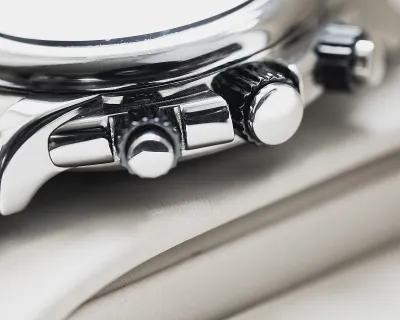
Watch parts are handled and seen up close. Surface texture affects grip, look and how the part feels in use.
Knurling
Knurling adds a grip pattern to the crown edge. We review tooth shape, pitch and depth with you. Some patterns are cut; others are formed. The right route depends on the material and the look you want.
Polishing
Polishing can be applied to faces, edges or the whole part, as the drawing asks. Polishing changes dimensions slightly, so fits and sealing faces need allowance in the plan.
For a new knurled crown, send a drawing or a physical sample. Pattern, pitch and finish are hard to describe in words alone. We confirm the look with you before we cut production parts.
Button Fit and Repeat Use
Chronograph pushers and watch buttons must press smoothly and return to position. The buyer usually cares about feel as much as dimension.
Fit and repeat action depend on the stem, the bore, the spring and the housing. Because these parts come from different sources, we review the assembly, not just the single button.
Swipe the table to see all columns.
| Control item | What to agree first |
|---|---|
| Stem diameter | Fit to the bore and housing |
| Head dimension | Size and look of the button |
| Return feature | How the button returns after a press |
| Mating parts | Who supplies the bore and housing |
We check fit and repeat action against the agreed drawing and assembly requirement. We do not publish a fixed press-cycle number, because the result depends on the design and the mating parts. Tell us how you want it checked.
If you supply the case or housing, send it with the sample. A button that passes on its own can still fail in the real assembly.
Material Choices for Watch Parts
Stainless steel is common for crowns, tubes and buttons because of its look and corrosion behaviour. The final grade follows your drawing.
Swipe the table to see all columns.
| Material | Typical use | Note |
|---|---|---|
| 316L stainless | Crowns, tubes, buttons | Common choice for watch parts |
| 304 stainless | General watch components | Selected by requirement |
| Brass | Internal or plated parts | Review finish and plating |
| Other grades | Special requirement | Reviewed on the drawing |
For more on stainless machining, see our stainless steel CNC machining page. We confirm the grade, finish and any material certificate with you before production.
We do not claim a grade is better for all watch parts. The choice depends on corrosion need, finish, cost and the specification on your drawing.
How We Machine Crowns and Pushers
Five processes do most of the work on watch crown and pusher parts. We select the route by part shape, size and quantity.
Swipe the table to see all columns.
| Process | Used for |
|---|---|
| CNC turning | Crown bodies, tubes, threads and seal grooves |
| CNC milling | Flats, slots and features on button heads |
| Threading | Internal and external threads on crowns and tubes |
| Knurling | Grip pattern on crown edges |
| Precision polishing | Faces, edges and visible surfaces |
Small diameter parts are often run on turning equipment suited to long, slim work. Related features are grouped in one setup where possible, to help hold alignment. We will confirm the exact route when we review your drawing.
We do not make watch movements, springs or complete watches. Our scope is the machined metal parts to your drawing.
ISO 10552 and ISO 22810, Explained
Two standards often get mixed up in watch part enquiries. They cover different things.
Swipe the table to see all columns.
| Standard | Covers | What it does not mean |
|---|---|---|
| ISO 10552:2014 | Design and dimensions of crowns and crown tubes | It is not a watch water resistance test |
| ISO 22810:2010 | Water resistance of a complete watch | It does not certify a single machined part |
ISO 10552 relates to the part. ISO 22810 relates to the finished watch. Machining a crown to a dimension standard does not give a watch a water resistance rating. We machine parts; we do not certify watches.
If your drawing names a standard, we work to that drawing. Tell us which dimensions and tolerances are critical so we can plan inspection around them.
Inspection and Documents
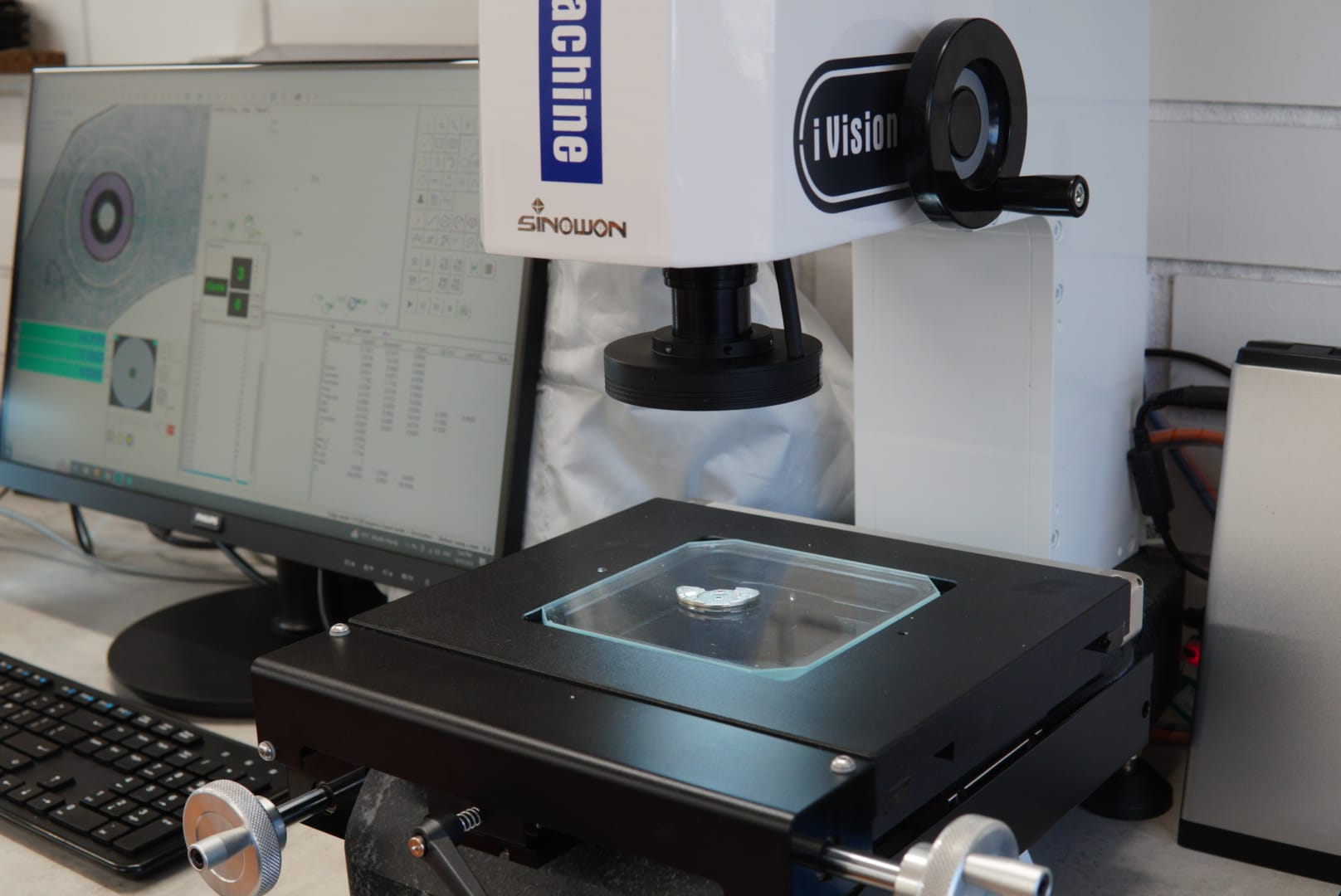
Small parts need inspection matched to their size. We review the drawing first, then confirm which features need measurement and which need a functional check.
Swipe the table to see all columns.
| Item | How we handle it |
|---|---|
| Dimensions | Checked against the drawing |
| Threads | Method agreed in the inspection plan |
| Seal grooves | Checked to drawing width, depth and finish |
| Fit and feel | Confirmed against the supplied sample |
| Documents | Dimensional report, FAI or material certificate on request |
We can provide a dimensional report, first article inspection or a material certificate when the order calls for it. Tell us what you need at the quote stage, not after production.
We do not describe inspection as 100% on every feature. The inspection plan is agreed per part and per drawing.
RFQ Checklist for a Watch Crown or Pusher
A clear enquiry gets a clear quote. Send as much of the following as you have.
Swipe the table to see all columns.
| Item | Example |
|---|---|
| Drawing or sample | 2D drawing, 3D file or a physical part |
| Part family | Crown, tube, pusher or button |
| Material | 316L stainless, for example |
| Thread details | Size, pitch, fit class |
| Finish | Polished, knurled or plated |
| Quantity | Sample and production quantity |
| Inspection | Report, FAI or material certificate |
Ready to quote? Send the drawing and we will review fit, material and process. Use the button below or read our quote process.
Watch Component Machining at Goldcattle
Goldcattle is a custom manufacturer in Xiamen, China. Founded in 1998, we make parts to customer drawings across six processes under one quality system.
Company
Xiamen Goldcattle Plastic & Metal Products Co., Ltd. Founded in 1998.
Machining routes
CNC turning and milling for small precision parts, selected by geometry.
Grade review
Stainless steel and other grades reviewed against the drawing.
Machine base
100+ machines across the six processes in total, not 100+ CNC machines alone.
We also machine other watch parts, including stainless steel watch cases. This page, however, is about crowns and pushers only.
Our scope here is custom machined parts. We do not make complete watches, movements or watch repair work, and we do not publish a factory ranking.
Frequently Asked Questions: Crowns & Pushers
What watch crown and pusher parts do you machine?
We machine screw-down crowns, crown tubes, chronograph pushers, custom knurled crowns and stainless steel watch buttons. These are custom parts made to the customer drawing. We do not make complete watches or movements.
Can you make screw-down crowns with the right thread fit?
Yes. We machine internal and external threads on small parts. Thread size, pitch and fit class are taken from the drawing. The thread is checked by the method agreed in the inspection plan. We do not claim every thread is fully gauged.
How do you control thread accuracy on small watch parts?
Thread accuracy depends on tool condition, machine setup and the part material. We choose the turning or thread-milling route by thread size and part shape. We confirm the inspection method with you before production.
What is the difference between a watch crown and a crown tube?
The crown is the knob you turn. The crown tube is the small sleeve fixed to the case that the crown screws onto. The two must fit as a pair. We can machine either part or both to your drawing.
Can you machine seal grooves on watch crowns?
Yes. Seal grooves can be included in the turning operation when they are on the drawing. Groove width, depth and surface finish are held to the drawing and checked as agreed. A machined groove alone does not make a watch water resistant.
Does a machined crown make a watch waterproof?
No. ISO 10552 covers the design and dimensions of crowns and crown tubes. ISO 22810 covers water resistance testing of a complete watch. Machining a crown to a standard does not certify a watch as water resistant.
What does knurling do on a watch crown?
Knurling adds a grip pattern to the crown edge. It can be cut or formed, and the pattern is set by the drawing or a sample. We confirm tooth shape, pitch and the look you want before we cut production parts.
How do you check button fit and repeat use?
Fit and repeat action are checked against the agreed drawing and assembly requirement. We do not publish a fixed press-cycle number, because the result depends on the design and the mating parts.
Which stainless grades do you use for watch buttons?
Stainless steel such as 316L or 304 can be selected for watch parts. The final grade follows your drawing and requirement. We review the grade, finish and any material certificate with you before production.
What do you need from me to quote a watch crown?
Send a drawing or a clear sample, the part material, thread details, finish, quantity and any inspection requirement. A drawing with dimensions and tolerances gives the fastest and clearest quote.
Need watch crowns or pushers made to your drawing?
Send the drawing or a sample, with the material, thread details, finish and quantity. We will review the fit and machining route and come back with questions or a quote.
Custom watch parts · Drawing-based CNC machining · Xiamen Goldcattle Plastic & Metal Products Co., Ltd.