Custom CNC Automotive Door Hinges
Custom door hinges manufactured for vehicle-specific fit, movement and structural requirements. We produce hinge components and assemblies from customer drawings, 3D CAD files, samples or defined specifications.
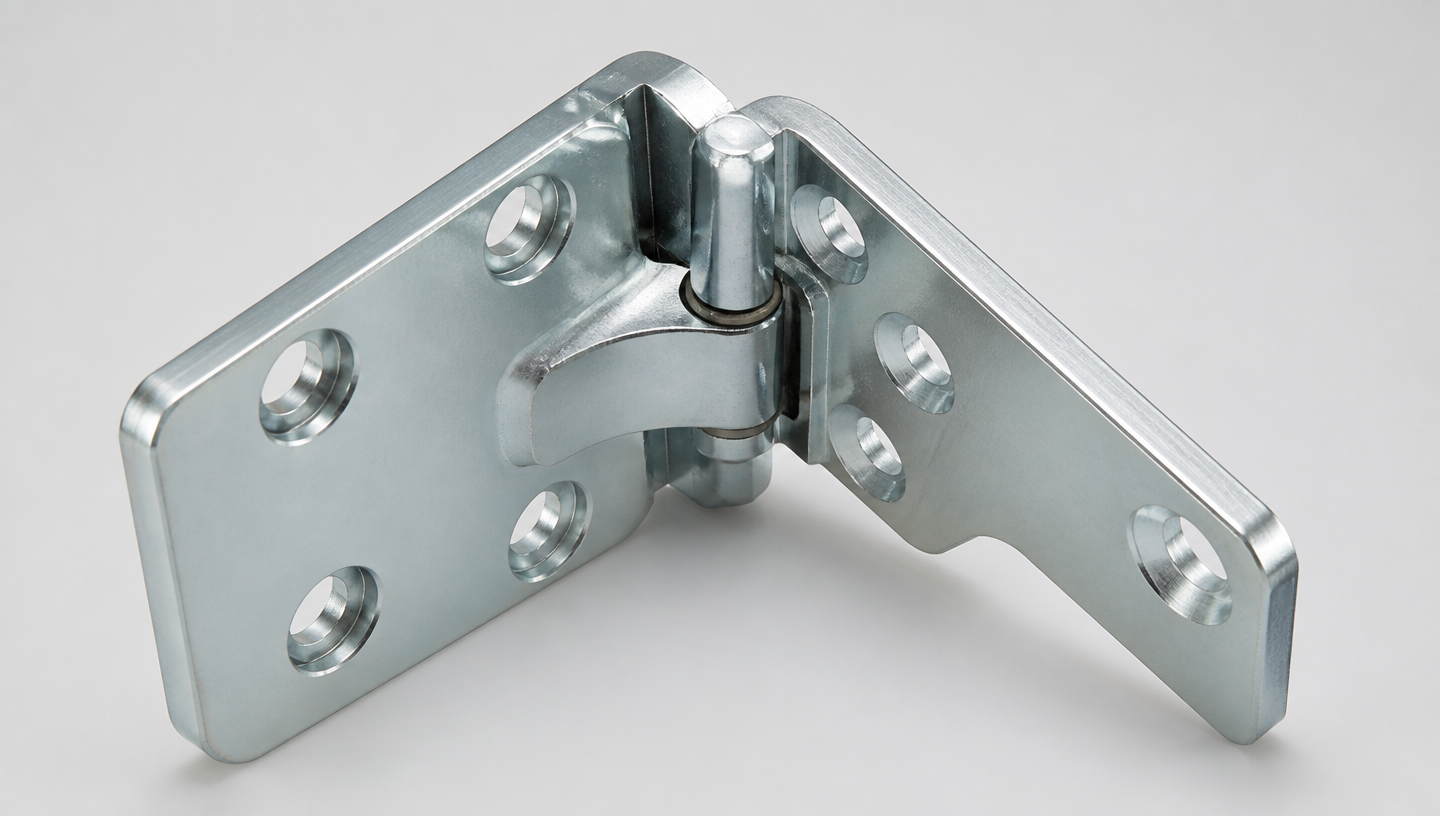
What Automotive Door Hinges Can We Manufacture?
Available for custom manufacturing where the component geometry and manufacturing route are suitable. All hinges are produced to customer specifications — drawings, CAD files or samples.
| Product Type | Typical Application | Notes |
|---|---|---|
| Side Door Hinges | Front and rear passenger doors | Most common automotive hinge type |
| Rear Door Hinges | Rear access and vehicle doors | Commercial and van applications |
| Tailgate Hinges | Vertical or rear-opening panels | Pickup trucks and utility vehicles |
| Hood Hinges | Engine hood / bonnet applications | Depending on geometry suitability |
| Liftgate Hinges | SUVs, vans and utility vehicles | Powered and manual liftgate variants |
| Specialty Hinges | Modified or low-volume vehicle programs | Custom geometry per specification |
| Replacement Hinges | Obsolete or unavailable vehicle components | Reverse engineering from sample |
Automotive Door Hinge Components
An automotive door hinge is an assembly of precision components — not a single machined part. Understanding these elements is essential for specifying and manufacturing the correct component.
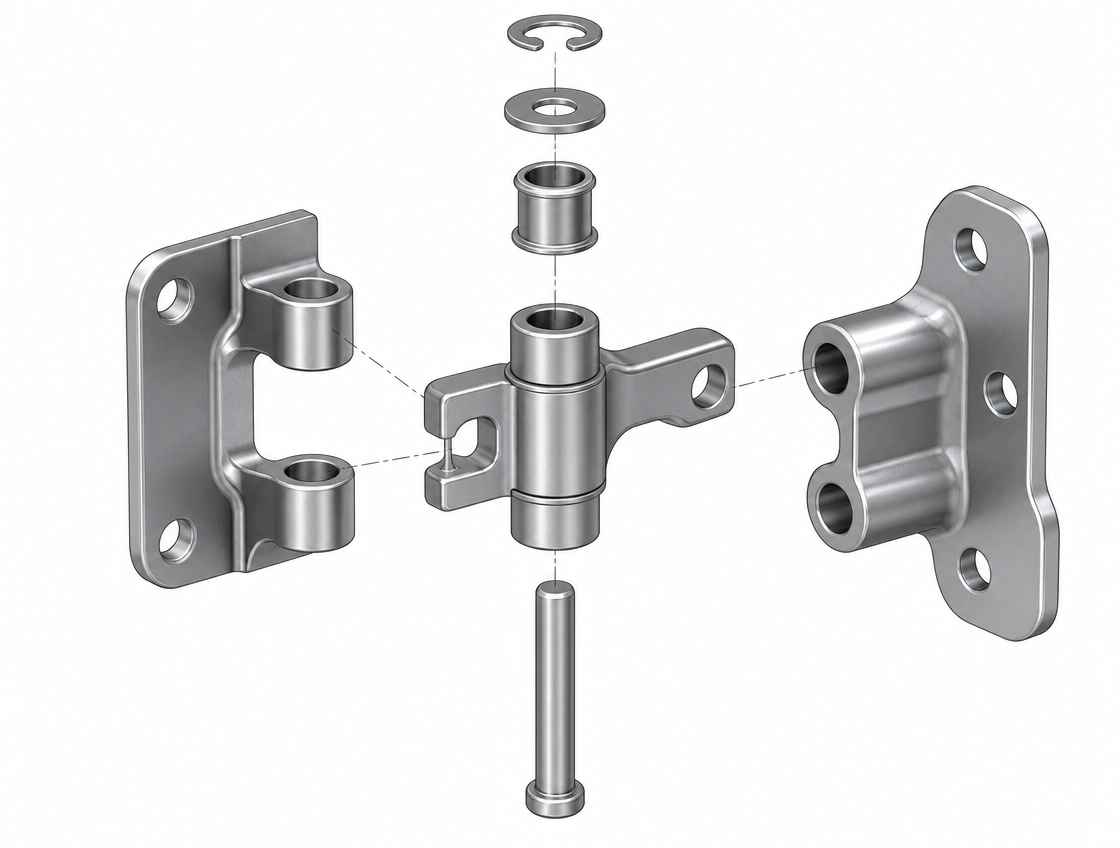
Exploded view: typical automotive door hinge assembly
Hinge Body
Main structural member connecting the door to the vehicle body. Contains the mounting interface and pivot structure.
Door Member
Hinge half that attaches to the door structure. Mounting hole pattern and geometry are vehicle-specific.
Body Member
Hinge half that attaches to the vehicle body pillar. Mounting interface must align with the body structure.
Hinge Pin
Defines the primary rotational axis of the hinge system. Diameter, straightness, surface finish and hardness are critical.
Bushing
Controls relative motion, clearance and wear at the pivot interface. Material, ID/OD and press fit affect hinge performance.
Washer / Spacer
Controls axial position and end play in the hinge assembly.
Retainer
Secures the hinge pin in the assembly. Design varies by application.
Fastening Interface
Determines the positional relationship between the hinge and door/body structure. Hole pattern, diameter and position are critical dimensions.
What Makes an Automotive Door Hinge Different?
An automotive door hinge is not simply a rotating joint. It must maintain the position of the door relative to the vehicle body while allowing controlled movement through the required opening range.
Unlike general-purpose hinges, automotive door hinges are vehicle door-positioning and retention components. Their geometry, strength, and precision directly affect door alignment, sealing, safety and user experience.
Door Position
Hinge geometry determines the relationship between door and body when closed
Swing Path
The hinge axis influences how the door moves during opening and closing
Load Transfer
The hinge transfers door weight and operating loads into the vehicle body structure
Clearances
Pin, bushing and mating interfaces must maintain suitable clearance over the service life
Durability
Repeated opening and closing creates wear and fatigue demands on the hinge system
Automotive Door Hinge Design Considerations
Specifying an automotive door hinge involves more than defining the part outline. Geometry, mechanical loads, durability demands and manufacturing constraints all interact.
Geometry
- Hinge arm shape and offset
- Mounting-hole pattern
- Hinge pin location and axis
- Door/body interface surfaces
- Opening trajectory and range
Mechanical Requirements
- Door mass and load distribution
- Static and dynamic loads
- Opening and closing forces
- Impact-related requirements
- Hinge-axis alignment across mounting points
Durability
- Repeated opening/closing operation
- Pin and bushing wear resistance
- Fatigue life
- Looseness and rattle control
- Corrosion exposure and protection
Manufacturing Requirements
- Machining accessibility
- Hole position and coaxiality
- Flatness and parallelism
- Surface finish specifications
- Heat treatment and coating control
Door Alignment & Hinge Geometry
Hinge dimensions don't just determine whether a door can be installed — they affect the entire door system: gap, flushness, sag, sealing, closing feel and latch alignment.
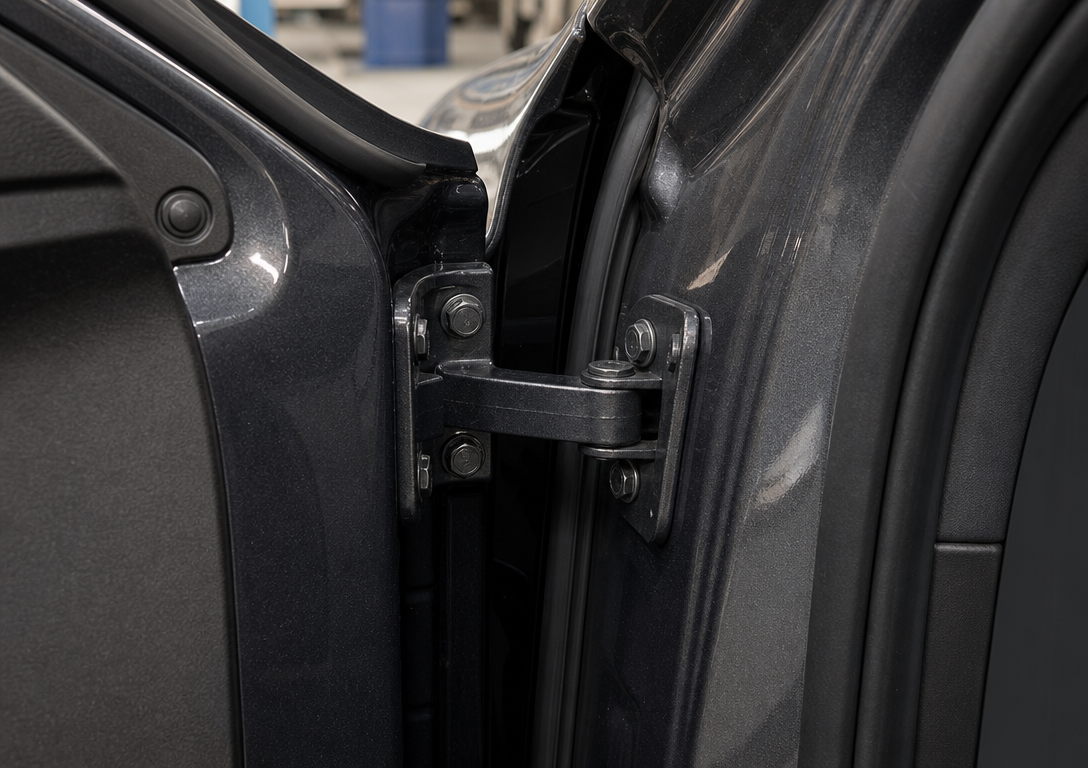
Door hinge installed at the door-to-body interface — hinge geometry controls gap, flushness and alignment
Critical Dimensions That Affect Door Alignment
- Mounting hole position relative to hinge axis
- Hinge pin axis location and orientation
- Pivot location (offset from mounting face)
- Parallelism between mounting faces
- Perpendicularity of pin bore to mounting surface
- Spacing between upper and lower hinge points
- Critical interface dimensions at door and body contact
Hinge Axis & Multi-Hinge Alignment
When multiple hinges are used on the same door, their rotational axes and mounting positions must work together as an assembly. Misalignment between upper and lower hinges causes door binding, uneven wear and closing difficulties.
Hinge Axis
- Pin diameter and straightness
- Axis orientation relative to mounting
- Coaxiality between door and body halves
- Axis verticality within specified limits
Multi-Hinge Control
- Upper/lower axis alignment
- Mounting tolerance stack-up
- Vertical alignment between hinge points
- Coordinated mounting-hole position
Consequences of Misalignment
- Door binding or resistance during swing
- Uneven pin/bushing wear
- Door sag or shifting position
- Compromised sealing or latch engagement
Hinge Pin & Bushing Engineering
Many door hinge problems originate not at the hinge body but at the pivot interface. Pin and bushing specifications determine smooth operation, wear rate and service life.
Hinge Pin
- Diameter and tolerance
- Straightness
- Surface finish
- Hardness and heat treatment
- Corrosion protection
- Retention method (staking, clip, threaded)
Bushing
- Inner diameter / outer diameter
- Material (sintered bronze, polymer, steel)
- Clearance to pin
- Wear characteristics
- Lubrication provision
- Press fit into hinge body
Assembly
- Rotational movement smoothness
- Excessive play detection
- Binding or interference check
- End play / axial movement
- Lubrication access
- Alignment verification
Materials for Custom Automotive Door Hinges
Material selection depends on the vehicle application, load requirements, manufacturing volume, corrosion exposure, heat treatment needs and mating components. There is no single "best" hinge material.
Carbon / Alloy Steel
Strength, structural applications, heat treatment capability
Stainless Steel
Corrosion-sensitive applications, exterior environments
Aluminum Alloys
Weight reduction, CNC billet machining, prototyping
Ductile / Cast Iron
Depending on geometry and production route
Engineering Plastics
Bushings or non-structural components where appropriate
Material selection depends on the vehicle application, load requirements, manufacturing volume, corrosion exposure, heat treatment and mating components. We manufacture from customer-specified materials.
CNC Machining for Automotive Door Hinges
CNC machining is not the only manufacturing route for door hinges, but it excels in specific situations.
CNC Is Particularly Useful For
- Prototype hinges
- Low-volume programs
- Custom mounting patterns
- Complex hinge geometry
- Replacement components
- Machined billet aluminum hinges
- Secondary machining of cast/forged blanks
For Higher-Volume Programs
- Stamping — suitable for formed hinge brackets at volume
- Forging — appropriate for high-strength hinge bodies
- Casting — viable for complex geometry at production scale
- CNC secondary machining — finishing of cast/forged blanks
CNC vs Stamping vs Forging vs Casting
Choosing the right manufacturing process depends on production volume, part geometry, material and economics. No single process is best for all door hinges.
| Requirement | CNC Machining | Stamping | Forging | Casting |
|---|---|---|---|---|
| Prototype | Excellent | Tooling dependent | Tooling dependent | Tooling dependent |
| Low volume | Excellent | Usually less attractive | Less attractive | Less attractive |
| Complex machined interfaces | Excellent | Limited | Secondary machining needed | Secondary machining often needed |
| Custom geometry | Excellent | Depends on formability | Depends on design | Strong |
| High-volume economics | Case dependent | Strong | Strong | Strong |
| Tooling cost | Low–moderate | Higher | Higher | Higher |
For low-volume custom hinges, CNC machining avoids dedicated production tooling. For larger volumes, alternative processes may become economically appropriate depending on geometry and material.
Automotive Door Hinge Surface Finishing
Surface treatment selection depends on the base material, corrosion environment, appearance requirements and customer specifications.
Steel Hinges
- Zinc-based coatings where specified
- Protective coatings per customer requirement
- Black oxide where suitable
- Other customer-specified finishes
Aluminum Hinges
- Anodizing
- Hard anodizing where applicable
- Powder coating per specification
- Conversion coatings
Stainless Steel Hinges
- Passivation
- Electropolishing where appropriate
- Mechanical finishing per specification
- Coating if specified
Quality Inspection for Automotive Door Hinges
What we inspect — not what we claim. Inspection scope is defined by the drawing requirements and customer specifications.
Dimensional Inspection
- Mounting-hole position and diameter
- Hinge thickness and critical lengths
- Pin diameter and bushing dimensions
- Flatness and parallelism
- Position and perpendicularity
- CMM measurement of critical features
Functional Inspection
- Hinge rotation smoothness
- Opening/closing movement
- Excessive play detection
- Binding or interference check
- Assembly fit verification
Material / Process Documentation
- Material certificate where required
- Heat treatment record where required
- Coating / surface treatment record
- Dimensional inspection report
- PPAP-related documentation where applicable
Automotive project documentation can be discussed according to customer requirements, including dimensional inspection and PPAP-related documentation where applicable. Final documentation requirements should be confirmed against the customer's drawing, PPAP level, program and OEM-specific requirements.
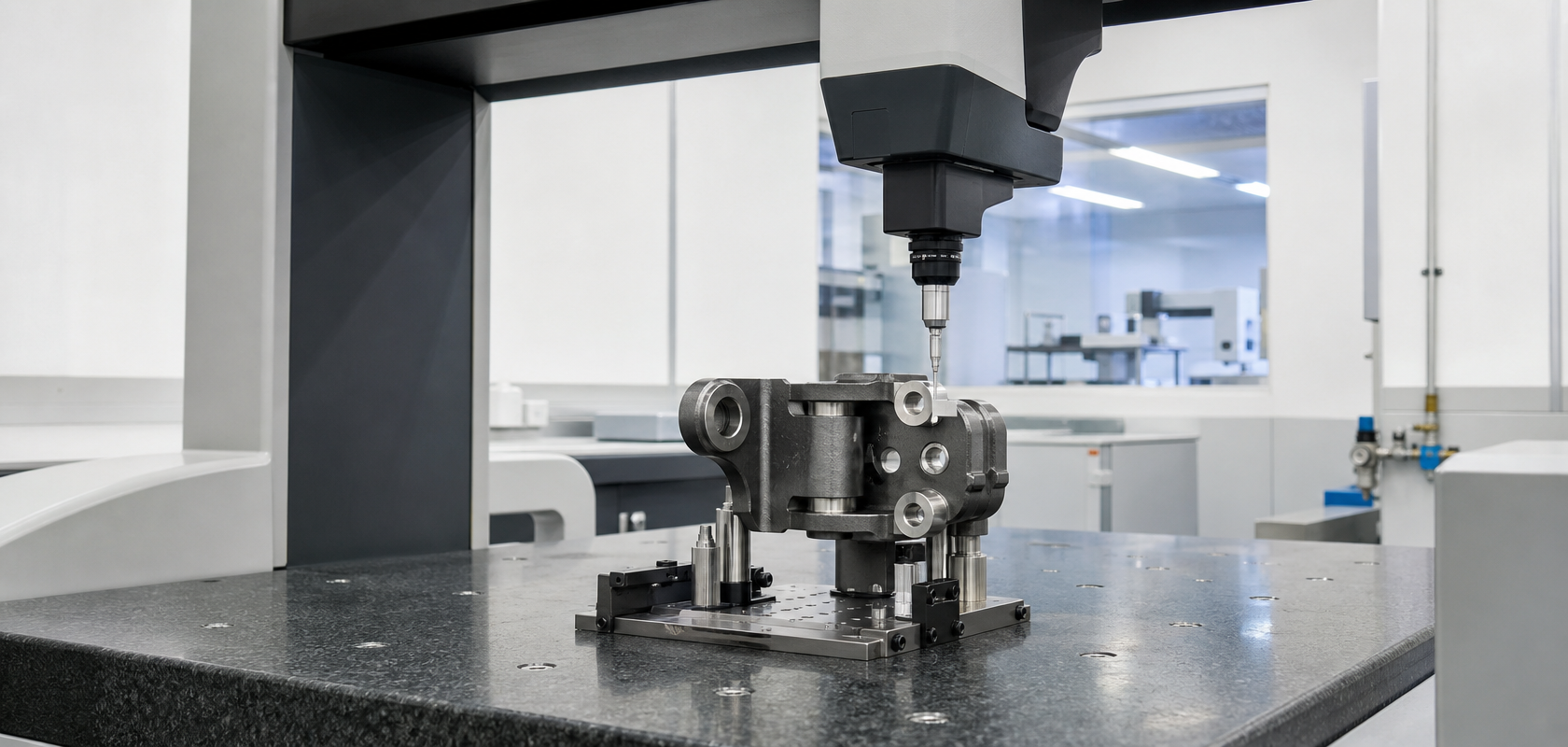
CMM inspection of critical hinge dimensions — mounting position, pin bore and interface geometry
Automotive Compliance & Validation Considerations
Automotive door hinges can form part of a vehicle's door retention system. Applicable regulatory and customer requirements depend on the vehicle type, market, vehicle program and final assembly.
FMVSS 206 — Door Retention Components
FMVSS 206 explicitly covers door retention components including hinges. For hinged doors, it specifies structural load requirements for the hinge system — the hinge system must support 11,000 N longitudinal load and 9,000 N transverse load without separation.
View FMVSS 206 →UN Regulation No. 11 — Door Latches & Hinges
UN Regulation No. 11 covers door latches and hinges within the EU vehicle type-approval framework under Regulation 2018/858. It defines performance requirements for door retention systems including hinges.
View EU Regulation 2018/858 →OEM & Program Requirements
Automotive OEMs define customer-specific quality and documentation requirements for suppliers. IATF global oversight publishes OEM-specific requirements that vary by manufacturer and program.
View IATF OEM Requirements →Important: Final compliance is determined at the vehicle/system level and according to the applicable regulatory and customer requirements. Component-level manufacturing must support the vehicle program's validation path, but hinge manufacturers do not independently certify vehicle-level compliance.
Automotive Hinge Supply by Project Stage
Different project stages have different requirements. Goldcattle supports custom / prototype / low-to-medium volume automotive components — not high-volume Tier-1 production.
Feasibility review
Small quantity for evaluation
Dimensional & functional verification
Process confirmation
Stable batch supply
Replacement components
Custom Automotive Hinge Replacement
Need to reproduce an obsolete or unavailable automotive hinge?
The original hinge is discontinued. The supplier cannot support the old part. You have the physical hinge but no CAD. This is a common aftermarket situation — and we can help.
Send us what you have. We review the available information and determine whether the component is suitable for drawing reconstruction and CNC production.
What to Send
- Physical sample
- Photographs with scale reference
- Basic dimensions (hole spacing, pin diameter, overall size)
- OE / reference number if available
- Mounting information and vehicle application
- CAD file if available
Automotive Door Hinge Applications
Our custom manufacturing covers a range of automotive and specialty vehicle applications — from prototype development to aftermarket replacement.
Passenger Vehicle Doors
- Front doors
- Rear doors
- Sedan and hatchback applications
SUVs / Vans / Commercial
- Heavier door assemblies
- Larger access panels
- Liftgate and tailgate hinges
Specialty Vehicles
- Low-volume vehicle programs
- Modified vehicles
- Utility and off-highway vehicles
Aftermarket / Replacement
- Discontinued components
- Restoration projects
- Replacement parts for older vehicles
Lightweight / EV Applications
- Aluminum hinge components
- Geometry optimization
- Integrated mounting features
- CNC prototyping for weight-conscious design
Custom / Engineering Projects
- Non-standard mounting patterns
- Special geometry requirements
- Development prototype batches
Custom CNC Door Hinge — Prototype to Production
Engineering case structure — not marketing claims. Actual project data will be added when available.
Customer Requirement
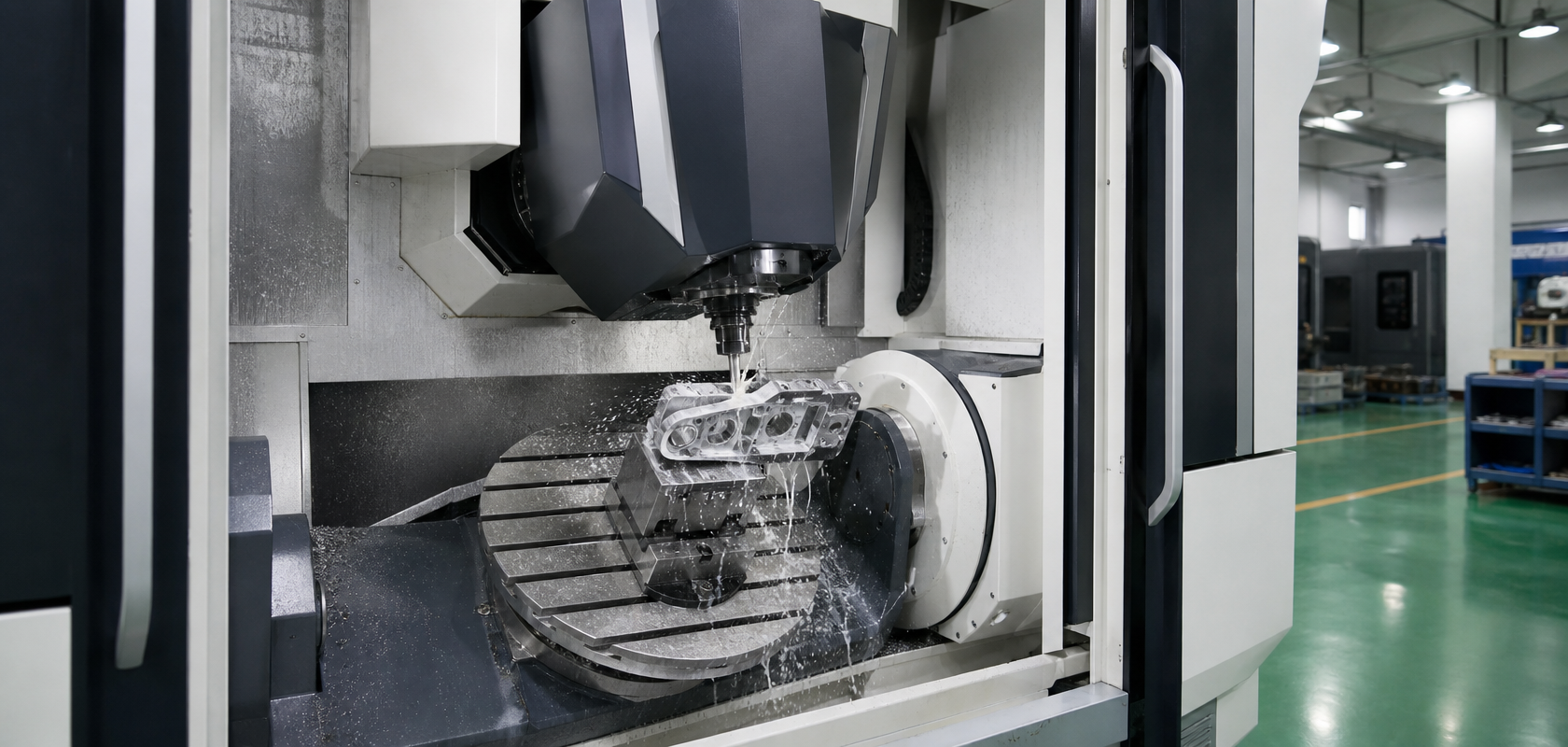
5-axis CNC machining of custom automotive door hinge body
What Affects Automotive Door Hinge Cost?
Understanding cost drivers helps specify a hinge that is both functional and economically viable for the intended production volume.
| Factor | Cost Impact |
|---|---|
| Material | Steel / aluminum / stainless steel price differential |
| Geometry | Machining complexity — number of setups, features, access |
| Number of Setups | Fixturing and machining time per part |
| Tolerance | Inspection and process control cost |
| Heat Treatment | External processing, distortion control and re-machining |
| Surface Finish | Plating / anodizing / coating specifications |
| Hinge Pin / Bushing | Additional components and assembly |
| Tooling | Fixtures / dies if required beyond standard CNC workholding |
| Quantity | Setup cost allocation per piece |
| Inspection | Dimensional and functional testing scope |
| Packaging | Automotive-specific protection and labeling requirements |
For low-volume custom hinges, CNC machining can avoid dedicated production tooling. For larger volumes, alternative processes such as stamping, forging or casting may become economically appropriate depending on geometry and material.
What Do We Need to Quote a Custom Automotive Door Hinge?
The more complete the information, the more accurate the quotation. But we can also start a review with partial information.
2D Drawing
- Dimensions and GD&T
- Material specification
- Surface treatment callout
- Critical tolerances identified
3D CAD
- STEP / IGES / SolidWorks
- Complete solid model
- Assembly context if available
Physical Sample
- Sample for reverse engineering
- Photographs with scale reference
- Mounting and vehicle information
Application Information
- Vehicle type and door type
- Approximate door mass
- Upper/lower hinge arrangement
- Operating environment
Production Requirement
- Prototype quantity
- Annual volume estimate
- Target production date
- Packaging requirements
Mounting
- Hole diameter
- Hole spacing
- Slot dimensions
- Mounting face
Pivot
- Pin diameter
- Pin bore
- Bushing dimensions
- Axis location
Geometry
- Hinge offset
- Arm thickness
- Overall length
- Opening angle
GD&T
- Position
- Perpendicularity
- Parallelism
- Concentricity / runout
Why Goldcattle for Custom Automotive Door Hinges?
Six verified capabilities — no unsubstantiated claims. What we can actually do, based on our published manufacturing services.
Drawing / CAD / Sample Based
Manufacturing from 2D drawings, 3D CAD files or physical samples
Custom Hinge Geometry
Vehicle-specific mounting patterns, hinge axis and bracket geometry
CNC Milling / Turning / 5-Axis
3/4/5-axis CNC machining, CNC turning and grinding capability
Pin / Bushing / Assembly Support
Hinge pins, bushings and assembly verification as part of the project
Dimensional Inspection & Documentation
CMM inspection and project-specific documentation per customer requirements
Prototype → Production
From prototype development through low-to-medium volume production
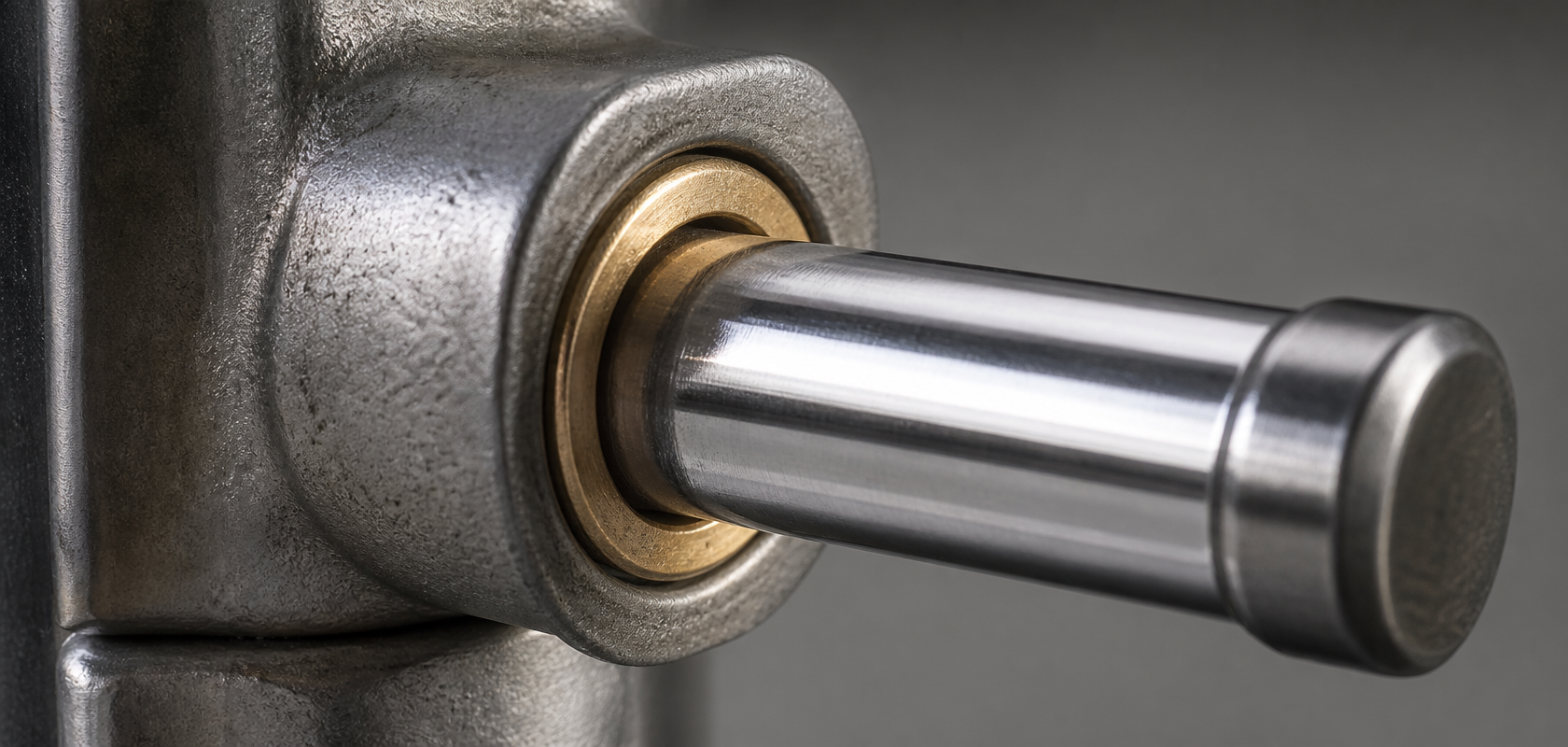
Hinge pin and bushing pivot interface — the critical wear point in a door hinge system
Custom Hinge Geometry Variants
Door hinge geometry varies significantly by vehicle and application. These images illustrate the range of configurations we encounter in custom manufacturing.
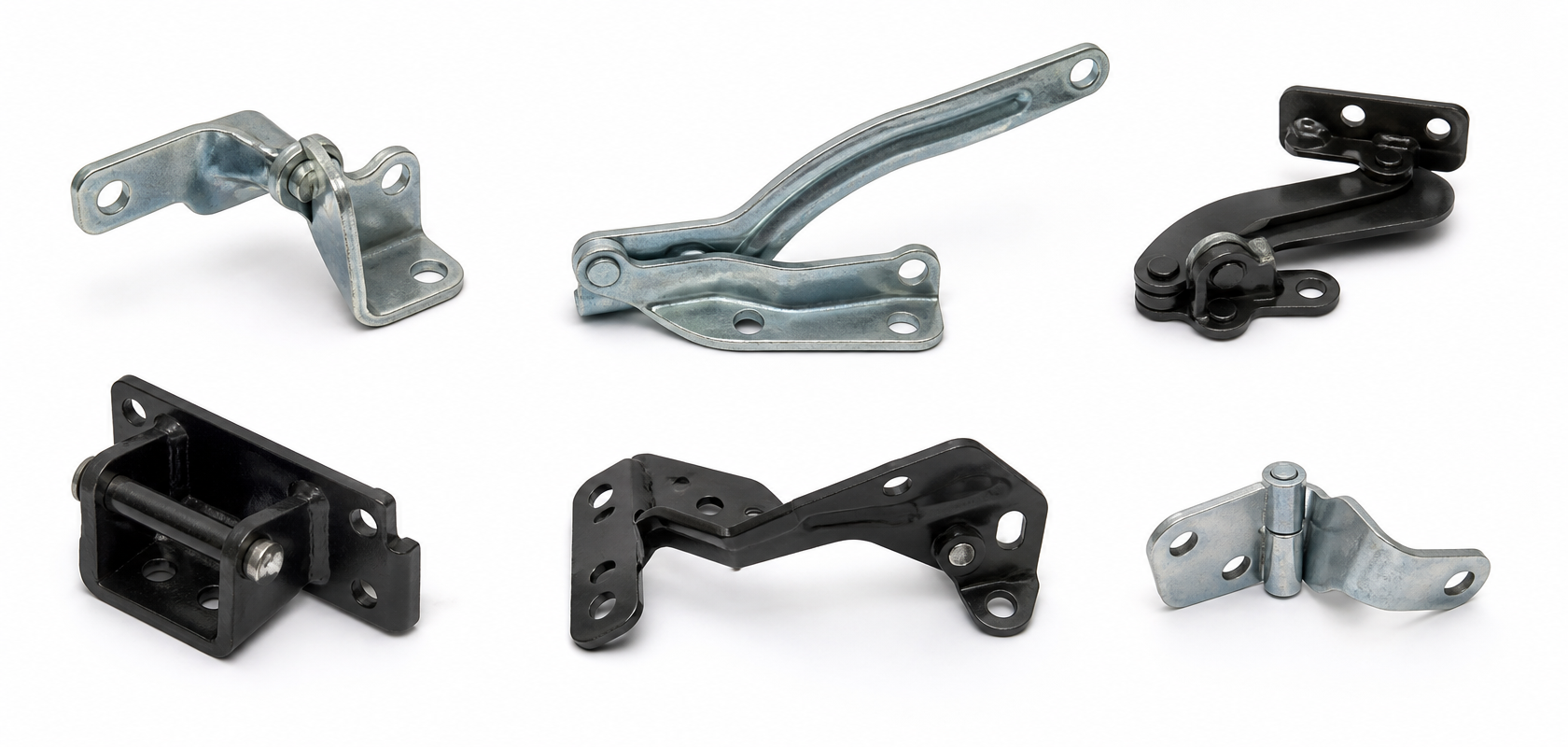
Common automotive hinge geometry variants — side door, liftgate, hood and specialty configurations
Frequently Asked Questions
Can you manufacture automotive door hinges from a drawing?
Yes. We manufacture custom automotive door hinges from 2D engineering drawings and 3D CAD files. The drawing should specify dimensions, tolerances, material, surface treatment and any critical interface requirements.
Can you make a door hinge from a physical sample?
Yes, depending on the project. A physical sample can be used to reverse-engineer the hinge geometry and dimensions. We review the available information and determine whether the component is suitable for drawing reconstruction and CNC production.
Can you manufacture replacement hinges for discontinued vehicle models?
Yes, this is one of our supported applications. We can work from a physical sample, photos, basic dimensions or OE reference information to reproduce obsolete or unavailable door hinges.
What materials can be used for custom automotive hinges?
Material selection depends on the vehicle application. Common options include carbon/alloy steel for structural applications, stainless steel for corrosion-sensitive environments, aluminum alloys for weight reduction, and ductile/cast materials depending on geometry and production route.
Can you machine aluminum automotive door hinges from billet?
Yes. CNC machining from billet aluminum is suitable for prototype and low-volume door hinges where the geometry and application permit aluminum.
Can you manufacture hinge pins and bushings together with the hinge?
Yes. We can manufacture hinge pins and bushings as part of the overall hinge project. Pin diameter, straightness, surface finish, hardness and bushing dimensions can be specified according to the application requirements.
What information is required for an automotive hinge quotation?
Preferred information includes: 2D drawing with dimensions and GD&T, 3D CAD file (STEP/IGES/SolidWorks), physical sample or photographs with key dimensions, application information (vehicle type, door type, quantity), and production requirements (prototype quantity, annual volume, target date).
Can you provide dimensional inspection reports?
Yes. Dimensional inspection reports can be provided for critical mounting and pivot dimensions according to customer requirements. We use CMM inspection and standard measurement equipment.
Can you support prototype quantities?
Yes. Prototype quantities are one of our primary manufacturing stages. CNC machining is particularly suitable for prototype door hinges because it avoids dedicated production tooling.
Can you manufacture hinges for aftermarket or specialty vehicles?
Yes. Aftermarket replacement, specialty vehicle and low-volume vehicle programs are within our manufacturing scope. We work from drawings, CAD files or physical samples.
Can automotive door hinges be heat treated?
Yes, where required by the application. Heat treatment for hinge pins and hinge bodies can be coordinated according to the specified material and hardness requirements.
Can you support PPAP documentation for applicable projects?
PPAP support can be discussed for applicable automotive projects. Final documentation requirements should be confirmed against the customer's drawing, PPAP level, program and OEM-specific requirements.
Can you manufacture the upper and lower hinges as a matched set?
Yes. When a vehicle door uses multiple hinges, we can manufacture upper and lower hinges as a matched set with controlled hinge-axis alignment to ensure proper door movement and alignment.
Can you manufacture a door hinge without a complete drawing?
Yes, depending on the project. A physical sample, partial drawing, CAD model, photographs and key dimensions may provide enough information for an initial manufacturability review. Final production dimensions, tolerances, material and functional requirements should be confirmed before manufacturing.
Request a Custom Automotive Door Hinge Quote
Send us your hinge specifications and we will review the part for manufacturability and provide a quotation.
- 2D drawing / 3D CAD / sample / OE reference
- Material specification
- Quantity — prototype or production
- Vehicle application and critical tolerances
- Surface treatment requirements
Need help identifying the manufacturing requirements? Send the available information and our engineering team can review the part for manufacturability.