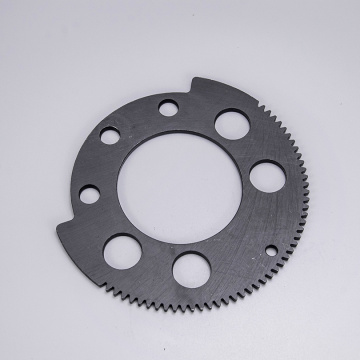
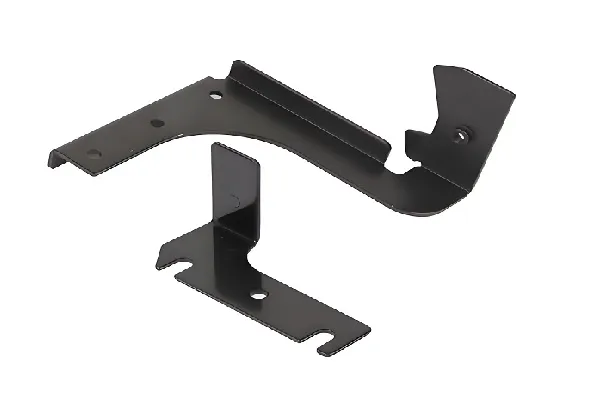
6061 Aluminum for CNC Machining, Die Casting & Precision Manufacturing
The default engineering aluminum for OEMs worldwide: lightweight, corrosion-resistant, exceptionally easy to machine and anodize. At XM Goldcattle, 6061-T6 is machined daily to ±0.005 mm on 100+ in-house CNC, turning and 5-axis centers.
- Lightweight
- Excellent Machinability
- Good Corrosion Resistance
- Anodizable
- Cost-effective
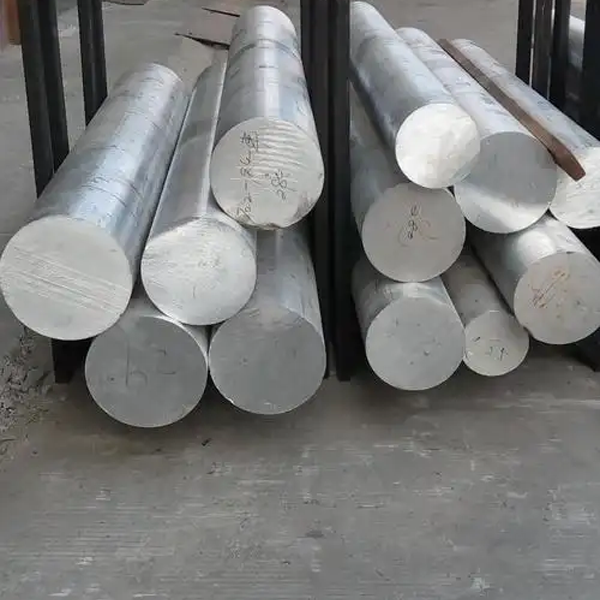
6061-T6 at a Glance
Key engineering data procurement and design teams need before specifying 6061 aluminum. All values are typical for 6061-T6; certificates confirm each lot.
Why Choose 6061 Aluminum?
6061 is the safe default for most aluminum parts. Understand when it wins — and when a different alloy is the better business decision.
✔ Best Used For
- CNC machining — fast cycle times, excellent finishes
- Structural parts — brackets, frames, chassis
- Robotics — light, stiff links and end-effectors
- Electronics — heat sinks, enclosures, carriers
- Medical equipment — anodized, cleanable surfaces
- Automation fixtures — stable, cost-efficient tooling
✖ Consider Another Material When
- You need maximum strength — choose 7075 Aluminum
- You need marine-grade corrosion resistance — choose 5052 Aluminum
- You need food-grade or hygienic surfaces — choose 316 Stainless Steel
- You need thin, decorative extrusions — choose 6063 Aluminum
- You need low-friction moving parts — choose POM or Nylon
Detailed 6061-T6 Properties
Data sourced from ASTM B209 and Aluminum Association standards. We supply mill certificates with every order so your incoming inspection matches the spec.
| Property | Value (6061-T6) | Test Standard | Notes |
|---|---|---|---|
| Density | 2.70 g/cm³ | ASTM B209 | ~1/3 of steel; excellent for lightweight designs |
| Melting Point | 582–652 °C | ASTM B209 | Suitable for most service temperatures |
| Thermal Conductivity | 167 W/(m·K) | ASTM E1461 | Good for heat sinks and thermal parts |
| Electrical Conductivity | ~43% IACS | ASTM E1004 | Lower than pure aluminum but adequate for enclosures |
| Yield Strength | ≥ 276 MPa | ASTM B209 | High enough for most structural parts |
| Tensile Strength | ≥ 310 MPa | ASTM B209 | T6 temper peak strength |
| Elongation at Break | ≥ 12% | ASTM B209 | Good formability before fracture |
| Elastic Modulus | 68.9 GPa | ASTM E111 | Stiff but lighter than steel |
| Hardness | 95 HB | ASTM E10 | Machinable with standard carbide tooling |
| Coefficient of Thermal Expansion | 23.6 µm/m·K | ASTM E831 | Plan fit with dissimilar materials |
Which Processes Work Best for 6061?
Not every process fits 6061. This table helps procurement and engineering teams choose the right manufacturing route before quoting.
| Process | Rating | Suitability | Typical Use |
|---|---|---|---|
| CNC Machining | Ideal for 6061. High speed, tight tolerance, great finish. | Structural parts, housings, fixtures | |
| CNC Turning | Round bar stock machines cleanly; good surface finish. | Shafts, bushings, pins | |
| 5-Axis Milling | Complex geometry in one setup; reduced handling. | Impellers, enclosures, aerospace parts | |
| Sheet Metal | 6061 can be bent but springback is higher than 5052. | Brackets, panels | |
| Die Casting | Not recommended | 6061 is a wrought alloy. Use A380/ADC12 for casting. | — |
| Extrusion + CNC | Cost-effective for long profiles with machined ends. | Frames, rails, heatsinks | |
| Welding | TIG/MIG compatible; HAZ loses strength unless heat-treated. | Welded frames, tanks |
What OEMs Make from 6061 Aluminum
Real part families where 6061 is the cost-performance sweet spot. Each application is supported by our in-house CNC, finishing and inspection.
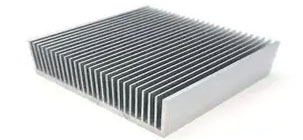
Heat Sinks
Good thermal conductivity plus easy anodizing makes 6061 ideal for LED, power supply and controller heat sinks.
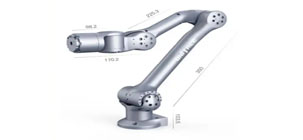
Robot Arms & Linkages
Lightweight and stiff, 6061 keeps inertia low while handling structural loads in automation cells.
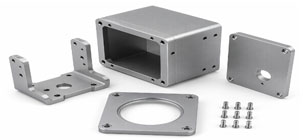
Camera Housings
Stable, machinable and anodizable — perfect for rugged enclosures with precise mounting features.
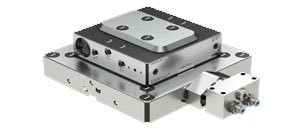
Fixtures & Jigs
Dimensional stability and low cost make 6061 the standard for production fixtures and inspection gauges.
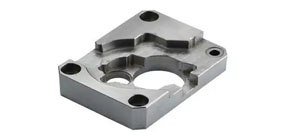
Automation Parts
Brackets, carriers and guide rails that need tight tolerances without the price of 7075.
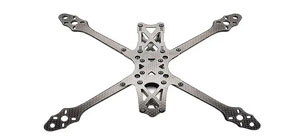
Drone Frames
High strength-to-weight ratio with easy assembly features; anodizing protects outdoor use.
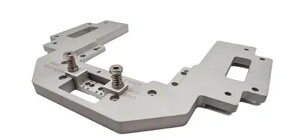
Medical Equipment
Anodized 6061 offers a cleanable, corrosion-resistant surface for devices and mounting hardware.
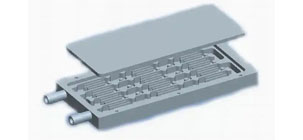
Battery Housings
Lightweight EMI shielding and thermal paths for e-mobility and portable electronics packs.
6061 Aluminum Finishing Options
6061 accepts a wide range of finishes. Choosing the right one early improves corrosion resistance, wear life and brand appearance.
Type II Anodizing
Decorative and corrosion-resistant. Adds 5–25 µm oxide layer, accepts dyes (black, blue, red, gold, clear).
Best for consumer & electronic enclosuresType III Hard Anodizing
Thick, dense ceramic layer (25–100 µm) for extreme wear and abrasion resistance.
Best for sliding & industrial partsSandblasting
Creates a uniform matte surface, removes tool marks and prepares for anodizing or coating.
Best for cosmetic consistencyPowder Coating
Durable polymer finish in many colors. Excellent outdoor protection and electrical insulation.
Best for outdoor & colorful partsPainting / Wet Coat
Smooth, high-gloss or textured finishes for visible products and branding.
Best for premium appearanceLaser Marking
Permanent logos, serial numbers and QR codes without adding material.
Best for traceabilityDFM Rules for 6061 Aluminum Parts
Design for manufacturability reduces cost and lead time. These rules are based on 26 years of machining 6061 for global OEMs.
Minimum Wall Thickness
Keep walls ≥0.8 mm (1.0 mm preferred). Thinner walls vibrate, distort and require slower machining.
Internal Corner Radius
Use R ≥ tool radius (typically R0.5–2 mm). Sharp internal corners increase stress and tool wear.
Recommended Holes
Standard drilled holes ≥1 mm; tapped holes ≥M2. Deep holes should stay below L:D of 4:1 without special tooling.
Threads & Inserts
Specify metric threads (M2–M12 common). For frequent assembly, consider helical inserts or PEM fasteners.
Tolerance Strategy
General: ±0.1 mm. Precision fits: ±0.02 mm. Ultra-precision: ±0.005 mm only where functionally required.
Dimensional Stability
6061-T651 is stress-relieved and more stable. For tight tolerance plates, specify T651 over T6.
What Drives 6061 Aluminum Machining Cost?
Transparent cost factors help procurement teams optimize designs before requesting a quote.
Factors That Increase Cost
- Tight tolerances — especially ±0.005 mm over long distances
- Complex geometry — multiple setups, 5-axis work, deep pockets
- Thick stock removal — hogging out large volumes from solid bar
- Surface finish requirements — mirror polish, hard anodizing
- Low quantities — setup cost spreads over fewer parts
- Threaded inserts & hardware — extra procurement and assembly
How to Reduce Cost
- Relax non-critical tolerances to ±0.1 mm where possible
- Design near-net shapes — use extrusion or plate close to final size
- Group features on the same plane to reduce setups
- Increase batch size — amortize programming and setup
- Choose standard finishes like sandblast + Type II anodize
- Consolidate parts — fewer assemblies mean lower total cost
6061 vs Other Materials
Comparison tables are high-intent SEO content. Use them to guide material selection and link into related material guides.
6061 vs 7075 Aluminum
| Strength | 7075 ~40% stronger |
| Corrosion | 6061 better |
| Weldability | 6061 better |
| Cost | 6061 lower |
| Best for | 6061 general; 7075 aerospace/stress |
6061 vs 5052 Aluminum
| Strength | 6061 higher |
| Formability | 5052 better |
| Corrosion | 5052 better in marine |
| Machinability | 6061 better |
| Best for | 6061 machined; 5052 sheet metal |
6061 vs 6063 Aluminum
| Strength | 6061 higher |
| Surface finish | 6063 smoother as-extruded |
| Extrudability | 6063 better |
| Machinability | 6061 better |
| Best for | 6061 structural; 6063 profiles |
See 6063 Aluminum Guide
6061 vs 316 Stainless Steel
| Weight | 6061 ~1/3 of steel |
| Corrosion | 316 superior |
| Machinability | 6061 much faster |
| Cost | 6061 lower |
| Best for | 6061 light structural; 316 hygienic |
6061 vs POM (Delrin)
| Strength | 6061 higher |
| Weight | POM lighter |
| Friction | POM self-lubricating |
| Conductivity | 6061 conducts heat/electricity |
| Best for | 6061 structural; POM bearings |
6061 vs Nylon (PA)
| Stiffness | 6061 much stiffer |
| Impact | Nylon better |
| Moisture | 6061 stable; Nylon absorbs water |
| Machinability | Both good |
| Best for | 6061 rigid frames; Nylon gears |
Which Manufacturing Path Fits Your 6061 Part?
A quick decision tree to help procurement managers match part requirements to the right process.
Need high precision?
CNC machining delivers ±0.005 mm tolerances and excellent surface finishes for low-to-medium volumes.
Recommended: CNC MachiningNeed large quantities?
Extrude the profile, then CNC machine end features and holes. Lowest cost for long runs.
Recommended: Extrusion + CNCNeed complex geometry?
5-axis CNC machines multiple faces in one setup, reducing handling and improving accuracy.
Recommended: 5-Axis CNCNeed a lightweight housing?
6061 CNC milled from plate or billet creates strong, light enclosures with integrated features.
Recommended: 6061 CNC MillingCase: Robotics Housing in 6061 Aluminum
Customer: A US robotics OEM needed a lightweight, stiff housing for a collaborative robot joint.
Challenge: The part required tight bearing bores, integrated cable channels and a black anodized finish. Weight was critical, but 7075 was overkill for the load.
Why 6061? 6061-T6 provided enough strength at lower cost, machined faster than 7075 and anodized uniformly. We chose T651 plate for dimensional stability.
Process: 3-axis roughing → 5-axis finishing for cable channels → deburr → Type II black anodize → laser marking serial number.
Result: Parts passed CMM inspection, weighed 18% less than the steel prototype and reduced unit cost by 34%. First article delivered in 10 days.
Services That Pair with 6061 Aluminum
Link material selection to manufacturing capability. These service pages explain tolerances, equipment and quality systems.
CNC Machining
3, 4 and 5-axis machining for precision aluminum parts.
Learn more →5-Axis CNC
Complex geometries and multi-face parts in one setup.
Learn more →CNC Turning
Round bar and tube work for shafts, bushings and pins.
Learn more →CNC Milling
Plate, block and enclosure milling to tight tolerances.
Learn more →Sheet Metal
Bent and formed aluminum brackets and panels.
Learn more →Anodizing
Type II decorative and Type III hard anodizing.
Learn more →Frequently Asked Questions About 6061 Aluminum
Is 6061 suitable for CNC machining?
Can 6061 aluminum be anodized?
Is 6061 stronger than 6063?
Can 6061 be welded?
Is 6061 food safe?
Can 6061 be used outdoors?
What industries use 6061 aluminum?
Which manufacturing process is best for 6061?
6061 vs 7075 aluminum — which should I choose?
What is the difference between 6061-T6 and 6061-T651?
Can 6061 aluminum be die cast?
What is the cost of CNC machining 6061 aluminum?
Does 6061 conduct electricity?
How does XM Goldcattle control quality for 6061 parts?
How do I get a quote for 6061 aluminum parts?
Request Parts Manufactured in 6061 Aluminum
Get a free material review, DFM feedback and manufacturing quotation from our engineering team. Samples ready in 7–15 days.
Upload CAD
STEP, IGES, DXF or PDF drawing
Free Material Review
We confirm 6061 is right for your design
Engineering Suggestions
DFM tips for cost and quality
Manufacturing Quotation
Detailed quote within 24 hours
ISO 9001 · SGS Certified · Material Certificates · NDA Available
Explore more: Return to the Materials Hub to compare all metals, plastics and ceramics, or view related guides for 7075 Aluminum, 5052 Aluminum and 6063 Aluminum.