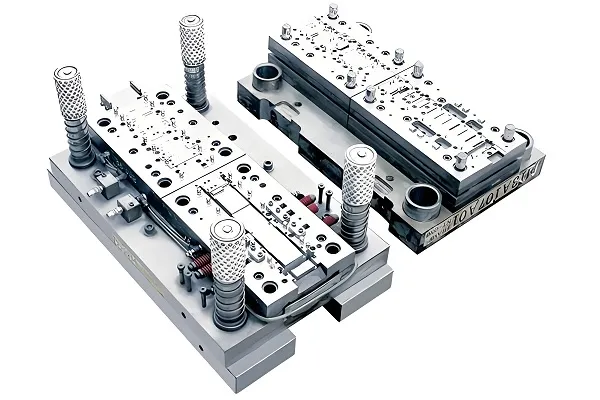
Inconel 718 CNC Machining Services
Custom Inconel 718 parts machined to your drawing, with material verification, multi-axis planning, dimensional inspection and traceable documentation.
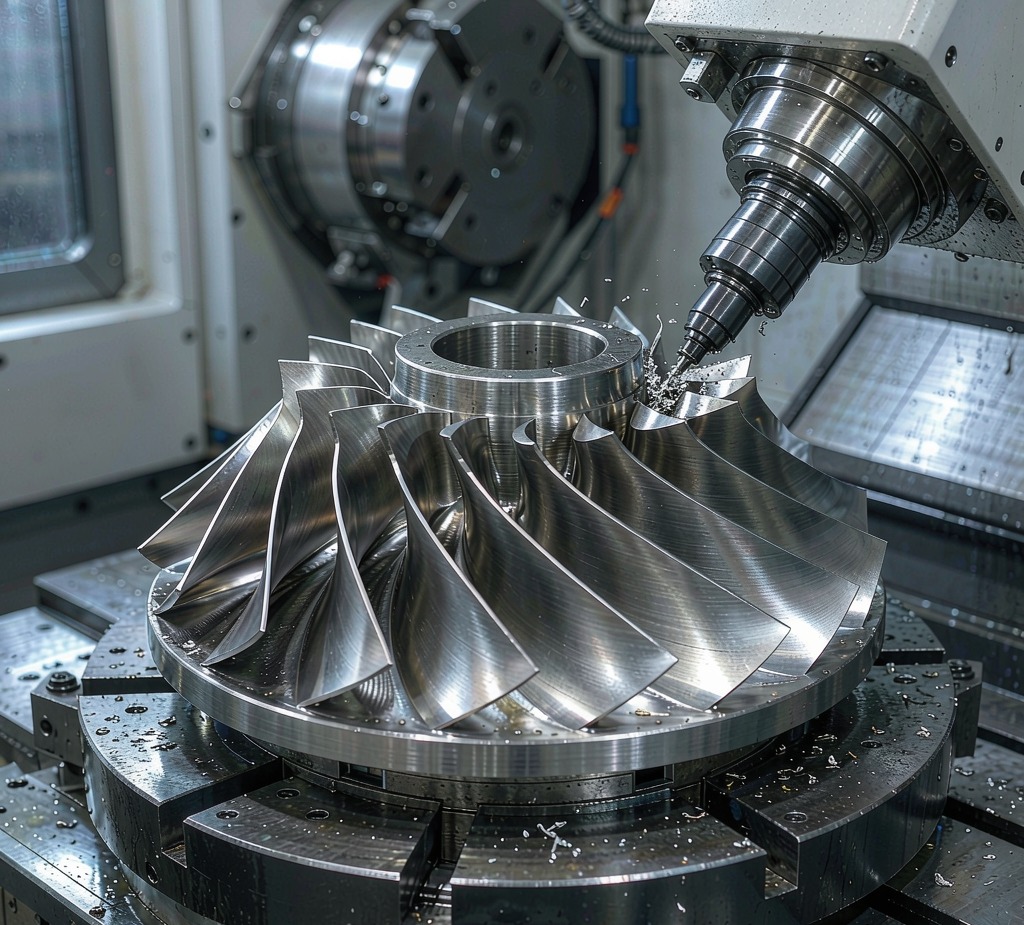
Goldcattle provides custom Inconel 718 CNC machining for complex precision components, with project-specific material verification, multi-axis machining planning, dimensional inspection and material traceability. Manufacturing feasibility and delivery requirements are confirmed against the customer's drawings and material specifications. Inconel 718 is a precipitation-hardening nickel-chromium superalloy designated UNS N07718 and commonly supplied to AMS 5662.
What we machine
You can order Inconel 718 parts by structure and function, not just by industry name. We review each part against the drawing before confirming that we can make it. The component types below describe the work we can assess; they are not a stock list.
Impellers & blades
Compound-curved impellers, turbine wheels and blades with restricted tool access. Finishing is planned around tool orientation on the airfoil surface.
Shafts & rotors
Precision shafts, sleeves and rotating components where diameter, concentricity and surface finish matter.
Housings & frames
Engine and equipment housings, brackets and support structures with pockets, bores and multiple faces.
High-temperature fittings
Flanges, valve bodies, connectors and other hardware selected for elevated-temperature service.
Common application areas include aerospace and turbomachinery, oil and gas equipment, energy and power generation, and industrial high-temperature equipment. Flight-critical or nuclear-regulated parts are assessed individually against your quality system and project requirements; material machining capability alone does not imply supply approval for those sectors.
Material specifications and conditions
What matters to a buyer is whether the specified material standard can be met and which condition the stock arrives in. We confirm both against the mill certificate and the drawing before machining.
Material identification
Swipe the table to see all columns.
| Item | Detail |
|---|---|
| Commercial name | Inconel 718 / Alloy 718 |
| UNS designation | N07718 |
| EN material number | 2.4668 |
| Alloy family | Precipitation-hardening nickel-chromium alloy |
| Primary specification | AMS 5662 |
| Other specifications | Confirmed against stock form and drawing |
Heat treatment and material condition
AMS 5662 and AMS 5663 describe different conditions of Alloy 718. AMS 5662 is solution-treated stock; AMS 5663 is the age-hardened condition with higher specified strength. Hardness must match the condition: the AMS 5662 specification gives a solution-treated hardness of no more than 277 HB, and a minimum of 331 HB after the required precipitation treatment. We report the actual value from the mill certificate rather than one general hardness number.
Swipe the table to see all columns.
| Condition | What it means for machining |
|---|---|
| Solution heat treated | Usually more suitable for rough machining and forming before age hardening. |
| Precipitation hardened | Age-hardened to specified strength; cutting forces and tool wear increase. |
| Finish machining after aging | Used when critical dimensions must be held after the material moves in treatment. |
Whether a part is rough machined, aged and then finished depends on the stock condition, the allowance and the drawing. The sequence is a planning decision, not a fixed route for every part.
High-temperature properties
Swipe the table to see all columns.
| Property | Technical explanation |
|---|---|
| High-temperature strength | High creep and stress-rupture resistance. |
| Creep / stress-rupture use | Up to approximately 704 °C, per the AMS 5662 application statement. |
| Oxidation resistance | Up to approximately 982 °C, per the AMS 5662 application statement. |
| Hardness | Depends on solution-treated or precipitation-hardened condition; per material certificate. |
Temperature boundary — read this carefully
- 704 °C and 982 °C are typical application notes from the AMS 5662 specification: creep/stress-rupture resistance and oxidation resistance are different properties.
- These notes do not mean a part may carry design load at either temperature.
- The allowable service temperature must be set by the design authority for the actual load, environment and design code.
Why Inconel 718 is difficult to machine
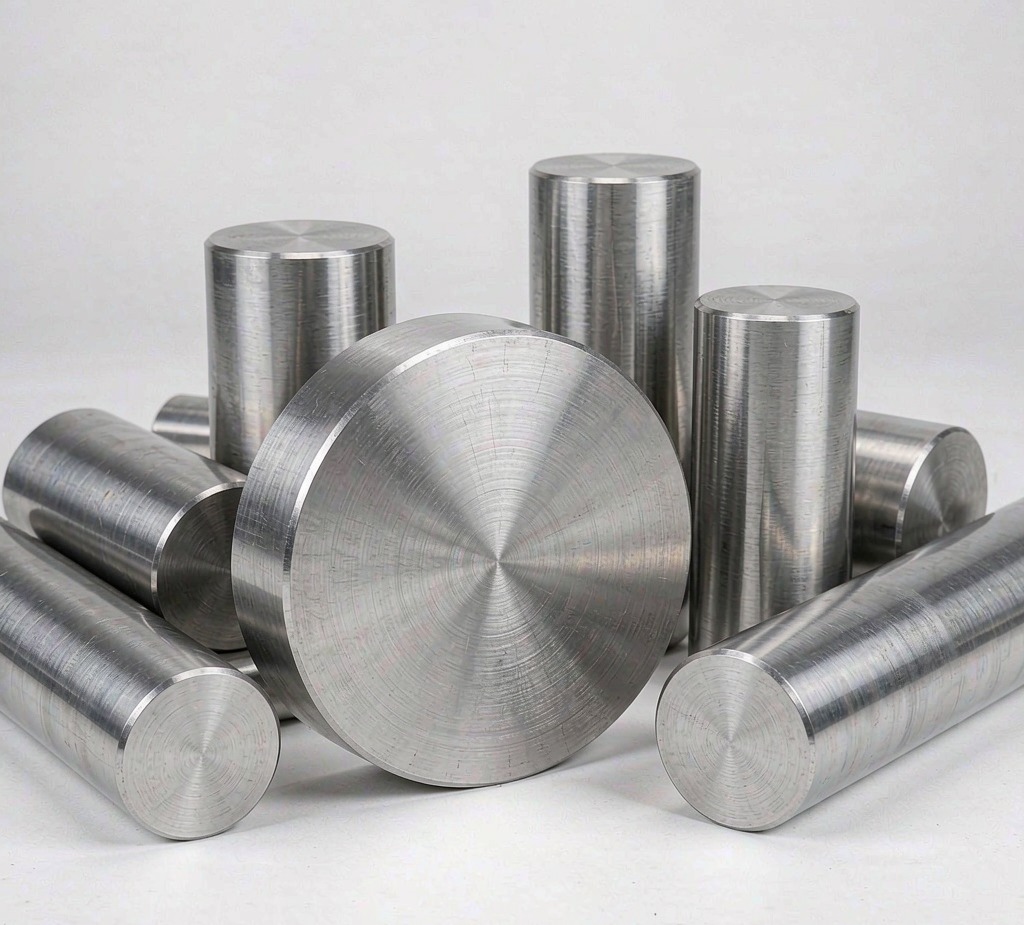
Inconel 718 work-hardens quickly and keeps its strength at cutting temperature. The engineering question is not whether it is hard to cut, but what risk each difficulty creates and how we control it. These are the controls we apply; we do not publish untested cutting speeds, feed rates or tool-brand data.
Swipe the table to see all columns.
| Machining difficulty | Risk to quality | Our control approach |
|---|---|---|
| Work hardening | Hardened surface, difficult subsequent cuts | Keep a steady cutting load; avoid dwelling and rubbing cuts. |
| Low thermal conductivity | Heat stays at the cutting edge, accelerating tool wear | Manage coolant delivery, chip evacuation and toolpath. |
| Tool wear | Dimensional drift and poor surface finish | Tool-life management, scheduled inspection and controlled tool changes. |
| Cutting vibration | Chatter marks, surface and dimensional error | Rigid fixturing, short tool overhang and stable cutting conditions. |
| High material removal | Part distortion and residual-stress release | Staged roughing, semi-finishing and finishing passes. |
| Complex geometry | Tool interference, unreachable features, datum error | 3D CAM simulation and 3+2 or simultaneous 5-axis selection. |
CNC machining capabilities
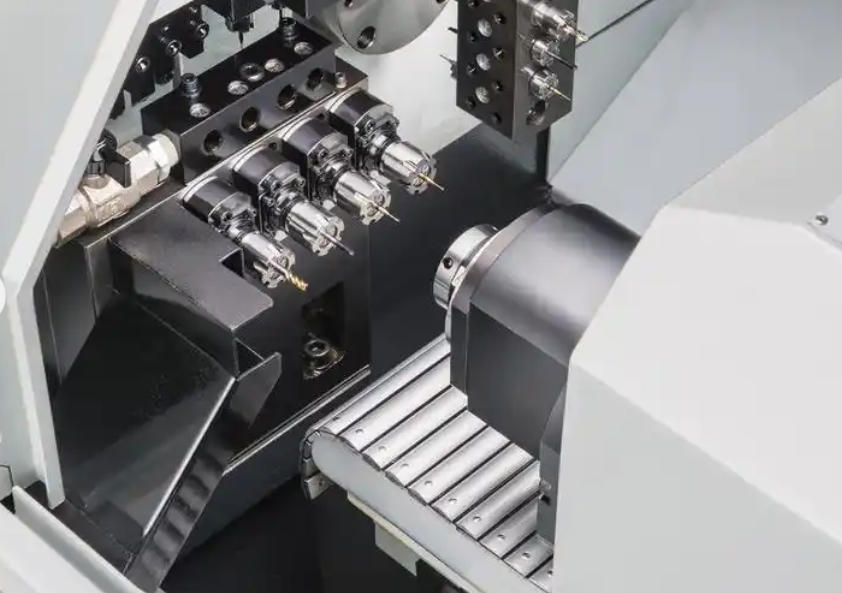
We select the process by geometry. A prismatic bracket does not need five-axis motion, and a compound-curved impeller cannot be finished well by indexed 3+2 alone. The table shows how each process is applied on Inconel 718 projects.
Swipe the table to see all columns.
| Process | Suitable parts | Focus |
|---|---|---|
| CNC milling | Housings, brackets, complex outlines | Stable cutting, surface quality and dimensional control. |
| 3+2 axis machining | Multi-face parts, angled holes, compound-angle features | Reach several faces with fewer re-clamps and datum changes. |
| Simultaneous 5-axis | Impellers, blades, compound-curved surfaces | Continuous tool-axis control and collision checking. |
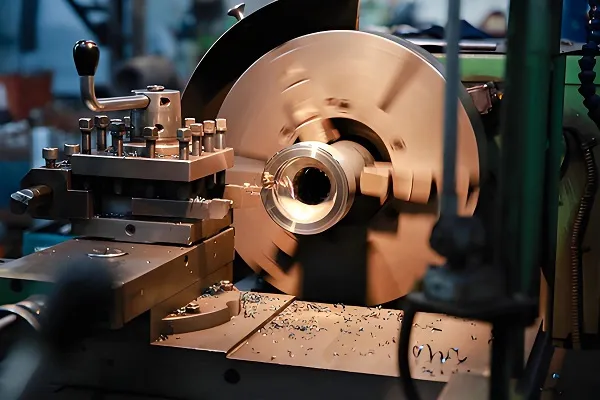
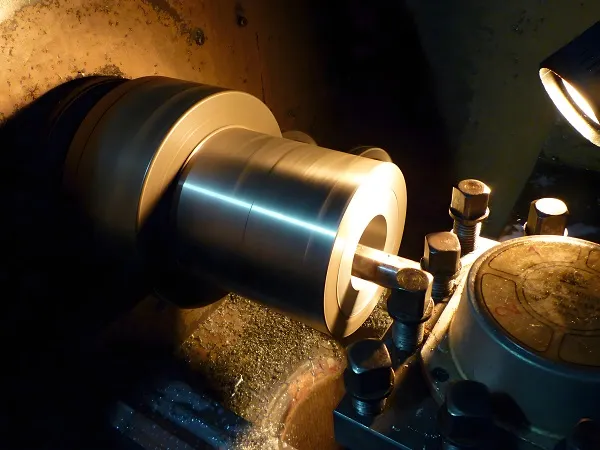
| CNC turning | Shafts, sleeves, rotational parts | Diameter, concentricity, roundness and surface finish. |
| EDM / grinding support | Special slots, precision profiles, post-processing | Arranged per drawing and process route. |
We do not describe every Inconel 718 part as a five-axis job. For a full explanation of our 3-axis, 3+2 and simultaneous 5-axis methods, see our 5-axis CNC machining services.
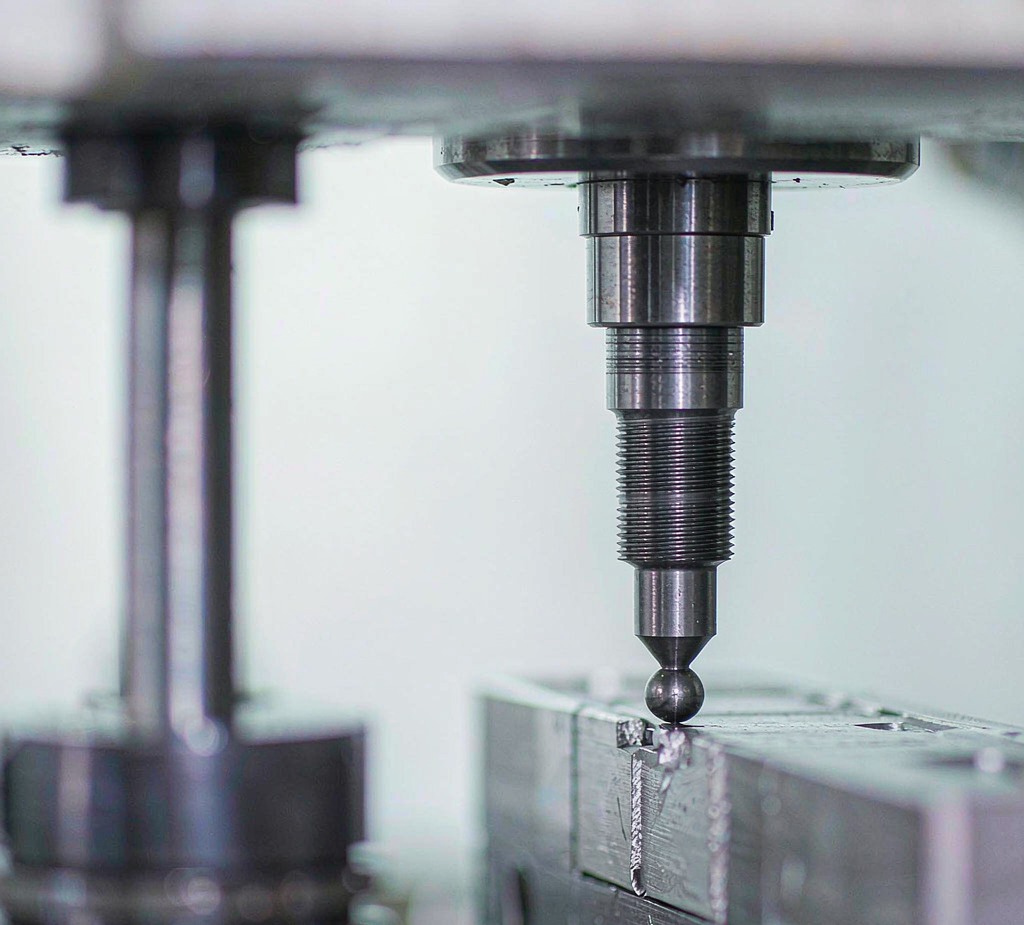
Manufacturing process and DFM
After we receive a drawing, the first work is engineering review. Inconel 718 projects differ from aluminium ones in tool access, thermal load, material allowance and heat-treatment sequence, so these points are settled before machining.
- Drawing and material review — check the 3D model, 2D drawing, AMS standard, stock condition and heat treatment define requirements
- DFM and machinability assessment — check tool access, allowance, thin walls, cavities and fixturing find the risks
- Process and toolpath planning — choose milling, turning or multi-axis routes and split roughing from finishing plan the route
- Prototype / first article — machine the first piece and check critical dimensions to validate the plan prove the setup
- Heat treatment and secondary operations — coordinate treatment and any finishing after treatment as required per the drawing
- Final inspection and documentation — verify dimensions, surfaces and records before dispatch close the loop
What we check in a DFM review
Walls, radii and cavities
Wall thickness for distortion, internal radii for tool fit, and deep cavities for tool length and chatter.
Allocation and datums
Whether tolerances are realistic and whether critical features share a consistent datum strategy.
Machining allowance
Whether stock must be left for heat treatment and finish machining after aging.
Measurement method
How compound curves and position tolerances will be verified on the finished part.
A real Inconel 718 machining project
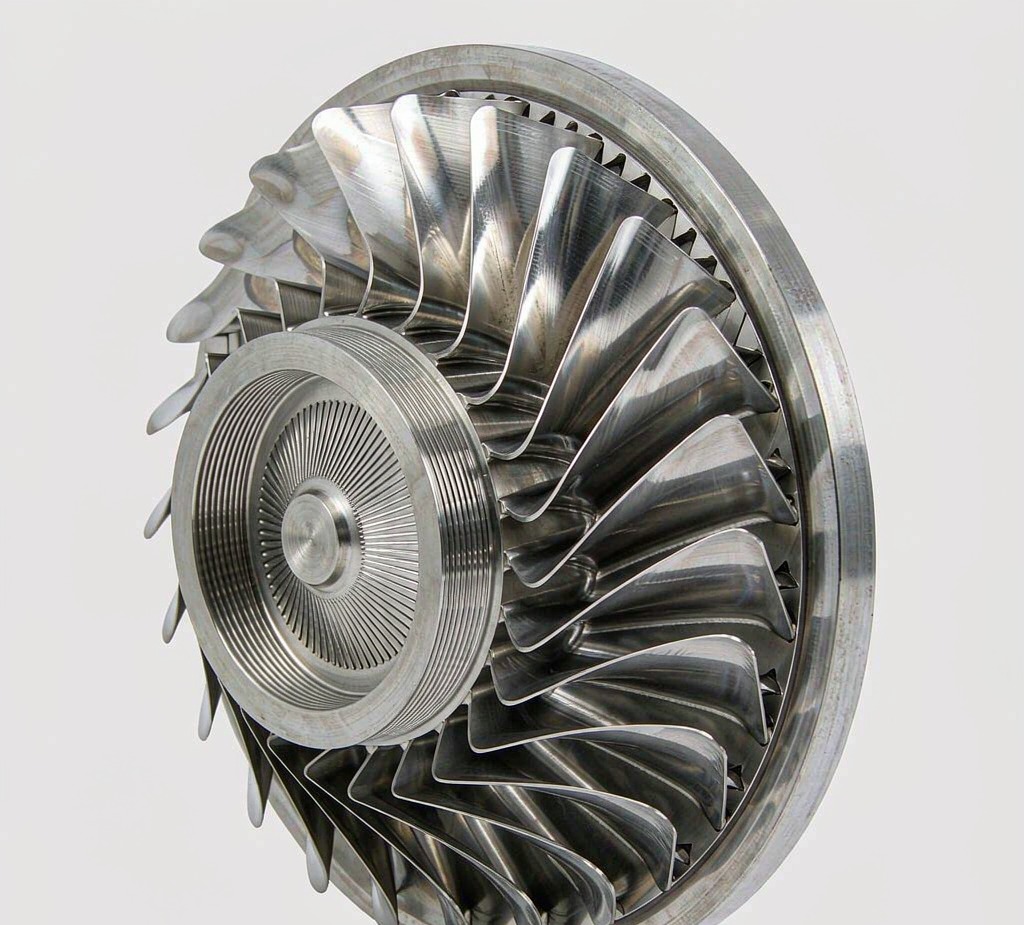
We have machined a 248 mm turbomachinery impeller with 17 curved blades from solid Inconel 718 in a single primary setup. The project required controlled tool access, a stable datum and CMM-based profile inspection. The figures below describe that specific project and are not a blanket delivery commitment for every part.
Project snapshot — Inconel 718 impeller
Machined from solid stock, not a cast blank. Blade surfaces were checked by CMM profile scan and critical features by dimensional inspection. Results are specific to this part and depend on geometry, material and inspection requirements.
Complex 5-axis blade geometry
Compound-curved blades finished with continuous simultaneous 5-axis motion around a single primary datum.
Surface and inspection
Ra 0.8 µm on blade airfoils, with CMM profile scan and FAI documentation for this project.
Read the full impeller case study for the requirements, constraints, process decisions and inspection evidence. If your part has restricted tool access or is in a nickel superalloy, tell us in the notes and we will start the review there.
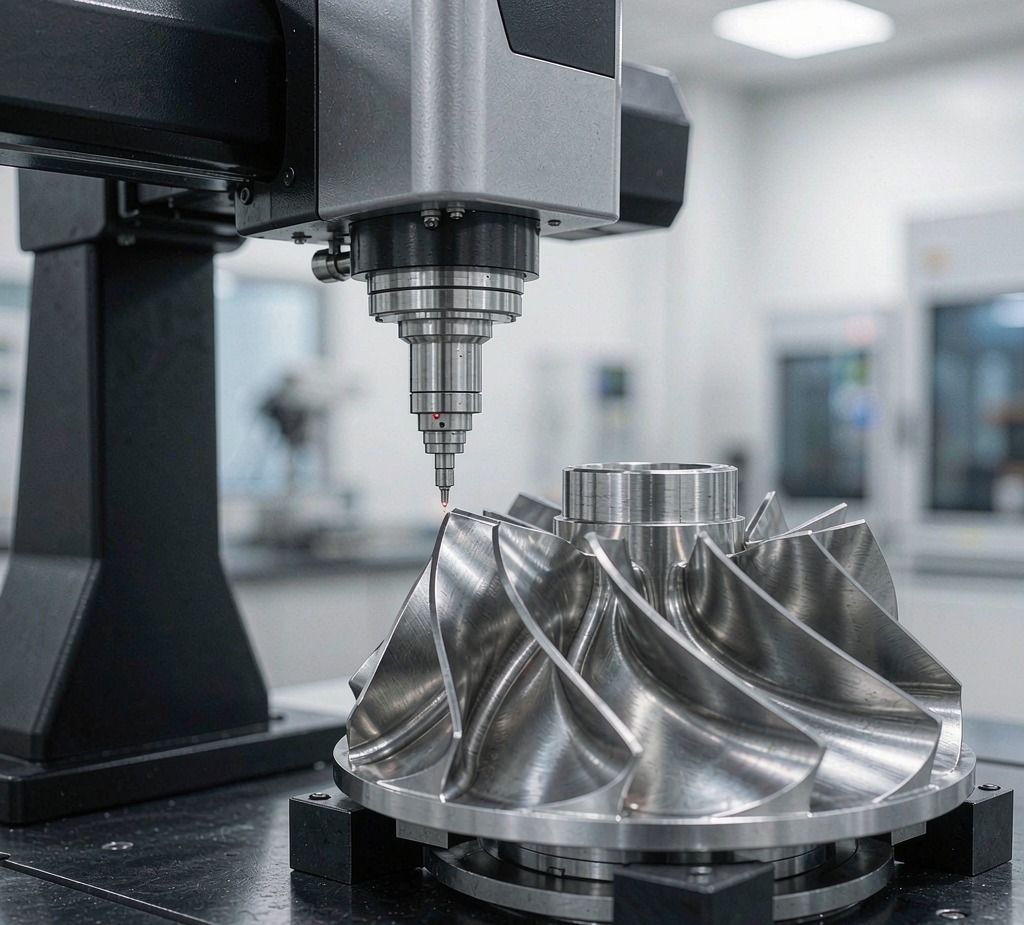
Inspection and quality documentation
For buyers in demanding sectors, making the part is only the first step. You also need to know the material is the grade specified, that batches can be traced, that critical features were measured, and that the records will be supplied. The documents below are provided according to the order and the drawing.
Swipe the table to see all columns.
| Quality item | What we provide |
|---|---|
| Material certificate | EN 10204 3.1 certification for each batch. |
| Heat / lot traceability | Stock heat number and batch recorded against the order. |
| Dimensional inspection | Report against the drawing's critical features. |
| CMM inspection | Profile and position checks for compound curves where required. |
| FAI | First Article Inspection reported per AS9102 when specified. |
| Certificate of conformance | Supplied to the requirements of the order. |
| Surface inspection | Roughness checks where the drawing specifies a value. |
Surface finish and post-processing
Finish on Inconel 718 is chosen for function, not appearance alone. For parts that see fatigue loading, surface integrity matters as much as the roughness value. The options below are applied only when the drawing and the application allow them.
Swipe the table to see all columns.
| Process | When it is used |
|---|---|
| As-machined | Ra as specified on the drawing, straight from CNC machining. |
| Precision grinding | Selected dimensions and surface requirements. |
| Polishing | Where a functional finish is required and confirmed. |
| Bead blasting | Only if the drawing permits and the application allows it. |
| Coating / plating | Assessed against the service environment, adhesion and customer spec. |
| Chemical treatment | Applied per the applicable specification and validated process. |
Cost, lead time and RFQ requirements
What affects the price
Inconel 718 costs more than ordinary steel, both as raw material and to cut. Two parts from the same alloy can cost very differently because of shape and inspection needs. We do not publish a fixed hourly or per-kilogram machining price.
Grade, condition and stock form
The specified standard, stock condition and available bar or forging size drive material cost.
Removal volume and complexity
How much material must be removed, plus curves, deep cavities and thin walls.
Strategy and setups
Number of operations, re-clamps, multi-axis work and heat-treatment sequencing.
Tolerance and documents
Tight critical tolerances, CMM scans and FAI add inspection time and reporting.
Why lead time is quoted after review
A general "7–12 days" figure does not apply to Inconel 718. Stock availability, roughing allowance, heat treatment, multi-axis scheduling and inspection all affect the schedule. Lead time is confirmed after drawing review, material availability, process planning and inspection requirements are known.
Information required for an Inconel 718 quote
Swipe the table to see all columns.
| Required information | Recommended format |
|---|---|
| 3D CAD model | STEP / STP / IGES / X_T |
| 2D engineering drawing | PDF with dimensions and GD&T |
| Material specification | AMS 5662 / applicable specification |
| Material condition | Solution treated / aged / as specified |
| Order quantity | Prototype or production quantity |
| Critical dimensions | Tolerances and GD&T callouts |
| Surface finish | Required Ra values |
| Heat treatment | Required condition and sequence |
| Quality documents | EN 10204 3.1 / FAI / other |
Frequently asked questions
Can Goldcattle machine Inconel 718?
Yes. We machine Inconel 718 (AMS 5662, UNS N07718) to customer drawings using 3-axis, 3+2 and simultaneous 5-axis CNC equipment. We also machine related nickel alloys such as 625, 600, X-750 and Hastelloy C-276. Send the drawing and the material condition and we will review the process before we quote.
What is the difference between AMS 5662 and AMS 5663?
AMS 5662 and AMS 5663 refer to different material conditions of Alloy 718. AMS 5662 covers solution-treated stock, while AMS 5663 covers stock that has also been age-hardened to a specified strength. Hardness and mechanical properties depend on the delivered condition, so we confirm them from the mill certificate instead of quoting one general hardness value.
Does Inconel 718 need machining before or after heat treatment?
It depends on the part. Solution-treated stock is usually easier to rough machine. If the drawing calls for an aged condition, critical dimensions may need finish machining after age hardening because the material moves during treatment. We review the stock condition, the allowance and the critical dimensions for each project before we set the process sequence.
Can you machine complex Inconel 718 impellers?
Yes. We completed a 248 mm impeller with 17 curved blades from solid Inconel 718 using simultaneous 5-axis machining on a DMG MORI DMU 50. Blade surfaces were checked with a CMM profile scan. That result belongs to that specific project; a new part is reviewed on its own geometry and tolerance before we confirm an approach.
What tolerance can you hold on Inconel 718 parts?
Tolerances are set against the drawing, feature by feature. Critical features such as bores and mounting datums are inspected against the stated callouts. We do not publish one blanket tolerance for every Inconel 718 part. Tell us which features are critical and we will confirm the inspection method in the quality plan.
Do you supply material certificates and inspection reports?
Yes. Each batch is supplied with EN 10204 3.1 material certification. We provide a dimensional inspection report with each shipment and can add CMM profile results for curved surfaces. First Article Inspection can be reported per AS9102 when the drawing requires it. AS9102 is an inspection standard, not a company certification.
What temperature can Inconel 718 be used at?
It depends on the load and the environment. The AMS 5662 specification notes typical applications up to about 704 °C for creep and stress-rupture resistance and up to about 982 °C for oxidation resistance. These are material application notes, not the design limit for a specific part. The allowable temperature must be set by the design authority for the actual load and environment.
What should I send to get an Inconel 718 quote?
Send a 3D CAD model (STEP, STP, IGES or X_T) and a dimensioned 2D drawing in PDF. Add the material specification, the material condition, the quantity, critical dimensions and tolerances, surface finish and any heat treatment or documentation requirements. If you are unsure about the material condition, select 'need engineering advice' and we will review it with you.
Submit your Inconel 718 drawing
Send the drawing, the 3D model and the material condition. We review tool access, machining route, heat treatment and inspection, then return a DFM review and a quotation. If the material condition is not fixed yet, tell us and we will advise.
Xiamen Goldcattle Plastic & Metal Products Co., Ltd. · Founded in 1998 · manufacturing to your drawings and samples.