Benefits, Applications & When to Choose CNC
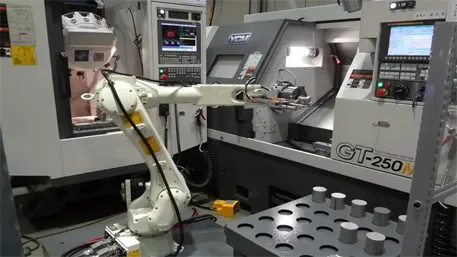
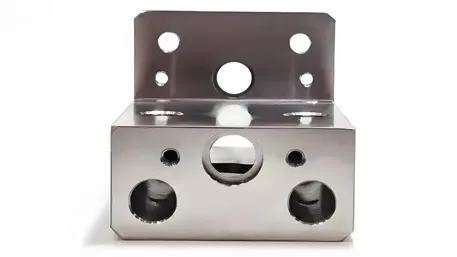
CNC machining is used because it combines controlled accuracy, repeatability across a batch, broad material compatibility and production flexibility in one process. It is particularly practical for prototypes, low-to-medium volumes and parts that need dimensional control or engineering-grade materials — before, or instead of, committing to dedicated tooling.

Short answer: why do manufacturers use CNC machining?
Manufacturers use CNC machining because it turns a digital model into physical geometry with predictable results. The cutting path is generated from CAD, executed by servo-controlled motion, and checked against the drawing — so the tenth part matches the first, the next order matches the last, and a design revision costs a program edit rather than a new mold. That combination is hard to replace anywhere between one-off prototypes and volumes large enough to justify tooling.
Why Do Manufacturers Use CNC Machining?
Six reasons explain most decisions to machine rather than cast, mold, print or cut by hand. Each one solves a specific manufacturing problem — and each carries conditions worth understanding before you rely on it.
Precision
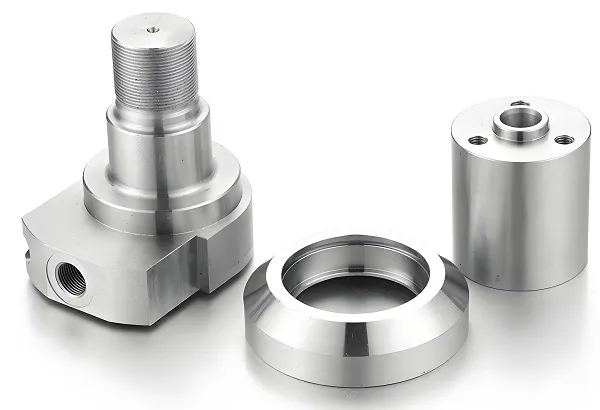
A machine does not "have" accuracy the way a gauge has graduations. What it has is controlled motion: servo drives reading position back to the control thousands of times a second, and correcting until the axis is where it was commanded to be. Accuracy on the finished part emerges from that motion control working together with everything downstream of it.
This matters because machine positioning figures quoted in isolation describe the machine, not your component. The tolerance you can actually hold depends on whether the whole chain supports it: machine condition and thermal state, tool geometry and wear, holding rigidity, how the material behaves as it is cut and cools, whether the part can deflect under cutting load, and whether the feature can even be measured to the precision being claimed.
This is why a shop quoting a tolerance is implicitly making a statement about its entire process, not just its equipment. It is also why drawings should be read carefully: tolerance belongs on the features that control fit and function. Applying it blanket across a drawing tends to raise cost without improving the part.
Repeatability
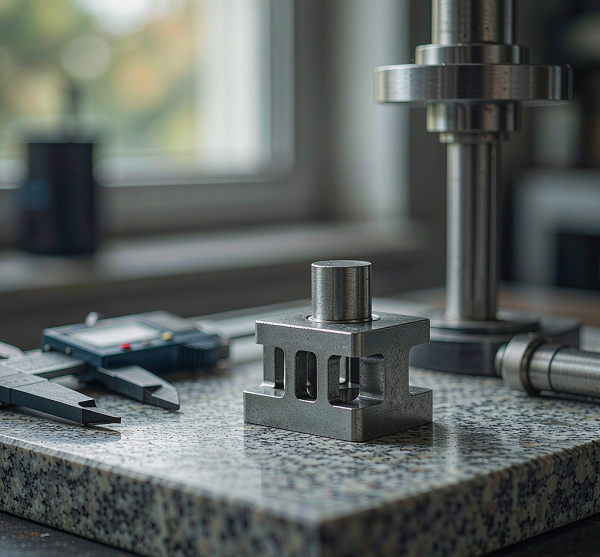
Precision makes one good part. Repeatability is what manufacturing actually needs — because a shipment of three hundred parts only works if every one of them assembles.
The mechanism is that decisions are proven once and then executed identically. Instead of relying on judgement at every feature of every part, the choices about tool order, cutting conditions, approach vectors and inspection points are settled during programming and first-article verification. What follows is repetition.
Repeatability is not automatic, though. It rests on tooling replacement intervals being enforced, holding being solid and located the same way every cycle, stock behaving consistently, and the process being checked at intervals tight enough to catch drift before it becomes scrap. When those hold, results are stable; when they lapse, variation appears quickly.
Material Versatility
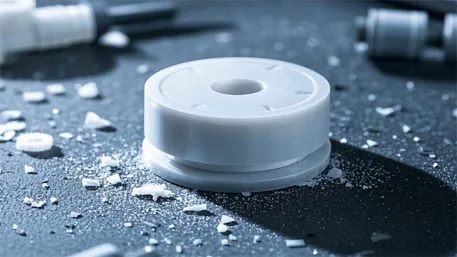
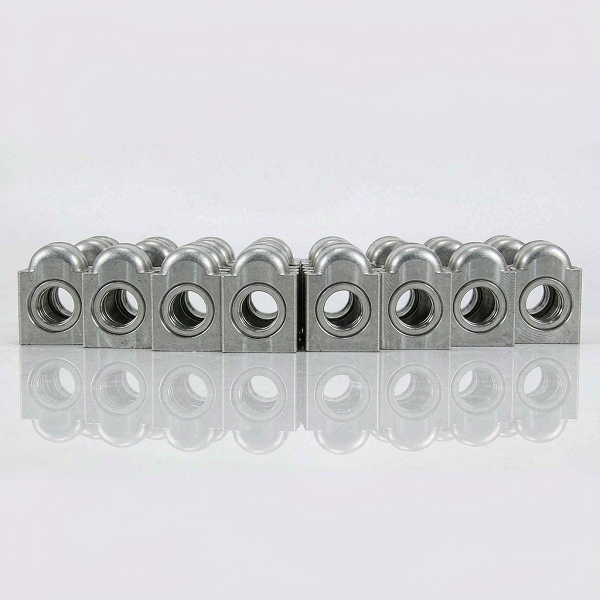
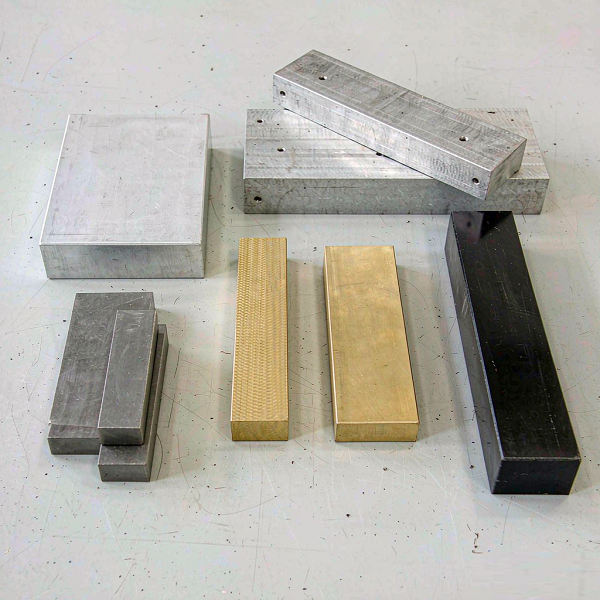
CNC cuts solid stock, which means it inherits the properties of real engineering materials rather than approximating them. A part machined from wrought aluminium bar behaves like that alloy; a PEEK component behaves like the polymer specified, not like a substitute chosen for printability.
The practical consequence is that material choice is handled as a specification question rather than a process question. Common families we machine include:
- Aluminium — light, machinable, good thermal behavior; the default for prototypes and many structural parts.
- Stainless steel — corrosion resistance and strength; work-hardens, so cutting strategy matters.
- Alloy steel — heat-treatable strength and toughness; see our alloy steel CNC machining page.
- Brass and copper — conductivity and free-machining behavior; see brass turned components.
- Titanium — strength-to-weight for demanding applications; see titanium CNC machining.
- Engineering plastics — POM, nylon, PTFE, PEEK and polycarbonate, each with its own stiffness, creep and thermal limits. See machining PEEK and custom acetal parts.
Material suitability depends on machinability, stiffness, thermal behavior, tooling availability and part geometry. Grade-specific trade-offs are covered in the linked material pages.
Complex Geometry
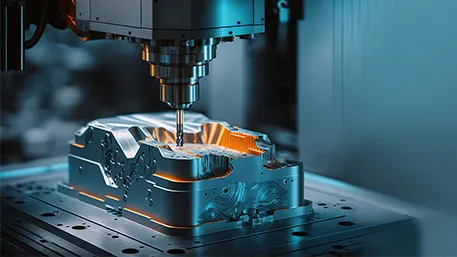
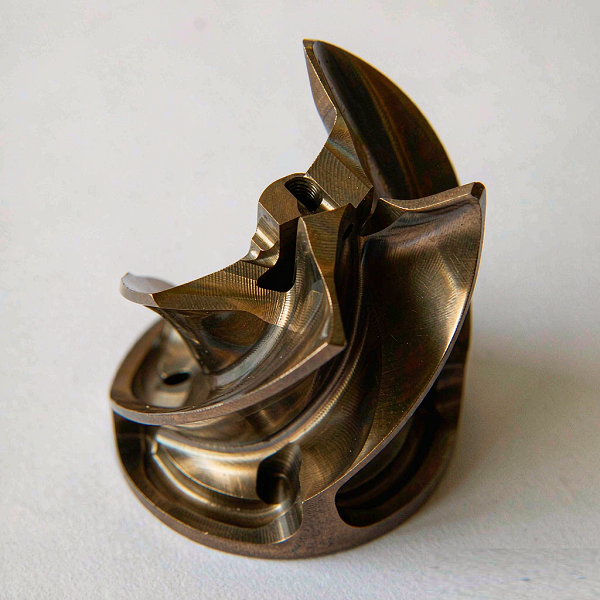
"CNC can make complex shapes" is too vague to be useful. Complexity is better understood by what it actually consists of: multiple faces needing machining, angled surfaces, deep pockets, curved contoured surfaces, slots, precision holes, threads and three-dimensional contours.
Whether these are economical depends largely on access — whether a tool can reach the feature at a workable angle and length. That is what drives axis count:
- 3-axis handles prismatic work well and is usually the most efficient where features are reachable from orthogonal directions.
- 4-axis adds rotation, allowing features around a part to be reached in fewer setups.
- 5-axis allows the tool or part to be oriented so angled and contoured surfaces are cut in one holding — see 5-axis CNC machining.
The corresponding limitation is physical, not digital: internal geometry that a tool cannot enter — enclosed internal channels, lattices, voids inside a solid — is generally a better fit for additive manufacturing. Deep cavities and thin walls also introduce deflection and chatter risk, which is why early DFM review pays for itself.
Production Flexibility
Flexibility is the property that makes CNC the default during development. A revision means editing geometry, regenerating toolpaths and cutting again — not modifying hardened tooling. That supports fast iteration, spare parts on demand, customized variants, and low-volume runs without committing capital to tooling before the design is settled.
No Dedicated Mold Required
This is the economic core of choosing CNC, and it is clearest when the two process chains are placed side by side.
Everything between the model and the first part in the second chain — tooling design, tool build, and trial shots — must be paid for and waited out. CNC skips it. That is why CNC tends to win for prototypes, low-to-medium volumes, and any case where the design may still change, while molding wins once volume and design stability allow the tooling cost to be spread across enough units.
What Makes CNC Different From Manual Machining?
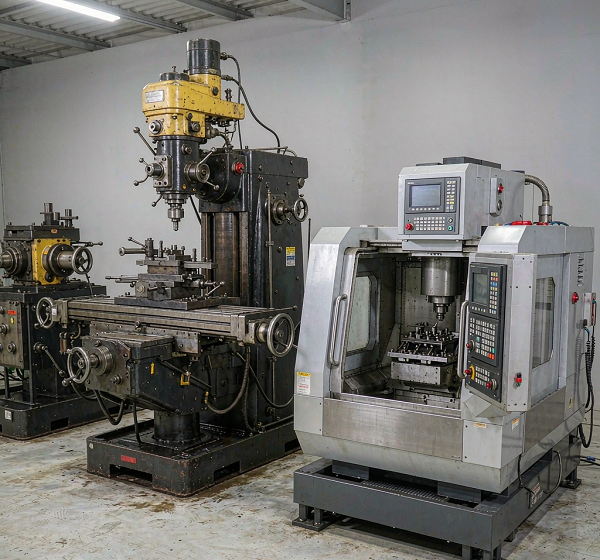
The difference is not that manual machining is imprecise. It is that manual results depend on human judgement exercised repeatedly, while CNC results depend on a process that was validated once.
| Factor | CNC | Manual machining |
|---|---|---|
| Consistency source | Validated program and fixed tooling list | Operator judgement, feature by feature |
| Batch consistency | High | Operator dependent |
| Contoured surfaces | Handled routinely via multi-axis interpolation | Difficult or impractical |
| Supervision | Can run largely unattended | Continuous operator attention |
| Repeat orders | Same program reused months later | Re-created each time |
| Where manual still fits | One-off simple features, quick repairs, setups where programming time exceeds cutting time | |
Manual machining still earns its place. A single slot in a plate, a repaired thread, or a fixture adjustment often costs less done directly than programmed. The point is not that one replaces the other, but that CNC scales: it delivers repeatability in situations where manual work cannot, including across shifts, across operators and across repeat orders.
What CNC Machining Does Better—and What It Doesn't
A credible process recommendation includes both sides. This table is how we would expect a manufacturing engineer to read CNC's position.
| Factor | CNC strength | CNC limitation |
|---|---|---|
| Precision | Controlled dimensional results | Tighter tolerances increase process cost |
| Repeatability | Excellent | Requires disciplined tooling, holding and checking |
| Material range | Very broad | Some materials machine slowly or poorly |
| Geometry | Strong for tool-accessible features | Internal geometry is limited |
| Volume | Prototypes through low-to-medium runs | High volume may favour molding or casting |
| Tooling | No dedicated mold | Cutting tools are still consumed |
| Surface finish | Good capability | Finish depends on machining strategy and time |
| Customisation | Very flexible | Every part still occupies machine time |
| Complexity | 5-axis expands reach | Enclosed or extreme geometry may favour AM |
| Cost | Competitive at low volume | Material removal can become costly at scale |
When Should You Choose CNC Machining?
Work through the conditions in order. If most apply, CNC is likely the practical choice; if several fail, another process probably deserves a look.
Reconsider — molding or casting may suit
- Very high volume
- Simple, repeatable geometry
- Aggressive unit-cost target
- Design stable long-term
Reconsider — additive may suit
- Enclosed internal channels
- Lattice or lattice-like structures
- Complex geometry at very low count
Prototyping
Prototypes are most informative when made from the material the product will actually use. Machined prototypes therefore support realistic assembly checks and functional evaluation rather than merely resembling the intended part. See custom CNC parts prototype.
Low-Volume Production
Between one prototype and full production there is often a long band in which tooling cannot yet be justified. CNC covers that band with production-intent parts, allowing volume decisions to be made against real demand rather than forecasts.
Functional Components
Parts carrying load, locating other components, sealing, or transmitting motion usually need material properties and dimensional control together. Machining from solid stock delivers both without the property compromises sometimes associated with built or cast material.
Tight-Tolerance Parts
Features controlling fit — bores, shafts, locating surfaces, mating interfaces, sealing faces — are where tolerances belong. Machining concentrates dimensional control on exactly those features; see tight-tolerance CNC machining.
Frequent Design Changes
Where a design is still moving, revisions should cost a program update rather than a tooling modification. This is one of the clearest cases for staying with CNC until the design settles.
CNC Machining vs Other Manufacturing Methods
The three comparisons below cover the decisions that come up most often. In each case, CNC wins some requirements and loses others — and knowing which is which before requesting a quote saves time on both sides.
CNC vs Manual Machining
Summarised above: CNC trades an upfront programming investment for repeatability and capability that manual work cannot sustain across batches and repeat orders.
CNC vs 3D Printing
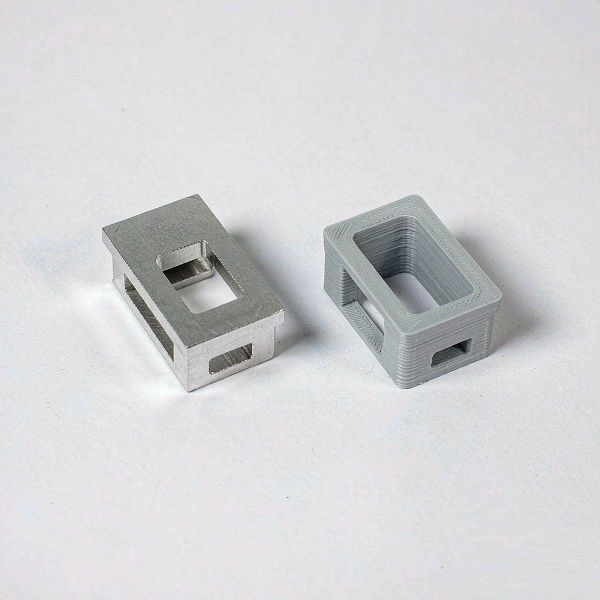
The two are often complementary rather than interchangeable. Additive manufacturing builds geometry layer by layer and therefore excels where internal complexity matters; CNC removes material and therefore excels where dimensional control, surface finish and true bulk material properties matter.
| Requirement | CNC | 3D printing |
|---|---|---|
| Tight tolerances | Strong | Process dependent |
| As-built surface | Strong | Usually requires finishing |
| Solid metal properties | Excellent | Material and process dependent |
| Internal lattices | Limited | Excellent |
| Enclosed channels | Limited | Strong |
| Low-volume prototypes | Excellent | Excellent |
| Material range | Broad | Process dependent |
| Best use | Precision functional parts | Complex geometry, low count |
A common pattern is to print concept iterations to validate form, then machine later iterations in production material once mechanical behaviour matters. For a fuller treatment, see CNC machining vs 3D printing for low-volume production.
CNC vs Injection Molding
This comparison turns on amortisation. Molding carries a large upfront tooling cost and a very low marginal cost per unit; CNC carries almost no tooling but charges machine time on every part. Somewhere between those curves the two cross.
| Requirement | CNC | Injection molding |
|---|---|---|
| Prototypes | Excellent | Tooling required |
| Low volume | Strong | Often tooling-heavy |
| High volume | Workable but costly | Usually stronger economics |
| Design changes | Easy | Mold modification may be required |
| Material | Metals and plastics | Thermoplastics |
| Tooling cost | Low | Higher |
| Geometry constraint | Tool access | Moldability |
In practice: CNC is often attractive before tooling exists, while molding becomes increasingly attractive as volume and design stability increase. See injection molding services and rapid injection molding.
CNC vs Die Casting
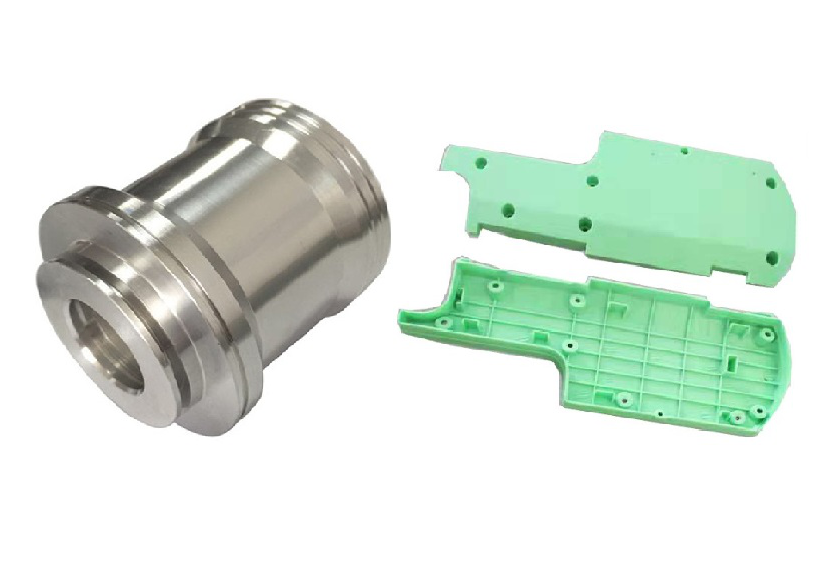
Die casting injects molten metal into a reusable steel die, so it suits higher volumes of net-shape aluminium or zinc parts, followed by machining on critical features. CNC is usually preferred below the casting threshold, during development, and where tolerances exceed what the casting process holds as-cast. Our die casting vs CNC machining page covers the decision in detail; see also the aluminium die casting guide.
Why Engineers Use CNC for Product Development
During development, the value of machining is that it answers questions other methods answer only approximately.
Functional Prototypes
Because parts can be cut from the intended material — aluminium, stainless steel, POM, PEEK or another specified grade — behaviour under load, temperature and wear reflects reality rather than a stand-in.
Fit and Assembly Validation
Machined parts hold the dimensional relationships that assemblies depend on, so interface problems surface during validation instead of after tooling.
Material Testing
Testing a machined specimen in the specified alloy or polymer gives data that transfers to production. Approximate materials produce approximate conclusions.
Bridge Production
Machining can supply early units while tooling decisions remain open, letting demand be confirmed before capital is committed.
Why Do Companies Outsource CNC Machining?
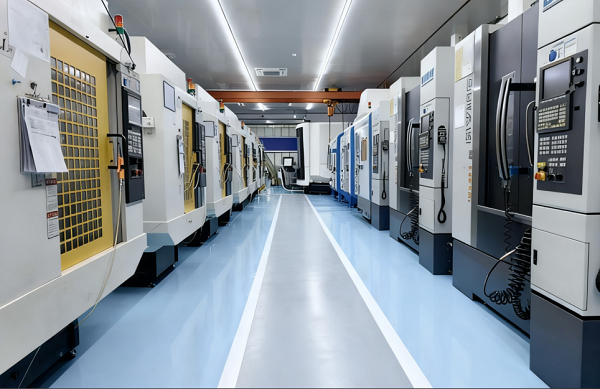
Buying machines is rarely the constraint. Skill, programming capacity, inspection capability and workflow maturity usually are. Outsourcing converts those into a service that scales with demand.
- No capital equipment commitment — capacity is purchased as needed rather than financed and depreciated.
- No programming team to build — CAM expertise and process planning sit with the supplier.
- No tooling inventory to manage — cutters, holders and workholding are carried by the shop.
- Access to multi-axis capability — 4- and 5-axis machining without owning that equipment.
- Access to inspection — dimensional verification and documentation come with the process.
- Capacity that scales — from a single prototype to repeat batches without changing your own headcount.
- Shorter development time — because the process already exists and is already proven.
Does CNC Machining Save Money?
Sometimes significantly, sometimes not at all. The honest answer depends on which side of the tooling curve your part sits on.
When CNC Is Cost-Effective
- Low volume where tooling cannot be amortised
- No dedicated mold required
- Frequent design changes
- Complex but machinable geometry
- Functional prototypes in real material
- Replacement and spare parts on demand
When CNC Becomes Expensive
- Very high volume
- Large material removal from solid stock
- Unnecessarily tight tolerances
- Many separate setups
- Difficult-to-machine materials
- Geometry that pushes very long cycle times
Main CNC Cost Drivers
| Cost driver | Effect on CNC cost |
|---|---|
| Material stock | Increases cost |
| Machining time | Increases cost |
| Number of setups | Increases cost |
| Tight tolerances | Increases cost |
| Complex geometry | Increases cost |
| 5-axis machining | Higher hourly rate, but may reduce setups |
| Surface finish requirements | Increases cost |
| Volume | Effect depends on automation, holding and geometry |
This is why "does CNC save money" has no universal answer. A single aluminium housing may be dramatically cheaper machined than moulded, while ten thousand of the same part almost certainly will not be.
Where Is CNC Machining Used?
CNC appears wherever parts must be accurate, traceable and made from real engineering materials — usually at volumes below the point where dedicated tooling pays back.
- Aerospace — low-to-medium volumes, tight tolerances and performance materials.
- Medical — precision components, engineering materials and complex geometry; see medical CNC parts quality.
- Automotive — fixtures, prototypes and functional components.
- Electronics — housings, brackets, heat dissipation parts and precision interfaces.
- Robotics — small batches, complex interfaces and custom components.
- Industrial equipment — replacement parts, shafts, housings and fixtures.
Application suitability depends on material grade, heat treatment where relevant, loading conditions and applicable industry requirements.
What Can CNC Machining Make?
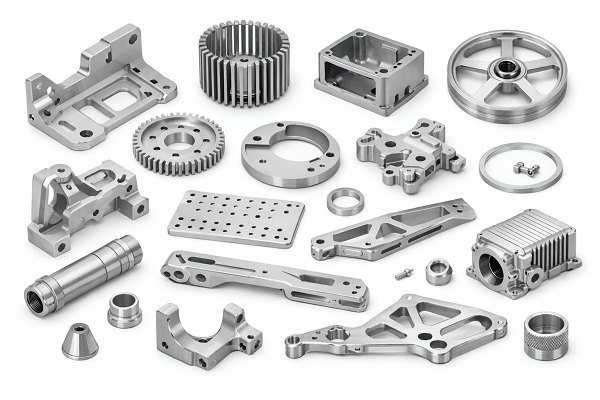
Commonly machined part types, grouped by the requirement that usually drives them to CNC.
Shafts
Turned cylindrical parts where concentricity and bearing fits control function.
Brackets
Structural interfaces where hole position and flatness matter for assembly.
Housings
Enclosures machined for sealing faces, bores and mounting accuracy.
Gears and Splines
Toothed components cut to specified geometry and material condition.
Manifolds
Flow-path blocks requiring accurate intersecting bores and port faces.
Heat Sinks
Thermal parts where fin geometry and base flatness drive performance.
Fixtures and Tooling
Workholding and inspection tooling built for repeatable location.
Medical Components
Precision parts made to drawing under defined inspection and documentation.
Prototype Assemblies
Sets of machined parts built to validate fit and function together.
Is CNC Machining Still Relevant Today?
Yes — largely because the value of CNC was never novelty. Modern CNC is defined less by its mechanics than by what surrounds them: digital CAD/CAM to generate and simulate toolpaths before metal is cut, multi-axis motion to reach difficult features in fewer setups, in-process probing to check parts while still on the machine, and inspection data feeding back into process control.
The technologies often presented as replacements occupy different territory. Additive manufacturing handles internal complexity that cutting tools cannot reach; injection moulding and die casting win on unit cost once volume amortises tooling. CNC continues to cover the wide band between them, and remains the finishing step for many castings and printed parts that need accurate interfaces.
We cover CNC's evolution — automation, multi-axis, smart factory and how it compares with newer technologies — separately, so this page stays focused on why CNC is used and when it is the right choice. See Is CNC outdated?
Is CNC Machining Right for Your Project?
A quick self-check before requesting a quote. Each "yes" points toward CNC; the last three point elsewhere.
| Question | If yes | Implication |
|---|---|---|
| Need a functional prototype? | Yes | CNC is a strong candidate |
| Need real material properties? | Yes | CNC fits well |
| Need tight dimensional control? | Yes | CNC may fit; specify tolerance where it matters |
| Low-to-medium volume? | Yes | CNC is often economical |
| Frequent design changes? | Yes | No dedicated mold required |
| Need different materials? | Yes | CNC offers broad flexibility |
| Need internal lattice structures? | Yes | Consider additive manufacturing |
| Very high volume? | Yes | Compare injection molding |
| Simple commodity part? | Yes | Compare stamping or die casting |
How Xiamen Goldcattle Applies CNC Machining
The principles above only matter if the shop can execute them. This is what drawing-based CNC machining looks like in our facility.
Milling and Turning
CNC milling and CNC turning carried out in-house, covering prismatic parts and rotary components.
Multi-Axis Capability
3-, 4- and 5-axis machining available, including 5-axis work where holding and complex surfacing justify it.
Metals and Plastics
Aluminium, stainless steel, alloy steel, brass, titanium and engineering plastics including POM, nylon, PTFE and PEEK.
Prototype to Repeat Production
Programme once, verify the first article, then reproduce — from a single part through recurring batches.
DFM Review
Tool access, setups, tolerance placement and material condition reviewed before machining begins.
Dimensional Verification
Inspection carried out against the drawing, with reporting agreed per project rather than assumed.
Frequently Asked Questions
Upload CAD and See Whether CNC Is the Right Route
Send your 3D model, 2D drawing, material, quantity, tolerance requirements and surface finish needs. We will review manufacturability, confirm whether CNC is the most sensible process for your part, and provide a production quote.
- Prototype to repeat production
- Milling, turning and multi-axis machining
- Metals and engineering plastics
- DFM review before machining
- Dimensional inspection to drawing
- ISO 9001:2015 certified quality system
STEP, IGES, DWG, DXF, PDF and SLDPRT accepted.
Further Reading
- CNC Machining Services — capability overview across milling, turning and multi-axis work.
- Is CNC Outdated? — how CNC evolved with automation and newer technologies.
- CNC Machining vs 3D Printing — a focused comparison for low-volume production.
- 5-Axis CNC Machining Services — when multi-axis changes what is practical.
- Tight-Tolerance CNC Machining — how tolerance capability is established.
- Custom CNC Parts Prototype — from CAD to first article.