When Should I Use 5-Axis CNC Machining?
Use 5-axis CNC machining when your part has multiple critical surfaces, difficult-to-reach features, complex 3D geometry, or tight positional relationships that would require multiple setups on a 3-axis or 4-axis machine. 5-axis machining is often most valuable when reducing setups improves accuracy, access or total production time.
Quick Answer: When Is 5-Axis CNC Worth It?
A simple decision matrix for procurement and engineering teams choosing between 3-axis, 4-axis and 5-axis machining.
| Part Requirement | 3-Axis | 4-Axis | 5-Axis |
|---|---|---|---|
| Simple prismatic part | ✓ | ✓ | Maybe |
| Multiple side features | Limited | ✓ | ✓ |
| Complex 3D surface | Limited | Limited | ✓ |
| Deep angled features | Limited | ✓ | ✓ |
| Many setups required | ✕ | Possible | ✓ |
| Tight relationship between multiple faces | Risky | ✓ | ✓ |
| Impeller / blade geometry | ✕ | Limited | ✓ |
| Medical anatomical geometry | Limited | Limited | ✓ |
| High-value complex parts | Risky | ✓ | ✓ |
7 Situations Where 5-Axis CNC Makes Sense
These are the practical scenarios where 5-axis machining creates measurable value compared with 3-axis or 4-axis alternatives.
Multiple Critical Surfaces
If several faces carry holes, pockets, bosses, sealing surfaces or datum features, 5-axis can machine them in one clamping. Fewer setups reduce datum transfer errors and handling time.
Difficult-to-Reach Features
Deep cavities, angled holes, undercuts, internal passages and compound-angle surfaces are often unreachable with a fixed spindle. Tilting the tool axis opens access.
Complex 3D Surfaces
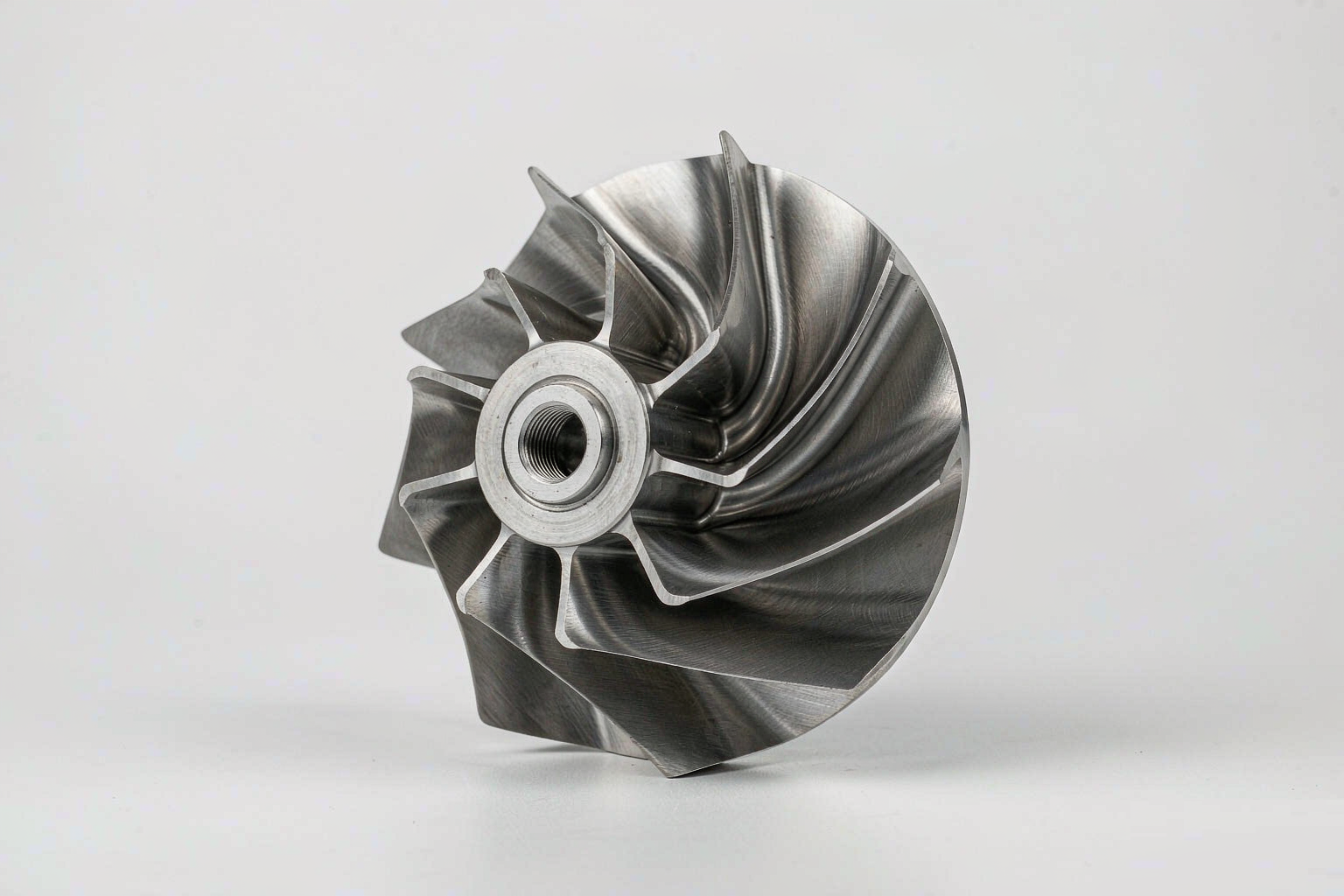
Impellers, turbine blades, molds, orthopedic components, aerospace fairings and complex housings need continuous tool orientation that 3-axis cannot deliver efficiently.
Tight Positional Relationships
When a hole on Face A must maintain a tight position to a bore on Face B, single-setup machining preserves the geometric relationship better than repeated re-fixturing.
Multiple Setups Would Be Required
3-axis may need four or more setups. 5-axis can often complete the same part in one clamping, reducing handling time and setup-related variation.
Tool Orientation Affects Quality
Inside deep cavities, tilting the tool allows shorter, more rigid cutters, better cutting conditions and improved surface finish on suitable geometries.
High-Value Complex Parts
For aerospace, medical, robotics and energy components, the cost of scrap, rework and setup time can exceed machine-hour savings. Setup reduction protects part value.
When Do You NOT Need 5-Axis CNC?
A trustworthy supplier will tell you when a simpler process is the better choice.
Skip 5-Axis For
- Simple 2.5D parts with flat faces
- Mostly planar geometry
- Few side features
- Loose tolerance requirements
- High-volume simple components
- Cost-sensitive production where setup count is low
- Standard drilling and pocketing
Use Instead
- 3-axis CNC milling for prismatic housings and brackets
- 4-axis CNC milling when parts have rotational side features
- CNC turning for cylindrical shafts and bores
- Standard machining for prototypes that only need to prove fit
If a 3-axis or 4-axis process can meet the drawing requirements efficiently, using 5-axis may add cost without creating enough value.
3-Axis vs 4-Axis vs 5-Axis CNC Machining
The value of 5-axis comes from controlled tool orientation and access—not simply from having “two more axes.”
| Feature | 3-Axis | 4-Axis | 5-Axis |
|---|---|---|---|
| X / Y / Z movement | Yes | Yes | Yes |
| Rotary axis | No | Yes | Yes |
| Tilt axis | No | No | Yes |
| Multiple faces in one setup | Limited | Good | Excellent |
| Complex 3D surfaces | Limited | Moderate | Excellent |
| Angled machining | Limited | Good | Excellent |
| Setup reduction | Low | Medium | High |
| Machine complexity | Low | Medium | High |
| Programming complexity | Low | Medium | High |
| Machine cost | Lower | Medium | Higher |
3+2 vs Simultaneous 5-Axis Machining
Not every 5-axis job needs full simultaneous motion. Understanding the difference helps you ask the right questions.
3+2 Machining
The machine positions the rotary axes to a fixed angle, then performs a 3-axis cut. The rotary axes do not move during cutting.
- Simpler programming and shorter CAM time
- Excellent for many multi-sided parts
- Often a practical alternative to full simultaneous machining
- Good access to angled faces and holes
Simultaneous 5-Axis
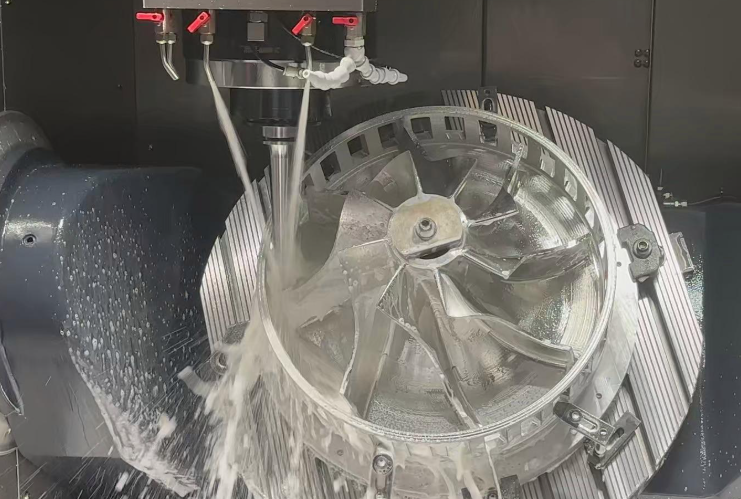
All three linear axes and both rotary axes move at the same time during the cut, enabling continuous tool-axis control.
- Required for impellers and turbine blades
- Used for complex freeform surfaces
- Enables continuous tool-axis control along curved surfaces
- Higher programming and machine requirements
You do not need simultaneous 5-axis machining simply because a part has five-sided access requirements.
Does 5-Axis CNC Mean ±0.005 mm Accuracy?
No. Five-axis capability does not automatically guarantee ±0.005 mm part tolerance.
Actual results still depend on machine accuracy, repeatability, thermal stability, workholding, tooling, material, programming, toolpath and inspection. A 5-axis machine is a tool; the tolerance is a result of the whole process.
For a deeper look at what tight tolerances really require, see Tight-Tolerance CNC Machining.
How 5-Axis Machining Can Improve Accuracy
The accuracy advantage often comes from setup reduction rather than simply from the number of axes.
5-axis machining reduces the number of times a part is unclamped and reclamped. Each re-fixturing introduces a small positional uncertainty. Eliminating those transfers is often where the accuracy improvement comes from.
Can 5-Axis CNC Reduce Production Time?
Sometimes yes—but the right comparison is total manufacturing time, not machine hourly rate.
A 5-axis machine may have a higher hourly rate, yet if it replaces four setups with one, the total project time can drop sharply. Less handling, less fixture changeover and fewer in-process inspections all add up.
3-Axis Route
5-Axis Route
Does 5-Axis CNC Cost More?
Hourly machine rate is usually higher, but total part cost is not automatically higher.
A more expensive machine can produce a lower-cost part if it eliminates multiple setups, reduces fixture cost, avoids secondary operations or cuts scrap. Compare total project cost, not just cost per machined hour.
3-Axis Route (Illustrative)
5-Axis Route (Illustrative)
Illustrative example only. Actual numbers depend on part geometry, material, quantity, fixture strategy and inspection requirements.
What Actually Drives 5-Axis CNC Cost?
| Cost Driver | Why It Matters |
|---|---|
| Programming | 5-axis toolpaths, collision avoidance and simulation take more CAM time than simple 3-axis jobs. |
| Machine time | Complex surfaces may need slower feeds and speeds to protect surface finish and tool life. |
| Fixturing | Complex parts may still need specialized workholding, though fewer setups reduce total fixture count. |
| Inspection | Complex GD&T and freeform geometry often require CMM inspection and longer reporting time. |
| Tooling | Long-reach, ball-nose and special-form tools cost more and wear faster on hard materials. |
| Material | Titanium, Inconel and hardened steels raise both material cost and cutting difficulty. |
| Quantity | Larger batches amortize programming and fixture cost; prototypes carry a higher per-piece burden. |
How Complex Does a Part Need to Be for 5-Axis?
Use geometry signals rather than a single complexity score.
Strong 5-Axis Candidates
- Compound-angle surfaces
- Multi-sided features
- Deep angled pockets
- Impeller blades
- Turbine blades
- Complex medical shapes
- Aerospace structures
- Molds and dies
Weak 5-Axis Candidates
- Simple blocks
- Flat plates
- Simple pockets
- Standard holes
- Basic brackets
- Most shafts and pins
Industries That Benefit From 5-Axis CNC Machining
The value shows up where geometry is complex and the cost of failure is high.
Aerospace
- Impellers
- Turbine components
- Structural parts
- Aerodynamic surfaces
Medical
- Orthopedic components
- Surgical instruments
- Anatomical implants
- Device housings
Robotics
- Joint housings
- Complex actuator components
- End-effector parts
- Lightweight frames
Energy
- Impellers
- Valve components
- Pump components
- Manifolds
Mold & Tooling
- Deep cavities
- Complex mold surfaces
- Core and cavity inserts
- Compound shutoffs
Automotive
- Prototype components
- Complex housings
- Performance parts
- Custom fixtures
5-Axis CNC Materials
Material selection affects toolpath strategy, cutting speed and final cost as much as machine selection does.
| Material | Common 5-Axis Applications | Key Consideration |
|---|---|---|
| Aluminum 7075 / 6061 | Aerospace brackets, housings, impellers, prototypes | High speed capable; watch thin-wall deformation |
| Stainless Steel 316L / 304 | Medical instruments, food-grade parts, marine hardware | Work hardening and heat require managed strategy |
| Titanium Ti-6Al-4V | Implants, aerospace fasteners, performance components | Low thermal conductivity; heat and tool wear control |
| Inconel 718 | Turbine parts, combustion components, oil & gas | Abrasive; slow speeds; rigid setup essential |
| Tool Steel / Hardened Steel | Mold inserts, dies, wear components | May need EDM or grinding for final precision features |
| PEEK / POM / Engineering Plastics | Medical housings, insulating fixtures, prototypes | Thermal expansion and fixturing distortion |
See the full Materials Overview for grades, finishes and typical applications.
5-Axis CNC and Tight-Tolerance Features
5-axis can help you reach tight tolerances, but it does not replace process control.
When positional relationships between multiple faces are critical, machining them in one setup removes re-fixturing error. However, final size, form and surface requirements may still need grinding, honing, lapping or superfinishing.
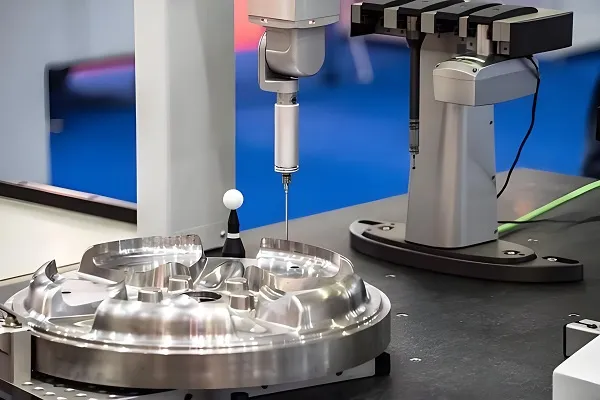
Goldcattle verifies tight features on a Zeiss Prismo CMM with ±0.0005 mm measurement accuracy. First Article Inspection per AS9102 and EN 10204 3.1 material certificates are available per program.
5-Axis CNC Is Not Always the Final Process
Complex geometry often starts on a 5-axis machine and finishes with a secondary process.
For example, 5-axis CNC may create the geometry of a precision bore, while grinding or honing provides the required final size and surface finish.
Real 5-Axis CNC Machining Case Studies
These examples show why 5-axis was chosen—not just what was machined.
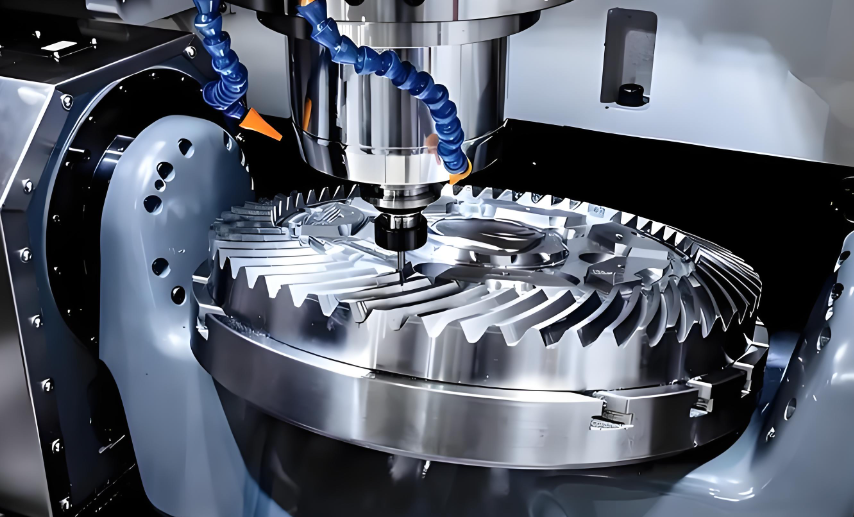
Aluminum Impeller
Curved blades and hub geometry required continuous tool orientation. 5-axis simultaneous machining avoided manual blending between setups.
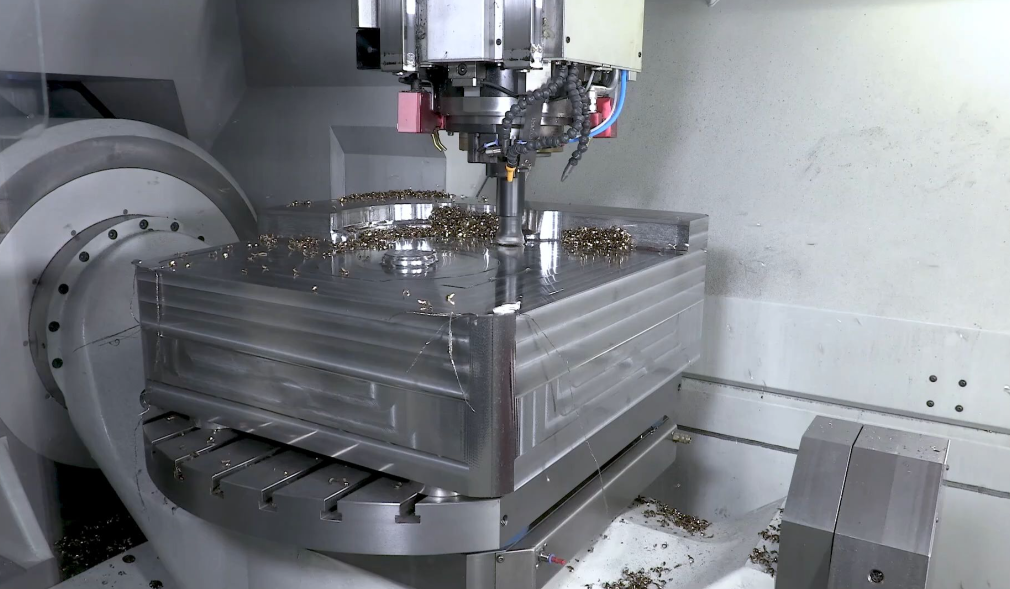
Titanium Structural Component
Deep pockets and angled faces made multi-sided access essential. Single-setup machining protected the positional relationship between mounting bores.
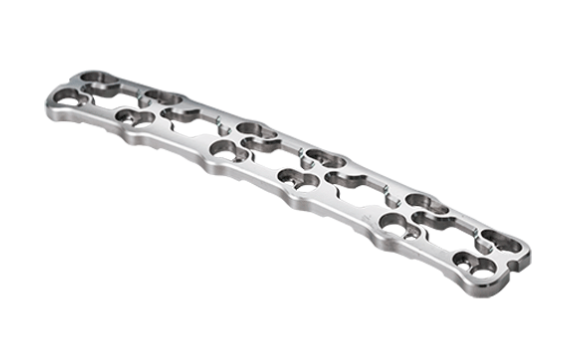
Orthopedic Guide Component
Freeform surfaces and multi-sided datum features required 5-axis access. In-process probing verified critical dimensions before unclamping.
Complex Mold Insert
Deep cavity and compound-angle shutoff surfaces were machined directly, reducing electrode work and secondary benching.
Should Your Part Be Machined on a 5-Axis CNC?
Use this screening checklist before requesting a quote. Final process selection always requires drawing review.
What Should You Tell a 5-Axis CNC Supplier?
The more context you provide, the better the supplier can recommend the right machining strategy.
A supplier should recommend the machining strategy based on the part, rather than assuming every complex part requires simultaneous 5-axis machining.
Goldcattle 5-Axis CNC Machining Capability
Structured capability table so you can see what is available and what needs to be confirmed for your specific project.
| Capability | Goldcattle |
|---|---|
| 5-axis machining | Available |
| 3+2 machining | Available |
| Simultaneous 5-axis | Confirm actual machine capability at quotation |
| CNC milling (3 / 4 / 5-axis) | Available |
| CNC turning | Available |
| Tight-tolerance features | Down to ±0.005 mm on selected features* |
| CMM inspection | Available (Zeiss Prismo, ±0.0005 mm) |
| DFM review | Free on every order |
| Prototype | Available |
| Production | Available |
*Final capability is confirmed from the drawing and depends on feature geometry, material, size, process and inspection requirements.
5-Axis Machine Spotlight
DMG MORI DMU 50
- 5-axis machining center
- Suitable for complex multi-surface parts
- Reduced setup requirements
- Used for high-value precision components
What It Means for Buyers
- Fewer setups on complex parts
- Better access to angled and deep features
- Single-setup machining for impellers and blades
- Confirmed scope per project before quotation
FAQ
Continue Your 5-Axis Research
Related pages that go deeper on process selection, precision machining and supplier qualification.
Not Sure If 5-Axis Is Right for Your Part?
Send your CAD file, drawing, material and quantity. Our engineers will compare 3-axis, 4-axis and 5-axis routes and recommend the most cost-effective process that meets your tolerance and delivery requirements.