
What Materials Can a CNC Supplier Machine?
A capable CNC supplier can machine a wide range of metals, plastics and engineering materials — aluminum, stainless steel, brass, copper, titanium, carbon and tool steels, PEEK, POM, nylon, ABS and PC. The right material depends on the strength, weight, temperature, corrosion, electrical, dimensional, finish, machinability and cost requirements of your part.
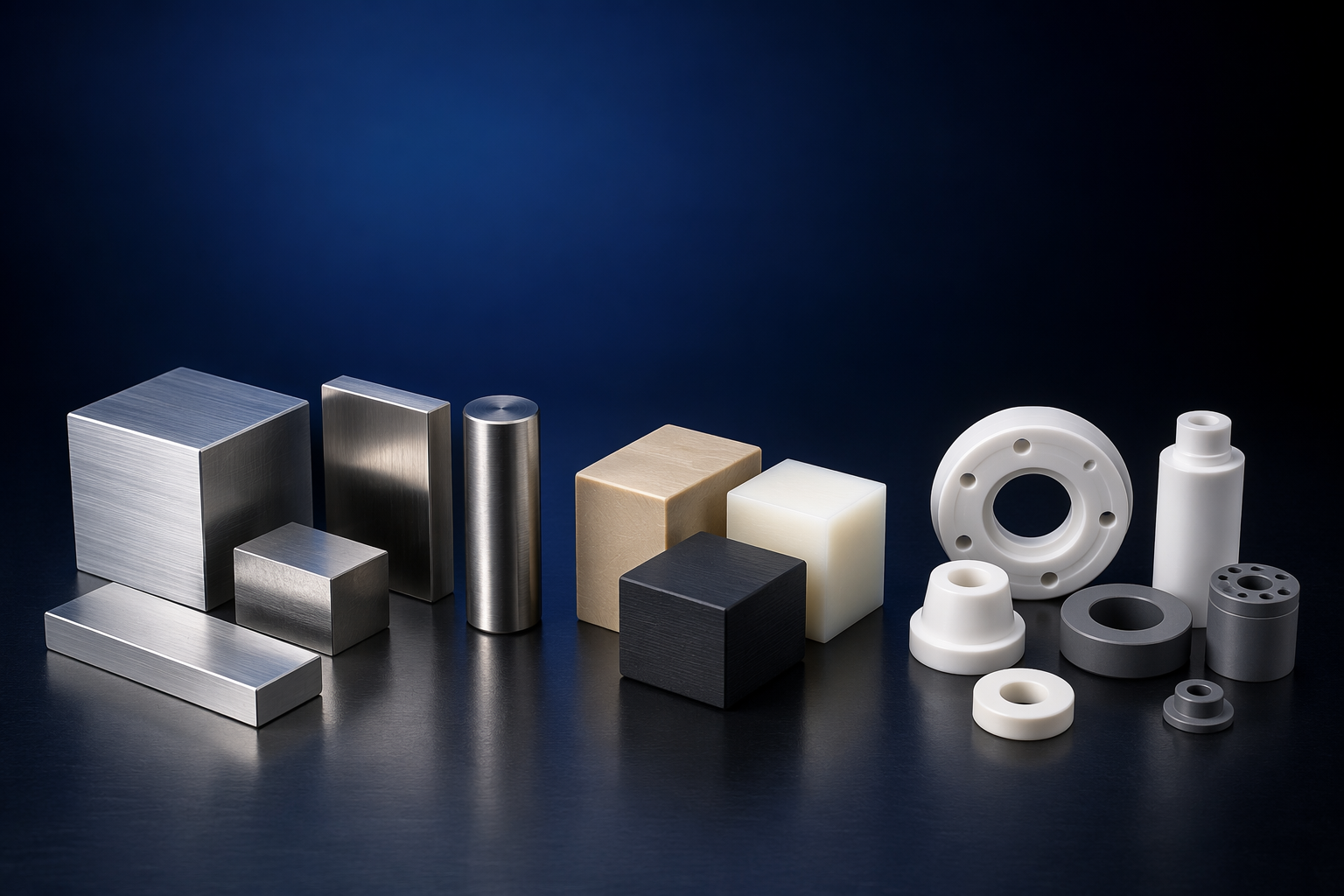
Quick Answer: What Materials Can CNC Suppliers Machine?
European and US procurement teams rarely ask "what is the longest material list?" They ask a sharper question: "Can you stably machine the exact grade my drawing specifies, prove the material, and hold my tolerance?" This page is organized around that decision — not around a material encyclopedia.
CNC Machining Materials at a Glance
The matrix below shows the materials Goldcattle machines routinely, whether they suit CNC milling and turning, where they are typically used, and their relative machining difficulty. Difficulty is a shop-floor ranking (Low / Medium–High / High), not a numeric score — harder materials need different tooling, feeds and thermal control.
| Material | CNC Milling | CNC Turning | Typical Applications | Machining Difficulty |
|---|---|---|---|---|
| AluminumMetal | ✅ | ✅ | Housings, brackets, aerospace & robotics parts | Low |
| Stainless SteelMetal | ✅ | ✅ | Medical, marine, food & industrial | Medium–High |
| Carbon SteelMetal | ✅ | ✅ | Shafts, structural & wear parts | Medium |
| Tool SteelMetal | ✅ | ✅ | Dies, tooling, fixtures | High |
| BrassMetal | ✅ | ✅ | Fittings, electrical & mechanical parts | Low |
| CopperMetal | ✅ | ✅ | Electrical & thermal parts | Medium |
| TitaniumMetal | ✅ | ✅ | Aerospace, medical | High |
| PEEKPlastic | ✅ | ✅ | Medical, semiconductor, seals | Medium–High |
| POMPlastic | ✅ | ✅ | Gears, bushings, wear parts | Low |
| NylonPlastic | ✅ | ✅ | Mechanical plastic parts | Low–Medium |
| ABSPlastic | ✅ | ✅ | Prototypes, housings | Low |
| PCPlastic | ✅ | ✅ | Transparent / impact parts | Medium |
Only materials Goldcattle machines routinely are listed. A longer list is not the goal — machining your exact grade reliably is. If your grade is not shown, see Can't Find Your Material?
What Are the Most Common CNC Machining Materials?
If you are early in material selection, these six groups cover the large majority of CNC parts. The bar shows how frequently each is specified in custom machining work — a useful starting point, not a ranking of capability.
Aluminum
Stainless Steel
Brass
Steel
Titanium
Engineering Plastics
Which CNC Material Should You Choose?
Start from what the part must do, not from a material name. Match your priority to a material group, then confirm the exact grade with the deep dives below.
CNC Machining Metals
Each profile states what the material is best for, its real advantages, the considerations a buyer should know, and the exact grades Goldcattle machines. Always specify the grade on the drawing — "stainless steel" is not enough to quote or inspect against.
Aluminum
6061-T6
General purpose- Best for: General-precision parts, brackets, frames, enclosures.
- Advantages: Highly machinable, lightweight, corrosion resistant, excellent anodizing.
- Considerations: Lower strength than 7075; not for the most demanding structural loads.
7075-T6
High strength- Best for: Aerospace brackets, high-load structural parts, performance components.
- Advantages: High strength-to-weight, good fatigue behavior.
- Considerations: Less corrosion resistant than 6061; anodizing differs (often Type III hard coat); more care on thin sections.
Stainless Steel
303 / 304 / 304L
Versatile- Best for: General parts, food & industrial, moderate corrosion needs.
- Advantages: Readily available, good corrosion resistance, 303 machines easiest of the group.
- Considerations: Work-hardens; 304 needs sharp tools and controlled cuts. 304L for welding.
316 / 316L
Marine & medical- Best for: Marine, medical, chemical, fluid components.
- Advantages: Best common stainless corrosion resistance (molybdenum added).
- Considerations: Harder to machine than 304; heat and work-hardening need managed feeds; passivation recommended.
17-4 PH
Hardenable- Best for: Parts needing stainless corrosion resistance plus high strength after heat treatment.
- Advantages: Precipitation-hardening; combines corrosion resistance and strength.
- Considerations: Heat-treatment sequencing matters for tolerance and distortion; DFM review advised.
Carbon & Tool Steel
Carbon / Alloy Steel
Strength- Best for: Shafts, structural parts, gears, fixtures.
- Advantages: High strength and stiffness at low material cost; wide grade range.
- Considerations: Prone to rust — needs plating, coating or oiling for storage; harder than aluminum to machine.
Tool Steel
Wear- Best for: Dies, tooling, wear parts, fixtures.
- Advantages: Very high hardness and wear resistance after treatment.
- Considerations: High hardness means slow, careful machining; heat treat drives final tolerance and flatness.
Brass & Copper
Brass (C360 / C464)
Easy machining- Best for: Fittings, electrical & mechanical parts, connectors.
- Advantages: Excellent machinability, low tool wear, good thread quality, corrosion resistant.
- Considerations: Softer than steel; watch small features and burrs; C464 for naval/marine use.
Copper
Conductive- Best for: Electrical contacts, busbars, thermal parts.
- Advantages: Excellent electrical & thermal conductivity.
- Considerations: Gummy to machine, work-hardens, needs burr control and sharp tools; C101/C110 common.
Titanium
Grade 2 / Grade 5 (Ti-6Al-4V)
Aero & medical- Best for: Aerospace, medical implants & instruments, high strength-to-weight parts.
- Advantages: Outstanding strength-to-weight and corrosion resistance; Grade 5 is the workhorse alloy.
- Considerations: Heat concentrates at the cut (low thermal conductivity); tool wear and work hardening need managed strategy; higher material and machining cost.
CNC Machining Plastics
Engineering plastics solve problems metals cannot: insulation, chemical resistance, low weight, low friction, transparency. They machine differently — they soften, creep and can melt at the tool. The profiles below focus on what each is actually good at.
PEEK
Virgin / CF30 / GF30 PEEK
Demanding- Best for: High-temperature, chemical, electrical-insulation and wear parts; semiconductor & medical.
- Advantages: Very high temperature capability for a polymer, excellent chemical resistance, stable dimensions.
- Considerations: Expensive; thermal expansion and residual stress need a controlled strategy; CF/GF fillers are abrasive on tools. State the exact grade and filler %.
POM / Nylon / ABS / PC
POM (Delrin)
Low friction- Best for: Gears, bushings, bearings, precision mechanical parts.
- Advantages: Low friction, good dimensional stability, easy to machine, tight tolerances.
- Considerations: Moisture sensitive for some grades; not for high heat.
Nylon (PA)
Tough- Best for: Wear parts, clips, consumer & industrial components.
- Advantages: Tough, good fatigue resistance, low cost.
- Considerations: Absorbs moisture (swells); affects final dimension — control storage and state conditioned vs dry.
ABS
Prototyping- Best for: Prototypes, housings, jigs.
- Advantages: Cheap, easy to machine, good surface.
- Considerations: Lower temperature and chemical resistance; not for demanding service.
PC
Impact / clear- Best for: Transparent or impact-resistant guards, enclosures.
- Advantages: High impact strength, optical clarity option.
- Considerations: Prone to stress cracking; moderate machinability; avoid aggressive coolants.
HDPE / PTFE
HDPE
Chemical- Best for: Chemical tanks, liners, low-friction parts.
- Advantages: Chemical resistant, low cost, easy to machine.
- Considerations: Softer; holds tolerances less tightly than POM; prone to burrs.
PTFE
Non-stick- Best for: Seals, insulators, non-stick & low-friction parts.
- Advantages: Extreme chemical resistance, very low friction, wide temperature range.
- Considerations: Very soft and creeps under load; machines poorly by standard methods; tight tolerances are hard. State application clearly.
Which Materials Are Easiest and Hardest to CNC Machine?
Machinability is ranked by shop-floor behavior — cutting ease, tool wear, heat and work-hardening — not by an arbitrary 1–10 score (which has no common test standard). Use this to plan cost and lead time, not as a material spec.
"Harder" materials are not "worse" — they are chosen for properties you cannot get elsewhere. The ranking only predicts tool wear, cycle time and the process control needed.
Which Materials Are Best for CNC Milling and Turning?
Nearly every material above suits both milling and turning. The fit rating reflects how naturally each material is processed by that method, not whether it is possible.
| Material | CNC Milling fit | CNC Turning fit |
|---|---|---|
| Aluminum | ⭐⭐⭐⭐⭐ | ⭐⭐⭐⭐⭐ |
| Stainless Steel | ⭐⭐⭐⭐⭐ | ⭐⭐⭐⭐⭐ |
| Brass | ⭐⭐⭐⭐⭐ | ⭐⭐⭐⭐⭐ |
| Carbon / Tool Steel | ⭐⭐⭐⭐ | ⭐⭐⭐⭐ |
| Titanium | ⭐⭐⭐⭐ | ⭐⭐⭐⭐ |
| PEEK | ⭐⭐⭐⭐ | ⭐⭐⭐⭐ |
| POM | ⭐⭐⭐⭐⭐ | ⭐⭐⭐⭐⭐ |
| ABS / PC / Nylon | ⭐⭐⭐⭐ | ⭐⭐⭐⭐ |
The more useful question is not "can you machine it?" but "can you machine it in my geometry?" Geometry, not material alone, decides feasibility:
| Material | Simple geometry | Deep cavity | Thin wall | Tight tolerance |
|---|---|---|---|---|
| 6061 | ✅ | ✅ | ⚠️ | ✅ |
| 7075 | ✅ | ✅ | ⚠️ | ✅ |
| 316L | ✅ | ⚠️ | ⚠️ | ✅ |
| Titanium | ✅ | ⚠️ | ⚠️ | ✅* |
| PEEK | ✅ | ⚠️ | ⚠️ | ✅* |
⚠️ = feasible with controlled strategy and usually at higher cost; ✅* = achievable on qualified features after drawing and inspection review, not a blanket guarantee. See tight-tolerance CNC machining.
How Do You Choose the Right CNC Material?
Work through these seven factors in order. The lowest-cost material is not always the lowest-cost part — a stronger grade may let you remove material or skip a joining step.
Mechanical Strength
Load, fatigue, impact. Steel and titanium lead; 7075 beats 6061.
Operating Temperature
PEEK and titanium far outlast ABS/PC/nylon above ~100–120 °C.
Corrosion Resistance
316L and suitable stainless; aluminum with protection; PEEK/PTFE chemically inert.
Weight
Aluminum and plastics for lightweight; titanium for strength at low mass.
Wear / Friction
POM, PEEK, filled polymers, hardened steel for moving contact.
Electrical / Thermal
Copper/brass conduct; PEEK/POM/ABS/PC insulate.
Cost & Availability
Material + machining + finishing + scrap, not unit price alone.
Side-by-Side: Temperature, Corrosion, Strength, Wear, Electrical
Which CNC Material Is Best for High-Temperature Applications?
| Material | Temperature capability* | Note |
|---|---|---|
| Aluminum | Moderate | Softens well below steel; fine for ambient/low heat. |
| Stainless Steel | High | 316L / 17-4PH retain strength hot. |
| Titanium | High | Strong and stable at elevated temperature. |
| PEEK | Very high for a polymer | ~260 °C continuous for virgin grade — confirm exact grade. |
| POM | Moderate | ~100–120 °C ceiling. |
| Nylon | Moderate | Varies by grade; moisture affects rating. |
| ABS | Lower | ~80–100 °C; not for heat. |
* Use the supplier's data for the exact alloy/grade. We do not publish one "max temperature" for a whole material family.
Which CNC Materials Resist Corrosion?
| Material | Corrosion resistance | Best with |
|---|---|---|
| 316 / 316L | Excellent | Marine, chemical, chloride exposure |
| 304 / 303 | Good | Indoor / mild industrial |
| Aluminum (anodized) | Good | Proper anodize + seal |
| PEEK / PTFE | Excellent | Chemicals, solvents |
| Brass / Copper | Fair–Good | Indoor; tarnish in some environments |
| Carbon Steel | Poor | Needs plating / coating / oil |
Which CNC Materials Are Strongest?
| Material | Strength profile |
|---|---|
| Steel / Tool Steel | Highest absolute strength & stiffness |
| 7075 Aluminum | High strength-to-weight |
| Titanium (Grade 5) | High strength-to-weight + corrosion resistance |
| PEEK | Outstanding among plastics; not metal stiffness |
Strength alone should not decide selection — weight, corrosion, temperature and cost usually matter more for the whole part.
Which CNC Materials Are Best for Wear Components?
| Application | Recommended material |
|---|---|
| Sliding / bearing surfaces | POM, PEEK, filled PEEK |
| Hard wear faces / tooling | Hardened & tool steel |
| Corrosive + wear | 316L, PEEK |
| Specific bearing alloys | Bronze / brass (per design) |
Which CNC Materials Are Best for Electrical / Thermal Applications?
| Need | Material |
|---|---|
| Conduct electricity | Copper, Brass |
| Conduct heat (sinks) | Copper, Aluminum |
| Insulate electrically | PEEK, POM, ABS, PC, Nylon |
| Insulate + high temp | PEEK |
Which CNC Materials Can Be Surface Finished?
Finishing is where material choice and appearance meet. The matrix shows typical options per material family.
| Material | Anodizing | Plating | Polishing | Passivation |
|---|---|---|---|---|
| Aluminum | ✅ | ✅ | ✅ | — |
| Stainless Steel | — | ✅ | ✅ | ✅ |
| Brass | — | ✅ | ✅ | — |
| Steel | — | ✅ | ✅ | — |
| Titanium | ✅* | ✅* | ✅ | — |
| PEEK | — | ⚠️ | ⚠️ | — |
✅ standard · ⚠️ possible with limits · — not typical. * Titanium anodize/plate by application. See CNC Surface Finishing, Anodizing Aluminum CNC Parts and Passivation Stainless Steel.
Material Grades, Tempers and Specifications
A procurement-grade RFQ names the exact specification. "Aluminum" is not enough to buy stock, machine or inspect against. State the family, grade, temper, standard and any filler.
| Generic | Procurement-grade specification |
|---|---|
| Aluminum | 6061-T6 (AMS/AA), 7075-T6, 5083-H111 |
| Stainless Steel | 316L (ASTM A276 / EN 1.4404), 304L, 17-4PH (H900) |
| PEEK | Virgin PEEK, CF30 PEEK, GF30 PEEK (filler % stated) |
| Brass | C36000 (free-cutting), C46400 (naval) |
| Titanium | Grade 2 (ASTM B348), Grade 5 Ti-6Al-4V |
Material Certification and Traceability
For EU and US buyers, "we can machine it" is not enough — you need proof of what the material is. Goldcattle supports material verification from stock to shipped part.
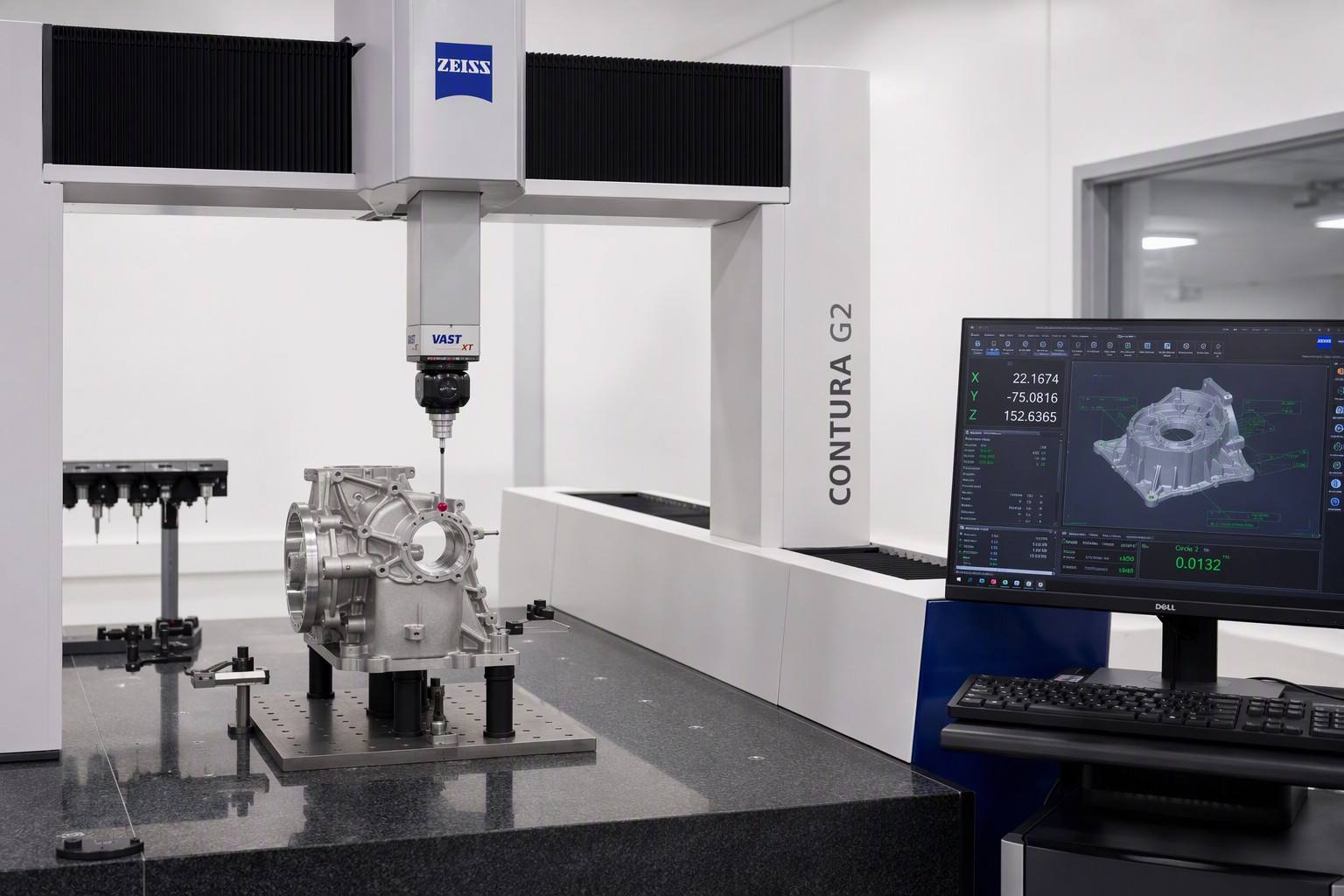
Where the contract requires it, material certificates and inspection records are supplied with the shipment. Confirm the exact certificate type (e.g. EN 10204 3.1) when you request a quote. See What certifications should a CNC supplier have?
Can a CNC Supplier Substitute Materials?
Short answer: not without your approval when the material is specified by drawing or contract. Substitution changes properties, certification and liability.
- 6061 → 6082: close, but not identical in strength/temper — must be approved.
- 316L → 304: lower corrosion resistance — never a silent default.
- PEEK → POM: completely different temperature/chemical profile — not a substitute.
If your specified grade is unavailable, we propose alternatives with a clear property comparison and let you decide. We do not swap grades to save cost.
Material Availability Can Affect CNC Lead Time
Machining time is not always the bottleneck — material availability can set the lead time. Plan both when you quote.
| Material | Typical sourcing |
|---|---|
| Standard aluminum (6061/7075) | Readily stocked |
| Common stainless (304/316L) | Readily stocked |
| Specialty titanium grade | Longer sourcing |
| Specific PEEK grade / filler | Material lead time |
| Specialty stainless / exotic | Stock dependent |
Tip: send exact grade + annual quantity + target date with the RFQ. We confirm stock and the real lead time before committing.
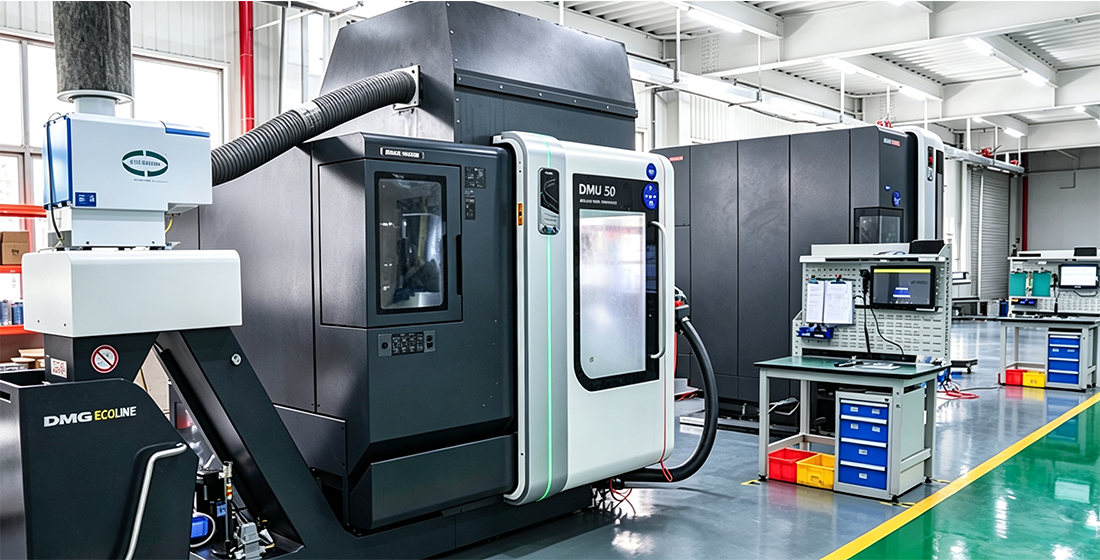
How We Qualify Materials Before CNC Production
Material qualification is a process, not a promise. The path below is how a specified grade becomes a measured, traceable part.
CNC Machining Material Case Studies
Real combinations of material, process and verification — the proof behind "we can machine it."
Aerospace bracket
Valve / fluid component
Aerospace / medical component
Precision bushing / semiconductor part
Material + Application Map
Which industries reach for which materials — a quick way to sanity-check your selection against your sector.
| Material | Industries |
|---|---|
| Aluminum | Aerospace · Automotive · Electronics · Robotics |
| Stainless Steel | Medical · Marine · Food · Industrial |
| Brass | Electrical · Plumbing · Industrial |
| Titanium | Aerospace · Medical |
| PEEK | Semiconductor · Medical · Chemical |
| POM | Robotics · Machinery |
| Nylon | Automotive · Consumer · Industrial |
Which CNC Material Is the Most Cost-Effective?
The finished-part cost is the sum of several steps — not the raw stock price. A dearer material can still be the cheaper part.
| Material | Raw material cost | Machining cost | Typical position |
|---|---|---|---|
| 6061 | $ | $ | Very economical |
| 7075 | $$ | $$ | Performance-oriented |
| 303 SS | $$ | $$ | Good machinability |
| 316L | $$$ | $$$ | Corrosion-oriented |
| Brass | $$ | $ | Easy machining |
| Titanium | $$$$ | $$$$ | High-performance |
| POM | $ | $ | Low-cost engineering plastic |
| PEEK | $$$$ | $$$ | High-performance polymer |
$ = lower · $$$$ = higher · illustrative relative comparison only, not a market price quote. Final cost depends on geometry, tolerance, volume and finish.
Can't Find Your Material?
Send us the exact material grade, drawing and quantity. We will confirm whether it is suitable for CNC machining, whether the material is available, and what inspection documentation is required.
CNC Machining Materials at Goldcattle
Goldcattle is a one-stop OEM/ODM custom manufacturer (Founded in 1998) machining metals and engineering plastics from prototype to production. The capability table and exact grades below show what we run routinely.
years of OEM/ODM experience across six processes, with in-house production and 24-hour engineering response.
Metals
Engineering Plastics
* Quoted per exact grade and application. All other grades machined routinely.
Frequently Asked Questions
What materials can a CNC supplier machine?
What metals can be CNC machined?
What plastics can be CNC machined?
Can CNC machines cut aluminum?
Can stainless steel be CNC machined?
Can titanium be CNC machined?
Can PEEK be CNC machined?
Can brass be CNC machined?
What is the easiest material to CNC machine?
What is the hardest material to CNC machine?
What is the cheapest material for CNC machining?
What is the best material for precision CNC machining?
Which material is best for CNC milling?
Which material is best for CNC turning?
What material is best for high-temperature applications?
What material is best for corrosion resistance?
Can a CNC supplier provide material certificates?
What is the difference between 6061 and 7075 aluminum?
Can a CNC supplier substitute materials?
How should I specify material in a CNC RFQ?
Request a CNC Material Review
Tell us what your part must withstand — strength, temperature, corrosion, weight, wear, electrical and tolerance. We will help you select the right CNC material and process, and confirm it against your exact grade.