Stainless Steel Passivation for CNC Machined Parts
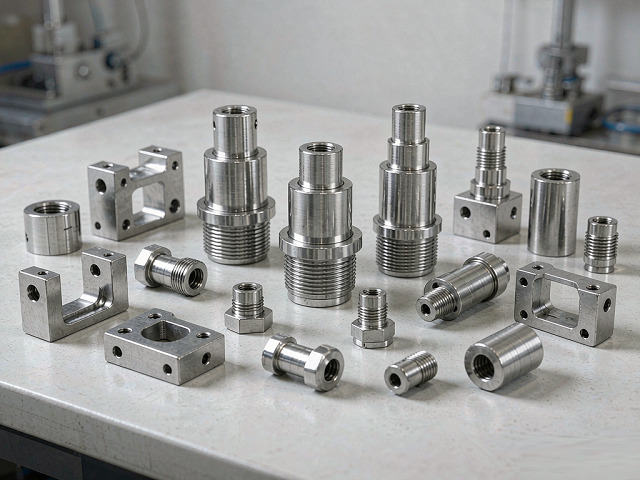
Passivation for CNC-machined stainless steel components where surface cleanliness, corrosion resistance and contamination control matter. We coordinate CNC machining, cleaning, passivation, inspection and documentation according to the required stainless grade and customer specification.
Why Passivate Stainless Steel CNC Parts?
Passivation is commonly specified after stainless steel fabrication or machining to remove free iron and other surface contamination, and to support the stainless steel's corrosion-resistant passive surface condition. It is not the same as coating, pickling or electropolishing, and the required treatment and acceptance testing should be defined by the applicable specification.
When Is Passivation Commonly Specified?
CNC Machining + Passivation From One Supplier
Instead of sourcing CNC machining and passivation separately, buyers can manage the finished stainless steel component through one manufacturing workflow — with each step controlled and documented.
Why Passivate Stainless Steel After CNC Machining?
Stainless steel does not need passivation simply because it is stainless. Passivation is specified when the application requires a controlled surface condition, contamination removal and/or confirmation of the treatment.
ASTM A380/A380M-25 states that passivation should be considered together with cleaning, descaling, pickling and prevention of recontamination — free iron, oil, metal chips and other contaminants can all affect surface condition.
How CNC Machining Can Introduce Free-Iron Contamination
Austenitic stainless steel can be contaminated by free iron introduced during fabrication or handling. Passivation is one part of the broader cleaning and contamination-control process.
The surface should be appropriately cleaned and prepared before passivation — machining contamination, free iron or visible staining should not be treated as acceptable starting conditions.
What Is Stainless Steel Passivation?
Passivation is not simply "acid cleaning," and it is not synonymous with pickling or electropolishing. ASTM A380/A380M-25 defines and discusses cleaning, descaling, pickling and passivation as separate practices.
Passivation vs Pickling vs Electropolishing
| Process | Main Purpose |
|---|---|
| Cleaning | Remove oil, dirt and process residues |
| Pickling | Remove oxide scale / certain surface contamination |
| Passivation | Remove free iron / exogenous contamination and establish a specified passive surface condition |
| Electropolishing | Electrochemically remove surface material and improve surface smoothness |
| Mechanical polishing | Mechanically improve surface finish / appearance |
Key point: passivation targets contamination and passive-surface condition — it is not a coating, and it does not automatically brighten a part. Don't expect a passivated part to look "polished."
Citric Acid vs Nitric Acid Passivation
ASTM A967/A967M-25 covers nitric acid immersion, citric acid immersion and electrochemical treatment — so both chemistries are legitimate, and the choice is specification-driven.
Citric Acid
- Covered by ASTM A967 — yes
- Common industrial use — yes
- Environmental considerations — often favorable
- Material compatibility — grade / process dependent
- Selection — specification-dependent
Nitric Acid
- Covered by ASTM A967 — yes
- Common industrial use — yes
- Environmental considerations — more stringent handling considerations
- Material compatibility — grade / process dependent
- Selection — specification-dependent
There is no universally "best" passivation chemistry. Select the method according to stainless grade, customer specification, process capability and acceptance requirements. Avoid both "citric is always better" and "nitric is always stronger."
Which Passivation Method Should You Choose?
General industrial CNC parts → citric or nitric according to the specified requirement.
304 / 304L → process selected according to grade and customer specification.
316 / 316L → commonly passivated for demanding applications; method and acceptance still need to be specified.
Medical / hygienic components → focus on material traceability, surface condition, contamination control and documentation.
Customer drawing specifies ASTM A967 → quote the applicable method and acceptance requirements.
ASTM A967 defines several alternative treatments and makes no universal grade/process recommendation — method selection is confirmed against your specification, not assumed.
Passivation of 304 / 304L vs 316 / 316L
| 304 / 304L | 316 / 316L | |
|---|---|---|
| Corrosion resistance | Excellent | Generally higher in chloride-containing environments |
| CNC use | Very common | Very common |
| Passivation | Common | Common |
| Typical applications | Industrial / food / general components | Marine / chemical / medical / fluid handling |
| Main focus | Cleanliness + contamination control | Cleanliness + contamination control + environment |
Passivation does not turn 304 into 316L, and it does not make any stainless grade immune to corrosion. Real performance depends on alloy + surface condition + environment + fabrication process.
Need to compare grades for your drawing? See our 304 vs 316 stainless steel machining guide and 304 / 316 machining reference.
What Passivation Cannot Fix
Being clear about limits builds more trust than a broad promise. If any of these apply to your part, the right starting point is usually a different process.
Does Stainless Steel Passivation Change Dimensions?
Chemical passivation is generally not intended to create a significant coating thickness like plating or paint. However, the overall cleaning, pickling or electrochemical treatment route can affect the surface, so critical dimensions should still be verified after finishing.
| Feature | What to Check |
|---|---|
| H7 / H6 bore | Final size |
| Precision shaft | Final diameter |
| Thread | Gauge / functional fit |
| Sealing surface | Final geometry |
| Bearing fit | Final dimension |
| Datum feature | Final inspection |
For ±0.01 mm or ±0.005 mm critical features, the finishing requirement should be considered when planning machining allowance and final inspection. See Tight-Tolerance CNC Machining and Can a CNC Supplier Hold ±0.01 / ±0.005 mm?
ASTM A967/A967M Passivation for Stainless Steel Parts
Current specification: ASTM A967/A967M-25 — Standard Specification for Chemical Passivation Treatments for Stainless Steel Parts. The current ASTM listing shows this standard as Active.
What It Covers
Treatments defined
- Nitric acid immersion
- Citric acid immersion
- Electrochemical treatment
- Rinsing requirements
- Alternative acceptance tests
Acceptance test examples
- Water immersion
- High humidity
- Salt spray
- Copper sulfate
- Potassium ferricyanide–nitric acid
- Damp cloth / boiling water immersion
- Free-iron related testing
Do not assume every project requires every test. The applicable test method and acceptance criteria should come from the specified treatment and project requirements.
ASTM A380/A380M for Cleaning, Descaling, Pickling and Passivation
A380 is broader than A967. It is the practice that frames the whole sequence — cleaning, descaling, pickling, passivation and contamination control — including prevention of recontamination after cleaning. Current version: ASTM A380/A380M-25 (Active).
| Standard | Main Role |
|---|---|
| ASTM A967/A967M | Passivation treatment specification |
| ASTM A380/A380M | Cleaning / descaling / pickling / passivation practice |
We reference A380/A380M cleaning and contamination-control practice where the customer specification requires it.
How Is Stainless Steel Passivation Verified?
Passivation should be verified against the applicable specification rather than judged only by visual appearance.
Inspection Layers
Visual Inspection
- Rust
- Discoloration
- Scale
- Pitting
- Frosting
- Visible contamination
Free-Iron & Acceptance Tests
- Water immersion
- High humidity
- Copper sulfate
- Other tests per the specified standard
ASTM A967/A967M-25 lists multiple alternative acceptance tests, and A380/A380M-25 describes free-iron and other contamination-detection approaches. Which test is used depends on the applicable specification and customer requirement.
From Material Certificate to Passivation Certificate
This is the documentation trail a European or North American procurement team actually checks.
Material traceability spans grade, heat number, lot number, supplier, material certificate, production batch and passivation batch. EN 10204 3.1 material certification is available where specified — confirmed against your project requirement before quoting.
Stainless Steel CNC + Passivation Quality Control
Incoming Material
- Grade verification
- Certificate verification
CNC
- Dimensional inspection
- Burr / surface condition
Pre-Passivation
- Cleaning
- Surface preparation
Passivation
- Defined process
- Batch control
- Rinsing
Post-Passivation
- Visual inspection
- Applicable acceptance test
- Dimensional verification
Documentation
- Material certificate
- Passivation documentation
- Dimensional report
Passivation for Medical, Marine and Chemical Components
Medical / Hygienic Components
We can support cleanliness, contamination control, traceability, documentation and a suitable surface condition for medical-related stainless steel parts.
Passivation does not by itself make a part medical-grade, implant-grade or FDA compliant. We do not claim FDA-approved or ISO 10993-certified passivation.
Marine / Chemical Components
316L is commonly used in many demanding environments — marine, chemical, fluid handling, pump, valve and instrumentation applications.
Material selection remains primary. Passivation is not a substitute for choosing an alloy suitable for the operating environment.
Passivation vs Electropolishing
| Requirement | Passivation | Electropolishing |
|---|---|---|
| Free-iron contamination control | Yes | Can contribute, but not equivalent |
| Surface smoothing | Limited | Stronger |
| Material removal | Limited | Yes |
| Bright appearance | No | Often |
| Cleanability | Good | Excellent |
| Dimensional impact | Generally low | More significant |
| Typical cost | Lower | Higher |
Choose passivation when contamination control and passive-surface condition are the primary requirements. Consider electropolishing when smoother surface topography and enhanced cleanability are also required. They are different manufacturing requirements, not one being "better" than the other.
See our CNC Surface Finishing guide to compare passivation with anodizing, plating, polishing, blasting and other finishes.
What Surface Condition Should Stainless Steel Have Before Passivation?
| Pre-Finish | Consideration |
|---|---|
| As machined | Suitable when the drawing allows |
| Deburred | Prevents trapped contamination |
| Polished | Suitable for smoother functional / cosmetic surfaces |
| Bead blasted | Media contamination must be controlled |
| Pickled | May be necessary when scale is present |
| Electropolished | Separate process / requirement |
How to Specify Passivation on a CNC Drawing
The notes below are an example template — specify the actual method, acceptance criteria and documentation based on your customer specification and application.
MATERIAL: 316L STAINLESS STEEL
FINISH: PASSIVATE PER ASTM A967/A967M-25
METHOD: CITRIC ACID [IF REQUIRED BY PROJECT]
CLEANING: PER APPLICABLE ASTM A380/A380M REQUIREMENTS
ACCEPTANCE: PER SPECIFIED ASTM A967 TEST METHOD
MATERIAL CERTIFICATION: EN 10204 3.1
DIMENSIONS: FINAL DIMENSIONS AFTER FINISHING
Cost & Lead Time
How Much Does Stainless Steel Passivation Cost?
Cost drivers:
- Part size
- Batch size
- Material
- Chemistry
- Cleaning requirements
- Masking
- Testing
- Documentation
- Minimum batch charge
- Packaging
Finishing price is only one part of total cost. A poorly specified passivation process can create much higher costs through rework, corrosion issues or rejected batches.
How Long Does Passivation Take?
Process sequence: CNC → Cleaning → Passivation → Rinse → Dry → Testing → Documentation → Shipment.
Actual lead time depends on batch size, process type, testing, outside processing and documentation requirements.
Typical Goldcattle lead times: prototypes 3–7 working days, small batch 7–20, production 15–25. Your passivation project is quoted with its specific timeline.
How to Evaluate a Stainless Steel Passivation Supplier
A checklist you can bring to any vendor — these are the questions that separate a controlled process from a "dip and ship" service.
Representative Project: 316L Precision Component
Project records are quoted with the actual values from the completed job. The structure below is the format we deliver — specific figures are confirmed from the project record before publishing.
| Field | Project Detail |
|---|---|
| Material | 316L stainless steel — confirmed from project record |
| Process | CNC turning + milling — confirmed from project record |
| Critical features | Per actual drawing requirements |
| Surface treatment | Passivation — actual specified method |
| Inspection | Actual inspection results |
| Material certification | Actual certificate reference |
| Result | Actual outcome |
Send your part number or drawing and we will share a comparable, verifiable project record for your industry.
Why Choose Goldcattle for CNC Stainless Steel + Passivation?
We do not sell "passivation" as a checkbox added at the end of CNC production. For precision stainless steel parts, material selection, machining, cleaning, passivation, contamination control, inspection and documentation are treated as one controlled manufacturing process.
Engineering Review
Drawing → material → surface requirement reviewed before production.
CNC Manufacturing
Turning / milling / 4- and 5-axis, with typical ±0.01 mm and tight ±0.005 mm tolerance on qualified features.
Surface Preparation
Cleaning, deburring and preparation before treatment.
Controlled Passivation
Specified process, batch control and rinsing.
Verification
Dimensional + applicable passivation testing.
Documentation & Export
Material + inspection + finishing records; protected packaging and shipment.
Company context: certifications and quality systems · what a CNC supplier should certify · machining with material certification · stainless steel CNC machining.
Stainless Steel Passivation — Questions Buyers Ask
What is stainless steel passivation?
A chemical treatment applied to stainless steel to remove free iron and other surface contamination and support the passive surface condition. It is not a coating.
Why passivate stainless steel after CNC machining?
Machining, tooling and handling can leave free iron and contamination on the surface. Passivation, together with proper cleaning, helps restore the corrosion-resistant surface condition.
Does passivation prevent stainless steel from rusting?
It supports corrosion resistance by removing surface contamination, but it does not make any stainless grade immune to corrosion. Alloy choice, environment and fabrication process matter too.
Does passivation remove free iron?
Yes — removing free iron and exogenous contamination is the primary purpose of passivation, and it is verified with the applicable acceptance test.
Is stainless steel passivation a coating?
No. It is not a coating like plating or paint and does not create significant coating thickness.
What is the difference between ASTM A967 and ASTM A380?
ASTM A967/A967M is the passivation treatment specification (methods + acceptance tests). ASTM A380/A380M is the broader practice covering cleaning, descaling, pickling and passivation.
What is the difference between citric and nitric passivation?
Both are covered by ASTM A967. The choice is specification-driven — citric is often more favorable environmentally; nitric has more stringent handling considerations. There is no universally "best" chemistry.
Which passivation method is best for 316L?
There is no single "best" method. The applicable method and acceptance criteria come from your specification and application.
Does passivation change dimensions?
Passivation itself is not intended to create significant thickness, but the overall finishing route can affect the surface. Critical dimensions are verified after finishing.
Is passivation the same as pickling or electropolishing?
No. Pickling removes scale; electropolishing removes surface material and smooths; passivation removes free iron and establishes the passive surface condition.
Does passivation improve surface finish?
Not as a finish-improvement process. It supports cleanliness and corrosion resistance; it does not turn a rough surface into a polished one.
How is passivation verified?
Against the applicable specification — through visual inspection and acceptance tests such as water immersion, high humidity, copper sulfate or other specified free-iron tests.
Do I need passivation after CNC machining?
It depends on your drawing and application. Where cleanliness, corrosion resistance and contamination control matter, passivation is commonly specified.
Can you provide material certificates and dimensional reports?
Material certificates (EN 10204 3.1 where specified), passivation documentation and dimensional reports are confirmed against your project requirement before quoting.
How should I specify passivation on a drawing?
State the material, the passivation standard (e.g., ASTM A967/A967M-25), method, cleaning practice, acceptance test and material certification. See the drawing callout example above.
How much does stainless steel passivation cost?
It depends on part size, batch size, material, chemistry, cleaning, masking, testing, documentation and minimum batch charge. Send your drawing for a project-specific quote.
Passivation Is Not a Checkbox Added at the End of CNC Production
Send your stainless steel drawing, material grade and required standard. We can review the machining, passivation and inspection requirements before production.
Request a Passivation + CNC Quote
Fill in your requirements and upload your drawing — we reply within 24 hours.